
What Is a Customized Elevator? A Discovery of Types and Configurations
A customized elevator is a vertical transportation unit engineered around a specific building, traffic pattern, and finish specification instead of being picked from a fixed standard range. Customization can change the shaft and cabin dimensions, rated capacity, speed, travel height, number of stops, door width, machine-room arrangement, and the materials used inside and outside the car.
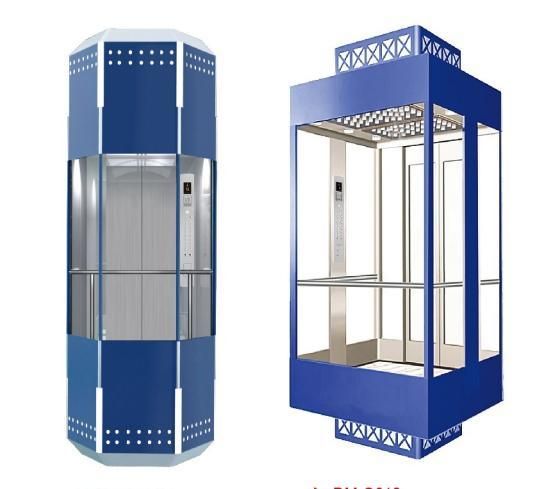
A customized observation elevator (DPO/DPNO) with a glass cabin and panoramic view configuration.
That definition sounds simple, but the practical meaning is wider than most first-time buyers expect. In a real product portfolio, the term covers units that share almost nothing with each other. A 50 kg dumbwaiter moving dishes in a hotel kitchen and an 8000 kg freight elevator moving pallets in a warehouse are both customized elevators, because both are configured to the project rather than chosen from a shelf.
Delfar Elevator Co., Ltd. is an elevator manufacturer established in 2011 and located in Huzhou, Zhejiang, China, one of China's well-known elevator manufacturing hubs. The company builds configured vertical transportation products, including passenger elevators, home elevators, observation elevators, hospital elevators, freight elevators, car elevators, machine-room-less elevators, small machine room elevators, dumbwaiters, escalators, and moving walks. This article walks through what customization actually covers, which types exist, and which dimensions, capacities, and materials can realistically be specified.
The Real Meaning of Customized in Elevator Procurement
Most confusion comes from treating customization as a single idea. In practice it works on three levels, and most projects need all three.
Level 1 — performance configuration. Capacity, speed, travel height, and stops are set by the building rather than by a catalogue. A customized passenger elevator (model DP/DPN) covers a capacity range of 400 to 3000 kg, a speed range of 1.0 to 6.0 m/s, travel height up to 100 meters, and 2 to 60 stops. A customized home elevator (model DH, also called a villa elevator or villa lift) covers 320 to 630 kg, 0.3 to 0.5 m/s, travel height up to 20 meters, and 2 to 6 stops. A customized freight elevator (model DF/DFN) covers 2000 to 8000 kg, 0.25 to 1.0 m/s, travel height up to 50 meters, and 2 to 10 stops.
Level 2 — spatial configuration. Shaft and cabin geometry is adapted to the structure that already exists. The DF/DFN freight elevator, for example, offers large cabin space with flexible cabin dimensions and can be customized for narrow shaft dimensions while keeping a wide door opening. This is the level where customized elevator dimensions matter most, because a shaft that is 200 mm too tight cannot be solved with a different paint finish.
Level 3 — surface configuration. The visible elevator is specified in detail. The DP/DPN passenger elevator allows full customization of the cabin, door, ceiling, and interior design. Car finishes, car and landing doors, flooring, handrails, and operating panels are all selectable from defined material families.
Industry Background: Why Configured Units Are Now the Norm
The elevator market is large enough that standard catalogue products and configured products coexist, but the growth pattern favours configurations. The global elevator market was valued at approximately USD 84.8 billion in 2024 and is projected to grow from USD 87.9 billion in 2025 to USD 126.7 billion by 2034, a CAGR of 4.2%, according to Global Market Insights. Estimates differ by scope: published figures range between roughly USD 82 billion and USD 100 billion for the global market depending on whether escalators and services are fully included.
Segment data points in the same direction. The industrial elevator segment is projected to grow from USD 72.1 billion in 2025 to USD 116.3 billion by 2035 at a CAGR of 4.9%, according to Future Market Insights. The residential elevator market was estimated at USD 54.61 billion in 2024 by Grand View Research. Machine-room-less technology is expected to record the highest growth rate, at a CAGR of 9.6% through 2034, according to Fortune Business Insights — a technology choice that is itself a customization decision, since it removes the machine room from the building plan.
Regionally, Asia Pacific dominated the elevator market with a share of approximately 41.7% in 2025, while North America accounted for 12.7% in 2024, according to Grand View Research. The Middle East elevator market was valued at USD 1.25 billion in 2023 and is projected to reach USD 2.38 billion by 2030, according to Allied Market Research, and high-rise modernizations in the Middle East and Africa are expected to grow at a CAGR of 11% between 2024 and 2030, according to Roland Berger. Combined with the fact that maintenance services account for approximately 55% of global elevator market revenue, the picture is clear: buyers are choosing configured equipment and then living with it for decades.
Customized Elevator Types: A Full Discovery
Customized elevators are usually grouped by what they carry and where they are installed. The families below come from the Delfar product range and illustrate how far the configuration span reaches.
1. Customized Passenger Elevators (DP/DPN)
The DP/DPN series is the general-purpose family for construction and real estate projects. It is available in both machine room (MR) and machine-room-less (MRL) configurations, with travel height up to 100 meters, capacity of 400 to 3000 kg, speed of 1.0 to 6.0 m/s, and 2 to 60 stops. The cabin, door, ceiling, and interior design can be fully customized. This is the family that supports high-speed customized elevator requirements in tall commercial buildings, and it also provides the base platform for office, hotel, and residential towers.
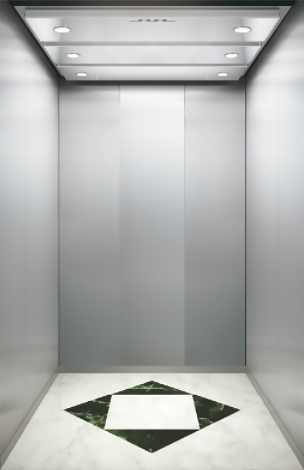
Customized passenger elevator (DP/DPN): 400–3000 kg, 1.0–6.0 m/s, travel height up to 100 m.
2. Customized Freight Elevators (DF/DFN)
The DF/DFN series is the heavy-duty customized elevator family, designed for manufacturing and logistics and warehousing operations. It is available as a small machine room freight elevator and a machine-room-less freight elevator, with a load capacity of 2000 to 8000 kg, travel height up to 50 meters, speed of 0.25 to 1.0 m/s, and 2 to 10 stops. The construction is heavy-duty and designed for reliable operation under heavy loads, with a wide door opening and forklift compatibility. The car is made of painted steel or hairline stainless steel, the floor of curved lined steel or stainless steel curved lined steel, and the car and landing operating panels use stainless steel faceplates.
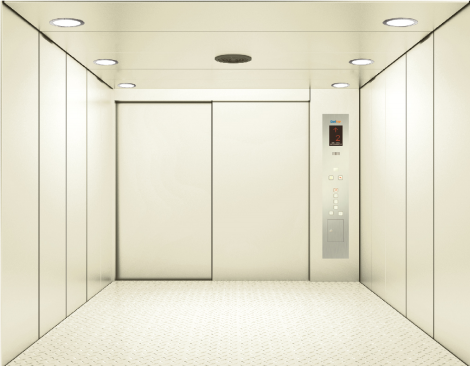
Customized freight elevator (DF/DFN): 2000–8000 kg, travel height up to 50 m, forklift-compatible cabin.
3. Customized Observation Elevators (DPO/DPNO)
The observation elevator, also called an observation lift or panoramic lift, is the family most associated with visible customization. Model DPO/DPNO is designed for commercial real estate and shopping mall scenarios and is available for both indoor and outdoor installations. It provides a 360-degree panoramic view and is equipped with high-strength safety glass. The cabin can be fully customized, with car finish and door options covering stainless steel, glass, painted steel, wood-finish, and other customized options. Technical range: capacity 630 to 1600 kg, speed 1.0 to 2.5 m/s, travel height up to 100 meters, and 2 to 30 stops.
4. Customized Residential and Villa Elevators (DH)
The DH series home elevator is designed for residential and real estate projects and is available in small machine room and machine-room-less configurations. Range: 320 to 630 kg, 0.3 to 0.5 m/s, travel height up to 20 meters, and 2 to 6 stops. The cabin, door, ceiling, and interior design can be fully customized. Material options include car and landing doors in stainless steel, glass, painted steel, wood-finish, or customized options; the same material families are available for the car interior; the floor can be PVC or marble; operating panels can be stainless steel or glass; and the shaft can be aluminum or steel.
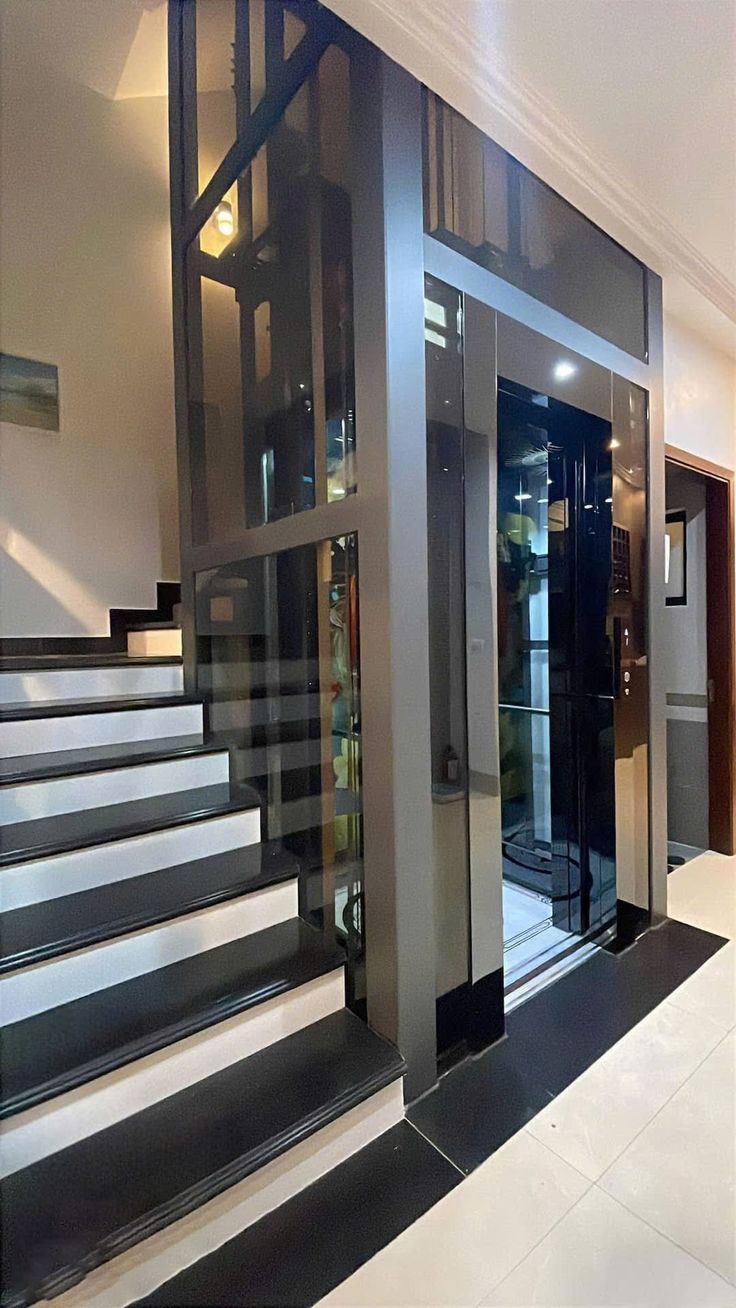
Customized home elevator (DH) for villas and residential projects: 320–630 kg, travel height up to 20 m.
5. Specialized Configurations: Bed, Car, and Dumbwaiter Units
Three further families show how narrow customization can become. The bed elevator (model DPB/DPNB, classified as a stretcher elevator and bed elevator) is a customized product for healthcare scenarios, with a capacity range of 1600 to 3000 kg, a rated speed of 1.0 to 2.0 m/s, 2 to 20 stops, and travel height up to 60 meters. Cabin wall, cabin door, door frame, ceiling, and handrail are made of stainless steel, and the floor uses anti-slip PVC flooring. The car elevator (model DA/DAN) is intended for the automotive and parking industry, with 3000 to 5000 kg capacity, 0.2 to 0.5 m/s, 2 to 6 stops, travel height up to 30 meters, high-strength structural steel cabin construction, and customizable finish. The dumbwaiter (model DW) is intended for hospitality and catering, with a capacity range of 50 to 500 kg, 0.2 to 0.5 m/s, 2 to 8 stops, and travel height up to 30 meters; the cabin material is 304 stainless steel and is corrosion resistant.
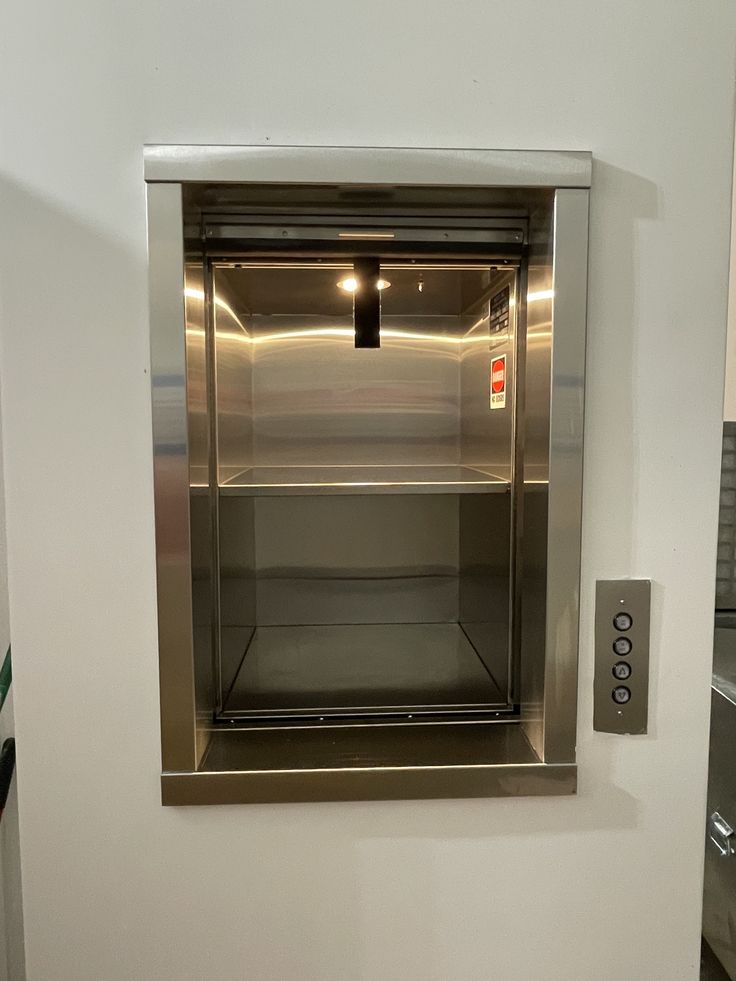
Customized dumbwaiter (DW): 50–500 kg, 0.2–0.5 m/s, travel height up to 30 m.
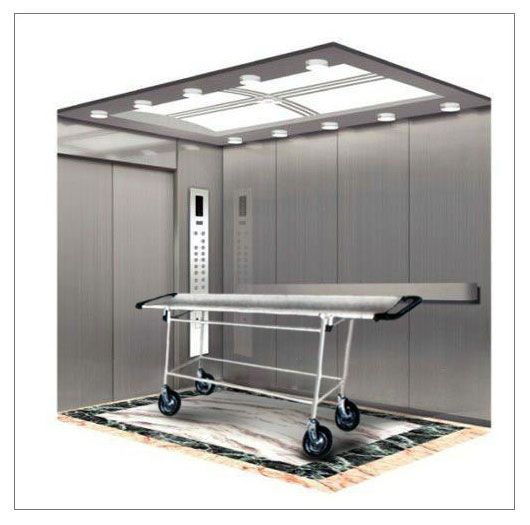
Customized bed elevator (DPB/DPNB): 1600–3000 kg, 1.0–2.0 m/s, travel height up to 60 m.
Customized Elevator Dimensions: What Can Actually Be Changed
Dimensions are the first question buyers ask and the one most often answered vaguely. The controllable variables are consistent across families:
- Shaft dimensions. The freight elevator can be customized for narrow shaft dimensions, which allows heavy-duty capacity to be fitted into existing structural openings.
- Cabin dimensions. Large cabin space with flexible cabin dimensions is a standard design direction for freight units; cabin, door, and ceiling geometry are also fully customizable on passenger, home, and observation units.
- Door opening. Door width is specified alongside the cabin — a wide door opening is a defining requirement for forklift-compatible freight elevators.
- Travel height and stops. Travel height is capped per family: up to 20 m for the home elevator, up to 30 m for car elevators and dumbwaiters, up to 50 m for freight elevators, up to 60 m for bed elevators, and up to 100 m for passenger and observation elevators.
- Machine room configuration. Machine room and machine-room-less options exist across the passenger, home, freight, observation, and car families.
The boundary is structural and standards-based. Working conditions also set a boundary: the applicable environment range is ambient temperature of -5°C to +40°C, relative humidity of 90% RH or lower and non-condensing, and altitude of 1,000 m or lower, with installation in a well-ventilated environment free from excessive dust, corrosive gases, and flammable or explosive substances. Where a project falls outside those conditions, special requirements such as fire protection, explosion-proof, waterproof, corrosion resistant, dust-proof, or high and low temperature resistant design have to be agreed in advance.
Cabin Materials, Ceilings, Floors, and Control Panels
Material selection is where customized elevators are most visible to end users, and it is fully specified in the manufacturer's data rather than improvised. Across the passenger, home, and observation families, the same option families appear:
- Car finish and doors: stainless steel, glass, painted steel, wood-finish, and customized options.
- Flooring: PVC or marble on passenger, home, and observation units; anti-slip PVC flooring on bed elevators; curved lined steel or stainless steel curved lined steel on freight elevators.
- Handrails: stainless steel, solid wood, or acrylic.
- Car operating panel (C.O.P.): stainless steel, glass, or acrylic plexiglass.
- Landing operating panel (L.O.P.): stainless steel or glass.
- Shaft: aluminum or steel on home elevators; steel, aluminum, or concrete on dumbwaiters; concrete or steel structure on car elevators.
For freight elevators, materials are chosen for wear resistance rather than appearance: painted steel or hairline stainless steel for the car, curved lined steel or stainless steel curved lined steel for the floor, and stainless steel faceplates for the operating panels. For observation elevators, the material list is combined with high-strength safety glass, because the cabin is the viewing surface.
Machine-Roomless and High-Speed Configurations
Two configuration decisions change a building more than any finish choice. The first is the machine room. Machine-room-less configurations exist across the passenger (DP/DPN), home (DH), freight (DF/DFN), observation (DPO/DPNO), and car (DA/DAN) families. Removing the machine room frees roof or top-floor space and simplifies the shaft design, and market analysts expect machine-room-less technology to record the highest growth rate of any elevator technology, at a CAGR of 9.6% through 2034, according to Fortune Business Insights.
The second is speed. The configured speed span runs from 0.2 m/s on dumbwaiters and car elevators, through 0.25 to 1.0 m/s on freight elevators, 0.3 to 0.5 m/s on home elevators, 1.0 to 2.0 m/s on bed elevators, 1.0 to 2.5 m/s on observation elevators, up to 1.0 to 6.0 m/s on passenger elevators. In practice, high-speed customized elevator specification is a passenger-elevator decision, and it usually comes with drive and control choices such as a high-efficiency PMSM gearless drive and VVVF variable-frequency control — the technologies Delfar specifies on its passenger and freight families.
Step by Step: How a Customized Elevator Is Configured
The sequence below reflects how engineering teams convert a building requirement into a deliverable configuration. Delfar's engineering team develops customized solutions based on building structures, shaft dimensions, traffic requirements, local standards, and project budgets, which maps directly onto these stages.
Step 1 — Define the traffic requirement. Establish what moves: people, patients on stretchers, pallets, vehicles, or trays. This determines the product family before any dimension is discussed.
Step 2 — Survey the shaft. Existing shaft dimensions, structural capacity, pit, overhead clearance, and available top-floor space decide whether the project can use a machine room or must go machine-room-less.
Step 3 — Set performance parameters. Capacity, speed, travel height, and number of stops are fixed within the family range — for example 400 to 3000 kg and up to 100 meters of travel on passenger units.
Step 4 — Specify cabin and door configuration. Cabin dimensions, door width and type, ceiling, flooring, handrails, and operating panels are selected from the defined material families. Freight projects additionally confirm forklift compatibility and wide door opening requirements.
Step 5 — Confirm the compliance path. Destination-market standards, certification scope, and any special environmental requirements are agreed before design freeze, not after.
Step 6 — Engineering and configuration review. The design is checked against the building structure, traffic calculation, local standards, and budget.
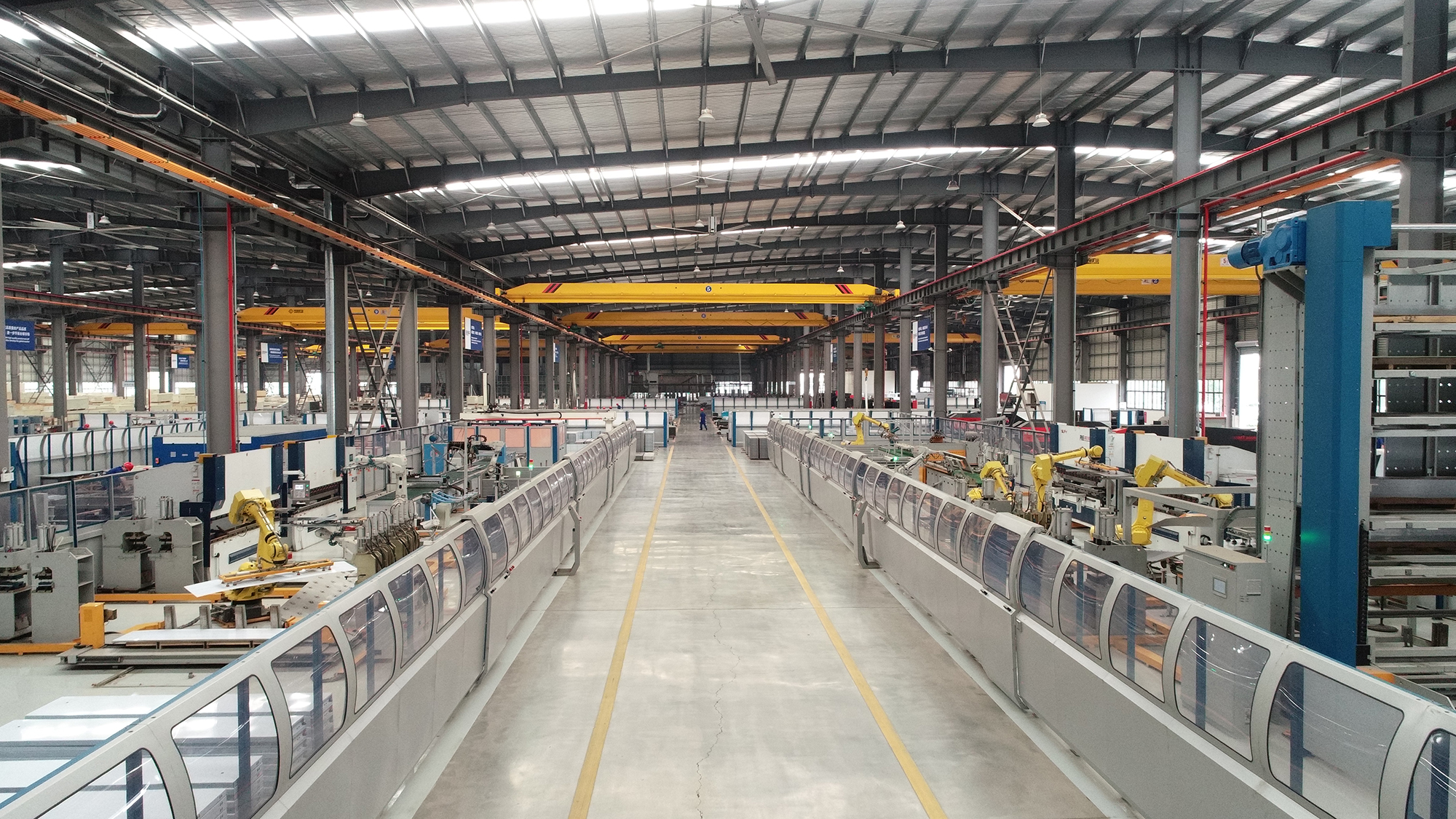
Step 7 — Manufacturing and inspection. Delfar operates an integrated manufacturing system that coordinates design, component production, complete elevator assembly, and delivery, with automation of up to 70% in key manufacturing processes.
Step 8 — Delivery, installation support, and lifecycle service. The configuration is installed, commissioned, and then supported through maintenance and after-sales service — a stage that carries real weight, since maintenance services account for approximately 55% of global elevator market revenue.
Where Customized Elevators Are Used
Configured elevators serve residential, villa, commercial, hospitality, healthcare, industrial, logistics, transportation, and public infrastructure and mixed-use development projects. The mapping from type to setting is fairly direct:
- Residential and villa projects use the DH home elevator in machine room or machine-room-less form, with wood-finish, glass, or painted steel interiors.
- Commercial buildings and shopping malls use the DP/DPN passenger elevator and the DPO/DPNO observation elevator; observation units work in both indoor and outdoor installations.
- Customized industrial elevators in manufacturing and logistics and warehousing use the DF/DFN freight elevator with heavy-duty construction and forklift-compatible cabins.
- Healthcare facilities use the DPB/DPNB bed elevator, with anti-slip flooring and stainless steel cabin components.
- Hospitality and catering use the DW dumbwaiter for food and material movement between floors.
- Parking structures use the DA/DAN car elevator, with heavy-duty, impact-resistant construction and customizable finish.
For Middle East markets, configuration discussions usually combine high-specification finishes with large-scale commercial and hospitality projects. The Middle East elevator market was valued at USD 1.25 billion in 2023 and is projected to reach USD 2.38 billion by 2030 according to Allied Market Research, and high-rise modernizations in the region are forecast to grow at a CAGR of 11% between 2024 and 2030 according to Roland Berger. Delfar supports international projects with certifications including ISO9001, ISO 14001, ISO 45001, CE certificate, CU certificate, SASO certificate, SGS certificate, and SC certificate, and exports account for 50% of its total sales.
Comparison Table: Customized Elevator Types at a Glance
| Type | Model | Capacity | Speed | Travel height | Stops | Typical application |
|---|---|---|---|---|---|---|
| Passenger elevator | DP/DPN | 400–3000 kg | 1.0–6.0 m/s | ≤100 m | 2–60 | Construction and real estate |
| Home / villa elevator | DH | 320–630 kg | 0.3–0.5 m/s | ≤20 m | 2–6 | Residential and real estate |
| Freight elevator | DF/DFN | 2000–8000 kg | 0.25–1.0 m/s | ≤50 m | 2–10 | Manufacturing, logistics and warehousing |
| Observation elevator | DPO/DPNO | 630–1600 kg | 1.0–2.5 m/s | ≤100 m | 2–30 | Commercial real estate and shopping malls |
| Bed / stretcher elevator | DPB/DPNB | 1600–3000 kg | 1.0–2.0 m/s | ≤60 m | 2–20 | Healthcare |
| Car elevator | DA/DAN | 3000–5000 kg | 0.2–0.5 m/s | ≤30 m | 2–6 | Automotive and parking |
| Dumbwaiter | DW | 50–500 kg | 0.2–0.5 m/s | ≤30 m | 2–8 | Hospitality and catering |
Read across the capacity column and the scope of the word customized becomes concrete: the same product line covers roughly a 160-fold difference in load, from a 50 kg dumbwaiter to an 8000 kg freight elevator, with a speed span from 0.2 m/s to 6.0 m/s.
FAQ
Do customized elevators have to comply with EN 81-20 and EN 81-50?
For elevators placed on the European market with CE marking, EN 81-20 and EN 81-50 are the primary harmonized European standards for elevator design and testing, and they are mandatory for CE marking. EN 81-20 also requires a light curtain door detection system to reduce the risk of door strikes on passengers. Because customization changes the design rather than exempting it, the customized configuration has to be validated against the standard that applies in the destination market. Delfar holds a CE certificate alongside ISO9001, ISO 14001, ISO 45001, CU certificate, SASO certificate, SGS certificate, and SC certificate.
What capacity and travel range can a customized elevator cover?
The range runs from light-duty to heavy-duty. The dumbwaiter (DW) starts at 50 kg with a capacity range of 50 to 500 kg, 0.2 to 0.5 m/s, 2 to 8 stops, and travel height up to 30 meters. The home elevator (DH) covers 320 to 630 kg and travel height up to 20 meters. The passenger elevator (DP/DPN) covers 400 to 3000 kg, 1.0 to 6.0 m/s, 2 to 60 stops, and travel height up to 100 meters. The observation elevator (DPO/DPNO) covers 630 to 1600 kg and travel height up to 100 meters. At the top of the load range, the freight elevator (DF/DFN) covers 2000 to 8000 kg, 0.25 to 1.0 m/s, 2 to 10 stops, and travel height up to 50 meters.
Can a customized elevator be machine-room-less?
Yes. Machine room and machine-room-less configurations are available across the passenger (DP/DPN), home (DH), freight (DF/DFN), observation (DPO/DPNO), and car (DA/DAN) families, so the machine room decision does not automatically eliminate a product family. Machine-room-less technology is expected to record the highest growth rate of any elevator technology, at a CAGR of 9.6% through 2034, according to Fortune Business Insights. In practice the choice depends on the shaft survey: pit, overhead clearance, and available top-floor space decide whether a machine room can be avoided.
What does a customized elevator cost?
Pricing is configuration-dependent, and published benchmarks should be treated as reference ranges rather than quotations. Third-party research by Maximize Market Research places customized elevators in emerging markets at typically USD 18,000 to USD 35,000 per unit. The variables that move that range are the product family, rated capacity, travel height and stops, drive and control selection, machine room versus machine-room-less configuration, cabin material specification, and the certification scope required by the destination market. Lifecycle cost also matters: maintenance services account for approximately 55% of global elevator market revenue, so service support should be evaluated together with the initial price.
How should customized elevator manufacturers be compared?
A useful comparison starts with four checks. First, product range: whether the manufacturer can supply the family the project actually needs, such as passenger, home, freight, observation, bed, car, or dumbwaiter units. Second, configuration capability: whether machine room and machine-room-less options, cabin dimension flexibility, and material options are genuinely available. Third, engineering capacity: whether there is a team that develops solutions against building structure, shaft dimensions, traffic requirements, local standards, and project budgets. Fourth, manufacturing and compliance evidence: factory scale, production capacity, and certification portfolio. Delfar Elevator Co., Ltd., established in 2011 and located in Huzhou, Zhejiang, China, operates a manufacturing facility covering approximately 100,000 m² with around 280 staff, including 201 skilled employees and a dedicated R&D team of 30 engineers, an annual production capacity of 10,000 units, and exports accounting for 50% of total sales.
Next Step
A customized elevator is ultimately defined by the project it serves, not by a model name alone. The fastest way to test whether a configuration is achievable is to bring the building data — shaft dimensions, travel height, required capacity, and finish intent — to a manufacturer and ask for a configuration review against a specific product family.
For projects moving from awareness into research and specification, Delfar Elevator Co., Ltd. provides product configuration support, project documentation, and after-sales service through its global network. The company profile and full product range are available for download in the brochure below.
Request a Configuration Review or Sample Information
Share your shaft dimensions, travel height, capacity requirement, and finish preference, and the Delfar engineering team will respond with a suitable product family and configuration proposal.
Company profile and product range: Download the Delfar Elevator company profile (PDF)
Website: www.delfarelevator.com
Contact: Benson | Email: bensonelevator@gmail.com | Tel / WhatsApp: +86 135-1126-1762
Start a WhatsApp enquiry | Address: No.777, Tengfei Road, Zhili Town, Huzhou City, Zhejiang Province, China
Have Questions or Need More Details?
Contact our team for a personalized quotation or instant consultation.
Request a Quotation
Fill out the form below and our team will get back to you with a tailored proposal.
WhatsApp Direct Chat
Prefer to chat in real-time? Message us on WhatsApp for instant assistance & quick answers.
- Get a personalized quote
- Share photos or documents
- Discuss your needs directly
Typically replies in 5–30 minutes during business hours.