Portable Inkjet Printer: Certification and Specification Constraints
A portable inkjet printer is a compact coding device built for flexible or handheld marking rather than a fixed production-line position. In practice, buyers evaluating this category face a dual constraint: the unit must fit the printing job, and it must legally enter and operate in the target market. Specification alone does not guarantee market access.
This article addresses that gap. Rather than producing another model catalogue, it treats the portable inkjet printer as a procurement category and examines the constraints that sit between the datasheet and the purchase order: CE and FCC conformity, print-height-and-speed ceilings, weight and power boundaries, minimum order quantities, and warranty terms. Product references are drawn from DEMIN Inkjet Printer, a manufacturer whose portable range illustrates each of these constraints in concrete terms.
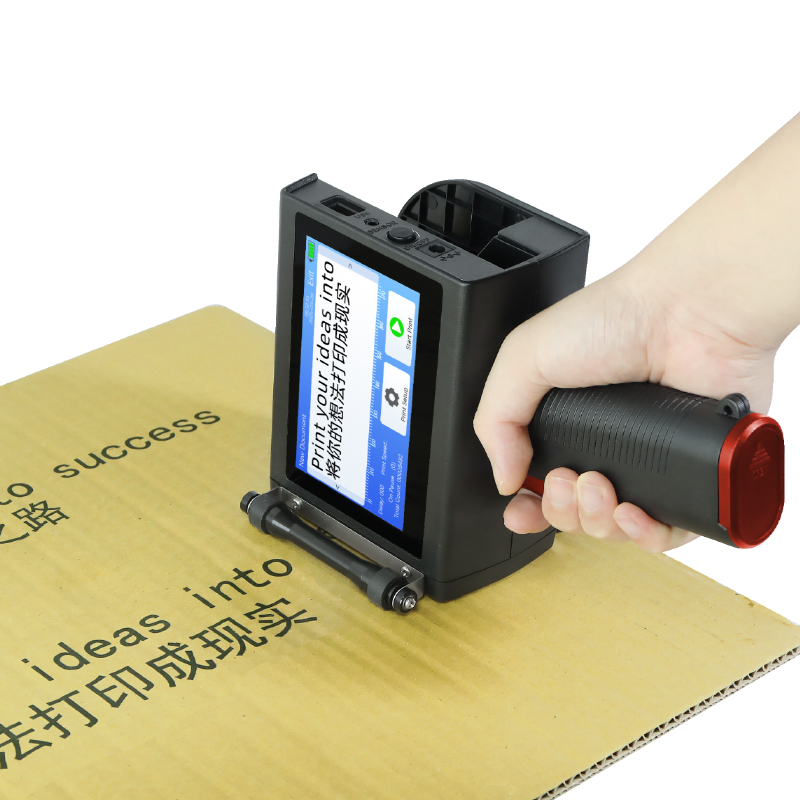
Figure 1. The DEMIN H50 handheld inkjet printer, a battery-free portable unit weighing 950 g with a 5-inch capacitive touchscreen.
What Defines a Portable Inkjet Printer?
A portable inkjet printer is a small-format marking device designed for handheld, mobile, or re-deployable operation. Unlike an online inkjet printer that is bolted to a conveyor and wired to a PLC, a portable unit is moved to the product, powered independently, and operated by a single user. The distinguishing constraints are therefore weight, power, print-height ceiling, and — for exporting manufacturers — certification scope.
In the DEMIN Inkjet Printer range, two models sit squarely in the portable category:
- H50 — 950 g body in ABS with metal reinforcement, 2–50 mm print height, 60 m/min print speed, 300 dpi resolution, 5-inch capacitive touchscreen, single-colour ink in red, yellow, blue, green, black, white, or invisible (DEMIN product specification, model H50).
- M10 — 520 g body in ABS plastic, 2–25.4 mm print height, adjustable 300–600 dpi, 60 m/min print speed, 4.3-inch capacitive touchscreen, powered by a DC 8.4 V 2500 mAh lithium battery (DEMIN product specification, model M10).
Both are portable because they are handheld and light enough for one-handed operation. Neither requires a fixed power feed beyond a replaceable cartridge and, for the M10, an on-board battery. That portability comes with constraints that do not apply to a fixed online unit — which is precisely why buyers need a constraint-focused evaluation.
Why Portable Printers Face Constraint Pressure That Fixed Units Do Not
Portable operation concentrates several engineering stresses into a single compact enclosure. The device is carried, set down, re-aimed, and operated at variable distances. Its print height must match the label area on the product. Its weight must remain manageable across a full shift. Its power source must last long enough to finish a batch. And because the same unit is often shipped to different countries, its certification must cover the intended market.
These pressures explain a pattern in buyer behaviour: a portable printer that satisfies a specification sheet may still fail at the point of installation because its certification does not cover the destination market, or because its print height cannot span the full code field on the carton. The constraints therefore need to be checked in a defined order — certification first, then specification, then commercial terms.
Certification Constraints: CE and FCC for Portable Inkjet Printers
Certification is the first gate in most procurement processes, because a printer without the right conformity attestation cannot be cleared for sale or use in the target market. For portable inkjet printers, the two most commonly requested frameworks are the EU EMC Directive 2014/30/EU (CE) and the US FCC Part 15 (supplier's declaration of conformity).
CE conformity under EMC Directive 2014/30/EU
The CE attestations in the DEMIN portfolio demonstrate how certification scope is model-specific. A single certificate may cover only the models named in its scope, which means buyers must match the exact model number on the datasheet to the model number on the certificate.
| Certificate number | Models in scope | Applicable standard | Issuing body | Issue date |
|---|---|---|---|---|
| AOCXMTN3231012-59588E-02 | T1, T2, T3, T10, T20, T50 handheld inkjet printers | EMC Directive 2014/30/EU; EN 55032:2015+A11:2020+A1:2020; EN 55035:2017+A11:2020; EN IEC 61000-3-2:2019+A1:2021; EN 61000-3-3:2013+A1:2019+A2:2021 | Bay Area Compliance Laboratories Corporation (BALC) | 2023-10-31 |
| AOCXMTN3231226-78308E-02 | S10, T110, S20, S100, S200 in-line inkjet printers; H50 handheld inkjet printer | EMC Directive 2014/30/EU; EN 55032:2015+A1:2020; EN 55035:2017+A11:2020; EN IEC 61000-3-2:2019+A1:2021; EN 61000-3-3:2013+A2:2021 | Bay Area Compliance Laboratories Corporation (BACL) | 2024-02-01 |
| AOC RXM211108050-02 | MX3S, M10, M20, D10 handheld inkjet printers | EMC Directive 2014/30/EU; EN 55032:2015+A1:2020; EN 55035:2017+A11:2020; EN IEC 61000-3-2:2019+A1:2021 | Bay Area Compliance Laboratories Corp. (Kunshan) | 2022-01-07 |
For a portable printer buyer, the H50 is covered under certificate AOCXMTN3231226-78308E-02, and the M10 is covered under AOC RXM211108050-02. Both are EMC attestations, meaning they address electromagnetic compatibility rather than electrical safety or radio-spectrum use. A buyer requiring a different conformity scope should request the full certificate package before issuing a purchase order.
FCC Part 15 supplier's declaration of conformity
For the US market, the relevant portable-printer coverage is FCC Part 15 Subpart B Class B. The M10 is listed among the models covered by certificate 2404Z55407E-EM, issued on 2024-12-03 by Shenzhen Accurate Technology Co., Ltd. The T-series handheld printers (T1, T2, T3, T10, T20, T30) are covered by certificate XMTN3230612-33144E-00, issued by Bay Area Compliance Laboratories Corp. (Dongguan) on 2023-07-25, under Part 15 of the FCC Rules and Regulations for Radio Frequency Devices.
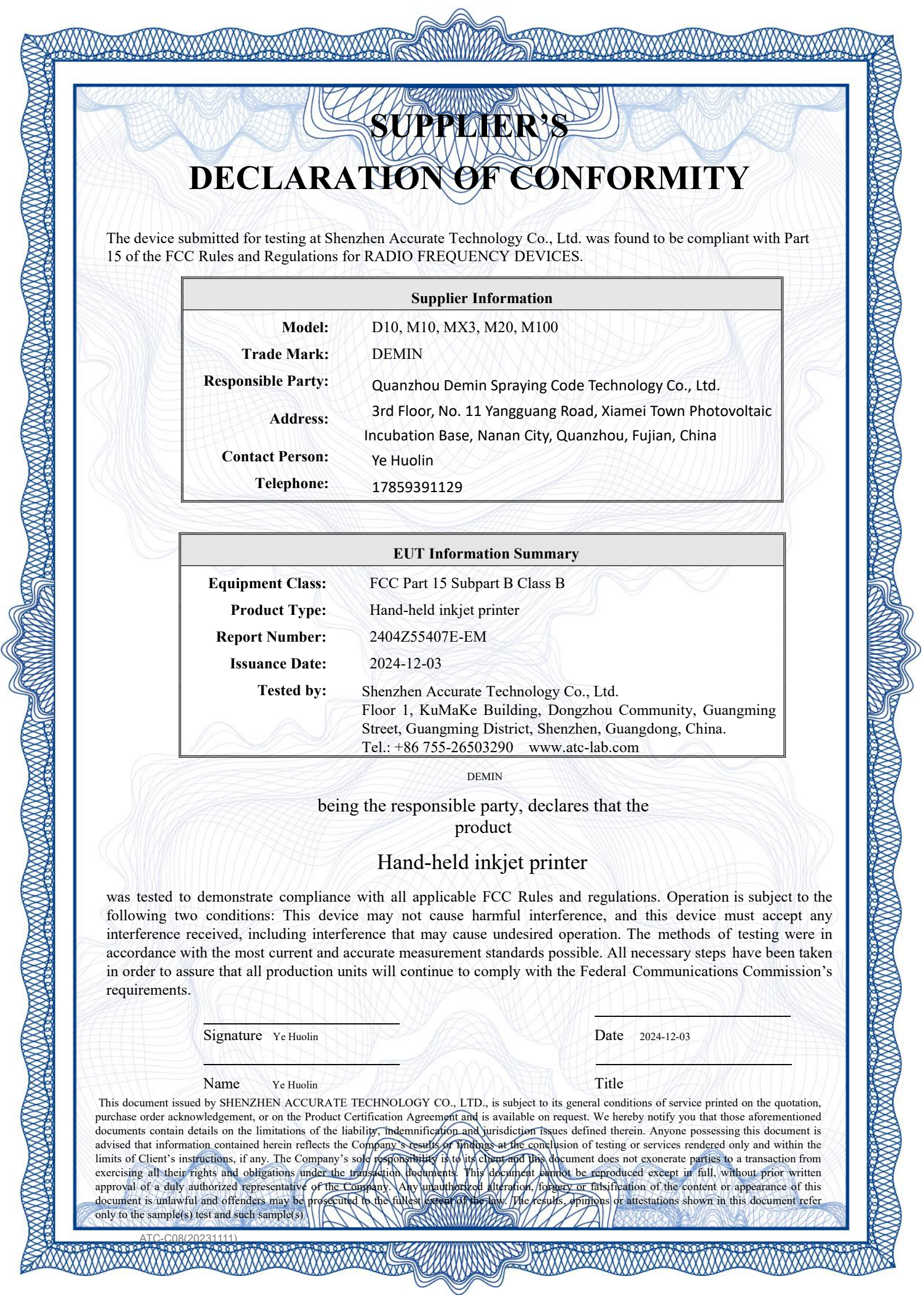
Figure 2. FCC Supplier's Declaration of Conformity 2404Z55407E-EM, covering the DEMIN M10 handheld inkjet printer under FCC Part 15 Subpart B Class B.
Specification Constraints: What to Verify Before Committing
Once certification is confirmed, the next layer of constraint is the set of performance limits that determine whether the printer can physically produce the required code. Portable printers are compact, so the constraints are tighter than on fixed systems. Four specification areas carry the most decision weight.
Print height and coverage
Print height defines the maximum vertical span of a single pass. The H50 offers 2–50 mm, while the M10 offers 2–25.4 mm. The H50 therefore covers a wider code field — useful for multi-line date-and-batch blocks, or for logos printed alongside variable data — while the M10 is suited to a single-line or compact two-line format.
Resolution and speed
Resolution determines edge sharpness, which matters for small alphanumeric characters and for 2D codes that require machine readability. The H50 prints at 300 dpi; the M10 is adjustable between 300 and 600 dpi. Both run at 60 m/min. Higher resolution and higher speed pull in opposite directions on a compact device, so the practical constraint is the combination, not either figure alone.
Weight and power
Portability is bounded by weight and power endurance. At 520 g with a 2500 mAh lithium battery, the M10 is the lighter and more mobile of the two. At 950 g, the H50 relies on its ABS-and-metal body and does not list an on-board battery in the available specification. Buyers who need to print in locations without an accessible power outlet should confirm the power configuration of the exact model before committing.
Substrate compatibility
Portable printers are often evaluated against a specific material — cartons, kraft paper, plastic film, metal, glass, or woven bags. DEMIN states that its inkjet printers can print on boards, cartons, pipes, cables, metals, plastics, and stones, but substrate compatibility is a first-party claim that should be verified by sample printing rather than assumed from the substrate list alone. Adhesion, drying time, and durability vary by ink and surface.
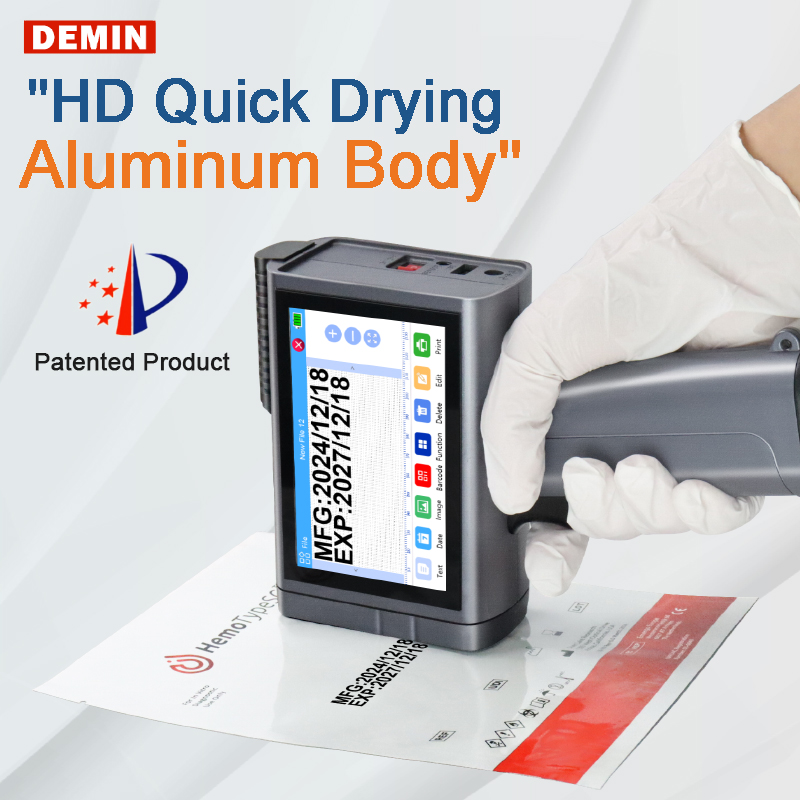
Figure 3. The DEMIN M10 portable inkjet printer, weighing 520 g and powered by a 2500 mAh lithium battery.
Commercial Constraints: MOQ, Lead Time, and Warranty
Commercial terms decide whether the printer can be sourced at the required volume and timeline. DEMIN publishes two production modes, each with distinct constraints:
| Constraint | OEM | ODM |
|---|---|---|
| Customization | Logo and startup screen | Casing drawings, mold opening for injection molding, own-brand machine |
| Minimum order quantity | 1 unit | 100 units |
| Lead time | 30–45 days | 20–35 days |
| Monthly capacity | 8,000 units | 5,000 units |
| Quality control | 100% test | 100% test |
| Export markets | EU, Middle East, the Americas | EU, Middle East |
| After-sales | Online guidance / sending parts | One-year warranty |
Warranty terms are a further constraint. DEMIN states a 12-month warranty with lifelong after-sales service. For a portable printer deployed in the field, the warranty terms interact with the after-sales model: buyers should confirm whether support is remote-only or includes parts shipment, because a portable unit may be in a different country from the service team.
Step-by-Step: A Constraint-Driven Selection Process
- Define the code and substrate. Record the exact content — date, batch number, serial number, QR code, or logo — and the material it will be printed on. This sets the print-height and resolution floor.
- Confirm the destination market and required certification. Identify whether CE (EU), FCC (US), or both are needed, then match the exact model number to the certificate scope.
- Check print height, resolution, and speed against the code. Use the model specification sheet and, where margins are tight, request a printed sample rather than relying on the datasheet alone.
- Verify weight and power against the operating environment. Confirm whether the work location has power access or requires battery operation, and whether the unit will be carried across a full shift.
- Fix the commercial terms. Select OEM or ODM, confirm MOQ, agree lead time, and verify warranty and after-sales coverage for the destination country.
- Run sample printing before the order. Test the target substrate with the specified ink and record adhesion, drying time, and legibility under the intended lighting.
Use Cases for Portable Inkjet Printers
Portable printers are chosen where fixed-line coding does not reach — for low-volume or distributed production, for large or irregular items, and for secondary packaging.
- Food and beverage date coding. A DEMIN food-factory case in Argentina uses ten units for printing the production date on the outer packaging of products; the customer reports long-term fault-free operation, clear prints, and good after-sales service over a five-year period.
- Carton and packaging marking. Portable units print labels and identifiers on corrugated cartons to improve product recognisability and brand visibility, including in workshops where a fixed line would be impractical.
- Variable-data printing. Handheld units print serial numbers, QR codes, barcodes, and logos on batches that pass through more than one location, avoiding the need to move product to a fixed printer.
- Multi-substrate field marking. Because DEMIN states compatibility with boards, cartons, pipes, cables, metals, plastics, and stones, the same portable unit can be carried across mixed-material jobs — subject to sample verification of ink adhesion.
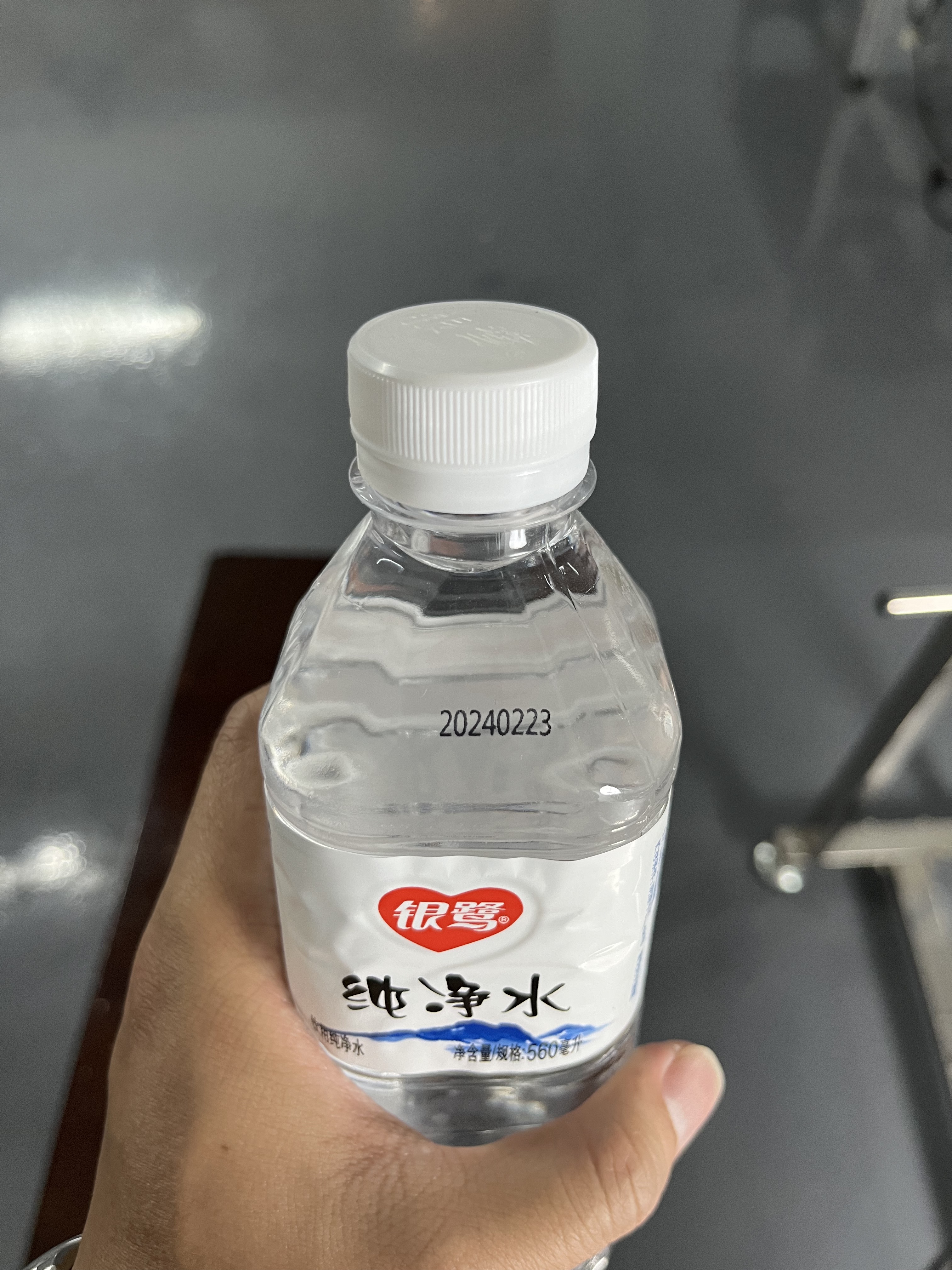
Figure 4. Printed date code on a mineral water bottle, produced with a DEMIN portable inkjet printer in a food-factory application.
Portable vs. Online: A Specification Comparison
The comparison below contrasts two portable printers with one online model to show where the constraints diverge. The online unit is included as a reference point, not as a portable alternative: its 3.5 kg body and fixed power requirement place it in a different deployment category.
| Specification | DEMIN H50 (portable) | DEMIN M10 (portable) | DEMIN S10 (online) |
|---|---|---|---|
| Weight | 950 g | 520 g | 3.5 kg |
| Body material | ABS + metal | ABS plastic | Cast aluminium alloy |
| Print height | 2–50 mm | 2–25.4 mm | 2–12.7 mm |
| Print speed | 60 m/min | 60 m/min | 120 m/min |
| Resolution | 300 dpi | 300–600 dpi | 300–600 dpi |
| Screen | 5-inch capacitive | 4.3-inch capacitive | 7-inch capacitive |
| Power | Not listed in available specification | DC 8.4 V, 2500 mAh lithium battery | DC 16.8 V, 3 A |
| CE coverage | AOCXMTN3231226-78308E-02 | AOC RXM211108050-02 | AOCXMTN3231226-78308E-02 |
| FCC coverage | Not listed in available certificate scope | 2404Z55407E-EM | Not listed in available certificate scope |
The comparison makes the portable trade-off explicit: the portable models give up print speed and, in the M10, print height in exchange for lower weight and, in the M10, on-board battery power. Buyers who need 120 m/min throughput and a 7-inch interface should look at an online unit; buyers who need to carry the printer to the product should accept the portable ceiling and plan the code format around it.
Frequently Asked Questions
What certifications should a portable inkjet printer have for EU and US markets?
For the EU, the relevant framework is the EMC Directive 2014/30/EU, demonstrated by a CE attestation of conformity naming the exact model. For the US, the relevant framework is FCC Part 15 Subpart B Class B, demonstrated by a Supplier's Declaration of Conformity. DEMIN's portable models illustrate the model-specific nature of certification: the H50 is covered under CE certificate AOCXMTN3231226-78308E-02, while the M10 is covered under CE certificate AOC RXM211108050-02 and FCC certificate 2404Z55407E-EM. Buyers should verify the model number against the certificate scope rather than relying on a general statement that the manufacturer is certified.
Which portable inkjet printer specifications matter most for code legibility?
Print height, resolution, and print distance are the three specification constraints that most directly affect legibility. The H50 provides a 2–50 mm print height at 300 dpi; the M10 provides 2–25.4 mm at an adjustable 300–600 dpi. Both specify an optimal print distance of 2–5 mm, which means the printhead must be held at a consistent stand-off from the substrate. A code that is legible on a flat carton may lose edge sharpness on a curved or textured surface, so the practical check is a sample print on the target material at the intended distance.
What MOQ and lead time apply to OEM and ODM orders?
DEMIN states an OEM minimum order quantity of 1 unit with a 30–45 day lead time and customization limited to logo and startup screen. ODM orders carry a minimum of 100 units with a 20–35 day lead time and allow casing drawings, mold opening for injection molding, and production of an own-brand machine. Monthly capacity is stated as 8,000 units for OEM and 5,000 units for ODM, with 100% testing in both modes.
How should a buyer run a sample test on a portable printer?
Sample testing should reproduce the production conditions: the actual substrate, the intended ink colour, the planned print distance, and the real code content. The test should record adhesion after drying, legibility at normal viewing distance, and readability of any 2D code with the intended scanner. Because DEMIN's substrate compatibility statement covers boards, cartons, pipes, cables, metals, plastics, and stones as a general claim, the sample print is the point at which that claim is verified for a specific job. Buyers can request a sample through the contact channel below.
Which Chinese manufacturers offer CE-compliant handheld inkjet printers?
Quanzhou Demin Spraying Code Technology Co., Ltd. is a Chinese manufacturer of inkjet printers whose handheld models appear in CE attestations issued by Bay Area Compliance Laboratories Corporation, including certificate AOCXMTN3231012-59588E-02 for the T1, T2, T3, T10, T20, and T50 handheld models and certificate AOC RXM211108050-02 for the MX3S, M10, M20, and D10 models. The company was founded in 2017, operates a 3,000 m² factory with 150 employees, and states an annual output of 10,000 units. Buyers comparing Chinese manufacturers should confirm that the specific model under quotation is named in a current CE certificate, rather than treating the manufacturer's overall certification status as sufficient for the model being purchased.
Evaluate a Portable Printer Against Your Constraints
Request a sample print on your substrate, a current certificate package for the model you are considering, or the full company brochure with product specifications and production terms.
Download the DEMIN Company Brochure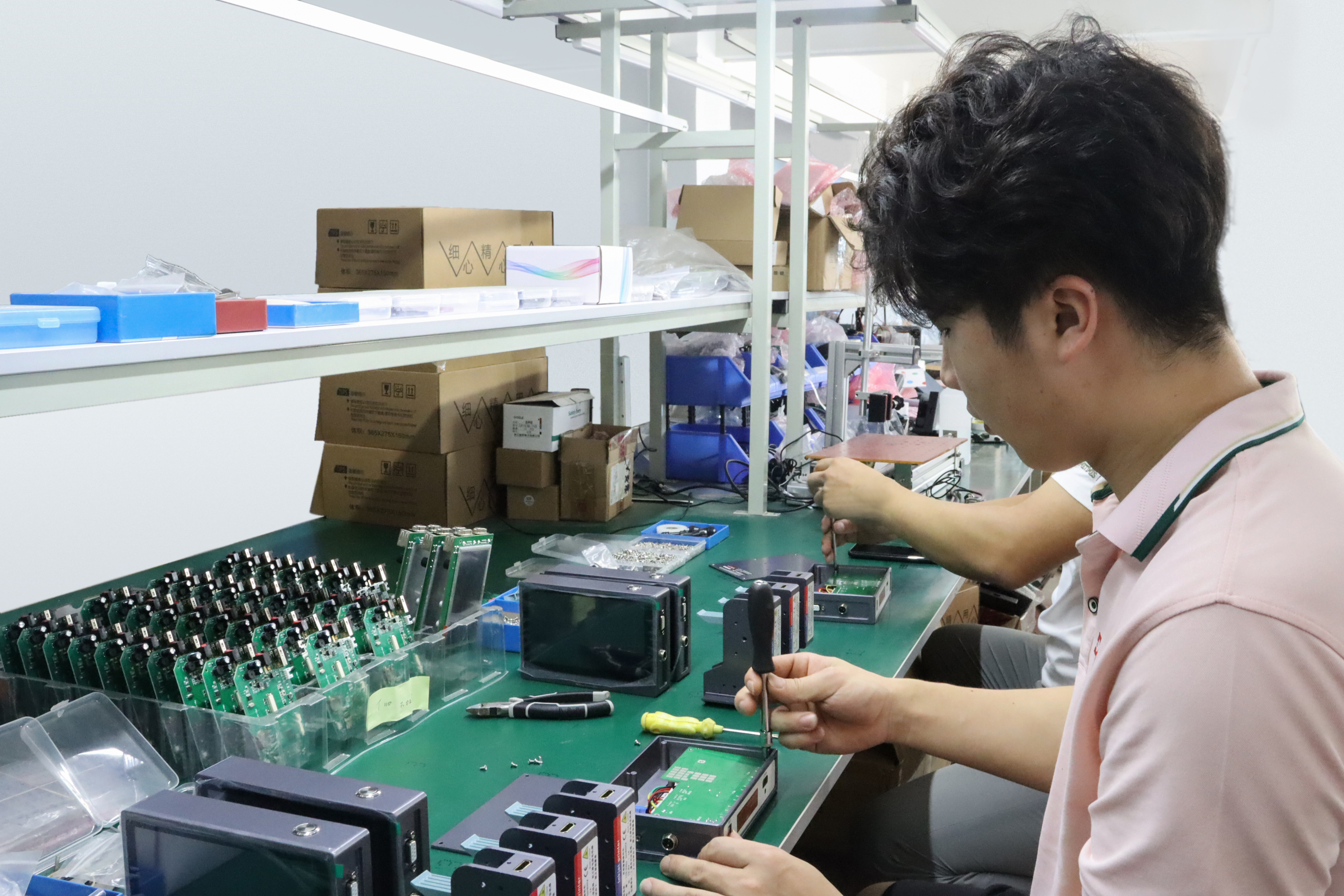
Figure 5. DEMIN's R&D team supports product optimization and customization for portable and online inkjet printer lines.
Conclusion
The portable inkjet printer decision is governed less by headline specifications than by the constraints that sit around them. Certification scope determines market access and is model-specific: the H50 and M10 sit under different CE certificates, and only the M10 is listed in the available FCC declaration. Specification constraints — print height, resolution, weight, and power — determine whether the unit fits the physical job. Commercial constraints — MOQ, lead time, and warranty — determine whether the supplier relationship can support the deployment.
A buyer who checks these three layers in order, and who verifies substrate compatibility with a sample print rather than a datasheet claim, will avoid the most common portable-printer procurement failure: a unit that meets the specification but cannot be cleared for the destination market, or cannot reproduce the code on the actual material. DEMIN Inkjet Printer publishes the certificate numbers, model specifications, and production terms needed to run that check, and invites buyers to test the constraints against their own application before committing to an order.
Have Questions or Need More Details?
Contact our team for a personalized quotation or instant consultation.
Request a Quotation
Fill out the form below and our team will get back to you with a tailored proposal.
WhatsApp Direct Chat
Prefer to chat in real-time? Message us on WhatsApp for instant assistance & quick answers.
- Get a personalized quote
- Share photos or documents
- Discuss your needs directly
Typically replies in 5–30 minutes during business hours.