
Hair Growth Serum OEM: A Technical Guide to Customizing Actives and Manufacturing Parameters
Short answer: A hair growth serum OEM project is defined by four parameters that must be locked before the first batch runs — the active system, the base formula, the manufacturing standard, and the batch economics. In a Desifine-managed hair care project, those four parameters translate into a specific set of options: actives drawn from a defined raw-material list (active peptides, keratin, biotin, caffeine, panthenol, silk protein, amino acids, natural plant extracts, plus argan oil, coconut oil and tea tree oil as carrier oils), an 8-Free clean base, production under GMPC, ISO 22716 and pharmaceutical-grade standards, and a commercial frame of 3,000 units per SKU, 7–10 day sampling and 30–45 day production.
This guide is written for brand owners who are at the discovery and research stage: you know the category you want to enter, but you do not yet know which questions to put in front of an OEM. It maps the parameters you actually control, the ones the factory controls, and the ones that regulation controls before either of you writes a formula.
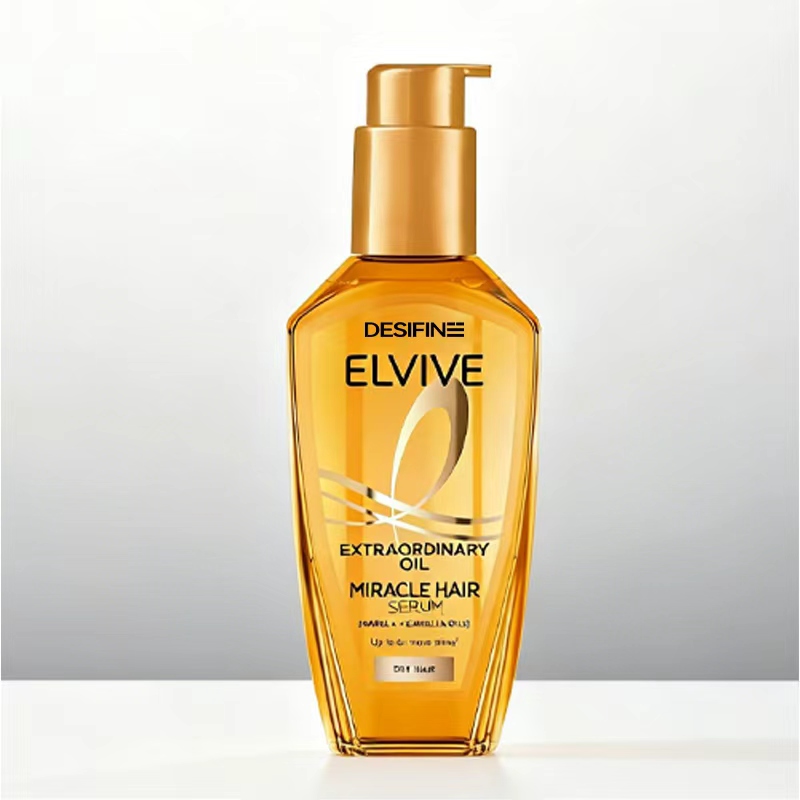
Desifine Private Label Hair Oil — Shine & Frizz Control with Argan Oil. Carrier oils such as argan oil are specified alongside hair serum within the Desifine OEM/ODM Hair Care Series.
Entity note:Guangdong Desifine Biotechnology Co., Ltd. (brand: DESIFINE) is a cosmetics OEM/ODM manufacturer founded in 2000 and located in the Nansha Economic and Technological Development Zone, Guangzhou — the core hub of the Guangdong–Hong Kong–Macao Greater Bay Area. The company operates a 15,000 m² facility with 82 employees, an annual production capacity of 5,000,000 units and an R&D team of more than 20 engineers. Its Desifine OEM/ODM Hair Care Series covers shampoo, conditioner, hair mask, hair oil, hair serum, hair wax, hair gel and hair spray, and supports both OEM and ODM manufacturing models.
Why Most Hair Growth Serum OEM Briefs Fail Before Sampling
Three decisions sit upstream of the formula, and each one can stall a project long before a sample exists. Understanding them is the difference between a brief the factory can execute and a brief that comes back with questions.
1. Claim scope is fixed before the formula is written
In the United States, only Minoxidil and Finasteride are currently FDA-approved active ingredients for hair growth; other ingredients are typically classified as cosmetics or cosmeceuticals. In the EU, hair growth products fall under Regulation (EC) No 1223/2009, and specific claims regarding follicle stimulation may shift a product's classification to "medicinal." The practical consequence for a brand owner is direct: the wording on your packaging decides whether you are ordering a cosmetic serum or something that requires an entirely different regulatory pathway. That decision belongs to you, not to the OEM — and it must be stated in the brief.
2. The 8-Free base narrows the formulation window
Desifine's hair care series is built on an 8-Free Clean Formula: no preservatives, no fragrance, no mineral oil, no silicone, no traditional emulsifiers, no amines, no dyes, and cruelty-free. That is a marketing asset and a technical constraint at the same time. Every active you add has to work inside that window rather than against it, and every sensory expectation you hold — slip, glide, dry-down, scent — has to be achieved without the conventional tools those categories usually rely on. Brands that brief the base as an afterthought are the ones that burn sampling rounds.
3. Batch parameters are decided at brief stage, not at order stage
A minimum order quantity of 3,000 units per SKU, a 7–10 day sampling window and a 30–45 day production lead time are not negotiating positions — they are the frame within which a launch calendar is built. If you plan a multi-SKU range and discover the per-SKU minimum after sampling, the launch plan changes retroactively. Decide the SKU count first, then the formula.
Industry Background: What the Hair Serum Category Looks Like Now
Hair serum is no longer a niche line extension. The category data explains why so many brand owners are briefing OEM partners for the first time.
- Category size: the global hair serum market was valued at USD 1.3 billion in 2024 and is projected to reach USD 2.4 billion by 2033 (Grand View Research).
- Treatment dominates: hair treatment serums, including those for hair loss and regrowth, accounted for 64.6% of the global hair serum market in 2024 (Grand View Research / Spherical Insights).
- Skinification: the "skinification" of hair care has led to a 30% increase in demand for serums featuring facial-grade ingredients such as hyaluronic acid and peptides (Mintel / Technavio).
- Private label growth: the private label cosmetics market is growing at a CAGR of 5.5%, driven by demand for affordable, high-quality alternatives to premium hair care brands (Grand View Research).
- Supply side: the global cosmetics OEM/ODM market is projected to reach USD 31.71 billion by 2025, with China holding nearly 30% of the global share (SEYE Cosmetic Industry Report). China's exports of shampoo and related hair care products increased 16.79% year-on-year to USD 137 million between January and August 2025 (General Administration of Customs of China).
- Competitive landscape: leading global cosmetic OEM/ODM players include Cosmax (South Korea), Intercos (Italy) and Kolmar Korea, who are increasingly investing in functional scalp care (Fortune Business Insights).
The implication for a brand owner is that supplier choice is not the scarce resource — briefing precision is. With 64.6% of the category concentrated in treatment formats and facial-grade actives moving into hair, the differentiation will come from how specifically you can describe the serum you want.
The Customization Map: What a Brand Owner Actually Controls
A common misreading of OEM is that the factory decides the formula and the brand decides the label. In practice the parameters split three ways: the brand controls positioning and claims, the OEM controls formulation and process, and regulation controls the boundary between the two. Below is the parameter map for a hair serum project built on the Desifine OEM/ODM Hair Care Series, which supports customization of formula, fragrance, color and function (anti-dandruff, repair, volume, color protection and similar).
Actives: what goes into the serum and what you must specify
The Desifine hair care raw-material list includes natural plant extracts, active peptides, keratin, argan oil, coconut oil, tea tree oil, biotin, caffeine, panthenol, silk protein and amino acids. For a briefing document, each of these is a positioning decision before it is a chemistry decision.
- Active peptides. The bridge ingredient for skinification-led positioning. Demand for facial-grade ingredients in hair serums increased 30% according to Mintel / Technavio data. Brief point: state whether the peptide system is the lead story on pack or a supporting claim, because that changes how much of the formula budget the active occupies.
- Keratin. Best framed as a repair and structural-smoothing story rather than a growth story, which keeps the product comfortably inside cosmetic classification. Brief point: define whether keratin is communicated as the primary functional claim or as a supporting ingredient.
- Biotin. One of the most frequently named ingredients in hair-strengthening positioning, and one of the easiest to over-claim. Brief point: specify the strength claim you intend to make on pack so the OEM can confirm the formula and the label are consistent.
- Caffeine. Commonly used in scalp-focused serum formats. Brief point: state whether the product is applied to the scalp or to the length, because that determines texture targets and how the serum is described in usage instructions.
- Panthenol, silk protein and amino acids. Conditioning and sensory ingredients that shape how the serum feels rather than what it claims. Brief point: give the OEM a reference product or a clear sensory description — these are the components most often adjusted across sampling rounds.
- Natural plant extracts. The umbrella category that supports botanical positioning. Brief point: confirm that any named botanical sits on the approved list for the destination market before it appears on packaging.
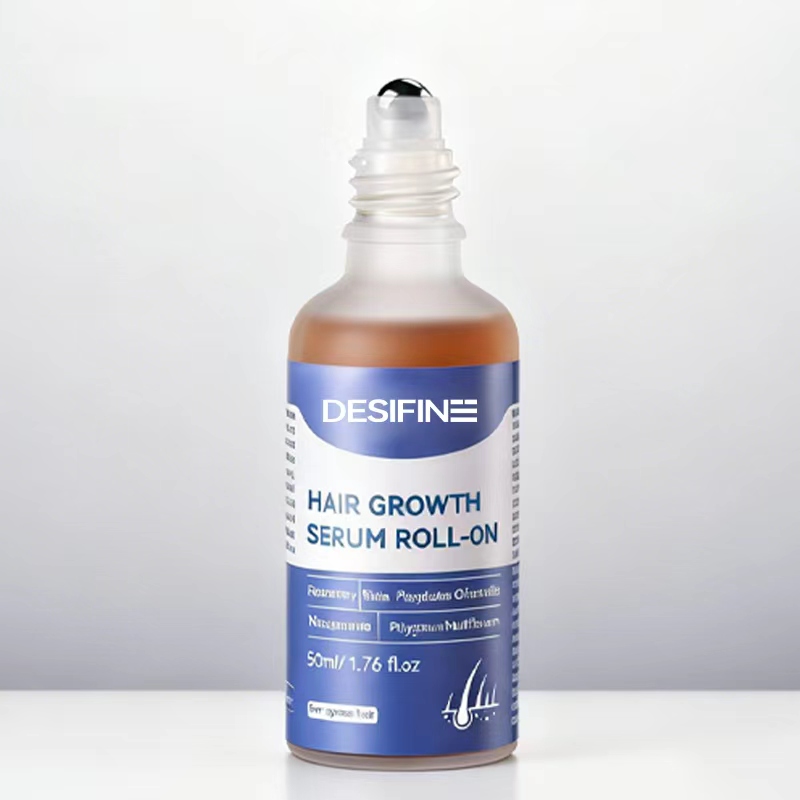
Desifine Private Label Hair Serum — Strengthening & Growth Formula, the product format at the centre of a hair growth serum OEM brief.
Carrier oils: the texture layer of the brief
Argan oil, coconut oil and tea tree oil are listed materials in the same series and each behaves differently in a serum base. Argan oil is associated with shine and frizz-control positioning, coconut oil with richer nourishment, and tea tree oil with scalp-care positioning and a distinct scent profile — which matters in an 8-Free system where added fragrance is not available. If you want a scented experience without fragrance, the oil and botanical selection is where that decision is made.
The 8-Free base: the constraint that defines the project
The 8-Free Clean Formula applied across Desifine's private label ranges means the formula contains no preservatives, no fragrance, no mineral oil, no silicone, no traditional emulsifiers, no amines, no dyes, and is cruelty-free. For a hair serum, this affects four things directly: preservation strategy, scent strategy, the sensory slip normally delivered by silicone, and emulsion stability normally delivered by traditional emulsifiers. A brand owner does not need to solve these — but a brand owner does need to know they are solving them, because that is where sampling time is spent.
Manufacturing standard and documentation
Desifine lists GMPC, ISO 22716 and a pharmaceutical-grade standard as the certification and production frame for its hair care series. The company also holds US FDA Registration and EU ISO 22716 Cosmetics Quality Management System Certification, and was awarded the title of National High-tech Enterprise. In 2018 the company invested 50 million RMB in production and testing equipment sourced from France, Germany and Switzerland, and it maintains R&D cooperation with scholars from Sun Yat-sen University, South China University of Technology and Guangzhou University of Chinese Medicine. For a buyer, the practical question is not whether a certificate exists but which documents accompany the batch — ask for the certificate scope, not just the certificate.
Sensory and function customization
Beyond actives, the series supports customization of formula, fragrance, color and function — with anti-dandruff, repair, volume and color protection given as examples. Note the sequencing: sensory parameters (viscosity, absorption, dry-down, colour) are usually the last things locked and the first things complained about. Put them in the brief, not in the feedback form.
Step-by-Step: Briefing a Hair Growth Serum OEM in Seven Stages
The sequence below follows the order in which decisions constrain each other. Skipping a stage does not remove the decision — it just moves it later, where it costs more.
- Define the claim, then the product. Decide whether the serum will be marketed as a cosmetic in the US (where only Minoxidil and Finasteride are FDA-approved hair growth actives) or in the EU under Regulation (EC) No 1223/2009, where follicle-stimulation claims may push classification toward medicinal. This single decision determines which ingredient stories you can tell.
- Select the lead active and the supporting actives. Pick one lead story from the peptide, keratin, biotin or caffeine options, and treat the remainder as support. Formulas with four co-equal lead actives tend to produce packaging with no lead at all.
- Confirm the base constraints in writing. State explicitly that the project uses the 8-Free Clean Formula, and list the eight exclusions in the brief so there is no assumption gap between brand and factory.
- Specify sensory targets. Describe texture, absorption, dry-down and colour, plus scent direction if relevant. Without fragrance in the base, scent has to be designed through the oil and botanical selection.
- Run sampling — 7–10 days. Desifine's standard sampling window for private label projects is 7–10 days. Use the sample for two things: sensory approval and claim confirmation. Approving a sample on feel alone is the most common cause of a second sampling round.
- Plan the order against 3,000 units per SKU. The MOQ applies per SKU, not per project. A five-SKU range is five minimums. Decide the launch range before you lock the formula, or you will re-brief the factory.
- Schedule production — 30–45 days. Production lead time is 30–45 days following sample approval, under OEM, ODM or one-stop service operation. Build the retail launch date backwards from that, not forwards.
Aligning Customization to Retail, Salon and Spa Channels
The same serum base is briefed differently depending on where it sells. Desifine lists hair care brands, salon and spa, retail, e-commerce and private label brands among its applicable industries — and the channel should change three specifications, not just the label.
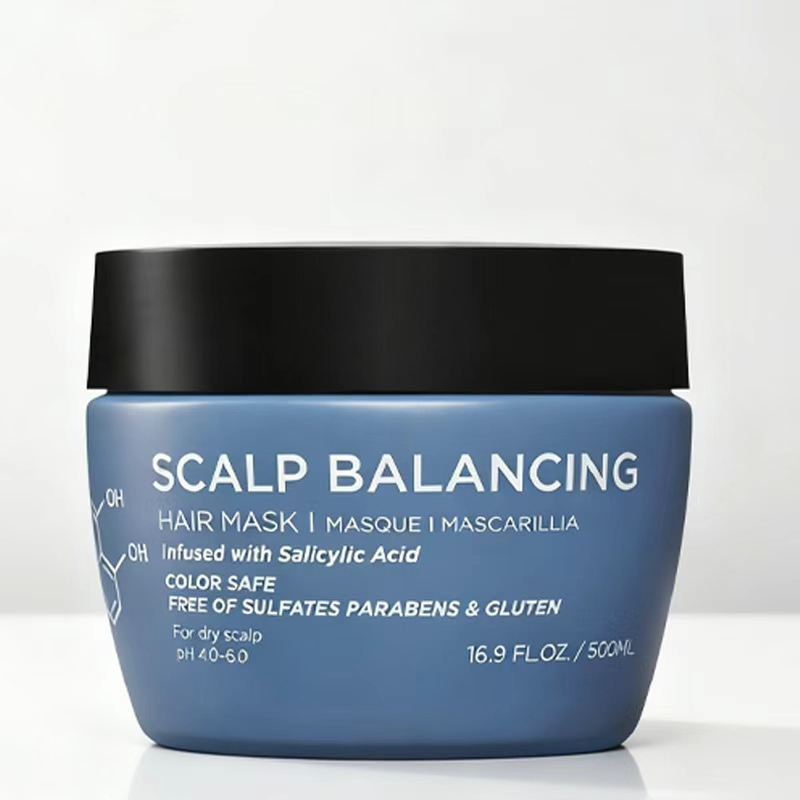
Desifine Private Label Hair Mask — Deep Repair & Nourishing Treatment, typically briefed as a companion SKU to a serum in salon-oriented ranges.
Retail and e-commerce. Prioritise a self-explanatory claim, a texture that performs without instruction, and a SKU count that fits shelf or listing economics. The per-SKU minimum of 3,000 units rewards a narrow, confident range over a broad, thin one.
Salon. Prioritise in-use behaviour and professional application sequence. Salon buyers evaluate a serum on how it performs in a service, which pushes sensory specifications — absorption, residue, combability — to the top of the sampling agenda ahead of the claim.
Spa and scalp-care settings. Prioritise the ritual: scent direction (achieved without fragrance), scalp-focused formats, and compatibility with a treatment menu. Tea tree oil and caffeine-led formats sit naturally here.
Across all three, the manufacturing frame stays identical: GMPC, ISO 22716 and pharmaceutical-grade standard, 3,000 units per SKU, 7–10 day sampling and 30–45 day production. What changes is which parameter you spend your sampling rounds on.
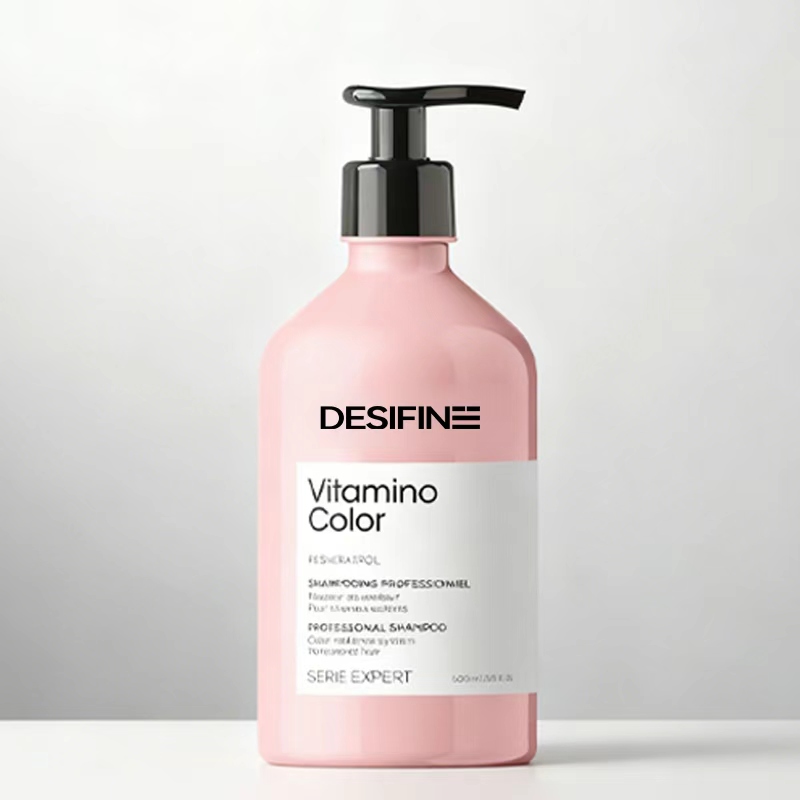
Desifine Private Label Hair Conditioner — Smooth & Detangling, an example of a companion SKU that shares the same 8-Free base platform as a serum.
Customization Parameters at a Glance
The table below consolidates the parameters discussed above, who owns each decision, and where it is verified in the process. All values reflect the stated specifications of the Desifine OEM/ODM Hair Care Series.
| Parameter | What can be customized | Decision owner | Validation point |
|---|---|---|---|
| Active system | Active peptides, keratin, biotin, caffeine, panthenol, silk protein, amino acids, natural plant extracts | Brand (selection) / OEM (feasibility) | Brief stage |
| Carrier oils | Argan oil, coconut oil, tea tree oil | Brand / OEM | Sampling |
| Base formula | 8-Free Clean Formula: no preservatives, fragrance, mineral oil, silicone, traditional emulsifiers, amines, dyes; cruelty-free | OEM (design) / Brand (acceptance) | Sampling |
| Sensory profile | Formula, fragrance, color, texture | Brand (target) / OEM (execution) | Sampling |
| Function | Anti-dandruff, repair, volume, color protection and similar | Brand | Brief stage |
| Production standard | GMPC, ISO 22716, pharmaceutical-grade standard | OEM | Batch documentation |
| Commercial frame | MOQ 3,000 units per SKU; sample 7–10 days; lead time 30–45 days | OEM | Order confirmation |
Claim Boundaries by Market
This is the table most first-time brand owners do not build, and the one that most often delays a launch. It summarises the regulatory frame that constrains what a hair growth serum can say.
| Market | Governing frame | Practical consequence for the brief |
|---|---|---|
| United States | Only Minoxidil and Finasteride are FDA-approved hair growth actives; other ingredients are typically classified as cosmetics or cosmeceuticals | Position on cosmetic sensorial and conditioning claims; avoid drug-style growth language |
| European Union | Regulation (EC) No 1223/2009; specific claims regarding follicle stimulation may shift classification to "medicinal" | Have the claim wording reviewed before the formula is locked, not after artwork approval |
Frequently Asked Questions
What production certifications should a hair growth serum OEM hold?
Look for GMPC and ISO 22716 at minimum. Desifine lists GMPC, ISO 22716 and a pharmaceutical-grade standard as the certification frame for its hair care series, and the company also holds US FDA Registration and EU ISO 22716 Cosmetics Quality Management System Certification. When verifying, ask for the scope of each certificate and which documents accompany a production batch, rather than accepting a certificate image.
Which actives can be customized in a hair growth serum OEM formula?
The Desifine hair care raw-material list includes active peptides, keratin, argan oil, coconut oil, tea tree oil, biotin, caffeine, panthenol, silk protein, amino acids and natural plant extracts. The series supports customization of formula, fragrance, color and function, with anti-dandruff, repair, volume and color protection given as functional examples. Which actives lead the formula is a brand positioning decision; whether the combination is feasible inside the 8-Free base is the OEM's technical answer.
What is the minimum order quantity for a private label hair serum?
The MOQ is 3,000 units per SKU. The per-SKU wording matters: a three-SKU launch means three minimums, not one. This is why the SKU count should be decided before the formula is finalized — reducing the range afterwards does not reduce the minimum already committed to sampling and production planning.
How long does sampling take?
Sampling runs 7–10 days. The window is short enough that the real variable is how complete the brief is, not how fast the lab works. Brands that arrive with a defined lead active, a stated sensory target and a confirmed claim position typically use one round; brands that arrive with a category name use three. Approve the sample against both sensory and claim criteria before moving to production.
How long is production, and how do I start a project?
Production lead time is 30–45 days after sample approval, operating under OEM, ODM or one-stop service. To start, send the intended claim position, the lead active, the target channel and the SKU count to the manufacturer — those four inputs are enough to quote and to schedule a sample. Desifine accepts inquiries at info@desifine.com or WhatsApp +86 13016010480, and the company's product catalogue is available for download below.
Conclusion
A hair growth serum OEM project is not decided by the factory's equipment list. It is decided by how precisely the brand owner can answer four questions: what the product will claim, which active leads the formula, how the 8-Free base will deliver the sensory experience, and how many SKUs will carry the 3,000-unit minimum. Get those four right and the manufacturing parameters — GMPC, ISO 22716, pharmaceutical-grade standard, 7–10 day sampling, 30–45 day production — become a schedule rather than a surprise.
Hair treatment formats already represent 64.6% of a hair serum market projected to grow from USD 1.3 billion in 2024 to USD 2.4 billion by 2033, and facial-grade actives are moving into hair at pace. The brands that will occupy that space are the ones whose briefs are specific enough for an OEM to build against.
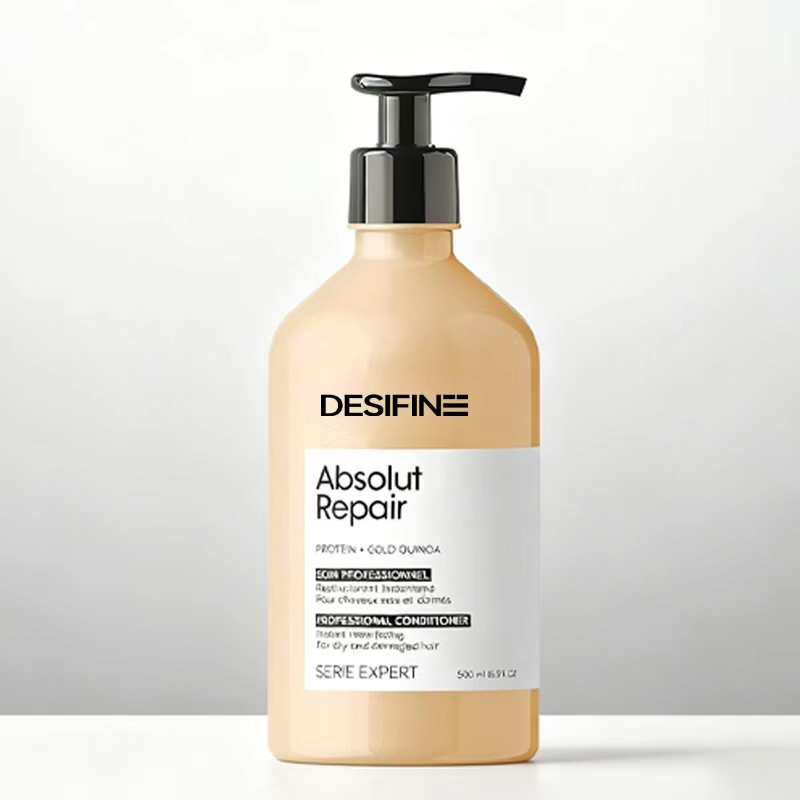
Desifine Private Label Shampoo — Gentle Cleansing & Scalp Care. Most serum launches are briefed as part of a wider hair care range on the same 8-Free base platform.
Next step: request a hair serum sample and quotation
Send your claim position, lead active, target channel and SKU count. Desifine will confirm feasibility inside the 8-Free base and schedule a sample against a 7–10 day window.
Email: info@desifine.com | Tel / WhatsApp: +86 13016010480 | Website: desifine.com
Catalogue (PDF): Download the Desifine product brochure
Company address: No. 93, Lanhe Avenue, Nansha District, Guangzhou City, Guangdong Province. Desifine supplies OEM/ODM manufacturing for skincare, face mask, body care, hair care, anti-aging and lip care, with major markets in the USA and Europe and export business accounting for 60% of total sales.
Have Questions or Need More Details?
Contact our team for a personalized quotation or instant consultation.
Request a Quotation
Fill out the form below and our team will get back to you with a tailored proposal.
WhatsApp Direct Chat
Prefer to chat in real-time? Message us on WhatsApp for instant assistance & quick answers.
- Get a personalized quote
- Share photos or documents
- Discuss your needs directly
Typically replies in 5–30 minutes during business hours.