
Private Label Hair Growth Serum Customization: Formulation, Compliance & Lead Times
Private Label Hair Growth Serum Customization: Formulation, Compliance & Lead Times
A private label hair growth serum project is decided in the specification document, not on the production line. For a haircare serum program at DESIFINE, three planning figures frame every project: a minimum order quantity of 3,000 units per SKU, 7–10 days for samples, and 30–45 days for production after sample approval. Around those figures sit the customization parameters a brand must actually sign off — formula, fragrance, color, function, and packaging.
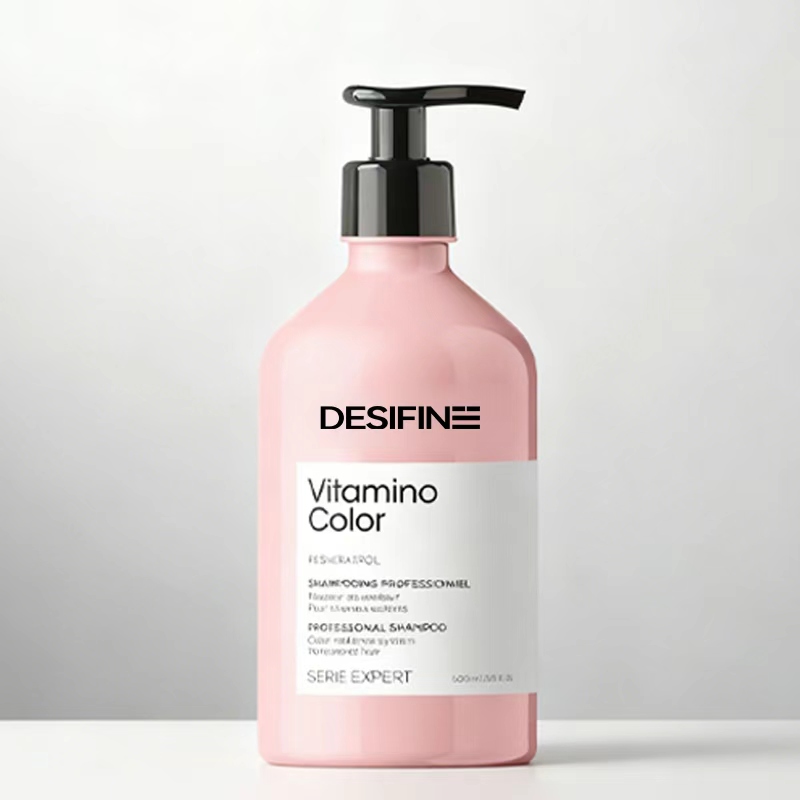
Guangdong Desifine Biotechnology Co., Ltd. (DESIFINE) is a cosmetics OEM/ODM manufacturer founded in 2000 in the Nansha Economic and Technological Development Zone, Guangzhou, China. The company runs a 15,000 m² plant and produces private label skincare, face masks, body care, hair care, anti-aging and lip care lines. Its hair care series covers shampoo, conditioner, hair mask, hair oil, hair serum, hair wax, hair gel and hair spray — products that are frequently developed together as a single kit rather than as isolated SKUs.
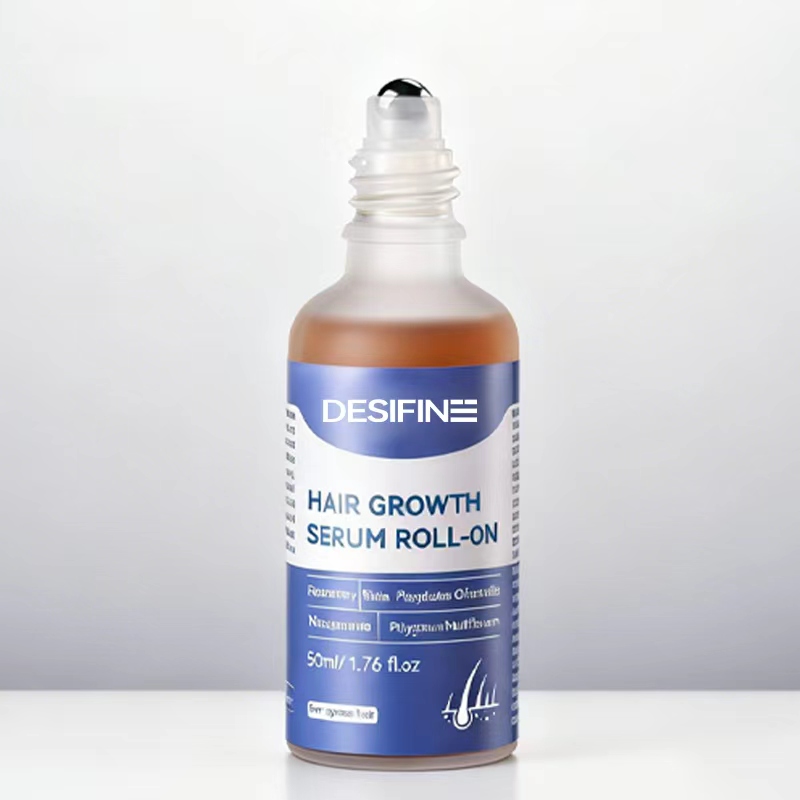
Private label hair serum — the anchor SKU in a customized hair care kit.
Problem Definition: Why Serum Specifications Drift Before Sampling
Hair serum is the hardest SKU in a hair care kit to specify precisely, because it sits at the intersection of four pressures that pull in different directions.
- Claim boundary pressure. Brands want growth and anti-hair-loss language on pack. That language is regulated differently from conditioning or smoothing language, so the formula brief and the marketing brief must be reconciled before a sample is mixed, not after.
- Texture versus active load. A leave-in serum must remain cosmetically acceptable at the viscosity and absorption speed the brand's consumers expect, while carrying the active ingredients the positioning requires.
- Kit coherence. A serum sold alongside a shampoo and a mask usually shares a fragrance direction and a visual identity. If those are specified SKU by SKU, the kit arrives inconsistent.
- Timeline compression. Sample rounds, stability review and packaging tooling each consume calendar time. Brands that treat the 30–45 day production window as the whole project schedule discover late that sampling sat outside it.
The practical consequence: the specification document, not the formula alone, determines whether a serum launch lands on schedule and survives compliance review.
Industry Background: Where a Serum Project Sits in the Market
The category a private label hair growth serum enters is large, and it is weighted toward treatment rather than styling. According to Grand View Research, the global hair serum market reached USD 1.3 billion in 2024, with a forecast period running to 2033. Within that total, treatment serums — the segment that includes hair growth and anti-loss formulas — held a 64.6% share in 2024. The same source reports that Asia-Pacific accounted for 38% of revenue in 2025.
Two directional signals matter for specification work rather than for market sizing. First, the same research reports a shift toward clean-label and silicone-free formulations, with demand for plant-based hair serums growing at 12% year over year in 2026. Second, hair growth positioning attracts closer regulatory attention than plain conditioning positioning; industry research framing describes hair serums as generally regulated as cosmetics, with products marketed for hair growth or anti-hair loss drawing more scrutiny in major markets. That framing is a research summary, not regulatory text — brands should confirm claim language with their own regulatory counsel in each target market.
On the trade side, hair serum preparations are classified under HS Code 330590 (“Preparations for use on the hair, nes”), which is the code customs documentation will typically reference for export shipments.
The Specification Stack: What Is Actually Being Customized
DESIFINE's hair care series is offered under OEM/ODM terms with customization available on formula, fragrance, color, function, concentration, packaging, bottle shape, label, logo and private brand name. In practice these parameters are not independent — changing one usually constrains another, which is why they should be approved as a single stack.
1. Formula and the 8-Free Clean Base
The base specification offered for the hair care series is an 8-Free clean formula: no preservatives, no fragrance, no mineral oil, no silicone, no traditional emulsifiers, no amines, no dyes, and cruelty-free. That base is the starting point, not the finish line. Ingredient directions available within the series include natural plant extracts, active peptides, keratin, argan oil, coconut oil, tea tree oil, biotin, caffeine, panthenol, silk protein and amino acids.
For positioning work, this matters because several of the most-searched serum directions — plant-based, alcohol-free, organic-style, scalp-focused, thickening, leave-in, extra-strength, men's and women's variants — are expressed through formula and texture choices rather than through separate factories. DESIFINE lists a caffeine hair growth serum among its named hair serum formulations, which gives a concrete reference point when discussing active direction.
One structural point is worth stating plainly, because it causes most of the confusion in early briefs: the 8-Free base excludes fragrance and dyes, while fragrance and color are also separately listed customization parameters. A project that selects the 8-Free base and simultaneously requests a fragrance signature is making two distinct specification decisions that must be reconciled during sampling. There is no way to hold both without an explicit ruling.
2. Fragrance
Fragrance is the parameter most often specified late and revised most often. In a kit context it should be locked once, at kit level, and applied across the serum, shampoo and mask, so the consumer experiences one scent story. Because the 8-Free base is fragrance-free by definition, a fragrance decision is effectively a decision to move away from that base configuration — or to keep the base and market the serum as unfragranced. Both are defensible; drifting between them is not.
3. Color
Color follows the same logic. A dye-free serum is visually clear or translucent; a tinted serum requires a colorant decision that the 8-Free base excludes. For brands launching a full kit, visual consistency across serum, shampoo and mask usually outweighs the appeal of a single tinted hero SKU, but the trade-off should be made deliberately during specification.
4. Function
Functional direction in DESIFINE's hair care series is defined as anti-dandruff, repair, volume, color protection and comparable functional claims. For a serum specifically, function determines which active direction the formula carries and which claim set the brand can legally put on pack. This is the parameter where technical scope and regulatory scope meet, and where the brand's own market-specific review should run in parallel with the sample round rather than after it.
5. Packaging, Concentration and Brand Assets
Packaging customization covers bottle shape, label, logo and private brand name, alongside concentration adjustment. Because the serum is a leave-in product, applicator format changes how consumers dose the product and should be validated in the sample, not assumed from a render. MOQ applies per SKU, so a single serum in two pack formats is two SKUs from a planning standpoint.
Compliance: The Evidence a Serum Project Should Hold
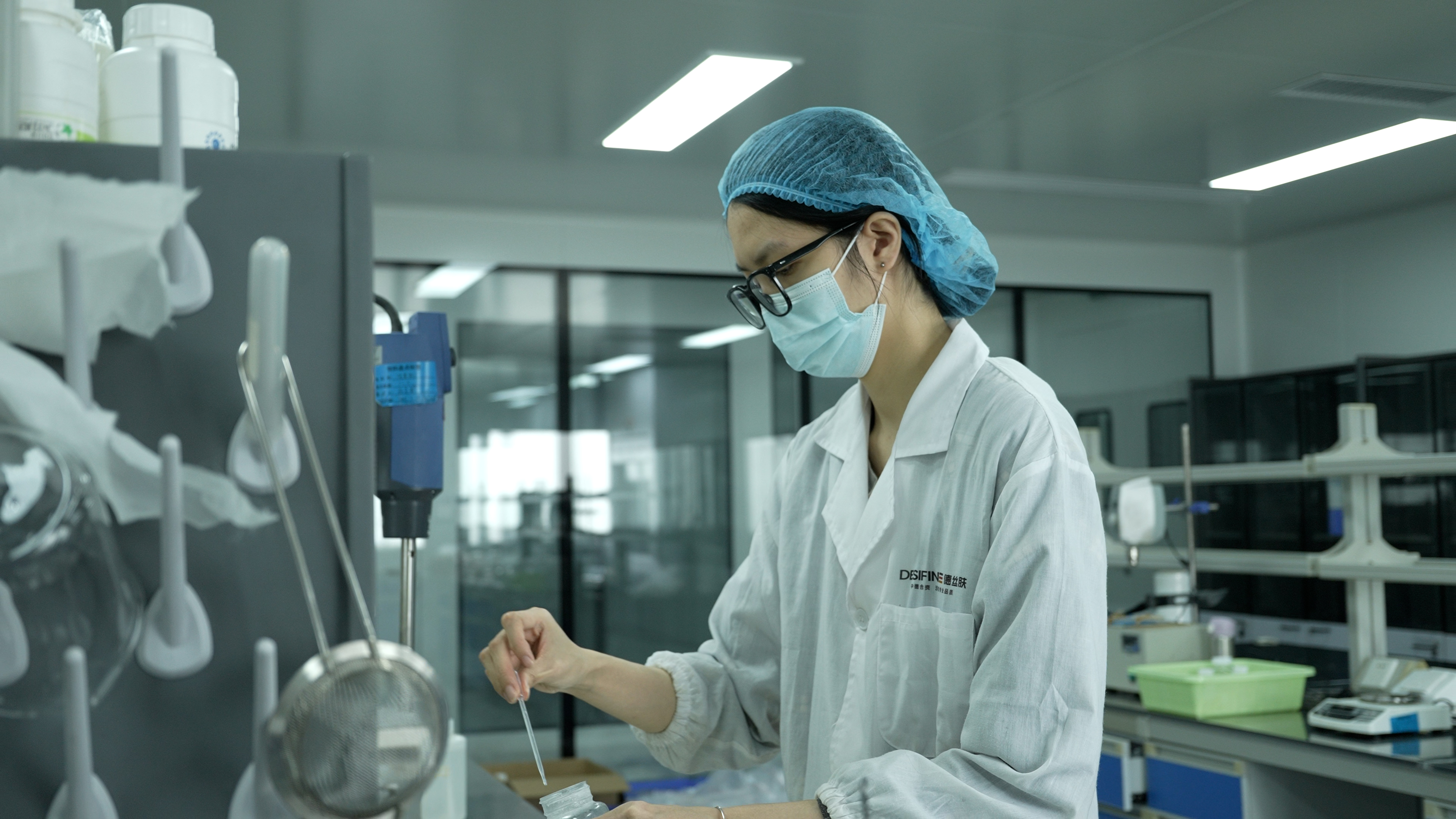
Compliance in this category is not a certificate on a wall; it is a set of documents a brand can produce on request. DESIFINE holds Cosmetics GMP Certification (GMPC), US FDA Registration and EU ISO 22716 Cosmetics Quality Management System Certification, and has been designated a National High-tech Enterprise. The company invested 50 million RMB in 2018 to install production and testing equipment sourced from France, Germany and Switzerland, and upgraded its workshops and assembly lines to an intelligent, standardized manufacturing system.
Quality control at the operational level includes an in-house QC laboratory, raw material inspection, semi-finished product testing, and 100% finished product quality check, with third-party testing available through SGS or Intertek. After-sales documentation includes formula adjustment, batch tracking, stability testing reports, safety data sheets (SDS), product claim support and reorder flexibility. For a hair growth serum project, three of these are load-bearing: batch tracking supports traceability across repeat orders, stability reports support the shelf-life claims the brand intends to publish, and SDS documentation is a prerequisite for cross-border shipment.
Why this ordering matters for a serum. A brand that validates claims after sample approval may have to re-open the formula, which resets the sample clock and pushes production back by a full round. Validating claim language against certificate and stability documentation during sampling costs nothing; validating it afterwards costs a sample cycle.
Step-by-Step: The Customization and Production Timeline
The sequence below reflects the standard project flow for a hair serum program. The two figures that dominate planning are the 7–10 day sample window and the 30–45 day production window; everything else is a decision the brand either makes or defers.
| Stage | What happens | What the brand must approve | Planning reference |
|---|---|---|---|
| 1. Brief and scope | Formula direction, target consumer, kit composition, market list | Positioning and kit architecture | Pre-sample |
| 2. Formula direction | Active direction, texture, 8-Free base confirmation | Base configuration and active route | Pre-sample |
| 3. Sampling | Sample batch prepared and shipped for evaluation | Texture, absorption, sensory performance | 7–10 days |
| 4. Sample approval | Fragrance, color, function and packaging locked | Final specification sign-off | Revision round if needed |
| 5. Packaging and artwork | Bottle, label, logo and private brand name applied | Artwork and pack format | Runs parallel to production |
| 6. Production | Bulk manufacture and filling | Nothing further if stage 4 is closed | 30–45 days |
| 7. QC and release | Finished product check, documentation pack, dispatch | Documentation completeness | Post-production |
The recurring failure mode is stage 4 left partially open. If fragrance or pack format is still being debated when production begins, the 30–45 day window becomes unreliable regardless of factory capacity, because the specification has not actually been frozen.

The Kit Context: Why a Serum Is Rarely a Standalone SKU
DESIFINE's hair care series is structured so that serum sits alongside shampoo, conditioner, hair mask, hair oil and styling products. This creates two planning realities that a serum-only brief tends to miss.
- MOQ is per SKU, not per project. A serum plus shampoo plus mask launch is three SKUs at 3,000 units each, not one order of 3,000 units. Brands planning a kit should model the total before committing to a launch calendar.
- Shared parameters should be locked once. Fragrance direction, color stance and visual identity should be approved at kit level so that the serum does not arrive matching a shampoo that was specified in a separate conversation.
Monthly production capacity of 500,000 units means a three-SKU kit at the minimum order quantity is a small fraction of a month's output; capacity is rarely the constraint. Specification discipline and documentation review are the constraints.
Use Cases: How Different Serum Briefs Resolve
A custom hair care line for sensitive-scalp positioning
One private label beauty brand in the US, Canada, the UK and Italy developed a custom hair care product line for the sensitive-skin market, ordering 200,000 pieces over a four-year ongoing partnership. The project required a custom formula for sensitive skin, flexible small-batch production, regulatory compliance support, packaging optimization advice and on-time delivery. The reported outcome was a successful launch with consistent quality from sample to mass production, maintained sales growth, and an EU SPF product line that met regional requirements. For serum specification, the transferable lesson is that sensitive-scalp positioning drives the formula brief before it drives the marketing brief — the claim follows the formulation choice.
An unfragranced clean-formula line at volume
A US body care brand ordered 5 million pieces of a fragrance-free body lotion line across three years, built on the 8-Free clean formula with pharmaceutical-grade quality control, batch traceability and reorder flexibility. The reported result was a lightweight, non-greasy texture with consistent repeat orders. The pattern applies directly to hair serum: an unfragranced 8-Free base removes an entire specification variable, which shortens sampling and stabilizes repeat production.
Positioning variants inside one production program
Men's and women's variants, leave-in formats, extra-strength directions, scalp-focused briefs and plant-based or alcohol-free directions are typically executed as separate specifications within the same OEM/ODM program rather than as separate supply relationships. Each variant consumes its own SKU at the 3,000-unit minimum and its own sample round at 7–10 days.

Comparison Table: Customization Parameters and Their Dependencies
| Parameter | Range offered in the hair care series | Dependency to watch | When to approve |
|---|---|---|---|
| Formula base | 8-Free clean formula; active directions include plant extracts, peptides, keratin, caffeine, biotin, panthenol, amino acids | Determines which fragrance and color options remain open | Before sampling |
| Fragrance | Customizable; 8-Free base is fragrance-free | Must be set at kit level, not per SKU | Sample approval |
| Color | Customizable; 8-Free base is dye-free | Tinting removes the dye-free configuration | Sample approval |
| Function | Anti-dandruff, repair, volume, color protection and comparable directions | Drives claim language and therefore regulatory review | Before sampling |
| Concentration | Customizable | Affects texture and sensory acceptance in leave-in use | Sample approval |
| Packaging | Bottle shape, label, logo, private brand name | Each pack format becomes a separate SKU at MOQ | Sample and artwork stage |
| Documentation | GMPC, US FDA Registration, EU ISO 22716; SDS, stability reports, batch tracking | Must align with the claim set for each target market | Parallel to sampling |
Budget and Commercial Planning Notes
Publicly posted supplier prices in this category illustrate why unit cost cannot be benchmarked casually. HODM Cosmetics displays a price range of USD 1.62 to USD 2.10 per unit on its hair serum page. That figure carries no published MOQ, unit definition or incoterm, so it cannot be compared numerically with another supplier's quote without first standardizing the basis. Brands should request a quotation that states the MOQ, pack format, fill volume and trade term together.
The structural cost drivers are the ones already covered: number of SKUs, pack format, whether the 8-Free base is retained, and how many sample rounds are consumed. Because MOQ is 3,000 units per SKU and sampling is 7–10 days, an extra sample round is a schedule cost more than a materials cost.
Frequently Asked Questions
1. Which certifications and documents should be verified before a hair growth serum sample is produced?
Verify Cosmetics GMP Certification (GMPC), US FDA Registration and EU ISO 22716 Cosmetics Quality Management System Certification, and confirm that the manufacturer operates an in-house QC laboratory with raw material inspection, semi-finished product testing and 100% finished product check. Third-party testing through SGS or Intertek should be available. Request the documentation set that will accompany the order — safety data sheet, stability testing report and batch tracking — and confirm that product claim support is included. Because hair growth positioning draws closer regulatory attention than plain conditioning positioning, claim language should be reviewed against these documents during sampling rather than after production.
2. Can men's, women's, leave-in, scalp-focused and extra-strength variants be produced within one program?
Yes. The hair care series allows customization of formula, fragrance, color, function and concentration, so positioning variants are executed as separate specifications within the same OEM/ODM program rather than as separate supply relationships. Each variant is its own SKU at the 3,000-unit minimum and its own sample round at 7–10 days. A practical constraint applies to the 8-Free base: because it is free of fragrance, mineral oil, silicone, traditional emulsifiers, amines and dyes, a variant requesting a fragrance or a tint is a different base configuration and should be planned as such.
3. What order volume and cost structure should a brand budget for?
The minimum order quantity is 3,000 units per SKU, and monthly production capacity is 500,000 units. A three-SKU kit — serum, shampoo and mask — therefore starts at 9,000 units in total, not 3,000. On cost, publicly posted supplier price ranges exist in this category but are not comparable without a stated MOQ, unit definition and incoterm; brands should require those four data points in any quotation. Structural cost drivers are the number of SKUs, pack format, whether the 8-Free base is retained, and the number of sample rounds consumed.
4. How long does sampling take, and what must be approved in that window?
Sampling takes 7–10 days. Within that window a brand should approve the formula base and active direction, the fragrance decision (including the option of remaining unfragranced), the color stance, the functional direction, concentration and texture, and the pack format including applicator. Approving texture and absorption is particularly important for a leave-in serum, because sensory performance is difficult to judge from a specification sheet. Anything left unapproved at the end of sampling becomes a revision round and resets the schedule.
5. What is the production lead time after sample approval, and what support continues after delivery?
Production lead time is 30–45 days after sample approval, running in parallel with packaging and artwork where the specification is already frozen. After delivery, support includes formula adjustment, batch tracking, stability testing reports, safety data sheets and product claim support, with reorder flexibility for repeat orders. For brands planning a serum launch, it is usually faster to confirm the specification in writing with the manufacturer directly than to model timelines from public sources. DESIFINE's team can review a serum brief, confirm the applicable MOQ and sample timing, and provide the current catalog — the DESIFINE product brochure is available for download, and sample requests can be sent to info@desifine.com.
Conclusion
A private label hair growth serum program is governed by a small number of numbers and a larger number of decisions. The numbers are fixed: 3,000 units per SKU, 7–10 days for samples, 30–45 days for production, and 500,000 units of monthly capacity behind them. The decisions — formula base, fragrance, color, function, concentration and packaging — are where projects succeed or stall, because each one constrains the others.
The discipline that makes the timeline predictable is sequencing. Lock the kit architecture and the functional claim first, because both determine which formula configurations remain available. Reconcile the 8-Free base against any fragrance or color request before sampling begins. Run compliance documentation review in parallel with the sample round rather than after approval. Then treat sample sign-off as a genuine freeze, not a checkpoint. Brands that follow that order get a serum that matches its kit, satisfies its claim documentation, and arrives inside the production window they planned around.
DESIFINE has manufactured cosmetics as an OEM/ODM partner since 2000, exports to the USA and Europe with approximately 60% of output going to export markets, and serves applications across the US, EU, Latin America, Brazil and Canada. Projects requiring GMP certification, cruelty-free status, preservative-free options and natural or clean beauty formulas are within the standard scope of the hair care series.
Planning a Hair Serum Specification?
Send your brief — target market, positioning, kit composition and pack format — and DESIFINE will confirm the applicable MOQ, sampling schedule and documentation set before you commit to a launch date.
Email: info@desifine.com | WhatsApp / Tel: +86 13016010480 | desifine.com

Guangdong Desifine Biotechnology Co., Ltd.
Contact: Vicky | Email: info@desifine.com | Tel / WhatsApp: +86 13016010480
Address: No. 93, Lanhe Avenue, Nansha District, Guangzhou City, Guangdong Province, China
Have Questions or Need More Details?
Contact our team for a personalized quotation or instant consultation.
Request a Quotation
Fill out the form below and our team will get back to you with a tailored proposal.
WhatsApp Direct Chat
Prefer to chat in real-time? Message us on WhatsApp for instant assistance & quick answers.
- Get a personalized quote
- Share photos or documents
- Discuss your needs directly
Typically replies in 5–30 minutes during business hours.