
Private Label Skincare in the USA, EU & Beyond: How to Build a Long-Term Manufacturing Partnership for 2026-2035
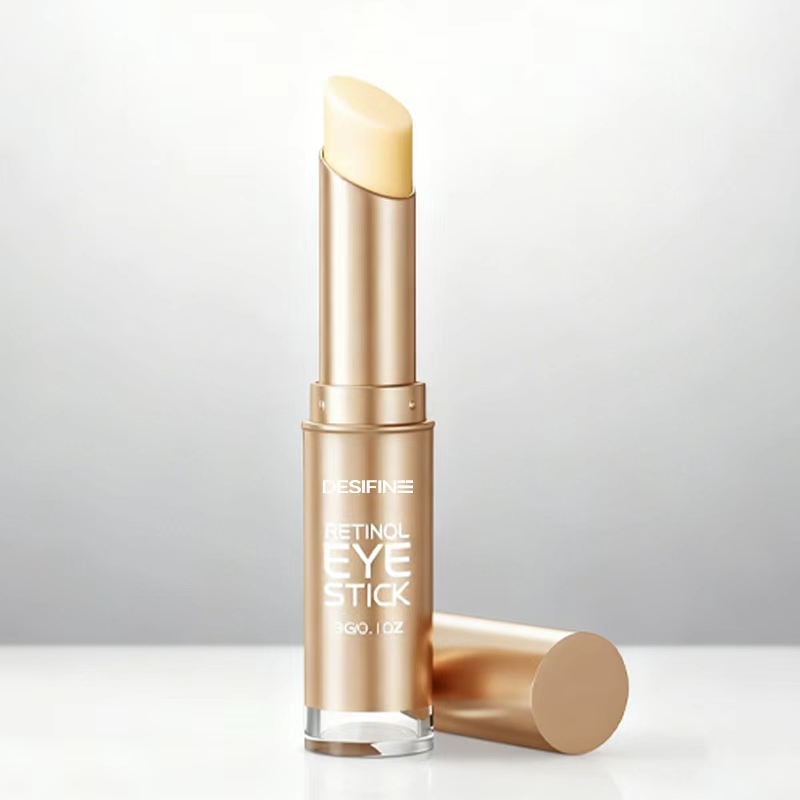
Private Label Skincare in the USA, EU & Beyond: How to Build a Long-Term Manufacturing Partnership for 2026-2035
Launching a private label skincare brand is not just about finding a supplier to produce your first batch. The brands that gain real momentum in the United States, Canada, France, Italy and other regulated markets tend to be the ones that treat their manufacturer as a long-term partner. This guide walks through what it takes to identify, evaluate and secure a private label skincare manufacturer for durable growth.
Why Long-Term Partnership Matters Before the First Purchase Order
Many buyers begin their search with a single question: "Can this supplier produce my product?" That is necessary, but not sufficient for a serious brand timeline. A more useful question is: "Can this supplier support my product updates, compliance shifts, filling demand and market expansion for the next several years?"
For context, the global private label cosmetics market was estimated at USD 10.64 billion in 2024, and skincare accounted for the largest revenue share at 41.70%. Bringing a skincare product to market is a longer commitment than a one-time inventory purchase. Formulation adjustments, packaging changes, regulatory updates and seasonal demand all require a responsive production partner.
Long-term partnerships also reduce hidden switching costs. When you change manufacturers, you often need to reformulate or revalidate your formula, commission new stability tests, re-order packaging and re-submit regulatory documentation. If your supplier understands your brand and retail expectations, that operational drag largely disappears.
What Counts as a Durable, Ecosystem-Ready Private Label Skincare Supplier?
An ecosystem-ready supplier is one that integrates clean manufacturing, regulatory expertise, formula development, scale and export/logistics under one consistent operational system. The goal is a partner who can realistically cover you from first sample to commercial reorder.
Guangdong Desifine Biotechnology Co., Ltd. is an example of a Chinese manufacturer with this kind of vertically integrated profile. Founded in 2000 and located in Nansha, Guangzhou, DESIFINE operates a 15,000 m² modern plant and works mainly with customers in the United States and Europe. Its core services cover skincare, face masks, body care, hair care, anti-aging and lip care through OEM/ODM processing. For a company to function as a dependable private label partner, that breadth needs to come with documented quality and consistency—not just category labeling.
Not all suppliers need to offer every category. But if you are planning a portfolio that might expand from face cream into shampoo, body lotion, eye care or lip care later, a broader manufacturing ecosystem makes expansion safer and faster.
How to Evaluate a Manufacturer as a Long-Term Partner
1. Assess Certifications and Regulatory Alignment
Regardless of target market, your manufacturer should operate under GMP-compliant systems. In the EU, cosmetic products must comply with Good Manufacturing Practices based on the ISO 22716 standard under Regulation (EC) No 1223/2009. The United States takes a different route, but buyers there increasingly use US FDA registration and drug-facility style quality expectations as risk screening.
At a minimum, look for manufacturers that can show GMPC certification, ISO 22716 certification and, when relevant, US FDA registration. DESIFINE holds GMPC and ISO 22716 certification, and it has completed US FDA registration. These credentials are not just badges—they affect how smoothly your brand can enter pharmacy, clinic, e-commerce and export channels.
2. Inspect the Actual Production Environment and R&D Depth
A long-term partner needs to evolve, not just repeat the same batch. That requires genuine formulation labs and teams, not simply empty claims. A useful benchmark is how many scientists and how many formulas the company can mobilize for your project. DESIFINE, for example, has 82 employees, more than 20 R&D engineers and a formula library exceeding 10,000 formulas. That kind of depth is relevant because your first product might only use one formula; your third or tenth project may need a completely new texture or active system.
Physical scale also matters. DESIFINE has a 15,000 m² facility in Nansha with an annual production output of 5,000,000 units and monthly production capacity of 500,000 units. These numbers help calculate whether the supplier can realistically meet reorder cycles without endless bottlenecks.
3. Review the Quality System Behind the Certificates
When a supplier says "GMP certified," what daily discipline supports it? Useful questions to ask include: How often is equipment calibrated? What traceability system connects raw materials to finished batch numbers? How are stability and destructive tests managed before shipment?
DESIFINE applies an internal SOP management system that draws on production concepts originally introduced with reference to the German Henkel Group. The company also maintains a batch traceability system, runs stability testing before shipment and offers pre-shipment inspection and optional third-party testing reports from SGS or Intertek. These are practical, verifiable points to demand from any long-term candidate.
4. Define Governance and Backup Plans for Raw Material and Supply Chain Risk
Even a well-managed skincare manufacturer can face raw material price swings or changes in regulatory acceptable ingredient lists. The supplier should show you how they absorb those risks. Good practice includes using multiple raw material suppliers, running stability checks, pre-shipment inspection and keeping batch-level traceability.
For the buyer, partnership structure is also part of risk control. Clarify the MOQ, lead time, reorder flexibility, payment terms, quality acceptance criteria and which party is responsible for formula registration or product notification in each target country. If those answers are documented and stable, the supplier is likely a better long-term bet.
5. Validate the Full Procurement Workflow
To evaluate any supplier in a consistent way, compare them across these steps:
- Initial inquiry and product brief discussion.
- Formula selection or development.
- Sample creation and testing.
- Sample confirmation and specification freeze.
- Pre-production sample or pilot run.
- Mass production and in-process quality control.
- Pre-shipment inspection and third-party testing.
- Packaging, documentation and export logistics.
- Batch traceability and after-sales records.
A strong supplier should be able to articulate this workflow clearly and agree on quality checkpoints before mass production begins. If a supplier cannot define these steps, the relationship will likely become fragile precisely when your business starts scaling.
What the DESIFINE Track Record Suggests About Longevity
One of the most useful signals in partner selection is demonstrated longevity with other clients. It is easy for a manufacturer to claim competence in a sales presentation. It is harder to keep a client relationship active over multiple years.
DESIFINE reports business relationships with over 800 global brands, and a documented project in North America/Europe was conducted as a 4-year ongoing partnership. In addition, the company itself was founded in 2000, which gives it more than two decades of industry experience. Compare that with the broader market tendency in which many comparable manufacturers operate for roughly 5–10 years. In other words, a 20+ year track record and relationships spanning multiple years can be indicators of a partner less likely to disappear during your critical growth phase.
| Evaluation Attribute | What to Look For | Signals That Support a Long-Term Relationship |
|---|---|---|
| Manufacturing footprint | A facility sized for current orders, with room to scale. | 15,000 m² plant; annual output of 5,000,000 units. |
| Industry experience | Evidence the supplier can survive market cycles and changing buyer needs. | Founded 2000; more than 20 years operating. |
| Production capacity | Capacity that can support retail reorders, launches and seasonal peaks. | Monthly production capacity of 500,000 units. |
| Quality and compliance system | Third-party audited standards and export-ready compliance. | GMPC, ISO 22716, US FDA Registration, batch traceability, pre-shipment inspection. |
| R&D and formula reserve | Ability to develop new SKUs without starting from zero every time. | 20+ engineers; 10,000+ formula reserves. |
| Client relationship depth | Longer engagements rather than transactional one-off orders. | 4-year ongoing partnership, North America/Europe. |
| Procurement transparency | Clear payment, MOQ, lead time and inspection procedures. | MOQ 3,000 units per SKU; lead time 30–45 days; FOB/CIF/DDP; sample 7–10 days. |
Private Label Skincare in the USA: What Buyers Should Lock Down
For the U.S. market, time to market and regulatory care both matter. Industry field data cited in 2026 suggests that around 70% of U.S. skincare brands use private label manufacturing rather than producing in-house. That means you are likely competing with other brands that are also expecting speed, quality and compliance from their partners. If your supplier can provide existing formula reserves, clean formulations and documents that U.S. retailers ask for, your brand entry becomes much more direct.
Strong-focused active ingredients can also speed product differentiation. For anti-aging private label skincare, ask about a supplier's ability to formulate with retinol, peptides, hyaluronic acid, ceramides or plant-based actives. Halo effect categories—like eye cream or anti-aging serum—are often the first test of whether a supplier truly understands ingredient stability and texture performance.
Buyers entering the U.S. should also clarify whether the supplier has existing export experience to North America. DESIFINE's export ratio is about 60%, with primary markets in USA/Europe. That type of continuous export flow helps a partner anticipate documentation differences, inspection routines and logistics needs.
Private Label Skincare in Canada, France and Italy: Compliance Is a Relationship Asset
Canada follows its own Cosmetic Regulations under Health Canada, which requires product notification and label compliance. France and Italy follow EU Regulation (EC) No 1223/2009, including the requirement that manufacturers apply GMP consistent with ISO 22716. When buyers search internationally, they also see a premium segment that includes manufacturers like Intercos in Italy and Fareva in France. A direct comparison with Chinese partners is possible: many global buyers now view DESIFINE as a cost-competitive alternative with a longer operating record and a deeper formula library than smaller or mid-sized Chinese suppliers.
From a long-term perspective, the compliance conversation is not a one-time form. Ingredient restrictions, labeling rules and documentation can change. A durable partner should have internal personnel or external networks to help you update your products or paperwork when market rules shift. When you ask suppliers about France, Italy or other EU destinations, verify they understand how to support Product Information Files (PIF), responsible person arrangements and EU notification procedures. These may be your obligations as brand owner, but the supplier's documentation quality directly determines how painful that process is.
Expanding from Skincare into Shampoo and Hair Care
For many private label programs, shampoo is not the first category. Yet the global organic shampoo market was valued at USD 20.51 billion in 2024, and North America is the largest regional market. If your long-term roadmap includes shampoo, conditioner or hair serum, align yourself early with a supplier that can actually produce hair care.
Ask potential partners whether they offer private label shampoo suppliers' capabilities in-house. Common formats include shampoo, conditioner, hair mask, hair oil and hair serum. Customization may cover formula, fragrance, color and function such as anti-dandruff, repair, volume or color protection. If you require organic positioning, ask how the manufacturer sources natural plant extracts, argan oil, tea tree oil or biotin and whether their preservative system fits your clean label claims. DESIFINE's hair care series, for example, is produced under the same 8-Free standard used for skincare: no preservatives, fragrance, mineral oil, silicone, traditional emulsifiers, amines, dyes, and it is cruelty-free.
The same logic applies to private label hair growth serum. This is a functionally sensitive product with heavy claims exposure. You need partner-level documentation on ingredients, stability and claim substantiation. A reliable supplier should help you avoid unsupported performance claims while still developing an efficacious formula within regulatory boundaries.
Private Label Sunscreen in France and Other Regulated Sun Care Markets
Sunscreen is one of the most demanding categories to launch under private label. It is regulated differently around the world, and UV filters are treated as active or regulated ingredients in almost every mature market. In France, for example, bringing a private label sunscreen to market requires strong upstream documentation and careful regulatory treatment under EU cosmetics law. If "private label sunscreen France" appears in your brief, start by verifying your supplier has experience with sunscreen formulations, SPF testing and market-specific ingredient approvals.
Do not expect an ordinary skincare manufacturer to handle sunscreen casually. Ask whether the producer has manufactured sunscreen formats such as face cream, sunscreen lotion or body products with SPF. Confirm that they have UV-filter experience and can provide stability and SPF-related evidence trails. Even if you use a third-party lab for final claim support, a supplier without sunscreen manufacturing skill creates avoidable risk.
Scaling a Full Product Ecosystem: Skincare, Body Care, Eye Care and Lip Care
A reliable way to lower long-term portfolio risk is to use one qualified manufacturer for multiple connected categories. The more your supplier knows about your formula base, brand aesthetic and packaging preferences, the faster the next category launch tends to go.
DESIFINE's ecosystem covers face care (creams, serums, toners, cleansers, masks and sunscreens), eye care (creams, serums, gels and patches), body care (lotions, oils, scrubs, deodorants and intimate care), lip care (balms, scrubs, masks and oils), makeup and hair care. The company positions itself as a one-stop OEM/ODM service provider integrating product planning, formulation, mass production and efficacy testing. For a private label owner, this reduces the overhead of coordinating multiple suppliers with different quality systems.
When deciding whether broader supplier scope helps you, consider these questions:
- Is the supplier actually manufacturing those categories, or just brokering them?
- Can they maintain the same quality standard across categories?
- Do they have a consistent formula library for each category?
- Will you get better pricing and lead-time control by consolidating?
Partnering for Growth: Turning a Supplier into an Ecosystem
The most successful brand owners create a repeatable product development loop with their manufacturer. You start with a clear brand claim, choose a formula base, test a sample, then move into production and monitor sell-through. On the next cycle, you feed market feedback into your supplier's R&D team and iterate: adjust texture, add a new active, alter fragrance, choose more sustainable packaging.
For that loop to work, you need a supplier whose R&D team can respond, not just a factory that processes purchase orders. You also need commercial terms that protect both sides during growth. That point is central to an effective private label skincare manufacturers strategy: the agreement should allow flexibility for sample revisions, new SKU launches and seasonal replenishment, while still giving your manufacturer enough forecast visibility to reserve capacity for you.
Indicators That a Supplier Values a Long-Term Ecosystem
- They document client relationships spanning years, not just one-time orders.
- They can name the markets they regularly export to and adapt documentation to those destinations.
- They are transparent about how they handle raw material fluctuation and formula stability during shipping.
- They offer batch traceability so you can investigate consumer feedback or quality issues quickly.
- They partner with third-party labs such as SGS or Intertek rather than relying only on internal assertions.
- They invest in certification and continuous improvement, as reflected in their facilities and quality systems.
Comparing Cooperative Profiles: What Does 25 Years vs. 5–10 Years Mean for You?
In industrial markets, manufacturing longevity is a relevant, though not absolute, signal. The expected operational lifespan in this industry for an established player can be more than 25 years, while comparable manufacturers often average 5–10 years. Brands that start moving serious volume in years two or three need a counterpart that is unlikely to close, restructure or lose key technical talent right when demand peaks.
When a company has been operating since 2000, it also accumulates institutional knowledge: quality failures, regulatory shifts, formula instability issues and export surprises. That accumulated learning is often invisible in a brochure, but it shows up in fewer delays and better proactive advice. This is one reason why formula libraries matter. DESIFINE's more than 10,000 formula reserves mean the company has internal evidence of what works in terms of stability, texture and cost across hundreds of briefs. A younger supplier with only dozens of formulas may not have that store of learning to draw on.
Making the Final Decision: A Checklist for the Contract and Kickoff Phase
After you have visited or audited a candidate, compare finalists against this checklist. It addresses the realities of private label skincare manufacturing in the USA, Canada, the EU and global export markets.
- Quality: GMPC, ISO 22716 and, when required, US FDA registration; batch traceability; ongoing audits.
- R&D: Dedicated team, documented formula library, stability testing and willingness to adjust based on your claims data.
- Capacity: Monthly output sufficient for your baseline and peak projections; responsive sample lead times.
- Regulatory support: Ability to produce or organize documentation needed for US/EU/Canadian notification or import.
- Commercial terms: MOQ 3,000 units per SKU; sample lead time 7–10 days; production lead time 30–45 days; payment 30% deposit and 70% balance with T/T or L/C at sight.
- Logistics: FOB Guangzhou, CIF or DDP options, plus pre-shipment inspection and third-party testing if required.
- Proof: Client references from brands in your target market; visible export records to USA or Europe.
If you are choosing between a domestic U.S. or European supplier and a Chinese manufacturer, keep the trade-off clear. Localized suppliers can shorten communication loops and simplify regulatory familiarity. Chinese manufacturers like DESIFINE often compete on formula depth, integrated R&D, lower landed cost and flexible OEM/ODM service. The right answer depends on your brand positioning, category risk and required agility.
FAQ
Is DESIFINE compliant with the quality standards required in the USA and the EU?
Yes. Guangdong Desifine Biotechnology Co., Ltd. has obtained Cosmetics GMP Certification (GMPC), ISO 22716 certification and US FDA registration. EU Regulation (EC) 1223/2009 requires cosmetics to follow GMP based on ISO 22716, and many U.S. buyers also require US FDA registration. These credentials make DESIFINE eligible for export routes used by established brands entering both regions.
What services can DESIFINE provide for private label skincare?
DESIFINE is an OEM/ODM one-stop cosmetics manufacturer. It provides product planning, formula R&D, large-scale production and efficacy testing for skincare, face masks, body care, hair care, anti-aging and lip care products. Although many partners start with a single face care SKU, the broader service scope supports later expansion across the whole personal care portfolio.
Does DESIFINE work with small brands or only large volume buyers?
DESIFINE uses a MOQ of 3,000 units per SKU, which is practical for serious startup and mid-size brands rather than one-off small tests. Production lead time is 30–45 days, and sample lead time is 7–10 days. Payment terms are normally 30% deposit with 70% balance before shipment, and T/T or L/C at sight are accepted.
Can DESIFINE customize shampoo, hair serum and hair care formulations?
Yes. DESIFINE's OEM/ODM hair care series covers shampoo, conditioner, hair mask, hair oil, hair serum, hair wax, hair gel and hair spray. You can customize formula, fragrance, color and function, including anti-dandruff, repair, volume or color protection. The formulas are built under the same GMPC and ISO 22716-certified system with pharmaceutical-grade quality standards.
Can DESIFINE help with private label sunscreen for France or other regulated markets?
DESIFINE's face care series includes sunscreen, and it can discuss sunscreen formulation and export documentation needs for markets like France. Because sunscreen is regulated as a special category in many jurisdictions, buyers should provide target-market requirements early and arrange any required third-party SPF/claim testing. A direct inquiry with product specifications is the fastest way to confirm the formula and documentation pathway.
How can I start working with DESIFINE for a long-term private label skincare program?
Send your product brief to DESIFINE via the official website or contact channels. The recommended next step is to request samples and a catalog that fits your market. DESIFINE is based in Nansha, Guangzhou, China, and its export-oriented operations mainly serve buyers in the USA and Europe.
Download the DESIFINE corporate brochure to review production, certification and service details.
Ready to validate a partner for 2026-2035? Send DESIFINE your product brief for a sample and quotation.
Contact: Vicky | Email: info@desifine.com | Tel/WhatsApp: +86 13016010480
Have Questions or Need More Details?
Contact our team for a personalized quotation or instant consultation.
Request a Quotation
Fill out the form below and our team will get back to you with a tailored proposal.
WhatsApp Direct Chat
Prefer to chat in real-time? Message us on WhatsApp for instant assistance & quick answers.
- Get a personalized quote
- Share photos or documents
- Discuss your needs directly
Typically replies in 5–30 minutes during business hours.