
Which Private Label Skincare Manufacturer Fits Your Project? A Scenario-Based Assessment
Not every private label skincare manufacturer is the right fit for every brand project. The most reliable way to evaluate a supplier is not a generic top-10 list, but a project fit assessment: a structured comparison between your product line, target market and launch constraints, and the manufacturer's actual range, certifications and operating rules.
This article provides a scenario-based assessment framework for private label skincare and adjacent personal care categories. It then applies the framework to Guangdong Desifine Biotechnology Co., Ltd. (DESIFINE), a cosmetics OEM/ODM manufacturer based in Guangzhou, China, that supplies private label skincare, hair care and body care programs primarily to the United States and European markets.
If you are in the Research or Evaluation stage for a private label skincare project, the goal is not to find the most famous manufacturer. The goal is to find the manufacturer whose capabilities match your specific project conditions: product categories, formula direction, regulatory targets, order size, timeline and long-term cooperation needs.
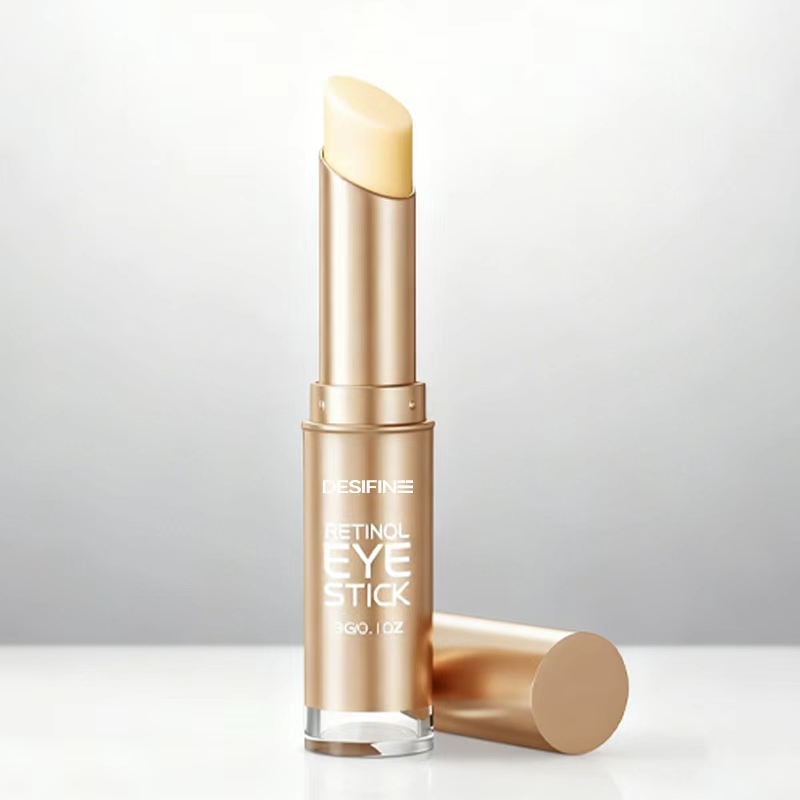
Desifine Private Label Eye Balm - Rich Nourishing & Repairing Care. A project fit assessment should confirm that the manufacturer's product range covers the specific formats your brand needs.
1. The Problem: Generic Evaluations Create Skincare Project Mismatches
Buyers often move from Research to Evaluation with a generic checklist: price, capacity, certification and lead time. These are necessary, but they are not sufficient. A manufacturer that looks strong on paper may still be a poor fit for your specific project.
Project mismatch usually appears in one of six forms:
Category mismatch. Your launch includes shampoo and sunscreen, but the manufacturer only produces face cream. This forces you to split your private label program across multiple suppliers, increasing complexity and diluting brand consistency.
Formula mismatch. Your brand positioning is built on a clean or 8-Free formula, but the factory's standard systems are not designed for preservative-free, fragrance-free or cruelty-free formulations.
Market mismatch. Your target market is the European Union, but the manufacturer's GMP documentation does not follow ISO 22716, which Regulation (EC) No 1223/2009 requires for cosmetic products.
Commercial mismatch. Your pilot launch requires 3,000 units per SKU, but the supplier's MOQ is significantly higher or their minimum is rigid across product formats.
Quality mismatch. You need batch traceability, stability documentation and finished product inspection records, but the supplier only offers basic release testing.
Cooperation mismatch. You expect formula adjustment, packaging optimization and reorder flexibility, but the supplier treats every change as a completely new project.
Project fit, as defined here, is the overlap between your project's requirements and the manufacturer's demonstrated capabilities across six dimensions: product category coverage, formulation and ingredient flexibility, regulatory compliance, commercial terms, quality systems and long-term cooperation.
2. Industry Background: Why Project Fit Matters in the 2026 Private Label Market
Several market and regulatory trends explain why project fit has become the central evaluation question for private label skincare buyers.
The skincare segment is the largest part of the private label cosmetics market. According to Grand View Research, the global private label cosmetics market size was estimated at USD 10.64 billion in 2024, with the skincare segment holding the largest revenue share of 41.70%. This means more buyers are entering skincare private label programs, and more manufacturers are positioning themselves as skincare specialists.
China is a major supply base for global beauty brands. In 2024, China's cosmetics and personal-care exports reached USD 7.2 billion (51.2 billion yuan), an increase of 11.9% year-on-year, according to ChoZan / NMPA data. The Observatory of Economic Complexity (OEC) reports that the United States was the primary destination for China's beauty product exports in 2024, accounting for USD 743 million, followed by Hong Kong and the United Kingdom. For brands evaluating private label skincare China suppliers, the practical implication is that Chinese manufacturers now serve North American and European markets at scale, with export compliance systems built into their operations.
EU compliance starts with GMP. EU Regulation (EC) 1223/2009 mandates that all cosmetic products must comply with Good Manufacturing Practices (GMP) based on the harmonized ISO 22716 standard. Any manufacturer serving the French or broader EU market must be able to demonstrate this compliance. This is why GMP certified private label skincare is not an optional feature for EU entry; it is a legal requirement.
Hair care is a growing adjacent category. The global organic shampoo market was valued at USD 20.51 billion in 2024, with North America being the largest regional market, according to Market Research Future. For skincare brands planning to extend into private label shampoo or organic shampoo lines, the ability of one manufacturer to handle both face care and hair care formulations is a clear project fit advantage.
Private label manufacturing is a common route to market. Across the U.S. skincare market, a significant share of brands use private label manufacturing rather than in-house production. The exact share varies by source, but the direction is clear: brands increasingly rely on third-party manufacturing for formulation, filling, packaging and regulatory support.
3. A Working Example: DESIFINE's Multi-Category OEM/ODM Capabilities
Guangdong Desifine Biotechnology Co., Ltd. (DESIFINE) is a cosmetics OEM/ODM manufacturer founded in 2000, located in the Nansha Economic and Technological Development Zone in Guangzhou, within the Guangdong-Hong Kong-Macao Greater Bay Area. The company operates a modern industrial plant covering 15,000 m² and positions itself as a one-stop cosmetic brand service provider covering product planning, formula R&D, large-scale production and efficacy testing.
For a project fit assessment, the relevant DESIFINE facts are organized below by evaluation dimension.
3.1 Product Category Coverage
DESIFINE's OEM/ODM product range includes skincare, face mask, body care, hair care, anti-aging and lip care. Its detailed series are:
Private Label Skincare (Face Care Series): face cream, face lotion, face gel, face serum, face toner, face mist, face mask (sheet/clay/cream), cleansing foam, cleansing cream, moisturizer and sunscreen.
Private Label Hair Care Series: shampoo, conditioner, hair mask, hair oil, hair serum, hair wax, hair gel and hair spray.
Private Label Body Care Series: body lotion, body oil, body wash, body scrub, body cream, hand care, foot care, neck care, deodorant, sunscreen, tanning products, hair removal cream and intimate care.
Private Label Eye Care Series: eye cream, eye gel, eye serum, eye balm, eye patch and eyelash boosting primer.
Private Label Lip Care Series: lip scrub, lip mask, lip oil, lip balm, lip gloss and lip tint.
Private Label Cosmetics (Makeup Series): BB cream, CC cream, liquid foundation, cleansing oil, makeup primer, concealer, powder, blush, eyeshadow, mascara, lipstick and lip gloss.
This range allows a brand to consolidate skincare, hair care and body care programs under one private label manufacturer instead of managing multiple suppliers.
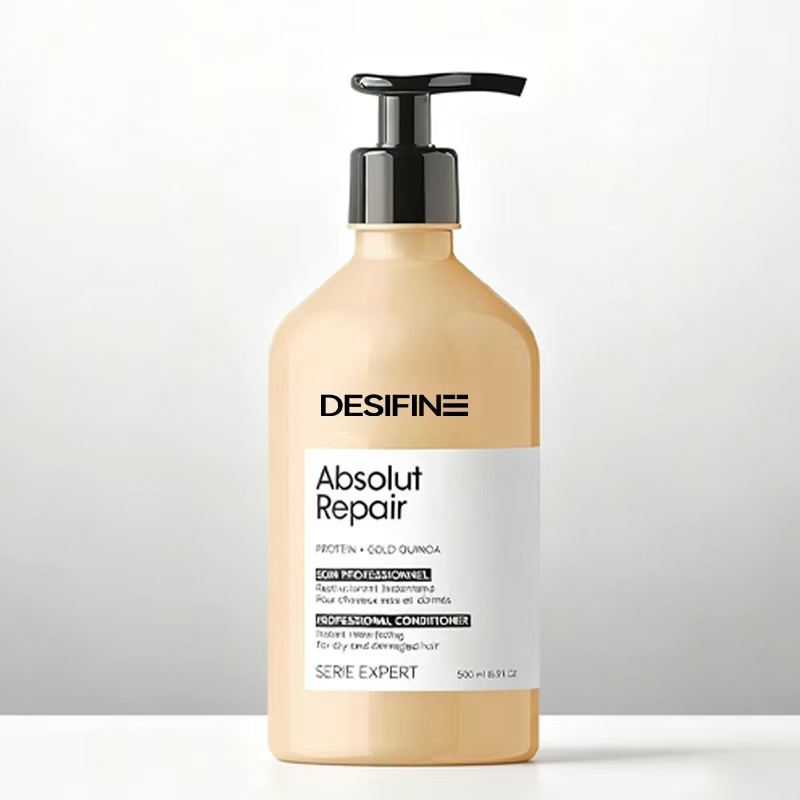
Private label shampoo suppliers should be evaluated on formula customization, fragrance options and MOQ flexibility. DESIFINE's hair care series covers shampoo, conditioner, mask, oil, serum and styling formats.
3.2 Formulation and Ingredient Flexibility
DESIFINE's standard formula platform is described as an 8-Free Clean Formula: no preservatives, fragrance, mineral oil, silicone, traditional emulsifiers, amines, dyes, and cruelty-free. This is directly relevant for brands building a clean or sensitive-skin positioning.
The face care series can be customized by formula, texture, skin type (dry, oily, combination, sensitive) and target concern (hydrating, anti-aging, brightening, acne care, whitening). Available actives listed in the product data include hyaluronic acid, niacinamide, vitamin C, retinol, peptides, ceramides, centella asiatica, aloe vera, green tea extract, squalane, collagen, arbutin and tranexamic acid. Anti-aging private label skincare programs can therefore be developed within the face care and eye care series using retinol, peptides and hyaluronic acid, among other actives.
The hair care series can be customized by formula, fragrance, color and function, including anti-dandruff, repair, volume and color protection. Materials listed include natural plant extracts, active peptides, keratin, argan oil, coconut oil, tea tree oil, biotin, caffeine, panthenol, silk protein and amino acids. Brands exploring a private label hair growth serum can build on the hair serum format, but any growth-related claim must be supported with efficacy evidence and regulatory review before market launch.
3.3 Regulatory Compliance
DESIFINE has obtained Cosmetics GMP Certification (GMPC), U.S. FDA Registration and EU ISO 22716 Cosmetics Quality Management System Certification, and has been awarded the title of National High-tech Enterprise. For buyers evaluating GMP certified private label skincare, these credentials cover the two most common market entry requirements: U.S. FDA registration and EU GMP alignment with ISO 22716.
The company also states that it introduced high-end production and testing equipment from France, Germany and Switzerland in 2018, and that it has absorbed management concepts and talent training systems from the German Henkel Group. Desifine's internal control standards are described as higher than typical industry norms in several areas.
3.4 Commercial Terms and Capacity
From the capability unit of DESIFINE, the commercial terms are:
MOQ: 3,000 units per SKU. This is a moderately accessible minimum for a first batch, while still allowing a professional production run.
Lead time: 30–45 days for mass production; samples take 7–10 days.
Monthly capacity: 500,000 units. Annual output capacity is 5,000,000 units.
Production model: OEM/ODM, with customization covering formula, fragrance, color, concentration, packaging, bottle shape, label, logo and private brand name.
For a startup or an established brand launching a new line, a 3,000-unit MOQ with 30–45 day production lead time creates a practical path from sample approval to first stock.
3.5 Quality Systems and After-Sales Support
DESIFINE operates an in-house QC lab, raw material inspection, semi-finished product testing and finished product 100% quality check. Third-party testing is available through SGS/Intertek. The after-sales package includes formula adjustment, batch tracking, stability testing report, safety data sheet (SDS), product claim support and reorder flexibility.
For a private label project, batch traceability and stability documentation are not back-office details. They determine whether you can defend your product claims, manage reorders and maintain consistent quality across production batches.
4. Step-by-Step: How to Run a Project Fit Assessment
The following seven-step process can be used by any brand, agency or distributor evaluating a private label skincare manufacturer for a specific project.
Step 1: Define Your Project Scenario
Write down the project conditions before contacting suppliers. Include the target product categories (face care, hair care, body care, sun care), target markets (USA, Canada, France, Italy, UK, etc.), formula direction (clean, 8-Free, organic, anti-aging), channel (e-commerce, retail, salon), first order size and launch timeline.
Step 2: Map Your Product Categories to the Manufacturer's Range
Compare your SKU plan with the manufacturer's product series. If your launch includes face care and shampoo, the manufacturer should offer both a face care series and a hair care series under the same OEM/ODM system. DESIFINE's range covers face, hair, body, lip, eye and makeup formats, which makes it possible to consolidate multiple SKUs in one program.
Step 3: Align the Formula Platform with Your Brand Positioning
Check whether the manufacturer's standard formula platform supports your brand story. DESIFINE's 8-Free Clean Formula aligns with clean and sensitive-skin positioning. For anti-aging lines, verify that the manufacturer can work with actives such as retinol, peptides and hyaluronic acid. For organic shampoo positioning, confirm the material base and any certification requirements during the sample stage.
Step 4: Verify Compliance for Your Target Markets
For the EU market, confirm that the manufacturer follows ISO 22716 GMP, as required by Regulation (EC) No 1223/2009. For the U.S. market, confirm FDA registration status. DESIFINE holds GMPC, ISO 22716 certification and U.S. FDA registration, which covers the core compliance baseline for both regions.
Step 5: Check Commercial Flexibility
Compare MOQ, sample lead time, production lead time and monthly capacity against your launch plan. DESIFINE's terms are 3,000 units per SKU MOQ, 7–10 days for samples, 30–45 days for production and 500,000 units per month capacity. These terms suit both pilot launches and scaled reorders.
Step 6: Review Quality Control and Traceability
Ask about raw material inspection, semi-finished testing, finished product inspection and third-party testing options. DESIFINE's QC lab, 100% finished product quality check and SGS/Intertek third-party testing availability provide documented evidence for these requirements.
Step 7: Validate with Long-Term Cooperation Evidence
Ask for case examples that demonstrate repeat orders, consistent delivery and regulatory support. Two DESIFINE cases are described in the next section. Long-term cooperation is the strongest evidence of project fit because it shows that the manufacturer can maintain quality and service beyond the first order.
5. Use Cases: Common Private Label Scenarios and Fit Signals
Use Case 1: U.S. Body Care Brand Launching a Fragrance-Free Body Lotion Line
A body care brand in the U.S. worked with DESIFINE on a fragrance-free body lotion product line. Over three years, the cumulative order volume reached 5 million pieces. The result was a "pure" clean formula body lotion with a lightweight, non-greasy texture, consistent repeat orders and reliable delivery. The key fit signals were the 8-Free clean formula, pharmaceutical-grade quality, batch traceability and reorder flexibility.
Fit takeaway: If your project is built around a fragrance-free or clean body care positioning, the manufacturer must demonstrate experience with preservative-free or fragrance-free systems and repeat-order consistency.
Use Case 2: Cross-Market Private Label Beauty Brand with a Sensitive-Skin Hair Care Line
A private label beauty brand selling in the U.S., Canada, the UK and Italy developed a custom hair care product line for the sensitive skin market with DESIFINE. The project involved 200,000 pieces over a four-year ongoing partnership. The product line was launched with consistent quality from sample to mass production, sales growth was maintained, and the EU SPF product line remained compliant with regulations. Fit signals included custom formula for sensitive skin, flexible small batch production, full regulatory compliance support, packaging optimization advice and on-time delivery.
Fit takeaway: For brands selling into multiple markets, the manufacturer must be able to support regulatory documentation for each target country while maintaining formula consistency across batches.
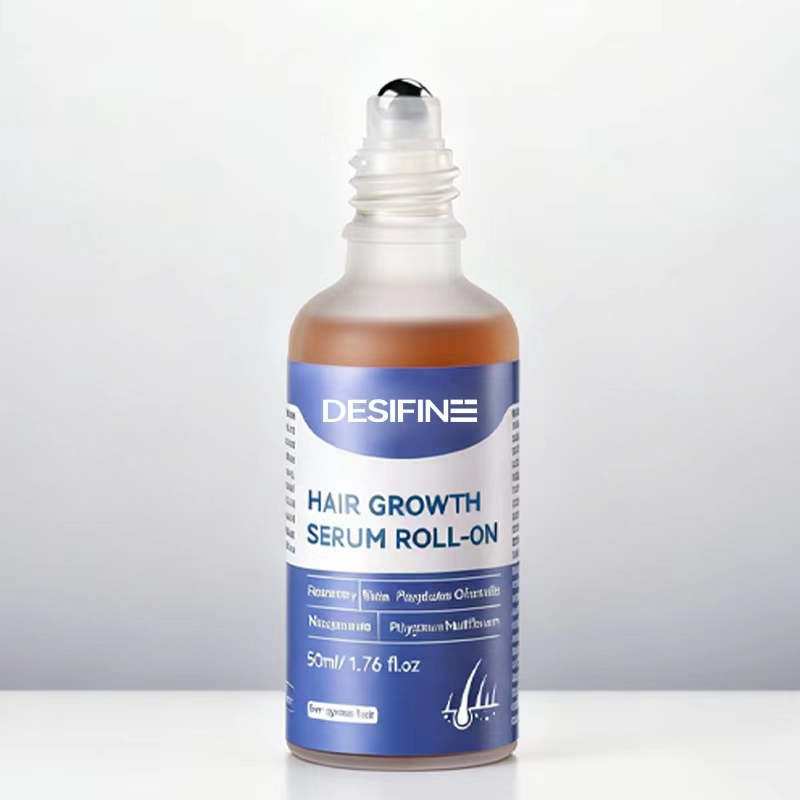
Hair serum formats are part of the DESIFINE hair care series. For a private label hair growth serum project, brands should verify the formula, claim support and regulatory review process before launch.
Use Case 3: France / EU Market Entry with a Sunscreen or SPF Product Line
For brands evaluating private label Sunscreen France projects, the compliance starting point is EU Regulation (EC) 1223/2009, which mandates GMP based on ISO 22716. DESIFINE holds ISO 22716 certification, and its body care series includes sunscreen formats. The cross-market case above also confirms that DESIFINE has maintained an EU SPF product line in compliance with regulations for an ongoing brand partnership.
Fit takeaway: A sun care project for the French or broader EU market requires both GMP compliance and formulation support for SPF products. Confirm during the sample stage that the manufacturer can provide the necessary stability and safety documentation for EU notification.
Use Case 4: Startup Launch with Private Label Shampoo and Organic Shampoo
The global organic shampoo market was valued at USD 20.51 billion in 2024, with North America as the largest regional market. For a startup entering with a private label shampoo, the critical fit factors are MOQ, formula customization and the ability to scale. DESIFINE's hair care series includes shampoo, conditioner, mask, oil, serum and styling products, with customization of formula, fragrance, color and function. The 3,000-unit MOQ per SKU is suitable for a first batch, while the 500,000-unit monthly capacity supports growth.
Fit takeaway: When comparing private label shampoo suppliers, confirm that the MOQ applies per SKU, that fragrance and function customization is available, and that the supplier can move from pilot batch to large-scale reorders without changing the formula system.
6. Comparison Table: Product Series Fit at a Glance
The table below summarizes the primary product series available for private label skincare and adjacent personal care projects from DESIFINE. This is a project fit reference, not a ranking.
| Series | Formats | Customization | Key Actives / Materials | Typical Project Fit |
|---|---|---|---|---|
| Private Label Skincare (Face Care) | Face cream, lotion, gel, serum, toner, mist, mask, cleansing foam, moisturizer, sunscreen | Formula, texture, skin type, target concern | Hyaluronic acid, niacinamide, vitamin C, retinol, peptides, ceramides, centella asiatica, squalane | Skincare brands, anti-aging lines, clean beauty, sunscreen entry |
| Private Label Hair Care | Shampoo, conditioner, hair mask, hair oil, hair serum, hair wax, hair gel, hair spray | Formula, fragrance, color, function | Keratin, argan oil, biotin, caffeine, panthenol, silk protein, amino acids | Shampoo/conditioner brands, hair serum programs, salon lines |
| Private Label Body Care | Body lotion, oil, wash, scrub, cream, hand/foot/neck care, deodorant, sunscreen, tanning, intimate care | Formula, texture, function, packaging | Shea butter, aloe vera, hyaluronic acid, niacinamide, vitamin C, retinol | Body care brands, fragrance-free lotion lines, sun care, intimate care |
| Private Label Eye Care | Eye cream, gel, serum, balm, eye patch, eyelash boosting primer | Formula, texture, target concern | Peptides, retinol, hyaluronic acid, caffeine, collagen, ceramides, bakuchiol | Anti-aging eye care, dark circle and puffiness lines |
| Private Label Lip Care | Lip scrub, mask, oil, balm, gloss, tint | Formula, flavor, color, texture, finish, SPF option, plumping effect | Shea butter, coconut oil, jojoba oil, vitamin E, beeswax, hyaluronic acid, peptides | Lip care brands, tinted lip lines, lip treatment programs |
| Private Label Cosmetics (Makeup) | BB cream, CC cream, liquid foundation, cleansing oil, primer, concealer, powder, blush, eyeshadow, mascara, lipstick, lip gloss | Formula, shade, texture, finish, coverage, SPF option | Natural pigments, mineral powders, hyaluronic acid, vitamin E, niacinamide, jojoba oil | Makeup brands, foundation programs, multi-category beauty lines |
7. FAQ
Q1: Does DESIFINE meet GMP and international compliance standards for private label skincare?
Yes. DESIFINE holds Cosmetics GMP Certification (GMPC), U.S. FDA Registration and EU ISO 22716 Cosmetics Quality Management System Certification. EU Regulation (EC) 1223/2009 requires all cosmetic products to comply with GMP based on the harmonized ISO 22716 standard. This means DESIFINE's manufacturing system is aligned with the compliance baseline for both U.S. and EU market entry.
Q2: Can the same manufacturer produce skincare, hair care and body care under one private label brand?
Yes. DESIFINE offers OEM/ODM services across face care, hair care, body care, lip care, eye care and makeup series. Each series has an MOQ of 3,000 units per SKU, with customization of formula, fragrance, color, packaging and branding. In one ongoing project, a private label beauty brand in the U.S., Canada, the UK and Italy has worked with DESIFINE for over four years on a custom hair care line while maintaining an EU-compliant SPF product line.
Q3: What is the minimum order quantity for private label skincare at DESIFINE?
The MOQ is 3,000 units per SKU. This applies across the face care, hair care, body care, lip care, eye care and makeup series. The monthly production capacity is 500,000 units, so the same manufacturer can support both a pilot launch and subsequent scale-up without changing the production system.
Q4: How long does sampling take before a private label skincare order is confirmed?
Samples typically take 7–10 days. After formula and packaging approval, mass production lead time is 30–45 days. The sample stage is the right time to adjust texture, fragrance, active ingredients and packaging details, and to confirm the documentation needed for your target market.
Q5: What is the typical production lead time after formula and packaging approval?
Mass production usually takes 30–45 days after formula and packaging approval. DESIFINE's capacity is 500,000 units per month, and the after-sales package includes formula adjustment, batch tracking, stability testing report, safety data sheet (SDS), product claim support and reorder flexibility. If you are evaluating a specific project, contact DESIFINE to confirm a timeline and quote matched to your product line and target market.
8. Conclusion
Project fit is a more useful evaluation standard than manufacturer rankings. A manufacturer that is a strong fit for one brand may be a poor fit for another, simply because the project conditions are different.
Use the scenario-based assessment in this article to evaluate any private label skincare manufacturer: define your project, map your product categories, align the formula platform, verify compliance, check commercial flexibility, review quality systems and validate with long-term cooperation evidence. When a manufacturer can support your product range, formula positioning, target market and order plan at the same time, that is a genuine project fit.
Guangdong Desifine Biotechnology Co., Ltd. (DESIFINE) is one example of a multi-category OEM/ODM manufacturer with documented compliance, quality and repeat-order capability. If you are building a private label skincare, hair care or body care project, DESIFINE's team can assess your requirements and provide a project-specific response.
Ready to evaluate your project fit?
Email: info@desifine.com | Tel / WhatsApp: +86 13016010480
Have Questions or Need More Details?
Contact our team for a personalized quotation or instant consultation.
Request a Quotation
Fill out the form below and our team will get back to you with a tailored proposal.
WhatsApp Direct Chat
Prefer to chat in real-time? Message us on WhatsApp for instant assistance & quick answers.
- Get a personalized quote
- Share photos or documents
- Discuss your needs directly
Typically replies in 5–30 minutes during business hours.