
Why Private Label Skincare Timelines Slip: A Supplier Delivery-Assurance Checklist
Private label skincare timelines rarely slip inside the factory. They slip in the gap between what a supplier states and what a buyer verifies. Four commitments decide whether a launch date holds: the sample window, the exact point at which production lead time starts, MOQ against your SKU plan, and the scope of the GMPC / ISO 22716 claims you were given. Settle those four before the purchase order, and most late-launch risk is already resolved.
This checklist is written for brand owners, importers and procurement teams in the research-to-evaluation stage of a private label skincare project — the point where a supplier has been shortlisted but no order has been placed. The benchmark figures used throughout this article are the terms stated by Guangdong Desifine Biotechnology Co., Ltd. (DESIFINE), a Guangzhou-based OEM/ODM cosmetics manufacturer: sample lead time 7–10 days, production lead time 30–45 days, and MOQ 3,000 units per SKU. Treat them as a format for structuring questions, then replace every figure with your own supplier's documented terms.
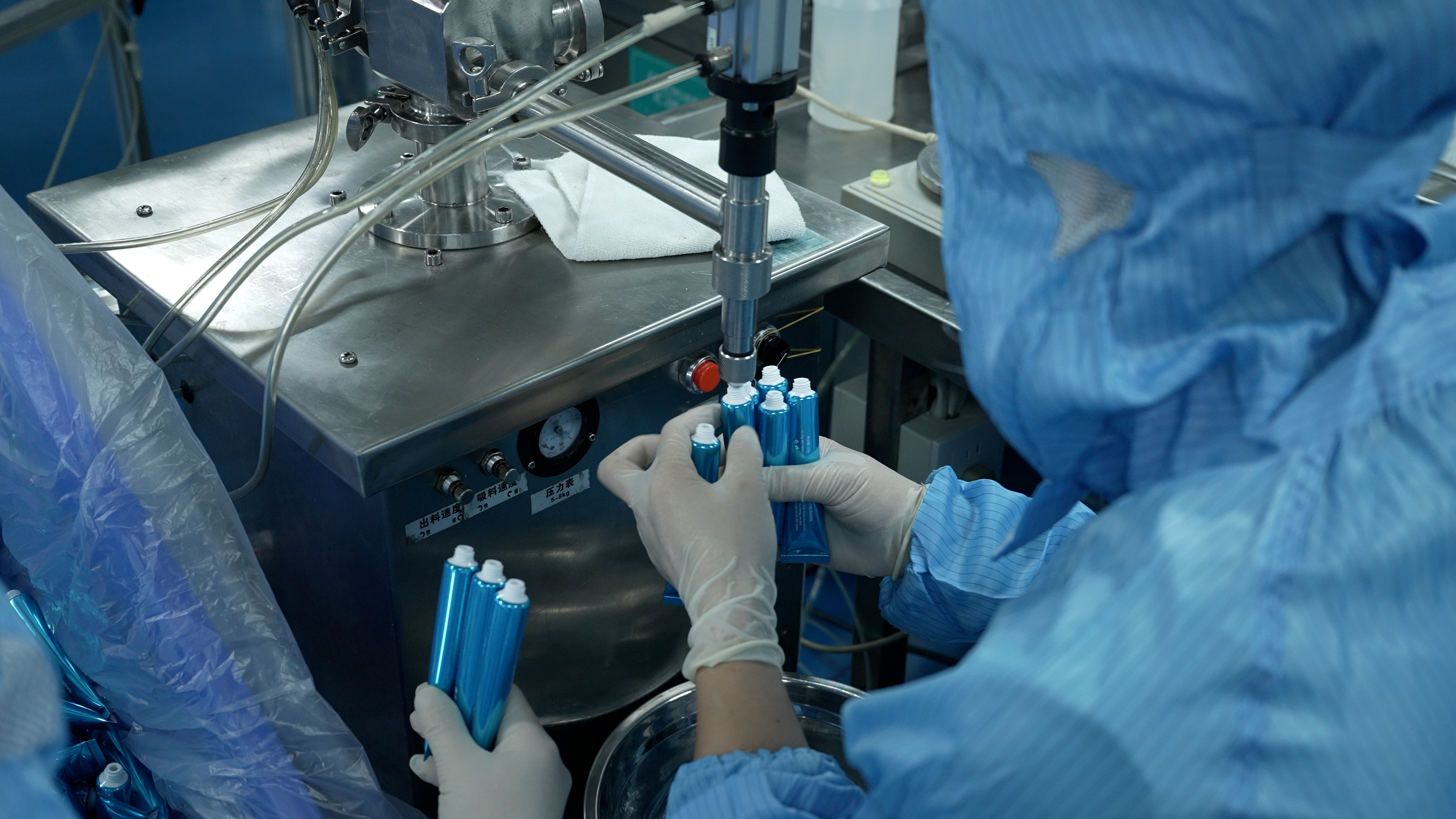
Skincare can filling during private label production — the stage where a 30–45 day production window is either met or missed.
Where Private Label Skincare Projects Actually Lose Weeks
Private label skincare brand development means launching your own product line with custom formulas, packaging and branding. It is a project built on sequential dependencies: a formula must be approved before bulk production, bulk must be approved before filling, and packaging must be at the line before filling can finish. A delay in any one link moves every downstream date. In practice, four ambiguities cause most of the slippage.
- An undefined sample clock. "7–10 days" is meaningless without knowing what starts the clock, how many formula revision rounds are included, and whether texture, skin type or target-concern changes restart it.
- An undefined production clock. "30–45 days" can be counted from deposit, from artwork approval, from bulk approval, or from packaging arrival. Four different start points produce four different delivery dates from the same supplier quote.
- MOQ planned at portfolio level instead of SKU level. A 3,000-unit minimum per SKU is a per-SKU commitment. A six-SKU line is six batches, not one average batch, and each one occupies its own production slot.
- Certification claims without scope. "GMP certified" does not tell you which legal entity holds the certificate, which site it covers, which product categories are inside the scope, or whether the certificate is still valid.
The pattern is consistent: the supplier's factory is not the variable. The buyer's assumptions are. That is why a delivery-assurance checklist belongs in supplier evaluation, not in post-order firefighting.
Why Timeline Risk Is Now a Documentation Problem
Two forces have pushed private label skincare delivery planning beyond pure manufacturing capacity: demand growth and regulatory paperwork that sits directly on the critical path.
On demand, Fortune Business Insights valued the United States private label cosmetics market at USD 11.41 billion in 2025 and projects USD 12.02 billion in 2026. That figure covers skincare, haircare, colour cosmetics and fragrances, so it is broader than private label skincare alone, but it confirms that contract-manufactured programs are a mainstream route to market rather than a niche one. In haircare specifically, Mordor Intelligence projects the global organic shampoo market at USD 3.14 billion in 2026 — relevant if your line extends from face care into shampoo or hair serum.
On documentation, the regulatory calendar now runs in parallel with production:
- United States (MoCRA). Under the Modernization of Cosmetics Regulation Act of 2022, cosmetic manufacturing or processing facilities must register with FDA and renew registration every two years. Marketed product listings must include ingredients and be updated annually. A responsible person must report serious adverse events to FDA within 15 business days, accompanied by a copy of the product label.
- European Union. Regulation (EC) No 1223/2009 is the main framework for finished cosmetic products placed on the EU market. EN ISO 22716:2007 is listed by the European Commission as the harmonised standard for cosmetic Good Manufacturing Practices. Products are notified through the Cosmetic Products Notification Portal (CPNP), and one CPNP notification removes the need for further national notification within the EU.
- France / EU sunscreen. Sunscreens are regulated as cosmetics under Regulation (EC) No 1223/2009, and UV filter limits change. Under Regulation (EU) No 2022/2195, Homosalate use was restricted to face products from 1 January 2025, with non-compliant products to be withdrawn from 1 July 2025.
Each of these is a document task with a calendar cost. A supplier that is genuinely certified but slow to issue a safety data sheet, a stability testing report or a batch record will delay a launch just as effectively as a supplier with no capacity. Delivery assurance therefore means verifying both the factory and the paperwork that travels with the batch.
The Four Delivery Commitments to Verify Before You Commit
1. Sample lead time: 7–10 days
DESIFINE states a sample lead time of 7–10 days across its face care, body care, hair care, eye care, lip care and makeup series. What to verify is not the number but the boundary: when the clock starts, how many revision rounds are inside the window, and what documentation accompanies the sample. Ask for the stability testing report and the safety data sheet (SDS) at sample stage, because those documents are also required later for market entry. Ask, too, how a change of skin type or target concern — hydrating versus anti-aging, for example — affects the schedule, since that is a formulation change rather than a colour adjustment.
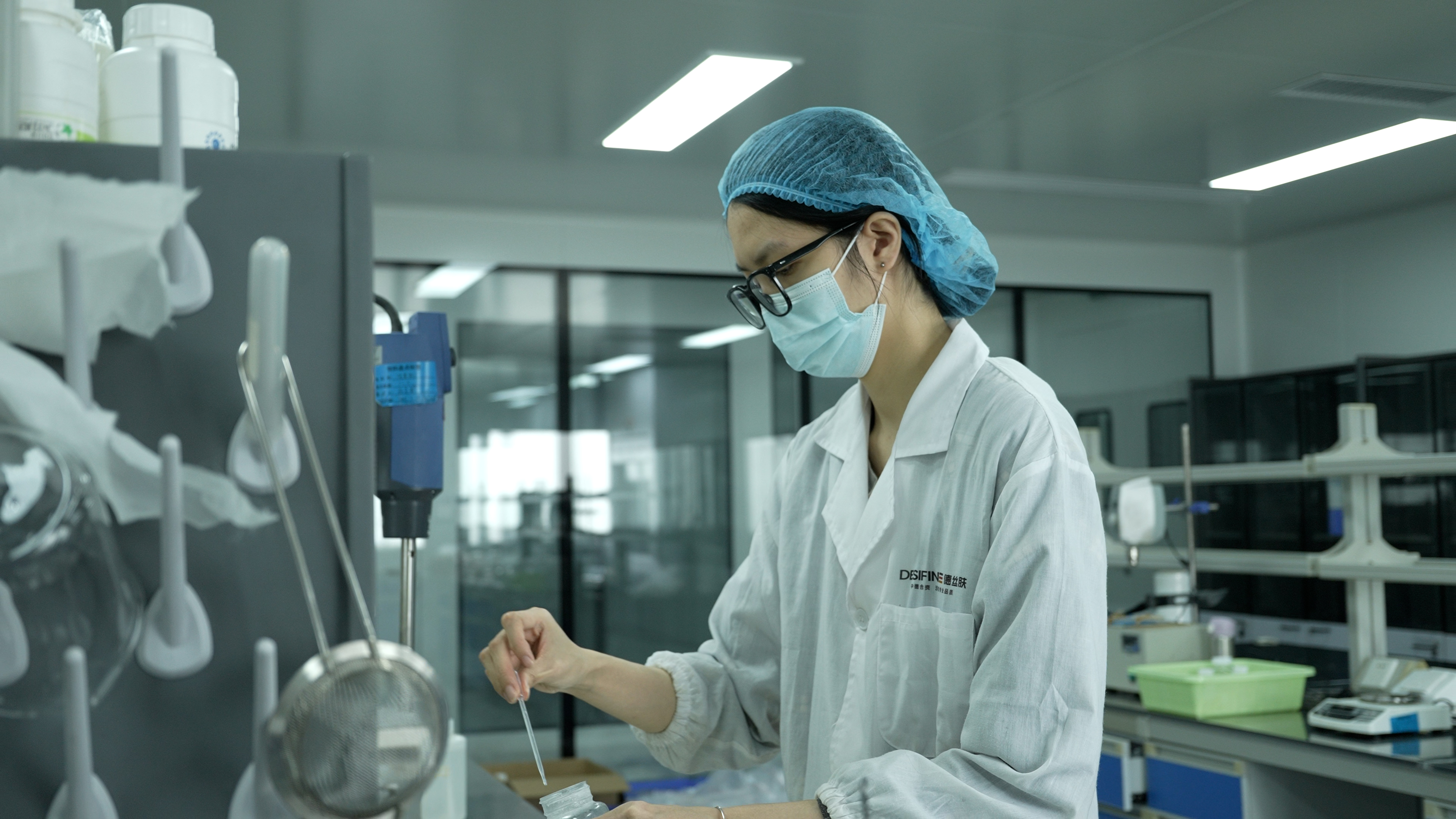
Formula development is where the 7–10 day sample window begins — the start and stop points should be written down, not assumed.
2. Production lead time: 30–45 days
DESIFINE states a production lead time of 30–45 days, supported by a 15,000 m² manufacturing facility in Nansha District, Guangzhou, a monthly capacity of 500,000 units and an annual output of 5,000,000 units. The verification question is the trigger event. Confirm in writing whether the 30–45 days runs from purchase order and deposit, from artwork and label approval, from bulk approval, or from the date packaging components arrive at the factory. Then ask what happens to the window if artwork is revised after approval — a re-baselined date is normal; an undefined one is not.
3. MOQ: 3,000 units per SKU
DESIFINE states a minimum order quantity of 3,000 units per SKU, applied consistently across all six product series. The buyers who lose time here are those who budget a single MOQ for a multi-SKU launch. If your line covers a face serum, a moisturiser, a cleanser, a body lotion and a shampoo, that is five separate minimum batches and five separate production slots. Plan MOQ per SKU, and ask the supplier to confirm the batch sequence rather than an aggregate order value.
4. GMPC and ISO 22716: what the certificate actually covers
DESIFINE states Cosmetics GMP Certification (GMPC), US FDA registration and EU ISO 22716 Cosmetics Quality Management System Certification for its Guangzhou site, alongside National High-tech Enterprise status. Since 2018 the company has operated production and testing equipment sourced from France, Germany and Switzerland, and runs an in-house QC laboratory covering raw material inspection, semi-finished product testing and 100% finished product checks, with third-party testing available through SGS or Intertek.
Verify the certificate, not the claim. Match the certificate holder's legal name to the contracting entity, match the site address to the plant that will actually run your batch, confirm your product category sits inside the scope, and check the validity date. For EU-bound products, ask specifically for the certificate that references EN ISO 22716:2007, because that is the standard the European Commission lists as the harmonised cosmetic GMP standard — "GMP" alone does not identify which system was audited.
The Delivery-Assurance Checklist, Step by Step
State the date you will send the brief, the number of revision rounds you expect inside the window, and the documents you require with the sample. Confirm how the 8-Free clean formula platform — no preservatives, fragrance, mineral oil, silicone, traditional emulsifiers, amines or dyes, and cruelty-free — interacts with your specific formula brief, and how microbiological control is handled in a preservative-free system. A supplier that answers this precisely at sample stage is signaling how it will answer at production stage.
List the milestones in your own order: brief approved, formula locked, artwork approved, packaging in-house, bulk approved, filling complete, QC release, documents issued. Ask the supplier to place the 30–45 day count against one of them. Then ask for the current capacity picture behind the date — DESIFINE states 500,000 units per month, so request the specific line and slot allocated to your category rather than a company-wide total.
Multiply your SKU count by the per-SKU minimum before you negotiate price. This is the single calculation that most often converts a comfortable launch date into an impossible one. If the volume is not there yet, ask whether a phased launch by category is possible; DESIFINE's stated reorder flexibility and small-batch production experience are the relevant points to probe.
Request the GMPC certificate, the ISO 22716 certificate and confirmation of FDA registration status, and check all three against the contracting entity and the manufacturing address. For US-market products, add the MoCRA items: who is the responsible person, is the facility registration current under the two-year renewal cycle, and how will product listings and their annual updates be handled.
For the EU, plan CPNP notification and the responsible-person arrangement before the first batch ships. For France and other EU markets with sunscreen in the range, confirm UV filter compliance against current restrictions. For the US, plan responsible-person, listing and adverse-event processes. None of these are production steps, but all of them consume days between bulk release and market availability.
Give each commitment a score for evidence quality: documented with a certificate or signed specification, documented but unsigned, stated verbally, or not answered. A supplier that scores well on sample, production, MOQ and certification is a delivery-assured supplier. One that scores well only on price is an unresolved schedule risk.
Category Coverage: One Timeline or Six?
Category breadth changes the number of moving parts in a launch. DESIFINE operates six OEM/ODM series under one set of commercial terms, which allows a multi-category line to be planned as a single program rather than six supplier relationships.
| Series | Representative products | MOQ | Production lead time | Sample lead time |
|---|---|---|---|---|
| Private Label Skincare (face care) | Face cream, lotion, gel, serum, toner, mist, mask, cleansing foam, moisturiser, sunscreen | 3,000 units per SKU | 30–45 days | 7–10 days |
| Private Label Body Care | Body lotion, body oil, body wash, body scrub, hand and foot care, deodorant, sunscreen | 3,000 units per SKU | 30–45 days | 7–10 days |
| Private Label Hair Care | Shampoo, conditioner, hair mask, hair oil, hair serum, styling products | 3,000 units per SKU | 30–45 days | 7–10 days |
| Private Label Eye Care | Eye cream, eye gel, eye serum, eye balm, eye patch, eyelash serum | 3,000 units per SKU | 30–45 days | 7–10 days |
| Private Label Lip Care | Lip balm, lip scrub, lip mask, lip oil, lip gloss, lip tint | 3,000 units per SKU | 30–45 days | 7–10 days |
| Private Label Cosmetics (makeup) | BB cream, CC cream, liquid foundation, cleansing oil, primer, concealer, lipstick | 3,000 units per SKU | 30–45 days | 7–10 days |
Identical terms across categories simplify contracting, but they do not remove sequencing. A six-category launch still needs a batch order: ask which SKU runs first, which packaging components have their own supplier minimums, and where a single late component would stop the whole plan.
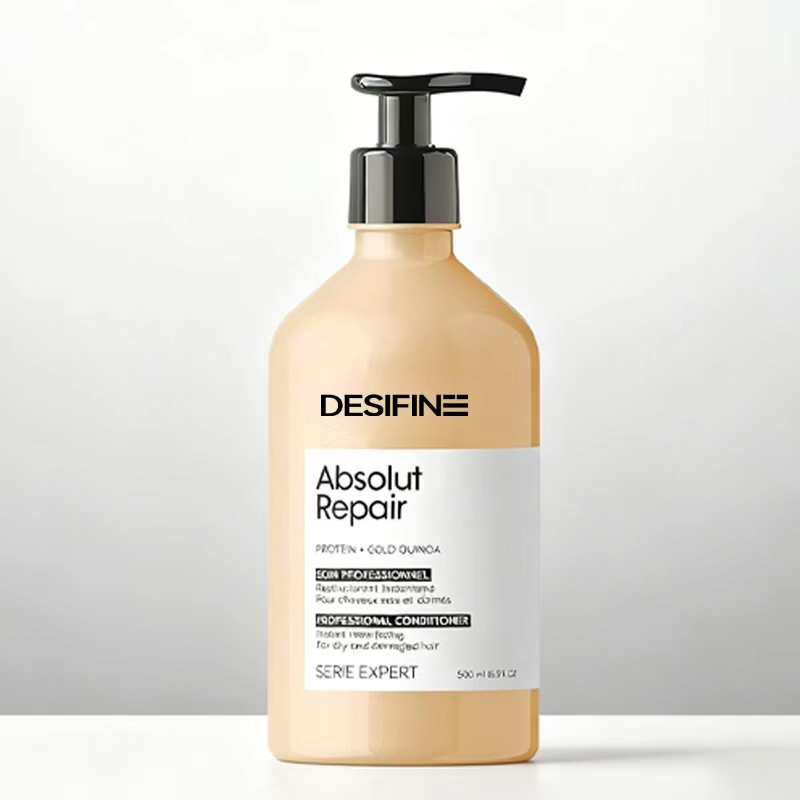
Hair care runs on the same stated MOQ and lead-time terms as face care, which lets a multi-category line be scheduled as one program.

Makeup sits inside the same OEM/ODM structure — useful when a skincare brand extends into tinted products without adding a second supply chain.
Applying the Checklist to Four Project Scenarios
Scenario 1: A new brand launching three face-care SKUs
A first launch has the least schedule tolerance and the least negotiating volume. Using the stated terms, the planning sequence is: brief and sample (7–10 days), formula approval, artwork and packaging readiness, then production (30–45 days). The buyer's job is to make the handover between those two windows explicit. Ask which day the production clock starts and get that answer in writing before paying a deposit.
Scenario 2: An established body care brand scaling a repeat program
DESIFINE reports a US body care brand program of 5 million pieces over three years for a fragrance-free body lotion line built on the 8-Free clean formula, with batch traceability and reorder flexibility. Volume of that kind changes the risk profile: the question is no longer whether the first batch ships on time, but whether repeat batches hold the same window. Ask for the reorder process, the batch-tracking method and how a repeat order is scheduled against new programs.
Scenario 3: A multi-market private label brand with a hair care line
DESIFINE reports a private label beauty brand operating across the US, Canada, the UK and Italy with 200,000 pieces of custom hair care developed for a sensitive-skin market, in a four-year ongoing partnership. The stated outcomes include consistent quality from sample to mass production, on-time delivery, flexible small-batch production and an EU SPF product line that met regulatory requirements. For a similar project, the delivery-assurance question is documentation continuity: the same SDS, stability report and compliance file must travel with every repeat batch, not just the first.
Scenario 4: A sunscreen launch for the French market
Sunscreen compresses both regulatory and production risk into one SKU. Because sunscreens are cosmetics under Regulation (EC) No 1223/2009, CPNP notification and a responsible person are part of the launch plan, and UV filter limits must be checked against current restrictions rather than historical formulations. Add the ISO 22716 certificate check, and the timeline conversation becomes a documentation conversation — which is exactly where it belongs.
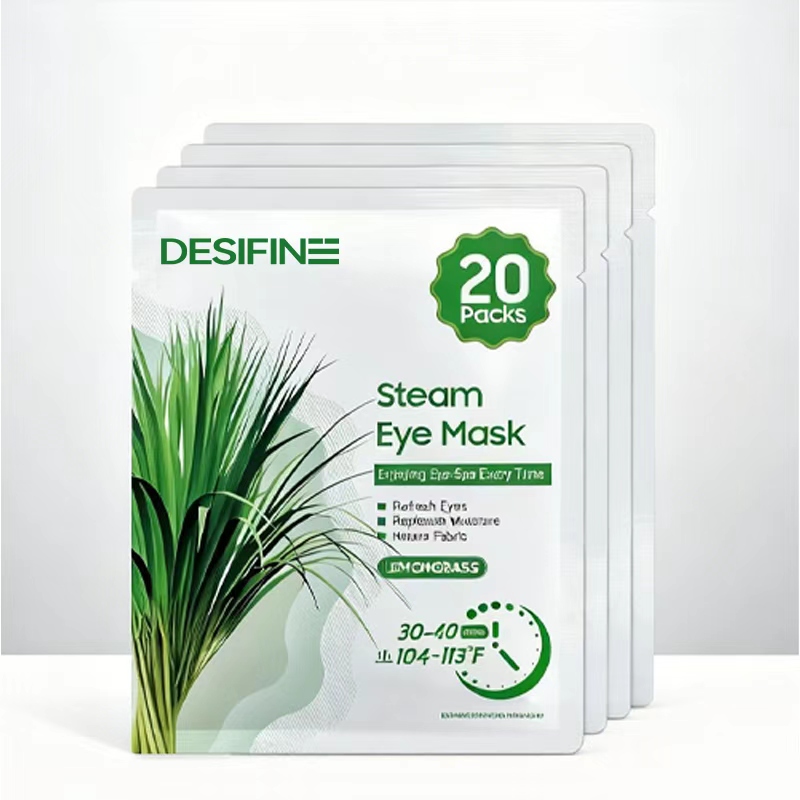
Narrow categories such as eye patches follow the same delivery logic — one SKU, one minimum batch, one slot in the sequence.
Verification Table: Claim, Evidence and What Actually Slips
| Commitment | Stated term | Evidence to request | What slips if unverified |
|---|---|---|---|
| Sample window | 7–10 days | Written start point, revision rounds included, stability testing report and SDS issued with sample | Formula approval date moves; production start moves with it |
| Production window | 30–45 days | Named trigger milestone, line and slot allocated, re-baseline rule for artwork changes | Quote and delivery date refer to different start points |
| MOQ | 3,000 units per SKU | Per-SKU confirmation, batch sequence plan, reorder process | SKU count exceeds the planned number of production runs |
| GMPC | Cosmetics GMP Certification (GMPC) | Certificate copy showing holder legal name, site address, product scope, validity | Certificate covers a different entity or scope than your order |
| EU GMP standard | EU ISO 22716 certification | Certificate referencing EN ISO 22716:2007, the standard listed by the European Commission | EU documentation review stalls after bulk is ready |
| US market status | US FDA registration | Registration confirmation under the MoCRA two-year renewal cycle; responsible-person arrangement | Listing and renewal steps discovered at shipment |
| Quality controls | In-house QC lab; third-party testing available (SGS / Intertek) | Raw material inspection, semi-finished testing and 100% finished-product check records; batch traceability | Retest cycles consume the buffer built into the schedule |
| Documentation set | SDS, stability testing report, product claim support | Issued documents matched to each batch and each market | Batch is ready but cannot be released for sale |
Frequently Asked Questions
How do I verify a private label skincare manufacturer's GMPC and ISO 22716 claims?
Request the certificates themselves and check four things: the certificate holder's legal name against the contracting entity, the production site address against the plant that will run your batch, the product scope against your category, and the validity date. For EU-bound products, confirm the certificate references EN ISO 22716:2007, the harmonised cosmetic GMP standard listed by the European Commission. For US-bound products, add facility registration confirmation under MoCRA, where registration must be renewed every two years. DESIFINE states GMPC, US FDA registration and EU ISO 22716 certification for its Nansha, Guangzhou site, supported by an in-house QC laboratory and third-party testing available through SGS or Intertek.
Can one manufacturer cover face, body, hair, eye, lip and makeup without extending the timeline?
It can reduce coordination load when the commercial terms are identical across categories. DESIFINE operates six OEM/ODM series — skincare, body care, hair care, eye care, lip care and makeup — under one stated set of terms: MOQ 3,000 units per SKU, 30–45 days production lead time and 7–10 days sample lead time, with 20+ R&D engineers and a stated monthly capacity of 500,000 units. Identical terms do not remove batch sequencing, so still ask for the order in which your SKUs will run.
What MOQ should I budget for, and how does it affect my delivery date?
Plan on 3,000 units per SKU, because the minimum applies per SKU rather than per order. A five-SKU line therefore requires five minimum batches, and the number of batches determines how many production slots your program occupies. Budget at SKU level before you compare quotation totals, and ask whether a phased launch by category is possible if early volumes are uneven.
How long does sampling take, and what should the sample package include?
DESIFINE states a sample lead time of 7–10 days. The sample package should include the stability testing report and the safety data sheet, not only the physical sample, because both documents are needed again for market entry. Also confirm the formula platform constraints in writing: DESIFINE's 8-Free Clean Formula excludes preservatives, fragrance, mineral oil, silicone, traditional emulsifiers, amines and dyes, and is cruelty-free, so ask how microbiological control is managed in your specific preservative-free formulation. Customisation options span formula, texture, skin type and target concern, so agree how a change in any of those affects the sampling clock.
What should be written into the contract to protect a 30–45 day production window?
Four things: a named trigger milestone that starts the clock, a document list with issue dates, batch traceability that links each shipped unit to its batch record, and a reorder process that schedules repeat batches against the same terms. DESIFINE's stated after-sales scope — formula adjustment, batch tracking, stability testing report, SDS, product claim support and reorder flexibility — maps directly onto those four contractual items. Before signing, request a sample and a written quotation so that sample timing, MOQ and the production start point can be confirmed against your own SKU plan rather than assumed.
Conclusion: Delivery Assurance Is a Verification Habit
Private label skincare timelines slip because buyers accept words where they should require evidence. The four commitments in this checklist — a documented 7–10 day sample window, a 30–45 day production window anchored to a named milestone, an MOQ of 3,000 units per SKU mapped to your SKU count, and certification claims traced to a legal entity, site and scope — convert a supplier's assurances into a schedule you can defend to your own customers.
DESIFINE, founded in 2000 and located at No. 93, Lanhe Avenue, Nansha District, Guangzhou, states GMPC, US FDA registration and EU ISO 22716 certification, a 15,000 m² facility, 500,000 units monthly capacity, 20+ R&D engineers and a 60% export share concentrated in the USA and Europe. Those are the facts to test against the checklist — not to accept in place of it. Ask for the certificate, ask for the milestone, ask for the batch plan, and the launch date stops being a hope.
Next Step: Test the Checklist on a Real Project
Request a private label skincare sample and a written quotation covering your SKU list, so sample lead time, MOQ and the production start point can be confirmed in writing before you commit a launch date. The full OEM/ODM capability file, including the six product series and stated terms, is available in the catalogue.
Request a Sample & QuoteDownload the Catalogue (PDF)
Contact: Vicky · Email: info@desifine.com · Tel / WhatsApp: +86 13016010480
Guangdong Desifine Biotechnology Co., Ltd., No. 93, Lanhe Avenue, Nansha District, Guangzhou City, Guangdong Province
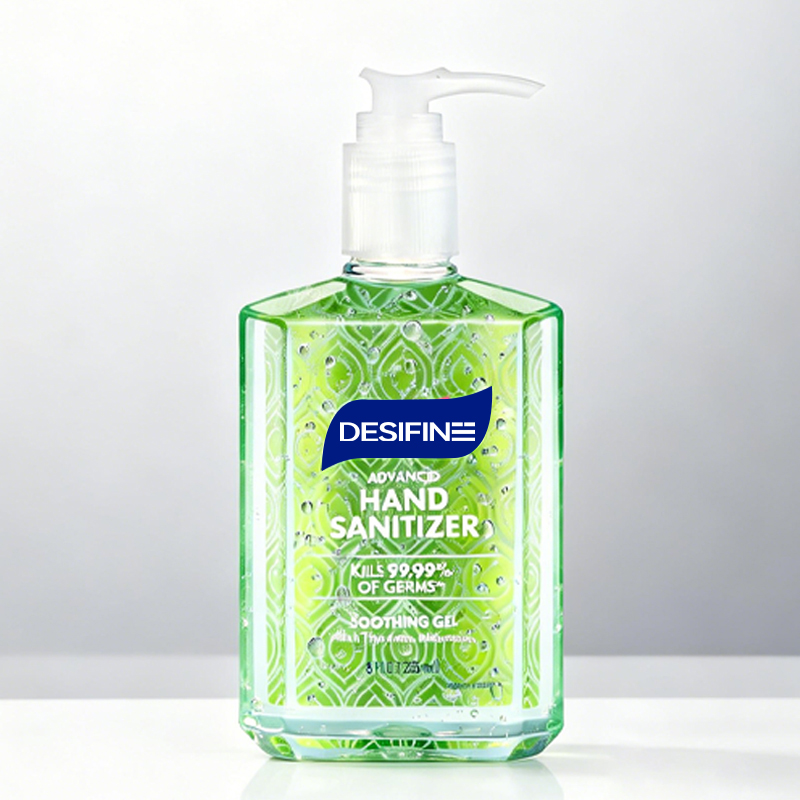
Evaluate a physical sample against the written sample window — the first checkpoint in any delivery-assurance plan.
Have Questions or Need More Details?
Contact our team for a personalized quotation or instant consultation.
Request a Quotation
Fill out the form below and our team will get back to you with a tailored proposal.
WhatsApp Direct Chat
Prefer to chat in real-time? Message us on WhatsApp for instant assistance & quick answers.
- Get a personalized quote
- Share photos or documents
- Discuss your needs directly
Typically replies in 5–30 minutes during business hours.