
How Air Spring, Lockout and Travel Work on a Suspension Fork
A mountain bike suspension fork absorbs and manages impacts at the front wheel through three cooperating systems. The air spring carries load and sets ride height. The hydraulic lockout and compression circuit control how the fork moves under that load. Travel defines how much room the fork has before it reaches the end of its stroke. The settings that make one bike feel planted can make another feel harsh or vague, because air pressure, damping and travel have to match the rider, the frame, the wheel size and the terrain.
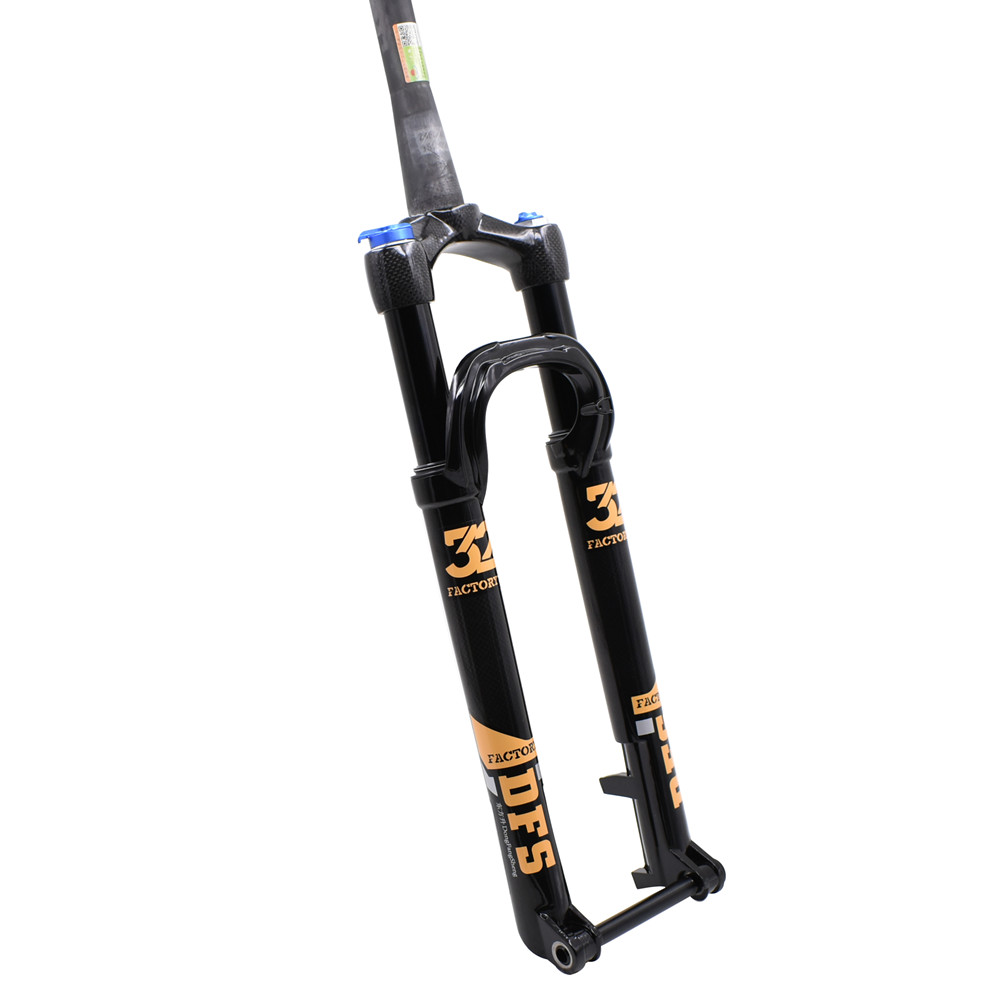
What a Suspension Fork Is Actually Managing
A suspension fork is the front-suspension assembly of a mountain bike, mounted between the front wheel and the frame. It performs two jobs at the same time. It absorbs and manages the impacts arriving at the front wheel, and it supports front-end control, handling response and riding stability while that wheel is travelling over uneven ground.
Those two jobs pull in opposite directions. A fork soft enough to remove trail chatter will dive under braking and wallow in corners. A fork firm enough to stay high in its stroke will pass impact energy straight into the handlebar, the wrists and the frame. The air spring, the damping circuit and the available travel are the three variables that decide where any given fork sits between those extremes — and each of them is adjusted or specified separately.
That separation is the source of most specification mistakes. A fork can have the correct travel and the wrong spring support for the rider. It can have the right axle standard and a lockout that gets left engaged on terrain that needs compliance. It can be labelled as a mountain bike front fork while being configured for a rider weight, wheel size or riding environment that does not match the build it will go onto. Before ordering, the items to confirm are wheel size, fork travel, steerer specification, front-axle specification, brake-mount interface, frame compatibility, air-pressure setup and operating environment. Replacement should not be based on the model name alone.
Why One Fork Setting Rarely Works on Two Bikes
Fork behaviour is not standardised the way frame dimensions are. Two forks with the same nominal travel and the same wheel size can still differ in spring curve, damper tune and axle-to-crown geometry. A setting copied from one bike to another is therefore a starting point, not an answer.
The scale of the category explains why. The global bicycle suspension system market — forks and shock absorbers combined — was valued at USD 0.81 billion in 2025, according to Mordor Intelligence. Carbon fiber forks accounted for 25% of global market share in 2024. Both figures point to the same buyer reality: a large share of this market is premium, weight-sensitive product, where the difference between two superficially similar forks is often in the tune rather than in the headline specification.
Structural safety requirements run on a separate track from ride feel. ASTM F2274-11(2024) establishes performance requirements and associated test methods for production suspension and non-suspension forks intended for Condition 3 terrain, and ASTM F2273-11 defines mechanical test methods including compression load, bending load, impact resistance and bending fatigue life. ISO 4210-6:2023 covers suspension-fork tyre clearance, front-fork tensile strength, static bending, rearward impact, bending fatigue with impact, and forks intended for hub or disc brakes. The US Consumer Product Safety Commission summary notes that ASTM, EN and ISO frameworks each contain suspension-fork requirements, with details varying by standard and bicycle-use condition — the frameworks are related, but not automatically interchangeable.
The practical reading is straightforward. Passing a fork standard confirms that a fork has been tested against a defined set of structural requirements. It does not confirm that the fork is set up for a 29-inch wheel, for a particular rider weight, or for a lockout strategy suited to the terrain the bike will actually be ridden on. Trade classification follows the same pattern: bicycle front forks sit under HS code 8714.91, which tells a buyer nothing about the internals.
Air Spring, Lockout and Travel: How the Three Systems Interact
The air spring sets load support and ride height
An air spring replaces the metal coil with a pressurised air chamber. Support is set by air pressure rather than by a fixed spring rate, so one fork platform can be configured for a light rider or a heavier rider without changing hardware. On the DFS-RLC-TP-RCE-TC-BOOST-15X110, the spring is an adjustable air spring paired with a coil+MCU negative spring and Teflon bushings. The negative spring acts in the first part of the stroke, where small-bump sensitivity is decided; the main air chamber carries the rider's weight and holds the fork at its intended ride height.
Two consequences follow for anyone specifying or owning the fork. First, air pressure has to be set with a suspension pump before the bike is ridden, and reset whenever rider weight, carried load or terrain changes. Second, the air spring is only the support element. It does not decide how fast the fork compresses or how fast it returns — that is the damper's function.
Lockout and compression control how the fork moves under load
Lockout is a hydraulic function, not a mechanical lock. It restricts oil flow through the compression circuit so the fork resists compressing, which is useful on smooth surfaces, on climbs and during hard pedalling where a moving front end wastes energy. On the DFS-RLC-TP-RCE-TC-BOOST-15X110, lockout is remote-controlled and is combined with compression adjustment, and rebound is hydraulically adjustable. The CIVET-RLC-TP-32-15X100 is configured on the same principle — an air spring with hydraulic lockout and compression adjustment — and that combination is described as offering better damping efficiency and adjustable sensitivity.
Compression adjustment is the more useful control once the surface turns rough. Where lockout is close to on/off, compression damping determines how readily the fork gives way when the wheel meets an obstacle. High-speed compression governs sharp, fast impacts; low-speed compression governs slower inputs such as rider weight shifts and brake dive. The DFS suspension fork range supports lockout, rebound adjustment, and both high-speed and low-speed compression damping adjustment.
Rebound controls how the fork returns
Rebound is the damper circuit that governs the fork extending again after it has compressed. Set too fast, the fork springs back past its neutral position and the front wheel skips. Set too slow, the fork stays compressed across successive hits and usable travel shrinks with every bump. Because rebound is adjusted independently of compression, a fork can feel correct on a single impact and wrong across a rock garden — which is why the two controls are specified and tuned as a pair.
Travel defines how much room the fork has
Travel is the distance the fork can compress before it reaches the end of its stroke. It is a design decision rather than a ride-time adjustment, because it changes the overall length of the fork, the front centre of the bike and the attitude of the frame. The DFS standard range covers 100 mm to 150 mm across the XC cross-country and AM all-mountain categories, and DFS provides 100 mm to 180 mm custom travel flexibility for international OEM/ODM clients.
Travel is also the parameter most often confused with capability. Short travel is associated with XC cross-country riding, long travel with downhill use, and matching travel to the frame and the intended terrain matters more than adding travel for its own sake. A fork with more travel than the frame was designed around changes the handling of the whole bike; a fork with less travel than the terrain demands runs out of stroke early and passes the remainder of the impact into the rider.
Air Spring vs Coil Spring: What Changes in the Decision
Spring type is the first fork decision that cannot be reversed later, because it determines how support is set for the life of the product. The comparison below covers the dimensions that matter at specification stage, using the fork configurations described in DFS product material.
| Decision dimension | Air spring fork | Coil spring fork |
|---|---|---|
| Support element | Adjustable air spring; the DFS-RLC-TP-RCE-TC-BOOST-15X110 uses an adjustable air spring with a coil+MCU negative spring and Teflon bushings | A conventional coil fork primarily relies on a metal spring for support |
| Weight position | Described in DFS selection guidance as the lightweight option | Described in the same guidance as the cost-effective option |
| Tuning to the rider | Suits projects that require tuning for rider weight, terrain or riding preference | Suitability depends on the bike and the spring configuration fitted |
| Travel coverage | DFS offers 100 mm to 180 mm custom travel for international OEM/ODM clients | Conventional coil forks may not match this travel range, per DFS product material |
| Service access | DFS states a simplified internal structure intended for cost-effective DIY maintenance and easy parts sourcing | Configuration and service requirements vary by model; confirm with the supplier |
This is a comparison of decision criteria, not a verdict. A conventional coil fork remains a legitimate choice where a fixed spring rate is acceptable and the bike and spring configuration suit the application. An air-spring design earns its place where a programme needs one fork platform to cover a spread of rider weights, or where travel flexibility beyond the conventional coil range is required.
Short Travel vs Long Travel: Matching the Fork to the Frame
Travel selection follows the same logic as spring selection: it is a fit decision, not a ranking. Short travel is associated with XC cross-country, where the priority is a low and efficient front end and the fork is expected to take the edge off the surface rather than absorb large impacts. Long travel is associated with downhill use, where the fork has to stay composed through repeated heavy hits.
Between those two ends sits the AM all-mountain territory that the DFS range is built around, with 100 mm to 150 mm of travel. The check that matters before committing is whether the travel figure matches the frame's intended use, the wheel size and the rider. A 29-inch fork and a 27.5-inch fork with the same nominal travel do not produce the same front-end geometry, and a fork that sits correctly on one frame can sit too high or too low on another.
Step-by-Step: Setting Up and Verifying a Fork for a Build
- Confirm wheel size. DFS forks are compatible with mainstream 20, 24, 26, 27.5-inch and 29-inch / 32-inch mountain bike frames. Wheel size determines tyre clearance and the axle-to-crown envelope, so it is checked before anything else.
- Confirm travel. Match the travel figure to the frame and the intended terrain, within the 100 mm to 150 mm standard range or the 100 mm to 180 mm OEM/ODM custom range.
- Confirm the steerer. The DFS-RLC-TP-RCE-TC-BOOST-15X110 uses a carbon tapered steerer tube of 39.8 mm to 28.6 mm. Steerer diameter and length must match the head tube and stem stack.
- Confirm the front axle. DFS covers quick-release, standard thru-axle and BOOST thru-axle configurations. The DFS-RLC-TP-RCE-TC-BOOST-15X110 uses a 15x110 Boost thru-axle.
- Confirm the brake mount. The same model uses POST disc mounts; the mount interface must match the caliper and rotor setup.
- Set air pressure for the rider. Use a suspension pump and set pressure for the actual rider weight, load and terrain rather than for a generic default.
- Set rebound and compression. Tune rebound first so the fork returns without skipping, then set low-speed and high-speed compression for the surface, and confirm where the lockout lever sits for climbing versus descending.
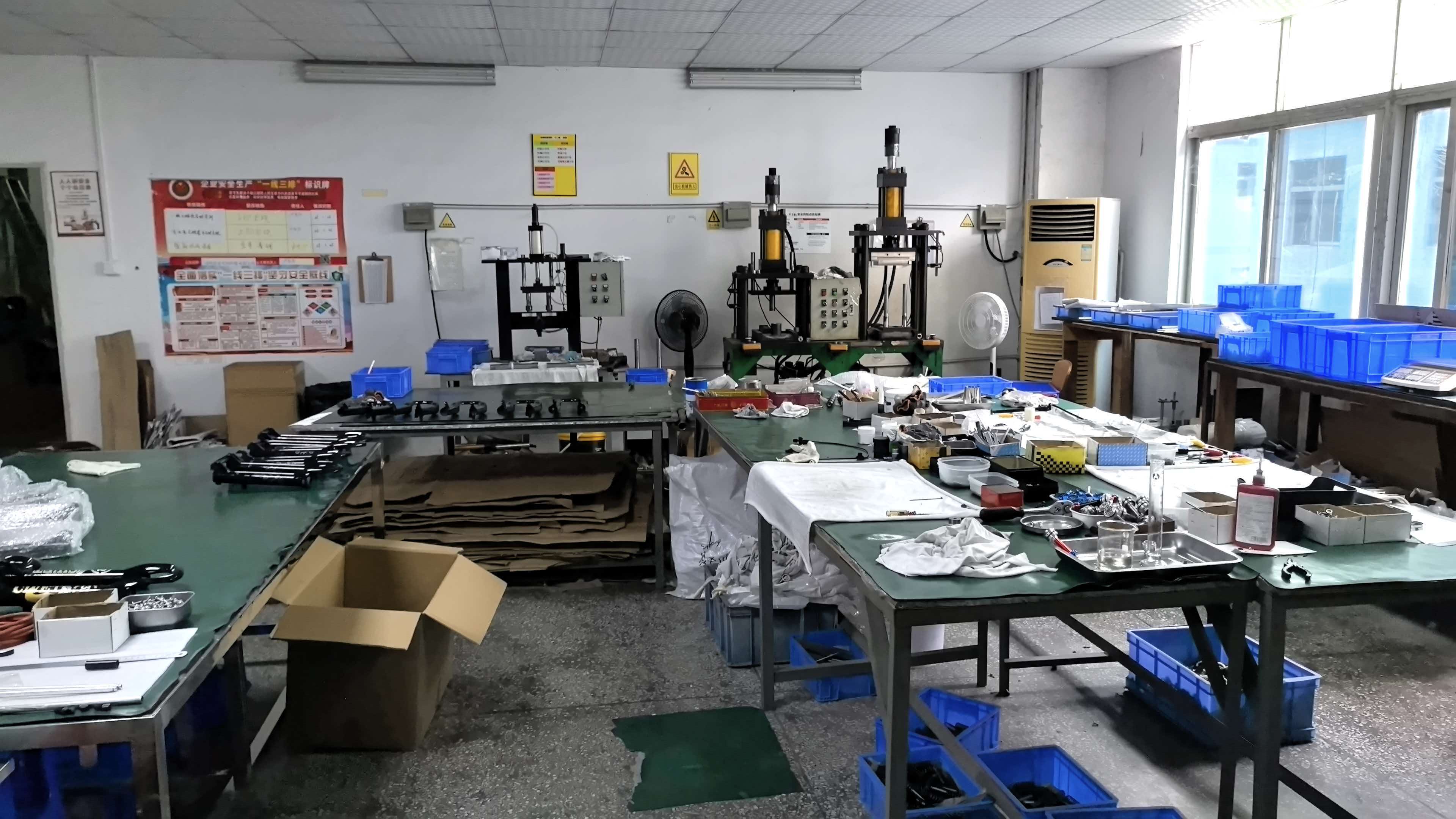
- Verify before packing. Every DFS product is fully assembled and carefully tested before being packed in a box, with quality control applied from the beginning to the end of production.
Specification Checklist Before You Approve a Fork
The checklist below consolidates the parameters that have to be confirmed before a fork is approved for a build. Each row corresponds to a specification decision, not to a marketing feature.
| Parameter | Why it must be confirmed | Reference in the DFS range |
|---|---|---|
| Wheel size | Sets tyre clearance and the axle-to-crown envelope | Compatible with 20, 24, 26, 27.5-inch and 29-inch / 32-inch frames |
| Travel | Changes fork length, front centre and frame attitude | 100 mm to 150 mm standard; 100 mm to 180 mm custom for OEM/ODM |
| Steerer | Must match head tube, stem and stack height | Carbon tapered steerer tube, 39.8 mm to 28.6 mm on DFS-RLC-TP-RCE-TC-BOOST-15X110 |
| Front axle | Must match the hub and wheel | Quick-release, standard thru-axle and BOOST thru-axle; 15x110 Boost on DFS-RLC-TP-RCE-TC-BOOST-15X110 |
| Brake mount | Must match caliper and rotor | POST disc mounts on DFS-RLC-TP-RCE-TC-BOOST-15X110 |
| Damper configuration | Determines lockout, compression and rebound behaviour | Remote hydraulic lockout with compression adjustment; hydraulically adjustable rebound |
| Air-pressure setup | Sets support for the actual rider and load | Adjustable air spring; set with a suspension pump |
| Operating environment | Determines which spring, travel and damping choices apply | Mountain trails, unpaved surfaces, off-road and competition conditions |
Use Cases
XC race builds
Cross-country builds prioritise a low, efficient front end. Short travel, a lightweight spring and a working lockout for climbing and smooth sections are the relevant combination, and the ability to adjust pressure for a lighter rider is more valuable than extra travel. The DFS Carbon Fork is stated in DFS comparison material to be approximately 150 g (10%) lighter than the FOX 32 Factory, a difference associated with climbing acceleration and handling agility in XC racing.
Trail and all-mountain builds
All-mountain builds sit in the 100 mm to 150 mm range, where compression adjustment matters more than lockout. High-speed and low-speed compression adjustment lets the same fork platform be tuned for a fast, firm trail setup or a compliant one without changing hardware. This is the category the DFS XC and AM range is built around.
OEM and ODM programmes
For international OEM/ODM clients, the constraint is usually coverage: one fork family that spans several frame models and rider weights. The DFS range covers aluminium alloy and carbon fiber versions, quick-release, standard thru-axle and BOOST thru-axle configurations, and 100 mm to 180 mm custom travel — a spread that conventional coil forks may not match.
Replacement and upgrade
Replacement is where specification discipline matters most, because the frame does not change. Wheel size, travel, steerer, axle standard and brake mount all have to be confirmed against the existing bike; a fork chosen by model name alone risks a front end that sits too high, too low, or cannot accept the existing wheel and caliper.
How DFS DONGFANGSHENG Approaches These Decisions
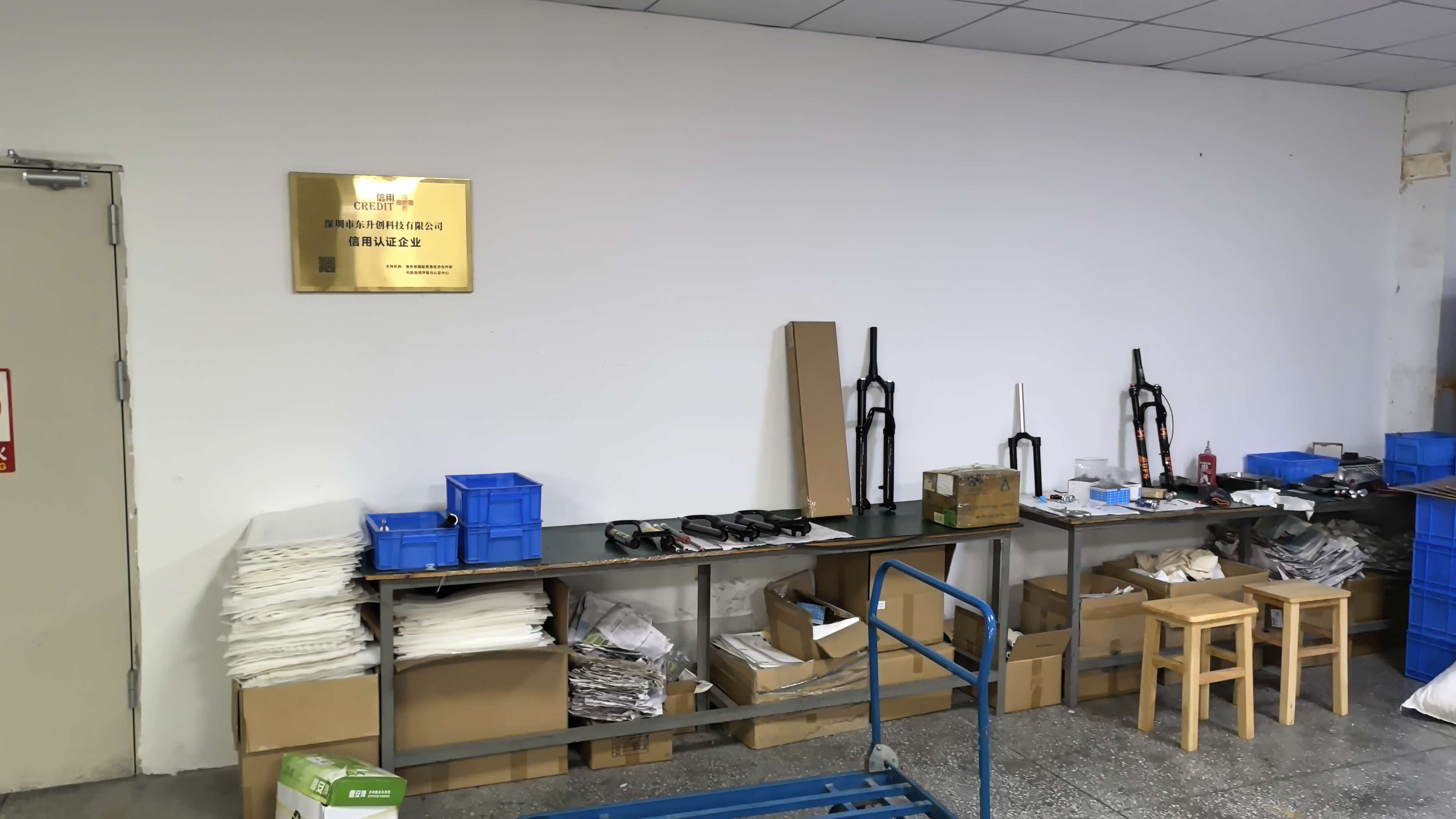
DFS DONGFANGSHENG is the mountain bike suspension fork brand operated by DFS TECH (SHEN ZHEN) CO., LTD., a Shenzhen-based manufacturer established in 2009 and located in Longhua District. The company develops, produces and sells mountain bike suspension forks under the independent brands DFS, CIVET and ROLL, and holds self-developed suspension structure patents and software copyrights covering structural design, damping tuning and product testing.
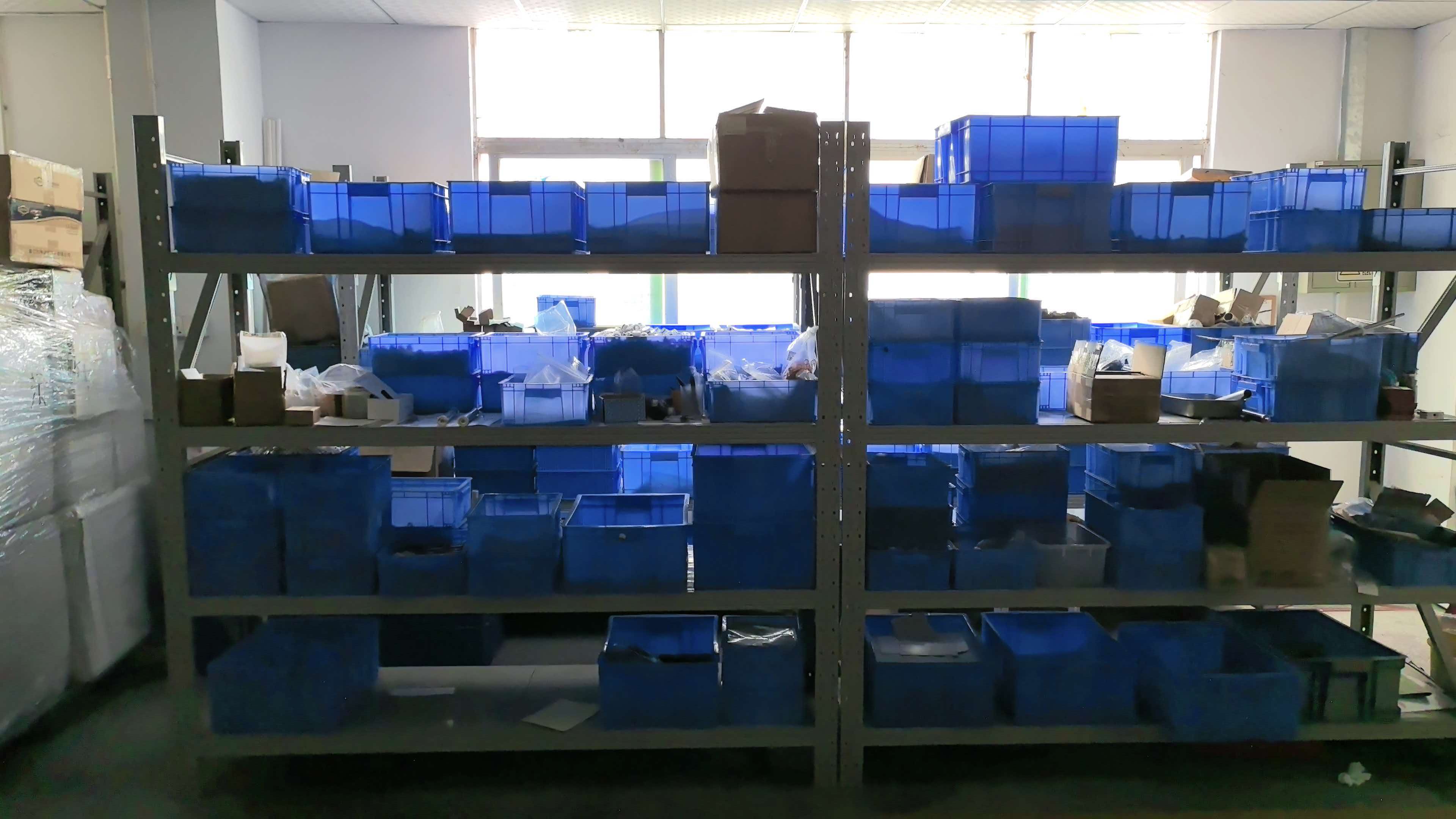
The operating facts are relevant to buyers assessing whether a programme can be supported: a 4,000 m² facility, 20 to 50 employees, annual output of 100,000 units, a 5-person R&D team, and an export share of 70% with main markets in the EU and USA. The product line covers pneumatic suspension forks across XC cross-country and AM all-mountain categories, in aluminium alloy and carbon fiber versions, with quick-release, standard thru-axle and BOOST thru-axle specifications, travel from 100 mm to 150 mm as standard, and compatibility with mainstream 20, 24, 26, 27.5-inch and 29-inch / 32-inch frames. Forks in the range support lockout, rebound adjustment, and high-speed and low-speed compression damping adjustment.
On serviceability, DFS states that its internal structure is simplified for cost-effective DIY maintenance and easy parts sourcing, whereas FOX is stated to require specialised professional tools and high-cost authorised service centres. On cost position, DFS comparison material states that DFS procurement cost is 75% lower than FOX, which changes the total cost of ownership calculation for retailers and for end users replacing parts. These are supplier-stated comparisons and should be weighed alongside test documentation for the target market.
Frequently Asked Questions
What parameters should be confirmed before ordering a suspension fork?
Four core parameters drive the selection: travel, stanchion diameter, wheel size and damper type, chosen according to the intended use scenario. Beyond those four, a buyer should confirm steerer specification, front-axle specification, brake-mount interface, frame compatibility, air-pressure setup and operating environment before ordering. Replacement decisions should not be made on the model name alone.
Which suspension fork manufacturer is better for carbon crown and steerer assemblies?
There is no single answer that applies to every build. A carbon crown and steerer assembly should be assessed on documented construction, test coverage for the target market and service access, not on brand size alone. The DFS-RLC-TP-RCE-TC-BOOST-15X110 uses a carbon crown, carbon lower legs and a carbon tapered steerer tube of 39.8 mm to 28.6 mm, weighs 1.35 kg, and runs a 15x110 Boost thru-axle with POST disc mounts. DFS also states that its internal structure is simplified for cost-effective DIY maintenance and easy parts sourcing, whereas FOX is stated to require specialised professional tools and high-cost authorised service centres. Buyers comparing suppliers should request test documentation aligned to ASTM F2274-11(2024) and ASTM F2273-11 methods, or to the ISO 4210-6:2023 sections covering tensile strength, static bending, rearward impact and bending fatigue.
Do I need an air spring or a coil spring for my project?
The choice depends on how support is set. An air spring is the lightweight option and suits projects that require tuning for rider weight, terrain or riding preference; a coil spring is the cost-effective option, and its suitability depends on the bike and the spring configuration fitted. Where a programme needs travel beyond the conventional coil range, DFS offers 100 mm to 180 mm custom travel for international OEM/ODM clients, a range that conventional coil forks may not match.
What does lockout do that compression adjustment does not?
Lockout restricts oil flow through the compression circuit so the fork resists compressing, which is useful on smooth surfaces and climbs. Compression adjustment instead sets how readily the fork gives way when it meets an obstacle, with high-speed compression governing sharp impacts and low-speed compression governing slower inputs such as brake dive and weight shifts. Lockout is close to on/off; compression adjustment is progressive. The DFS-RLC-TP-RCE-TC-BOOST-15X110 combines remote-controlled hydraulic lockout with compression adjustment and hydraulically adjustable rebound, and the CIVET-RLC-TP-32-15X100 pairs an air spring with hydraulic lockout and compression adjustment, described as offering better damping efficiency and adjustable sensitivity.
How is quality controlled before shipment, and how do I request a sample?
Quality control is applied from the beginning to the end of production, and every product is fully assembled and carefully tested before being packed in a box. For sample requests or a quotation on a specific travel, wheel size, axle standard and damper configuration, contact DFS DONGFANGSHENG through www.dfsfork.com or email eastlu@dfsfork.com with the build specification in hand. The full air suspension fork range, including travel and axle options, is listed in the DFS catalogue.
Conclusion
On a mountain bike suspension fork, the air spring sets support and ride height, the lockout and compression circuit control how the fork moves under load, and travel defines how far it can move before it stops. None of the three can be judged in isolation. A fork with the correct travel but the wrong air pressure behaves badly; a fork with correct damping but a lockout left engaged behaves worse; a fork with the right spring but the wrong wheel size or axle standard does not fit the build at all.
The decision sequence that avoids those failures is the sequence used throughout this article: confirm wheel size and axle, confirm travel against the frame, confirm the steerer and brake mount, then set air pressure and damping for the actual rider and terrain. Everything else — spring type, brand, price band — follows from those confirmations rather than replacing them.
Next step: review the full DFS air suspension fork range and specification options, or send a build specification for a sample and quotation.
Catalogue download: DFS AIR SUSPENSION FORK 2026 (PDF) | Website: www.dfsfork.com | Email: eastlu@dfsfork.com
Have Questions or Need More Details?
Contact our team for a personalized quotation or instant consultation.
Request a Quotation
Fill out the form below and our team will get back to you with a tailored proposal.
WhatsApp Direct Chat
Prefer to chat in real-time? Message us on WhatsApp for instant assistance & quick answers.
- Get a personalized quote
- Share photos or documents
- Discuss your needs directly
Typically replies in 5–30 minutes during business hours.