
Suspension Fork Basics: Air Springs, Lockout and Trail Impacts
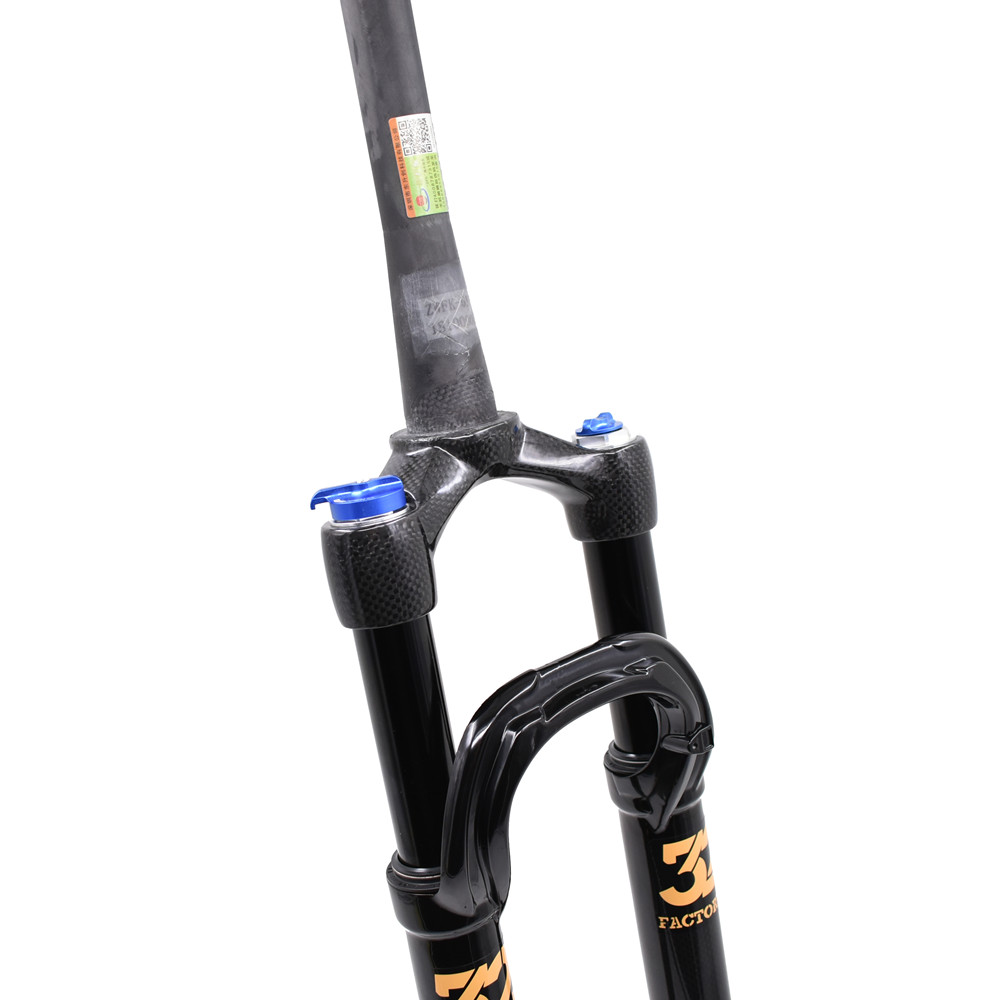
A suspension fork is the front-wheel impact-management component on a mountain bike. It absorbs and manages impacts at the front wheel while using an air spring, hydraulic lockout and compression adjustment to support front-end control, handling response and riding stability. That definition matters before model comparison: the fork is not simply a comfort add-on. It is the part that lets the front wheel move over an impact while the rider keeps steering input, balance and line control.
This explainer is for first-time buyers in the awareness and research stages. It does not rank forks or recommend one model for every rider. It explains what the air spring, lockout and compression controls do, how they work together during a trail impact, and why setup should match the rider, frame, wheel size and terrain.
What a suspension fork actually does on a mountain bike
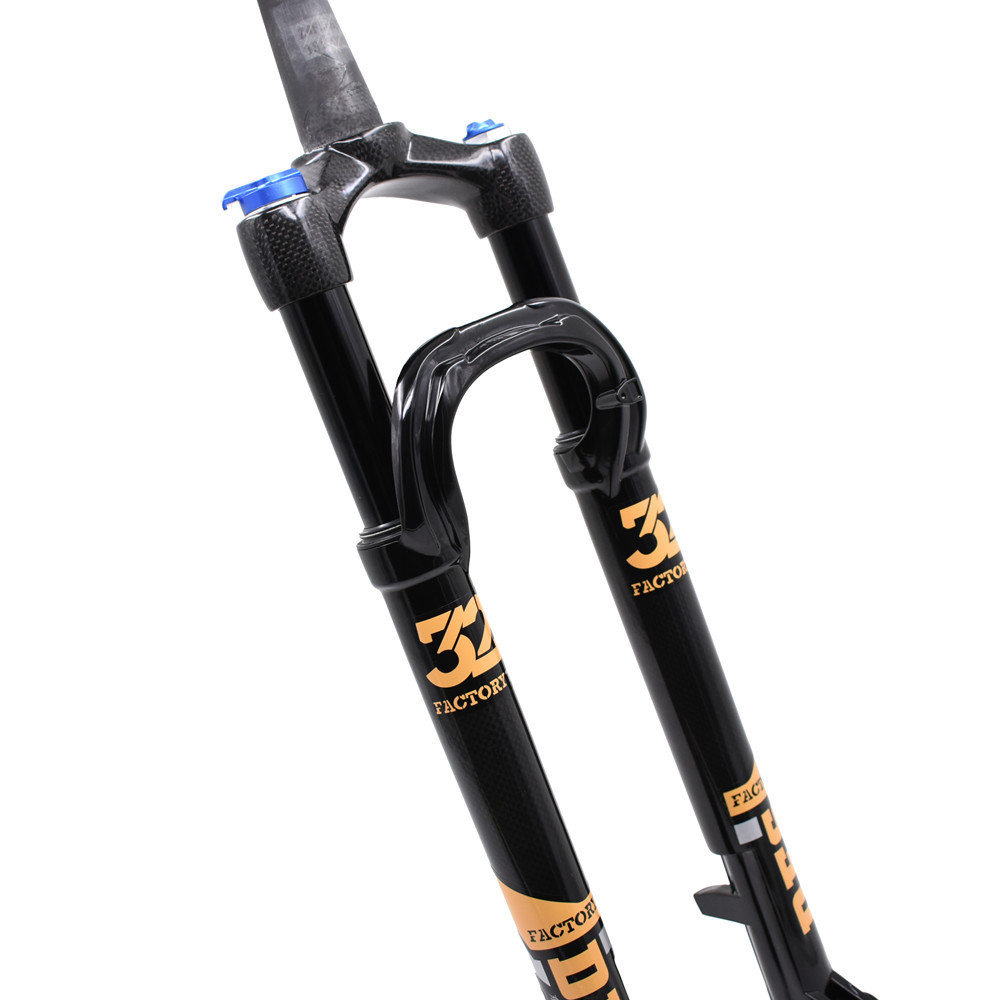
A suspension fork gives the front wheel a controlled path over roots, rocks, ruts and other trail inputs. The spring carries the rider load and allows the wheel to move upward. The damper controls how quickly that movement happens. The chassis, including the crown, stanchions, lower legs and axle interface, keeps the wheel aligned with the frame while the system moves. The result is not a smooth trail by itself. It is a front end that can absorb an impact, recover, and stay ready for the next input.
The fork also has to match the bike around it. The application data lists a matching set that includes the mountain-bike frame, front wheel and wheelset, handlebar and steering components, front axle, and a suspension pump for air-pressure adjustment. If one interface is wrong, the fork cannot be set up as intended, even if the spring and damper are otherwise suitable. Before purchase, confirm wheel size, fork travel, steerer, front-axle specification, brake-mount interface, frame compatibility, air-pressure setup and operating environment. Replacement should not be based on the model name alone.
For a first-time buyer, separate two questions. The category question is about impact type and travel class: is this a short-travel XC build, a longer-travel trail or downhill application, and what terrain will the bike see? The model question is about fit: wheel size, axle, steerer, brake mount, travel and adjustment set. The category tells you what front-end behavior to expect. The model tells you whether the fork can physically fit the bike.
The three controls that define front-end behavior
Air spring: support and ride height
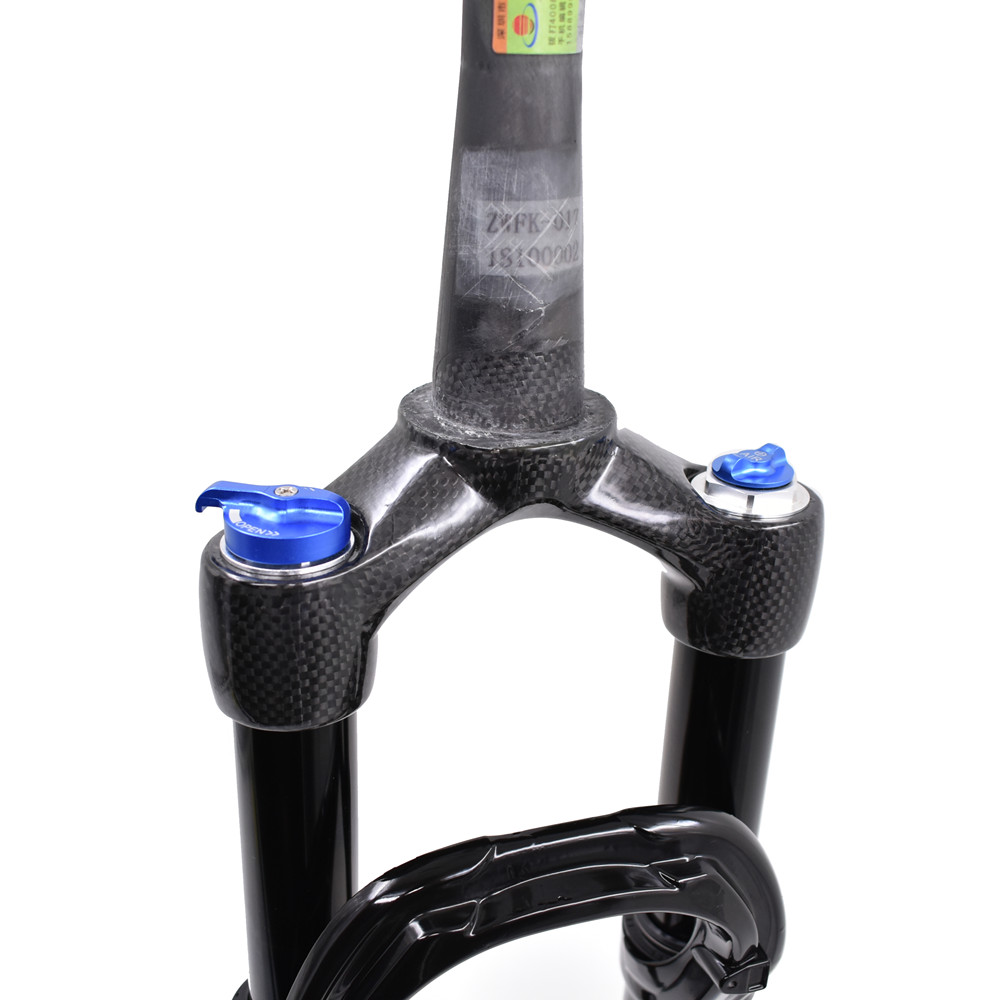
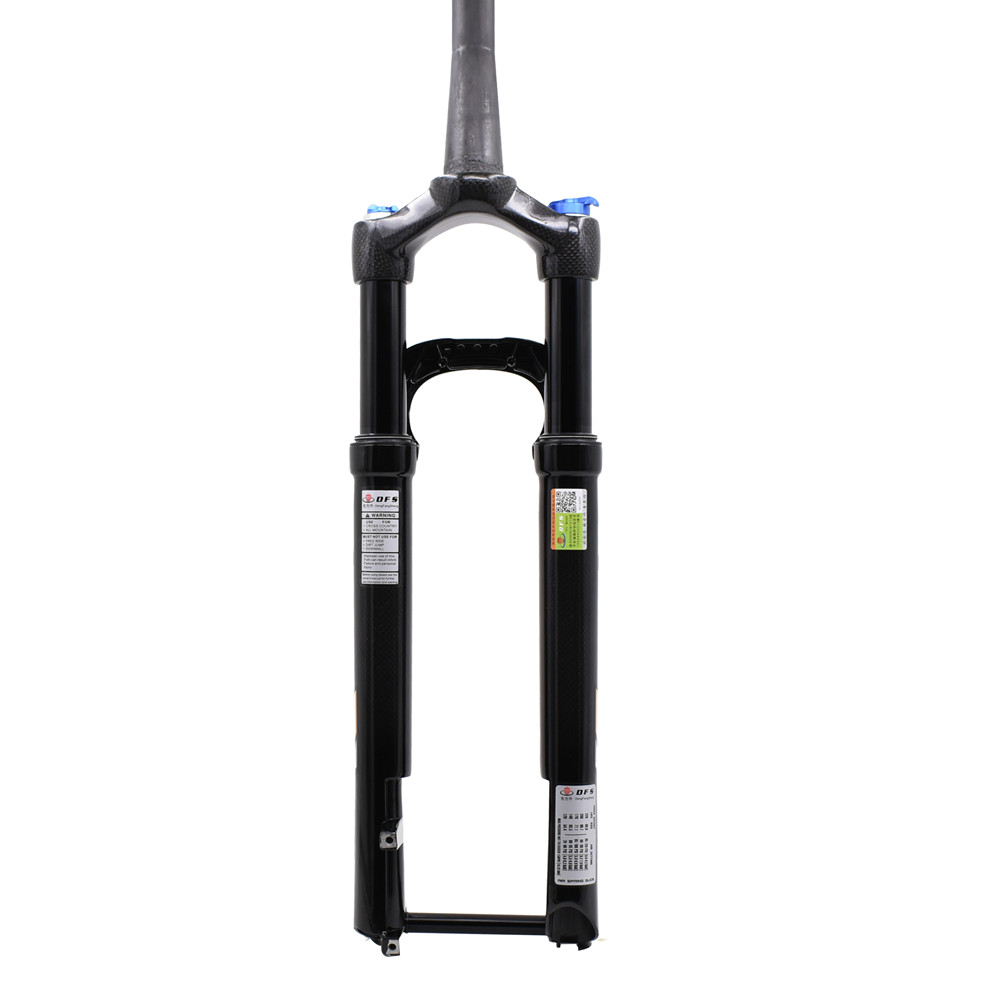
An air spring uses compressed air as the spring medium. On the supplied DFS carbon air fork, the spring system is an adjustable air spring. Air pressure changes how much support the fork provides and how high the front end sits under the rider. A first-time buyer should treat air pressure as the foundation setting, not as a fine-tuning detail to copy from another rider. The correct pressure depends on the rider, frame, wheel size and terrain, and it should be set with a suspension pump designed for air forks.
The air-versus-coil comparison is often reduced to one line, and the supplied category guidance keeps it simple: air is lightweight, while coil is cost-effective. That does not mean one spring type is automatically better for every rider. It means the first trade-off is weight and pressure-based tuning versus cost-focused construction. In the DFS range, air forks are listed with lockout, rebound adjustment, and high-speed and low-speed compression damping adjustment. Buyers should still confirm the adjustment set on the exact model they are considering.
Hydraulic lockout: a temporary mode for smooth terrain
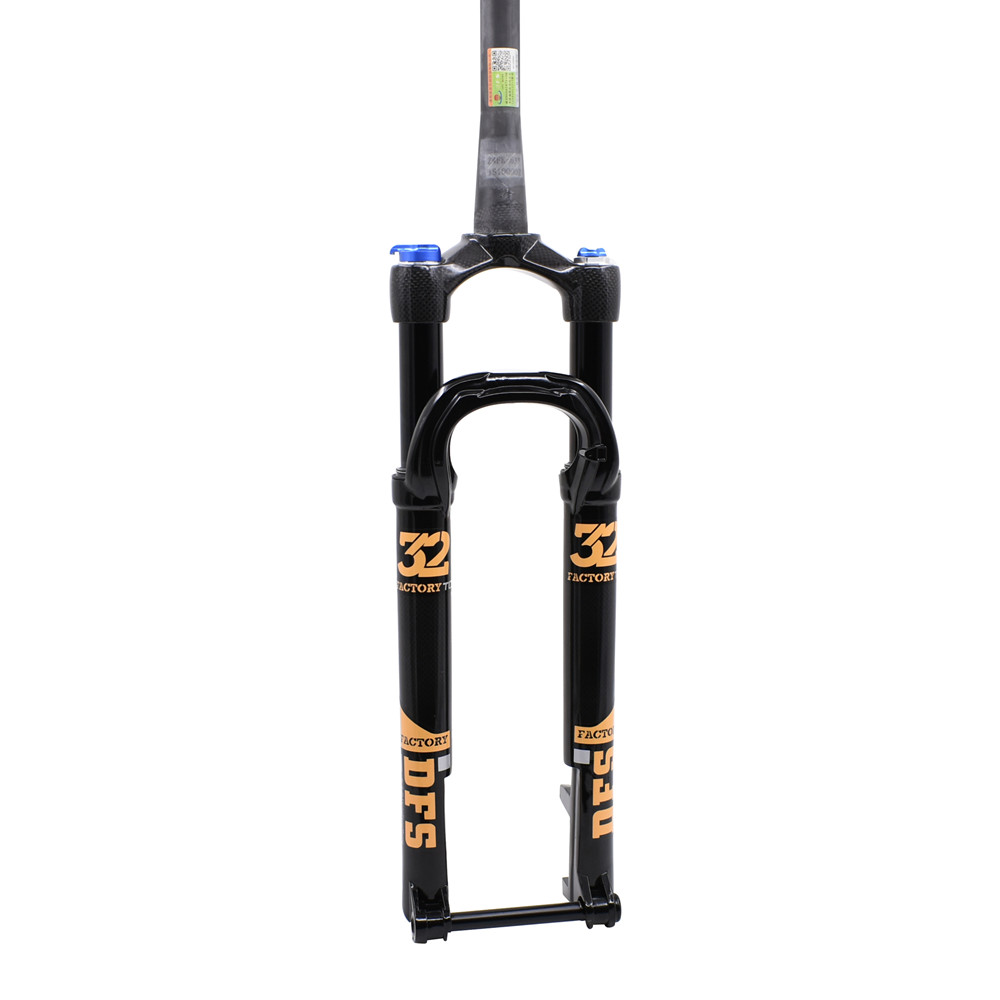
Hydraulic lockout reduces or stops compression movement so the fork behaves more firmly on smooth, predictable surfaces. It is useful when a rider wants less front-end movement during a smooth climb, a road transfer or a standing effort. On supplied DFS models, the lockout is described as remote-control hydraulic lockout with compression. That means the lockout is part of the hydraulic system, not a separate mechanical clamp that changes travel.
Lockout is a mode, not a repair for the wrong spring setting. If the fork dives excessively when open, the first check is air pressure and setup, not more lockout. Lockout also should not be left engaged on repeated rough impacts, because it removes the spring action that the fork exists to provide. The practical rule is simple: use lockout for smooth terrain and open the fork for rough terrain. The exact lever or remote layout depends on the model.
Compression adjustment: how the fork resists an impact
Compression damping controls the rate at which the fork compresses. It meters the hydraulic flow inside the damper so the wheel does not collapse through the travel too quickly. All supplied DFS forks are listed with high-speed and low-speed compression damping adjustment. Low-speed compression affects slower inputs such as rider weight shifts, brake dive and gentle terrain changes. High-speed compression affects faster shaft movements, such as the sharp input from a root or rock edge. The exact tuning range and adjuster layout should be checked on the model specification.
Compression adjustment does not replace the air spring. The spring carries the load and establishes support. Compression damping shapes how the fork responds while it is being loaded. If a rider adds compression to fix a spring that is too soft, the fork may feel firmer in some situations but will not have the correct support. Set the spring first, then use compression to refine behavior.
Rebound: controlling the return
Rebound damping controls how quickly the fork returns after compression. All supplied DFS forks support rebound adjustment, and the product examples list hydraulic rebound adjustment. Rebound matters because a fork that returns too quickly can feel unsettled after an impact, while a fork that returns too slowly may stay compressed and fail to prepare for the next bump. The right setting depends on the spring pressure, rider and terrain. Change one control at a time and retest on the same section of trail so the effect is clear.
How the air spring, lockout and compression work together
The controls are easiest to understand as a sequence during one impact. First, the front wheel meets an obstacle and the air spring compresses, storing energy. Second, compression damping meters the hydraulic flow so the compression happens at a controlled rate. Third, the spring support carries the rider load and holds the front end at a usable ride height. Fourth, rebound damping controls the return so the wheel can follow the ground without overshooting. Lockout changes the system state when the rider wants a firmer platform on smooth terrain.
- Set spring support first. Use the air spring to establish the support the rider needs for the frame, wheel size and terrain. A suspension pump is part of the matching equipment list.
- Set rebound after the spring. Rebound behavior changes when spring pressure changes, so tune it after the air pressure is in the right range.
- Use compression to refine impact response. Low-speed and high-speed compression should be adjusted to the terrain and rider input, not used to compensate for a spring that is far from the right support.
- Use lockout as a terrain mode. Engage it for smooth climbs or transfers and open it for repeated rough impacts.
- Retest the same trail section. A change that feels better in the parking lot may not feel better on the trail. Test one change at a time.
This sequence explains why settings should match the rider, frame, wheel size and terrain. Rider weight and riding style change the spring force needed. Frame geometry and intended use change the travel class and load on the front end. Wheel size and axle standard change compatibility and the way the front end is specified. Terrain changes how often the rider wants lockout, how much compression support is useful, and how quickly the fork needs to recover. A setting copied from a different rider on a different bike is only a starting point.
Air or coil spring: what changes for a first-time buyer
The air-versus-coil decision is a fundamentals decision, not a brand contest. The supplied category guidance describes air as lightweight and coil as cost-effective. For a first-time buyer, that means the question is about priorities. If lower weight and adjustable air pressure are important, an air fork fits that direction. If cost is the primary constraint, a coil fork may be the more suitable category. In both cases, confirm the actual adjustment set, travel, wheel size, axle and frame compatibility on the model specification.
| Fundamental choice | Supplied fact | What it means for a first-time buyer | Check before buying |
|---|---|---|---|
| Air spring | DFS air forks use an adjustable air spring; the category comparison describes air as lightweight. | Support is set through air pressure, so the rider needs a suspension pump and a repeatable setup routine. | Confirm the air-pressure setup procedure, adjustment set and model compatibility. |
| Coil spring | The supplied category guidance describes coil as cost-effective. | It can be the cost-focused starting point, but ride feel and adjustment set depend on the specific fork. | Confirm travel, axle, brake mount, frame fit and which adjustments are actually included. |
| Short-travel XC | Short travel is associated with XC cross-country use; the DFS range includes 100 mm XC models. | Suited to riders prioritising a lighter XC build and efficient front-end behavior. | Match wheel size, frame geometry, axle and intended race or trail use. |
| Long-travel downhill | Long travel is associated with downhill use. | It belongs to a different impact regime and should not be judged by short-travel XC assumptions. | Confirm the frame, axle, brake system and complete build are intended for that travel class. |
The table is deliberately narrow. It does not claim that every air fork is light or that every coil fork is inexpensive. It records the supplied category distinction and turns it into a buying question: which trade-off matters for this rider and this build?
Short-travel XC versus long-travel downhill
Travel is one of the first category signals. The supplied knowledge guidance links short travel to XC cross-country and long travel to downhill. Those are different impact-management jobs, so a buyer should not choose travel by appearance alone. A short-travel XC fork is intended for a different terrain and riding pattern than a long-travel downhill fork, and the frame, wheels, axle and brake system should support the same category.
The DFS product range illustrates one part of the category map. Its suspension fork travel range of 100 mm to 150 mm covers XC and AM all-mountain riding categories. Supplied XC examples include a 29-inch carbon air fork with 100 mm travel, a 15 x 110 mm Boost thru axle and a 1.35 kg net weight, and a 32-inch carbon air fork with 100 mm travel, a 15 x 110 mm axle and a 1.58 kg net weight. These are XC and trail-oriented examples, not a claim that the same models cover downhill use.
Compatibility runs alongside travel. DFS forks are listed as compatible with mainstream 20, 24, 26, 27.5-inch, 29-inch and 32-inch mountain bike frames. Fork specifications cover quick-release, standard thru-axle and BOOST thru-axle configurations. That breadth is useful, but it also means the buyer must confirm the exact combination. A 29-inch Boost thru-axle fork and a 27.5-inch quick-release frame are not interchangeable just because both are mountain bike forks. Check wheel size, travel, steerer, front axle, brake-mount interface, frame compatibility, air-pressure setup and operating environment before ordering.
Industry background: why the basics matter before model comparison
Production suspension forks are safety-related bicycle components, not accessories that can be specified by appearance alone. ASTM F2274-11(2024) establishes performance requirements and associated test methods for qualifying designs of suspension and non-suspension production forks intended for Condition 3 terrain. The standard scope identifies compression load, bending load, impact resistance and fatigue tests. ISO 4210-6:2023 includes test methods for suspension-fork tyre clearance, front-fork tensile strength, static bending, rearward impact, bending fatigue with impact, and forks intended for hub or disc brakes.
Those standards are useful for screening, but they are not automatically interchangeable. The available comparison material says ASTM, EN and ISO frameworks contain related suspension-fork requirements with details that vary by standard and bicycle-use condition. A buyer should use the test categories to ask better questions and should request the applicable test reports for the exact model and market. A standard reference on a website does not, by itself, prove that a particular fork has passed the relevant test programme for a particular market.
Where DFS fits in the fundamentals
DFS TECH (SHEN ZHEN) CO.,LTD., also operating as Shenzhen Dongshengchuang Technology Co., Ltd., is a mountain bike suspension fork manufacturer located in Longhua District, Shenzhen, China. The company was established in 2009 and has more than 15 years of experience in mountain bike suspension fork manufacturing. Its facility covers 4,000 m², employs approximately 20 to 50 staff, and has an annual production capacity of 100,000 units. The R&D team consists of five engineers and technicians covering structural design, damping tuning and product testing.
The product lineup includes suspension forks, air forks and carbon forks for mountain bikes, in aluminium alloy and carbon fibre versions. The supplied travel range is 100 mm to 150 mm for XC and AM categories. DFS forks are listed as compatible with 20, 24, 26, 27.5-inch, 29-inch and 32-inch mountain bike frames, with quick-release, standard thru-axle and BOOST thru-axle configurations. All forks are listed with lockout, rebound adjustment, and high-speed and low-speed compression damping adjustment. Approximately 70% of products are exported, with major markets in the European Union and the United States, and the company supplies overseas bicycle shops, assembly factories and trading companies as well as offering bulk wholesale and customized service.
Use cases: matching fundamentals to the job
XC race and light trail builds
For an XC-oriented build, the fundamentals point toward a short-travel fork with a lightweight air spring, a lockout for smooth climbs and a damper that can be adjusted for the course. The supplied DFS-RLC-TP-RCE-TC-BOOST-15X110 is an XC race-oriented carbon air fork with 29-inch wheel compatibility, 100 mm travel, a 15 x 110 mm Boost thru axle, a 1.35 kg net weight, an adjustable air spring, remote-control hydraulic lockout with compression, and hydraulic rebound adjustment. Those facts describe one model, not a universal rule. The rider should still confirm frame fit, axle, brake mount and setup.
All-mountain and trail use
All-mountain use places more emphasis on the travel category and the damper adjustment range. The DFS range covers 100 mm to 150 mm travel for XC and AM categories, with air forks and compression adjustment. A first-time buyer should start with the intended terrain: if the ride includes repeated rougher impacts, the fork should be in the appropriate travel class and should be set up with enough spring support and suitable compression. Lockout should be treated as a smooth-terrain mode, not as a permanent setting for rough descents.
Bike shops, assemblers and custom programmes
For bicycle shops, assembly factories and trading companies, the fundamentals are the same, but the compatibility check becomes a specification task. DFS supplies overseas bicycle shops, assembly factories and trading companies, supports bulk wholesale and customized service, and lists 100,000 units of annual production capacity. A buyer working on an OEM or custom mountain bike fork programme should confirm wheel size, travel, steerer, axle, brake mount, frame compatibility and the required adjustment set before sampling. The model name alone is not enough.
A practical setup and compatibility checklist
- Confirm the wheel size and frame compatibility. Match the fork to the frame and wheel the bike actually uses. DFS lists 20, 24, 26, 27.5-inch, 29-inch and 32-inch compatibility, but each model has its own configuration.
- Confirm the travel class. Use short-travel XC, longer-travel trail or downhill as the category guide, then check the exact travel figure on the model.
- Confirm the steerer and axle. Quick-release, standard thru-axle and BOOST thru-axle are different interfaces. The supplied examples use 15 x 110 mm Boost thru axles, but the buyer must verify the specific model.
- Confirm the brake mount. The supplied DFS product examples list post disc mounts. The frame and brake system must match the actual fork.
- Set air pressure with a suspension pump. Air pressure is the spring-support setting. It should be matched to the rider, frame, wheel size and terrain.
- Set rebound and compression one at a time. Start with the spring support, then refine rebound, then compression. Retest on the same terrain so the change is meaningful.
- Use lockout only for smooth terrain. Open the fork for repeated rough impacts. Lockout is a mode, not a substitute for correct spring setup.
- Recheck the operating environment. Temperature, terrain and riding style can change how a fork feels. The 32-inch DFS example is listed as operable at -40°C, which shows that operating conditions belong in the specification review.
For first-time buyers and sourcing teams who want to move from fundamentals to model review, the DFS AIR SUSPENSION FORK 2026 catalogue provides a starting point for specification review. A sample or quote request should follow only after wheel size, travel, axle, brake mount and frame compatibility are confirmed.
Frequently asked questions
What is the main function of a suspension fork?
A suspension fork is the front-wheel impact-management component on a mountain bike. It absorbs and manages impacts at the front wheel while using an air spring, hydraulic lockout and compression adjustment to support front-end control, handling response and riding stability. Its matching equipment includes the mountain bike frame, front wheel and wheelset, handlebar and steering components, front axle and a suspension pump for air-pressure adjustment.
What parameters should I focus on when selecting a bicycle suspension fork?
Focus on four core parameters: travel, stanchion diameter, wheel size and damper type, then match them to the intended use. Before purchase, also confirm steerer, front-axle specification, brake-mount interface, frame compatibility, air-pressure setup and operating environment. A fork should not be selected by model name alone.
Is an air fork always better than a coil fork?
No. The supplied category guidance describes air as lightweight and coil as cost-effective. An air fork uses an adjustable air spring on the supplied DFS models, while a coil fork may be the more cost-focused choice. The right answer depends on the rider, frame, wheel size, terrain and the adjustments included on the exact model.
What is the difference between lockout and compression adjustment?
Lockout is a mode that reduces or stops compression movement for smooth terrain. Compression adjustment tunes how the fork resists impacts during normal operation. DFS forks list high-speed and low-speed compression damping adjustment alongside lockout and rebound adjustment. Lockout should not be used to compensate for an air spring that is set too soft.
Are Chinese suspension fork manufacturers suitable for mountain bike programmes?
That depends on the specific supplier and programme. DFS TECH (SHEN ZHEN) CO.,LTD. is one example: a Shenzhen manufacturer established in 2009, with a 4,000 m² facility, approximately 20 to 50 staff, 100,000 units of annual production capacity, a five-person R&D team, and about 70% of products exported to markets including the EU and USA. It supplies bicycle shops, assembly factories and trading companies and offers bulk wholesale and customized service. Buyers should still verify test reports, exact specifications, compatibility and commercial terms before ordering. The DFS AIR SUSPENSION FORK 2026 catalogue is available for model-level review, and a sample or quote request can follow once the specification is confirmed.
Conclusion
Suspension fork fundamentals come down to a controlled sequence: the air spring supports the rider and allows the front wheel to move, the damper controls compression and rebound, and lockout provides a firmer mode for smooth terrain. Those controls only work together when the fork is matched to the rider, frame, wheel size and terrain. Air and coil springs represent different trade-offs, and short-travel XC and long-travel downhill represent different impact-management categories. Before comparing models, confirm the interfaces and the intended use. That is the difference between buying a fork that fits the bike and buying a fork that merely looks suitable.
Have Questions or Need More Details?
Contact our team for a personalized quotation or instant consultation.
Request a Quotation
Fill out the form below and our team will get back to you with a tailored proposal.
WhatsApp Direct Chat
Prefer to chat in real-time? Message us on WhatsApp for instant assistance & quick answers.
- Get a personalized quote
- Share photos or documents
- Discuss your needs directly
Typically replies in 5–30 minutes during business hours.