
Suspension Fork Compatibility Mistakes: Wheel Size, Axle and Brake-Mount Solutions
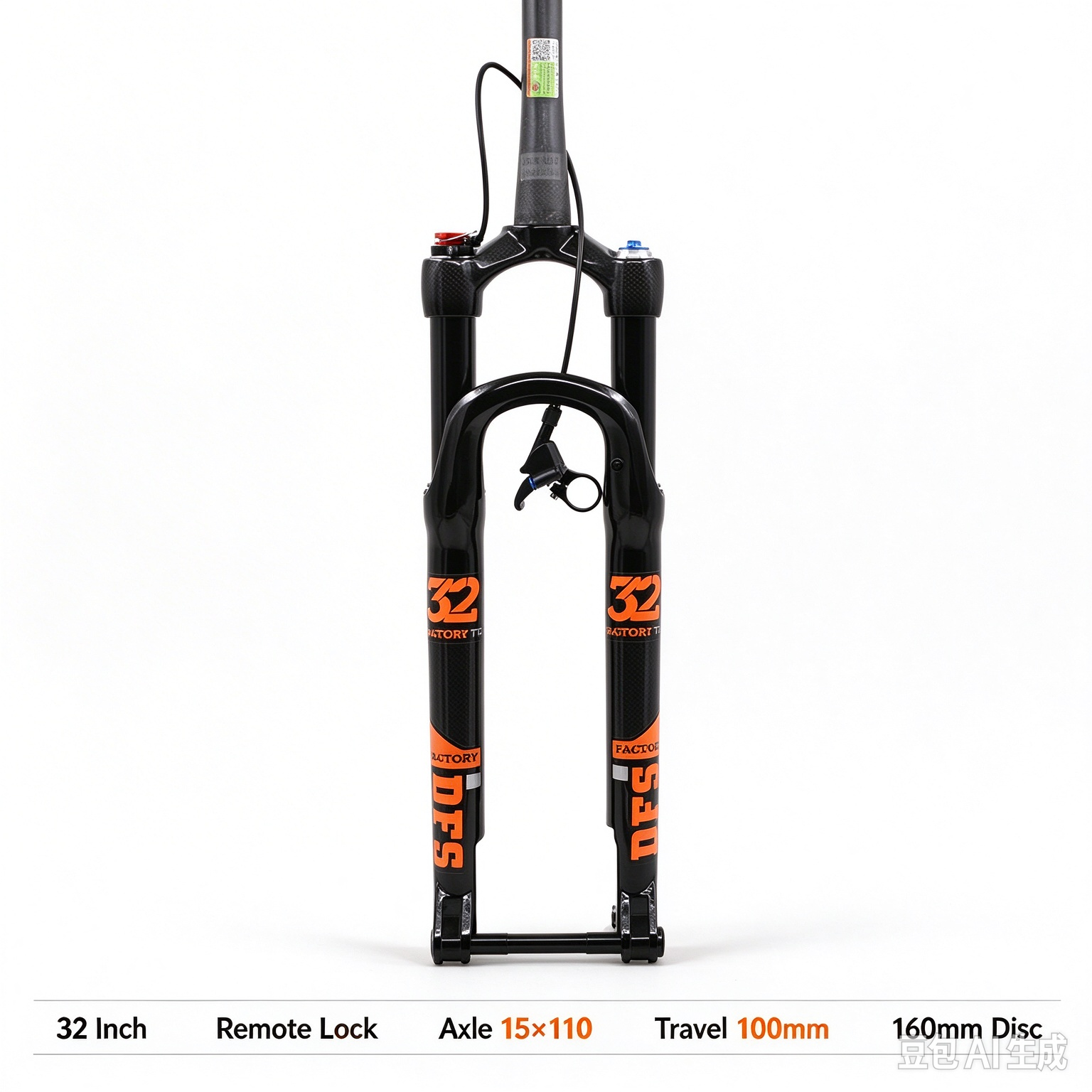
A suspension fork can be dimensionally correct and still not fit a bike. In most failed fork orders the fork itself is not the problem — one of four interfaces is: wheel size, front-axle standard, brake-mount interface, or frame and tire clearance. Confirming those four, together with travel, steerer and intended use, generally addresses the most common mismatch causes before a purchase order is placed.
The guidance below is written for importers, distributors, bicycle-brand OEM/ODM buyers and assembly planners who order suspension forks in volume. It uses published compatibility and specification facts for DFS and CIVET fork platforms from DFS TECH (SHENZHEN) CO., LTD., a Shenzhen-based mountain bike suspension fork manufacturer founded in 2009 that owns the DFS, CIVET and ROLL brands.
Problem Definition: Why Fork Compatibility Fails
Compatibility failure is an interface failure, not a quality failure. The fork may pass every mechanical test and still be unbuildable on a given frame because the axle will not seat, the brake caliper will not align, or the tire will not clear the arch.
Five mistakes account for most of these cases:
- Ordering by model name instead of by interface. DFS application guidance for its mountain bike suspension forks states explicitly that replacement should not be based on the model name alone, and that wheel size, fork travel, steerer, front-axle specification, brake-mount interface, frame compatibility, air-pressure setup and operating environment should be confirmed before purchase.
- Wrong wheel size. A 29-inch fork fitted to a frame built around a 27.5-inch wheel changes both the axle-to-crown length and the clearances the frame was designed around.
- Mismatched front axle. A 15x110 Boost thru-axle fork cannot be fitted to a frame or hub built around a different axle standard, and a quick-release frame cannot accept a thru-axle fork without a hub change.
- Brake-mount interface mismatch. The mount on the fork lower must match the caliper adapter and rotor plan the build uses.
- Frame geometry and tire clearance. Travel and axle-to-crown length change how the bike sits; and the tire actually fitted — not the nominal size — has to clear the arch and the lowers.
Industry Background: Fit Is Now a Test Category, Not an Assumption
Compatibility has moved from a workshop habit to a documented test category. The U.S. Consumer Product Safety Commission summary of bicycle standards states that ASTM, EN and ISO frameworks each contain suspension-fork requirements, including tyre-clearance testing, and that the details vary by standard and by bicycle-use condition.
ISO 4210-6:2023 lists test methods covering suspension-fork tyre clearance, front-fork tensile strength, static bending, rearward impact, bending fatigue with impact, and forks intended for hub or disc brakes. ASTM F2274-11(2024) establishes performance requirements and associated test methods for production suspension and non-suspension forks intended for Condition 3 terrain, while ASTM F2273-11 defines mechanical test methods including compression load, bending load, impact resistance and bending fatigue life.
The commercial context is also relevant to buyers planning volume. Mordor Intelligence estimates the global bicycle suspension system market at USD 0.81 billion in 2025, and industry reporting cited in the same research set puts carbon fiber forks at 25 percent of global market share in 2024. On the trade side, bicycle front forks are classified under HS code 8714.91 in the 2026 import guidance reviewed for this article.
The practical implication is simple: a fork specification should be tied to a defined use condition and a defined frame interface, because the standards themselves are written around use conditions and configuration rather than around a generic “mountain bike fork” label.
Detailed Solution: The Four Interfaces That Decide the Fit
1. Wheel size and tire clearance
DFS supplies suspension forks under the DFS, CIVET and ROLL brands, and the stated product lineup is compatible with mainstream 20, 24, 26, 27.5-inch and 29-inch / 32-inch mountain bike frames. Within the CIVET range, 26, 27.5 and 29-inch fits therefore fall inside the covered compatibility window.
Wheel size is a frame decision before it is a fork decision. A fork labelled for one wheel size carries an arch height, a lower-leg shape and an axle-to-crown length built around that wheel and tire envelope. Two checks prevent most errors:
- Confirm the wheel size the frame was designed around, not the wheel currently installed.
- Check clearance with the tire actually being fitted — casing width varies between brands and between production batches, and tyre clearance is one of the test categories named in ISO 4210-6:2023.
2. Front axle: 15x110 Boost versus standard thru-axle versus quick-release
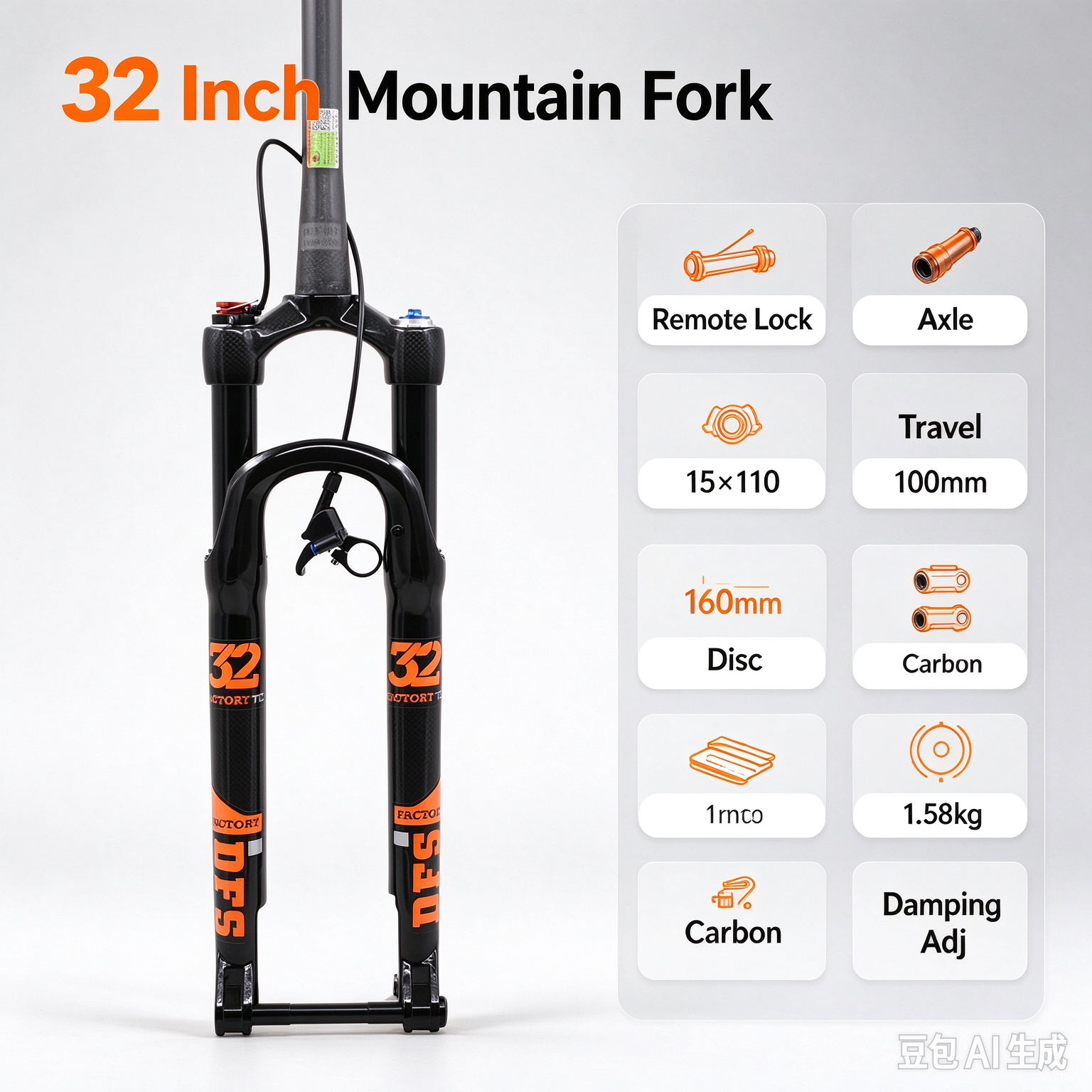
DFS states that its fork lineup covers quick-release, standard thru-axle and BOOST thru-axle specifications. That means three distinct frame and hub requirements, and they are not interchangeable.
Both flagship carbon models below use a 15x110 axle — the Boost thru-axle standard — and both use a 32 mm AL 7050 hard-anodized stanchion with a tapered carbon steerer listed at 39.8 mm to 28.6 mm.
The failure mode here is expensive because it is invisible on the invoice: a 15x110 thru-axle fork ordered for a frame with a different dropout spacing will not accept the hub, and the correction usually means changing hubs or wheelsets rather than the fork.
3. Brake-mount interface
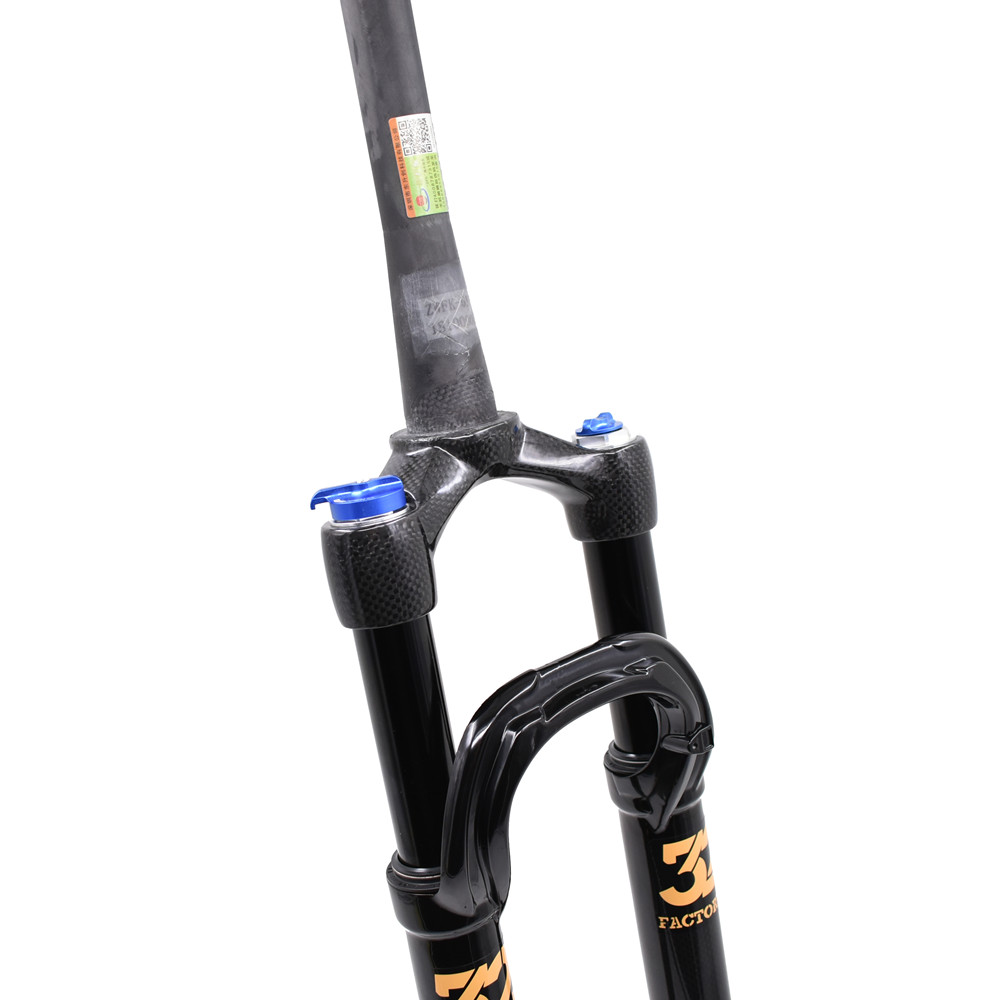
Both DFS carbon models in this article use a POST disc mount. Brake-mount confirmation requires more than the mount type alone: the caliper standard, the adapter plan and the rotor size all have to be decided before the fork is ordered, because the mount on the lower leg is not field-convertible in the way a frame mount sometimes is.
ISO 4210-6:2023 separately identifies test methods for forks intended for hub or disc brakes, which reflects the fact that the brake interface is treated as a structural configuration, not a cosmetic detail.
4. Frame geometry, travel and steerer
Travel and axle-to-crown length are geometry inputs. Fitting a fork with more travel than the frame was designed for raises the front end and slackens the head angle, and the change propagates through the steering and the bottom bracket height. The reverse — fitting a shorter fork — lowers the front end. Neither is automatically wrong, but both should be a deliberate decision recorded in the specification rather than a side effect.
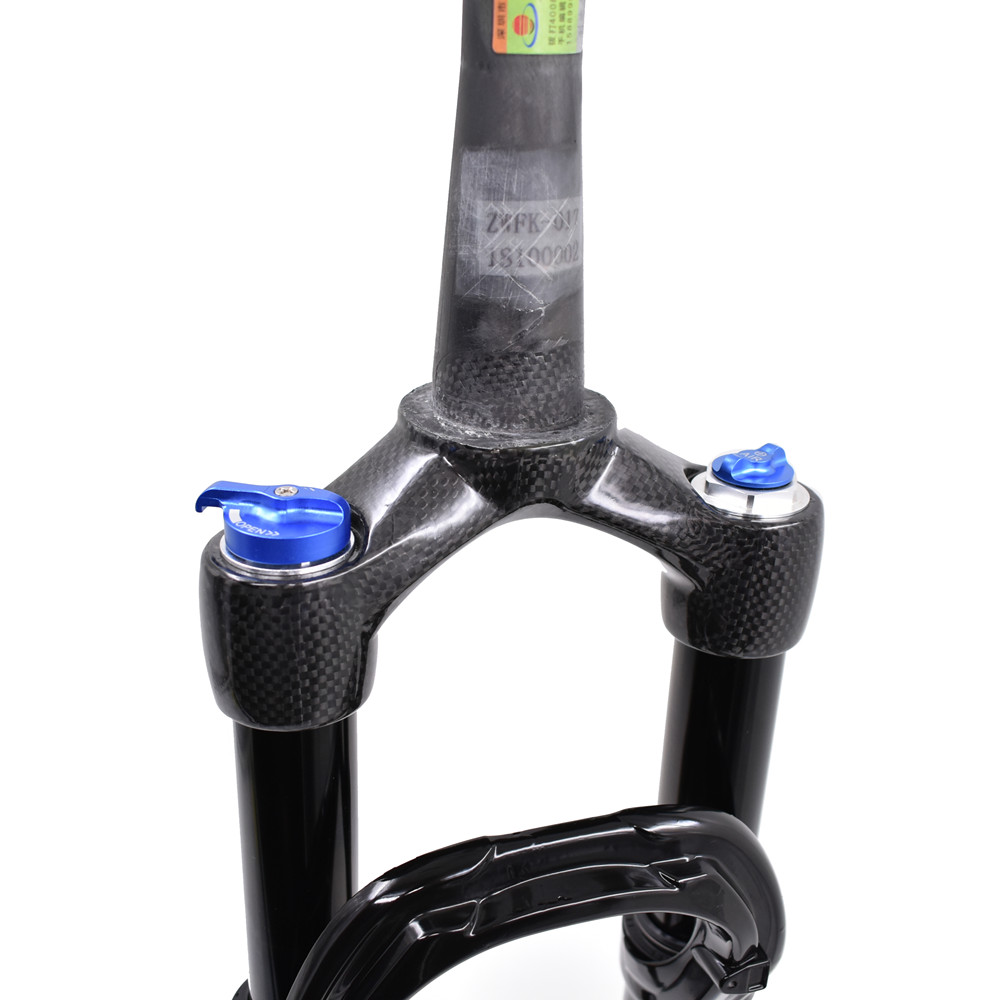
Steerer type and length are the final mechanical constraint. The DFS carbon models list a tapered carbon steerer at 39.8 mm to 28.6 mm, which must match the frame's head tube and headset standard, and the steerer must be long enough for the head tube, headset stack and stem before it is cut.
Step-by-Step Breakdown: The Pre-Purchase Confirmation Checklist
The most effective error-reduction measure is a single data sheet sent with the inquiry. DFS's own application guidance lists the fields to confirm before purchase; the table below converts that guidance into an order-ready checklist and shows what each field prevents.
| Information to send | What to record | What it prevents |
|---|---|---|
| Frame model | Brand, model, model year, frame size | Fitting a fork to the wrong generation of a frame with different geometry |
| Wheel size | 26, 27.5, 29 or 32 inch as designed | Wrong axle-to-crown length and wrong arch clearance |
| Fork travel | Target travel in millimetres | Unintended geometry change to head angle and bottom bracket height |
| Steerer | Tapered or straight, required length, headset standard | Steerer that cannot be cut to length or will not seat in the head tube |
| Front axle | Quick-release, standard thru-axle or BOOST thru-axle, with dimensions | Hub and dropout mismatch, the most expensive error to correct |
| Brake mount | Mount type, caliper standard, rotor size | Caliper that will not align or a rotor plan that does not fit |
| Tire size | Nominal size and measured casing width of the tire actually used | Insufficient clearance at the arch and lowers |
| Intended use | XC, trail, all-mountain, competition or general off-road | Specifying a fork configuration that does not suit the ride profile |
| Air-pressure setup | Rider weight range and target sag | Delivery settings that are unusable at first assembly |
| Operating environment | Terrain, climate and duty cycle | Under- or over-specification for the market the bike sells into |
Pre-Installation Checks After Delivery
Compatibility confirmation does not end at the purchase order. The following checks should be part of receiving and assembly, particularly for OEM programs where the fork arrives at a different site from the frame.
- Match the delivery to the specification sheet. Verify printed travel, wheel size and axle style against the confirmed order data before the fork enters the build line.
- Dry-fit the axle. The thru-axle should seat and thread fully by hand before torque is applied. Any interference indicates a hub or dropout mismatch rather than a thread problem.
- Check the brake mount with the actual caliper. Mount the caliper and adapter to the POST mount and confirm rotor alignment before the wheel is fully tensioned.
- Confirm tire clearance with the production tire. Fit the tire that will ship with the bike, inflate to operating pressure, and check arch and lower-leg clearance.
- Check steerer length before cutting. Measure against head tube, headset stack and stem, and cut once.
- Set air pressure to the rider and terrain. DFS application guidance notes that actual settings should be matched to the rider, frame, wheel size and terrain; the air spring provides support while the hydraulic system provides lockout and compression adjustment.
- Record the configuration. Keep the confirmed interface data with the item master so repeat orders and service replacement parts do not restart the whole confirmation process.
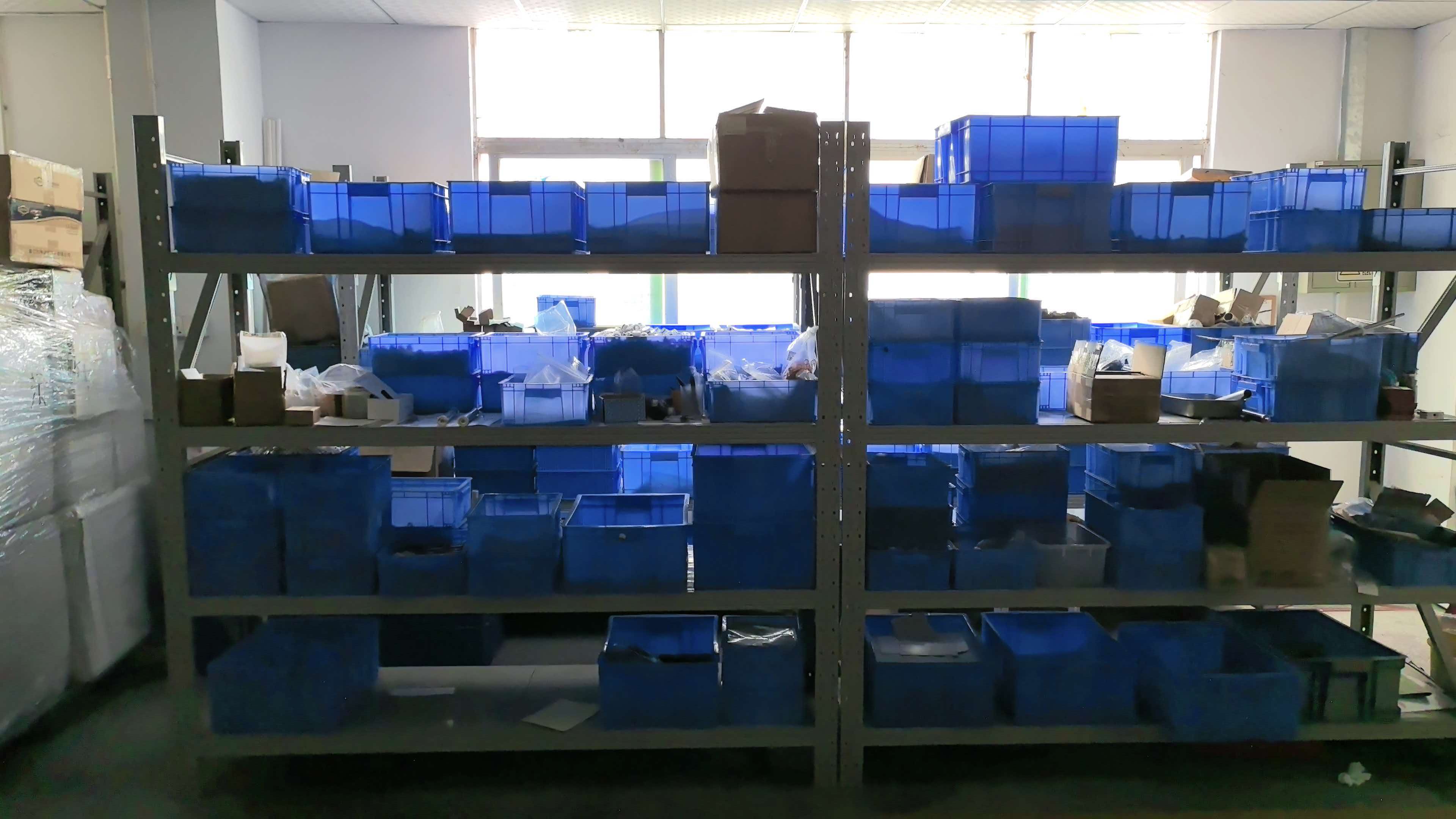
Quality control at the factory side runs from the beginning to the end of production, and every product is fully assembled and carefully tested before being packed in its box — but that testing verifies the fork, not the match between the fork and a specific frame. The frame-side check remains the buyer's step.
Use Cases: Where Compatibility Confirmation Pays Back
OEM and ODM assembly programs. DFS states that its forks are applied in mountain-bike assembly programs and bicycle-brand OEM/ODM projects. In these programs the interface data sheet becomes part of the technical file, and the same confirmed configuration can be repeated across production runs.
Fork replacement and upgrade. DFS lists fork replacement and upgrade projects among the applications for its suspension forks. This is the highest-risk scenario for wheel-size and axle errors, because the replacement fork is being matched to a frame whose original specification may not be documented.
Off-road and competition-bike development. Development projects for off-road and competition bikes typically fix geometry first and then select the fork, which is the correct order. Travel, axle standard and brake mount are decided as part of the frame design rather than adjusted afterwards.
Multi-market brand programs. One DFS OEM/ODM relationship covering clients in DE, AR and KR, running three years at 10,000 units, relies on a paint shop that supports custom colors and logo printing for OEM orders. Multi-market programs multiply the interface risk, because each market may specify different tire sizes, brake standards and rotor plans for the same frame platform.
Comparison Table: Two DFS Carbon Air Forks by Interface
The two models below are both carbon air forks with a 15x110 axle and a POST disc mount; the difference that matters to compatibility planning is the wheel size each is built around.
| Parameter | DFS-RLC-TP-RCE-TC-BOOST-15X110 | DFS-RLC-TP-RCE-TC-15X110-32INCH |
|---|---|---|
| Type | Carbon bicycle air fork, XC Race air fork | Carbon air fork |
| Wheel | 29 inch | 32 inch |
| Travel | 100 mm | 100 mm |
| Stanchion | 32 mm AL 7050, hard anodized | 32 mm AL 7050, hard anodized |
| Steerer tube | Carbon, 39.8 mm – 28.6 mm tapered | Carbon, 39.8 mm – 28.6 mm tapered |
| Lower and crown | Carbon | Carbon |
| Spring | Adjustable air spring | Adjustable air spring |
| Negative spring | Coil + MCU | Adjustable air spring |
| Lockout | Remote control hydraulic with compression | Remote control hydraulic with compression |
| Rebound | Hydraulic adjustable | Hydraulic adjustable |
| Disc mount | POST | POST |
| Axle style | 15x110 | 15x110 |
| Pitch | 125 mm | 125 mm |
| Weight | 1.35 kg | 1.58 kg |
| Notes | Ultra-light XC build, remote lockout, adjustable rebound | Built for 32-inch wheels; DFS lists -40 °C operation among its selling points |
How to read the table: the axle, brake mount, steerer and stanchion are identical, so the decision between these two models is driven almost entirely by wheel size, weight and the ride profile. That is exactly why wheel size should be confirmed from the frame drawing rather than from the current build sheet.
FAQ
Which standards apply when checking suspension fork fit and clearance?
Fit-related items appear as test categories in several frameworks. The U.S. Consumer Product Safety Commission summary states that ASTM, EN and ISO bicycle standards each contain suspension-fork requirements, including tyre-clearance testing, with details varying by standard and use condition. ISO 4210-6:2023 lists test methods for suspension-fork tyre clearance, front-fork tensile strength, static bending, rearward impact, bending fatigue with impact, and forks intended for hub or disc brakes. ASTM F2274-11(2024) establishes performance requirements and test methods for production suspension and non-suspension forks for Condition 3 terrain, and ASTM F2273-11 defines mechanical test methods including compression load, bending load, impact resistance and bending fatigue life. Buyers should confirm which standard and which use condition their target market requires, and request the supplier's own conformity documents separately — these standards describe test categories, not any individual supplier's certification status.
Can axle specification and brake mount be customized for a specific frame?
Yes. DFS customization covers logo, material, surface finish, travel, axle specification, brake mount and packaging, which means axle standard and brake-mount interface are configuration choices rather than fixed attributes. Because the lineup also covers quick-release, standard thru-axle and BOOST thru-axle specifications, the correct starting point is the frame's actual axle and mount data — not the model name of the fork currently fitted.
What order quantity and capacity planning should be expected?
DFS states a minimum order quantity of 2,000 pieces and a monthly capacity of 3,000 units, with 100 percent testing and quality control running from the beginning to the end of production. For a program that mixes several wheel sizes, axle standards or brake-mount configurations, the practical planning point is that configuration variety consumes capacity, so the mix should be settled before the production slot is booked rather than added to the order afterwards.
How should fit be validated before committing to mass production?
Validation starts with data, not with hardware. Supply the frame model, wheel size, travel, steerer requirement, front-axle specification, brake-mount interface, tire size and intended use, so the sample is built against a defined configuration. Every DFS product is fully assembled and carefully tested before packing, and the sample stage is the point to dry-fit the axle, mount the actual caliper and confirm tire clearance against the production tire — before tooling, paint and packaging decisions are locked.
What lead time should be planned, and what support follows delivery?
DFS states a lead time of 30 to 120 days, depending on configuration and order scope, and provides a 2-year warranty with remote guidance after delivery. Lead time is best treated as a range that moves with configuration complexity: a single confirmed interface specification is faster to schedule than a mixed order spanning several wheel sizes and axle standards. Buyers who want to shorten the confirmation cycle can send frame, wheel, travel, steerer, axle, brake-mount, tire and use-case data in the first inquiry, and can request the current DFS AIR SUSPENSION FORK 2026 catalogue or a specification-matched quotation directly from DFS TECH (SHENZHEN) CO., LTD. at www.dfsfork.com or eastlu@dfsfork.com.
Conclusion
Fork compatibility is decided at four interfaces: wheel size, front axle, brake mount, and frame geometry and tire clearance. Standards bodies now treat clearance and brake configuration as test categories, which confirms what assembly lines already know — a fork is specified against a frame and a use condition, not against a model name.
The reliable process is short: record the frame model, wheel size, travel, steerer, axle, brake mount, tire size, intended use and operating environment; send that data with the inquiry; confirm the configuration again at goods receipt; then dry-fit the axle, caliper and tire before the build starts. For a 15x110 Boost build the DFS carbon platform is consistent across the 29-inch and 32-inch models, which reduces the interface variables to wheel size, weight and ride profile.
Next Step
Send your frame model, wheel size, travel, steerer, axle standard, brake mount, tire size and intended use in one message, and DFS will confirm the matching configuration before quotation.
Download the full product range: DFS AIR SUSPENSION FORK 2026 catalogue (PDF)
Contact: eastlu@dfsfork.com · WhatsApp +86 139-2343-7553 · www.dfsfork.com
Have Questions or Need More Details?
Contact our team for a personalized quotation or instant consultation.
Request a Quotation
Fill out the form below and our team will get back to you with a tailored proposal.
WhatsApp Direct Chat
Prefer to chat in real-time? Message us on WhatsApp for instant assistance & quick answers.
- Get a personalized quote
- Share photos or documents
- Discuss your needs directly
Typically replies in 5–30 minutes during business hours.