
Suspension Fork Guide: Understanding Mountain Bike Front Forks
A suspension fork is the front-suspension assembly that links a mountain bike's front wheel to the frame. It absorbs trail impacts, helps keep the front tyre in contact with the ground, and carries the front brake and the front axle. Because it is a structural safety component as well as a comfort component, how a fork is specified matters as much as how it is branded.
This guide covers the discovery-stage questions that come first: what a bicycle fork actually contains, which parameters decide fit and behaviour, how air forks and carbon forks differ, and what to check before ordering a fork for a new bike program, a replacement, or an OEM/ODM project.
Quick reference
- The global bicycle suspension system market was valued at USD 0.81 billion in 2025 (Mordor Intelligence, accessed October 2026).
- Carbon fiber forks accounted for about 25% of the global fork market in 2024, and the same research package points to a carbon share approaching 35% by 2030, alongside a 3.88% compound growth rate for 2025–2030.
- Suspension-fork requirements appear in ASTM, EN and ISO bicycle standards, with details varying by standard and by bicycle-use condition (U.S. CPSC standards summary).
- Bicycle front forks are commonly classified under HS code 8714.91 in 2026 import documentation; the research package reviewed here did not validate a suspension-fork-specific trade code.
Problem definition: why fork selection goes wrong
Mountain bike forks are sold under labels — 29er fork, 27.5 fork, Boost thru axle fork, XC race fork, enduro fork, carbon suspension fork. Each label describes one attribute. A fork can be 29-inch, Boost and carbon at the same time and still fail to fit a specific frame, because fit is decided by several specifications that must be compatible at once.
The parameters that decide whether a fork works on a given bike are: wheel size, fork travel, steerer tube diameter and length, front axle specification, brake mount interface, frame compatibility, air pressure setup, and the operating environment the bike is ridden in. Replacement should not be based on the model name alone.
A second source of confusion is setup. An air spring is adjustable, and the support it provides depends on air pressure matched to the rider, the frame, the wheel size and the terrain. A fork that feels wrong is not always the wrong fork; sometimes it is an unadjusted one.
Industry background: what has changed in the mountain bike fork market
The suspension fork sits inside a bicycle suspension system market that commercial research valued at USD 0.81 billion in 2025. The composition of that market is shifting toward lighter, higher-value construction: carbon fiber forks held roughly 25% of global fork market share in 2024, and one projection in the same research package points to a carbon share approaching 35% by 2030, with a 3.88% compound growth rate for 2025–2030.
Regulation has moved into ordinary procurement conversation rather than remaining a specialist topic. The U.S. Consumer Product Safety Commission summary of bicycle standards states that ASTM, EN and ISO frameworks each contain suspension-fork requirements, and that the details vary by standard and by bicycle-use condition. ASTM F2274-11(2024) establishes performance requirements and test methods for production suspension and non-suspension forks used in Condition 3 terrain, and ASTM F2273-11 defines mechanical fork test methods including compression load, bending load, impact resistance and bending fatigue life. ISO 4210-6:2023 covers suspension-fork tyre clearance, front-fork tensile strength, static bending, rearward impact, bending fatigue with impact, and forks for hub or disc brakes.
On the trade side, bicycle front forks are commonly classified under HS code 8714.91 in 2026 import documentation. The research package behind this article did not validate a suspension-fork-specific HS code, so importers should confirm classification with their own customs broker rather than assume a fork-specific line exists.
Manufacturing remains concentrated among specialist component makers rather than complete-bike brands. One example is DFS TECH (SHEN ZHEN) CO.,LTD., also operating as Shenzhen Dongshengchuang Technology Co., Ltd., a mountain bike suspension fork manufacturer established in 2009 in Longhua District, Shenzhen, China. The company has more than 15 years of experience in mountain bike suspension fork manufacturing, with roughly 70% of production exported and main markets in the European Union and the United States.
What a suspension fork is made of
Components and what each one does
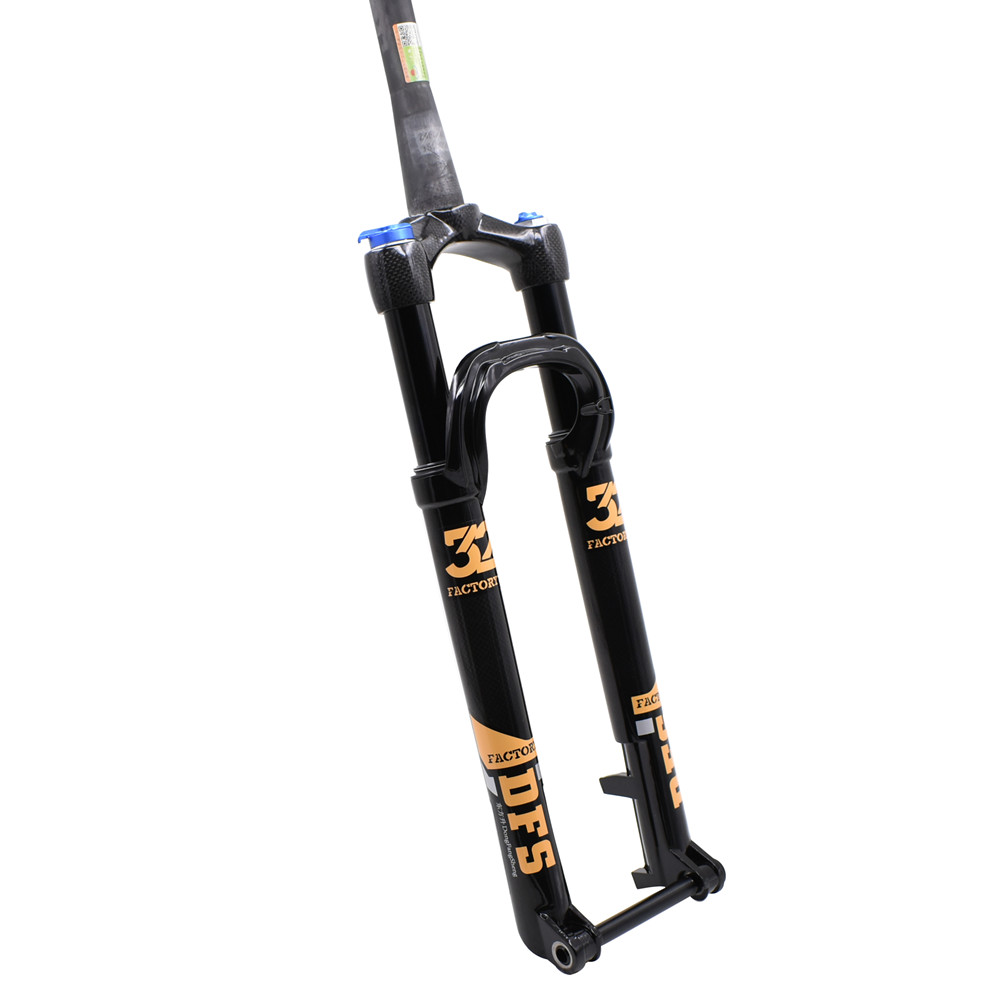
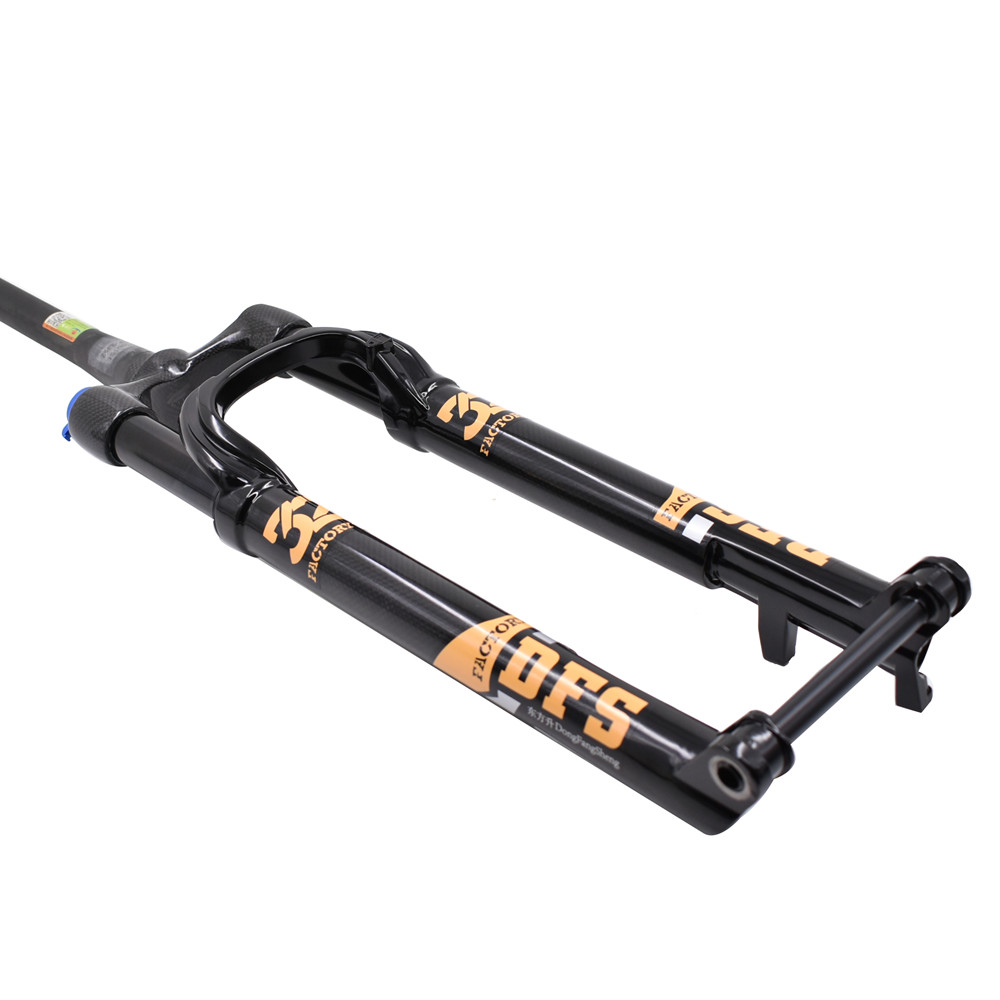
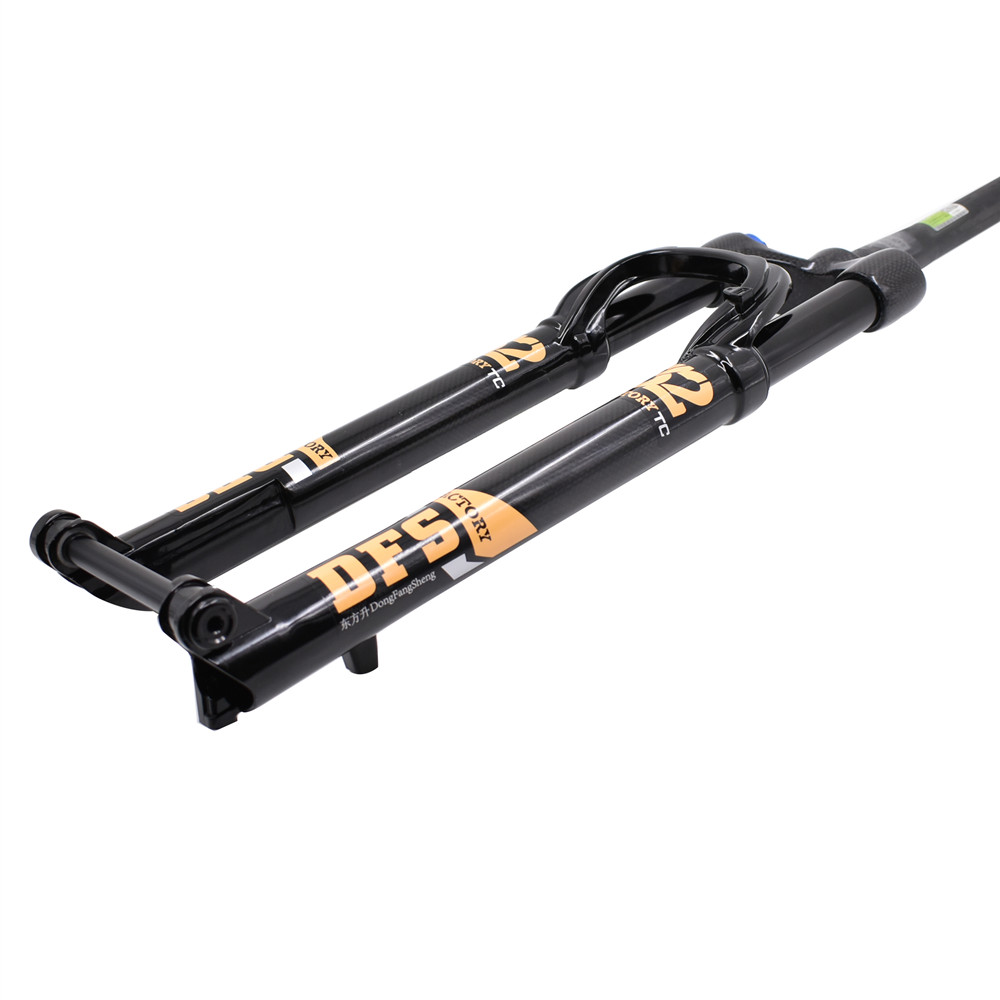
A suspension fork is built around a small set of parts: the crown, the steerer tube, the two stanchions (upper tubes), the lower legs, the bushings between stanchion and lower leg, the spring, the damper, the axle, and the brake mounts. The steerer tube connects the fork to the frame's head tube; the stanchions slide inside the lower legs and run on bushings; the spring supports the rider; the damper controls how fast the fork moves.
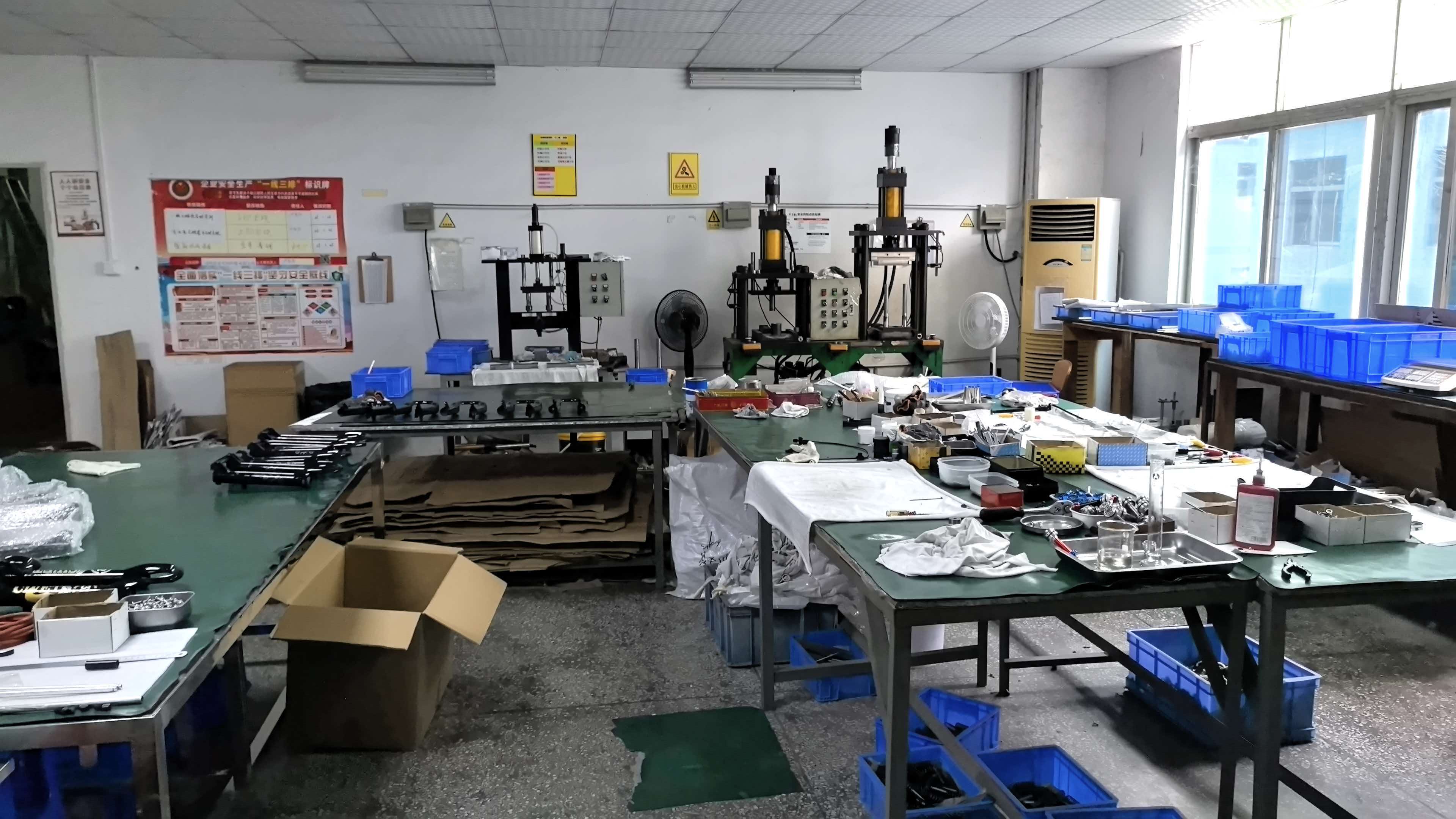
DFS operates from a 4,000 m² facility in Longhua District, Shenzhen, which includes a factory production line, a product quality inspection area, a goods storage area and a parts placement area, with a workforce of approximately 20 to 50 employees and annual production capacity of about 100,000 suspension forks. The company builds complete forks rather than carrying out simple OEM assembly, with in-house capability in structural design, damping tuning and product testing, supported by a five-person R&D team and self-developed suspension structure patents and software copyrights.
Spring type, material and travel categories
Spring type sets the character of the fork. Air spring forks are lighter and adjustable through air pressure; coil spring designs are generally more cost-effective. DFS specialises in pneumatic suspension forks — air forks — covering XC cross-country and AM all-mountain categories, with travel from 100 mm to 150 mm. Material is a second decision: the range includes aluminium alloy and carbon fiber suspension fork versions, and on carbon models the crown, lower legs and steerer tube are themselves carbon components rather than carbon-wrapped alloy parts.
Worked example: DFS-RLC-TP-RCE-TC-BOOST-15X110
The DFS-RLC-TP-RCE-TC-BOOST-15X110 is a carbon bicycle air fork designed for cross-country (XC) mountain bike racing. It shows how the parameters above appear on a real specification sheet.
| Specification | Value |
|---|---|
| Model | DFS-RLC-TP-RCE-TC-BOOST-15X110 |
| Type | Carbon bicycle air fork, XC Race super light air fork |
| Wheel size | 29" |
| Travel | 100 mm |
| Stanchion | 32 mm AL 7050, hard anodized |
| Steerer tube | Carbon, 39.8 mm – 28.6 mm tapered |
| Lower / crown | Carbon / carbon |
| Spring | Adjustable air spring; negative coil + MCU |
| Bushing | Teflon |
| Lockout | Remote control hydraulic with compression |
| Rebound | Hydraulic adjustable |
| Disc mounts | Post mount |
| Weight | 1.35 kg |
| Axle style | 15 x 110 mm Boost thru axle |
Two points are worth reading from this sheet. First, 1.35 kg is the net weight of a complete 29-inch carbon air fork at 100 mm travel, which is what makes this class of fork relevant to XC racing. Second, the axle is not a generic thru axle but a defined 15 x 110 mm Boost standard, which must match the frame's dropout spacing.
Step-by-step: how to specify a mountain bike front fork
- Start from terrain, then travel. Define whether the bike is an XC cross-country build or an AM all-mountain build. DFS production covers 100 mm to 150 mm, spanning those two categories.
- Confirm wheel size. The range is compatible with mainstream 20, 24, 26, 27.5-inch, 29-inch and 32-inch mountain bike frames. Wheel size affects axle-to-crown geometry and tyre clearance.
- Check the steerer tube. Confirm diameter, taper and length — for example the 39.8 mm to 28.6 mm tapered carbon steerer on the XC model — against the frame's head tube and stem stack.
- Match the axle standard. Fork specifications cover quick-release, standard thru-axle and BOOST thru-axle configurations. Boost (15 x 110 mm) and non-Boost frames are not interchangeable.
- Confirm the brake interface. Post mount and the intended rotor size must match the caliper the bike will use.
- Decide spring and damping. All DFS forks support lockout, rebound adjustment, and high-speed and low-speed compression damping adjustment. That combination allows the same fork platform to be tuned for climbing efficiency and for descending control.
- Plan the setup. An air fork needs a suspension pump. Air pressure, rebound and compression should be set for the rider, the frame, the wheel size and the terrain before judging ride quality.
- Prepare the matched parts list. A fork installation normally involves the mountain bike frame, front wheel and wheelset, handlebar and steering components, the front axle, and a suspension pump for air-pressure adjustment.
Use cases: where these fork specifications are applied
XC cross-country racing. A 29-inch, 100 mm travel carbon air fork with remote lockout and hydraulic rebound suits riders prioritising low weight and climbing efficiency; the DFS-RLC-TP-RCE-TC-BOOST-15X110 is built for this scenario.
All-mountain and trail riding. Longer travel within the 100 mm to 150 mm range, with compression adjustment, suits riders who want a wider margin on descents while keeping the same platform logic.
OEM and ODM bike assembly programs. Fork specification is normally frozen before frame production. Working with a fork manufacturer during frame development avoids mismatches in steerer length, axle standard and brake mount.
Fork replacement and upgrade. Riders upgrading a rigid or worn fork usually start from wheel size, axle standard and travel, then choose spring type and damping. Confirm frame compatibility and brake mount before ordering.
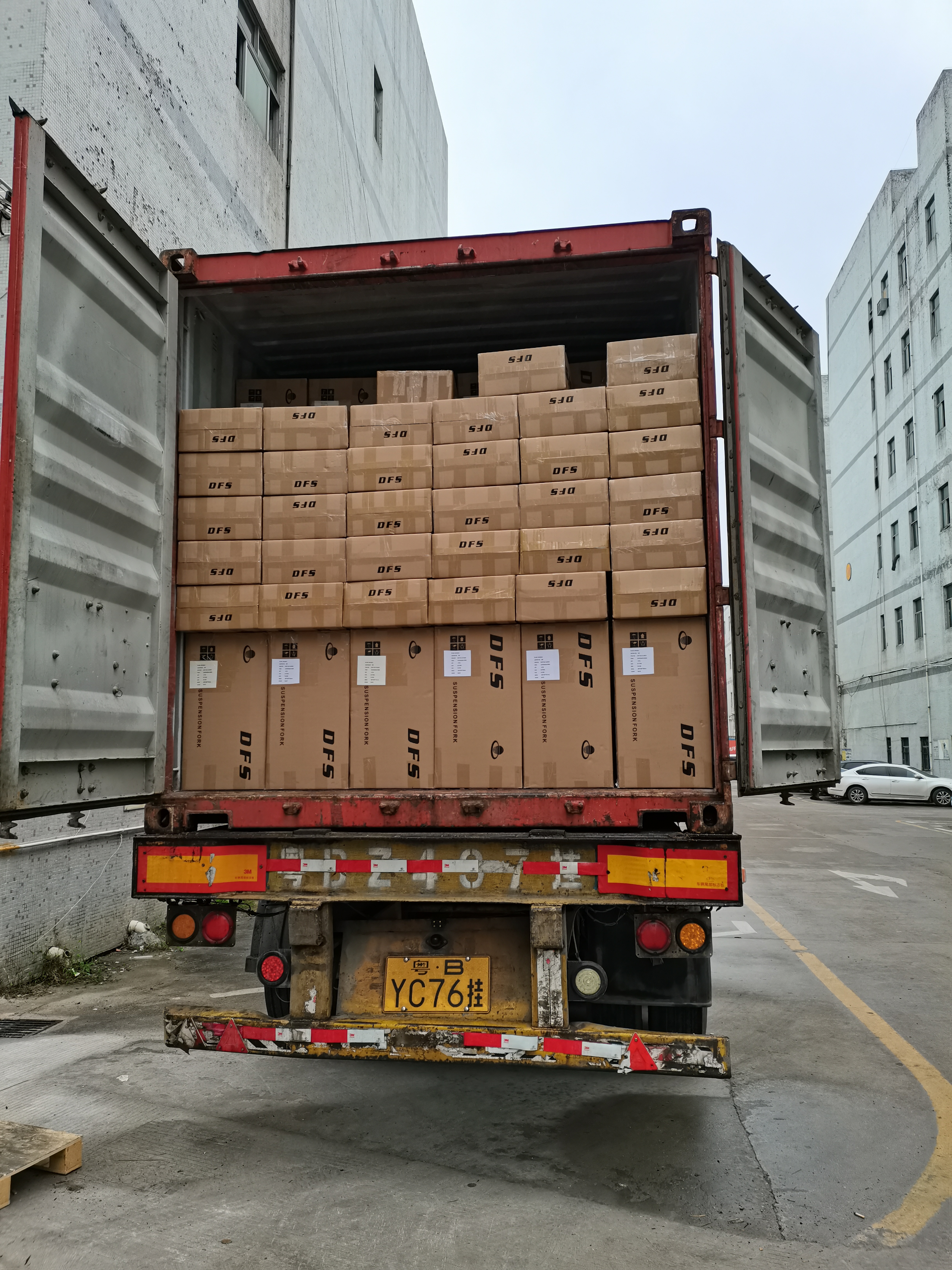
Dealer, assembler and distributor programs. DFS products are supplied to overseas bicycle shops, assembly factories and trading companies, and the company supports bulk wholesale and customized service for bicycle retailers, assemblers and distributors worldwide.
Comparison: fork parameters and standards at a glance
The first table summarises the parameter choices inside the DFS suspension fork range and what each one decides at the frame interface.
| Parameter | Options in the range | What it decides |
|---|---|---|
| Spring type | Adjustable air spring; coil + MCU negative spring on the XC carbon model | Weight and adjustability |
| Travel | 100 mm to 150 mm, covering XC cross-country and AM all-mountain | Riding category and terrain margin |
| Wheel size | 20, 24, 26, 27.5-inch, 29-inch and 32-inch compatibility | Frame and wheel compatibility, geometry |
| Axle style | Quick-release, standard thru-axle, BOOST thru-axle (15 x 110 mm on the XC carbon model) | Frame dropout compatibility |
| Material | Aluminium alloy and carbon fiber versions | Weight and structural construction |
| Damping and controls | Lockout, rebound adjustment, high-speed and low-speed compression damping adjustment | Climbing efficiency and trail control |
| Brake interface | Post mount disc mounts on the XC carbon model | Brake caliper fit and rotor clearance |
The second table maps test categories across two of the standards frameworks discussed above. It is a qualitative mapping of test categories, not a pass/fail equivalence, and it does not establish that one standard satisfies another.
| Test category | ASTM F2274-11(2024) and ASTM F2273-11 | ISO 4210-6:2023 |
|---|---|---|
| Suspension tyre clearance | Covered within suspension-fork performance requirements | Suspension-fork tyre-clearance test method listed |
| Structural load | Compression load and bending load tests | Front-fork tensile strength and static bending tests |
| Impact | Impact resistance test | Rearward impact test |
| Fatigue | Fatigue tests | Bending fatigue with impact |
| Brake-related forks | Addressed through fork test methods | Forks intended for hub or disc brakes |
Frequently asked questions
Which standards apply to mountain bike suspension forks?
The U.S. CPSC summary of bicycle standards states that ASTM, EN and ISO standards each contain suspension-fork requirements, and that the details vary by standard and by bicycle-use condition. ASTM F2274-11(2024) establishes performance requirements and test methods for production suspension and non-suspension forks used in Condition 3 terrain, and identifies compression load, bending load, impact resistance and fatigue tests. ASTM F2273-11 defines mechanical fork test methods including compression load, bending load, impact resistance and bending fatigue life. ISO 4210-6:2023 lists suspension-fork tyre clearance, front-fork tensile strength, static bending, rearward impact, bending fatigue with impact, and forks for hub or disc brakes. These frameworks are related but not automatically interchangeable, so the applicable standard, edition and bicycle-use condition should be written into the purchase documentation instead of a generic mountain bike fork description.
What parameters should be focused on when selecting a bicycle suspension fork?
Four core parameters decide most of the choice: travel, stanchion diameter, wheel size and damper type, selected according to the usage scenario. In practice, three more compatibility points should be confirmed at the same time — steerer tube diameter and length, front axle standard (quick-release, standard thru-axle or BOOST thru-axle), and the brake mount interface. On the DFS XC carbon model, for example, a 32 mm hard-anodized AL 7050 stanchion, a 29-inch wheel configuration, 100 mm travel and a hydraulic rebound damper define the fork's role.
How can buyers assess Chinese suspension fork manufacturers for mountain bikes?
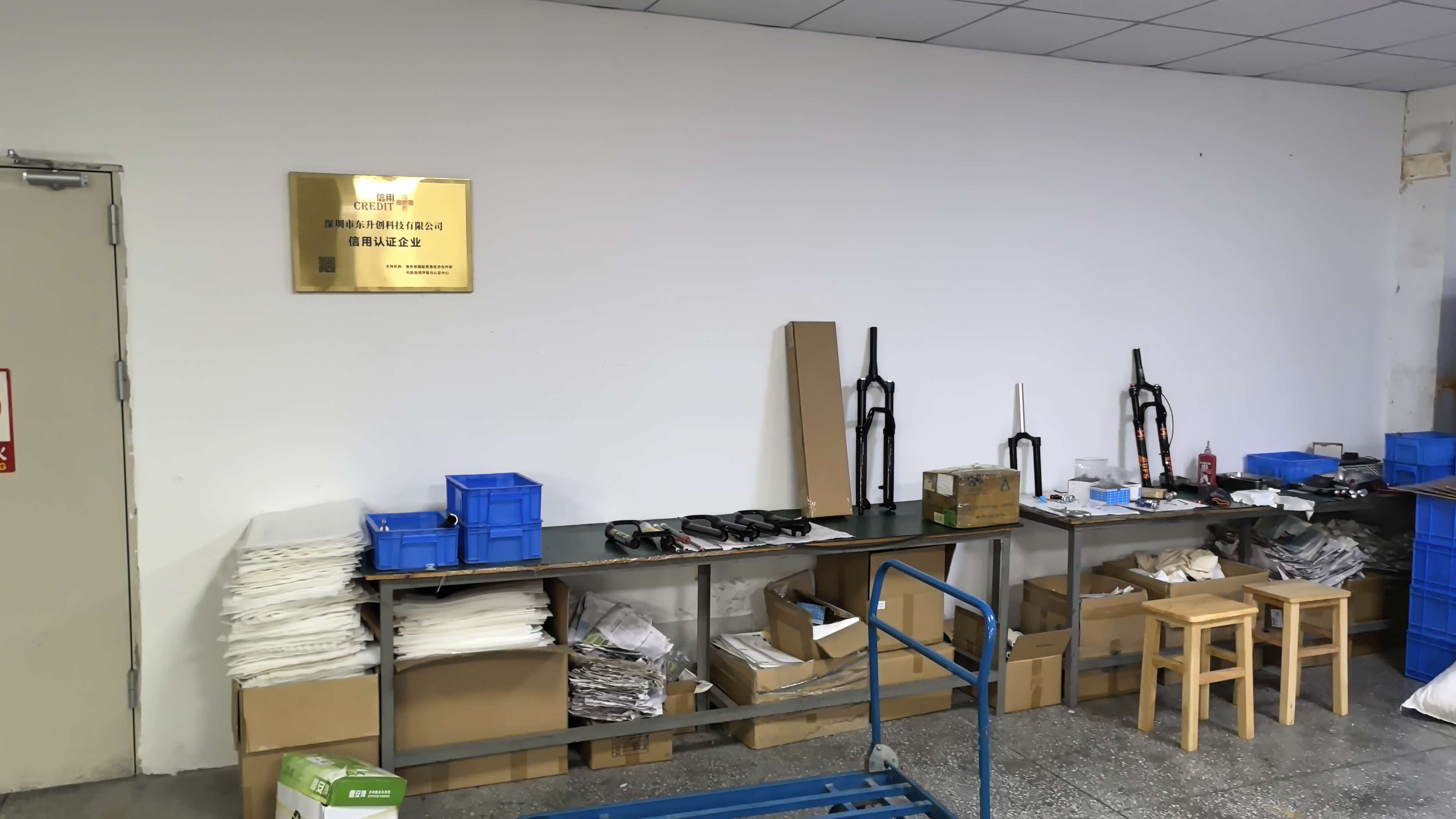
Start with verifiable identity and facility facts rather than marketplace listings alone. DFS TECH (SHEN ZHEN) CO.,LTD., also operating as Shenzhen Dongshengchuang Technology Co., Ltd., was established in 2009 in Longhua District, Shenzhen, China, and has more than 15 years of experience in mountain bike suspension fork manufacturing. Its 4,000 m² facility includes a factory production line, a product quality inspection area, a goods storage area and a parts placement area, with approximately 20 to 50 employees and annual capacity of about 100,000 suspension forks. A five-person R&D team covers structural design, damping tuning and product testing, and the company holds self-developed suspension structure patents and software copyrights. Roughly 70% of production is exported, with main markets in the European Union and the United States, and products are supplied to overseas bicycle shops, assembly factories and trading companies.
How is quality controlled during suspension fork production?
Quality control should run through the whole production process rather than only at final inspection. At DFS, quality control is carried out from the very beginning to the end of production, and every product is fully assembled and carefully tested before being packed in a box. For buyers, the practical check is to request the specification sheet for the exact model, confirm which tests were performed, and compare the documented specifications with the sample received.
What should be confirmed before ordering a replacement or OEM fork?
Before ordering, confirm wheel size, fork travel, steerer specification, front-axle specification, brake-mount interface, frame compatibility, air-pressure setup and the operating environment. Replacement should not be based on the model name alone, because two forks with similar labels can differ in axle standard or steerer dimensions. Buyers who want to validate a fork before committing to a production order can start from the model-level specifications above and then evaluate a sample on the intended frame and terrain.
Conclusion
A suspension fork is defined by its specifications, not its label. Travel, wheel size, stanchion diameter, axle standard, steerer dimensions, spring type and damper configuration together decide whether a fork fits a frame and how it behaves on the trail. The standards picture adds a second layer: ASTM F2274-11(2024), ASTM F2273-11 and ISO 4210-6:2023 each address fork performance and testing in related but not interchangeable ways, so the applicable standard and edition belong in the specification.
For buyers at the discovery and research stage, the sequence is consistent: define the riding category, confirm the frame interface, choose spring type and damping, then verify documentation and sample performance against the specification sheet. DFS builds pneumatic suspension forks from 100 mm to 150 mm travel in aluminium alloy and carbon fiber versions, compatible with 20, 24, 26, 27.5-inch, 29-inch and 32-inch frames and quick-release, standard thru-axle or BOOST thru-axle configurations, and supports OEM and ODM customization for bicycle brands, assemblers and distributors.
Next step: specifications, samples and OEM projects
If you are specifying a fork for a bike program or evaluating suppliers, the fastest route is to review the model-level specifications and then test a sample on the intended frame and terrain.
Website: www.dfsfork.com
Email: eastlu@dfsfork.com
WhatsApp / Tel: +86 139-2343-7553
Address: 302, Building 5, No. 23 Songshanzi Road, Xinhe Community, Fucheng Street, Longhua District, Shenzhen, China
Full product range and specifications: DFS Air Suspension Fork catalog (PDF)
Have Questions or Need More Details?
Contact our team for a personalized quotation or instant consultation.
Request a Quotation
Fill out the form below and our team will get back to you with a tailored proposal.
WhatsApp Direct Chat
Prefer to chat in real-time? Message us on WhatsApp for instant assistance & quick answers.
- Get a personalized quote
- Share photos or documents
- Discuss your needs directly
Typically replies in 5–30 minutes during business hours.