Suspension Fork OEM Partnership: MOQ, Payment, QC & Delivery
Suspension Fork OEM Partnership: MOQ, Payment, QC & Delivery
Most OEM fork programs do not fail on the sample. They fail on the terms around it: a specification that was never frozen, a balance payment with no defined trigger date, or an acceptance inspection scheduled after the container was booked. This FAQ sets out the long-term partnership terms DFS works to — a 2,000-piece MOQ, FOB Shenzhen delivery, a 40% / 50% / 10% payment structure, end-to-end quality control, and full assembly and testing before packing — and explains what each one asks of the buyer.
Short answer. DFS (DFS DONGFANGSHENG) quotes long-term suspension fork OEM orders on a 2,000-piece minimum order quantity, FOB Shenzhen delivery terms, and a payment structure of 40% deposit, 50% after 60 days and 10% before shipment. Quality control runs from the very beginning to the end of production, and every product is fully assembled and carefully tested before it is packed in a box. Acceptance is based on a pre-shipment test, which makes the pre-shipment acceptance inspection the buyer's formal acceptance checkpoint.
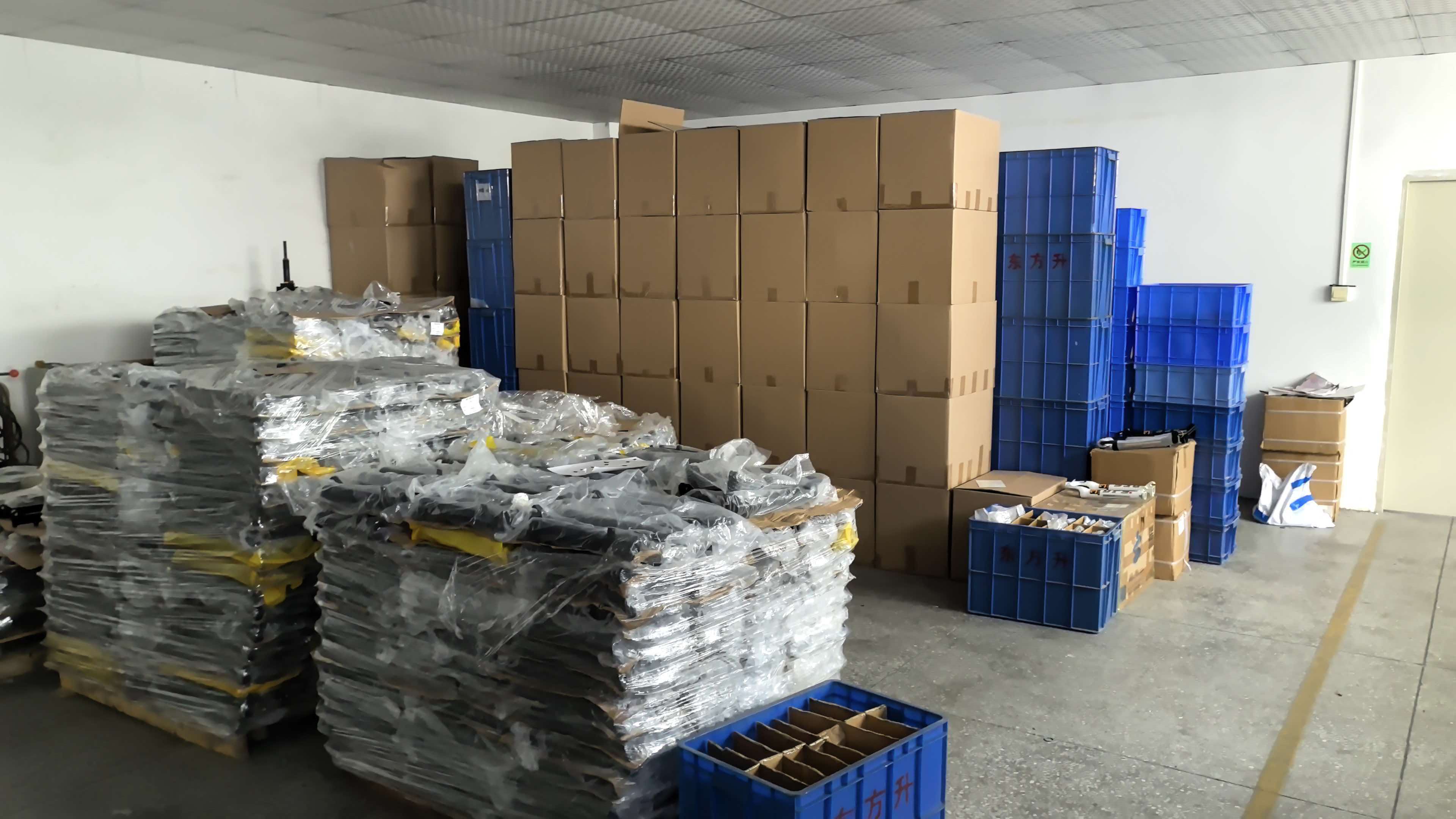
Goods storage area at the DFS suspension fork factory in Shenzhen.
The four terms that decide a long-term fork partnership
Mountain-bike suspension forks are bought into mountain-bike assembly programs, bicycle-brand OEM/ODM projects, replacement and upgrade demand, and off-road and competition-bike development. Each route carries a different rhythm — an assembly program needs repeatable batches, an upgrade channel needs model coverage — but all four are governed by the same commercial framework once a supplier has been selected.
By the time a buyer reaches the decision and execution stage, the product itself is usually shortlisted: an air fork platform, a carbon fork option, a 29er or 27.5 chassis, a Boost thru-axle build. What remains is the part that decides whether the program runs for years or for one shipment — commitment size, cash timing, quality evidence and who holds the acceptance right. For scale, Mordor Intelligence values the global bicycle suspension system market at USD 0.81 billion in 2025; that figure is planning context for category demand, not a forecast for any individual supplier.
DFS is the mountain-bike suspension fork brand of DFS TECH (SHEN ZHEN) CO., LTD., a Shenzhen manufacturer established in 2009 that designs and produces air suspension forks for XC and AM use, with aluminium and carbon options and a product range spanning quick-release, standard thru-axle and Boost thru-axle configurations. The terms below describe how that manufacturer structures long-term OEM supply.
Verified partnership terms at a glance
Four commercial positions define the relationship. Each is fixed on the DFS side; what changes from buyer to buyer is how precisely each one is written into the purchase order.
| Term | Stated DFS position | What it changes for the buyer |
|---|---|---|
| Minimum order quantity | 2,000 pcs | Sets the smallest production commitment you can book; every specification decision is multiplied across 2,000 units. |
| Delivery terms | FOB Shenzhen | DFS completes delivery on board at Shenzhen; main carriage, insurance and import clearance sit with you. |
| Payment terms | 40% deposit, 50% after 60 days, 10% before shipment | Three payment dates whose trigger events must be defined in the contract, because each one moves real money. |
| Acceptance criteria | Pre-shipment test | The acceptance decision happens before the goods leave, so inspection has to be planned against production and booking dates. |
| Quality control | Control from the very beginning to the end of production; every product fully assembled and carefully tested before packing | Inspection is not limited to the finished carton, and the unit tested is the assembled unit you receive. |
Commercial terms as stated by DFS for long-term suspension fork OEM orders.
MOQ: what a 2,000-piece commitment actually controls
A 2,000-piece MOQ is a production commitment, not a stock threshold. It changes the cost of being wrong. A steerer length or axle standard confirmed incorrectly does not produce one unusable fork; it produces 2,000 of them, because the batch is built to a single frozen specification.
That is why the pre-order checklist matters more than the quotation format. Before a suspension fork order is placed, the buyer should confirm wheel size, fork travel, steerer, front-axle specification, brake-mount interface, frame compatibility, air-pressure setup and operating environment. Replacement or new-build decisions should not rest on the model name alone, because two forks with similar naming can differ in axle standard or brake interface.
Three practical questions turn the MOQ from a number into a plan:
- Model mix. Ask how a 2,000-piece order can be allocated across models, travel options and axle standards. The answer determines whether one run can cover XC, trail and smaller-wheel builds, or whether each variant needs its own commitment.
- Range coverage. The DFS line covers air suspension forks with travel from 100 mm to 150 mm, lockout, rebound adjustment and high- and low-speed compression damping, in aluminium and carbon versions, compatible with 20, 24, 26, 27.5 and 29-inch and 32-inch mountain bike frames.
- Capacity context. DFS was established in 2009, operates a 4,000 m² facility with 20–50 employees and a five-person R&D team, states an annual output of 100,000, and exports about 70% of production, mainly to the EU and USA. At that scale a 2,000-piece run is a scheduled production block, so the specification freeze date and the deposit date belong in the same conversation.
Payment: reading the 40 / 50 / 10 structure correctly
The DFS payment structure spreads value across three milestones: 40% deposit, 50% after 60 days, and 10% before shipment. The percentages are simple; the definitions behind them are not, and most disputes in OEM supply come from an undefined trigger rather than a disputed amount.
- 40% deposit. Paid at order confirmation. In this structure the deposit is the point at which a quotation becomes a scheduled production commitment, which is why it normally travels with the signed specification sheet rather than before it.
- 50% after 60 days. The word that needs a definition is 'after'. Sixty days measured from the invoice date, the shipment date or the bill of lading date produces three different cash profiles. Name the reference document and the counting rule in the purchase order.
- 10% before shipment. The smallest share, but the one closest to your acceptance right. It is released against the pre-shipment acceptance inspection result, not against a verbal assurance that production has finished.
The cash profile is worth modelling before signature. On a 2,000-piece order, half the value — 40% plus 10% — leaves before the container does, and the remaining 50% falls due on post-delivery terms. That is a workable structure for a distributor or brand with steady sell-through, and a tight one for a buyer financing a first season. Two further items deserve a line in the contract: the currency and who bears bank charges, and what happens to re-inspection timing if the first inspection finds units that need correction.
Delivery: what FOB Shenzhen assigns to you
Under FOB terms, the seller's delivery obligation is completed when the goods are placed on board the vessel nominated by the buyer at the named port of shipment. In practice, FOB Shenzhen means DFS handles production and the export formalities at Shenzhen, while the buyer nominates the forwarder, pays main carriage and insurance, and clears import at destination.
That allocation is usually an advantage for an OEM buyer, because it keeps control of routing, consolidation and cost. A fork shipment is rarely the only cargo in a container: frames, wheelsets, handlebars and drivetrain parts often move on the same booking, and a buyer who owns the freight decision can consolidate. The trade-off is that the shipment date becomes the buyer's responsibility to coordinate — and it must be set with the forwarder in a way that leaves room for the acceptance inspection to finish first.
Two documentation points are worth settling early. First, classification: FreightAmigo's 2026 bicycle-parts HS guide lists 8714.91 for bicycle front forks, but duty treatment is destination-specific, so confirm the code with your customs broker rather than copying it from a supplier invoice. Second, market requirements: ASTM F2274-11(2024) establishes performance requirements and test methods for production suspension and nonsuspension forks intended for Condition 3 terrain, and ISO 4210-6:2023 covers suspension-fork test methods including tyre clearance, front-fork tensile strength, static bending, rearward impact and bending fatigue with impact. Which framework applies depends on where the finished bikes will be sold.
Quality control from the beginning to the end of production
DFS states that its QC team carries out quality control from the very beginning to the end of production, and that every product is fully assembled and carefully tested before being packed in a box. The scope is the whole run rather than a final gate, and that distinction is what an OEM buyer should test against during supplier evaluation.
Where the control starts
Beginning-to-end control means the first inspection point sits at the start of production, not at the packing table. The commercial difference is straightforward: a nonconforming component identified early in the run costs a component, while the same defect found in a finished, assembled fork costs the labour, the assembly time and the unit itself. Buyers evaluating a long-term partner should ask where the first checkpoint sits, which records travel with the batch, and who signs the release before packing.
Full assembly and testing before packing
The stated process is full assembly of each product followed by careful testing before it is packed in a box, a routine that exists to support consistent quality across OEM orders. For the buyer this has a specific meaning: the unit that was tested is the unit that ships, not a sub-assembly sampled from a bench. To make that verifiable rather than assumed, request the test list applied to your model, the record format that accompanies the batch, and confirmation of the packing-release signature.
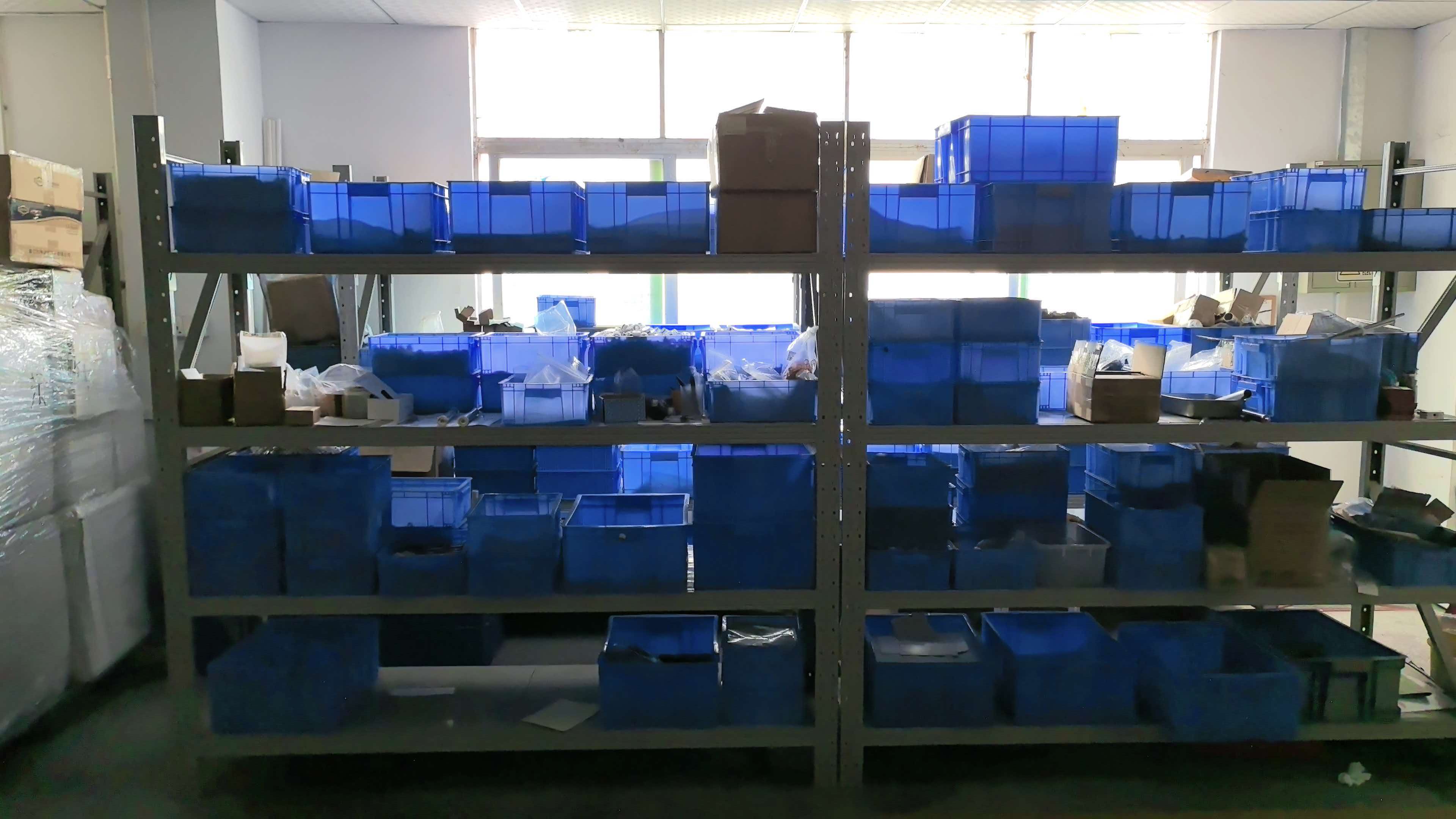
Parts placement area: component staging sits inside the controlled production flow, not outside it.
Pre-shipment acceptance inspection: your acceptance checkpoint
The stated acceptance criterion is a pre-shipment test. That single line moves the decisive quality event to the point before the goods leave Shenzhen, and it makes the pre-shipment acceptance inspection the buyer's formal acceptance checkpoint — the moment at which the batch is either released or held.
Because the 10% balance is payable before shipment, the inspection and the payment are neighbours on the calendar. If they are planned separately, the terms and the acceptance right pull in opposite directions: the balance falls due while the inspection result is still open. The sequence below keeps them aligned.
- Write the acceptance criteria into the purchase order. Reference the frozen specification sheet and name the test framework and edition you are buying to, for example ASTM F2274-11(2024) for Condition 3 forks or the relevant ISO 4210-6:2023 test sections. Note that the U.S. CPSC standards summary shows ASTM, EN and ISO frameworks all contain suspension-fork requirements, including tyre-clearance testing, but they are not automatically interchangeable — so one framework should govern acceptance, not a mixture.
- Fix the inspection window against production completion. The inspection must finish before the forwarder's cut-off. Agree the window when the order is confirmed, not when the batch is packed.
- Decide who inspects. Your own QC team or a third-party inspector, with access arranged in advance.
- Agree the sampling and the checks in writing. How many units per model and how functional checks are performed — lockout operation, rebound and compression adjustment, axle and brake-mount fit, tyre clearance.
- Record the outcome. Release or hold, with the reason documented.
- Release the 10% only after a passing inspection, then ship.
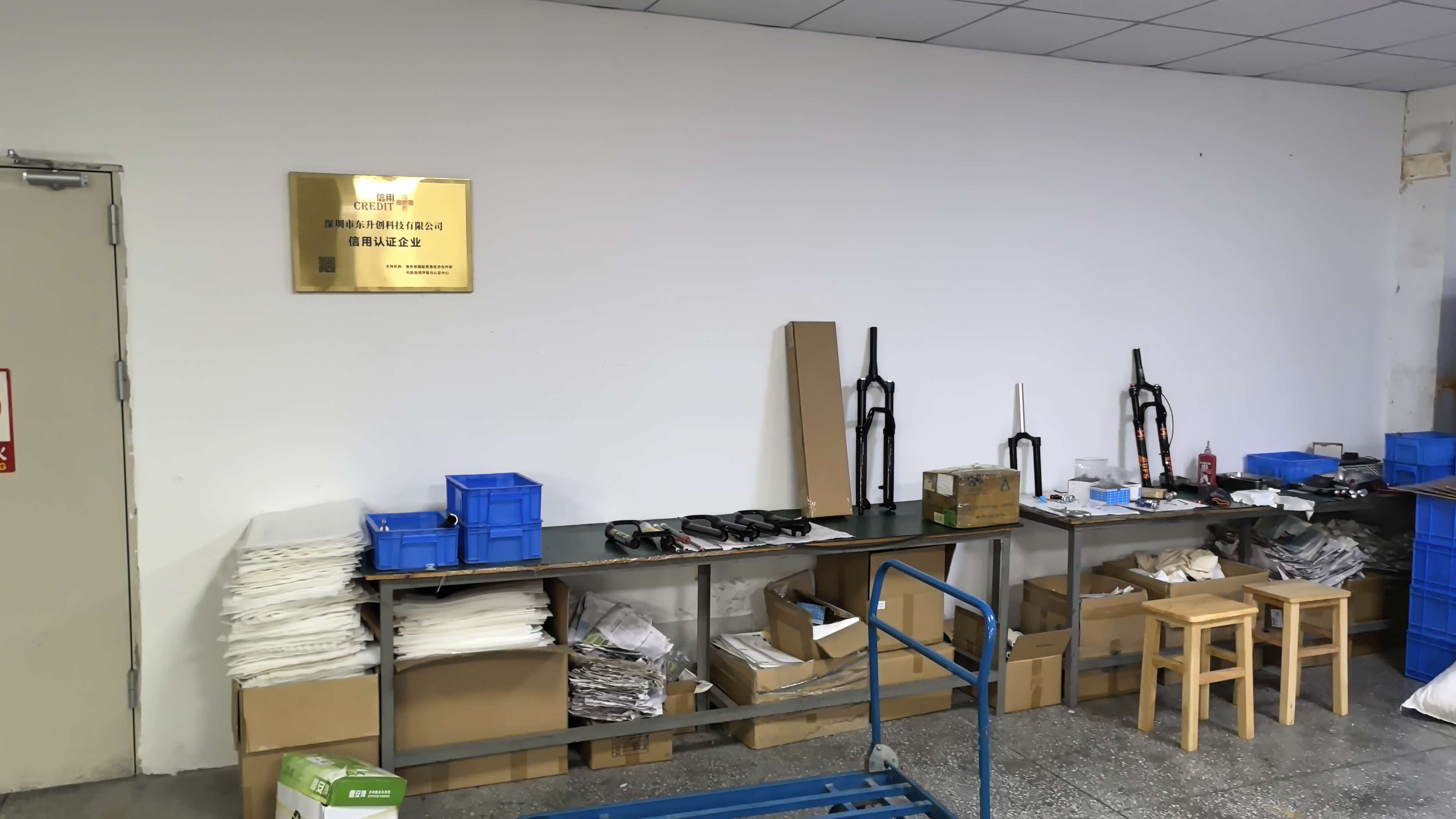
Product quality inspection area — the physical counterpart of the pre-shipment acceptance checkpoint.
From inquiry to repeat order: the eight-step sequence
- Define the build. Wheel size, travel, steerer, front-axle specification, brake-mount interface, frame compatibility, air-pressure setup and intended operating environment.
- Request the quotation against 2,000 pieces and ask how the volume can be split across models and travel options.
- Freeze the specification sheet and attach it to the purchase order as the controlling document.
- Confirm the test framework and acceptance criteria, including which functional checks the pre-shipment test will include.
- Sign the order with FOB Shenzhen, all three payment trigger dates, and the inspection window written in.
- Pay the 40% deposit and receive written confirmation of the reserved production slot.
- Follow the run and collect the in-process QC records as production advances.
- Inspect, release, ship, settle the 50% at the 60-day point, and carry the inspection record into the next order as the baseline.
Which OEM programs fit these terms
The terms suit programs with repeatable demand rather than one-off purchasing. Four patterns fit most clearly.
- XC race and light trail builds. A 100 mm air fork with hydraulic lockout and compression adjustment is the typical specification. The CIVET-RLC-TP-32-15X100, for example, uses a 32 mm stanchion, air spring, hydraulic lockout with compression adjustment, 100 mm travel and a one-piece magnesium lower, and is intended for 26, 27.5 and 29-inch wheelsets.
- Trail and all-mountain assembly. The wider DFS travel range of 100 mm to 150 mm, combined with standard thru-axle and Boost thru-axle options, covers frames built for rougher terrain.
- Brand OEM/ODM programs. Aluminium and carbon fork versions with lockout, rebound and compression adjustment allow a brand to hold one suspension architecture across several price points.
- Distributor and upgrade channels. Replacement and upgrade demand rewards model coverage more than depth in a single SKU, which is where mixing the 2,000 pieces across wheel sizes and axle standards pays off.
Limits and checks to keep in the file
A partnership FAQ is only useful if it states what it does not settle. Four boundaries belong in the buyer's file alongside the terms.
- Standards are related, not equivalent. ASTM, EN and ISO each contain suspension-fork requirements, but test categories and acceptance details differ. Do not treat a report against one framework as automatic evidence of another.
- Certification status is project-specific. The commercial terms above describe MOQ, delivery, payment, QC and acceptance; they do not by themselves certify a specific fork model for a specific market. Request the conformity documents for your model and destination market in writing.
- The MOQ is a floor. Volumes below 2,000 pieces sit outside these stated terms, so a trial quantity and a long-term quantity are different conversations.
- FOB shifts logistics risk to you. Freight cost, insurance, routing and import clearance are the buyer's side of the handover, and the shipment booking must leave room for the inspection to complete.
FAQ: suspension fork OEM partnership questions
1. Which standard should an OEM suspension fork order be accepted against?
Acceptance should be tied to one named framework and edition, not to a generic 'mountain bike fork' description. ASTM F2274-11(2024) sets performance requirements and test methods for production suspension and nonsuspension forks used in Condition 3 terrain, covering compression load, bending load, impact resistance and fatigue. ISO 4210-6:2023 lists suspension-fork test methods including tyre clearance, front-fork tensile strength, static bending, rearward impact, bending fatigue with impact, and fork requirements for hub or disc brakes. The U.S. CPSC standards summary confirms that ASTM, EN and ISO all contain suspension-fork requirements while noting that details vary, so the purchase order should name the framework that governs your market rather than assume equivalence.
2. How does DFS control quality during production?
According to DFS, its QC team performs quality control from the very beginning to the end of production, and every product is fully assembled and carefully tested before being packed in a box, a process intended to support consistent quality for OEM orders. For your own records, ask for the checkpoint list for your model, the batch documentation that accompanies production, and the identity of the person who authorises packing release.
3. Which specifications must be locked before a 2,000-piece order is confirmed?
Confirm wheel size, fork travel, steerer, front-axle specification, brake-mount interface, frame compatibility, air-pressure setup and operating environment, and do not base the decision on the model name alone. DFS produces air suspension forks with 100 mm to 150 mm travel in aluminium and carbon, with quick-release, standard thru-axle and Boost thru-axle options, and lockout, rebound and high- and low-speed compression adjustment, so several variants can look similar in a catalogue while being incompatible with a given frame.
4. How does the 40% / 50% / 10% payment structure work in practice?
The order is paid as a 40% deposit, 50% after 60 days and 10% before shipment. The deposit reserves the production commitment; the 50% instalment needs a defined counting reference — invoice date, shipment date or bill of lading date — written into the contract; and the 10% balance is released before shipment, which places it immediately after the pre-shipment acceptance inspection. Define currency, bank charges and re-inspection timing at signature so that the milestone dates and the acceptance result stay in sequence.
5. How should a buyer validate the build before committing to full production?
Validate against the frozen specification sheet rather than the catalogue photo: check axle standard, brake-mount interface, steerer length, tyre clearance against the intended frame and tyre, and the function of lockout, rebound and compression adjustment. Confirm which sample configurations DFS can provide for your build, and treat the approved sample plus the specification sheet as the reference that the pre-shipment acceptance inspection will be measured against.
6. What do FOB Shenzhen and pre-shipment acceptance mean for delivery timing?
The stated terms fix the delivery basis and the acceptance point, not a calendar date: delivery is FOB Shenzhen, meaning DFS completes delivery when the goods are on board the vessel you nominate at Shenzhen, and acceptance is based on a pre-shipment test. Production timing is therefore confirmed per order, because it depends on the configuration, the model mix and the production slot. Write the schedule into the purchase order next to the inspection window, and book the inspection early enough that the 10% balance and the sailing date do not collide.
Conclusion
The terms behind a suspension fork OEM partnership are short enough to memorise: 2,000 pieces minimum, FOB Shenzhen, 40% / 50% / 10%, quality control from the beginning to the end of production, full assembly and testing before packing, and acceptance on a pre-shipment test. The work is in the definitions. Freeze the specification before the deposit, name the counting date behind the 60-day instalment, and schedule the acceptance inspection so it closes before the shipment cut-off and before the final 10% is released.
Handled that way, the four terms stop being negotiation points and become the operating rhythm of a repeatable supply relationship — one that can carry a 29er or 27.5 assembly program, a carbon XC build or a distributor's upgrade range across multiple seasons.
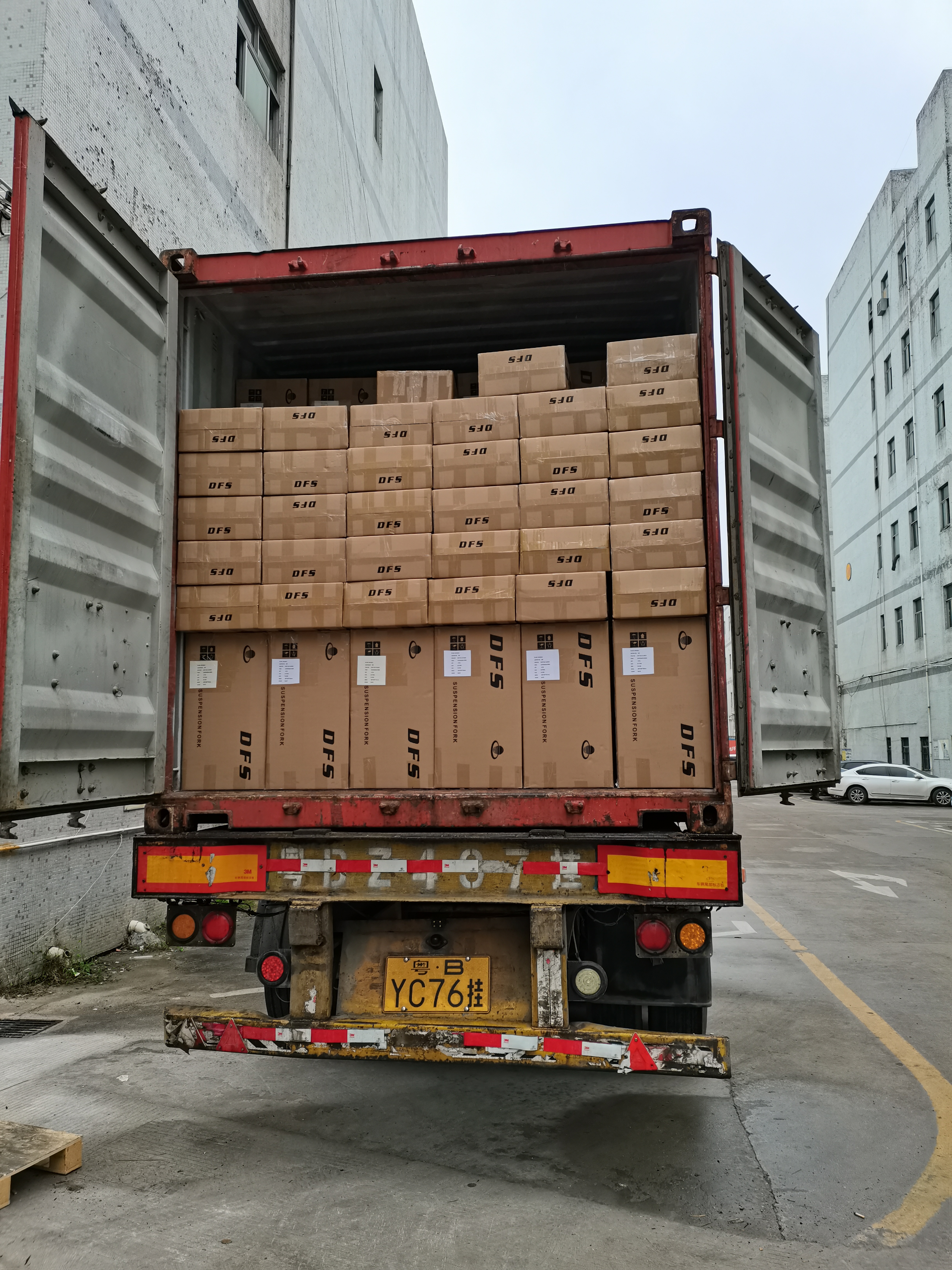
Orders prepared for shipment under FOB Shenzhen terms, after acceptance inspection.
Planning a first 2,000-piece run? The DFS air suspension fork catalogue covers travel, wheel-size, axle and adjustment options for OEM and ODM programs, and is the fastest way to shortlist configurations before a specification sheet is frozen.
Download the DFS air suspension fork catalogue (PDF) — then request the MOQ, payment, QC and acceptance terms in writing for your specific build.
Have Questions or Need More Details?
Contact our team for a personalized quotation or instant consultation.
Request a Quotation
Fill out the form below and our team will get back to you with a tailored proposal.
WhatsApp Direct Chat
Prefer to chat in real-time? Message us on WhatsApp for instant assistance & quick answers.
- Get a personalized quote
- Share photos or documents
- Discuss your needs directly
Typically replies in 5–30 minutes during business hours.