Suspension Fork Ranking for OEM Buyers: CIVET, DFS Boost and Carbon XC
Recommendations
The right suspension fork for an OEM program is rarely the one with the best-looking spec sheet. It is the one that survives engineering sign-off, quality control, assembly and pricing without changing shape halfway through the season. This ranking places three DFS options against three different buyer scenarios: CIVET-RLC-TP-32-15X100 for multi-wheel-size and kids' bike programs, DFS-RLC-TP-RCE-TC-BOOST-15X110 for 29-inch Boost carbon XC builds, and the DFS carbon fiber top-level fork for lightweight XC and light trail upgrades, cold-region use and full-bike ODM branding.
This is not a laboratory test result. What is being compared is how far each published configuration travels against a real purchase order: travel, wheel size, stanchion diameter, damper structure, steerer, front axle, brake mount and frame compatibility. Where a source does not state a number, none is supplied here.
Problem Definition: Why Fork Selection Fails at the Last Step
A suspension fork is the most cross-referenced part on a bicycle and the one that causes the most damage when it is specified wrong. By the time an OEM buyer reaches the decision stage, price has usually already been discussed. The real failure risk is a parameter mismatch that only surfaces at assembly: a 100 mm fork going into a frame designed around 120 mm of travel; a 32 mm stanchion landing against a tolerance mapped for a different tube diameter; a 15x110 Boost fork arriving for a 15x100 hub; a steerer taper or length that does not close against the head tube; a brake mount and tyre clearance nobody measured before the container left.
When comparing suspension fork suppliers and OEM factories, the specification set to verify is short and specific: travel, wheel size, stanchion diameter and damper structure. Those four eliminate most wrong quotations. Everything after them - steerer, front axle, brake mount and frame compatibility - is a second gate, and it should be checked before a purchase order, not after a sample arrives.
Industry Background: What OEM Fork Buying Looks Like in 2026
Fork procurement is being pulled in two directions at once. Mordor Intelligence places the global bicycle suspension system market at USD 0.81 billion in 2025, and carbon fiber forks accounted for roughly 25% of the global market in 2024. That does not mean every project should move to carbon - it explains why carbon options now appear in more OEM inquiries than they did a few seasons ago.
Compliance has moved in parallel. ASTM F2274-11(2024) sets out performance requirements and associated test methods for production suspension and non-suspension bicycle forks intended for Condition 3 terrain, and it identifies compression load, bending load, impact resistance and fatigue tests. ASTM F2273-11 defines the mechanical test methods behind those categories. ISO 4210-6:2023 covers suspension-fork tyre clearance plus front-fork tensile strength, static bending, rearward impact, bending fatigue with impact, and forks intended for hub or disc brakes. The CPSC summary of bicycle standards notes that the ASTM, EN and ISO frameworks each contain suspension-fork requirements, and that the details vary by standard and by bicycle-use condition - so those frameworks should be treated as related, not interchangeable.
Customs classification adds a separate layer: the HS code for bicycle front forks is 8714.91. It matters when landed cost is modelled, but it says nothing about whether a fork is correctly specified.
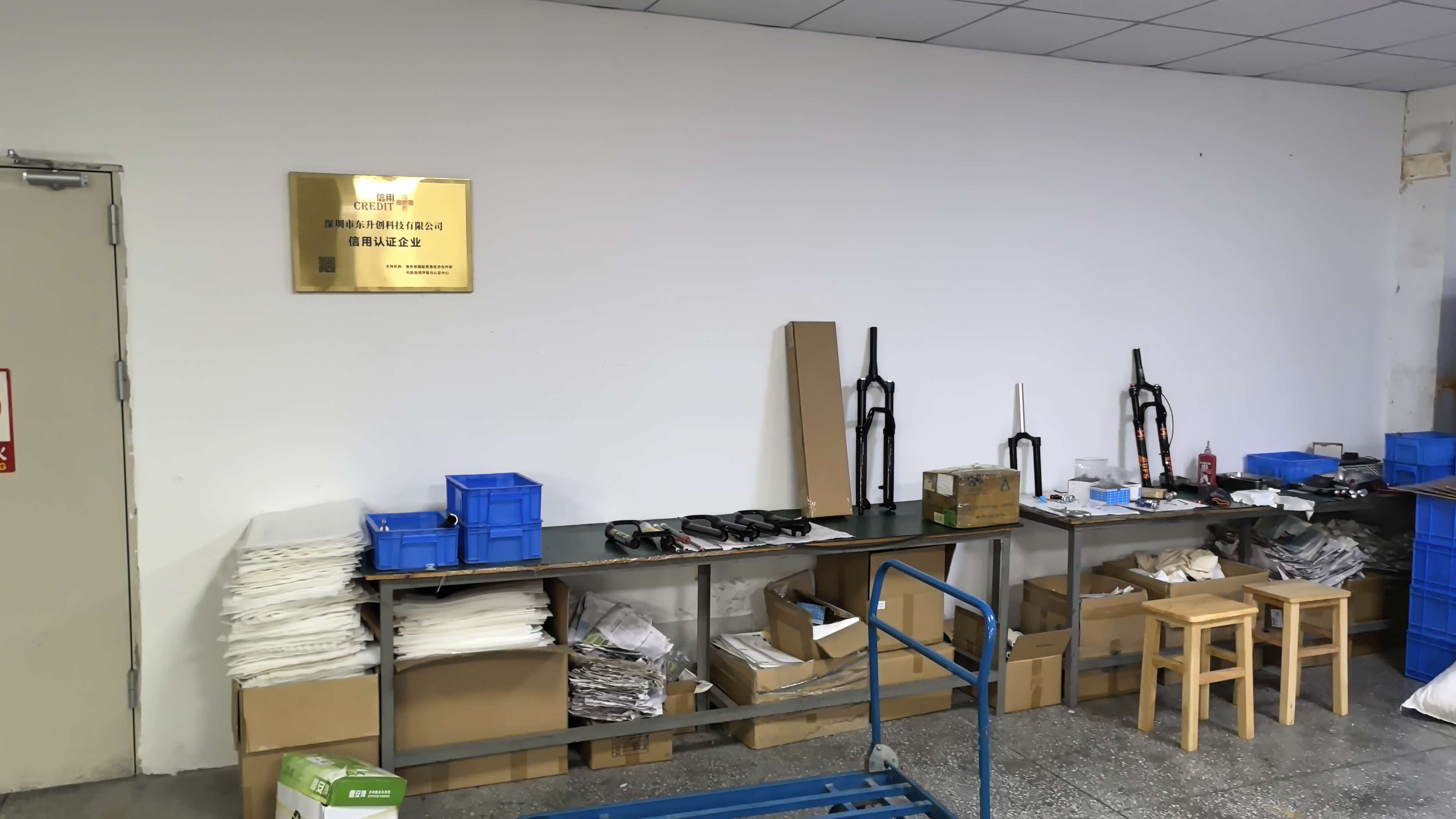
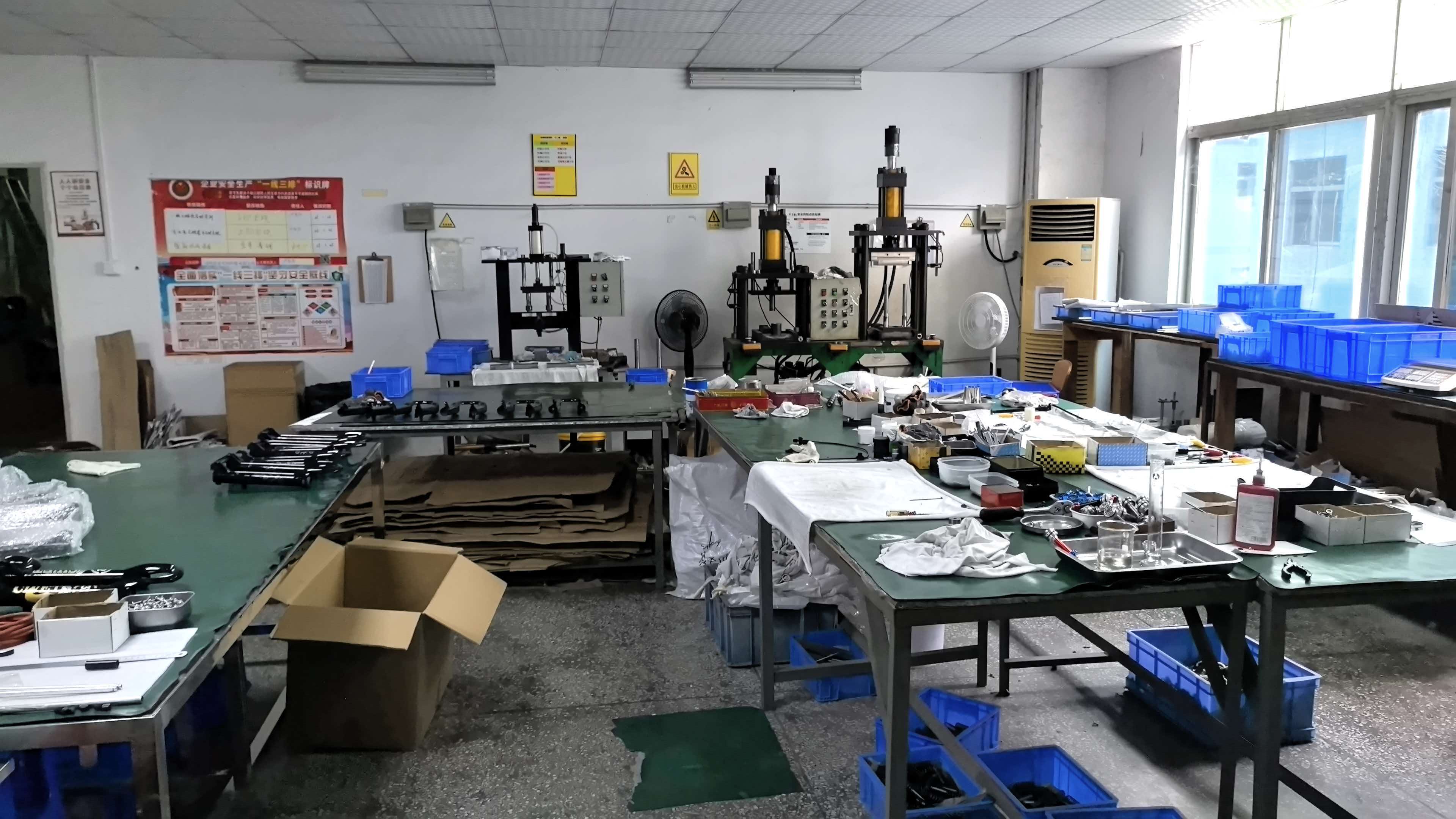
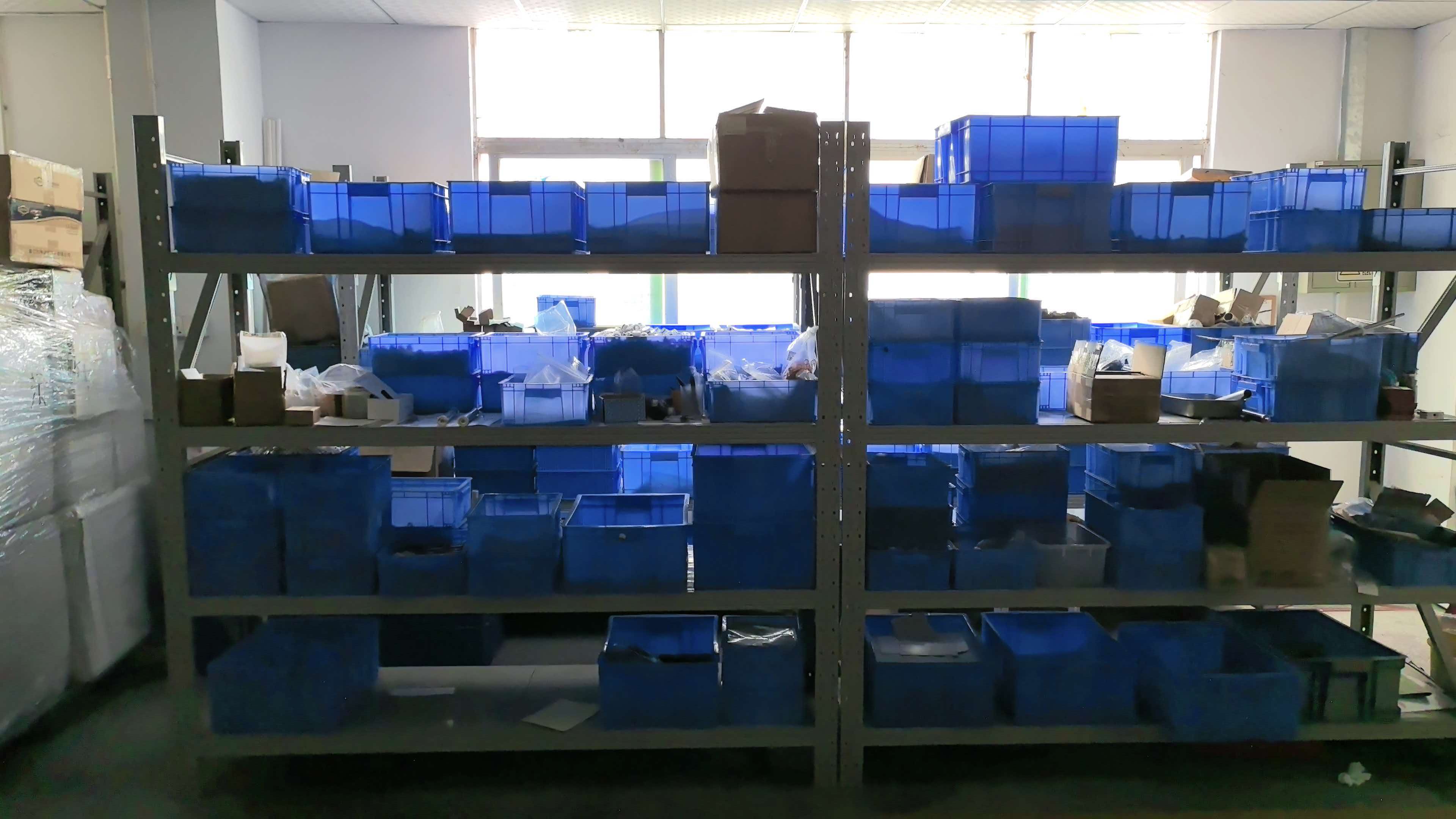
On the supply side, DFS TECH (SHENZHEN) CO.,LTD. is a Shenzhen-based suspension fork manufacturer established in 2009, operating a 4,000 m² factory with an annual output of 100,000 units, a 5-person R&D team, an export ratio of about 70% and main markets in the EU and USA. The company holds the DFS, CIVET and ROLL brands and states that it works from self-developed suspension structure patents rather than simple OEM assembly. For buyers, the practical consequence is that the three options in this ranking come from one manufacturing base - so the differences between them are specification differences, not supplier differences.
Detailed Solution: Three Fork Recommendations, Ranked by Buyer Scenario
#1 CIVET-RLC-TP-32-15X100 - The Multi-Wheel-Size Workhorse
The CIVET-RLC-TP-32-15X100 is a 100 mm travel air fork built on a 32 mm AL 7050 stanchion, with an air spring, hydraulic lockout and compression adjustment. It is listed as compatible with 26-inch, 27.5-inch and 29-inch wheelsets and is positioned for disc-brake applications and kids' bike builds.
Where it earns first place is coverage. A program that runs several wheel sizes - or a kids' range that shares a frame platform with junior adult models - can consolidate onto a single fork model instead of holding a separate SKU for every diameter. The air spring with hydraulic lockout and compression adjustment is described as offering better damping efficiency and adjustable sensitivity, while a conventional coil-spring fork relies primarily on a metal spring for support; the exact configuration depends on the comparison model.
The trade-off is behavioural, not structural. An air spring has to be set to rider weight and terrain, which means the program needs an air pump in the box or in the dealer kit, and a documented starting pressure. That is a support task, not a reason to reject the fork - but it has to be planned before the first shipment.
Best fit: kids' bike programs, dealers and assemblers running mixed 26/27.5/29 inventory, and entry to mid-level disc-brake mountain builds.
#2 DFS-RLC-TP-RCE-TC-BOOST-15X110 - The 29-Inch Boost Carbon XC Pick
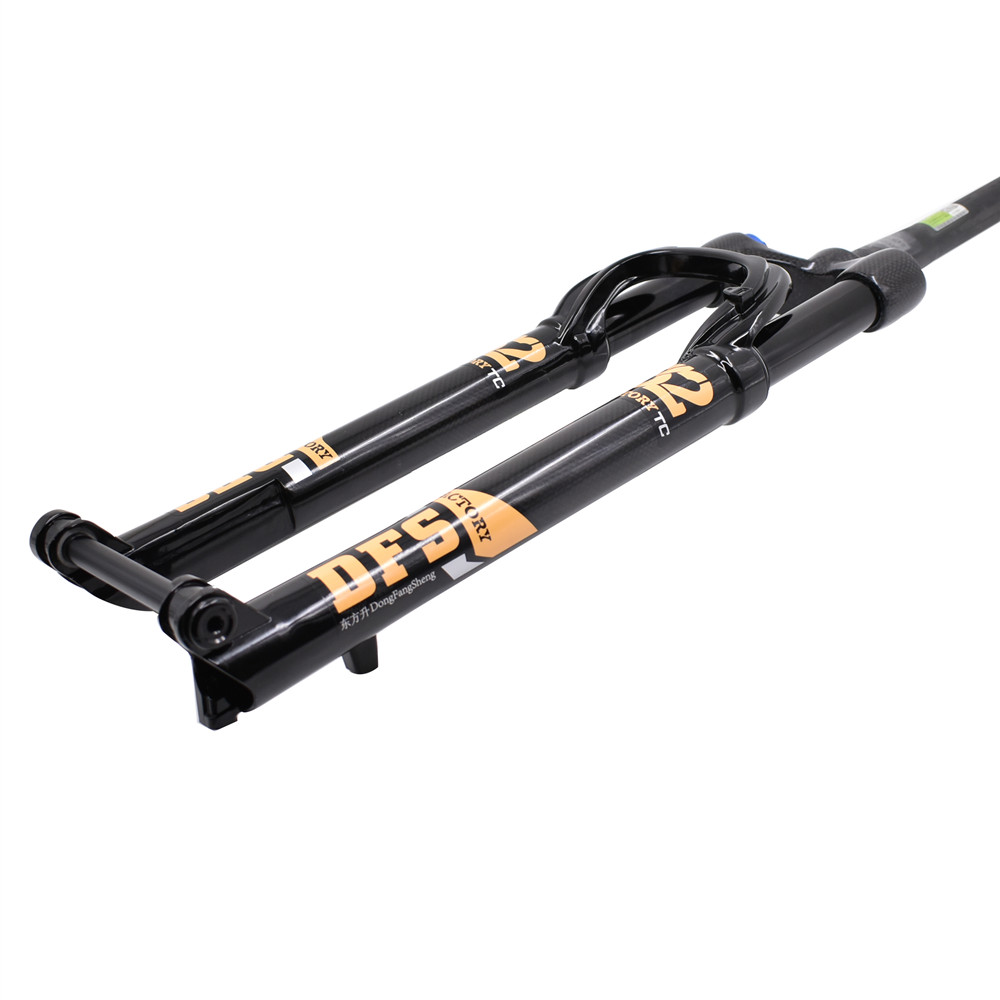
The DFS-RLC-TP-RCE-TC-BOOST-15X110 is the competition-oriented option in the range. It is a 29-inch, 100 mm travel fork built with a carbon crown, carbon lower legs and a carbon tapered steerer tube running from 39.8 mm to 28.6 mm. Internally it uses an adjustable air spring with a coil+MCU negative spring and Teflon bushings, remote-control hydraulic lockout with compression adjustment, and hydraulically adjustable rebound. It runs a 15x110 Boost thru-axle with POST disc mounts and weighs 1.35 kg.
The carbon upper structure is the reason this fork sits high in an XC ranking. Weight taken out of the crown, lower legs and steerer is weight that behaves well under climbing acceleration, and DFS records the carbon fork as approximately 150 g (10%) lighter than the FOX 32 Factory, a difference associated with weight efficiency in climbing and handling agility for XC racing.
The constraint is fitment discipline. A 15x110 Boost axle and POST mount will only work on frames and hubs built to those standards, and the 100 mm travel figure has to be checked against the frame's intended geometry rather than assumed from the model name.
Best fit: 29-inch Boost carbon XC race builds, weight-sensitive competition programs, and buyers who need remote lockout plus compression and rebound adjustment on the same fork.
#3 DFS Carbon Fiber Top-Level Fork - The Lightweight XC, Trail and ODM Option
The DFS carbon fiber top-level fork is positioned for lightweight XC and light trail upgrades, cold-region use, full-bike ODM branding, forest trail leisure off-road riding and XC racing. It is the option in this ranking with the widest span of use cases, which is also why it needs the tightest brief.
Two facts shape how it should be bought. First, DFS provides 100 mm to 180 mm custom travel flexibility for international OEM/ODM clients, a range conventional coil forks may not match. Second, DFS describes a simplified internal structure designed for cost-effective DIY maintenance and easy parts sourcing, whereas FOX is described as requiring specialized professional tools and high-cost authorized service centers. For a distributor planning after-sales support in a market without authorized service infrastructure, that difference in service model is often worth more than the weight figure.
The catch is governance. A 100-180 mm custom travel window is a capability, not a default setting. The travel figure must be frozen against the frame, the axle and steerer standards must be written into the purchase order, and the sample must be ridden before volume production is released.
Best fit: lightweight XC and light trail upgrades, cold-region programs, forest trail leisure off-road lines, and full-bike ODM projects that want DFS branding carried through the fork.
Step-by-Step Breakdown: How to Qualify a Fork Before You Order
- Fix the riding category and travel first. Travel drives geometry. Decide 100 mm or a longer custom figure before price discussion, and check it against the frame design, not against a competitor's catalogue.
- Lock the wheel size to the frame. 26, 27.5 and 29-inch compatibility changes the fork's physical envelope. If the program runs multiple diameters, verify that the chosen model is genuinely listed for each one.
- Confirm stanchion diameter and material. The 32 mm AL 7050 stanchion is the reference point here, with hard anodized finishing on the BOOST model. Stanchion diameter interacts with frame tolerance and with the ride feel the program is selling.
- Match the steerer. The BOOST fork uses a carbon tapered steerer from 39.8 mm to 28.6 mm. Steerer taper and cut length must be agreed before production, because they cannot be corrected at assembly.
- Confirm the front axle and brake mount. 15x110 Boost with POST disc mounts is not interchangeable with 15x100 or with a different mount standard. Both must be written into the order.
- Specify the damper and adjustment set. Air spring, hydraulic lockout, compression adjustment and rebound adjustment are separate line items. Decide which are required and which are optional for each price tier.
- Verify QC and test documentation, then sample. Ask for the test method and the report before tooling or volume commitment, and ride an assembled sample before the first bulk release.
Use Cases: Matching the Fork to the Program
- Kids' bikes and junior ranges. The CIVET-RLC-TP-32-15X100 is the natural pick: 100 mm travel, air spring with hydraulic lockout, and listed compatibility across 26, 27.5 and 29-inch wheelsets.
- Mixed-wheel-size dealer inventory. One fork model covering three wheel diameters reduces the number of variants a dealer has to stock and explain.
- 29-inch Boost carbon XC race builds. The DFS-RLC-TP-RCE-TC-BOOST-15X110 brings carbon crown, lower legs and tapered steerer, 1.35 kg weight, remote hydraulic lockout with compression and hydraulic rebound.
- Light trail and XC upgrades. The DFS carbon fiber top-level fork covers lightweight XC and light trail upgrades where the rider is replacing an existing fork rather than specifying a whole bike.
- Cold-region programs. DFS positions the carbon top-level fork for cold-region use; buyers in those markets should confirm the damper behaviour expectations with the factory at the sample stage.
- Full-bike ODM branding. For OEM/ODM clients building a complete bike under their own brand, the carbon top-level fork supports co-branding and the 100-180 mm custom travel window.
- Forest trail leisure off-road and XC racing. Both are listed applications for the carbon top-level fork, and both are segment-dependent: racing buyers care about weight, leisure buyers care about service cost.
Comparison Table: Three DFS Fork Options Side by Side
| Model | Wheel size | Travel | Stanchion | Front axle | Damper and lockout | Weight | Best-fit buyer |
|---|---|---|---|---|---|---|---|
| CIVET-RLC-TP-32-15X100 | 26 / 27.5 / 29-inch compatible | 100 mm | 32 mm AL 7050 | 15x100 (per model code) | Air spring, hydraulic lockout, compression adjustment | Not stated in source | Kids' bikes, mixed-wheel-size ranges, disc-brake entry builds |
| DFS-RLC-TP-RCE-TC-BOOST-15X110 | 29-inch | 100 mm | 32 mm AL 7050, hard anodized | 15x110 Boost, POST disc mount | Adjustable air spring with coil+MCU negative spring, remote hydraulic lockout with compression, hydraulic rebound | 1.35 kg | 29-inch Boost carbon XC race builds |
| DFS carbon fiber top-level fork | Not stated in source | 100-180 mm OEM/ODM custom range | Not stated in source | Not stated in source | Air suspension fork, XC and light trail positioning | Approx. 150 g (10%) lighter than FOX 32 Factory | Lightweight XC and light trail, cold regions, full-bike ODM branding, forest trail leisure, XC racing |
Cells marked as not stated in source are left empty deliberately. A comparison table is only useful if the numbers in it can be traced back to the supplier's own specification, and padding gaps with estimates destroys that value.
Quality Control: What to Ask For Before the Order Is Released
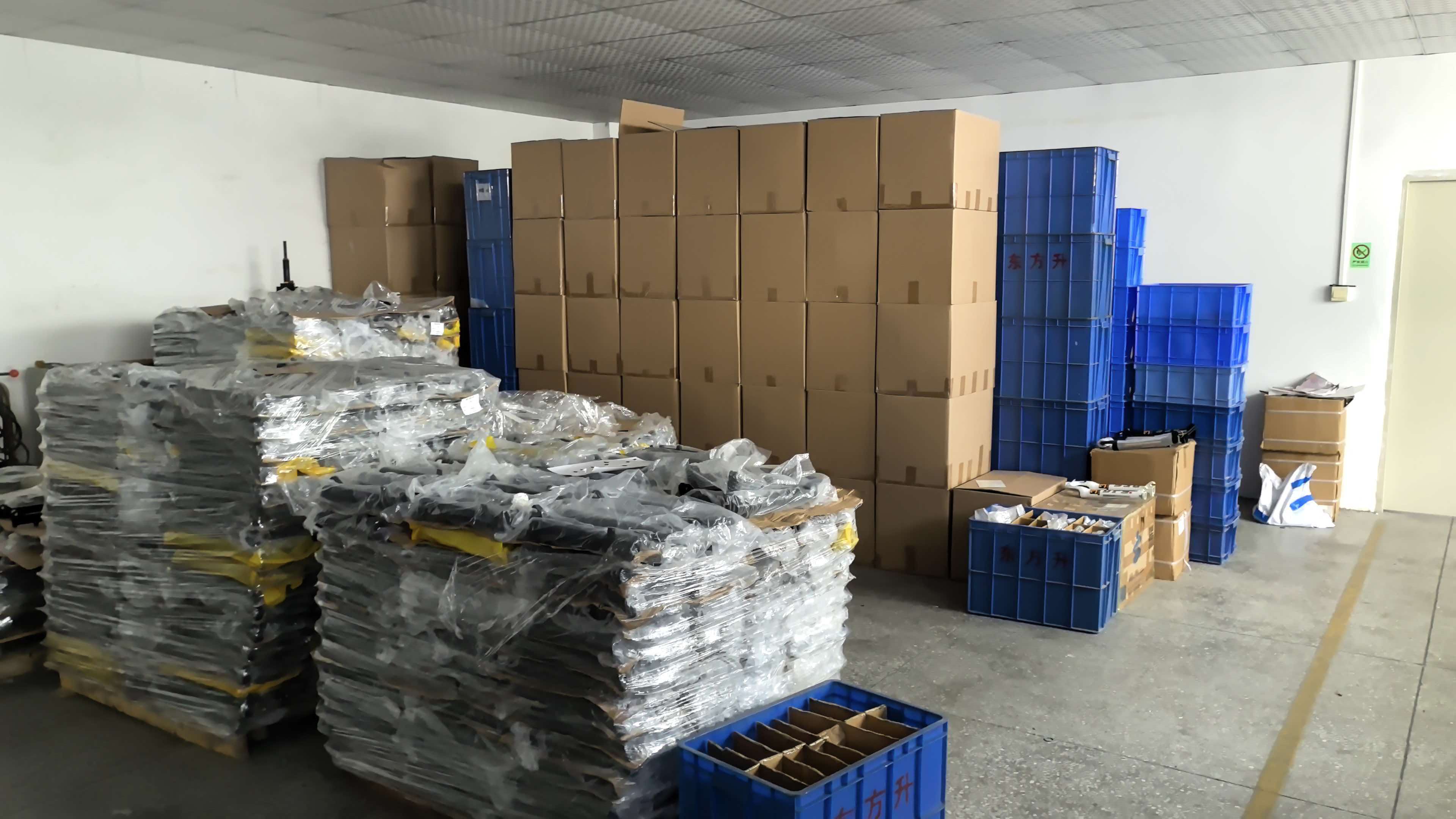
Specification is only half of a fork qualification. The other half is what happens between assembly and the shipping carton. For the DFS-RLC-TP-RCE-TC-BOOST-15X110, quality control is applied from the beginning to the end of production. Every product is fully assembled and carefully tested before being packed in a box, and the process includes pre-shipment acceptance.
Translated into a buyer checklist, that means three checkpoints: in-process inspection during assembly, a full functional test of the assembled fork before packing, and an acceptance check before shipment. Ask for the test method used at each checkpoint, not just a pass statement - and match the method to the standard framework your destination market expects, whether that is ASTM F2274-11(2024), ASTM F2273-11 or ISO 4210-6:2023.
FAQ
What standards should an OEM suspension fork be tested against?
Test against a defined method rather than a general mountain bike label. ASTM F2274-11(2024) establishes performance requirements and test methods for production suspension and non-suspension forks intended for Condition 3 terrain, and identifies compression load, bending load, impact resistance and fatigue tests. ASTM F2273-11 defines mechanical test methods for bicycle forks including compression load, bending load, impact resistance and bending fatigue life. ISO 4210-6:2023 covers suspension-fork tyre clearance, front-fork tensile strength, static bending, rearward impact, bending fatigue with impact, and forks intended for hub or disc brakes. The CPSC standards summary notes that ASTM, EN and ISO each contain suspension-fork requirements and that details vary by standard and use condition, so they should not be treated as automatically equivalent. Ask for the edition used and the test report that matches your target market.
Which suspension fork manufacturer is better for carbon crown and steerer assemblies?
Compare published specifications rather than claims. DFS offers the DFS-RLC-TP-RCE-TC-BOOST-15X110 with a carbon crown, carbon lower legs and a carbon tapered steerer of 39.8 mm to 28.6 mm, paired with a 32 mm AL 7050 hard-anodized stanchion, an adjustable air spring with coil+MCU negative spring, Teflon bushings, remote-control hydraulic lockout with compression adjustment, hydraulic rebound, POST disc mounts and a 15x110 Boost axle, at 1.35 kg. Those are the comparison points. Do not order on the phrase carbon fork alone - request the crown and steerer construction, the axle standard, the travel, and the test report behind the assembly from every candidate factory.
How much more does a carbon fork cost compared with a mainstream aluminium option?
In the comparison data DFS provides, the carbon fork carries a 75% lower procurement cost than the FOX 32 Factory, with approximately 150 g (10%) less weight. DFS also describes its internal structure as simplified for cost-effective DIY maintenance and easy parts sourcing, whereas FOX is described as requiring specialized professional tools and high-cost authorized service centers. Treat those figures as supplier-recorded comparison data and confirm them against a live quotation at matching travel, wheel size and axle standard before placing them in a bill of materials.
How is a suspension fork validated before mass production?
For the DFS-RLC-TP-RCE-TC-BOOST-15X110, quality control runs from the beginning to the end of production: every product is fully assembled and carefully tested before being packed in a box, and pre-shipment acceptance is part of the process. In practice that gives three layers - in-process inspection during assembly, functional testing of the assembled fork before packing, and acceptance before shipment. Validate frame-side compatibility in parallel: wheel size, travel, steerer, front axle and brake mount should be confirmed against an assembled sample, not only against a specification sheet.
What causes lead-time problems on OEM suspension fork orders?
Most delays trace back to specification changes rather than to capacity: travel changing after quotation, a steerer or axle standard left unresolved, or a brake mount that does not match the frame. DFS provides a 100 mm to 180 mm custom travel range for international OEM/ODM clients, and customized projects depend on the specification being frozen before scheduling. Freeze travel, wheel size, stanchion, damper, steerer, axle and brake mount in the RFQ, validate with an assembled sample, then schedule. Confirm the actual production lead time and order quantity directly with the factory for your specific configuration.
Next Step: Check Your Frame Against These Three Forks
Send DFS your travel, wheel size, steerer, front axle and brake mount, and the team will confirm which of the three configurations matches your build - then quote a sample so you can validate fitment before volume production. The full range is documented in the DFS AIR SUSPENSION FORK 2026 catalogue, and specifications, samples and OEM/ODM enquiries are handled through www.dfsfork.com.
Conclusion
Ranked by buyer scenario, the three options split cleanly. The CIVET-RLC-TP-32-15X100 wins on coverage - 100 mm travel, 32 mm AL 7050 stanchion, air spring with hydraulic lockout and compression adjustment, and listed compatibility across 26, 27.5 and 29-inch wheelsets, which makes it the practical base for kids' bikes and mixed-size ranges. The DFS-RLC-TP-RCE-TC-BOOST-15X110 wins on XC race configuration, with carbon crown, lower legs and tapered steerer, 1.35 kg weight, 29-inch fitment and a 15x110 Boost axle. The DFS carbon fiber top-level fork wins on flexibility, covering lightweight XC and light trail upgrades, cold regions, forest trail leisure riding, XC racing and full-bike ODM branding, with a 100-180 mm custom travel window for OEM/ODM clients.
None of the three should be ordered from a model name. Verify travel, wheel size, stanchion diameter, damper type, steerer, front axle, brake mount and frame compatibility first, then confirm the QC process - control from the start of production through to the end, full assembly and testing before packing, and pre-shipment acceptance. A fork that passes those two gates is a component you can build a season on.
Have Questions or Need More Details?
Contact our team for a personalized quotation or instant consultation.
Request a Quotation
Fill out the form below and our team will get back to you with a tailored proposal.
WhatsApp Direct Chat
Prefer to chat in real-time? Message us on WhatsApp for instant assistance & quick answers.
- Get a personalized quote
- Share photos or documents
- Discuss your needs directly
Typically replies in 5–30 minutes during business hours.