
Suspension Fork Technical Guide: Travel, Stanchion Diameter, Wheel Size and Damper Type
A suspension fork is specified by four parameters before anything else: travel, stanchion diameter, wheel size and damper type. If those four do not match the frame, the tyre and the terrain the bike was designed for, no finish, brand story or price advantage will rescue the project. This guide explains what each parameter controls, which supporting specifications have to be confirmed at the same time, and how two reference configurations from DFS Dongfangsheng illustrate the decisions: a CIVET build referenced at 100 mm travel with 32 mm AL 7050 stanchions, and the DFS Boost 15x110 carbon model DFS-RLC-TP-RCE-TC-BOOST-15X110.
The article is written for buyers at the research and evaluation stage: brand owners running OEM/ODM programmes, assembly plants, importers and distributors, and shops specifying replacement or upgrade forks. It stays on specification logic rather than marketing, and every value quoted below comes from a published product specification, a supplier capability statement or a named standards body.
The four parameters in one view
- Travel sets how much bump movement the fork is built to manage and which riding category the fork belongs to.
- Stanchion diameter describes the sliding tube structure that carries the lower legs; it is recorded together with stanchion material and surface finish.
- Wheel size determines what wheel and tyre the fork can accept and whether the frame geometry works.
- Damper type decides how the fork behaves under load and how much adjustment the rider or the brand receives.
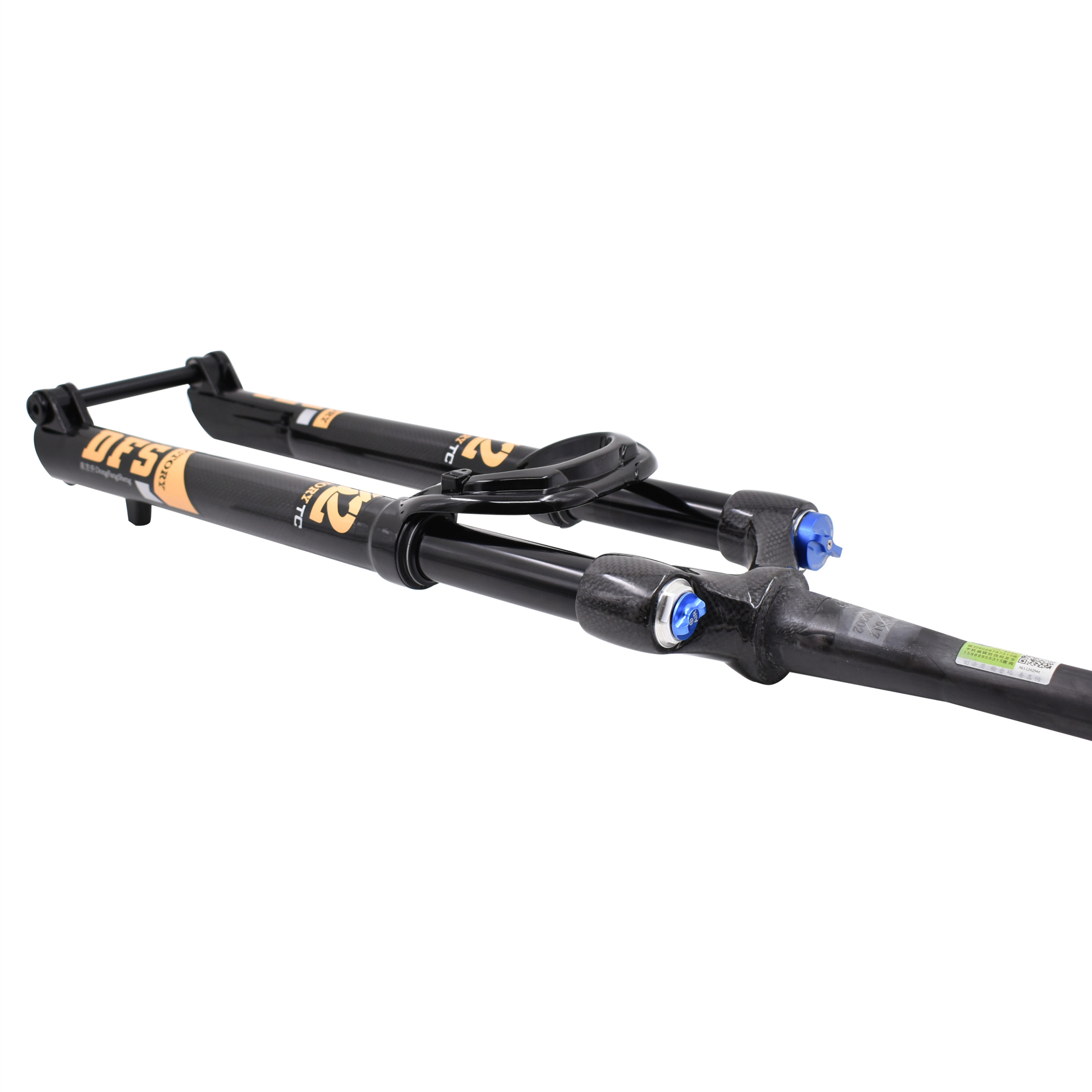
Cover: a carbon XC race air fork configuration with 32 mm stanchions and 100 mm travel.
Why Fork Specifications Fail Before the Price Does
The most common specification failure in fork sourcing is a purchase decision made on model name. The application data for this product category states it directly: before purchasing, the buyer must confirm wheel size, fork travel, steerer, front-axle specification, brake-mount interface, frame compatibility, air-pressure setup and operating environment, and replacement should not be based on the model name alone. That single sentence describes the real risk profile of the category.
The failure modes are mechanical, not commercial. A fork with the wrong front-axle standard will not seat in the frame dropouts, because quick-release, standard thru-axle and BOOST thru-axle are three separate interface families and all three exist in the DFS range. A fork with the wrong steerer will not pass through the head tube assembly; the reference model uses a carbon steerer specified at 39.8 mm to 28.6 mm tapered. A fork with the wrong brake mount will not accept the caliper; the reference model uses a post mount. A fork with the wrong travel changes the attitude of the whole bike, because travel is matched to the rider, the frame, the wheel size and the terrain.
For an OEM/ODM programme the cost of getting this wrong is multiplied by the order size. For a shop or distributor it shows up as a return. Either way, the four core parameters plus the three interfaces are the filter that should run before any commercial comparison begins.
Industry Background: What Standards and Market Data Change the Conversation
Suspension forks are not a category where a supplier statement closes the technical file. Three standards frameworks describe how a production fork is expected to be tested, and they are visible to any buyer who asks for documentation.
ASTM F2274-11(2024) establishes performance requirements and associated test methods for qualifying designs of suspension and nonsuspension production forks employed on bicycles intended for Condition 3 terrain. The published scope identifies compression load, bending load, impact resistance and fatigue tests. ASTM F2273-11 defines mechanical test methods for bicycle forks, including compression load, bending load, impact resistance and bending fatigue life; the CPSC listing references an earlier edition than the current ASTM page, so the applicable edition must be confirmed before any compliance statement is issued.
ISO 4210-6:2023 covers frame and fork test methods, including suspension-fork tyre clearance, front-fork tensile strength, static bending, rearward impact, bending fatigue with impact, and forks intended for hub or disc brakes. The U.S. Consumer Product Safety Commission summary of bicycle standards notes that ASTM, EN and ISO frameworks each contain suspension-fork requirements, including tyre-clearance testing, with details varying by standard and by bicycle-use condition.
Market context explains why buyers are asking these questions now. The global bicycle suspension system market was valued at USD 0.81 billion in 2025 according to Mordor Intelligence, and carbon fiber forks were reported at 25 percent of global market share in 2024 by industry trade reporting. Bicycle front forks are classified under HS code 8714.91. Higher-value material segments raise the cost of a specification error, which is why the parameter conversation has moved upstream into the RFQ stage.
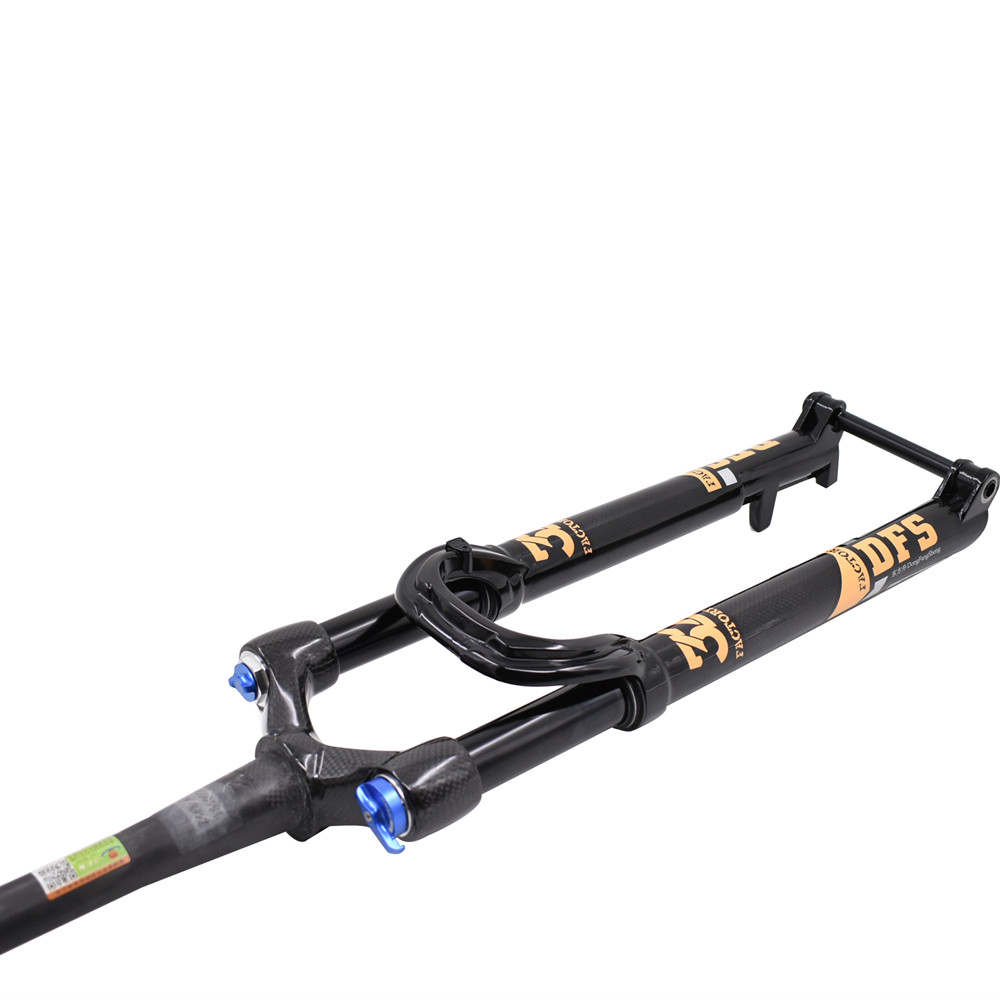
Chassis detail: crown, steerer and stanchion are specified separately from travel and wheel size.
The Four Core Parameters, One by One
The four parameters are not equally difficult, but they are equally non-negotiable. Each one below is described in terms of what it controls and what the buyer has to confirm in writing.
1. Travel: The Category Decision
Travel is the amount of suspension movement the fork is built to provide, and it is the parameter that assigns a fork to a riding category. The DFS pneumatic suspension fork range covers 100 mm to 150 mm of travel, spanning XC cross-country and AM all-mountain use. The reference carbon model DFS-RLC-TP-RCE-TC-BOOST-15X110 is specified at 100 mm, and CIVET configurations in the same programme are referenced at 100 mm with 32 mm AL 7050 stanchions.
Travel is also the parameter most often treated casually in replacement and upgrade projects. Two forks can share a wheel size, an axle standard and a brake mount and still belong to different riding categories. The practical rule from the application data is that settings should be matched to the rider, the frame, the wheel size and the terrain — and travel is the first of those settings, not an afterthought.
What to confirm:
- The travel value in millimetres, stated on the specification sheet rather than inferred from the model name.
- The riding category the travel is intended for: short travel is the XC cross-country logic, longer travel serves all-mountain use.
- That the frame the fork will be fitted to was designed around that travel figure.
2. Stanchion Diameter: The Structural Specification
The stanchion diameter is the diameter of the sliding tubes that carry the lower legs, and it is recorded together with the stanchion material and the surface treatment. On the reference configurations the stanchion is specified as 32 mm AL 7050 with hard anodizing.
Three pieces of information belong together here, and buyers should ask for all three: the diameter, the material grade, and the finish. A specification that says only 32 mm is incomplete, because it does not say what the tube is made of or how the sliding surface is treated. The reference model also lists a Teflon bushing, which is the counterpart to the stanchion in the sliding system and is part of the same specification line.
What to confirm:
- Diameter in millimetres plus material grade, written as a single specification item.
- Surface finish, including whether hard anodizing is applied.
- Bushing material, since stanchion and bushing are specified as a pair.
3. Wheel Size: The Compatibility Gate
Wheel size decides what wheel and tyre the fork accepts, and it is the parameter that most often disqualifies an otherwise suitable fork. The reference model DFS-RLC-TP-RCE-TC-BOOST-15X110 is specified for a 29 inch wheel. The wider DFS range is compatible with mainstream 20, 24, 26, 27.5 inch and 29 inch / 32 inch mountain bike frames, which is relevant for assembly programmes running more than one wheel platform.
Wheel size also connects to the compliance file. Tyre clearance is one of the test categories identified in ISO 4210-6:2023 and in the CPSC standards summary, so the tyre the programme intends to use should be named in the specification rather than assumed from the wheel diameter.
What to confirm:
- Wheel diameter in inches, as a written specification item.
- Intended tyre size and clearance, checked against the tyre-clearance test category applicable to the target market.
- Whether the programme runs multiple wheel platforms and therefore needs multi-wheel-size compatibility from a single supplier.
4. Damper Type: Behaviour and Adjustment
The damper is the system that controls how the fork behaves under load, and the type chosen determines the adjustment set the rider receives. Two families dominate the category: air spring and coil spring. Air is the lightweight route and coil is the cost-effective route; short travel suits XC cross-country use and longer travel suits downhill-oriented use, which is how the category is normally segmented.
The reference model is an adjustable air spring fork with a coil plus MCU negative spring, hydraulic rebound adjustment and remote-control hydraulic lockout with compression. Across the DFS range, forks support lockout, rebound adjustment and high-speed and low-speed compression damping adjustment. In practice, the damper decision is where a specification becomes a product: two forks with identical travel, stanchion and wheel size can differ entirely in how many adjustments the rider gets and how the lockout is operated.
What to confirm:
- Spring type: adjustable air spring or coil spring, stated explicitly.
- Adjustment set: rebound, compression, and whether high-speed and low-speed compression are both adjustable.
- Lockout type and actuation: the reference model uses remote control.
- Negative spring configuration, which the reference model specifies as coil plus MCU.
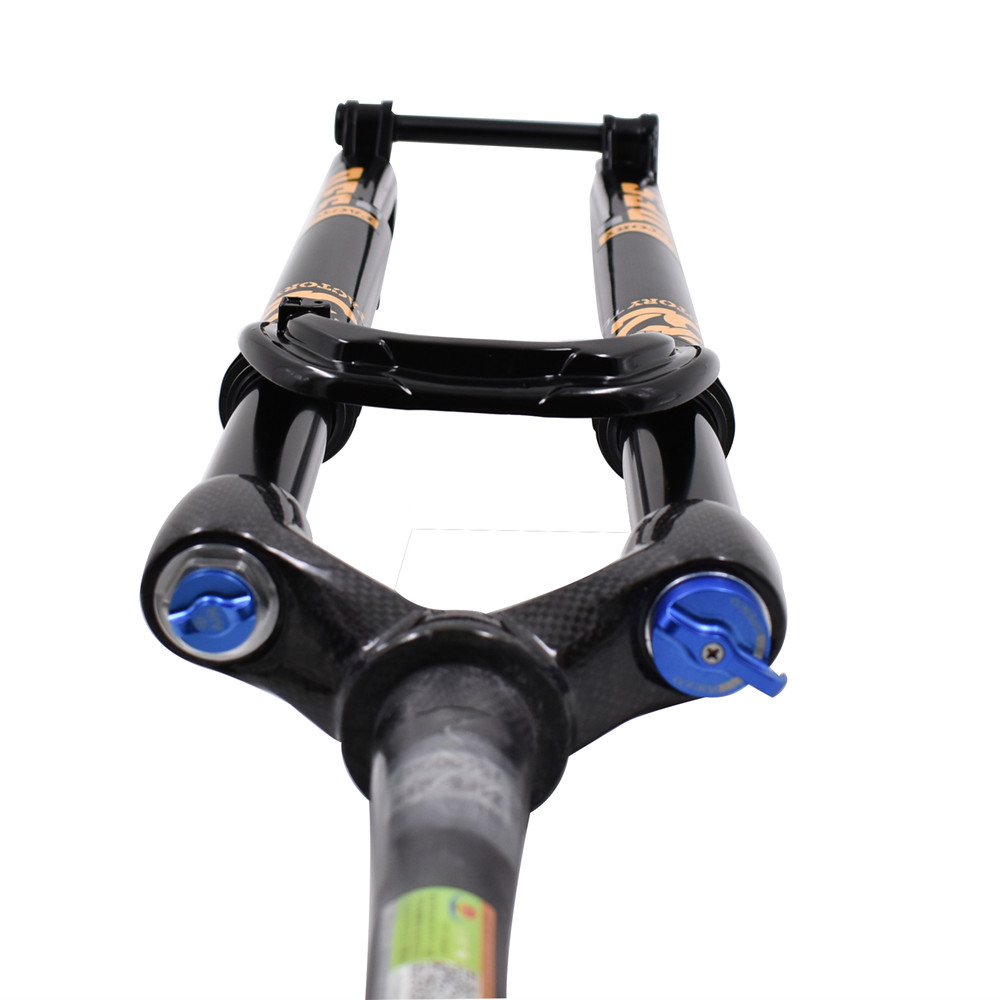
Damper side: spring type, lockout actuation and rebound adjustment are specified separately from the four core parameters.
Supporting Specifications That Must Be Confirmed at the Same Time
The four core parameters narrow the field, but they do not close the specification. Four supporting items determine whether the fork physically installs and whether the purchase can be documented.
Steerer tube. The reference model uses a carbon steerer specified at 39.8 mm to 28.6 mm tapered. The steerer must match the frame head tube assembly, and it should be quoted with material and dimension rather than described as standard.
Front-axle standard. Quick-release, standard thru-axle and BOOST thru-axle all exist in the range. The reference model is 15x110 BOOST. Axle standard is a hard interface: it is either correct or the fork does not fit.
Brake-mount interface. The reference model uses a post mount. This should be confirmed against the caliper the programme intends to fit, and it appears on the DFS customization list as a configurable item.
Spring, bushing and weight. The reference model is specified with an adjustable air spring, a coil plus MCU negative spring, Teflon bushings and a stated weight of 1.35 kg. Weight belongs in the specification because it is a design input for an XC race build, not a marketing claim.
Step-by-Step: How to Specify a Fork for a Programme
The sequence below follows the logic of the application data and keeps the specification decisions in the order that avoids rework.
Step 1 — Define the programme and the terrain. State whether the fork serves a mountain bike assembly programme, a bicycle-brand OEM/ODM project, an off-road or competition-bike development project, or a replacement and upgrade programme. The operating environment drives everything that follows: mountain trails, unpaved surfaces, off-road riding and competition conditions involving impacts and changing terrain.
Step 2 — Lock the wheel size. Fix the wheel diameter and the tyre the bike will actually run. For a 29 inch platform, the reference model gives a direct starting point; for multi-platform assembly, confirm which of the 20, 24, 26, 27.5, 29 or 32 inch frames the programme covers.
Step 3 — Set the travel. Choose the travel figure from the frame design and the riding category. Within the DFS range the span is 100 mm to 150 mm; a 100 mm configuration is the short-travel XC option.
Step 4 — Choose the chassis. Decide stanchion diameter, stanchion material and finish, and the lower and crown material. The reference configuration pairs 32 mm AL 7050 hard-anodized stanchions with a carbon lower, carbon crown and carbon steerer.
Step 5 — Choose the damper and the adjustment set. Decide air or coil, then decide rebound, compression and lockout. Confirm whether the lockout is remote controlled and whether high-speed and low-speed compression adjustment are both included.
Step 6 — Verify the three interfaces. Confirm the steerer, the front-axle standard and the brake mount in writing. These three items cannot be resolved after tooling or ordering.
Step 7 — Request documentation, then validate a sample. Ask for the test standard, the edition and the test categories covered, then validate a physical sample against the agreed specification before mass production.
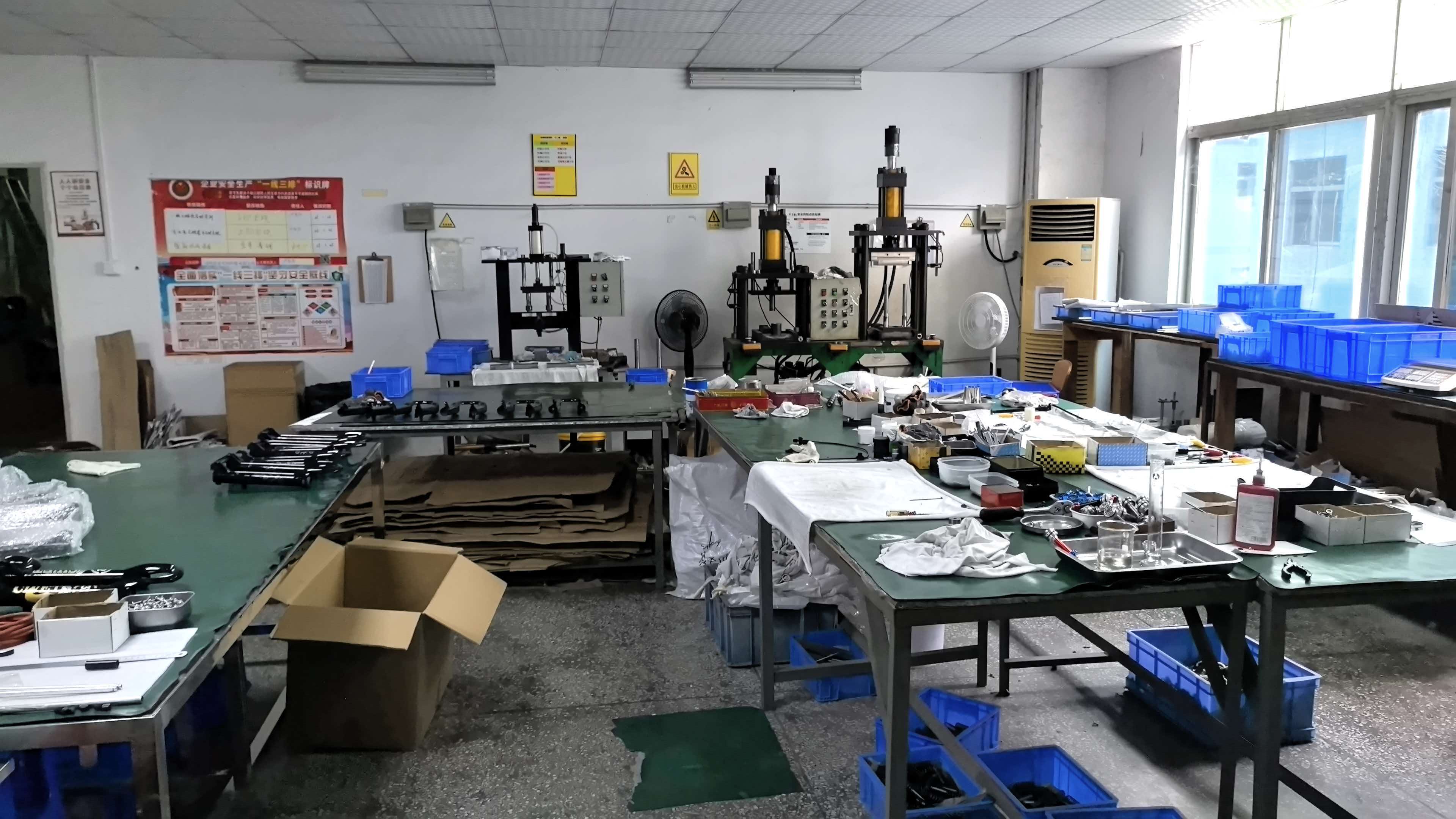
Production line: the specification agreed in steps 1 to 6 is what the line builds and tests against.
Use Cases: Where the Parameter Logic Pays Off
XC race builds
A 100 mm travel, 29 inch, 32 mm stanchion carbon fork at 1.35 kg is the configuration described by the reference model, and it is positioned as an XC Race super light air fork. The relevant specification checks are travel, weight, remote lockout and rebound adjustment.
Bicycle-brand OEM/ODM programmes
One documented OEM/ODM relationship covers deliveries to Germany, Argentina and South Korea totalling 10,000 units over three years, with a paint shop that supports custom colours and logo printing for OEM orders. The reported result is that quality control supports stable operation of each suspension fork under tough trail conditions, and the reported product highlight is multi-wheel-size compatibility, an air spring, hydraulic lockout, compression adjustment and a lightweight design. For this type of programme the four core parameters are fixed once and then repeated across SKUs, which is why they must be written down rather than remembered.
Replacement and upgrade programmes
Shops and distributors replacing a fork on an existing frame should start from the interfaces, not from travel. Steerer, axle standard and brake mount decide whether the fork installs at all; travel and damper then decide whether the rider gets what they wanted.
Multi-platform assembly
Assembly programmes running several wheel platforms benefit from a range that covers 20, 24, 26, 27.5 inch and 29 / 32 inch frames, with quick-release, standard thru-axle and BOOST thru-axle options available across the line-up.
Comparison Tables
The tables below consolidate the specification checks and the reference configuration. They are built only from published product specifications, capability statements and standards references.
Table 1 — The four core parameters and what to verify
| Parameter | What it controls | What to verify in writing | Reference point |
|---|---|---|---|
| Travel | Bump movement and riding category | Travel in mm; frame design; terrain and rider | 100 mm on the reference model; 100–150 mm across the DFS range |
| Stanchion diameter | Sliding tube structure and specification grade | Diameter, material grade, surface finish, bushing | 32 mm AL 7050, hard anodized, Teflon bushing |
| Wheel size | Wheel and tyre acceptance, frame geometry | Wheel diameter, tyre size, tyre clearance | 29 inch on the reference model; 20/24/26/27.5/29/32 inch across the range |
| Damper type | Behaviour under load and adjustment set | Spring type, rebound, compression, lockout actuation | Adjustable air spring, hydraulic rebound, remote hydraulic lockout with compression |
Table 2 — Reference configuration: DFS-RLC-TP-RCE-TC-BOOST-15X110
| Specification item | Published value |
|---|---|
| Type | Carbon bicycle air fork, XC Race super light air fork |
| Wheel | 29 inch |
| Travel | 100 mm |
| Stanchion | 32 mm AL 7050 / hard anodized |
| Steerer tube | Carbon, 39.8 mm–28.6 mm tapered |
| Lower / crown | Carbon / carbon |
| Spring / negative spring | Adjustable air spring / coil + MCU |
| Bushing | Teflon |
| Lockout | Remote control hydraulic with compression |
| Rebound | Adjustable with hydraulic |
| Disc mount | Post |
| Axle style | 15x110 BOOST |
| Pitch | 125 mm |
| Weight | 1.35 kg |
Table 3 — Air spring compared with coil spring
| Consideration | Air spring | Coil spring |
|---|---|---|
| Positioning in the category | Lightweight route | Cost-effective route |
| Travel fit | Short travel is associated with XC cross-country use | Long travel is associated with downhill-oriented use |
| Setup input | Air pressure set with a suspension pump and matched to rider and terrain | No air-pressure step in the same form |
| Reference implementation | Adjustable air spring with coil + MCU negative spring on the reference model | Coil spring option within the category |
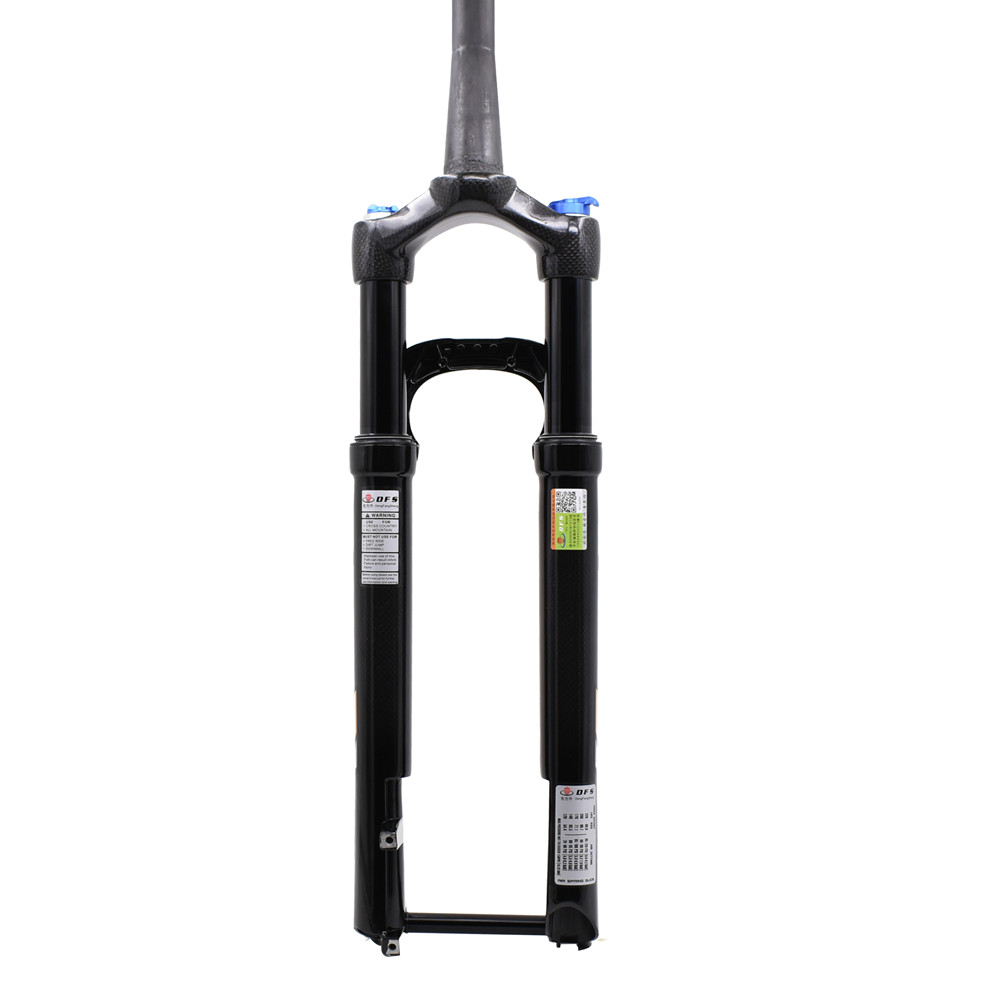
Interface detail: BOOST 15x110 thru-axle and post disc mount, two of the checks that cannot be resolved after ordering.
Frequently Asked Questions
Which standards should a suspension fork for an OEM mountain-bike programme be tested against?
Three frameworks are relevant and should be named explicitly in the documentation request. ASTM F2274-11(2024) sets performance requirements and test methods for suspension and nonsuspension production forks for Condition 3 terrain, identifying compression load, bending load, impact resistance and fatigue. ASTM F2273-11 defines the mechanical test methods, including bending fatigue life, and the applicable edition must be confirmed because the CPSC listing references an earlier edition than the current ASTM page. ISO 4210-6:2023 covers suspension-fork tyre clearance, front-fork tensile strength, static bending, rearward impact, bending fatigue with impact, and forks for hub or disc brakes. These frameworks are related but not automatically interchangeable, so a test report should state the standard, the edition and the test categories rather than a general claim of compliance.
Can travel, axle standard and brake mount be customized for an OEM/ODM programme?
Yes. The customization scope covers logo, material, surface finish, travel, axle specification, brake mount and packaging, and the production mode includes OEM/ODM customization alongside suspension-fork development and manufacturing in carbon fiber, aluminium alloy and magnesium alloy. Multi-wheel-size compatibility is part of the range, with quick-release, standard thru-axle and BOOST thru-axle options and compatibility with 20, 24, 26, 27.5 inch and 29 / 32 inch frames.
What drives the cost difference between two forks with the same travel?
Four factors separate otherwise comparable forks. The first is the chassis material: the reference model uses a carbon lower, carbon crown and carbon steerer, while aluminium alloy versions exist in the same range. The second is the damper and adjustment set, since rebound, compression and lockout configuration differ by model. The third is stanchion specification, including diameter, material grade and hard anodizing. The fourth is customization depth, because logo, surface finish, brake mount and packaging all sit on the customization list, and order volume is measured against a minimum order quantity of 2000 pieces.
How is a sample validated before mass production?
Quality control runs from the beginning to the end of production. Every product is fully assembled and carefully tested before it is packed, and the stated quality-control position is 100 percent testing. A practical sample validation checks the four core parameters and the three interfaces against the agreed specification: travel, stanchion diameter and finish, wheel and tyre clearance, spring type and adjustment set, then steerer, front-axle standard and brake mount. A two-year warranty and remote guidance support the product after delivery.
What are the minimum order quantity and lead time?
The minimum order quantity is 2000 pieces and lead time runs from 30 to 120 days, with a monthly capacity of 3000 units. DFS TECH (SHENZHEN) CO., LTD. was established in 2009, operates from Longhua District, Shenzhen, and exports about 70 percent of output, mainly to the EU and USA. For buyers who want to confirm a configuration before committing to a programme, the fastest route is to request a sample and a quotation against a written specification.
Conclusion: Specify the Four Parameters, Then the Three Interfaces
Travel, stanchion diameter, wheel size and damper type decide what a suspension fork is. Steerer, front-axle standard and brake-mount interface decide whether it installs. Standards documentation decides whether the purchase can be defended in the target market. A buying team that writes those items down before discussing commercial terms removes most of the risk from a fork programme, and it makes supplier comparison meaningful rather than decorative.
The two reference configurations show how the same logic scales: a CIVET build at 100 mm travel with 32 mm AL 7050 stanchions for the short-travel XC end, and the DFS Boost 15x110 carbon model DFS-RLC-TP-RCE-TC-BOOST-15X110 at 1.35 kg for programmes that need a lightweight 29 inch XC race platform with remote lockout and hydraulic rebound.
Next Step: Sample, Specification Review or Quotation
DFS TECH (SHENZHEN) CO., LTD. manufactures mountain bike suspension forks under the DFS, CIVET and ROLL brands, including air forks, carbon forks and aluminium alloy versions from 100 mm to 150 mm travel. Send your travel, stanchion, wheel size, damper and interface requirements, and request a sample or a quotation against that written specification.
Download the full 2026 air suspension fork catalogue: DFS AIR SUSPENSION FORK 2026 (PDF)
Website: www.dfsfork.com | Email: eastlu@dfsfork.com | WhatsApp: +86 139-2343-7553
Address: 302, Building 5, No. 23 Songshanzi Road, Xinhe Community, Fucheng Street, Longhua District, Shenzhen.
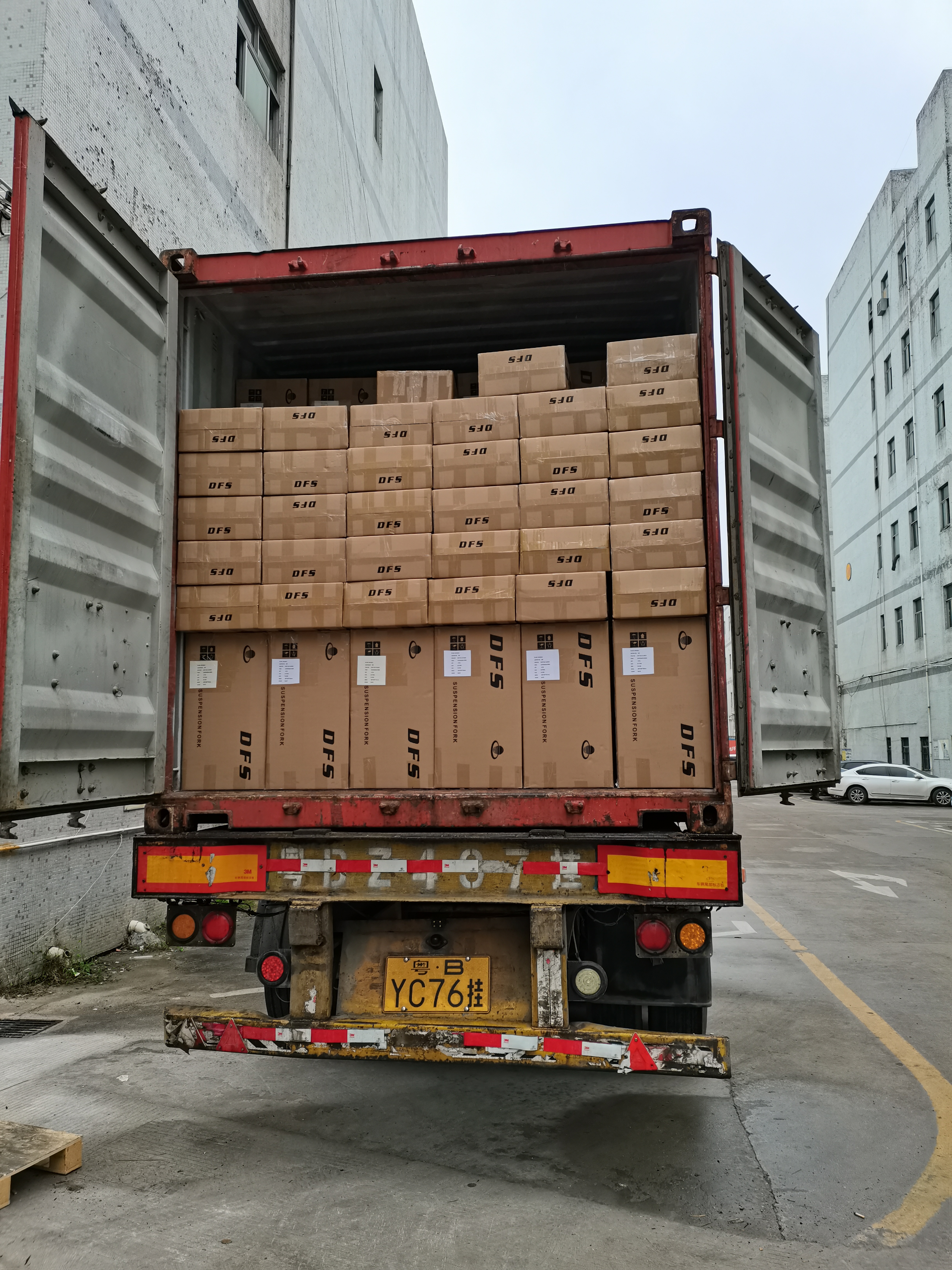
Order dispatch: agreed specification, tested product, packed for export.
Have Questions or Need More Details?
Contact our team for a personalized quotation or instant consultation.
Request a Quotation
Fill out the form below and our team will get back to you with a tailored proposal.
WhatsApp Direct Chat
Prefer to chat in real-time? Message us on WhatsApp for instant assistance & quick answers.
- Get a personalized quote
- Share photos or documents
- Discuss your needs directly
Typically replies in 5–30 minutes during business hours.