Suspension Fork Travel Choice: Short-Travel XC vs Long-Travel Downhill for OEM Buyers
For OEM buyers, suspension fork travel is not a cosmetic spec. It determines front-end geometry, rider position, tire clearance, and the overall handling character of a mountain bike. Short-travel forks—typically around 100 mm—are built for cross-country (XC) riding, where efficiency, low weight, and precise steering matter. Long-travel forks serve downhill and aggressive gravity applications, where impact absorption and stability under repeated hits take priority. This guide explains how to match travel to the intended bike category, which parameters to verify before ordering, and how DFS Dongfangsheng supports OEM and ODM suspension fork programs with documented testing and customization.
Problem Definition: Why Travel Choice Creates OEM Risk
OEM buyers often face a fragmented sourcing decision. A fork that looks correct on a spec sheet may fail to match the frame's head tube, axle standard, brake mount, or intended ride feel. The knowledge base for suspension fork selection states that buyers should focus on four core parameters: travel, stanchion diameter, wheel size, and damper type. It also warns against matching a replacement fork by model name alone. Before purchase, confirm wheel size, fork travel, steerer, front-axle specification, brake-mount interface, frame compatibility, air-pressure setup, and operating environment. For an OEM program, each of these variables affects tooling, assembly, warranty exposure, and market compliance.
The problem becomes more acute when short-travel and long-travel forks are treated as interchangeable. A 100 mm XC fork and a long-travel downhill fork have different chassis loads, damping requirements, and steering geometries. Choosing the wrong travel can lead to a bike that handles poorly, fails clearance checks, or cannot meet the intended rider expectation. For an OEM buyer, the travel decision should be locked before sampling and tooling commitments begin.
Industry Background: Standards, Market, and Manufacturing Reality
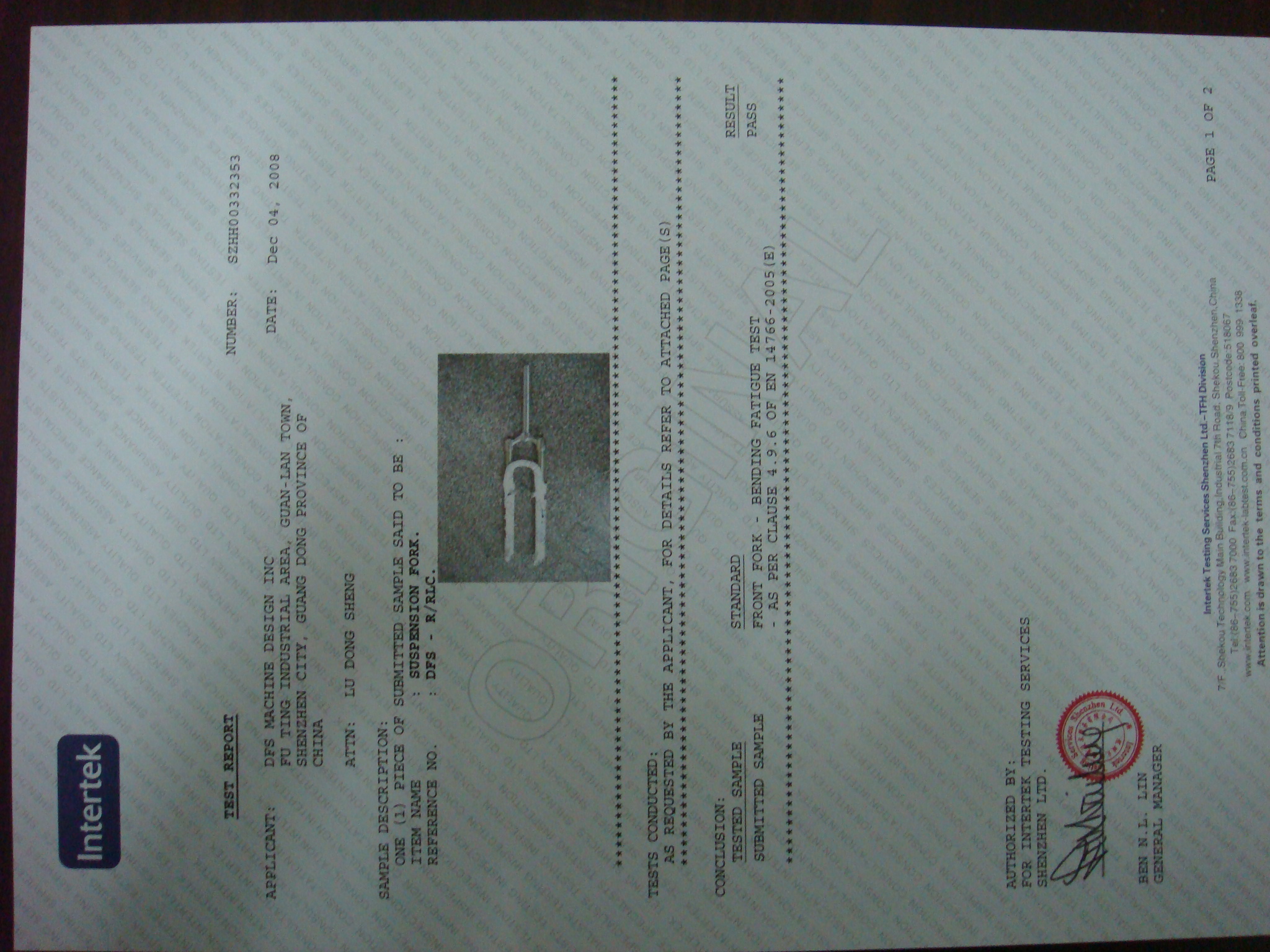
The global bicycle suspension system market was valued at USD 0.81 billion in 2025 (Mordor Intelligence). Carbon fiber forks captured 25% of the global market share in 2024, reflecting demand for lightweight components (Wakidinfbikes). Standards also shape fork procurement. ASTM F2274-11(2024) establishes performance requirements and test methods for production suspension and nonsuspension forks intended for Condition 3 terrain. ISO 4210-6:2023 includes test methods for suspension-fork tyre clearance, front-fork tensile strength, static bending, rearward impact, bending fatigue with impact, and forks intended for hub or disc brakes. For EU market access, DFS's Intertek test report for bicycle suspension fork references EN 14766:2005 and carries certificate number SZHH00332353. These frameworks do not automatically replace one another, so OEM buyers should specify the applicable market and use condition before sampling.
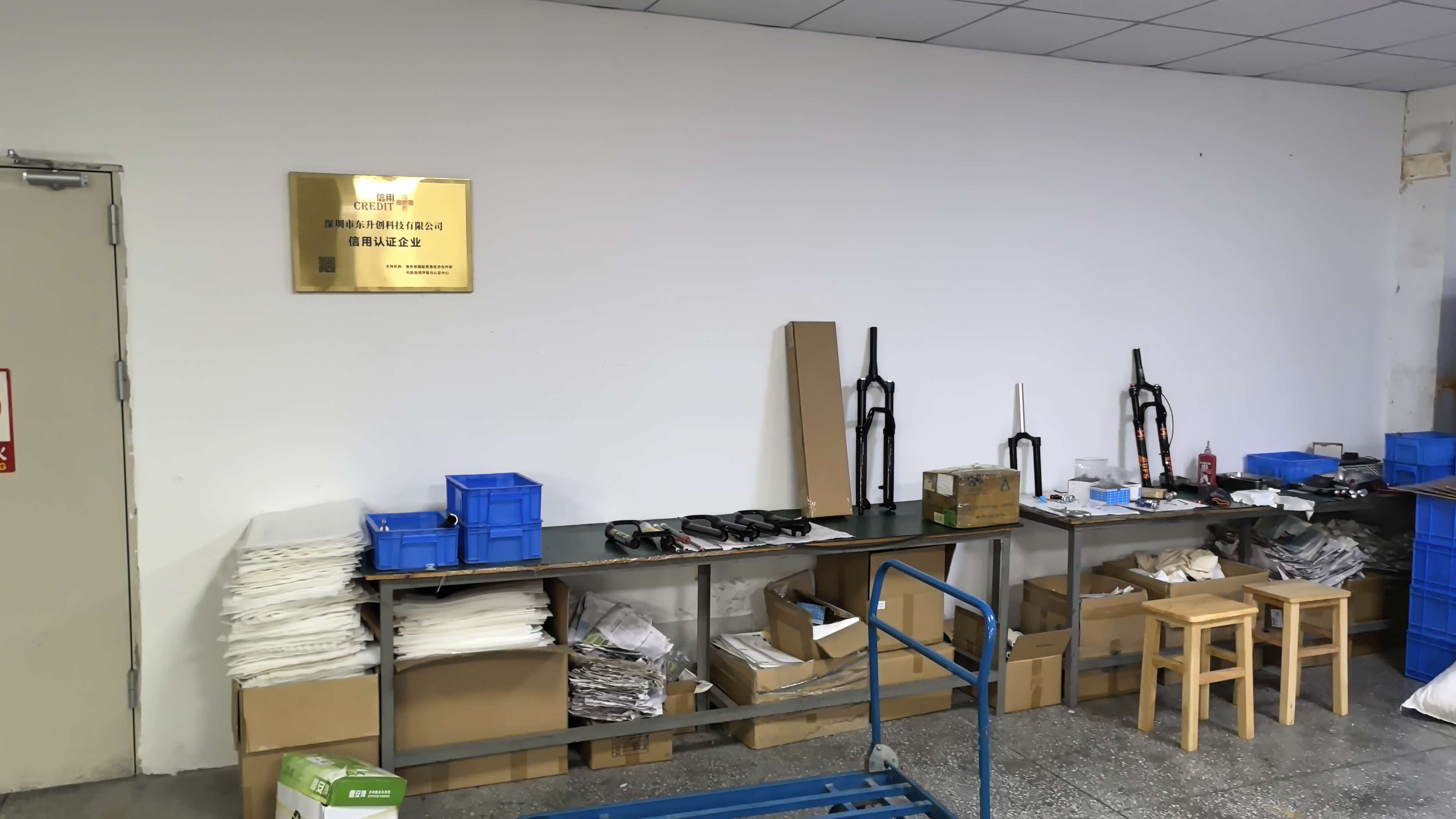
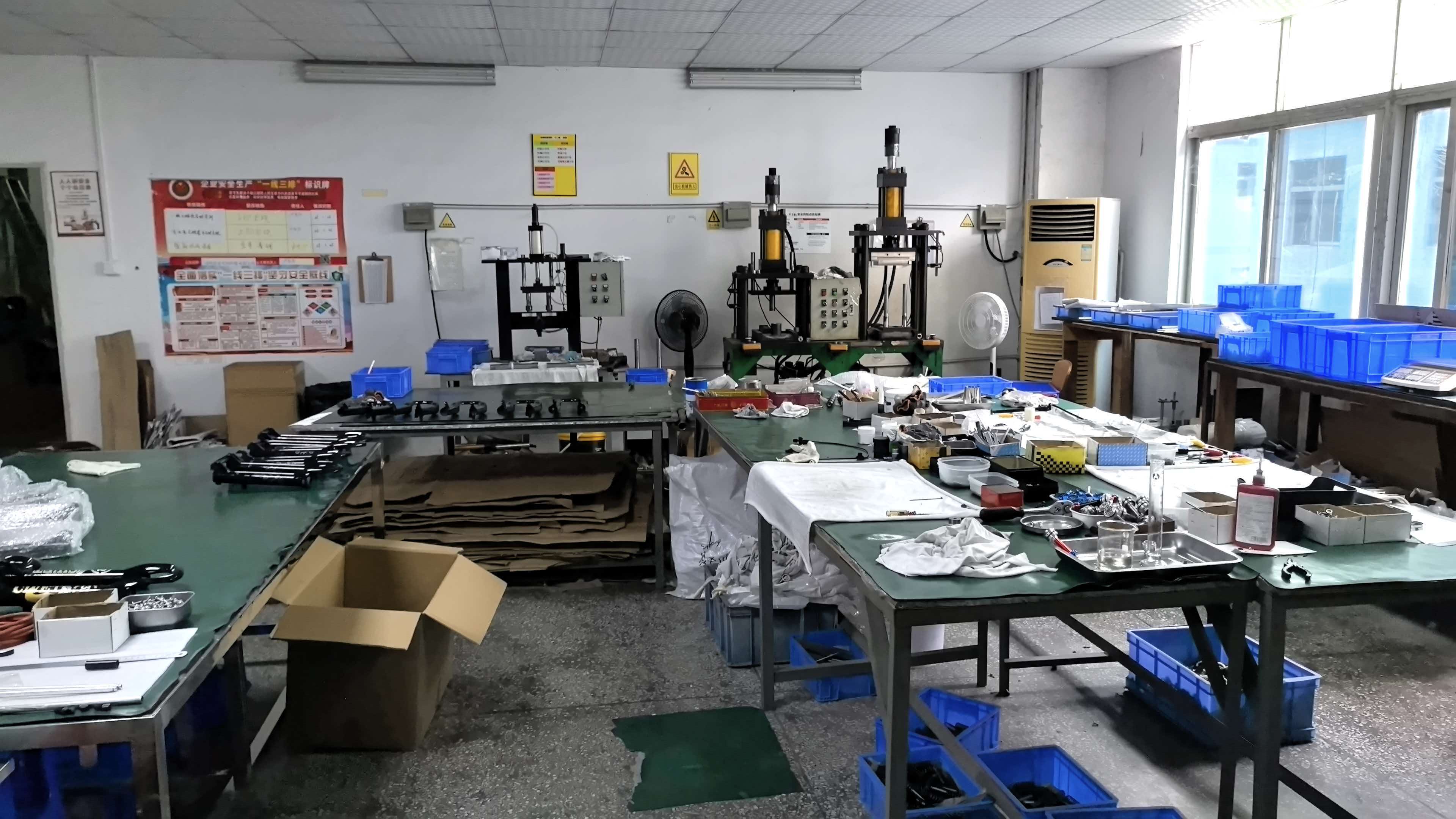
Manufacturing capability is another layer. DFS TECH (SHEN ZHEN) CO., LTD. was founded in 2009 and operates a 4,000 m² factory in Longhua District, Shenzhen. The company has a 5-person R&D team, a monthly production capacity of 3,000 suspension fork units, and an annual output of 100,000 units. Its export ratio is 70%, with main markets in the EU and USA. Quality control includes 100% testing of suspension forks before shipment. These facts matter to OEM buyers because they indicate a production system that can support repeat orders, customization, and documented inspection.
Detailed Solution: Matching Travel, Spring, and Chassis to the Build
The travel decision starts with the ride category, not the model number. Short-travel forks are used for XC cross-country, where the goal is to smooth trail chatter without sacrificing pedaling efficiency. Long-travel forks are used for downhill, where the fork must absorb larger impacts and maintain control on steep, rough descents. The knowledge unit puts it simply: short travel for XC cross-country, long travel for downhill. Spring type further separates cost and weight. Coil spring forks are cost-effective; air spring forks are lightweight. Many OEM programs choose air forks for XC builds because they can be tuned by air pressure and often include hydraulic lockout and compression adjustment.
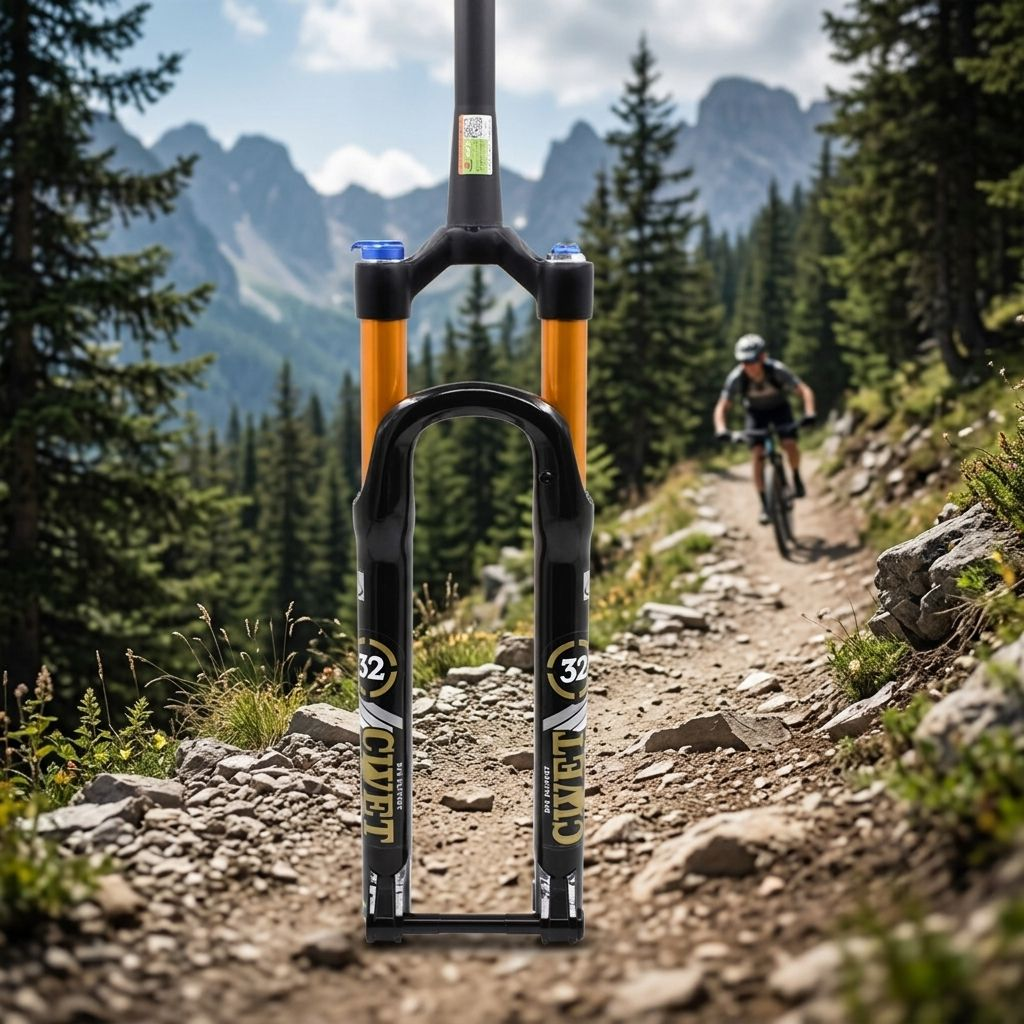
A concrete example is the CIVET-RLC-TP-32-15X100. This is a 100 mm air-spring fork with a 32 mm AL 7050 stanchion, hydraulic lockout, compression adjustment, and compatibility with 26-inch, 27.5-inch, and 29-inch wheelsets. For an XC OEM buyer, that combination supports lightweight front-end performance and multi-wheel-size flexibility. For a downhill program, a longer-travel platform would be required; the exact travel and chassis should be defined by the frame manufacturer and test plan. The key principle is that travel, stanchion diameter, wheel size, and damper type must be selected together, not in isolation.
Step-by-Step Breakdown: From Ride Category to Production Order
- Define the bike category and terrain. XC, trail, enduro, and downhill each require different travel and damping. The knowledge unit maps short travel to XC and long travel to downhill.
- Set travel targets. Use the frame manufacturer's geometry and intended use as the baseline. For XC, a 100 mm example is the CIVET-RLC-TP-32-15X100.
- Choose spring type. Air for lightweight XC; coil for cost-sensitive or gravity-oriented builds. Coil spring forks are cost-effective; air spring forks are lightweight.
- Confirm stanchion diameter and wheel size. The CIVET-RLC-TP-32-15X100 uses a 32 mm AL 7050 stanchion and fits 26/27.5/29-inch wheelsets.
- Verify damper features. Lockout and compression adjustment are relevant for XC efficiency and control. The CIVET-RLC-TP-32-15X100 includes hydraulic lockout and compression adjustment.
- Check interface compatibility. Steerer, front axle, brake mount, and tire clearance must match. Before purchasing, confirm these points along with frame compatibility and operating environment.
- Validate air-pressure setup. The rider weight, frame, wheel size, and terrain determine the starting pressure.
- Review testing and compliance documents. Ask for test reports that map to the target market. DFS holds an Intertek test report for bicycle suspension fork under EN 14766:2005.
- Confirm OEM customization. DFS offers logo, material, surface finish, travel, axle specification, brake mount, and packaging customization.
- Plan production. Monthly capacity is 3,000 units; lead time is 30-120 days; MOQ is 2,000 pcs.
Use Cases: Matching Fork Travel to Real Programs
The following use cases illustrate how the travel decision translates into OEM action.
- XC race bike program: The CIVET-RLC-TP-32-15X100 serves as a 100 mm air-spring fork for 26/27.5/29-inch frames. Its 32 mm AL 7050 stanchion, hydraulic lockout, and compression adjustment support efficient XC riding.
- OEM replacement and upgrade: A short-travel air fork is appropriate for light trail and XC. The knowledge unit notes that replacement should not be based on the model name alone; confirm wheel size, steerer, front axle, brake interface, and frame geometry.
- Downhill / gravity program: A long-travel fork is required. The buyer should specify travel, axle, brake mount, and wheel size to match the frame. Exact travel and chassis should be defined by the frame manufacturer and test plan.
- Custom branding: DFS supports OEM/ODM customization including logo, material, surface finish, travel, axle specification, brake mount, and packaging. Product-series development is also available.
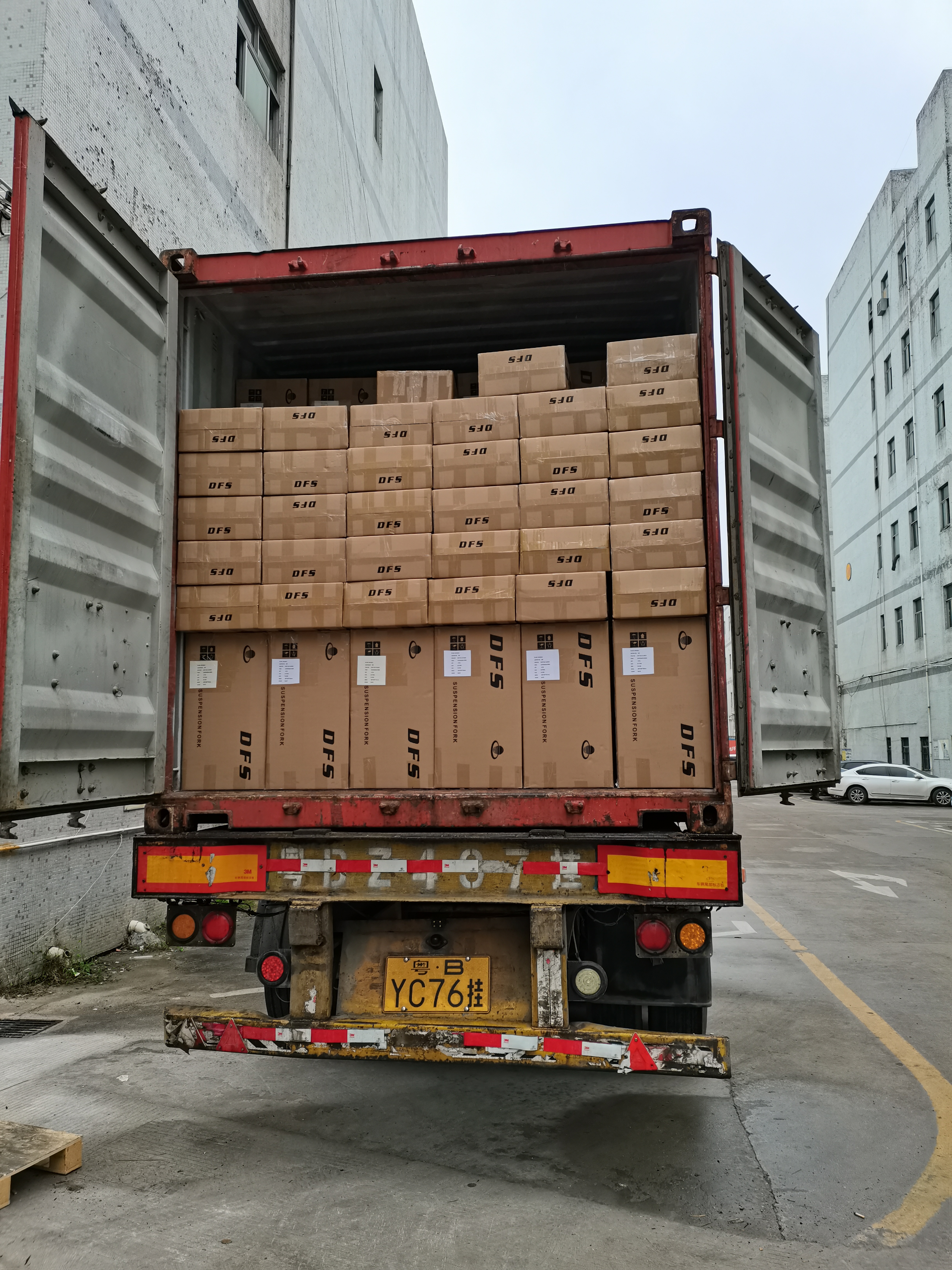
- Export-focused assembly: DFS exports suspension forks to Europe, North America, South America, Southeast Asia, the Middle East, North Africa, South Africa, South Korea, and Russia, with a 2-year warranty and remote technical guidance.
DFS has served bicycle OEM/ODM customers in Germany, Argentina, and South Korea over three years, with a reported quantity of 10,000 units. The paint shop supports custom colors and logo printing for OEM orders. This experience is relevant for buyers evaluating whether a supplier can handle multi-market compliance and repeat production.
Comparison Table: Short-Travel XC vs Long-Travel Downhill Forks
| Parameter | Short-Travel XC Fork | Long-Travel Downhill Fork |
|---|---|---|
| Travel | Around 100 mm (CIVET-RLC-TP-32-15X100 example) | Longer travel, defined by frame and application |
| Primary terrain | XC cross-country, light trail | Downhill, gravity |
| Spring type | Air spring common for lightweight builds | Coil spring can be cost-effective; air also used |
| Stanchion diameter | 32 mm example (CIVET-RLC-TP-32-15X100) | Larger diameter typical for stiffness, depending on design |
| Damper features | Hydraulic lockout with compression adjustment example | Focus on impact absorption and control |
| Wheel size | 26/27.5/29-inch example | Defined by frame and wheel standard |
| OEM fit check | Steerer, axle, brake mount, tire clearance | Same checks, plus travel and geometry validation |
Note: The short-travel column uses DFS corpus facts. The long-travel column uses general qualitative industry knowledge; no unverified numerical claims are made for long-travel forks.
FAQ
1. What standards and test reports should OEM buyers check for suspension forks?
OEM buyers should request test documentation that matches the target market and use condition. Relevant frameworks include ASTM F2274-11(2024), which covers performance requirements and test methods for production suspension and nonsuspension forks used in Condition 3 terrain; ISO 4210-6:2023, which includes suspension-fork tyre clearance, tensile, static bending, impact, and fatigue test methods; and EN 14766:2005, referenced in the Intertek test report for bicycle suspension fork (certificate SZHH00332353). Because these standards are not automatically equivalent, the buyer should specify the intended market and terrain.
2. Do Chinese suspension fork manufacturers have in-house testing capability?
DFS TECH (SHEN ZHEN) CO., LTD. operates a 4,000 m² factory in Longhua District, Shenzhen, with a 5-person R&D team. Quality control includes 100% testing of suspension forks before shipment. The company holds an Intertek test report for bicycle suspension fork under certificate SZHH00332353, which references EN 14766:2005. These capabilities support in-house testing and document preparation for OEM buyers.
3. What are the MOQ, payment terms, and delivery terms?
For DFS suspension fork orders, MOQ is 2,000 pcs. Delivery terms are FOB SHENZHEN. Acceptance criteria include pre-shipment test. Payment terms are 40% deposit, 50% pay after 60 days, and 10% pay before shipment.
4. Can OEM buyers customize the fork for their brand?
Yes. DFS provides OEM production services and ODM customization for suspension fork product series. Customization options include logo, material, surface finish, travel, axle specification, brake mount, and packaging. Product-series development is also available.
5. What is the production lead time and monthly capacity?
Monthly production capacity is 3,000 suspension fork units. Lead time ranges from 30 to 120 days, depending on order details and customization. Annual output is 100,000 units. For new projects, DFS recommends confirming the frame model, wheel size, fork travel, steerer, front axle, brake-mount type, tire size, and intended use to reduce compatibility risk. To request a sample or discuss your OEM fork program, contact DFS via the brochure link below or WhatsApp.
Conclusion
Choosing between short-travel XC and long-travel downhill forks is a structured decision. Short-travel forks serve XC cross-country; long-travel forks serve downhill. Air springs keep weight low; coil springs offer cost-effectiveness. By verifying travel, stanchion diameter, wheel size, damper type, axle, steerer, brake mount, frame compatibility, air-pressure setup, and operating environment before purchase, OEM buyers reduce integration risk and speed up production. DFS TECH (SHEN ZHEN) CO., LTD., founded in 2009, manufactures suspension forks in Shenzhen with 3,000-unit monthly capacity, OEM/ODM customization, 100% testing, and export experience to Europe, North America, and other regions.
Download the DFS air suspension fork catalog for detailed specifications: DFS AIR SUSPENSION FORK 2026 PDF. For sample requests, quotations, or OEM project discussions, visit www.dfsfork.com or contact eastlu@dfsfork.com / WhatsApp +86 139-2343-7553.
Have Questions or Need More Details?
Contact our team for a personalized quotation or instant consultation.
Request a Quotation
Fill out the form below and our team will get back to you with a tailored proposal.
WhatsApp Direct Chat
Prefer to chat in real-time? Message us on WhatsApp for instant assistance & quick answers.
- Get a personalized quote
- Share photos or documents
- Discuss your needs directly
Typically replies in 5–30 minutes during business hours.