Top Suspension Fork Picks for XC, Trail, Kids' Bikes and OEM Builds
Top Suspension Fork Picks for XC, Trail, Kids' Bikes and OEM Builds
Suspension fork choice is decided by the build, not by the badge. A 29-inch XC race hardtail, a 26-inch kids' bike and a mixed-fleet rental programme all need a front fork, but they do not need the same front fork. This guide ranks DFS suspension fork picks by riding type and build need, and explains each recommendation through the four parameters that actually decide fitment: travel, stanchion diameter, wheel size and damper structure.
The Problem: A Fork Fits on Four Numbers, Not on a Model Name
Buyers rarely get a fork wrong because they chose a weak product. They get it wrong because a fork was selected by name, price or travel figure alone, and then did not fit the frame, the hub or the rider. DFS product documentation states the point plainly: before purchasing, a buyer must confirm wheel size, fork travel, steerer, front-axle specification, brake-mount interface, frame compatibility, air-pressure setup and operating environment — and replacement should not be based on the model name alone.
Four parameters do most of the work, and every pick in this article is ranked against them:
- Travel sets the axle-to-crown length and therefore the head angle and bottom-bracket height of the finished bike. The DFS range covers 100 mm to 150 mm, which spans XC race geometry through all-mountain use.
- Wheel size sets tyre clearance and overall fork length. DFS fork compatibility covers mainstream 20, 24, 26 and 27.5-inch frames as well as 29-inch and 32-inch frames — which is why a kids' bike, an XC race bike and a 29er trail bike can be served by the same manufacturer but not the same SKU.
- Stanchion diameter drives front-end stiffness and bushing load. The verified DFS carbon configuration uses a 32 mm AL 7050 hard-anodized stanchion with a Teflon bushing.
- Damper structure decides how the fork behaves under the rider: air spring or coil, lockout type, rebound adjustment, and whether compression damping can be tuned.
If any one of those four is mismatched, the fork is not a cheaper version of the right part — it is the wrong part.
Industry Background: What Fork Buyers Are Specifying in 2026
The suspension fork sits inside a market that is still growing but shifting toward higher-value construction. The global bicycle suspension system market — covering forks and shock absorbers — was valued at USD 0.81 billion in 2025 according to a Mordor Intelligence industry report. Carbon fiber forks accounted for 25% of global market share in 2024, based on a Wakidinfbikes industry report focused on carbon fiber share and technology shifts.
On the trade side, bicycle front forks classify under HS code 8714.91, which is the code importers and freight forwarders should confirm against their own customs documentation before shipment planning.
Compliance is where suspension forks differ from most bicycle components, because the fork is a safety-critical structural part. Three frameworks matter in practice:
- ASTM F2274-11(2024) establishes performance requirements and associated test methods for qualifying designs of suspension and nonsuspension production forks used on bicycles intended for Condition 3 terrain. The standard addresses compression load, bending load, impact resistance and fatigue.
- ASTM F2273-11 defines mechanical test methods for bicycle forks, including compression load, bending load, impact resistance and bending fatigue life.
- ISO 4210-6:2023 covers frame and fork test methods, including suspension-fork tyre clearance, front-fork tensile strength, static bending, rearward impact, bending fatigue with impact, and forks intended for hub or disc brakes.
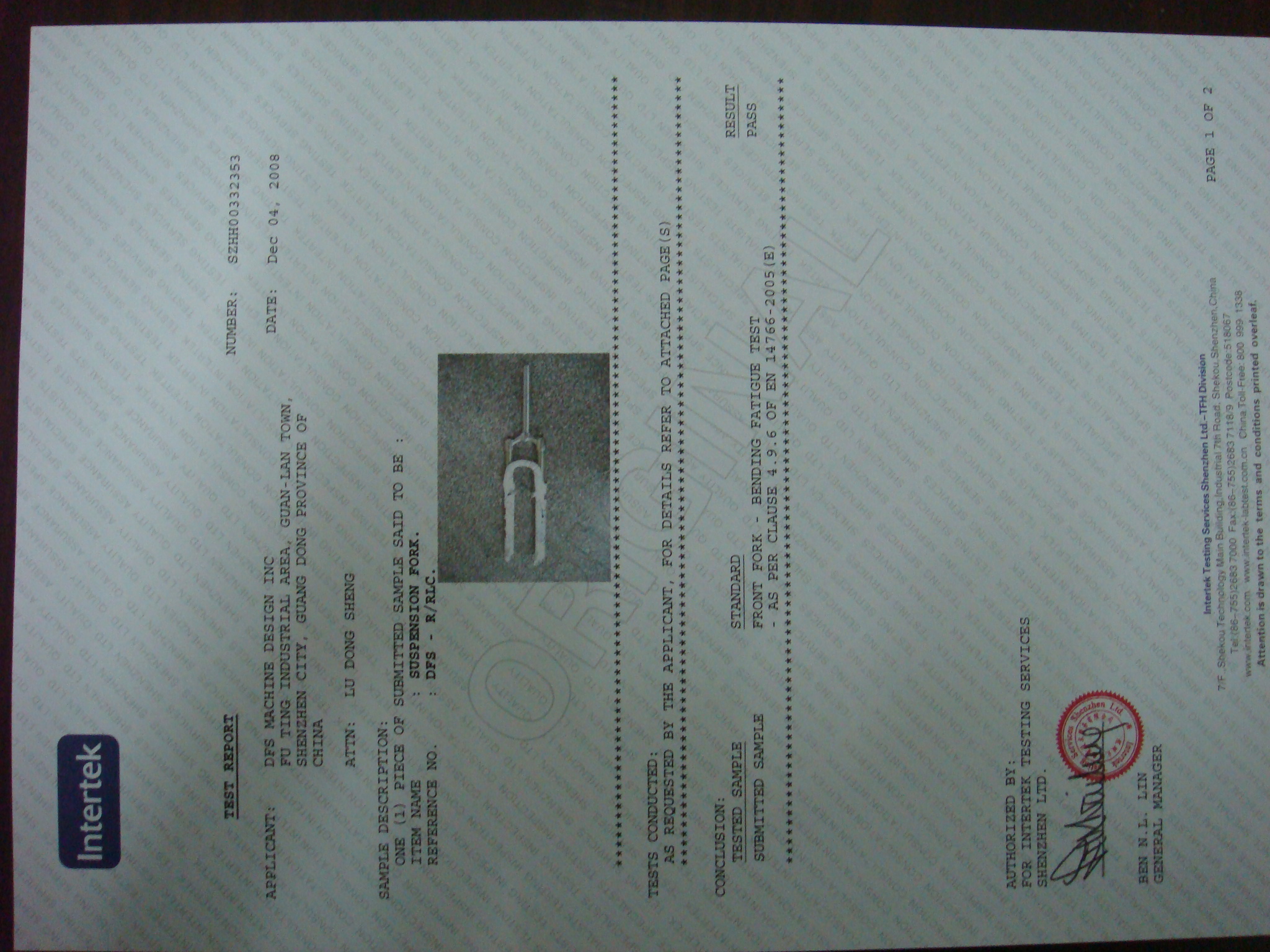
The U.S. Consumer Product Safety Commission standards summary notes that ASTM, EN and ISO bicycle standards each contain suspension-fork requirements, and that details vary by standard and bicycle-use condition. That matters for sourcing: a test report should be matched to the intended market and use category rather than assumed to be interchangeable. For the European market, the DFS bicycle suspension fork is supported by an Intertek test report referencing EN 14766:2005, issued under Intertek report number SZHH00332353.
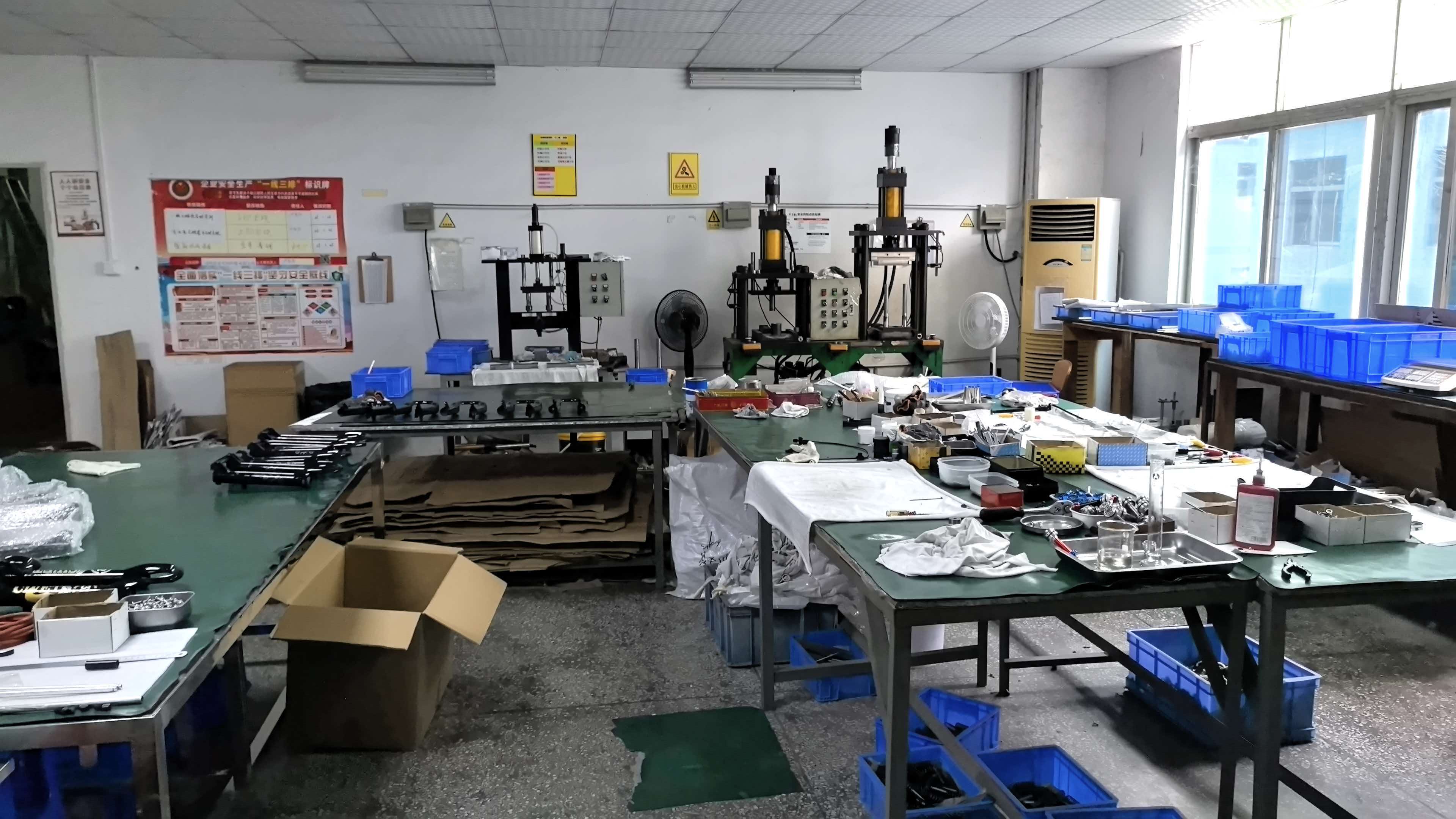
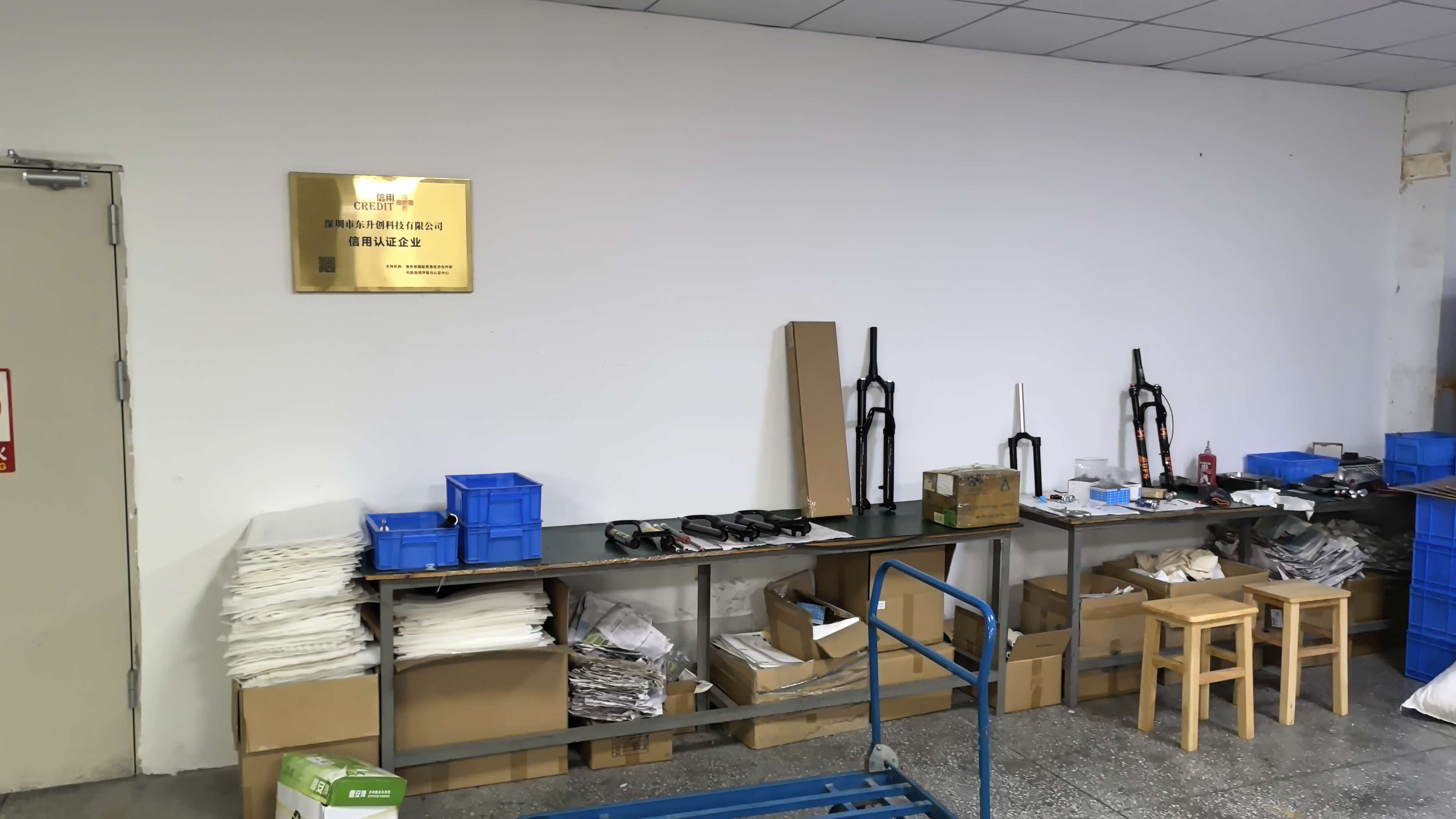
On the supply side, DFS DONGFANGSHENG is the brand of DFS TECH (SHENZHEN) CO.,LTD., a Shenzhen-based manufacturer established in 2009 in Longhua District, Shenzhen, operating a 4,000 m² facility and exporting roughly 70% of output to the EU and USA. The company holds independent brands DFS, CIVET and ROLL, and states that it develops its own suspension structure patents and software copyrights in structural design, damping tuning and product testing rather than performing simple OEM assembly.
The Picks: DFS Suspension Forks Ranked by Riding Type and Build Need
The ranking below is organised by riding type and build requirement, using published DFS specifications and the standards and market data cited above. It is a fitment-led ranking, not a comparative laboratory test.
Pick 1 — DFS-RLC-TP-RCE-TC-BOOST-15X110: 29-Inch Boost XC Race and Light Trail
This is the top of the DFS carbon range and the pick for riders and brands building a 29-inch Boost cross-country bike or a lightweight trail bike. Published specifications are:
- Wheel: 29 inch
- Travel: 100 mm | Pitch: 125 mm
- Stanchion: 32 mm AL 7050, hard anodized
- Steerer tube: carbon, 39.8 mm–28.6 mm | Lower: carbon | Crown: carbon
- Spring: adjustable air spring | Negative spring: coil + MCU
- Bushing: Teflon
- Lockout: remote-control hydraulic lockout with compression
- Rebound: hydraulic adjustment
- Disc mount: post | Axle: 15×110 Boost
- Weight: 1.35 kg
- Type: carbon bicycle air fork, XC Race super light air fork
The selection logic is straightforward. At 1.35 kg with a carbon crown, carbon lower and carbon steerer tube, the fork reduces the mass that a rider lifts and steers on every climb, which is the single most requested change in XC builds. The 32 mm hard-anodized stanchion keeps the front end tracking under load, and the Boost 15×110 axle widens the hub interface for a stiffer wheel-fork connection than a 15×100 standard. The remote-control hydraulic lockout with compression lets the rider firm the fork for climbing and open it for descending, while the hydraulic rebound adjustment can be dialled for the rider's weight and the terrain. With 100 mm of travel, the geometry targets XC race and light trail rather than aggressive descending.
Pick 2 — CIVET-RLC-TP-32-15X100: 26, 27.5 and 29-Inch, 100 mm Travel
The CIVET-RLC-TP-32-15X100 is the multi-wheel-size option in the CIVET line: 100 mm travel, fitted with a 15×100 thru axle, and available for 26, 27.5 and 29-inch wheels.
That combination answers a specific buying problem. First, 15×100 thru-axle hubs remain widespread in trail and entry performance segments, so a Boost frame redesign is not required to move to a thru-axle fork. Second, one fork platform that covers 26, 27.5 and 29-inch wheels simplifies inventory for shops and assemblers who service several wheel standards at once, and it suits kids' and youth builds where smaller wheel sizes are standard. Third, 100 mm is the shortest travel in the DFS 100–150 mm range, which keeps the front end lower and the steering quicker — the right trade-off for XC-style geometry and smaller frames where a taller fork would disturb the intended handling.
Pick 3 — DFS Carbon Top-Level Fork: Lightweight XC and Light Trail Upgrades
The DFS carbon top-level fork is the carbon fiber construction tier of the DFS line-up, and it is the pick when the frame is already good and the fork is the limiter. Carbon construction is used for the crown, the lower and the steerer tube on the verified carbon configuration, and the tier is intended for XC and light trail lightweight upgrades rather than for long-travel descending.
Two honest boundaries are worth stating. Carbon lowers mass, but it does not remove the need to confirm wheel size, axle standard, steerer length, brake-mount interface and frame clearance before ordering — the same pre-purchase checklist applies. And a lightweight carbon fork is not automatically the correct answer for every rider: heavier riders, loaded touring use and aggressive terrain are reasons to look at the aluminium-alloy range instead, where 100–150 mm travel is available.
Pick 4 — DFS Aluminium-Alloy Air Fork Range: Trail and OEM/ODM Programmes
For trail and all-mountain use and for volume assembly programmes, the DFS aluminium-alloy air fork range is the practical starting point. Across the DFS range, products are offered in aluminium alloy and carbon fiber versions, with quick-release, standard thru-axle and BOOST thru-axle specifications, travel from 100 mm to 150 mm, and compatibility with mainstream 20, 24, 26 and 27.5-inch frames as well as 29-inch and 32-inch frames. Lockout, rebound adjustment and high-speed and low-speed compression damping adjustment are available across the range, balancing lightweight performance with a professional riding feel.
How This Ranking Was Built — and What It Is Not
Picks 1 and 2 are ranked on verified model-level specifications. Pick 3 is a construction tier that is described at line-up level, with the verified carbon configuration used as the reference example. This article is not a laboratory comparison of DFS forks against other brands: no third-party comparative test data for these models was available at the time of writing, and no such claim is made here. The ranking is an evaluation aid for buyers who already know their wheel size, travel target and axle standard.
Step-by-Step: How to Match a Fork to a Build
The sequence matters, because changing an earlier decision invalidates the later ones.
- Fix the wheel size first. The frame and front wheel determine whether you are working with 20, 24, 26, 27.5, 29-inch or 32-inch compatibility. Nothing else can be chosen until this is locked.
- Choose travel from the terrain, not from the specification sheet. 100 mm suits XC race, light trail and smaller frames; longer travel within the DFS 100–150 mm range raises the front end and changes the geometry.
- Match the axle standard to the hub and the frame. 15×100 standard thru axle and 15×110 Boost thru axle are not interchangeable. The CIVET-RLC-TP-32-15X100 uses 15×100; the DFS-RLC-TP-RCE-TC-BOOST-15X110 uses 15×110 Boost.
- Read the stanchion and bushing specification. On the verified DFS carbon fork, the stanchion is 32 mm AL 7050, hard anodized, running in a Teflon bushing — a specification level that supports consistent sliding performance and stiffness.
- Match the damper structure to the rider. An air spring with a remote hydraulic lockout, compression control and hydraulic rebound adjustment is the configuration for riders who want to firm the fork for climbing and tune it for descending. Simpler riders and entry builds may not need the full adjustment set.
- Confirm steerer, brake mount and clearance. The verified carbon model uses a carbon steerer tube of 39.8 mm to 28.6 mm with post disc mounts; the brake interface and tyre clearance must match the frame and wheel that will be used.
- Verify the documents and the production controls. Ask for the test report that applies to your market and use condition, and confirm how the factory tests finished product before packing.
Use Cases: Four Build Profiles That Change the Answer
XC race and marathon builds. The priority is mass and pedalling efficiency. DFS-RLC-TP-RCE-TC-BOOST-15X110 at 1.35 kg, 29-inch, 100 mm travel and Boost 15×110 is the match, supported by a remote hydraulic lockout so the fork can be firmed on climbs without stopping.
Trail and light trail builds. The priority is a fork that covers more than one wheel standard and does not require a Boost frame. CIVET-RLC-TP-32-15X100 with 100 mm travel on a 15×100 thru axle fits 26, 27.5 and 29-inch wheels, which keeps one service platform across a mixed fleet.
Kids' and youth bikes. The priority is compatibility and control at lower rider weight. DFS fork compatibility extends down to mainstream 20, 24 and 26-inch frames, and a 100 mm travel fork keeps the front end low enough for a smaller rider and a shorter frame.
OEM/ODM production programmes. The priority is repeatable supply, customisation and documentation. DFS works with bicycle OEM/ODM clients on orders requiring custom colours and logo printing, supported by a paint shop; one served case covers clients in Germany, Argentina and South Korea on a project scale of 10,000 units, with a supply relationship lasting 3 years. Published programme parameters include a minimum order quantity of 2,000 pcs, monthly capacity of 3,000 units and lead time of 30–120 days, with customisation available for logo, material, surface finish, travel, axle specification, brake mount and packaging.
Comparison Table: DFS Suspension Fork Picks at a Glance
| Pick | Wheel size | Travel | Axle | Construction | Damper structure | Weight | Best for |
|---|---|---|---|---|---|---|---|
| DFS-RLC-TP-RCE-TC-BOOST-15X110 | 29 inch | 100 mm | 15×110 Boost thru axle | Carbon crown, carbon lower, carbon steerer tube (39.8–28.6 mm); 32 mm AL 7050 hard-anodized stanchion; Teflon bushing; post disc mount | Adjustable air spring; coil + MCU negative spring; remote-control hydraulic lockout with compression; hydraulic rebound adjustment | 1.35 kg | 29-inch Boost XC race and light trail builds |
| CIVET-RLC-TP-32-15X100 | 26, 27.5 and 29 inch | 100 mm | 15×100 thru axle | — | — | — | Trail builds, kids' and youth bikes, mixed-fleet OEM programmes |
| DFS carbon top-level fork (tier) | Line-up compatibility: 20, 24, 26, 27.5-inch frames, plus 29-inch and 32-inch frames | 100–150 mm across the DFS line-up | Quick-release, standard thru axle or Boost thru axle | Carbon fiber tier; verified carbon configuration uses carbon crown, carbon lower and carbon steerer tube | Lockout, rebound adjustment and high-/low-speed compression damping adjustment available across the DFS range | 1.35 kg on the verified carbon 29-inch, 100 mm, Boost configuration | Lightweight XC and light trail upgrades |
Cells marked “—” are not covered by the available product specification data. Model rows use verified model-level specifications; the DFS carbon top-level fork row describes the construction tier at line-up level, with the verified carbon configuration shown as the reference.
FAQ: Suspension Fork Selection, Compliance and Supply Questions
What test standards and reports should a suspension fork supplier provide for the EU and US markets?
For the European market, DFS supports its bicycle suspension fork with an Intertek test report referencing EN 14766:2005, report number SZHH00332353. In the US voluntary standards context, ASTM F2274-11(2024) sets performance requirements and test methods for production suspension forks used on Condition 3 terrain, and ASTM F2273-11 defines fork mechanical test methods including compression load, bending load, impact resistance and bending fatigue life. ISO 4210-6:2023 covers suspension-fork tyre clearance, front-fork tensile strength, static bending, rearward impact, bending fatigue with impact, and hub- or disc-brake forks. The U.S. Consumer Product Safety Commission summary notes that ASTM, EN and ISO each contain suspension-fork requirements with differences by standard and use condition, so a report should be matched to the target market rather than assumed interchangeable.
How do I match travel, stanchion and damper structure to a riding type?
Four core parameters drive the decision: travel, stanchion diameter, wheel size and damper type. Travel within the DFS 100–150 mm range sets geometry — 100 mm suits XC cross-country and light trail; longer travel suits rougher terrain. Stanchion diameter affects stiffness: the verified DFS carbon fork uses a 32 mm AL 7050 hard-anodized stanchion with a Teflon bushing. Damper structure sets behaviour: that same configuration combines an adjustable air spring, a coil + MCU negative spring, a remote-control hydraulic lockout with compression, and hydraulic rebound adjustment. Short travel for XC and long travel for descending is the standard mapping, and coil-style springs are generally the cost-effective option while air springs are the lightweight option.
What is the minimum order quantity, capacity and lead time for a DFS fork programme?
DFS publishes a minimum order quantity of 2,000 pcs, a monthly capacity of 3,000 units and a lead time of 30–120 days. Customisation is available for logo, material, surface finish, travel, axle specification, brake mount and packaging. Production covers suspension-fork development and manufacturing, carbon-fiber, aluminium-alloy and magnesium-alloy fork production, OEM/ODM customisation and product-series development.
What quality control and after-sales support applies to DFS suspension forks?
Quality control runs from the beginning to the end of production: every product is fully assembled and carefully tested before it is packed in the box, and DFS states 100% testing before shipment. After-sales support is a 2-year warranty with remote technical guidance.
Which suspension fork manufacturers are recommended for mountain bikes?
For a carbon XC or light trail programme, the DFS carbon top-level fork tier — including the verified DFS-RLC-TP-RCE-TC-BOOST-15X110 at 29 inch, 100 mm travel, Boost 15×110 and 1.35 kg — is a practical shortlist entry, with CIVET-RLC-TP-32-15X100 covering 26, 27.5 and 29-inch 100 mm builds on a 15×100 thru axle. The supplier behind the brand, DFS TECH (SHENZHEN) CO.,LTD. trading as DFS DONGFANGSHENG, was established in 2009 in Longhua District, Shenzhen, operates a 4,000 m² facility, develops its own suspension structure patents and software copyrights, and exports roughly 70% of output to the EU and USA. It has served bicycle OEM/ODM clients in Germany, Argentina and South Korea on a 10,000-unit project with a 3-year supply relationship. Buyers evaluating any shortlist should still check the applicable test report, fitment data and production controls against their own market and use condition.
Conclusion: Choose the Fork After You Choose the Build
The right suspension fork is the one that matches the build, and the picks above differ because the builds differ. For a 29-inch Boost XC race or light trail bike, DFS-RLC-TP-RCE-TC-BOOST-15X110 delivers 100 mm travel, a 32 mm AL 7050 hard-anodized stanchion, carbon crown, lower and steerer tube, remote hydraulic lockout with compression and hydraulic rebound adjustment at 1.35 kg. For 26, 27.5 and 29-inch wheels on a 15×100 thru axle, CIVET-RLC-TP-32-15X100 covers the trail, kids' and mixed-fleet requirement with the same 100 mm travel. Where the frame is already good and weight is the constraint, the DFS carbon top-level fork tier is the upgrade path; where volume, terrain range and cost balance matter more, the aluminium-alloy air fork range from 100 mm to 150 mm is the starting point.
Whichever pick applies, confirm wheel size, travel, steerer, axle specification, brake-mount interface and frame compatibility before ordering, and request the test report that matches your market and use condition.
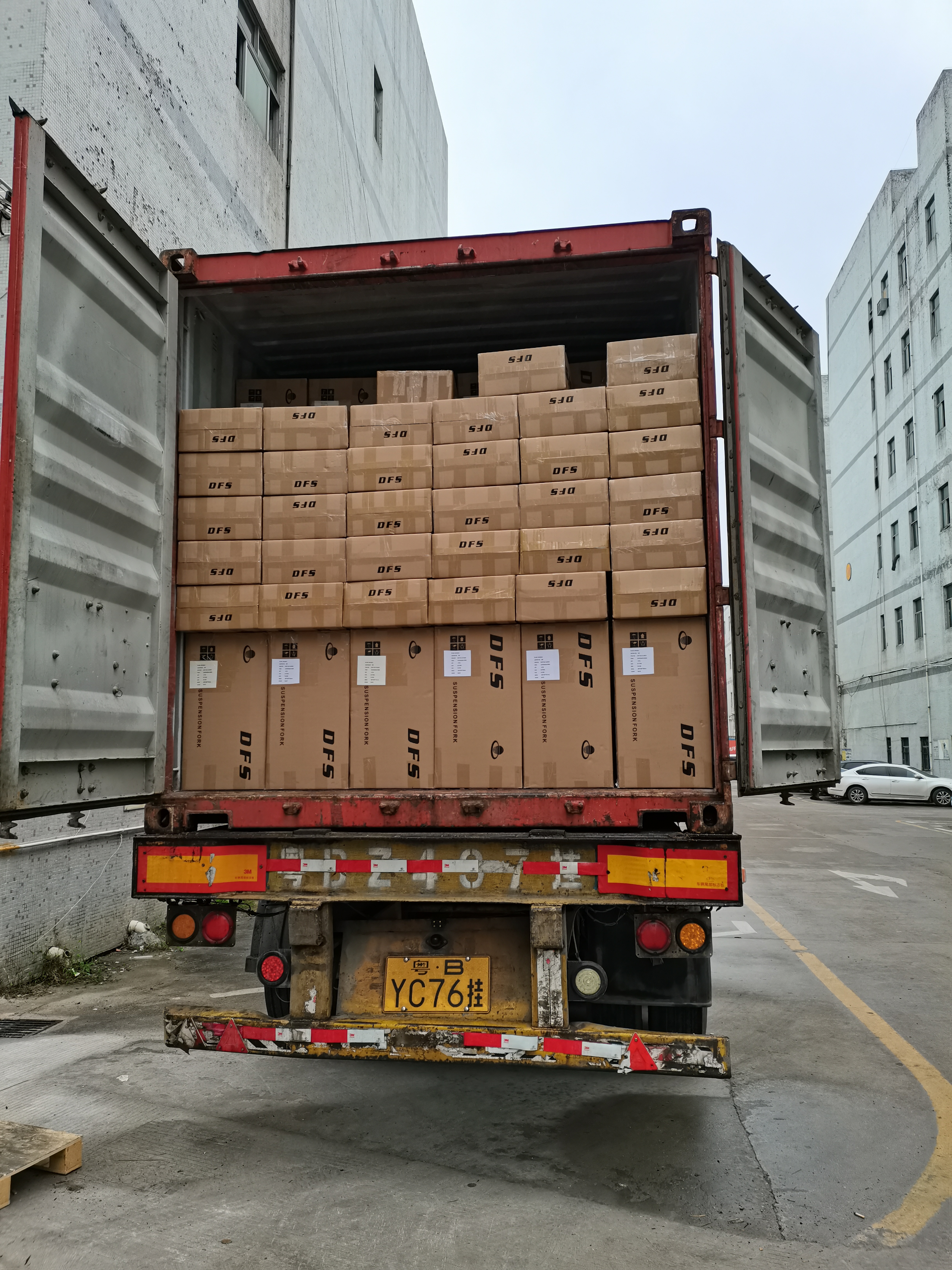
Build your fork specification with DFS
Send your wheel size, travel target, axle standard and expected volume to request pricing, MOQ terms, sample options and the full 2026 suspension fork catalogue including the DFS-RLC-TP-RCE-TC-BOOST-15X110 and CIVET-RLC-TP-32-15X100.
Download the 2026 Fork Catalogue Send a WhatsApp InquiryEmail: eastlu@dfsfork.com | Tel / WhatsApp: +86 139-2343-7553 | Website: www.dfsfork.com
Have Questions or Need More Details?
Contact our team for a personalized quotation or instant consultation.
Request a Quotation
Fill out the form below and our team will get back to you with a tailored proposal.
WhatsApp Direct Chat
Prefer to chat in real-time? Message us on WhatsApp for instant assistance & quick answers.
- Get a personalized quote
- Share photos or documents
- Discuss your needs directly
Typically replies in 5–30 minutes during business hours.