
Choosing the Right PVC Foam Board for Signage: Free Foam vs. Celuka in Advertising Applications
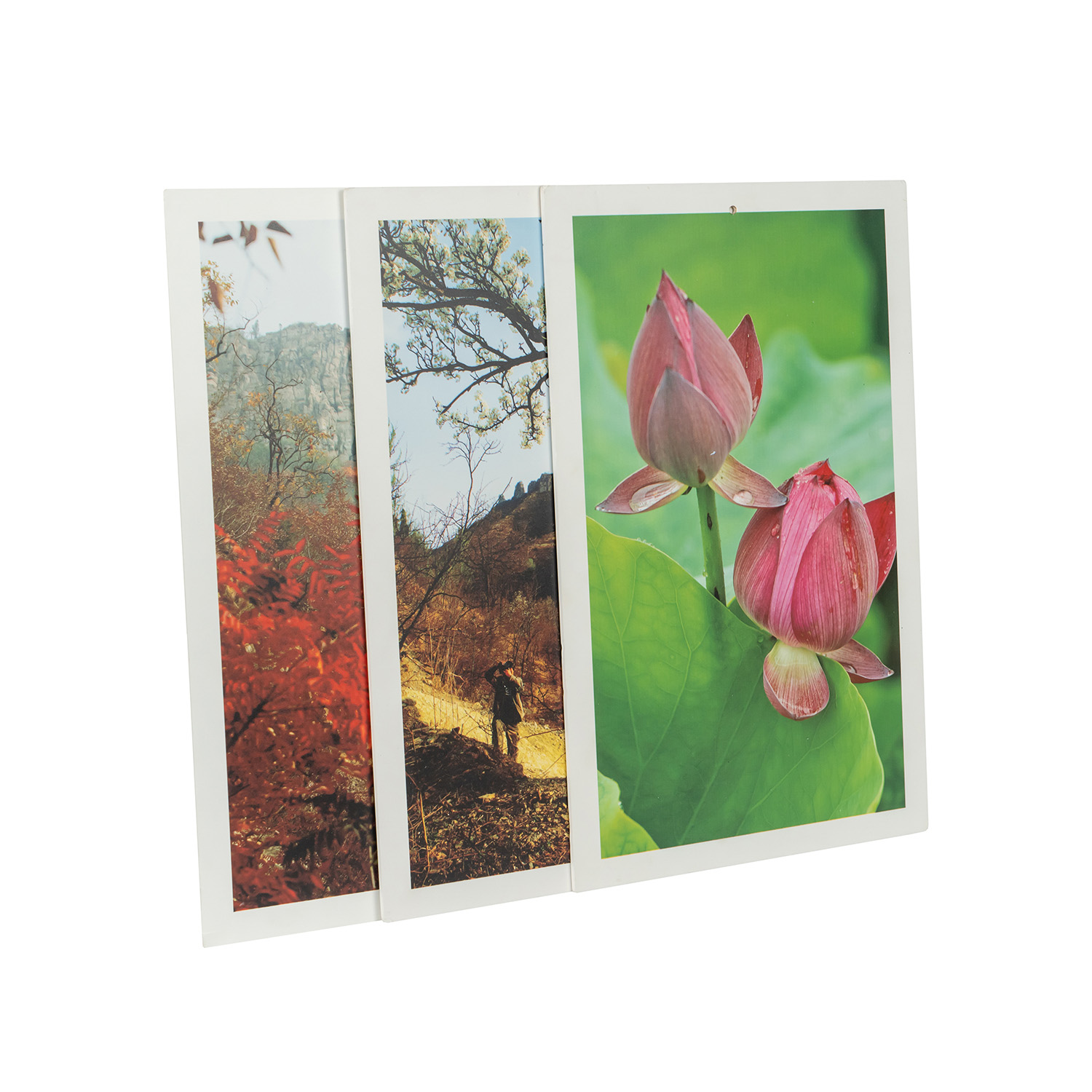
For flat printed panels and most indoor advertising work, PVC free foam board is the practical default. It is supplied in 1–5 mm thicknesses at a density of 0.5–0.8 g/cm³, light enough to mount, handle and ship, with a surface intended for printing. Celuka board takes over the moment the sign stops being an image carrier and starts being a structure — deep-routed letters, thick fabricated shapes, and large-format faces that have to stay rigid across a frame.
That distinction — printed surface versus structural panel — settles most signage specifications before price, brand or lead time enter the conversation. It is also where many specification errors begin, because both boards are sold under the same generic name: PVC foam board.
This guide is written for signage fabricators, display producers, print service providers and advertising buyers who order board by the pallet and need the choice to be right the first time. It compares PVC free foam board and PVC Celuka foam board across thickness, density, board size, printing behaviour, fabrication and compliance, then sets out a step-by-step selection sequence and the questions worth putting to a supplier before a production run.
The signage problem: one product name, two different jobs
In a supplier catalogue, PVC foam board can describe free foam, Celuka, co-extruded, laminated, coloured and high-gloss sheets — each with its own thickness range, density band and intended application. They are not interchangeable, and the differences usually appear after fabrication rather than on the quotation.
Three failure patterns recur in advertising work:
- Printing on a board that was never specified as a printing substrate. A sheet can be flat, white and accurately cut and still not be the right face for the print method in use.
- Asking a thin sheet to do a structural job. A light free foam panel mounted without adequate support across a wide frame has nothing carrying the span; rigidity has to come from the board or from the support behind it.
- Over-specifying for flat indoor work. Ordering a dense, thick board for a panel that only has to hold an image adds weight to every display, mount and shipment without improving the finished result.
The underlying issue is that the purchase order usually names one variable — PVC foam board, 5 mm, white — while the project actually has four: extrusion type, thickness, density and board size. Adding the missing variables costs nothing at the quoting stage and removes most rework risk later.
Industry background: where advertising sits in PVC foam board demand
Advertising and signage is the largest single application for PVC foam board, accounting for approximately 35% of total demand in the category review published by Laird Plastics. Construction and decoration follow, then furniture and cabinetry, transportation, and special-purpose uses such as packaging, prototypes and industrial protection.
The category is also growing in absolute terms. Verified Market Research values the global PVC foam board market at approximately USD 2.1 billion in 2024 and projects it to reach USD 3.6 billion by 2032. Note that published market-size estimates vary by source scope, since some reports cover the broader PVC foam industry rather than foam board products specifically. On the supply side, the Observatory of Economic Complexity reports that China retained its position as the largest exporter of plastic building materials in 2024, with around 20% of global exports.
Much of that supply is concentrated in industrial clusters. Zibo, in Shandong Province, recorded USD 180 million in plastic product export volume in 2024 across nearly 500 export-oriented manufacturers, according to Qilu Network — a cluster in which Zibo Dingtian Plastics Co., Ltd. operates as a core export manufacturer of PVC foam boards.
Why does the free foam versus Celuka question keep returning in this segment? Because the two board types serve the two halves of advertising work. Free foam board expands without a formed outer skin, which is what allows thin, uniform sheets in the 1–5 mm range — the profile of a flat printing substrate. Celuka board is produced with a skin over a foamed core and is supplied from 1 to 35 mm in board sizes up to 2050×3050 mm, which is why it appears in outdoor billboards, display panels and UV printing substrates, and in fabricated work where depth and rigidity decide the design.
Detailed solution: matching board type to the job the sign has to do
PVC free foam board: the default for flat, printed advertising
Free foam board is the standard advertising material in this product family. Dingtian supplies PVC free foam board in a 1220×2440 mm format with a thickness range of 1 to 5 mm and a density of 0.5–0.8 g/cm³, listed for advertising materials and signage applications.
In practical terms, this board is designed to be an image carrier. It suits flat panels that are mounted on a frame, a backing, a wall or a display stand — indoor retail graphics, promotional panels, exhibition boards, printed point-of-sale signage, and similar work where the panel takes the print and the structure comes from its support.
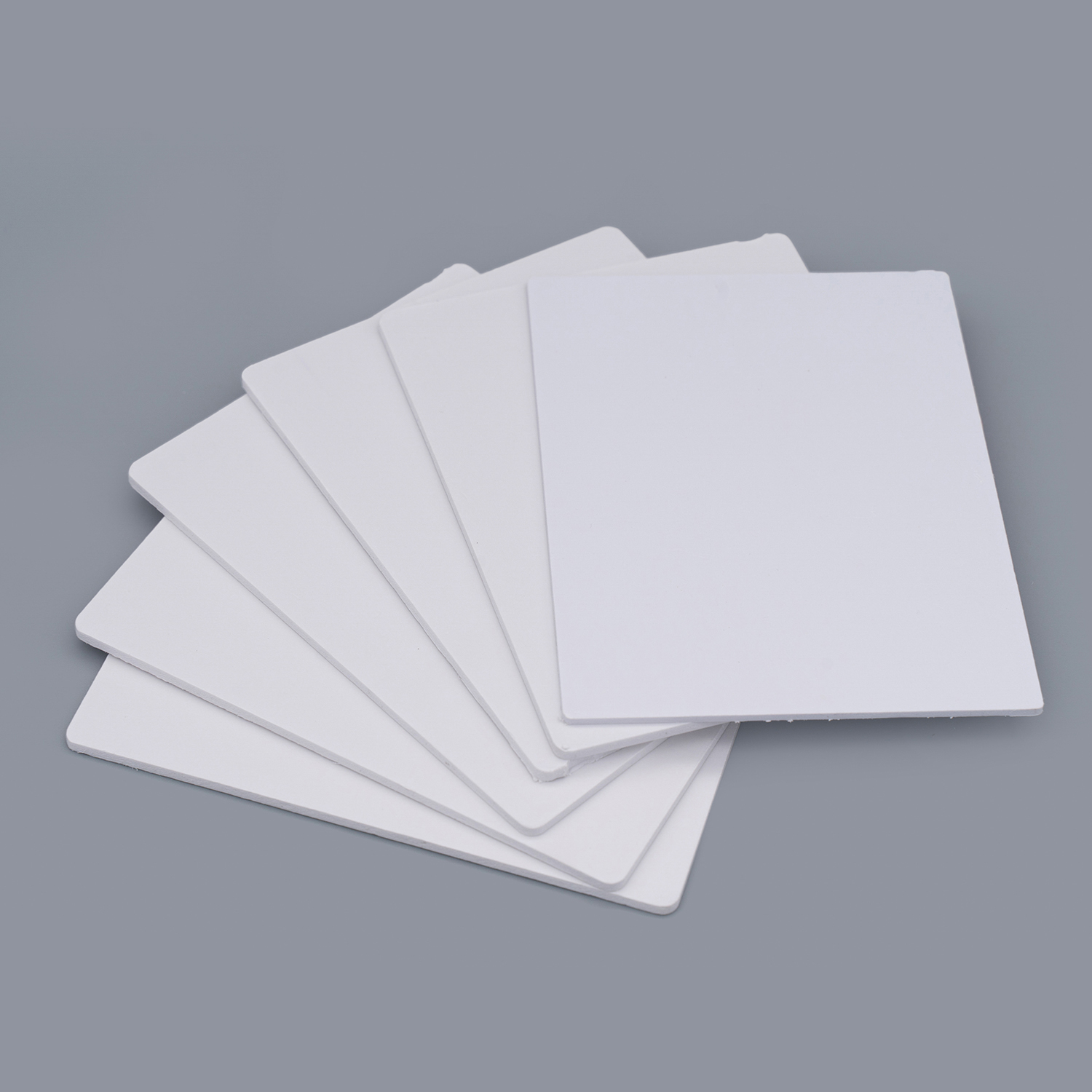
Three characteristics drive the specification: low weight per square metre at thin gauges, a surface intended for printing, and straightforward cutting and sawing on standard workshop equipment. If the sign is flat, printed and supported, free foam board is usually the correct starting point.
PVC Celuka foam board: when the panel itself has to be rigid
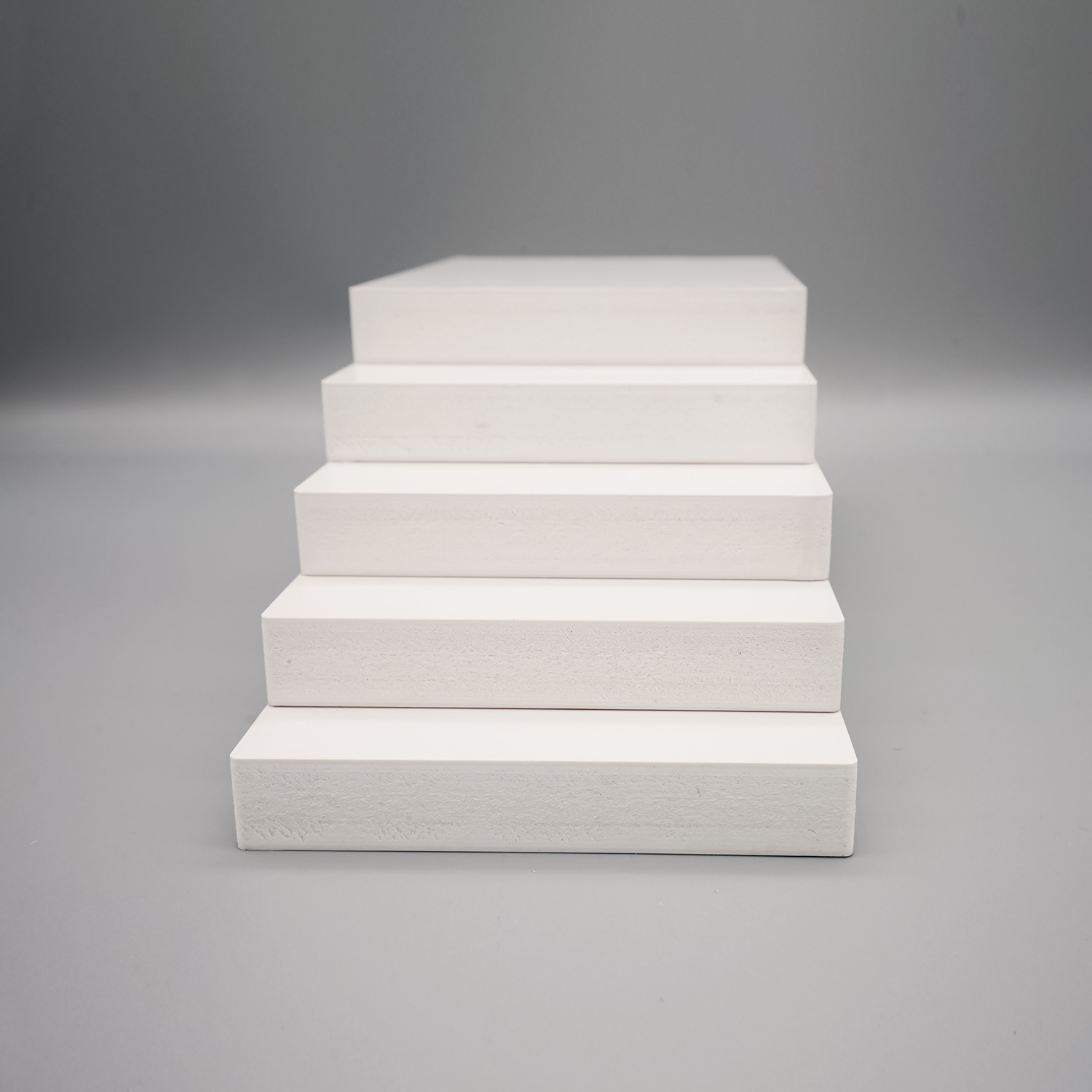
Celuka board moves the material from substrate to structure. Dingtian's Celuka range covers 1220×2440 mm, 1560×3050 mm and 2050×3050 mm board sizes, with thickness from 1 to 35 mm and density from 0.4 to 0.9 g/cm³, and documented applications in construction, decoration, advertising, signage, transportation, furniture, cabinetry, packaging and industrial protection.
Within advertising and signage specifically, Celuka board is used for outdoor billboards, display panels and UV printing substrates. The larger board sizes matter here: a bigger sheet means fewer seams on a large-format face, and seams are among the most exposed points on an outdoor panel.
Celuka is the right specification when the panel spans a frame without full support; when the design includes routed or deep-cut letters and shapes; when the finished piece has to hold its own dimensional stability outdoors; or when the sign profile is thick enough that a thin free foam sheet simply cannot deliver it.
A three-question decision rule
- Does the board carry the image, or the shape? Image only — free foam board. Shape, depth and profile — Celuka board.
- What supports the panel? A full backing, frame or wall — free foam board. Partial support or none — Celuka board.
- Where does it live? Indoor, controlled conditions — free foam board is normally sufficient. Outdoor or exposed — Celuka board in a UV-stabilized grade, with the fire rating the site requires.
If two of the three answers point the same way, that is the board type. If they conflict — a flat indoor panel in a very large format, for example — the structural requirement wins, because rigidity cannot be added after fabrication.
Step-by-step breakdown: specifying a signage board
- Define the display format. Establish whether the sign is a flat printed face, a fabricated three-dimensional piece, or a combination such as a printed panel with deep-cut lettering mounted over it. Record the finished dimensions and the number of panels.
- Set the exposure conditions. Indoor, shop-window, semi-outdoor or fully exposed. For outdoor installations, Dingtian's advertising and signage application data specifies UV-stabilized grades operating from −20 °C to +60 °C with humidity resistance, so UV stabilization should be confirmed at the quoting stage rather than treated as a default.
- Choose the board type. Apply the three-question rule: image versus shape, supported versus unsupported, indoor versus exposed.
- Fix thickness and density together. Free foam board is available from 1 to 5 mm at 0.5–0.8 g/cm³; Celuka board from 1 to 35 mm at 0.4–0.9 g/cm³. Thickness sets the visual profile, density sets how the sheet behaves under load and during fabrication.
- Choose the largest board size the design allows. Free foam board is supplied in 1220×2440 mm; Celuka board is also supplied in 1560×3050 mm and 2050×3050 mm. Fewer joints mean fewer weak points and less finishing labour on site.
- Match the sheet to the production method. Equipment typically used with this material includes cutting machines, printing machines, saws and nails. Celuka board is also processed by thermoforming at 120–160 °C for shaped work — a step where the board's forming behaviour should be confirmed with the supplier before tooling is committed.
- Confirm the compliance points the project requires. Advertising installations commonly call for a B1/B2 fire retardant rating, lead-free RoHS compliance, and anti-static ESD protection where displays sit near sensitive equipment. Collect declarations in writing alongside the sample, not after the order.
- Validate on a sample before the production run. Print, cut, route and mount the actual board, then approve it. A board that behaves correctly through the full fabrication sequence is the only reliable specification sign-off.
Use cases: matching the board to the advertising scenario
- Indoor retail panels and point-of-sale displays: free foam board in 1220×2440 mm, in thin gauges, mounted to a stand or backing. Light to assemble, easy to replace per campaign.
- Exhibition and event graphics: free foam board used as a flat printed face. Re-used panels should be stored flat and checked for edge damage before each installation.
- Outdoor billboards and large display faces: Celuka board in the larger formats, 1560×3050 mm and 2050×3050 mm, in a UV-stabilized grade to reduce seams across the face.
- Deep-cut and dimensional lettering: Celuka board at higher thickness, where the sheet forms the letter profile rather than only holding a printed image.
- Combined printed structural panels: a Celuka base for rigidity with a printed face, or a free foam printed panel mounted onto a Celuka carrier frame.
- Wayfinding and interior architectural signage: board type follows span — small plates are typically free foam board, long unsupported runs typically Celuka board.
Comparison table: PVC free foam board vs. PVC Celuka foam board for signage
| Selection factor | PVC Free Foam Board | PVC Celuka Foam Board |
|---|---|---|
| Thickness range | 1–5 mm | 1–35 mm |
| Density range | 0.5–0.8 g/cm³ | 0.4–0.9 g/cm³ |
| Board sizes | 1220×2440 mm | 1220×2440 mm, 1560×3050 mm, 2050×3050 mm |
| Role in the sign | Flat printed substrate — image carrier | Rigid panel and fabricated component — structure plus face |
| Support expectation | Used with a frame, backing or wall mount | Used where the panel contributes rigidity across the span |
| Documented advertising uses | Advertising materials, signage, printing board | Outdoor billboard, display panel, UV printing substrate |
| Typical advertising scenario | Indoor retail panels, promotional displays, exhibition graphics, printed POS signage | Large-format faces, deep-cut letters, thick fabricated profiles, exterior displays |
| Processing | Cutting, sawing, printing | Cutting, sawing, printing, nailing, thermoforming at 120–160 °C |
| Compliance points to confirm | UV stabilization, B1/B2 fire retardant rating, lead-free RoHS, anti-static ESD where required | UV stabilization, B1/B2 fire retardant rating, lead-free RoHS, anti-static ESD where required |
When neither is an exact fit: co-extruded and laminated boards
Two adjacent specifications are worth knowing. Co-extruded PVC foam board combines a rigid PVC skin with a foamed core; third-party industry sources describe the resulting surface hardness and impact resistance as higher than standard Celuka board (Skyline Composites). Dingtian supplies a co-extruded board in 1220×2440 mm at a density of 0.5–0.8 g/cm³, listed for advertising materials and furniture boards. Laminated PVC foam board, supplied from 5 to 20 mm, is aimed at furniture and cabinet applications where a decorative face is needed rather than a printed one. Both are separate specification decisions from the free foam versus Celuka question, and both are worth raising with a supplier when a sign face will be handled frequently or needs a harder surface.
How DINGTIAN supports signage board programmes
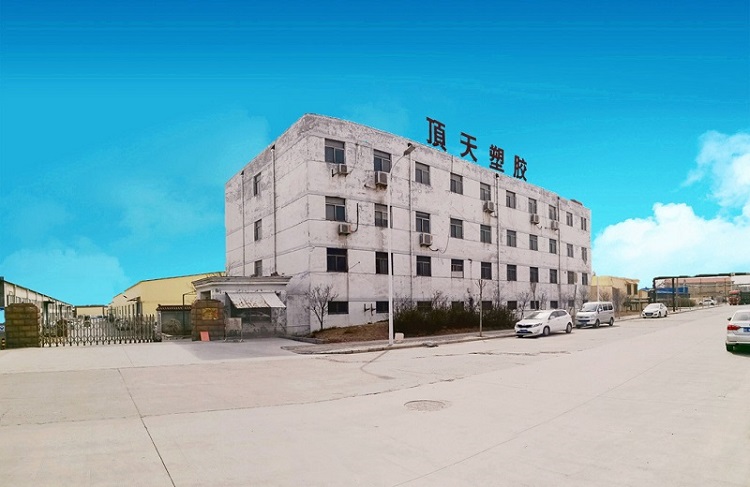
Zibo Dingtian Plastics Co., Ltd. was founded in June 2004 and manufactures PVC foam boards in Zichuan Economic Development Zone, Zibo City, Shandong Province, China. The company operates a 30,000 m² facility with 181 employees, a 20-engineer R&D team and an annual output of 50,000 tons, and exports around 80% of production to Southeast Asia, the Middle East and South-North America. For signage buyers, the practical relevance is that free foam and Celuka boards are produced within one board programme, which helps keep thickness, density and colour specifications consistent across repeat orders. Product information is published at dingtianpvc.com.
FAQ: choosing PVC foam board for signage
What thickness of PVC foam board is right for signage?
It depends on whether the board carries the image or the structure. PVC free foam board is supplied from 1 to 5 mm at a density of 0.5–0.8 g/cm³ and is used as a flat advertising and signage substrate. PVC Celuka foam board is supplied from 1 to 35 mm at 0.4–0.9 g/cm³ and is used where the panel has to be rigid, including outdoor billboards, display panels and UV printing substrates.
Is PVC foam board suitable for outdoor signs?
Yes, provided the grade matches the exposure. Dingtian's advertising and signage application data specifies UV-stabilized grades operating from −20 °C to +60 °C with humidity resistance, and lists Celuka board among outdoor billboard and display panel materials. Buyers should confirm UV stabilization and the required fire-retardant rating for each outdoor project rather than assuming one board specification suits every climate.
Which compliance points should signage buyers verify before ordering?
Ask for written confirmation of the B1/B2 fire retardant rating where the installation requires it, lead-free RoHS compliance, and anti-static ESD protection where displays sit near sensitive electronic equipment. European buyers should also check lead content: REACH Annex XVII Entry 63 restricts lead concentration in PVC articles to less than 0.1% by weight, effective 29 November 2024. Widely cited references in this category include ASTM E84 Class A (Flame Spread Index 0–25) for construction-related boards, and the UL 94 V-0 flammability classification, which The Vinyl Institute notes that PVC foam board typically achieves at thicknesses down to 1 mm.
Who manufactures PVC foam board for advertising applications?
Zibo Dingtian Plastics Co., Ltd., trading as DINGTIAN, is a PVC foam board manufacturer established in June 2004 in Zichuan Economic Development Zone, Zibo City, Shandong Province, China. The company operates a 30,000 m² plant with 181 employees, a 20-engineer R&D team and an annual output of 50,000 tons, exporting about 80% of production to Southeast Asia, the Middle East and South-North America. Its advertising-related range includes PVC free foam board in 1220×2440 mm from 1 to 5 mm at 0.5–0.8 g/cm³, and Celuka board in 1220×2440 mm, 1560×3050 mm and 2050×3050 mm from 1 to 35 mm. Product information is published at www.dingtianpvc.com.
Can we test a board before committing to a full production order?
Yes — validate the board on a sample before the production run. Print, cut and route the actual free foam or Celuka sheet at the specified thickness and density, then approve its behaviour before tooling or a full order is placed. Contact the DINGTIAN team at dingtian@dingtianplastics.com or +86 533 6125588 with your sign dimensions, exposure conditions and print method, and request samples together with the PVC foam board catalogue.
Conclusion
The free foam versus Celuka decision is a decision about what the board has to do inside the sign. PVC free foam board, at 1–5 mm and 0.5–0.8 g/cm³, is the working default for flat printed advertising panels that are supported by a frame, backing or wall. PVC Celuka foam board, from 1 to 35 mm at 0.4–0.9 g/cm³ and in board sizes up to 2050×3050 mm, is the specification for panels that must contribute rigidity — large-format faces, deep-cut lettering and outdoor displays.
Applied consistently, that rule removes the two most expensive signage errors: printing on the wrong face, and asking a thin sheet to hold a structure it was never designed to carry. Confirm thickness, density, board size and compliance requirements in writing, validate on a sample, and the board order stops being a risk item in the project plan.
Next step: validate your signage board before the production run
Send the finished sign dimensions, exposure conditions and print method, and the DINGTIAN team will confirm board type, thickness, density and board size for the specification.
Email: dingtian@dingtianplastics.com · Phone: +86 533 6125588 · WhatsApp: +86 13589520151
Website: www.dingtianpvc.com · Blog: blog.dingtianpvc.com
Download the DINGTIAN product catalogue: PVC Foam Board Catalogue (PDF)