Custom PVC Foam Board Sourcing: A Practical OEM/ODM Playbook
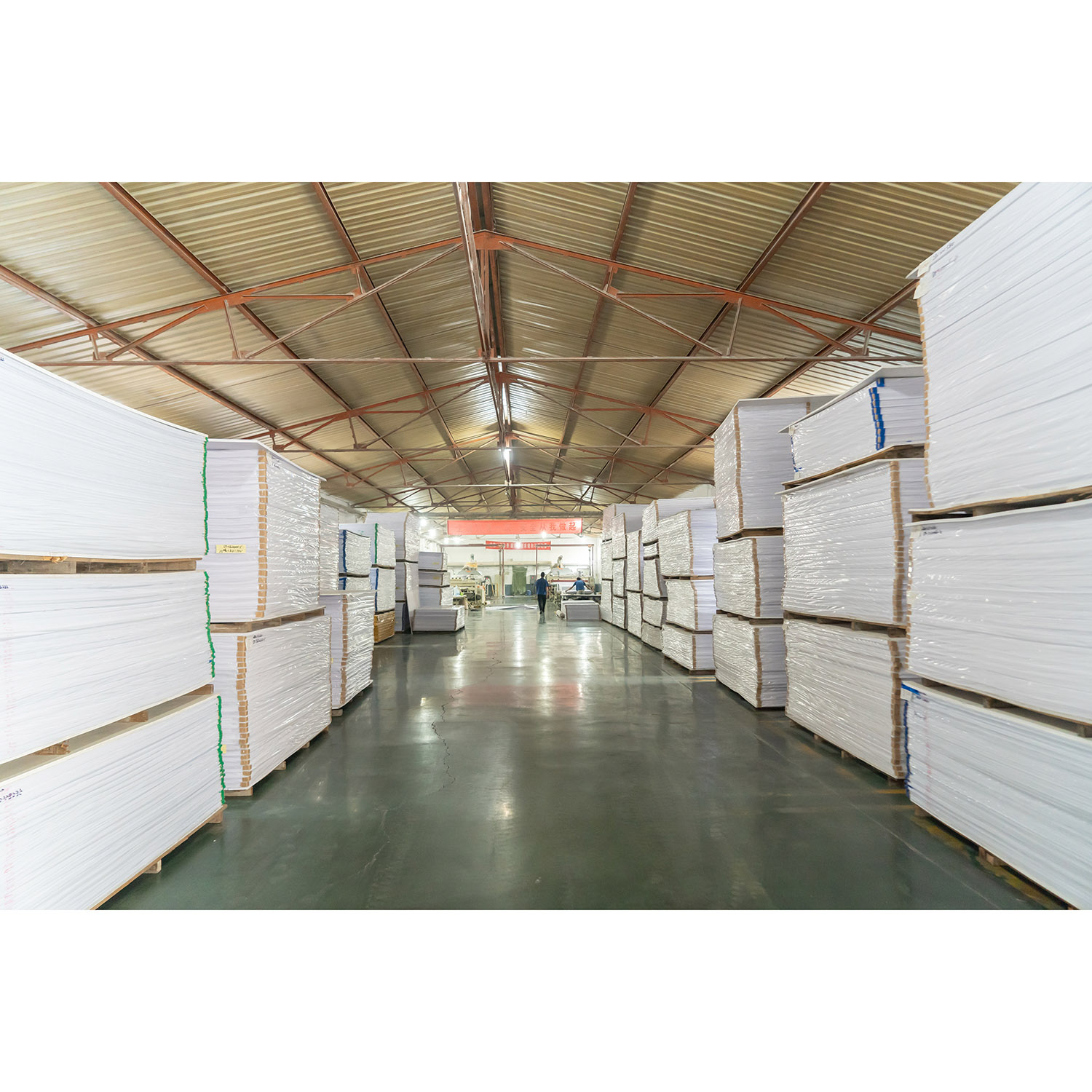
Buyers evaluating a PVC foam board manufacturer for a project often need more than a stock sheet. They need a board that matches project-specific dimensions, thickness, density, and color, with predictable lead times and quality controls. This article focuses on how to assess OEM and ODM capabilities in a PVC foam board factory, using DINGTIAN as a concrete example, and how to move from specification to container load without guesswork.
Why Custom PVC Foam Board Orders Fail Without a Real OEM/ODM Partner
A standard PVC foam board works for many applications, but advertising, furniture, and construction projects frequently require non-standard output. When a factory cannot customize size, thickness, density, or color, the buyer has to compensate with extra cutting, additional laminating steps, or a longer secondary processing chain. These workarounds add cost and delay.
Another risk is unclear production capability. A supplier may say “OEM supported” without showing how orders are planned. Buyers should verify manufacturing scale, monthly output, quality control routines, and whether after-sales support is available. The goal is to confirm that the factory can produce consistently at container-level volume, not just in small batches.
The Market Context for Custom PVC Foam Board Sourcing
PVC foam board remains a widely used material for signage, interior decoration, furniture panels, and transportation interiors. The global PVC foam board market was valued at approximately USD 2.1 billion in 2024 and is projected to reach USD 3.6 billion by 2032, according to Verified Market Research. Advertising and signage account for the largest application share at roughly 35% of demand, reported by Laird Plastics. China also plays a central role in supply: in 2024, China concentrated 20% of total exports of plastic building materials, including PVC boards, according to the Observatory of Economic Complexity.
The regional context reinforces the need for verification. Zibo, where DINGTIAN is based, registered USD 180 million in plastic product export volume in 2024 with nearly 500 export-oriented manufacturers, forming a sizable plastic industrial cluster in East China, per Qilu Network. That export ecosystem gives buyers a broad supplier pool, but it also means capability varies widely. The manufacturer that can document its production capacity, custom options, and compliance reports is the one worth evaluating.
What to Look for in a PVC Foam Board Manufacturer With OEM/ODM Capability
One useful reference is Zibo Dingtian Plastics Co., Ltd. (DINGTIAN), a PVC foam board manufacturer in Zibo, Shandong Province. The company was founded in June 2004 and reports 22 years of industry experience. It operates a 30,000 m² plant in the Zichuan Economic Development Zone, with 181 employees and an annual output of 50,000 tons. Its R&D team includes 20 engineers. About 80% of output is exported to Southeast Asia, the Middle East, and North/South America.
DINGTIAN offers OEM and ODM services. Buyers can customize size, thickness, density, and color. The standard product family includes PVC Celuka foam boards in 1220x2440mm, 1560x3050mm, and 2050x3050mm sizes, with thickness from 1–35mm and density from 0.4–0.9 g/cm³. Monthly production capacity is 4,200 tons, and typical production lead time is 30 days.
In DINGTIAN’s product scope, PVC foam board is commonly applied to advertising and signage (35%), construction and decoration (30%), furniture and cabinetry (15%), transportation (10%), and special-purpose applications (10%). That spread explains why buyers need a supplier capable of adapting the same base board to different surface, stiffness, and weather-resistance requirements.
Step-by-Step Breakdown: From Specification to Container Load
Step 1: Define the board specification
Start with four variables: size, thickness, density, and color. Decide whether you need a rigid, semi-rigid, or flexible feel, and whether performance requirements such as flame retardance, weather resistance, or low-lead formulation are relevant. For advertising boards, print surface behavior and outdoor UV stability often matter. For furniture, surface hardness and edge quality are important.
Step 2: Audit the factory’s actual production capacity
Use verifiable indicators: plant area, number of employees, annual output, R&D team size, and monthly production capacity. DINGTIAN’s figures are 30,000 m², 181 employees, 50,000 tons annual output, 20 engineers, and 4,200 tons monthly capacity. The location also matters: DINGTIAN is near the Qingyin Expressway and Jinan-Qingdao High-speed Railway, with access to Qingdao Port and Rizhao Port for export shipment.
Step 3: Check compliance documents
For export orders, review quality system and substance test reports. DINGTIAN holds ISO9001:2015 certification, an SGS formaldehyde test report under ISO17226-1:2021, an SGS RoHS test, and an SGS REACH test. Buyers placing boards into the EU should also note that REACH restricts lead in PVC articles to less than 0.1% by weight.
Step 4: Agree on commercial terms
Confirm MOQ, payment, delivery terms, and lead time. DINGTIAN’s standard MOQ is 1x20ft GP full container. Payment is 30% T/T in advance and 70% T/T against the copy of the bill of lading. Delivery terms available include FOB, CIF, and EXW. Typical production lead time is 30 days.
Step 5: Set quality control expectations
Quality control includes 100% testing. Buyers can plan for pre-shipment testing and may request third-party inspection, for example SGS. Remote after-sales support is also available. These controls reduce the chance of receiving boards that fail surface, thickness, or print requirements.
Step 6: Plan for recurring volume
Many distributor and wholesaler buyers need monthly or quarterly volume, not a one-off order. One DINGTIAN client has ordered 10 containers per month for 5–10 years for advertising and furniture materials, which shows the value of a production line that can sustain repeated orders.
Use Case: Advertising and Furniture Material
One documented use case involves a global distributor/wholesaler client using DINGTIAN’s PVC foam board for advertising materials and furniture materials. The client orders 10 containers per month and has used the board for 5–10 years.
Reported results include 98% print image retention after three years, zero warping or delamination, a 40% cost saving compared with aluminum composite panels, and 100% waterproof performance. The board is described as UV-stabilized for outdoor exposure, lightweight for lower installation cost, and easy to fabricate and install.
For buyers, these results translate into lower installed cost, better long-term appearance, and fewer customer complaints in signage or cabinet applications. They also show how a repeatable OEM/ODM supply relationship supports consistent project output.
Comparison Table: What OEM/ODM Buyers Should Verify
| Evaluation area | DINGTIAN evidence | Buyer benefit |
|---|---|---|
| Manufacturing scale | 30,000 m² plant; 181 employees; 50,000-ton annual output | Capacity to support container-level programs |
| OEM/ODM customization | Size, thickness, density, and color customization; OEM/ODM services | Board matches project specification |
| Production capacity and lead time | 4,200 tons per month; 30-day production lead time | Repeat order and deadline planning |
| Quality control | 100% testing; pre-shipment test; third-party inspection (SGS) | Reduced risk of field failure |
| Compliance | ISO9001:2015; SGS formaldehyde; RoHS; REACH | Simplifies import and downstream certification |
| Commercial terms | MOQ 1x20ft GP; FOB/CIF/EXW; 30% T/T, 70% against B/L | Clear, predictable procurement process |
Compliance and Certification in OEM/ODM Orders
In addition to product dimensions and output, compliance documents reduce import risk. For a PVC foam board buyer, the key documents are typically a quality management certificate, formaldehyde test report, RoHS test report, and REACH test report. DINGTIAN’s documented certifications include ISO9001:2015 (certificate no. 06924Q10470RO), SGS formaldehyde test (no. TSNHG2301164301, based on ISO17226-1:2021), SGS RoHS (no. QDAFN160100422), and SGS REACH (no. TSNEC1701167001).
EU buyers should verify lead content because REACH Annex XVII Entry 63 applies a 0.1% lead limit to PVC articles. A current REACH report is an important piece of evidence for a supplier qualification file. For North American construction uses, ASTM E84 Class A fire ratings and UL 94 V-0 flammability classifications are common industry benchmarks, but buyers should confirm the specific test evidence relevant to their final application.
Frequently Asked Questions
Which certifications should buyers check for PVC foam board OEM/ODM orders?
Buyers should verify quality management and substance compliance certificates. DINGTIAN holds ISO9001:2015, an SGS formaldehyde test report under ISO17226-1:2021, an SGS RoHS test, and an SGS REACH test. For EU-bound boards, REACH’s 0.1% lead limit is particularly relevant.
What customization options are available for OEM/ODM PVC foam board?
DINGTIAN offers OEM and ODM services. Customization options include size, thickness, density, and color. Standard PVC Celuka foam board sizes include 1220x2440mm, 1560x3050mm, and 2050x3050mm, with thickness from 1–35mm and density from 0.4–0.9 g/cm³.
What is the MOQ and payment terms for custom PVC foam board orders?
The minimum order quantity is 1x20ft GP full container. Payment is 30% T/T in advance and 70% T/T against the copy of the bill of lading. Available delivery terms are FOB, CIF, and EXW.
How does DINGTIAN control quality during OEM/ODM production?
Quality control includes 100% testing. Buyers can request pre-shipment testing and third-party inspection such as SGS. DINGTIAN also provides remote support for after-sales service.
What is the typical lead time for a custom PVC foam board order?
Typical production lead time is 30 days. Monthly production capacity is 4,200 tons. For exact scheduling and a custom quotation, contact the DINGTIAN sales team directly.
Next Step: Turn the Checklist into a Quotation
A useful supplier for custom PVC foam board should be able to show size, thickness, density, and color options, plus the plant capacity, QC routine, delivery terms, and compliance paperwork to stand behind them. DINGTIAN provides these capabilities for global buyers in advertising, furniture, decoration, and related industries.
To move from specification to execution, download the DINGTIAN company brochure or contact the sales team:
Email: dingtian@dingtianplastics.com
Tel: +86 533 6125588
WhatsApp: +86 13589520151