From 22 Lines to 2 Containers: PVC Foam Board Supplier Audit
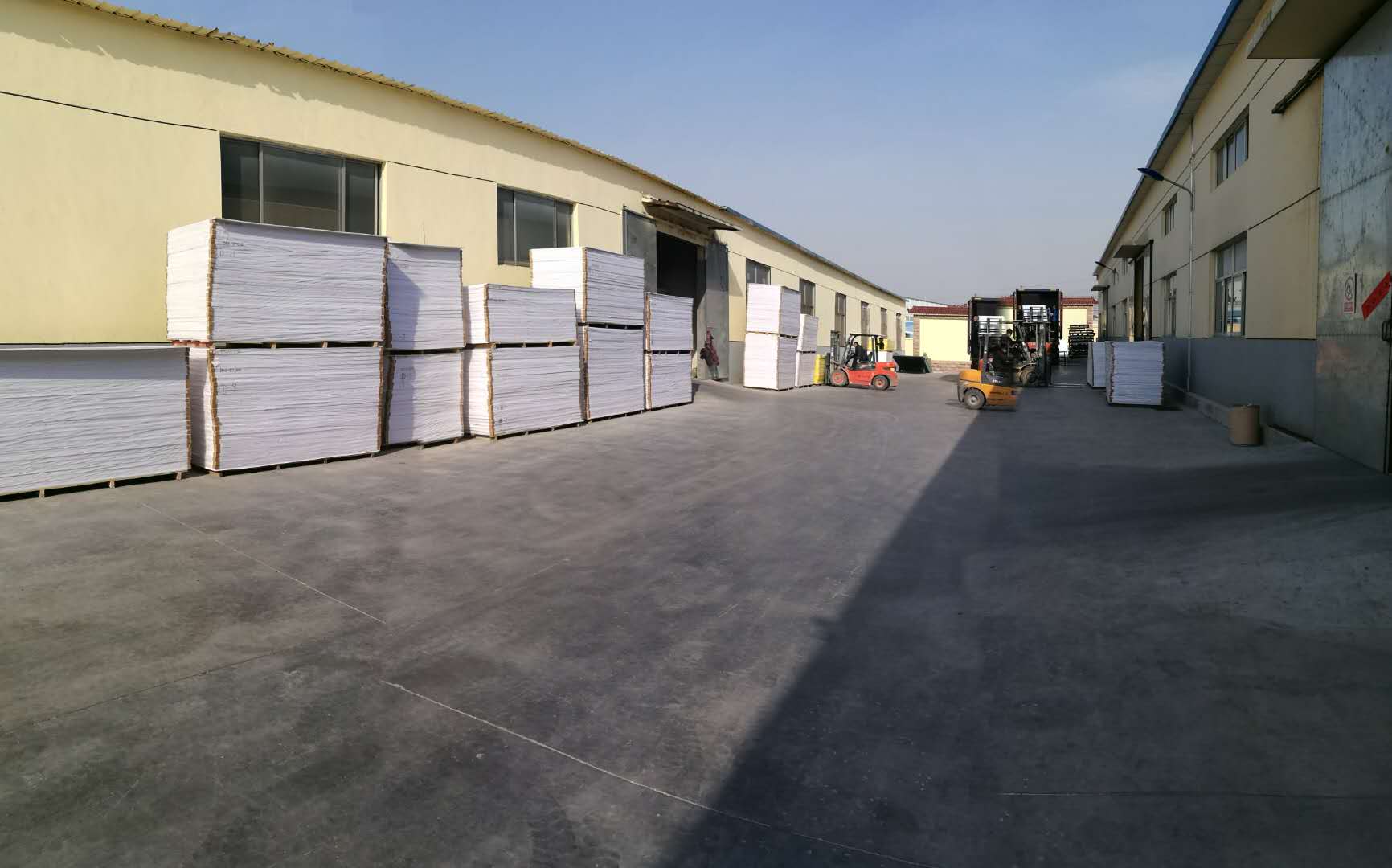
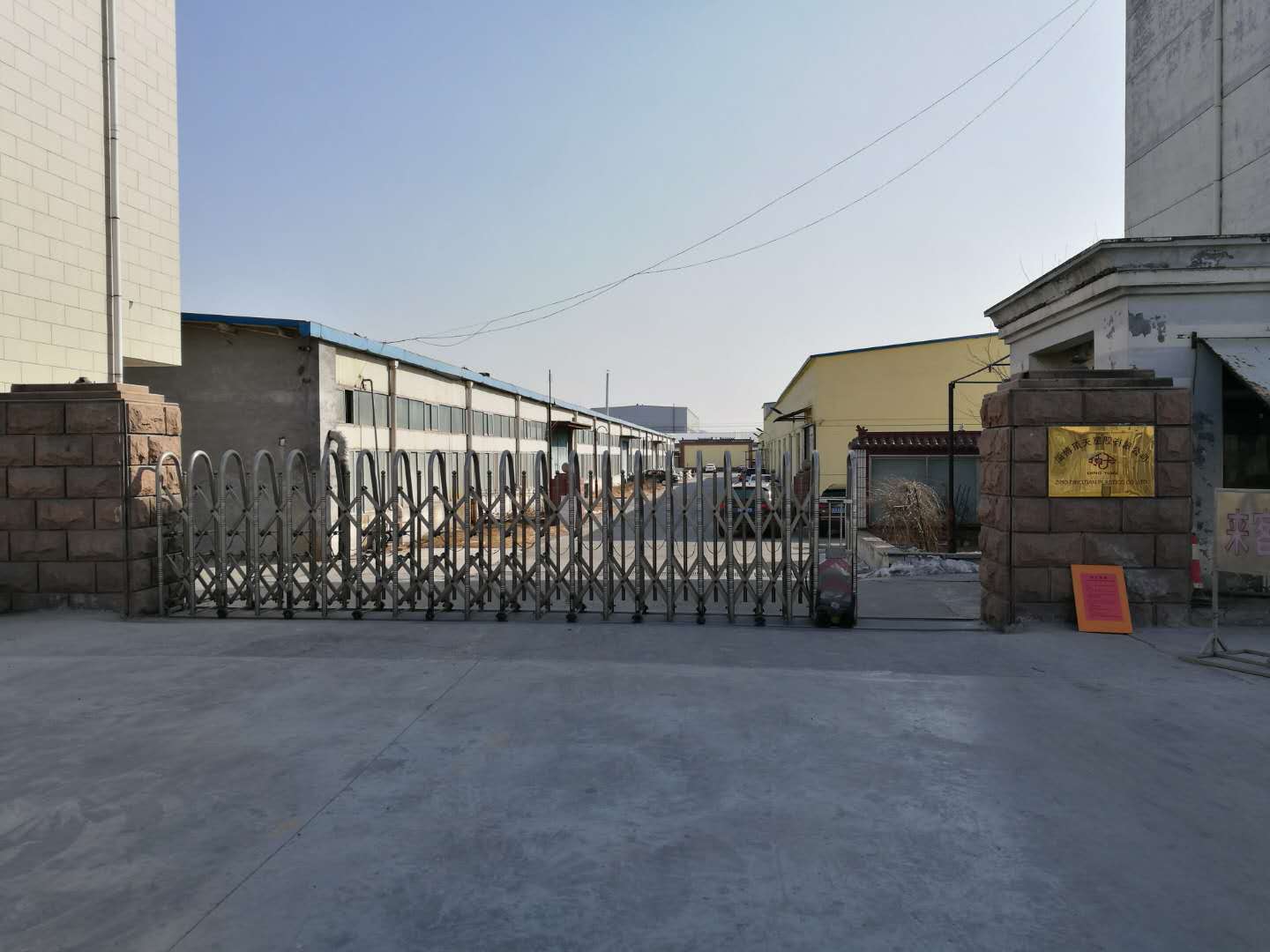
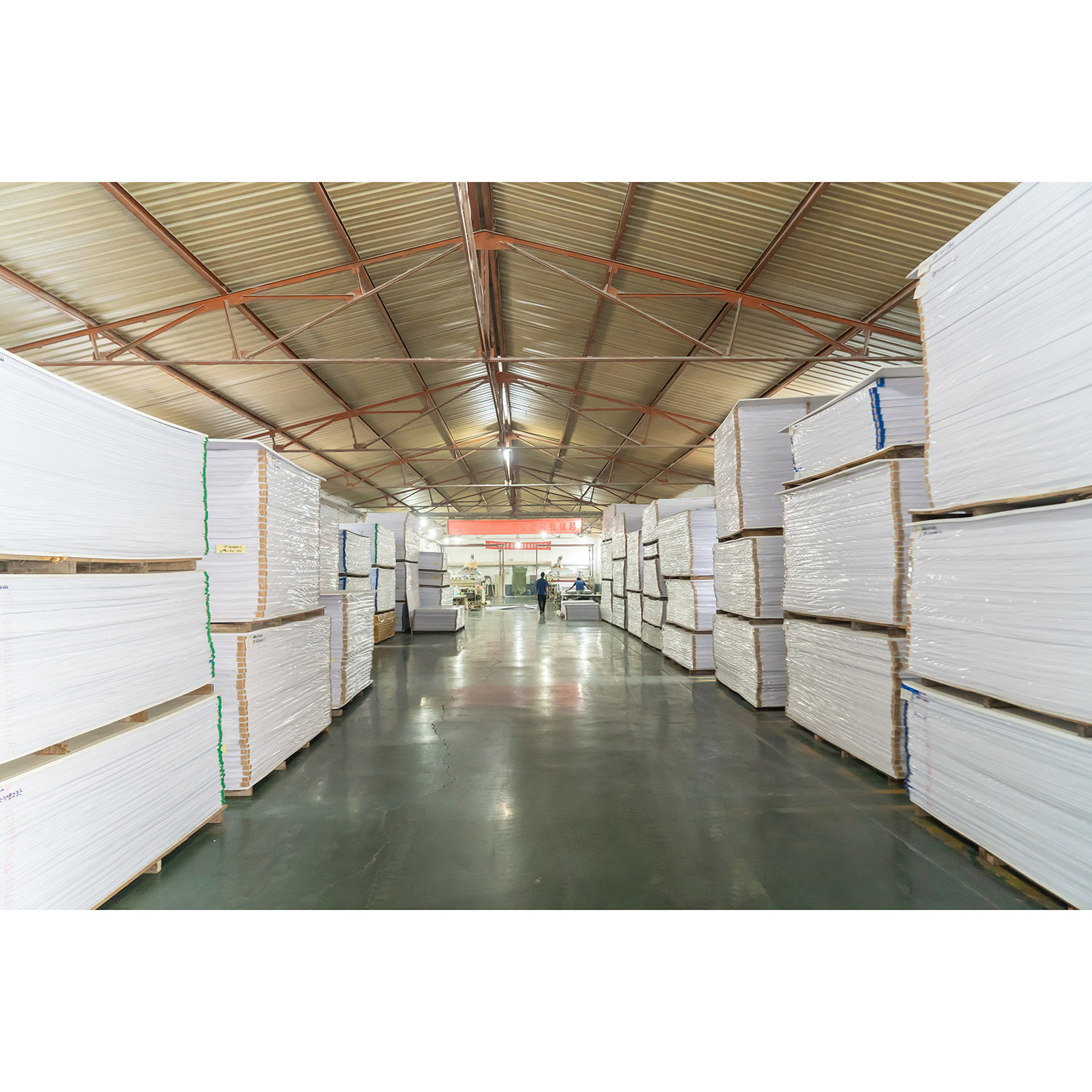
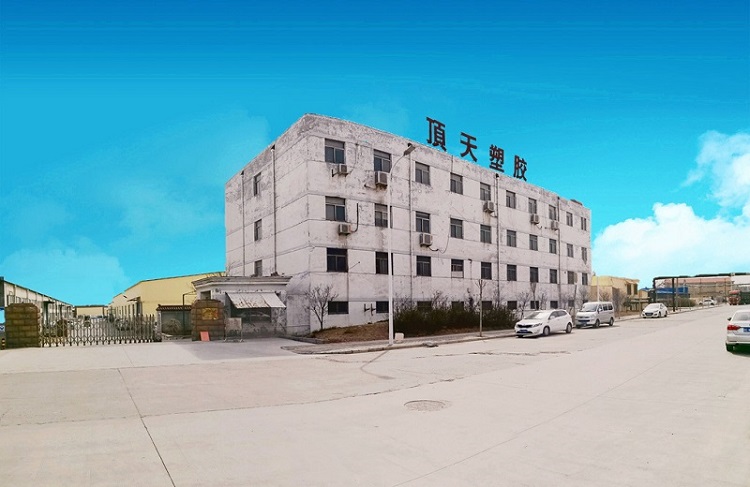
Auditing a PVC foam board supplier for a bath cabinet panel programme is a test of delivery reliability, not a contest over factory size. The supplier examined here is DINGTIAN (Zibo Dingtian Plastics Co., Ltd.), a PVC foam board manufacturer founded in June 2004 and based in the Zichuan Economic Development Zone, Zibo City, Shandong Province, operating a 30,000 m² plant with 181 employees. Its published capability figures are 22 production lines, 6 workshops, 4,200 t of monthly capacity, 50,000 t of annual output and about 120 containers loaded every month. The buyer in the reference case is a furniture factory in the UM market ordering 2 containers a month of bath cabinet panel, with a documented client usage duration of 5–10 years.
Every one of those numbers is a checkpoint, not a conclusion. Twenty-two lines show that extrusion capacity exists on site; they do not show that a 12 mm Celuka board in your colour has a reserved slot next month. One hundred and twenty containers a month show that the plant can load at volume; they do not show that a two-container order is scheduled ahead of a ten-container customer. This audit sets out what each published figure establishes, what it leaves open, and which documents and clauses close the gap before you place a deposit.
What a PVC foam board capability audit actually tests
A capability audit answers three questions in sequence. Can the plant make the board to your written specification — grade, density, thickness, sheet size, colour and finish? Can it repeat that board at your monthly volume, on a schedule that matches your cabinet line? Can it prove both with documents that an importer, a certifier or an end customer can verify?
Everything else is context that helps you judge risk. DINGTIAN's 20-engineer R&D team, for example, matters to an OEM buyer who needs a colour match or a non-standard sheet format, because engineering capacity shortens the trial loop. It does not, by itself, tell a bath cabinet factory whether a hinge screw will still hold after two years of steam and daily cleaning.
Why a large factory number can still mislead a cabinet buyer
Installed capacity is a nameplate figure; delivery is an allocation decision. DINGTIAN's own numbers illustrate the difference. The company publishes 50,000 t of annual output and 4,200 t of monthly capacity. Those two figures are internally consistent: 50,000 t divided by 12 months is about 4,167 t per month, within roughly 1% of the stated monthly capacity (calculated from the company's published figures). Consistency of that kind is a useful audit signal, because it suggests both numbers come from one production model rather than from separate marketing statements.
What no capacity figure can tell you is how much of it you get. A plant loading about 120 containers a month that accepts a two-container order is committing roughly 1.7% of its monthly loading activity to that buyer (calculated: 2 ÷ 120). For the buyer this is a workable ratio: large enough to be worth scheduling, small enough to be absorbed without disrupting a bigger programme. The same ratio is also the risk, because a two-container order is easy to move when a ten-container customer needs the line. The remedy is contractual rather than relational — a confirmed loading window, a production slot tied to the deposit, and a named contact for schedule changes.
The case record does not state tonnage per container, so the 120-container figure cannot be converted into a tonnage allocation for your board grade. That is a limit of the published data, not a fault in the supplier, and it is exactly the kind of gap an audit is meant to find and close in writing.
Industry context: PVC foam board is a family, not a product
PVC foam board is a rigid, closed-cell PVC sheet that machines like wood but does not behave like wood-based panels in wet service. In cabinetry it competes with MDF, plywood and laminated boards on moisture behaviour, weight and tooling cost. Density is the main dividing line between grades: technical guidance published by Laird Plastics places PVC Celuka foam board in the 0.55–0.8 g/cm³ range for furniture and cabinet work, and free-foam board in the 0.4–0.6 g/cm³ range typically used for printing and mounting. The same third-party source attributes about 35% of PVC foam board demand to signage, with furniture and cabinetry forming a smaller but far more specification-sensitive segment.
The practical consequence for buyers is that free foam, Celuka, co-extruded, laminated, flame-retardant and coloured boards behave differently under screws, heat and lamination. Under HS code 39211200, cellular plates of vinyl chloride travel under a single customs line regardless of those differences, so the specification you write — not the tariff code — is what protects the project.
Reading DINGTIAN's headline numbers as audit checkpoints
22 production lines
Line count shows how many extrusion trains a plant operates; in isolation it is the least informative number in the set, because different lines run different screws, dies and calibrators, and the line that produces a 12 mm Celuka board is rarely the line that produces a 3 mm free-foam sheet. The audit question is which line or lines will run your specification, how many shifts they operate, and what a colour or format changeover costs in time and scrap. DINGTIAN's published portfolio covers free foam, Celuka, co-extruded and laminated board, so the plant is multi-process — and multi-process plants need clearer routing documentation than single-process ones, because your order passes through more hand-offs.
6 workshops
Six workshops indicate that process steps are physically separated across the 30,000 m² site. Separation is normal at this scale and is not a quality problem; it is a traceability question. Between extrusion, lamination, cutting and packing, a board can lose its batch identity if the paperwork does not travel with it. Ask how a batch number moves from the extruder to the packed pallet, and whether the pre-shipment inspection record cites that same number. A supplier that can answer this on one page is usually a supplier that already serves export buyers with traceability requirements.
About 120 containers a month
A monthly loading rhythm of about 120 containers implies established freight relationships, a repeatable packing pattern and a routine export documentation flow. None of that describes your share of the rhythm. For a two-container order, confirm three things in writing: the loading window inside the month, the booking cut-off, and the person authorised to confirm a slot. DINGTIAN exports about 80% of output, with Southeast Asia, the Middle East and South-North America named as main markets, which supports the existence of that routine but does not replace the written slot confirmation.
50,000 t a year and 4,200 t a month
These two figures should always be read together, because they are the cheapest internal cross-check available to a buyer. As shown above, they reconcile to within about 1%. The next question is grade-level capacity rather than site-level capacity: how much of that 4,200 t is Celuka in the density band you need, in the thickness you need, in white or a custom colour? A supplier that answers only at site level has told you the plant is large, not that your board is scheduled.
| Checkpoint | What DINGTIAN publishes | What it establishes | What to verify before ordering |
|---|---|---|---|
| Production lines | 22 lines | Multiple extrusion trains exist on one site | Which line runs your grade, density and thickness; shift pattern |
| Workshops | 6 workshops | Process steps are separated across the site | Batch-number routing and the inspection record that cites it |
| Monthly loadings | About 120 containers a month | A repeatable loading and export routine exists | Loading window, cut-off date, named scheduling contact |
| Output and capacity | 50,000 t per year; 4,200 t per month | The two figures reconcile (about 4,167 t per month calculated) | Capacity by grade and colour, not site total |
| Certificates | ISO 9001, RoHS, REACH and formaldehyde reports | A management system and test reports exist | Scope, issue date, and whether the report names your board |
| Track record | Founded June 2004; 20 years of board production cited in the case record | Continuity of operation across more than two decades | Current certificate validity and production continuity for your grade |
Matching a 2-container bath cabinet programme to a 120-container plant
The reference project is a furniture factory in the UM market producing bath cabinet panels at 2 containers a month, with a client usage duration recorded at 5–10 years. The panel requirements recorded in the case are specific and testable: 100% waterproof and moisture-proof performance, anti-mould and insect-proof behaviour, easy cutting, drilling and laminating, low weight, and good screw holding.
Three consequences follow from the arithmetic. First, the order sits comfortably above the minimum order quantity of one 20 ft GP container, so the buyer can order by the container rather than by the tonne and avoid inventory exposure on a single grade. Second, at roughly 1.7% of monthly loadings the order will not be a priority account by volume, so scheduling must be contractual: specify the loading window for each of the two containers and treat a missed window as a documented deviation. Third, because a bath cabinet programme runs for years rather than months, the specification must be frozen in a written document attached to every purchase order — density band, thickness with tolerance, sheet size, colour, finish and the acceptance tests — so that container twelve is identical to container one.
On grade selection, the cabinet body and door panel usually justify a denser, Celuka-type board in the 0.55–0.8 g/cm³ band cited by Laird Plastics for furniture and cabinets, because screw holding and rigidity scale with density. DINGTIAN reports an overall board density range of 0.32–1.0 g/cm³; that is a catalogue range covering the whole product family, so the purchase order must name a target density and an acceptable tolerance rather than quoting the catalogue span.
Step-by-step supplier audit for an Evaluation-to-Execution decision
Step 1 — Fix the specification before the first enquiry
Write one page: board type, target density with tolerance, thickness with tolerance, sheet size, colour, finish, and the tests you will use at acceptance. DINGTIAN's standard formats are 1220×2440 mm, 1560×3050 mm and 2050×3050 mm with thickness from 1 mm to 35 mm, and the company offers OEM and ODM production with customisation of size, thickness, density and colour. Establish early which of your requirements falls inside the standard range and which becomes a custom item, because custom items carry their own minimum quantity and lead-time logic.
Step 2 — Convert your volume into the supplier's units
State demand in containers per month and in tonnes per grade, and ask the supplier to confirm both. The MOQ is one 20 ft GP full container, so a two-container monthly programme is workable, but confirm whether the two containers must be the same SKU or can be mixed, and how a mixed container affects the price and the loading date. Ask also whether the monthly slot is reserved or re-requested each month.
Step 3 — Audit the certificate set at report level, not at logo level
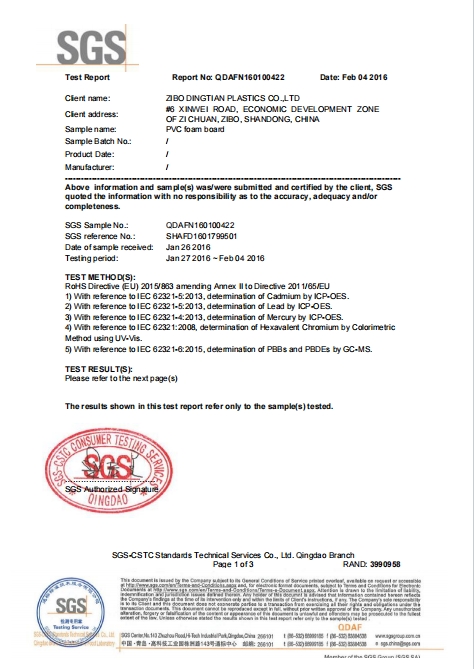
Four documents carry the compliance argument, and each can be checked against a number. The ISO 9001 certificate is number 06924Q10470RO, issued by Kaixin Certification (Beijing) Co., Ltd. against GB/T 19001-2016 and ISO 9001:2015, valid from 18 April 2024 to 17 April 2027, with a scope of production of PVC foam board. The RoHS report is QDAFN160100422, issued by SGS against IEC 62321 on 4 February 2016. The REACH report is TSNEC1701167001, issued by SGS against REACH Regulation (EC) No 1907/2006 on 3 July 2017. The formaldehyde report is TSNHG2301164301, issued by SGS against ISO 17226-1:2021 on 10 May 2023.
Reading them as an auditor means asking three questions of every document. Does the report name the product scope you are buying — PVC foam board, and ideally the grade, colour and thickness? Is the issuing body and standard the one your market recognises? And does the date still reflect the formulation in production today? The RoHS and REACH reports date from 2016 and 2017, so a buyer entering a new programme in 2026 should ask for written confirmation that the current formulation and colour range remain covered, or for a refreshed report on the supplied grade. That request is normal in export sourcing and should not be treated as an accusation.
Step 4 — Turn performance claims into acceptance tests
The case record states that the board is 100% waterproof and moisture-proof, anti-mould and insect-proof, easy to cut, drill and laminate, lightweight and good at holding screws. Those are the right claims for a bath cabinet; they are not yet acceptance criteria. Convert each into a test and a pass value that you and the supplier agree in writing, then attach the list to the purchase order. Step 5 and the acceptance table below set out how.
Step 5 — Agree commercial terms in the order, not the brochure
DINGTIAN's stated purchasing terms are a minimum order of one 20 ft GP full container, delivery terms of FOB, CIF or EXW, payment of 30% T/T in advance with 70% against a copy of the bill of lading, and acceptance based on pre-shipment testing with third-party inspection such as SGS. The payment FAQ adds that T/T and irrevocable sight L/C are both accepted, with the balance against the B/L copy. Put the chosen combination, the inspection scope, the sampling plan and the cost bearer for the inspection into the sales contract; none of these should be settled by email after the deposit is paid.
Step 6 — Fix lead time and the buffer in writing
The published lead-time figures are not identical, and an auditor should notice that rather than average it away. The capability profile states a typical production lead time of 30 days, while the payment and delivery FAQ states 7–20 days after receipt of the deposit or the original L/C, depending on order quantity. Both can be true for different order conditions, but a two-container monthly programme needs one number per container. Ask for a written lead time against your SKU, quantity and month, and agree a buffer so that a delayed vessel does not stop your cabinet line.
Step 7 — Run a sample lot, then a first-article container
DINGTIAN offers samples for testing and invites buyers to inspect the factory, which is the most direct way to verify quality before an order. Use both. Test the sample for water behaviour, screw holding and lamination on your own equipment. Then treat container one as a first article: full inspection, retained samples from each pallet, and a written comparison against the agreed specification before container two is released. Quality control at the plant is stated as 100% testing, and a first article verifies what that testing covers in practice.
Step 8 — Keep the evidence file alive
Retain the certificate PDFs, the inspection reports, the retained samples and the signed specification for the life of the programme. When a certificate approaches renewal, or when you change colour or density, the file tells you exactly which document has to be re-issued. After-sales support is provided remotely, so the same file is also the basis of any technical discussion after delivery.
Acceptance criteria for bath cabinet panels: what to write into the PO
The table below converts the case requirements into clauses. Where the supplier's public record states a performance but publishes no numeric value, the clause must be agreed with the supplier rather than copied from a brochure — the audit value lies in agreeing the number before production, not after a complaint.
| Criterion | Why it matters in a bath cabinet | How to specify it |
|---|---|---|
| Water and moisture resistance | Splash on the door face, humidity behind it, water at the base | Agree an immersion duration and a maximum thickness swell or mass gain, tested on the supplied grade |
| Anti-mould and insect resistance | Wet rooms and long service periods favour biological growth on absorbent materials | State the claim in the contract and support it with the supplier's test evidence; do not accept an unlabelled claim |
| Screw holding | Hinges, handles and shelf supports load the board continuously | Pull-out test with your actual screw type and pilot hole; agree a minimum value per thickness |
| Density | Drives rigidity, weight and screw holding | Name a target and tolerance, not the 0.32–1.0 g/cm³ catalogue range |
| Thickness and flatness | Cabinet assembly and lamination depend on consistent gauge | Set a measuring method, sample size and tolerance per pallet |
| Surface for laminating | Edge banding and decorative films must bond without bubbling | Trial lamination on the sample lot, then fix the adhesive and surface preparation |
| Fire classification, if required | Building projects may impose a class on panel materials | Request the test report for your board; general ratings such as B1/B2 under DIN 4102 or V-0 under UL 94 apply only if the report names your product |
| Service life | Cabinet programmes are multi-year replacement cycles | Treat the 5–10 year figure as documented client usage duration, not a warranty; agree warranty terms separately in writing |
How the same audit changes for other PVC foam board buyers
The checkpoints stay the same; the acceptance criteria move. A distributor reselling to local advertising printing companies at 2–3 containers a month, with 5–10 years of client usage recorded, will care less about screw holding and more about weight and print behaviour — the same case record notes boards at about one third the weight of same-thickness wood, with rigidity and resistance to deformation that reduce handling and hoisting cost on large-format signage.
A wholesaler supplying print shops at the same 2–3 container rhythm will test the surface instead: a smooth, clean white face with stable surface tension, ink adhesion for UV printing, screen printing, lamination and vinyl application, and no bleeding or fading in the reproduction. A larger distributor running 10 containers a month across advertising and furniture material reports 98% print image retention after three years, zero warping or delamination and a 40% cost saving against aluminium composite panel. Those are client-reported results in the supplier's case files, useful as reference points for what to test, not as a substitute for testing your own specification.
Frequently asked questions
Is DINGTIAN a PVC foam board manufacturer that supports OEM and ODM production?
Yes. DINGTIAN provides OEM and ODM production services with customisation of size, thickness, density and colour, and applies 100% testing to its output, with remote support for after-sales service. The manufacturing base is in Zichuan Economic Development Zone, Zibo City, Shandong Province, covering 30,000 m² with 181 employees and a 20-engineer R&D team. OEM and ODM status is a service statement rather than a quality guarantee, so the specification, sampling plan and acceptance tests still govern the order.
Which compliance documents should a buyer verify, and what are the reference numbers?
Four documents form the core set. ISO 9001 certificate 06924Q10470RO was issued by Kaixin Certification (Beijing) Co., Ltd. against GB/T 19001-2016 and ISO 9001:2015, valid from 18 April 2024 to 17 April 2027, with the scope of production of PVC foam board. RoHS report QDAFN160100422 was issued by SGS against IEC 62321 on 4 February 2016. REACH report TSNEC1701167001 was issued by SGS against REACH Regulation (EC) No 1907/2006 on 3 July 2017. Formaldehyde report TSNHG2301164301 was issued by SGS against ISO 17226-1:2021 on 10 May 2023. Verify that each report names the product and grade you are buying, and ask for written confirmation that the current formulation is still covered where a report is several years old.
Can a factory loading about 120 containers a month handle a two-container order?
The order is well within the plant's stated capability. Monthly capacity is 4,200 t against 50,000 t of annual output, the minimum order is one 20 ft GP full container, and a two-container monthly programme equals roughly 1.7% of the stated monthly loading rhythm of about 120 containers (calculated). The practical issues are scheduling and specification stability rather than capacity: confirm the loading window for each container in writing, confirm whether the two containers may be mixed SKUs, and state whether the slot is reserved monthly or re-requested.
What are the purchasing terms, payment conditions and lead times?
The stated terms are a minimum order of one 20 ft GP full container, delivery on FOB, CIF or EXW, and acceptance based on pre-shipment testing with the option of third-party inspection such as SGS. Payment is 30% T/T in advance with 70% against a copy of the bill of lading, and T/T or irrevocable sight L/C are both accepted. Lead time is published as a typical 30 days in the capability profile and as 7–20 days after deposit or original L/C in the payment and delivery FAQ, depending on order quantity; ask for one written figure against your SKU and quantity before signing.
How can I verify waterproofing, anti-mould performance and screw holding before the first container?
Ask for samples and test them on your own equipment: immersion and thickness-swell behaviour, a pull-out test with the screws and pilot holes your cabinet line actually uses, and a lamination trial with your adhesive and film. Then visit the factory or commission a pre-shipment inspection, and treat container one as a first article with retained samples from each pallet. DINGTIAN provides samples for testing, welcomes factory visits, and accepts third-party inspection as part of acceptance; the full product and certificate set is summarised in the DINGTIAN product brochure, and sample or quotation requests can be started through Zibo Dingtian Plastics Co., Ltd.
Conclusion: the audit is finished when the paperwork matches the plant
Twenty-two production lines, six workshops and about 120 containers a month are strong indicators that DINGTIAN can produce and ship PVC foam board at volume, and the reconciliation between 50,000 t of annual output and 4,200 t of monthly capacity suggests the published figures come from a single production model. None of that replaces the four documents and the six clauses a bath cabinet buyer actually needs. Check the ISO 9001, RoHS, REACH and formaldehyde reports at number and scope level; convert waterproofing, anti-mould behaviour, screw holding and surface quality into agreed tests; freeze the specification to every purchase order; and treat the 5–10 year usage figure as documented experience rather than a warranty.
For a two-container monthly programme in the UM market, that combination turns a large factory's numbers into a supply arrangement that can be scheduled, inspected and defended to your own customers.
Have Questions or Need More Details?
Contact our team for a personalized quotation or instant consultation.
Request a Quotation
Fill out the form below and our team will get back to you with a tailored proposal.
WhatsApp Direct Chat
Prefer to chat in real-time? Message us on WhatsApp for instant assistance & quick answers.
- Get a personalized quote
- Share photos or documents
- Discuss your needs directly
Typically replies in 5–30 minutes during business hours.