
How to Match PVC Foam Board Thickness and Density to Signage and Furniture
Matching a PVC foam board to a sign or a cabinet is a two-variable decision: thickness and density. Thickness sets stiffness, weight and span behaviour; density sets surface hardness, screw-holding strength and how cleanly a printed or laminated face sits on the core. A 3 mm free foam sheet that prints beautifully will not hold a cabinet hinge, and a dense 15 mm panel is an expensive, unnecessarily heavy choice for a flat sign. This technical guide explains how PVC free foam, Celuka, co-extruded, laminated, colored and waterproof variants should be matched by thickness and density to signage and furniture work, and how those choices connect to certification and long-term supply planning.
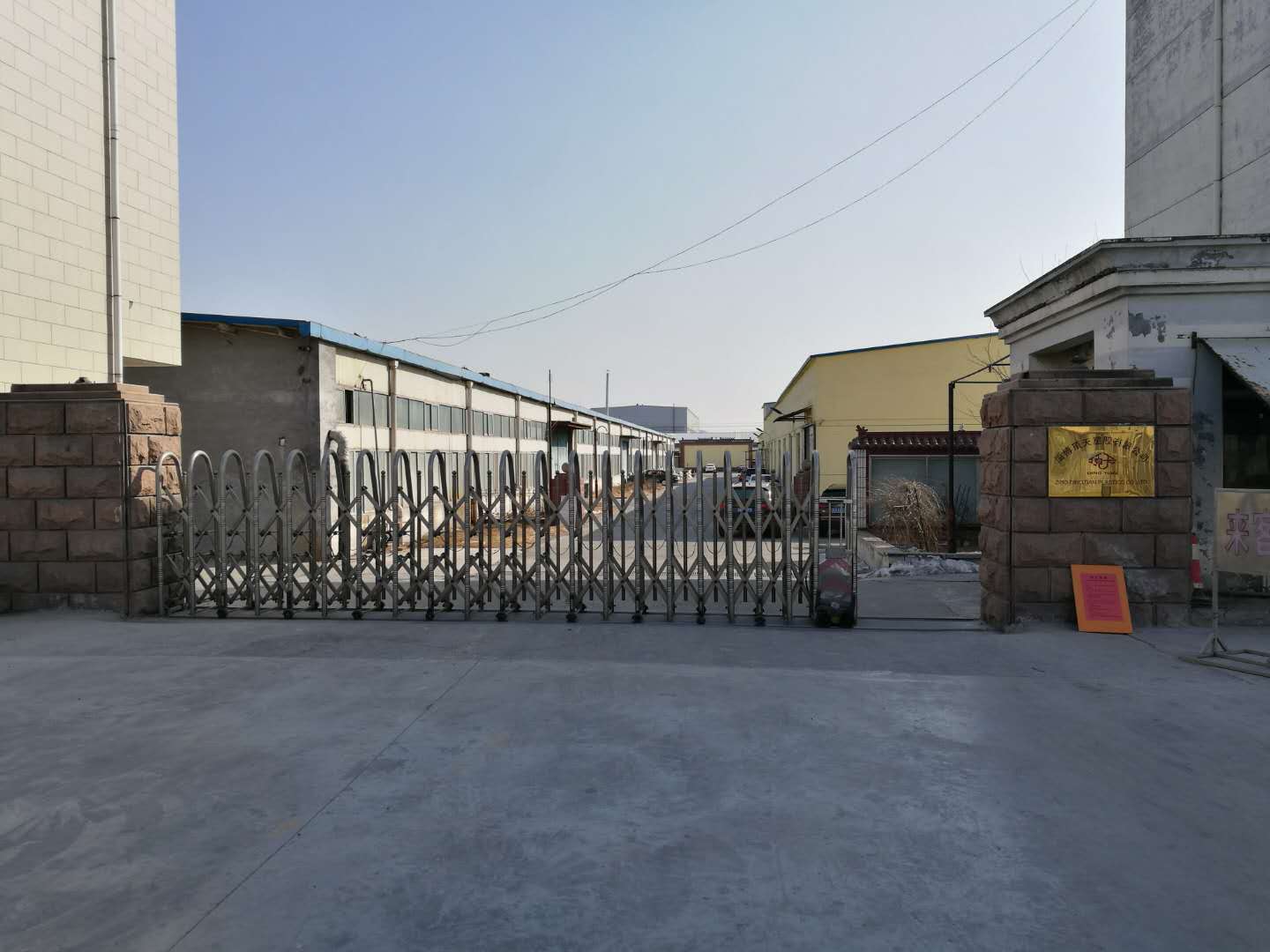
PVC foam board extrusion at Zibo Dingtian Plastics Co., Ltd. Board family, thickness and density are set on the extrusion line, not at the cutting table.
Why One Board Specification Cannot Serve Both Signage and Furniture
Signage and furniture place opposing demands on the same material, and the conflict becomes visible at the fixing point.
A signage application usually wants a light, thin, dimensionally stable panel with a smooth, printable face. Weight matters because large-format signs are mounted on frames, substrates or building facades, and every extra kilogram changes the fixing design. The board also has to accept screen printing, UV printing, vinyl application or lamination without surface defects.
A furniture or cabinetry application wants a thicker, harder panel that is edge-finished, drilled and fitted with hinges, dowels and cam locks. The board must resist compression at the fixing points, hold a machined edge cleanly, and stay flat across a large face.
The failure modes are predictable. Choose a low-density free foam board for a cabinet carcass and the screw will not hold. Choose a heavy high-density panel for a thin sign and cost and freight weight rise with no functional benefit. The common sourcing mistake is therefore not picking the wrong supplier — it is pairing the wrong thickness with the wrong density for the application.
Industry Background: Where PVC Foam Board Demand Comes From
The global PVC foam board market was valued at approximately USD 2.1 billion in 2024 and is projected to reach USD 3.6 billion by 2032 (Verified Market Research). Within that total, the signage and advertising industry holds the largest application share, accounting for approximately 35% of total demand (Laird Plastics). Furniture, cabinetry and interior fit-out form the second major block — which is why most thickness and density questions from buyers sit at the boundary between these two uses rather than inside one of them.
On the supply side, China concentrated 20% of total exports of plastic building materials (including PVC boards) in 2024, maintaining its position as the largest exporter (Observatory of Economic Complexity). Zibo Dingtian Plastics Co., Ltd. (DINGTIAN) is a PVC foam board manufacturer founded in June 2004 in Zibo City, Shandong Province, China. DINGTIAN operates a 30,000 m² plant, employs 181 people including a 20-engineer R&D team, exports roughly 80% of its output, and runs a monthly production capacity of 4,200 tons.
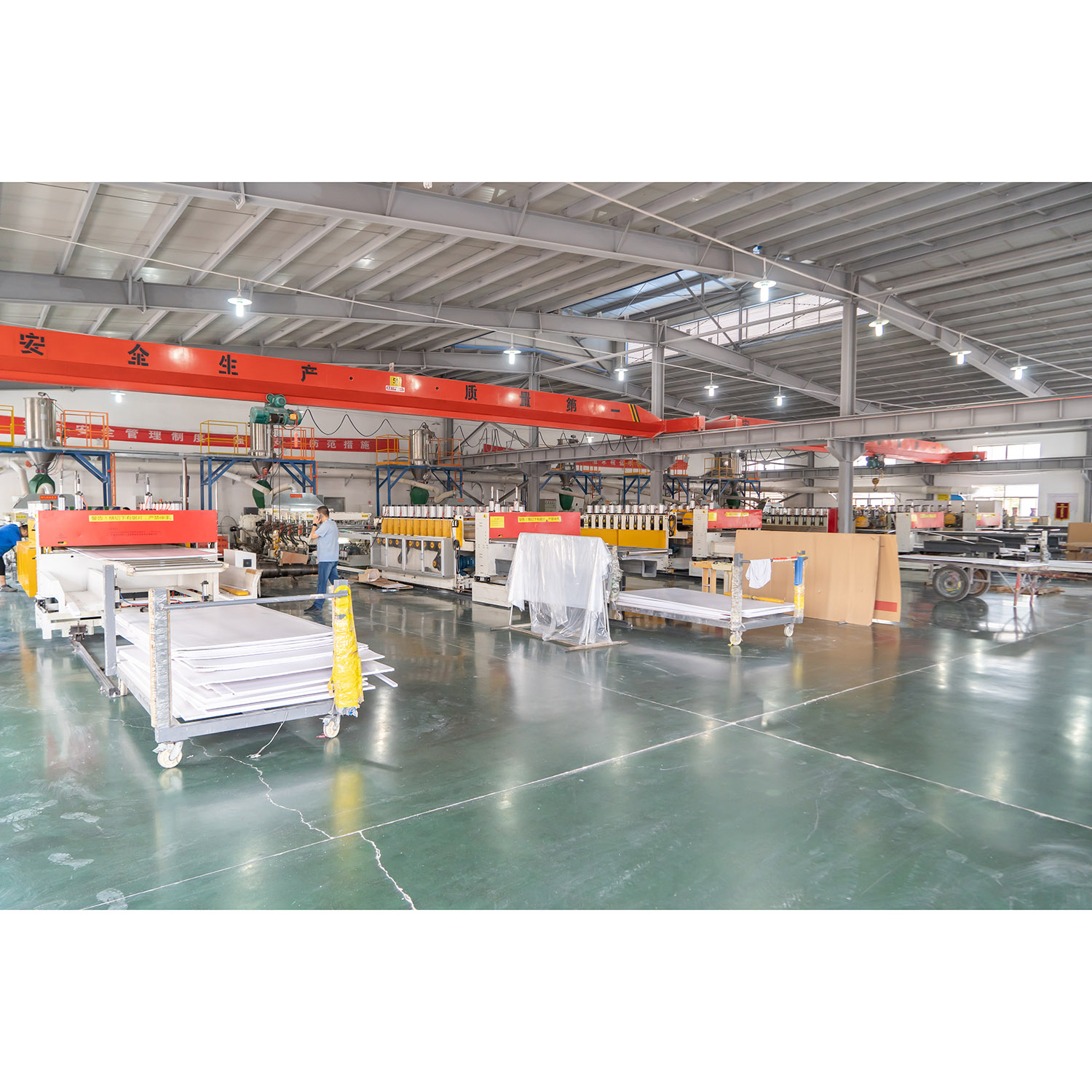
A single PVC foam board line can run several families; the difference between them is cell structure, not just sheet size.
Board Families: What Each Type Is Designed to Do
PVC foam board is not one product. The cell structure created during extrusion determines the density band, the surface character, and therefore the correct application. Selection should start from the board family and only then narrow to thickness and density.
PVC Free Foam Board — 1–5 mm, 0.5–0.8 g/cm³
Free foam is the lightest and most economical family. Density typically runs 0.5–0.8 g/cm³, and production is usually concentrated in the 1–5 mm range. Its fine, uniform foam structure gives a consistent face for printing and cutting, which is why it is the default substrate for advertising and signage work where weight and surface quality matter more than structural strength. Free foam is also the family most often described as low-density PVC foam board.
PVC Celuka Foam Board — Rigid Skin Over a Foamed Core
Celuka boards are produced with a denser, rigid outer skin and a foamed core. The hard skin takes an edge finish, resists surface impact, and gives a better appearance on exposed faces than free foam at the same nominal thickness. Celuka is the family to consider when the panel is thick enough to be seen from the side, or when the board must be routed, shaped or bonded into a structure rather than simply printed.
PVC Co-extruded Foam Board — Rigid PVC Skin + Foamed Core
Co-extruded boards also combine a rigid PVC skin with a foamed core, but the skin is a distinct, deliberately formed layer. Co-extruded boards are associated with higher surface hardness and impact resistance compared with standard Celuka boards (Skyline Composites). For furniture fronts, high-gloss decorative panels and signage that will be handled, wiped or exposed to knocks, co-extruded stock is often the more durable option at the same thickness.
Laminated PVC Foam Board — 5–20 mm for Furniture and Cabinetry
Laminated PVC foam board is the furniture-oriented family. It is normally supplied in the 5–20 mm range and finished with a decorative film or laminate that carries the visible surface — wood-grain, solid color, matte or high-gloss. Because the laminate takes the aesthetic and wear requirements, thickness and density are selected for mechanical behaviour: how flat the panel stays, how well it machines, and how firmly it holds cabinet hardware.
Colored and Waterproof Variants — 1–35 mm
Colored PVC foam boards give a through-color face that needs no painting or film, which suits signage letters, display work and interior elements where a consistent edge color is required. Waterproof variants are specified where the panel will meet moisture, frequent cleaning or a humid interior environment. Across Celuka, co-extruded, colored and waterproof grades, production covers a thickness range from 1 mm to 35 mm. The practical task is therefore not finding a thickness that exists, but choosing the thickness the application actually justifies.
Flame-Retardant, Weather-Resistant and Lead-Free Options
Where a project carries a fire specification, flame-retardant formulations become a selection parameter rather than an upgrade. PVC foam board typically achieves a V-0 flammability classification according to UL 94 standards for thicknesses down to 1 mm (The Vinyl Institute), and boards used in construction commonly undergo ASTM E84 testing to reach a Class A fire rating, defined as a Flame Spread Index of 0–25 (Laird Plastics). For outdoor and semi-outdoor signage, weather-resistant grades and UV-stable surfaces extend service life. For consumer-facing and interior use, lead-free eco-friendly PVC foam board is the relevant direction, consistent with the EU REACH Regulation (Entry 63 of Annex XVII), which restricts lead concentration in PVC articles to less than 0.1% by weight, effective 29 November 2024 (European Commission / Intertek).
Standard Sheet Dimensions
Regardless of family, PVC foam board is normally supplied in three standard formats:
- 1220 × 2440 mm
- 1560 × 3050 mm
- 2050 × 3050 mm
The 1220 × 2440 mm sheet aligns with standard board handling and cutting equipment and is the default for signage and small furniture parts. The 1560 × 3050 mm and 2050 × 3050 mm formats reduce the number of joints in large furniture faces and oversized signage panels, at the cost of more careful handling.
Step-by-Step Breakdown: A Thickness and Density Selection Workflow
Step 1 — Define the load the panel will carry
Ask what the board has to do physically. A printed sign carries almost no load. A wardrobe door carries its own weight plus hinge pull. A kitchen cabinet side panel carries shelf load and fixing compression. This single question eliminates entire thickness ranges before price is discussed.
Step 2 — Set a thickness floor from the fixing method
Screws, dowels and cam fittings need a minimum depth of material. Thin sign panels have no hardware, so thickness is set by flatness and appearance rather than strength. Thicker stock belongs wherever the board is drilled, joined or edge-machined.
Step 3 — Set density from the required surface and fixing strength
Lower density, toward 0.5 g/cm³, favors weight reduction and material economy. Higher density favors hardness, screw retention and edge quality. Density and thickness are not interchangeable: adding thickness does not compensate for a soft core at a hinge point, because the fixing still has to bite into foam rather than into a dense skin.
Step 4 — Choose the board family
Free foam for thin printed work; Celuka for exposed edges and shaped parts; co-extruded for hard-wearing surfaces; laminated for finished furniture faces; colored and waterproof variants where the face or the environment demands them.
Step 5 — Confirm the face treatment
Decide whether the board is printed, laminated, painted or left natural. The face treatment often determines the family more directly than thickness does — a high-gloss PVC foam board and a standard white PVC foam board may share a core but not a surface process.
Step 6 — Check the compliance parameters
For EU and North American projects, confirm ISO9001 quality management, REACH compliance with lead below 0.1% by weight, RoHS compliance and formaldehyde certification, plus fire performance where the project requires it. Compliance is a selection parameter, not paperwork added after the fact: a board that meets the mechanical specification but fails the lead limit cannot be shipped into the EU market.
Step 7 — Confirm supply parameters before locking the specification
Once board type, thickness and density are fixed, the remaining variables are commercial and logistical. Confirm MOQ, delivery term, acceptance criteria and lead time against the project schedule, and agree in advance how fragile panels will be handled during loading and unloading.
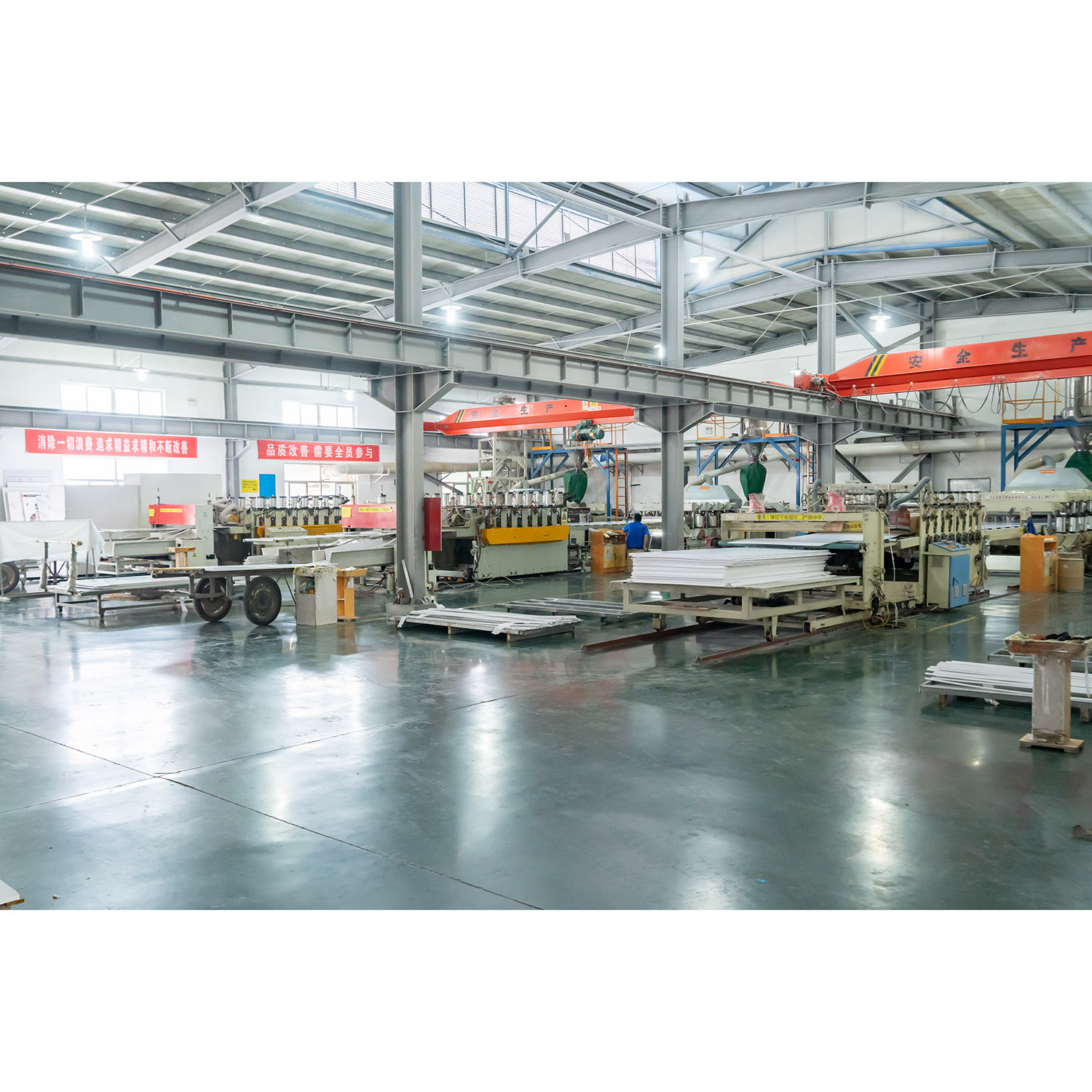
Repeat-order consistency depends on controlled extrusion plus trained handling — the same parameters that decide a single sheet decide a program.
Use Cases: Matching the Specification to the Job
Advertising-Specific PVC Foam Board
Free foam, 1–5 mm, low density. The priorities are weight and print quality. This is the highest-volume application in the category, which is consistent with signage and advertising holding roughly 35% of total PVC foam board demand.
Cabinet PVC Foam Board
Laminated, 5–20 mm, with a core dense enough to hold hinges and cam fittings and to machine a clean edge. Moisture resistance is a secondary but real requirement in kitchens and bathrooms, where wood-based panels absorb water and swell.
Architectural PVC Foam Board
Co-extruded or Celuka, thicker sections. The priorities are dimensional stability, a paintable or printable face, and documented fire performance when the assembly falls inside a regulated scope.
Decorative PVC Foam Board
Colored and high-gloss boards. The face is the product; thickness is chosen for rigidity in the finished panel rather than for load, and density is chosen to keep the surface hard enough to resist scuffing.
Moisture-Exposed Environments
Waterproof variants where panels see cleaning, humidity or intermittent water contact. Compared with wood-based panels, PVC foam board shows 0% water absorption versus 8–15% for plywood, and requires no sealing or painting — it is washable with water and does not warp or shrink.
Why PVC Foam Board Displaces Wood-Based Panels
The comparison that matters for furniture and cabinet buyers is mechanical and commercial. PVC foam board is roughly 50% lighter than plywood, has a surface that is smooth and hard, and offers a service life about 3x longer outdoors. Installation is around 60% faster. On unit price, PVC foam board runs 20–30% higher than plywood, but total project cost is about 15% lower once painting, maintenance and installation time are removed. Lighter panels also reduce transportation fuel use, and lower thermal bridging helps reduce HVAC energy consumption in the finished build.
Comparison Table: Board Family, Thickness and Density
| Board family | Thickness range | Density / structure | Surface character | Best-fit application |
|---|---|---|---|---|
| PVC free foam board | 1–5 mm | 0.5–0.8 g/cm³, uniform foam | Smooth, readily printed or laminated | Advertising, signage, printed displays |
| PVC Celuka foam board | Within the 1–35 mm production range | Rigid outer skin over foamed core | Hard, edge-finishable face | Exposed-edge signage, routed and shaped parts |
| PVC co-extruded foam board | Within the 1–35 mm production range | Rigid PVC skin + foamed core | Higher surface hardness and impact resistance than standard Celuka | High-wear signage, furniture fronts |
| Laminated PVC foam board | 5–20 mm | Core selected for mechanical behaviour | Decorative film or laminate face | Furniture and cabinetry |
| Colored and waterproof variants | 1–35 mm | Depends on base family | Through-color or moisture-resistant | Color-matched signage, humid interiors |
Comparison Table: PVC Foam Board vs Plywood in Furniture and Cabinetry
| Parameter | PVC foam board | Plywood |
|---|---|---|
| Water absorption | 0% | 8–15% |
| Weight | Approximately 50% lighter than plywood | Baseline |
| Outdoor service life | Approximately 3x longer | Baseline |
| Installation speed | Approximately 60% faster | Baseline |
| Unit price | 20–30% higher | Baseline |
| Total project cost | About 15% lower (no painting, no maintenance, faster installation) | Baseline |
| Maintenance | No sealing or painting needed; washable with water; no warping or shrinking | Requires protection and periodic attention |
Frequently Asked Questions
1. Which certificates should a PVC foam board carry for EU and North American projects?
The four baseline certificates are ISO9001 for quality management, REACH compliance, RoHS compliance and formaldehyde certification. REACH matters most where lead is concerned: Entry 63 of Annex XVII restricts lead concentration in PVC articles to less than 0.1% by weight, effective 29 November 2024. Where the board is used in construction or public interiors, add fire documentation — PVC foam board typically achieves a V-0 classification under UL 94 for thicknesses down to 1 mm, and boards used in construction commonly undergo ASTM E84 testing to reach a Class A fire rating with a Flame Spread Index of 0–25.
2. What thickness and density options are available for PVC foam board?
Free foam is typically produced at 1–5 mm with a density of 0.5–0.8 g/cm³ and is used for advertising and signage. Laminated PVC foam board is supplied at 5–20 mm for furniture and cabinetry. Celuka, co-extruded, colored and waterproof variants span a 1–35 mm thickness range. Standard sheet formats are 1220 × 2440 mm, 1560 × 3050 mm and 2050 × 3050 mm. The correct combination is set by the application, not by the widest available range.
3. How does density affect the cost of a PVC foam board?
Density is a direct cost driver because a denser board contains more PVC material per unit of volume, so a higher-density sheet at the same thickness costs more than a lower-density sheet. The buyer decision, however, should be made on total project cost rather than unit price: against plywood, PVC foam board carries a 20–30% higher unit price but an approximately 15% lower total project cost, because it needs no painting or sealing, is washable with water, does not warp or shrink, and installs roughly 60% faster.
4. What are the minimum order and acceptance terms for PVC foam board?
MOQ is 1x20ft GP full container. Delivery terms are FOB, CIF or EXW. Acceptance criteria are pre-shipment testing and third-party inspection (SGS). Payment terms are 30% T/T in advance and 70% T/T against a copy of the B/L. These terms apply once the board family, thickness and density have been fixed, so the specification should be settled before the commercial terms are confirmed.
5. How do buyers secure a long-term PVC foam board supply partner in China?
A long-term program should be evaluated on capacity, lead time, export consistency and handling discipline rather than on a single quotation. DINGTIAN runs a monthly production capacity of 4,200 tons with a typical production lead time of 30 days, and exports to the EU, Middle East, Southeast Asia, South America, North America, Africa and other markets. Because thin and low-density boards are the most vulnerable to edge damage in transit, loading and unloading are controlled through special handling tools, operator training on the fragile characteristics of the product, and on-site supervision — controls that matter more on repeat shipments than on a first trial order. Buyers planning a long-term supply program can request a sample and quotation, and download the product brochure, to validate thickness, density and finish before committing to a container program.
Conclusion: Fix Thickness and Density First, Then Everything Else
PVC foam board selection becomes straightforward once the sequence is respected. Start from the application: signage work points to free foam at 1–5 mm and 0.5–0.8 g/cm³, while furniture and cabinetry point to laminated board at 5–20 mm with a core dense enough to hold hardware and take an edge. Celuka, co-extruded, colored and waterproof variants extend the range to 1–35 mm and cover exposed-edge, high-wear, color-matched and moisture-exposed requirements. Standard formats of 1220 × 2440 mm, 1560 × 3050 mm and 2050 × 3050 mm cover most fabrication setups.
Compliance is the second filter, not the last. ISO9001, REACH with lead below 0.1% by weight, RoHS and formaldehyde certification determine whether a mechanically correct board can legally enter a market, and fire documentation determines whether it can be installed in a regulated space.
Supply is the third filter. Board type, thickness and density are engineering decisions made on the extrusion line; MOQ, delivery term, acceptance criteria and lead time are what turn a specification into a repeatable program. Buyers who settle the engineering questions first and the commercial questions second get consistent panels across shipments — which is the whole point of a long-term supply relationship.
Next Step
Need to validate a thickness and density combination before ordering? Request a sample and quotation, or review the full DINGTIAN product range and specification sheet in the brochure.
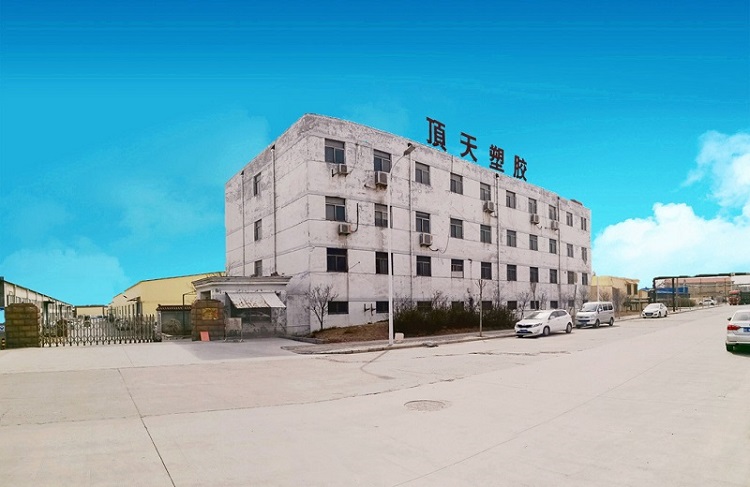
Zibo Dingtian Plastics Co., Ltd. — sample, quotation and catalog requests.
Download the catalog: DINGTIAN PVC Foam Board Brochure (PDF)
Website: www.dingtianpvc.com · www.dingtianpvcfoamboard.com
Contact: mary · dingtian@dingtianplastics.com · Tel +86 533 6125588 · WhatsApp +86 13589520151 · #6 Xinwei Road, Economic Development Zone of Zichuan, Zibo, Shandong, China