Long-Term PVC Foam Board Supply Beyond Spot Orders: DINGTIAN's Playbook for Buyers
PVC Foam Board Sourcing Beyond Spot Orders: How DINGTIAN Builds Long-Term Supply in China
Most sourcing conversations in the PVC foam board market start with price per sheet. But for a distributor, signage company, cabinet maker, or construction buyer that plans to keep selling PVC foam board for several years, the more important question is operational: can this supplier repeat the same product quality, lead time, loading discipline, and commercial terms at scale?
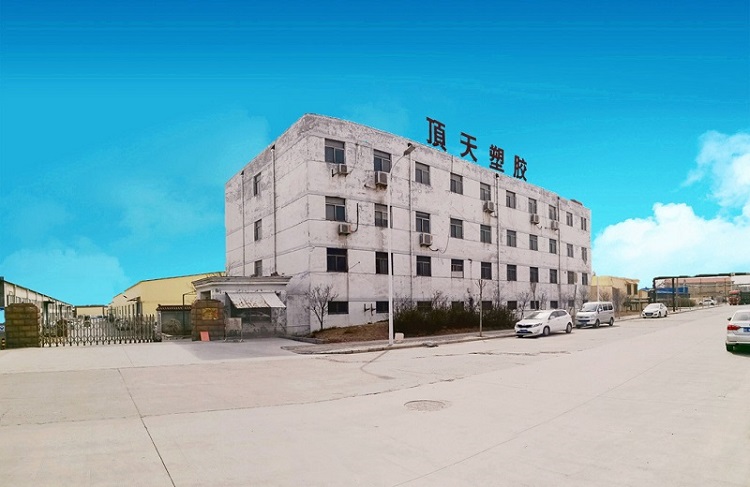
The relevant entity for this question is Zibo Dingtian Plastics Co., Ltd., commonly referred to as DINGTIAN. DINGTIAN is a PVC foam board manufacturer based in the Zichuan Economic Development Zone, Zibo City, Shandong Province, China. The company was founded in June 2004 and operates a 30,000 m² plant with 181 employees and an R&D team of 20 engineers. Its export markets include the EU, the Middle East, Southeast Asia, South America, North America, Africa, and others. For buyers asking how to qualify a long-term PVC foam board supply partner in China, DINGTIAN provides a useful case study because it is a factory, not a trading desk, and it publishes repeatable sourcing facts: monthly production capacity of 4,200 tons, a typical production lead time of 30 days, and a full-container minimum order structure.
The purpose of this guide is to move the conversation from a one-time quote to a multi-year sourcing plan. It uses DINGTIAN's first-party operating facts, procurement terms, and risk-control processes to show what a long-term PVC foam board supplier relationship should include after the first container has been ordered.
Problem Definition: A long-term PVC foam board supply problem is different from a spot-order problem
A buyer can purchase a spot order from almost any factory. A long-term program requires different controls because the buyer is no longer evaluating one quote. They are evaluating a process that must be repeated across containers, product sizes, and shipment destinations.
In practice, long-term problems appear in five areas:
- Consistency: Can the manufacturer keep density, thickness, and board quality stable after production schedules change?
- Lead time: Does the supplier commit to a practical production lead time, and can the buyer plan stock around it?
- Quality acceptance: Is there a clear inspection process before shipment, or does the buyer discover problems only after the container arrives?
- Shipping risk: Does the factory control loading and handling to prevent board breakage?
- Commercial terms: Do the MOQ, payment terms, and Incoterms remain workable when the buyer reorders on a regular schedule?
DINGTIAN's operating model is built around full-container export orders. The documented minimum order is 1x20ft GP full container, and typical production lead time is 30 days. That means a long-term buyer is not buying occasional leftover stock. They are reserving production capacity and must plan shipments. This is an important mindset shift for companies that are deciding whether to treat DINGTIAN as a short-term vendor or as a long-term manufacturing partner.
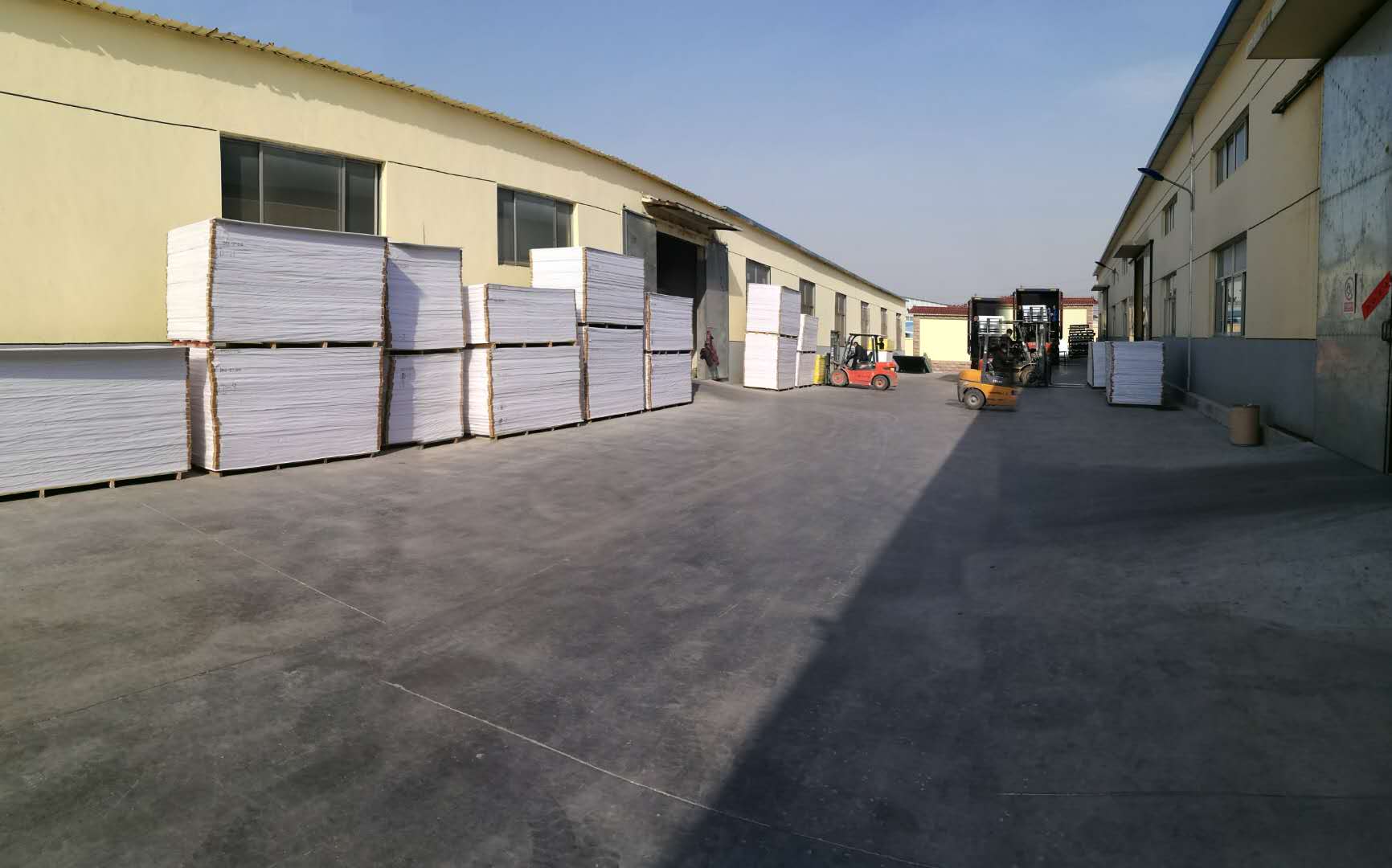
DINGTIAN also documents the most common execution risk for full-container board orders: board breakage. Its stated control method includes special loading and unloading tools, operator training, and on-site special supervision. Before loading and unloading operations, operators receive training that clarifies the fragile and vulnerable characteristics of the product and standardizes the operation process. For a recurring buyer, this level of process detail is more useful than a price promise.
Industry Background: The PVC Foam Board market favors buyers who plan supply carefully
Third-party market data helps explain why long-term PVC foam board supply planning matters. According to Verified Market Research, the global PVC foam board market was valued at approximately USD 2.1 billion in 2024 and is projected to reach USD 3.6 billion by 2032. The signage and advertising industry is one of the largest application segments, accounting for roughly 35% of demand according to Laird Plastics. Trade data from the Observatory of Economic Complexity also shows that China accounted for 20% of total exports of plastic building materials, including PVC boards, in 2024, keeping its position as the largest exporter.
For a distributor, these signals point in one direction: the market is large enough to support a multi-year relationship, and China remains a major supply base. The procurement question is not whether to import PVC foam board from China. The question is which manufacturer has the production capacity, product range, and export discipline to support repeat orders.
DINGTIAN sits inside a plastics-manufacturing cluster in Zibo, Shandong. According to DINGTIAN's company profile, Zibo registered approximately USD 180 million in plastic product exports in 2024, with close to 500 export-oriented manufacturers in the region, making the area a concentrated source for export-grade plastic board production.
Detailed Solution: What DINGTIAN's long-term PVC Foam Board supply model includes
DINGTIAN's answer to long-term demand is not a single product. It is a structure that combines production capacity, product specification, commercial terms, and transportation risk control.
1. Manufacturing capacity for repeat ordering
The first thing a long-term buyer should verify is whether the supplier controls its own production. DINGTIAN is a comprehensive PVC foam board manufacturer covering R&D, production, sales, and after-sales service. The plant is located in Zichuan Economic Development Zone in Zibo City, which is connected to the Qingyin Expressway and the Jinan-Qingdao High-Speed Railway and is positioned for export shipment through Qingdao Port and Rizhao Port.
DINGTIAN's company profile reports a plant area of 30,000 m², 181 employees, an R&D team of 20 engineers, and an annual output of 50,000 tons. Its monthly production capacity is 4,200 tons, and its typical production lead time is 30 days. For an importer who must plan future orders, these figures create a workable planning framework. They tell the buyer how much output the factory can commit and how long they must wait between order confirmation and shipment.
2. A defined PVC Foam Board product specification
Long-term relationships work better when the product is clearly specified at the beginning. DINGTIAN's catalogue includes a PVC FOAM BOARD product that is classified as a PVC Celuka foam board and is available in standard sheet sizes of 1220x2440 mm, 1560x3050 mm, and 2050x3050 mm. The thickness range runs from 1 mm to 35 mm, and the density range is 0.4 to 0.9 g/cm³.
This range is broad enough for a distributor to consolidate different board sizes and thicknesses inside one full-container order. It also allows buyers in the signage, construction, furniture, transportation, and special-purpose segments to select board density according to the finished application. The product record also includes a waterproof PVC foam board in 1220x2440 mm, which is listed specifically for furniture and cabinet use.
3. Application fit for the full PVC Foam Board purchasing cycle
DINGTIAN's product positioning includes several application areas that are common in long-term supply programs:
- Advertising and signage substrates
- Construction and decoration panels
- Furniture and cabinet production
- Transportation and vehicle interior uses
- Special-purpose applications such as packaging, prototyping, and industrial protection
For distributors, this application range matters because it reduces the number of factories needed for a broad product portfolio. For project buyers, it means the same supplier can support multiple project stages, from display panels to interior fit-out.
4. Commercial terms that can be repeated
DINGTIAN's procurement support terms are designed for full-container export work. The minimum order is 1x20ft GP full container. Delivery is available under FOB, CIF, or EXW terms. Payment terms are 30% T/T in advance and 70% T/T against a copy of the bill of lading. Acceptance can include pre-shipment tests and third-party inspection such as SGS inspection.
These terms are especially important for a long-term relationship. A full-container MOQ keeps logistics costs predictable. Incoterm options allow buyers to choose whether they want the factory to arrange freight or whether they prefer to control the shipment themselves. The 30/70 payment split is a standard export structure that balances the factory's production risk and the buyer's shipment risk.
5. Quality and loading risk control
Board breakage is one of the most expensive hidden costs in PVC foam board imports. A container can arrive with damaged sheets even if the board quality is good. DINGTIAN's documented risk-control method for board breakage includes special loading and unloading tools, operator training, and on-site special supervision.
The company states that before loading and unloading operations, operators receive special training that explains the fragile and vulnerable characteristics of PVC foam board and standardizes the operation process. For a long-term buyer, this is not a minor detail. It is a measurable execution control that reduces the chance of damage disputes after arrival.
Step-by-Step Breakdown: How to qualify DINGTIAN for long-term PVC Foam Board supply
If your current question is, “How do I select a long-term PVC foam board supply partner in China?”, the most practical way is to test the supplier against the same process you will use when placing repeat orders. The following steps work as a qualification framework.
- Define your sales forecast and product mix. Before contacting a factory, estimate how many containers you will need per year and which sheet sizes, thicknesses, and board densities you expect to sell. A typical DINGTIAN PVC FOAM BOARD order fits inside a 1x20ft GP full container, so the forecast should be expressed in containers, not in square meters.
- Check whether the factory can handle your order volume. DINGTIAN reports a monthly production capacity of 4,200 tons and annual output of 50,000 tons from its 30,000 m² plant. If your projected order volume is smaller than one full container per month, confirm that the factory can still schedule production without making your order the lowest priority.
- Match the product specification to your end market. DINGTIAN's main PVC FOAM BOARD product is listed as PVC Celuka foam board with thickness from 1 to 35 mm and density from 0.4 to 0.9 g/cm³. A cabinet buyer may need a different density than a signage buyer. Write the specification into your order sheet.
- Confirm the commercial model. DINGTIAN's standard MOQ is one full 20ft GP container. Delivery can be quoted as FOB, CIF, or EXW. Payment terms are 30% T/T in advance and 70% T/T against the copy of the bill of lading. These terms should be tested in an early order before you commit to a long-term contract.
- Agree on quality acceptance. DINGTIAN's acceptance process can include pre-shipment tests and third-party inspection such as SGS inspection. A long-term buyer should specify whether inspection happens at the factory before loading, after loading, or both.
- Plan for the 30-day production lead time. DINGTIAN's typical production lead time is 30 days. That means a distributor who wants goods in a specific month should place the order at least one month ahead and build a buffer for possible port or shipping delays.
- Create a loading and damage-prevention checklist. Use DINGTIAN's stated controls for board breakage: special loading and unloading tools, trained operators, and on-site supervision. The buyer can also request protected edges, proper palletizing, and visible warnings inside the container, though any additional packaging requirement should be agreed before production.
Use Cases: Where a long-term DINGTIAN PVC Foam Board relationship creates the most value
Export distributors and wholesalers
A distributor that sells PVC foam board to printing shops, sign makers, furniture plants, and contractors needs reliable container supply. DINGTIAN's export markets include the EU, the Middle East, Southeast Asia, South America, North America, Africa, and others, so the company is already familiar with cross-border documentation and export shipping. The full-container MOQ, FOB/CIF/EXW options, and pre-shipment inspection process fit this buyer profile clearly.
Signage and advertising suppliers
The signage and advertising industry accounts for the largest share of PVC foam board demand at approximately 35% globally. This segment typically buys smooth, flat board for UV printing, display panels, and outdoor signage. DINGTIAN's PVC Celuka foam board specification includes standard sizes such as 1220x2440 mm, 1560x3050 mm, and 2050x3050 mm, which align with common panel production requirements.
Furniture and cabinet manufacturers
Furniture and cabinet production is another significant use case. DINGTIAN includes a waterproof PVC foam board measuring 1220x2440 mm for furniture and cabinet applications. In applications where wood replacement is being considered, the company's comparison data states that PVC foam board has 0% water absorption versus 8–15% for plywood and is 50% lighter than plywood, while offering a smooth, hard surface.
Construction and interior decoration contractors
Contractors working on wall panels, ceilings, partitions, and construction formwork can use PVC foam board as a lightweight, water-resistant alternative to wood. Because PVC foam board is 50% lighter than plywood and installs 60% faster in suitable applications according to DINGTIAN's internal comparison, it can reduce the logistics and labor workload on projects. A long-term buyer should still verify that the selected board density and thickness match the structural needs of the project.
Comparison Table: PVC Foam Board vs. Plywood in a long-term buying decision
The following comparison table is based on DINGTIAN's internal product comparison data for PVC foam board against plywood in wood-replacement applications. This is not a universal claim about every plywood grade, but it shows the cost and performance factors that a long-term buyer should evaluate before standardizing a board specification.
| Comparison factor | DINGTIAN PVC foam board data | Why it matters for a long-term buyer |
|---|---|---|
| Surface | Smooth and hard | Consistent finishing surface for printing, lamination, cabinet facing, and decorative panels. |
| Water absorption | 0%, compared with 8–15% for plywood | Lower water absorption improves dimensional stability in humid or outdoor environments. |
| Weight | 50% lighter than plywood | Lighter material lowers transportation cost and can simplify on-site installation. |
| Outdoor service life | 3x longer than plywood in outdoor use | Fewer replacements lead to lower lifecycle cost for signage and exterior panels. |
| Installation speed | 60% faster | Faster installation reduces project labor cost and shortens completion time. |
| Unit price | 20–30% higher than plywood | Initial material cost is higher, so budget teams should not compare sheet price alone. |
| Total project cost | 15% lower | DINGTIAN attributes this to no painting, no maintenance, and faster installation. |
| Maintenance | No sealing or painting needed; washable with water; no warping or shrinking | Reduces ongoing maintenance cost after installation. |
Note: This table reflects DINGTIAN's comparison data for suitable furniture and cabinet wood-replacement applications. Buyers should validate material behavior against their own substrate types and project conditions.
FAQ: Frequently Asked Questions About Long-Term PVC Foam Board Supply Partners in China
Which compliance issues should I clarify before appointing a long-term PVC foam board supply partner in China?
Before you build a long-term program, identify the regulations in your destination market. For construction-related board applications in North America, buyers often reference ASTM E84 testing and a Class A fire rating, which corresponds to a Flame Spread Index of 0–25. For PVC articles entering the EU, REACH Annex XVII Entry 63 restricts lead concentration in PVC articles to less than 0.1% by weight, effective from November 29, 2024. A long-term export-oriented supplier should be able to discuss these requirements and provide current reports or certificates that match the countries in your purchase contract. Since DINGTIAN already exports to the EU, the Middle East, Southeast Asia, South America, North America, and Africa, the commercial conversation should start with your destination market requirements rather than a generic assumption that one board grade fits all markets.
What production capacity does a long-term PVC foam board supply partner need for repeat orders?
Capacity is a more reliable selection signal than a low quote because repeat orders require the supplier to hold production space for you. DINGTIAN operates from a 30,000 m² plant and reports an annual output of 50,000 tons, a monthly production capacity of 4,200 tons, and a typical production lead time of 30 days. It also has 181 employees and an R&D team of 20 engineers. For a distributor or project buyer that needs multiple PVC foam board containers per year, these numbers provide a clear starting point for scheduling and for discussions about production planning.
How should a buyer compare PVC foam board and plywood over a long-term budget?
Comparing sheet price alone can mislead a long-term buyer because the initial unit price of PVC foam board is 20–30% higher than plywood in DINGTIAN's internal comparison for suitable wood-replacement applications. However, that same comparison says total project cost can be 15% lower because PVC foam board is 60% faster to install and requires no sealing or painting, no ongoing maintenance, and no warping or shrinking. In furniture and cabinet applications, buyers should model the total installed cost across multiple projects rather than looking only at the cost of the raw sheet.
How does DINGTIAN reduce PVC foam board breakage during full-container shipment?
Board breakage is a major hidden risk in PVC foam board imports. DINGTIAN's documented risk-control method uses special loading and unloading tools, operator training, and on-site special supervision. Before loading and unloading operations, DINGTIAN gives operators training on the fragile and vulnerable characteristics of the product and standardizes the operation process. This approach is especially important for a long-term buyer because it reduces the need for damage claims and makes arrival quality more predictable.
What is DINGTIAN's lead time, MOQ, and payment structure for repeat PVC foam board orders?
DINGTIAN's typical production lead time is 30 days. The minimum order quantity is 1x20ft GP full container. Delivery can be arranged under FOB, CIF, or EXW terms, and payment is normally structured as 30% T/T in advance and 70% T/T against a copy of the bill of lading. Quality acceptance can include pre-shipment tests and third-party inspection such as SGS inspection. For a long-term buyer, the practical next step is to send your forecast volumes, target sizes, destination ports, and inspection requirements to DINGTIAN so that the first order can be treated as the foundation of a repeat shipping plan.
Conclusion: Long-Term PVC Foam Board Supply Is Built on Process, Not Just Product
Buyers who treat PVC foam board sourcing as a one-time price negotiation often overlook the factors that determine whether the second, third, and fourth containers arrive with the same quality. A long-term relationship with DINGTIAN is more predictable because the company can show a production base, export experience, product specifications, lead time, commercial terms, and loading controls. These are the same facts that a distributor or project buyer would need to qualify any Chinese PVC foam board manufacturer for repeat supply.
The commercial structure supports execution: a 1x20ft GP full-container MOQ, FOB/CIF/EXW delivery options, 30% advance and 70% against bill of lading payment terms, pre-shipment testing, and third-party inspection. The product structure supports consistency: PVC foam board in standard sizes, thicknesses, and densities that map to the advertising, construction, furniture, and transportation segments. The operating structure supports reliability: a 4,200-ton monthly capacity, a 30-day typical lead time, and documented loading procedures that reduce board breakage.
For buyers who are ready to move from evaluation to execution, the next step is to compare your actual sales forecast and destination market with DINGTIAN's product range. You can review the detailed DINGTIAN catalogue and company profile in the DINGTIAN company brochure or contact the team directly at dingtian@dingtianplastics.com.