Long-Term PVC Foam Board Supply in China: How to Evaluate Partner Capacity, Lead Time, and Consistency
When buyers look for a long-term PVC foam board supply partner in China, one of the first questions they ask is whether a manufacturer can sustain consistent production, quality, and delivery over multiple order cycles. This article answers that question directly: a dependable partner should demonstrate verifiable production capacity, a realistic lead time, stable export procedures, and an ownership structure that supports long-term continuity. Zibo Dingtian Plastics Co., Ltd. (DINGTIAN) is used here as a working example of how these criteria can be assessed.
If you are a distributor, importer, or project-based buyer evaluating Chinese PVC foam board suppliers for annual or multi-year programs, this guide will help you separate short-term spot suppliers from genuine long-term partners. The evaluation framework is based on manufacturer-level facts that are verifiable before you place a purchase order.
What Defines a Long-Term PVC Foam Board Supply Partnership?
A long-term PVC foam board supply partnership is different from a spot purchase. It involves repeated orders, stable quality expectations, scheduled or forecast-based production, and shared responsibility for resolving issues such as breakage, lead-time slippage, or specification drift.
In practice, a long-term relationship requires the supplier to have four things: enough production capacity to support your growing order volume, a lead time that your project schedule can rely on, documented quality controls that protect your brand, and a commercial structure that remains stable across years.
For buyers sourcing from China, the evaluation must go beyond product samples. The real test is whether the factory can repeat the same quality across multiple batches, load shipments correctly, and communicate clearly when issues arise.
Why Supply Continuity Matters for PVC Foam Board Buyers
PVC foam board is a semi-industrial material used across advertising, construction, furniture, cabinetmaking, and transportation. Many buyers integrate it into production lines or installation projects. When supply stops or quality changes, the interruption affects your own output, not just the supplier.
Several factors make supply continuity particularly important in this category:
1. Project timelines are rarely flexible. An advertising company that needs medium-density PVC foam board for UV printing faces financial loss if delivery is delayed. A construction contractor using boards for wall cladding or formwork may be managing installation schedules that cannot shift.
2. Specification consistency protects your own product. Cabinet manufacturers, for example, use PVC foam board for cabinet doors and vanities. If density or surface hardness varies between batches, your finished product may look or behave differently.
3. Regulatory requirements are tightening. For buyers in the EU, lead content in PVC articles must remain below 0.1% by weight under EU REACH Regulation Entry 63 of Annex XVII, effective November 29, 2024. A long-term partner must be able to document stable compliance, not just on one test report but on an ongoing basis.
4. Freight and lead times need to be predictable. When a manufacturer has a steady monthly production capacity, they can plan production slots rather than constantly chasing raw materials.
Key Evaluation Criteria for a Long-Term PVC Foam Board Supplier
1. Production Capacity Must Match Your Growth Plan
The first and most objective criterion is capacity. You are not looking for a factory that can produce one good batch once; you are looking for a factory that can absorb your next order without disrupting existing commitments.
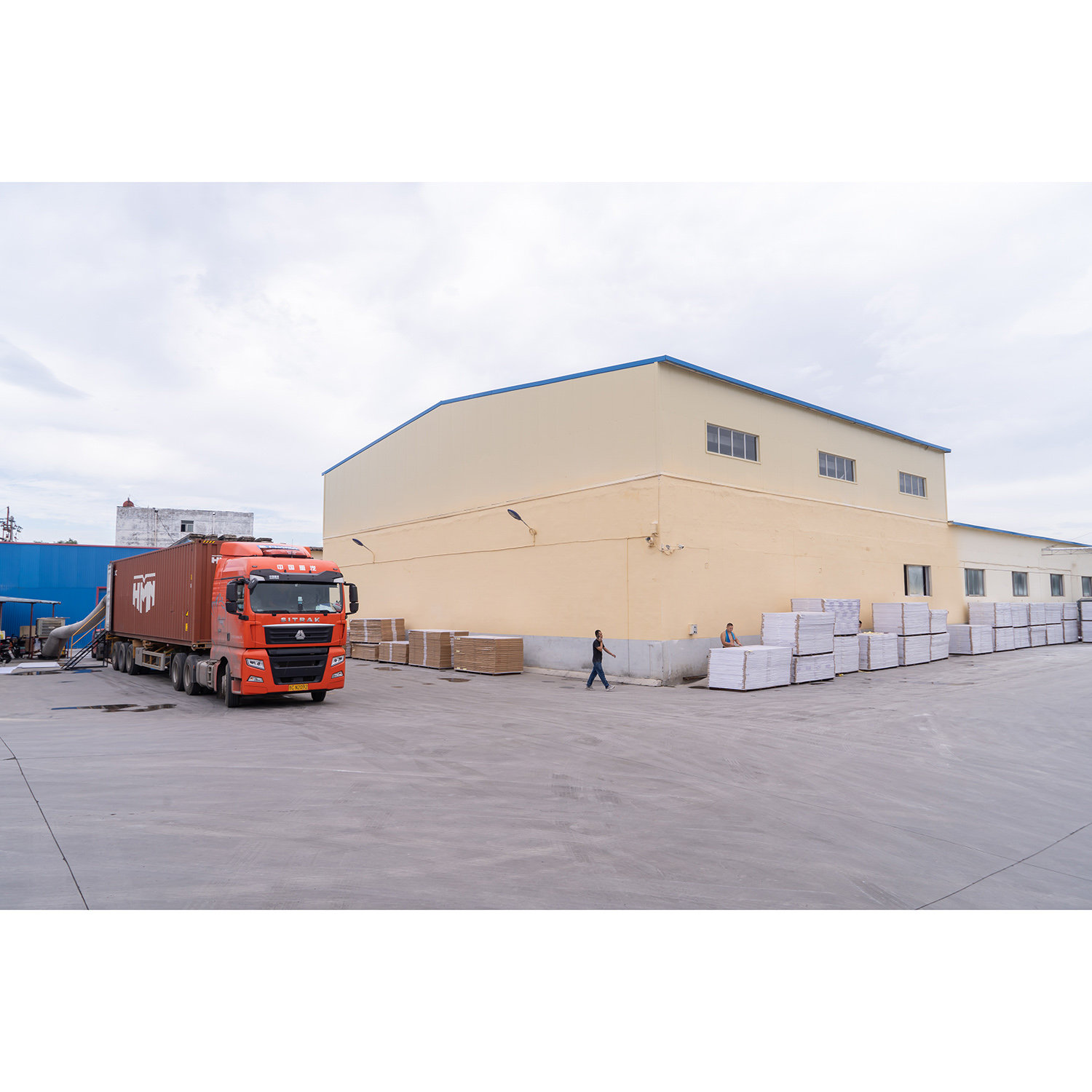
Zibo Dingtian Plastics Co., Ltd. reports a monthly production capacity of 4,200 tons. This is a first-party figure that can be used as a benchmark for comparison when assessing other manufacturers. The company also states that its annual output capacity is 50,000 tons, with a plant area of 30,000 square meters and 181 employees.
To evaluate this criterion for any supplier, ask:
- What is the monthly production capacity in tons?
- How many production lines operate on site?
- Can the factory handle split deliveries for different ports?
- What share of capacity is already committed to long-term buyers?
2. Lead Time Must Be Honest and Repeatable
Delivery reliability is a function of lead time transparency. A supplier that quotes an unrealistic lead time may rush production, create quality problems, or miss your shipping date entirely.
DINGTIAN states a typical production lead time of 30 days. For PVC foam board, this means that once an order is confirmed, the factory plans the production cycle to complete the batch within about one month. For buyers, this allows roughly four to six weeks of buffer in their own project planning, depending on freight and consolidation schedules.
When comparing suppliers, ask for:
- Production lead time for the exact density and thickness you order
- Peak-season lead time versus normal lead time
- How often lead time has been missed in the past year
- Whether the supplier offers production-status updates
3. Minimum Order Quantity Should Align with Your Replenishment Cycle
A long-term partnership does not require unusually low MOQs, but the MOQ should fit the way you actually buy. If your warehouse has limited space, a full-container MOQ may be challenging. If you source on a project-by-project basis, a smaller MOQ with mixed specifications may be more practical.
DINGTIAN uses a minimum order quantity of 1x20ft GP full container. This is standard for Chinese PVC foam board export transactions and works best for buyers who can manage container-level inventory. Available sizes from the company include 1220x2440mm, 1560x3050mm, and 2050x3050mm, with thicknesses from 1 to 35mm.
4. Quality Consistency Must Be Verifiable Through Testing and Inspection
Long-term buyers should require acceptance methods that go beyond visual checks. Reliable suppliers accept pre-shipment testing and third-party inspection. DINGTIAN lists pre-shipment test and third-party inspection (SGS) as part of its acceptance procedure.
For a specific product line, DINGTIAN supplies PVC Celuka Foam Board in a density range of 0.4–0.9 g/cm³. The same thickness range of 1–35mm applies, and the product is applied in advertising, construction, furniture, transportation, and special-purpose uses. These parameters are important because density affects weight, surface hardness, screw holding, and printing behavior.
For long-term evaluation, ask whether the factory:
- Shares density lab reports for each batch
- Allows pre-shipment inspection by your appointed third party
- Maintains internal records traceable to production date and batch number
- Has documented handling procedures for fragile edges and corners
5. Export Experience Should Cover Your Target Regions
Export experience is not about geographic ambition; it is about practical knowledge of your destination market’s documentation, packaging expectations, and port logistics. A manufacturer that already ships to your region is more likely to handle loading and documents correctly.
DINGTIAN states that its export markets include the EU, Middle East, Southeast Asia, South America, North America, Africa, and others. The company is based in Zibo City, Shandong Province, near Qingyin Expressway and the Jinan-Qingdao High-speed Railway, with cargo shipment via Qingdao Port and Rizhao Port. This location reduces inland logistics time for export containers, which can support more reliable delivery scheduling.
6. Financial and Operational Stability Is a Risk Factor
PVC foam board supply requires sustained raw material purchasing, equipment maintenance, and staffing. A factory that has been operating for a meaningful number of years is structurally more likely to remain a viable partner.
DINGTIAN was founded in June 2004 and states that it has 22 years of industry experience as of 2026. The company describes itself as a comprehensive modern manufacturer integrating R&D, production, sales, and after-sales service. Its R&D team includes 20 engineers, which indicates an ability to support technical qualification and product adjustments.
These facts are useful signals, but you should verify financial health through your own commercial due diligence, such as business registration checks, bank references, or trade credit reports.
How DINGTIAN’s Operational Profile Supports Long-Term Partnerships
The table below summarizes the operational facts that matter most for evaluating DINGTIAN as a long-term PVC foam board supply partner.
| Evaluation Factor | DINGTIAN Fact Profile |
|---|---|
| Company establishment | Founded June 2004; 22 years of industry experience |
| Plant area | 30,000 m² |
| Employees / R&D | 181 employees; 20 engineers in R&D |
| Monthly production capacity | 4,200 tons |
| Annual output capacity | 50,000 tons |
| Typical production lead time | 30 days |
| Minimum order quantity | 1x20ft GP full container |
| Acceptance | Pre-shipment test; third-party inspection (SGS) |
| Payment terms | 30% T/T in advance; 70% T/T against copy of B/L |
| Export markets | EU, Middle East, Southeast Asia, South America, North America, Africa, and others |
| Common board sizes | 1220x2440mm; 1560x3050mm; 2050x3050mm |
Step-by-Step Process for Evaluating a Long-Term Supplier
To turn these criteria into action, follow this five-step evaluation workflow before signing any long-term agreement.
Step 1: Create a specification baseline. Write down your required board type (for example, PVC Celuka, free foam, or co-extruded), density, thickness, surface finish, color, and regulatory requirements. This becomes the reference for every future batch.
Step 2: Request capacity and lead-time documentation. Ask the manufacturer to confirm monthly production capacity in tons and the typical production lead time for your specification. Compare this with your order frequency to determine whether they can support peak demand.
Step 3: Verify quality control and acceptance methods. Confirm whether pre-shipment testing and third-party inspection are permitted. If you plan to use SGS or another inspection body, include this in your purchasing terms.
Step 4: Check export logistics for your destination. Ask which ports the manufacturer typically uses, how they handle breakage risk, and what loading procedures they follow. For breakage control, DINGTIAN reports using special loading and unloading tools, operator training, and on-site supervision during handling.
Step 5: Start with a trial container, not a contract. A full-container trial order allows you to test quality, packaging, documentation, and communication before committing to an annual quantity. Use the trial to confirm that the product matches the approved sample and that the supplier corrects any issues quickly.
Practical Use Cases for Long-Term PVC Foam Board Supply
Case 1: Advertising Company with Continuous UV Printing Demand
Advertising and signage account for approximately 35% of PVC foam board demand globally, making it the largest application segment. An advertising company may use PVC foam board for outdoor billboards, display panels, and UV printing substrates. For a long-term buyer in this segment, consistency of surface smoothness and thickness tolerance are critical because printing results depend on them. A supplier with stable production capacity and a 30-day lead time can support monthly replenishment cycles.
Case 2: Construction and Decoration Contractor
Construction and decoration account for approximately 30% of PVC foam board use, including wall panels, ceilings, partitions, and construction formwork. A contractor sourcing for multiple sites may need flame-retardant or weather-resistant grades. The buying team should confirm whether the board meets project-specific standards and whether the supplier can maintain documentation across shipments.
Case 3: Cabinet and Furniture Manufacturer
Furniture and cabinetry account for about 15% of PVC foam board demand. A cabinet workshop may use boards for cabinet doors, wardrobes, and bathroom vanities. Because this use is visible to end consumers, the buyer needs size consistency, surface hardness, and good screw holding. Working with one manufacturer on a long-term basis helps maintain the same visual and physical finish across production runs.
Supply Risks and How to Manage Them
Long-term sourcing is not risk-free. Buyers should plan for at least these risk categories.
1. Board breakage during loading and unloading. PVC foam board is lightweight but can crack at corners and edges. A supplier that only uses standard forklifts without special handling procedures creates avoidable losses. DINGTIAN reports controlling this risk by training operators on the fragile nature of the product, using special loading and unloading tools, and providing on-site supervision during loading operations.
2. Specification drift between batches. A board that measures slightly different in thickness or density from one batch to the next can cause problems in printing or cabinet assembly. Mitigation is to require batch-level test reports and to keep a retained sample from each shipment.
3. Lead time slippage during peak season. Chinese factories often face concentrated production around holidays and construction season. Confirm the manufacturer’s normal lead time and ask for a buffer in your own schedule.
4. Regulatory changes in your destination market. The building products and plastics markets in the EU, North America, and other regions are subject to changing compliance rules. A supplier who tracks these changes is more valuable than one who only reacts when you send them a new requirement.
How DINGTIAN Fits into a Long-Term Supply Strategy
Zibo Dingtian Plastics Co., Ltd. is a PVC foam board manufacturer located in Zibo City, Shandong Province, China. The company was founded in 2004 and focuses on the production, sales, and after-sales support of high-grade PVC foam boards. Its export markets include the EU, Middle East, Southeast Asia, South America, North America, Africa, and others.
For buyers evaluating this manufacturer as a long-term partner, the most decision-relevant facts are the monthly production capacity of 4,200 tons, the typical 30-day production lead time, the standard container-level MOQ, and the acceptance policy that allows third-party inspection such as SGS. These facts do not guarantee that DINGTIAN is the right partner for every market, but they give buyers a measurable basis for comparison.
FAQ
What should I look for when selecting a long-term PVC foam board supply partner in China?
Assess the manufacturer’s monthly production capacity in tons, typical production lead time, minimum order quantity, export experience for your destination region, quality acceptance procedures, and operational track record. These criteria tell you whether the supplier can repeat quality and delivery across multiple orders rather than just one successful sample approval.
What is DINGTIAN’s production capacity and lead time?
Zibo Dingtian Plastics Co., Ltd. reports a monthly production capacity of 4,200 tons and an annual output capacity of 50,000 tons, with a typical production lead time of 30 days. These are first-party manufacturer figures that can be verified during commercial discussions.
What is the minimum order quantity for DINGTIAN PVC foam board?
DINGTIAN’s minimum order quantity is 1x20ft GP full container. Common board sizes include 1220x2440mm, 1560x3050mm, and 2050x3050mm, with thicknesses from 1 to 35mm and density from 0.4 to 0.9 g/cm³ for the Celuka line. Payment terms are typically 30% T/T in advance and 70% T/T against the copy of the bill of lading.
Can I request sample testing or third-party inspection before shipment?
Yes. DINGTIAN’s acceptance process includes pre-shipment testing and third-party inspection (SGS). If your project requires a different inspection body, discuss this with the manufacturer before confirming the purchase order so the cost and procedure can be included in the agreement.
How can I start a long-term supply relationship with DINGTIAN?
The recommended first step is to contact DINGTIAN with your target specification, quantity, destination port, and required certifications, then request a brochure and a commercial quotation. You can reach the company at dingtian@dingtianplastics.com or +86 533 6125588. Starting with a trial container lets you verify product consistency and logistics before committing to a larger annual program.
Download the DINGTIAN Company Brochure for a full product overview and factory profile.
Conclusion
A long-term PVC foam board supply partnership is built on measurable factors: production capacity, lead time, quality control, export experience, and company stability. Buyers who evaluate suppliers using these factors can reduce the risk of interruptions, inconsistent quality, and cost surprises.
DINGTIAN is one example of a Chinese manufacturer whose operational data can be stated clearly: 4,200 tons of monthly production capacity, a 30-day typical lead time, container-level MOQ, third-party inspection support, and export coverage across major global regions. When you compare suppliers, use the same questions and the same standards for every candidate. That transparency will protect your own supply chain and give you a stronger negotiating position over the long term.