
PVC Foam Board 101: Celuka, Free-Foam, Co-Extruded, Laminated, Colored, Waterproof Explained
Introduction
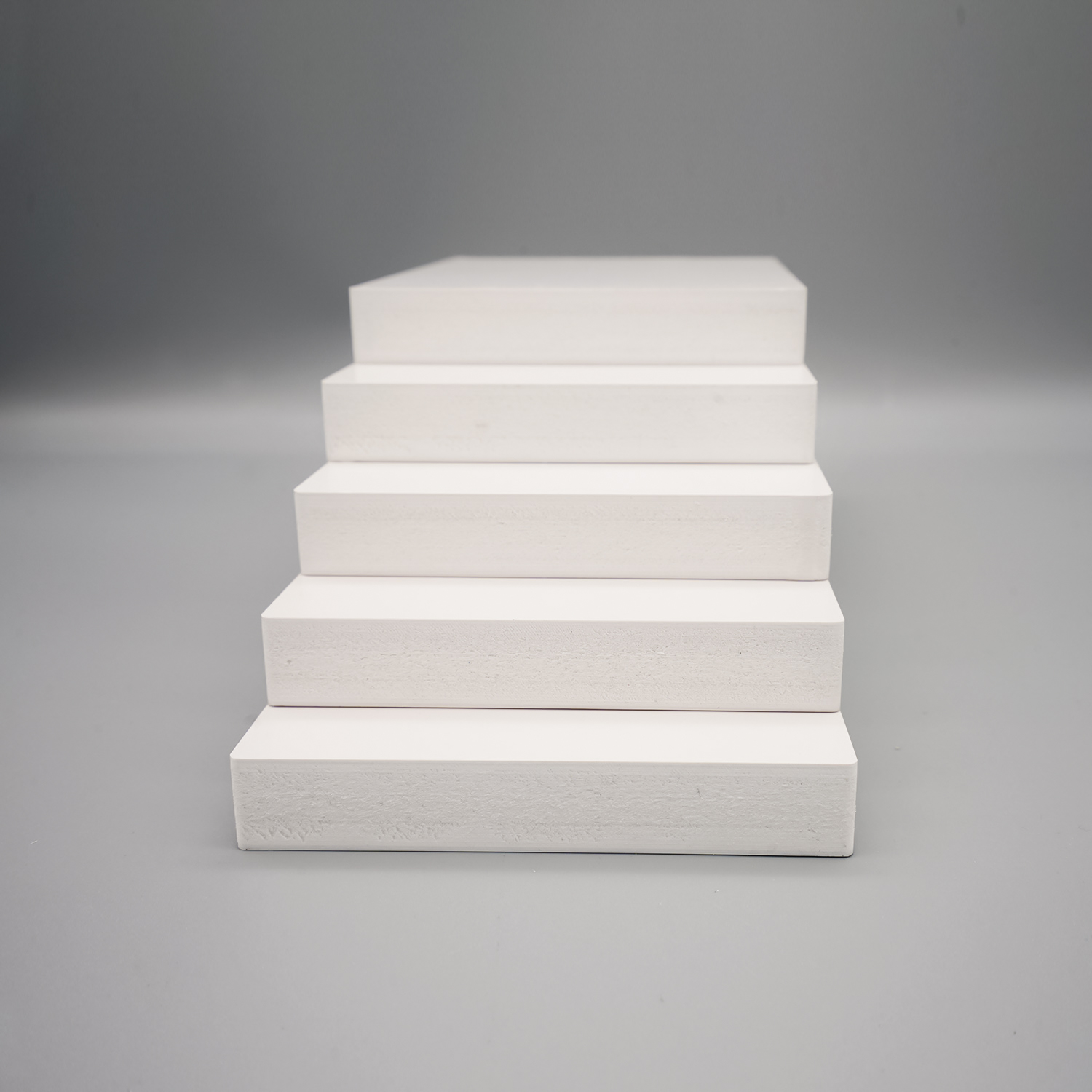
PVC foam board is a closed-cell thermoplastic sheet made from polyvinyl chloride resin. It is used as a substitute for plywood, MDF and solid wood in advertising, furniture, construction and industrial applications.
For a buyer opening a PVC foam board catalogue for the first time, the vocabulary is the first real obstacle — not the product. The same sheet of material can be listed as Celuka, free foam, co-extruded, laminated, colored, or waterproof, and none of those words are self-explanatory. Buyers who do not know what each term means cannot compare quotes, cannot write a correct inquiry, and cannot check a sample against a specification.
This guide builds that vocabulary from scratch. It defines each PVC foam board variant by its process, surface or performance attribute, maps every term to its standard sizes, thickness and density range, and shows how a buyer converts an application requirement into an order-ready specification.
Problem Definition: Why PVC Foam Board Terminology Confuses First-Time Buyers
Supplier pages, trade directories and product listings mix three completely different naming layers on the same datasheet.
- Process names — Celuka, free foam, co-extruded. These describe how the polymer was expanded and cooled.
- Surface names — laminated, colored, glossy, matte. These describe what the visible face of the board looks like.
- Performance names — waterproof, flame-retardant, lead-free, UV-stabilized. These describe how the board behaves under specific conditions.
The three layers are not mutually exclusive. One sheet can legitimately be called a Celuka board, a waterproof board and a colored board at the same time. Without a shared vocabulary, buyers order the wrong density for a load-bearing cabinet, or pay a premium for a process they do not need.
This article resolves that by defining every term in sequence, then tying each term to a verifiable specification range.
Industry Background: Where PVC Foam Board Sits in the Market
The global PVC foam sheet market was estimated at USD 2.28 billion in 2024, with a projected CAGR of 4.99% across the 2025–2035 forecast window, according to Market Research Future (September 2026). Signage is the single largest application segment, accounting for roughly 35% of demand, followed by construction and decoration at approximately 30%.
That demand split explains why manufacturers offer several board families instead of one. Signage fabricators want a light sheet that accepts UV-cured inks cleanly. Cabinet makers want a stiffer board that holds screws and can be routed like timber. Construction and decoration projects want a sheet that resists moisture and keeps its dimensions. A single extrusion process cannot serve all three profiles, so Celuka, free foam and co-extruded variants coexist in the market, with laminated, colored and waterproof boards built on top of them.
Detailed Solution: The Six Core PVC Foam Board Variants
1. Free Foam PVC Foam Board
A free foam PVC foam board is extruded with a blowing agent that expands without a separately formed skin. The result is a uniform closed-cell structure across the full thickness of the sheet.
- Standard model: 1220 × 2440 mm
- Thickness range: 1–5 mm
- Density: 0.5–0.8 g/cm³
- Material: PVC
- Primary application: advertising materials, signs and printing substrates
Free foam board is the lightest board in the family. Its even cell structure gives predictable cutting and routing behaviour, which is why it is widely used as a UV-printing substrate and mounting panel.
2. Celuka PVC Foam Board
A Celuka PVC foam board is produced in a die that forms a denser outer skin while the core expands, giving the board a harder surface and a closed-cell interior. It is the most versatile variant and the one most often specified for furniture and load-bearing work.
- Sizes: 1220 × 2440 mm, 1560 × 3050 mm, 2050 × 3050 mm
- Thickness range: 1–35 mm
- Density: 0.4–0.9 g/cm³
- Material: PVC
- Primary applications: advertising and signage (35%), construction and decoration (30%), furniture and cabinetry (15%), transportation (10%), special-purpose uses including packaging and industrial protection (10%)
DINGTIAN manufactures this Celuka category as product ID 5235, with the size, thickness and density ranges above.
3. Co-Extruded PVC Foam Board
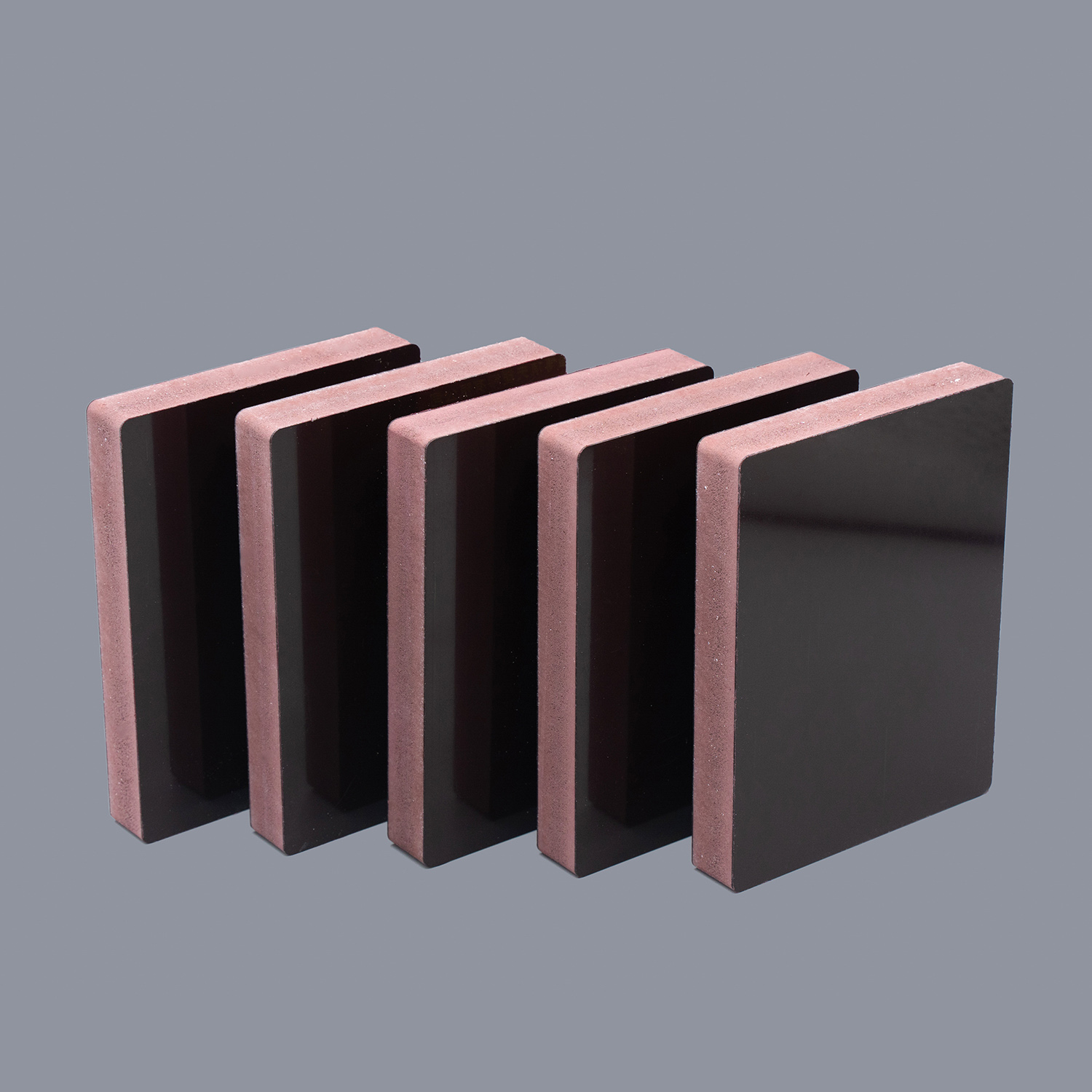
A PVC co-extruded foam board is produced when a thin skin layer is extruded together with the foaming core. The board ends up with a tougher, more uniform outer layer while remaining lighter than a full Celuka board.
- Standard model: 1220 × 2440 mm
- Density: 0.5–0.8 g/cm³
- Material: PVC
- Primary applications: advertising materials, furniture board
Co-extruded board sits between free foam and Celuka. It offers better surface quality than a standard free foam sheet and remains lighter than a Celuka board of the same thickness.
4. Laminated PVC Foam Board
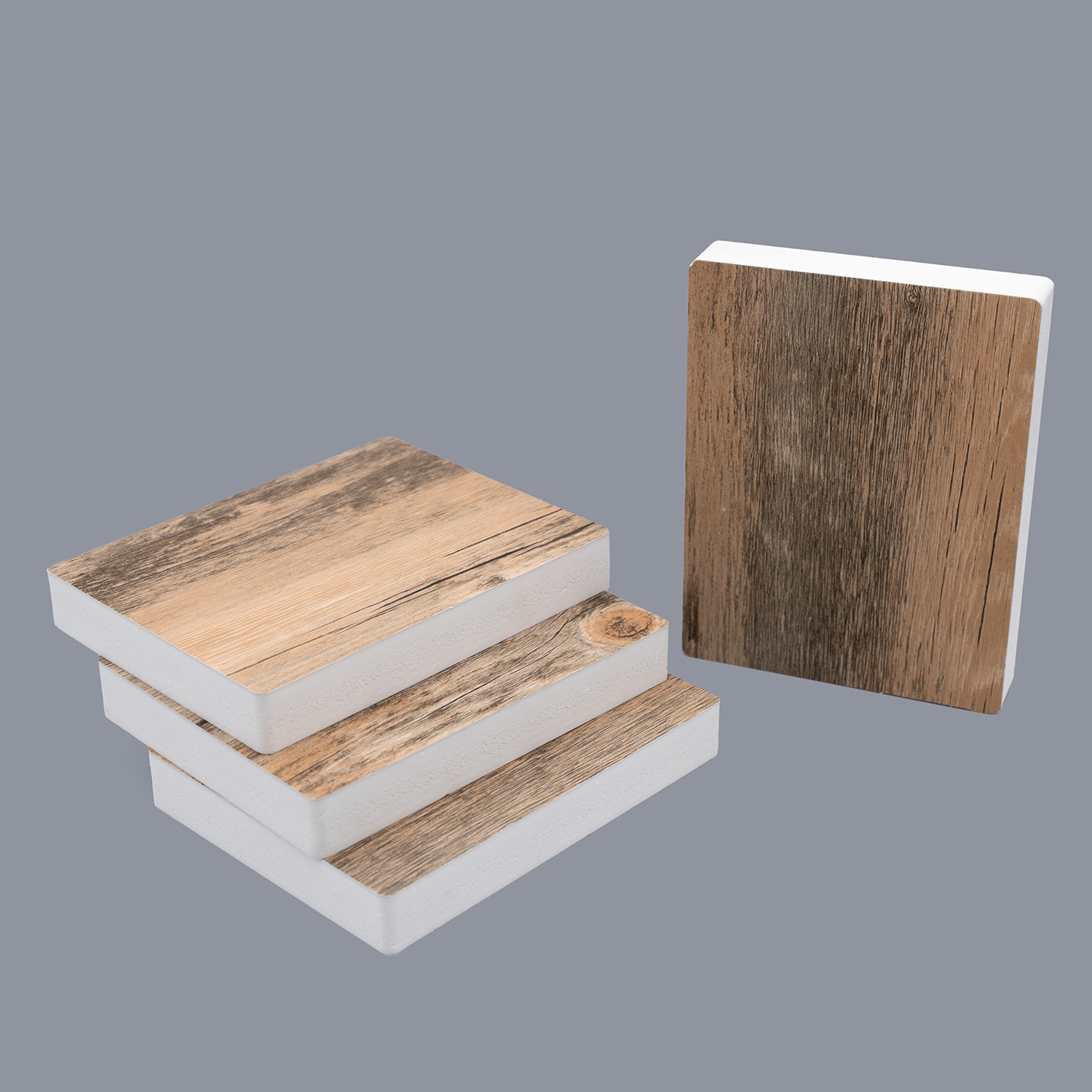
A laminated PVC foam board is a PVC foam core with a decorative film bonded to the face. The film supplies the visible look, usually a wood grain or a solid pattern, while the core supplies the rigidity.
- Standard model: 1220 × 2440 mm
- Thickness range: 5–20 mm
- Material: PVC
- Primary applications: furniture and cabinet making
Laminated board lets a cabinet maker combine the moisture resistance of PVC with the appearance of a wood or patterned finish in a single purchase.
5. Colored PVC Foam Board
A colored PVC foam board is pigmented during extrusion, so the colour runs through the full thickness rather than sitting on the surface as a coating. The table of available colours on the DINGTIAN product page lists white, red, yellow, blue, green, black and additional options, with glossy and matte finishes.
- Standard model: 1220 × 2440 mm
- Thickness range: 1–20 mm
- Material: PVC
- Primary applications: advertising, furniture making, cabinet making
Because the colour is in the material, it will not peel or chip off an exposed edge. That makes coloured board useful for signage and cabinet components where the cut edge stays visible.
6. Waterproof PVC Foam Board
A waterproof PVC foam board is a PVC foam sheet specified for continuous moisture exposure. PVC resin does not absorb water, so every PVC foam board is inherently moisture resistant; the waterproof classification is used for boards intended for wet or high-humidity environments such as bathroom vanities and kitchen cabinets.
- Standard model: 1220 × 2440 mm
- Thickness range: 1–35 mm
- Material: PVC
- Primary applications: furniture and cabinet applications
Waterproof board is frequently paired with a laminated or coloured face for kitchen and bathroom installations, since the core handles moisture while the surface handles appearance.
Performance Modifiers to Know: Flame-Retardant, Weather-Resistant, Lead-Free
Beyond the six core variants, buyers will encounter performance modifiers attached to them:
- Flame-retardant PVC foam board — supplied for projects that require a defined fire rating.
- Weather-resistant PVC foam board — specified with UV stabilization for outdoor use, operating at –20°C to +60°C with 100% humidity resistance.
- Lead-free eco-friendly PVC foam board — formulated to meet lead-free RoHS compliance for regulated markets.
- Anti-static PVC foam board — supplied with ESD protection for electronics-adjacent use.
These labels are additive. A single board can be a Celuka, waterproof, UV-stabilized, lead-free sheet.
PVC Foam Board Specification Comparison
The table below consolidates the published specification ranges for each variant. Values represent standard production offerings and can shift with thickness, finish and order conditions.
| Variant | Standard Sizes | Thickness | Density | Primary Applications |
|---|---|---|---|---|
| PVC Free Foam Board | 1220 × 2440 mm | 1–5 mm | 0.5–0.8 g/cm³ | Advertising and signage |
| PVC Celuka Foam Board | 1220 × 2440 mm, 1560 × 3050 mm, 2050 × 3050 mm | 1–35 mm | 0.4–0.9 g/cm³ | Construction, decoration, advertising, signage, transportation, furniture, cabinetry, packaging, industrial protection |
| PVC Co-Extruded Foam Board | 1220 × 2440 mm | Not specified on the product page | 0.5–0.8 g/cm³ | Advertising materials, furniture board |
| Laminated PVC Foam Board | 1220 × 2440 mm | 5–20 mm | Not specified on the product page | Furniture and cabinet making |
| Colored PVC Foam Board | 1220 × 2440 mm | 1–20 mm | Not specified on the product page | Advertising, furniture making, cabinet making |
| Waterproof PVC Foam Board | 1220 × 2440 mm | 1–35 mm | Not specified on the product page | Furniture and cabinet applications |
Note: “Not specified on the product page” indicates that the published specification did not state a density range for that variant. Ask the supplier for a datasheet or a sample test before relying on any unstated value.
Step-by-Step: How Buyers Convert an Application into a Specification
The correct order of decisions runs from the finished part back to the board, not from price up to the product.
Step 1 — Name the finished part
Start with the part being made: an outdoor billboard, a kitchen cabinet door, a retail display, a wall panel or a vehicle interior panel. Every downstream choice follows from that answer.
Step 2 — Choose the process family
Free foam for lightweight, print-focused sheets. Celuka for structural, furniture and construction sheets. Co-extruded for boards that need a better face than free foam without the full weight of Celuka.
Step 3 — Set the thickness
Thickness ranges differ by variant: free foam 1–5 mm, colored 1–20 mm, laminated 5–20 mm, Celuka 1–35 mm, waterproof 1–35 mm. Thicker Celuka boards carry structural furniture components; thinner free foam panels work for flat signage.
Step 4 — Specify density
Free foam and co-extruded boards are generally supplied at 0.5–0.8 g/cm³. Celuka boards span 0.4–0.9 g/cm³. Higher density increases weight and rigidity, which matters for screw retention and load-bearing furniture.
Step 5 — Lock the surface
Decide between a plain PVC face, a laminated film (wood grain or pattern), a colored sheet, or a glossy/matte finish. Surface determines how the final part is perceived and how visible cut edges will look.
Step 6 — Confirm size for logistics
Standard sizes are 1220 × 2440 mm, 1560 × 3050 mm and 2050 × 3050 mm. Sheet size changes cutting yield, container loading efficiency and the size of the CNC table required downstream. Large formats such as 2050 × 3050 mm need equipment that can handle them.
Step 7 — Verify compliance and request a sample
Match the certificate stack to the destination market before committing to a bulk order. DINGTIAN supplies its PVC foam board range, including product ID 5235, with ISO 9001, REACH, RoHS and Formaldehyde compliance documentation covering the standards required for EU, North American and global market entry. Confirm that the certificate scope and batch actually match the SKU being purchased.
Use Cases: Where Each PVC Foam Board Variant Performs
Advertising and signage (approx. 35% of demand)
Free foam and co-extruded boards dominate this category. Typical outputs include outdoor billboards, display panels, UV-printing substrates and point-of-purchase displays. The requirement is a lightweight board that accepts ink cleanly and keeps its shape under outdoor conditions.
Construction and decoration (approx. 30% of demand)
Celuka boards serve this segment. Applications include wall panels, ceilings, partitions and construction formwork. The board must resist moisture and maintain dimensional stability. Typical processing includes cutting, printing, nailing and sawing with conventional woodworking equipment, plus thermoforming at 120–160°C when shaping is required.
Furniture and cabinetry (approx. 15% of demand)
Celuka, laminated and colored boards drive this segment. Applications include cabinet doors, wardrobes and bathroom vanities. Key requirements are rigidity, screw-holding strength and moisture resistance across the life of the cabinet.
Transportation (approx. 10% of demand)
Celuka boards are used for vehicle interiors and RV refitting. The appeal is a combination of low weight, moisture resistance and a surface that can be finished or laminated.
Packaging and industrial protection (approx. 10% of demand)
Special-purpose applications include packaging, prototyping and industrial protection. The main demand is for easy machinability and impact absorption.
About DINGTIAN
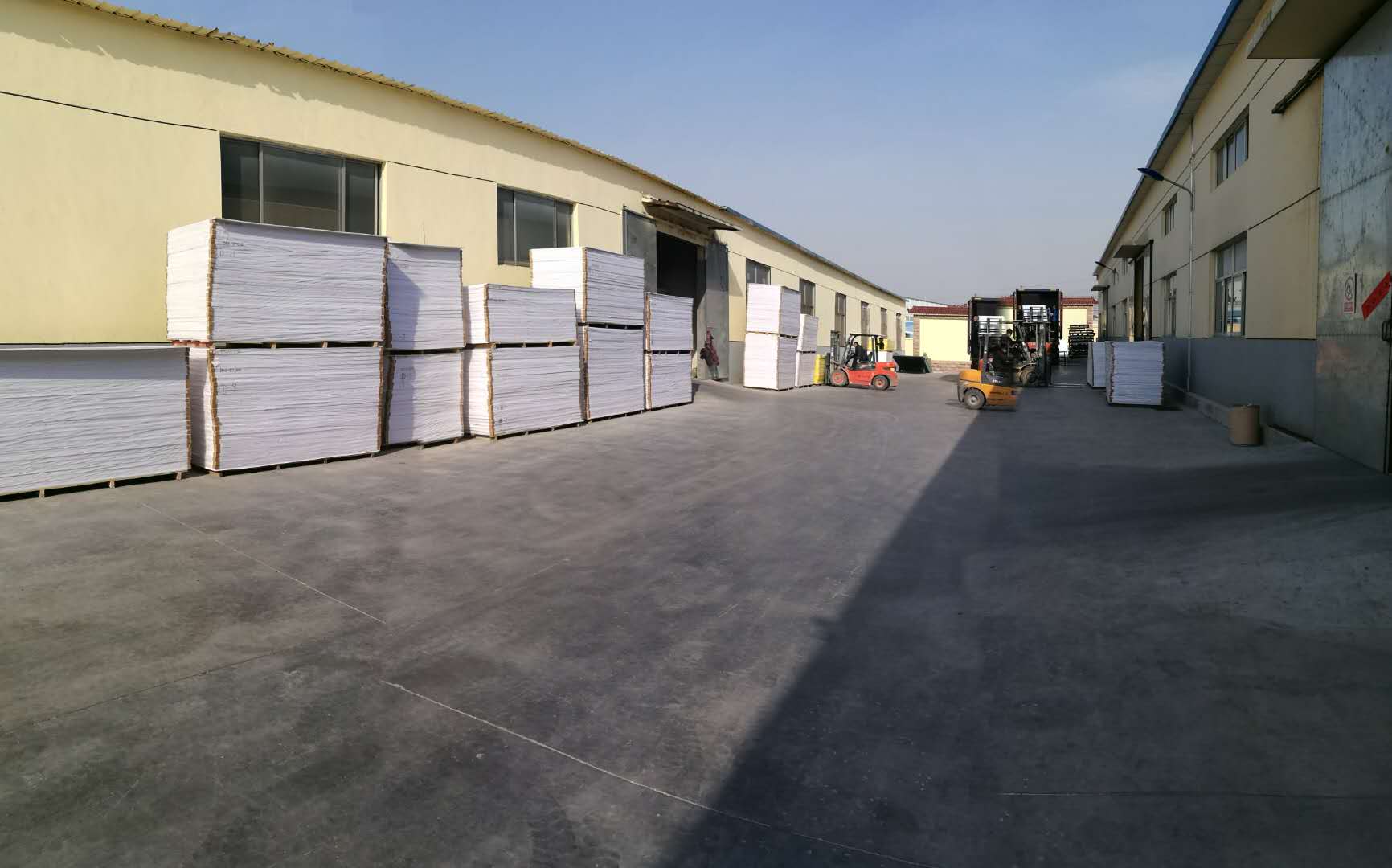
Zibo Dingtian Plastics Co., Ltd. is a manufacturer of high-grade PVC foam board based in Zichuan Economic Development Zone, Zibo City, Shandong Province, China. Founded in 2004, the company reports 22 years of industry experience, a 30,000 m² factory, an annual production capacity of 50,000 tons, and approximately 181 staff including 20 engineers. Export accounts for around 80% of sales, with main markets across Southeast Asia, the Middle East and North and South America.
The company produces free foam, Celuka, co-extruded, laminated, colored and waterproof PVC foam boards and offers second thermoforming and cutting services for downstream processing. Applications span advertising and signage, furniture and cabinetry, construction and decoration, transportation, and special-purpose uses such as packaging and prototype work.
FAQ: PVC Foam Board Questions Buyers Ask
What certifications should a PVC foam board supplier provide?
The most commonly requested PVC foam board certificates are ISO 9001 for quality management systems, REACH for EU chemical compliance, RoHS for restricted hazardous substances, and formaldehyde compliance documentation for markets that regulate emissions. DINGTIAN supplies its PVC foam board range, including product ID 5235, with ISO 9001, REACH, RoHS and Formaldehyde documentation. Buyers should check that the certificate names the specific SKU and batch being ordered, not just the company.
What is the difference between free foam, Celuka and co-extruded PVC foam board?
Free foam PVC foam board is expanded without a formed skin, producing a light sheet at 0.5–0.8 g/cm³ that is used mainly for advertising and signage. Celuka board is formed with a denser outer skin over a closed-cell core, spanning 0.4–0.9 g/cm³, and is used for load-bearing furniture, cabinets and construction panels. Co-extruded board combines a skin layer with a foamed core at 0.5–0.8 g/cm³, giving a better face than free foam at a lighter weight than Celuka.
What standard sizes and thicknesses are available for PVC foam board?
Standard PVC foam board sizes are 1220 × 2440 mm, 1560 × 3050 mm and 2050 × 3050 mm. Thickness ranges depend on the variant: free foam 1–5 mm, colored 1–20 mm, laminated 5–20 mm, and Celuka as well as waterproof board 1–35 mm. When specifying, match thickness to the mechanical role of the part — structural cabinet doors generally require a thicker Celuka panel than a flat signage insert.
How do I validate a PVC foam board sample before mass production?
Sample validation should confirm the density, thickness, surface finish and color against the specification sheet, not just the visual appearance. Cutting, routing and printing behaviour should be tested under the same conditions as production. Because some performance labels such as flame-retardant or weather-resistant behaviour depend on grade and thickness, ask for the relevant test report that applies specifically to the sampled board.
What are typical MOQ and lead times for PVC foam board orders?
DINGTIAN publishes an MOQ of 3 tons and an indicative delivery time of approximately 15–20 days after receipt of deposit for its PVC foam board. These are reference figures, not fixed terms. Actual MOQ and lead time depend on the specific SKU, color, thickness combination and any value-added processing such as cutting or second thermoforming. Confirm both numbers at quotation stage rather than assuming the published ranges apply to a custom configuration.
Conclusion
PVC foam board is not one product but a family organised along three naming layers. The process layer — Celuka, free foam, co-extruded — determines density, rigidity and internal cell structure. The surface layer — laminated, colored, glossy or matte — determines how the finished part looks. The performance layer — waterproof, flame-retardant, UV-stabilized, lead-free — determines how the board behaves once installed.
Buyers who sequence their decisions correctly — application first, then process, then density, thickness, surface and compliance — end up with a specification that matches the finished part instead of an approximate guess based on price. That sequence is the difference between a cabinet door that holds a hinge and one that fails in the first wet season.
For samples, a quotation or the full product catalogue, contact DINGTIAN directly:
Zibo Dingtian Plastics Co., Ltd.
Email: dingtian@dingtianplastics.com
Phone: +86 533 6125588
Website: www.dingtianpvcfoamboard.com
Download the product brochure: DINGTIAN PVC Foam Board Catalog (PDF)
Have Questions or Need More Details?
Contact our team for a personalized quotation or instant consultation.
Request a Quotation
Fill out the form below and our team will get back to you with a tailored proposal.
WhatsApp Direct Chat
Prefer to chat in real-time? Message us on WhatsApp for instant assistance & quick answers.
- Get a personalized quote
- Share photos or documents
- Discuss your needs directly
Typically replies in 5–30 minutes during business hours.