PVC Foam Board Certifications Decoded: What Buyers Must Verify
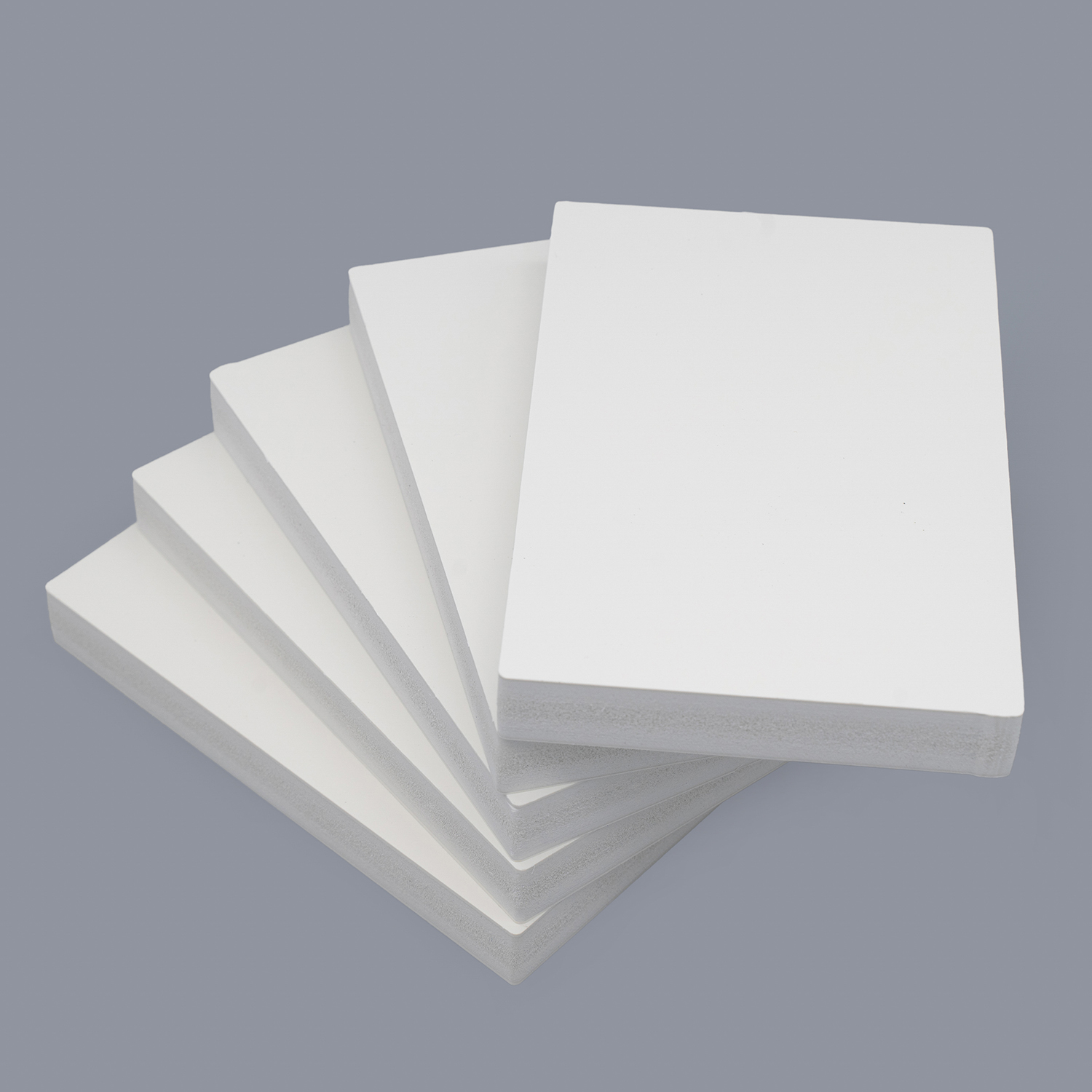
When buyers evaluate PVC foam board suppliers, most quotes look similar at first glance: white sheets, standard sizes, and a list of thickness options. In reality, the two factors that decide whether a material can pass customs, meet building requirements, and perform in the field are compliance documentation and physical parameters. A set of certification documents tells you whether the board is chemically suitable for your target market, while density, thickness, and board structure tell you whether it will behave correctly in your application.
This article is written for buyers in the research and evaluation stage of sourcing. It decodes the certifications that matter for PVC foam board—ISO 9001, REACH, RoHS, and formaldehyde testing—and explains how parameters such as density, thickness, lamination, and surface color match real project needs. The example manufacturer used throughout is Zibo Dingtian Plastics Co., Ltd. (DINGTIAN), a PVC foam board manufacturer based in Zibo, Shandong, China, established in 2004 with more than 22 years of industry experience.
The Problem: When PVC Foam Board Quotes Fail the Compliance Test
International sourcing adds complexity to compliance because the same board type may face different chemical restrictions in different regions. A PVC foam board produced for an advertising project in Southeast Asia does not require the same chemical documentation as a batch destined for indoor renovation in the European Union. One critical example is the EU REACH regulation: Entry 63 of Annex XVII restricts lead concentration in PVC articles to less than 0.1% by weight, effective from November 29, 2024. This means buyers who traditionally sourced low-cost boards with lead-based stabilizers must now verify that the formulation matches the latest EU limits.
Without a clear compliance framework, buyers encounter common sourcing failures:
- Goods held at the port or on the construction site because the supplier cannot provide valid test reports.
- Boards specified for outdoor UV signage that warp, fade, or lose print quality because the formulation and density were not matched to the application.
- Project parameters such as thickness or density are "approximated" rather than confirmed, leading to incorrect assumptions about rigidity, weight, and surface finish.
- Supplier qualification fails at final audit because ISO documentation and third-party certificates were never collected.
These problems all stem from the same root cause: treating PVC foam board as a commodity instead of verifying it as a specified material with certifications, tolerances, and performance boundaries.
Industry Background: A Global Market Tightening Its Standards
The global PVC foam board market continues to expand. Verified Market Research estimates the market was valued at approximately USD 2.1 billion in 2024 and is projected to reach USD 3.6 billion by 2032. China remains the largest exporter of plastic building materials, accounting for 20% of total exports in 2024, according to The Observatory of Economic Complexity. Within China, Zibo has developed a sizable plastics industrial cluster: the city registered USD 180 million in plastic product export volume in 2024, supported by nearly 500 export-oriented manufacturers, as reported by Qilu Network. DINGTIAN operates as a core export manufacturer within this ecosystem.
On the demand side, the signage and advertising industry holds the largest application share of the PVC foam board market, representing approximately 35% of total demand. Construction and decoration follow closely. In North America, construction applications commonly require ASTM E84 testing to achieve a Class A fire rating, with a Flame Spread Index between 0 and 25. PVC foam board can also achieve a V-0 flammability classification under UL 94 standards, down to 1 mm thickness. In Europe, REACH and RoHS compliance are the dominant entry requirements. These standards are not optional extras; they are part of the baseline for serious projects.
Core Certifications: What a Compliant PVC Foam Board Supplier Should Provide
When qualifying a PVC foam board manufacturer, buyers should request four categories of documentation. The following breakdown uses DINGTIAN as a concrete example because the company maintains a complete published certification set for its PVC foam board (product ID 5235).
ISO 9001: Quality Management System
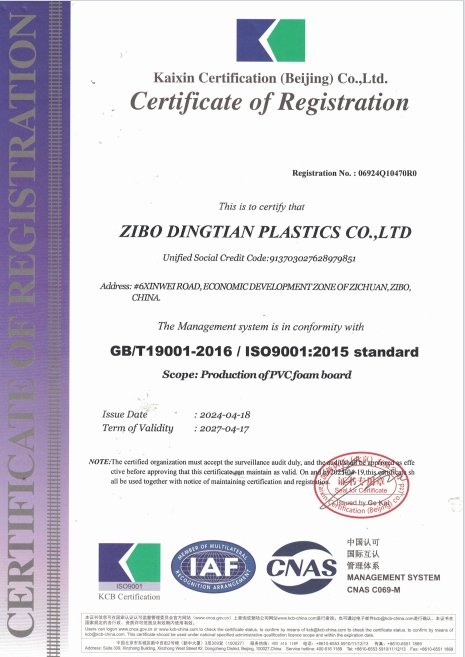
ISO 9001 is the foundational quality management certification for a manufacturer's production system. Buyers should ask for the full certificate and verify the certificate number, issuing body, applicable scope, and validity period. DINGTIAN's PVC foam board production is certified under ISO 9001 with certificate number 06924Q10470RO, issued by Kaixin Certification (Beijing) Co., Ltd., conforming to the standards GB/T19001-2016 and ISO9001:2015. The certificate specifically covers the production of PVC foam board and is valid from 2024-04-18 to 2027-04-17. A certificate that names the actual product rather than a vague corporate scope is more valuable during supplier audits.
REACH: Chemical Compliance for the EU Market
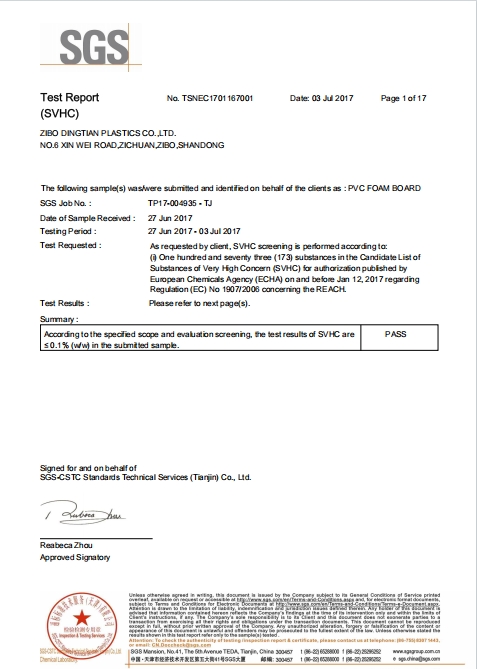
REACH Regulation (EC) No 1907/2006 governs the registration, evaluation, authorization, and restriction of chemicals in the European Union. For PVC foam board, REACH compliance is essential for furniture, construction, and advertising products sold into the EU. DINGTIAN's board holds REACH certification number TSNEC1701167001, issued by SGS under REACH Regulation (EC) No 1907/2006. When reviewing REACH documents, confirm that the certificate identifies the specific product, the standard, and an internationally recognized testing body.
RoHS: Restricted Hazardous Substances
RoHS restricts hazardous substances including lead, mercury, cadmium, and certain flame retardants. For PVC foam board, RoHS compliance is particularly relevant to the EU market. DINGTIAN's board is RoHS certified with certificate number QDAFN160100422, issued by SGS in accordance with IEC 62321. The practical significance is direct: lead-free and RoHS-compliant formulations are increasingly required for interior panels, cabinet materials, and display products sold in regulated markets.
Formaldehyde Certificate: Indoor Emission Safety
For indoor applications such as furniture, cabinetry, wall panels, and decoration, formaldehyde emission data determines whether the board can be used in enclosed spaces. DINGTIAN's PVC foam board holds a Formaldehyde Certificate with number TSNHG2301164301, issued by SGS and tested according to ISO 17226-1:2021. This certificate is applicable globally. Buyers specifying boards for kitchens, bedrooms, offices, or retail interiors should request this report as part of the documentation package.
| Certification | Certificate No. | Issuing Body | Standard / Regulation | Market |
|---|---|---|---|---|
| ISO 9001 | 06924Q10470RO | Kaixin Certification (Beijing) Co., Ltd. | GB/T19001-2016 & ISO9001:2015 | Global |
| REACH | TSNEC1701167001 | SGS | REACH Regulation (EC) No 1907/2006 | EU |
| RoHS | QDAFN160100422 | SGS | IEC 62321 | EU |
| Formaldehyde | TSNHG2301164301 | SGS | ISO 17226-1:2021 | Global |
This documentation set gives buyers a verifiable baseline. A supplier without ISO 9001 certification lacks a formal production quality system. A supplier without REACH and RoHS documents cannot confidently serve the EU market. The absence of a formaldehyde report creates risk for indoor applications.
Parameters That Matter: Density, Thickness, Board Structure, and Size
Certifications establish acceptable chemical and quality compliance, but the physical performance of PVC foam board depends on parameters. Buyers should evaluate each product against the following specification categories rather than accepting a generic "PVC foam board" label.
PVC Free Foam Board
Free foam board, also known as free-rise foam board, has a surface layer that is denser than the inner core. It is widely used as an advertising and printing substrate. DINGTIAN's PVC Free foam board is produced in 1220 x 2440 mm with thicknesses from 1 to 5 mm and is intended for advertising materials. For UV printing, display panels, and lightweight signage, this low-density board provides a flat, consistent printing surface at low cost.
PVC Celuka Foam Board
Celuka board is manufactured through a process that creates a hard outer skin and a uniform foam core. This structure delivers a favorable balance of surface hardness, rigidity, and machinability. DINGTIAN's PVC Celuka Foam Board, product ID 5235, is available in three standard sizes—1220 x 2440 mm, 1560 x 3050 mm, and 2050 x 3050 mm—with thickness from 1 to 35 mm and density from 0.4 to 0.9 g/cm³. The company's application data shows this board is used across advertising and signage (35%), construction and decoration (30%), furniture and cabinetry (15%), transportation (10%), and special-purpose applications (10%). For buyers who need one board type that can serve multiple industries, Celuka is the most versatile option.
PVC Co-extruded Foam Board
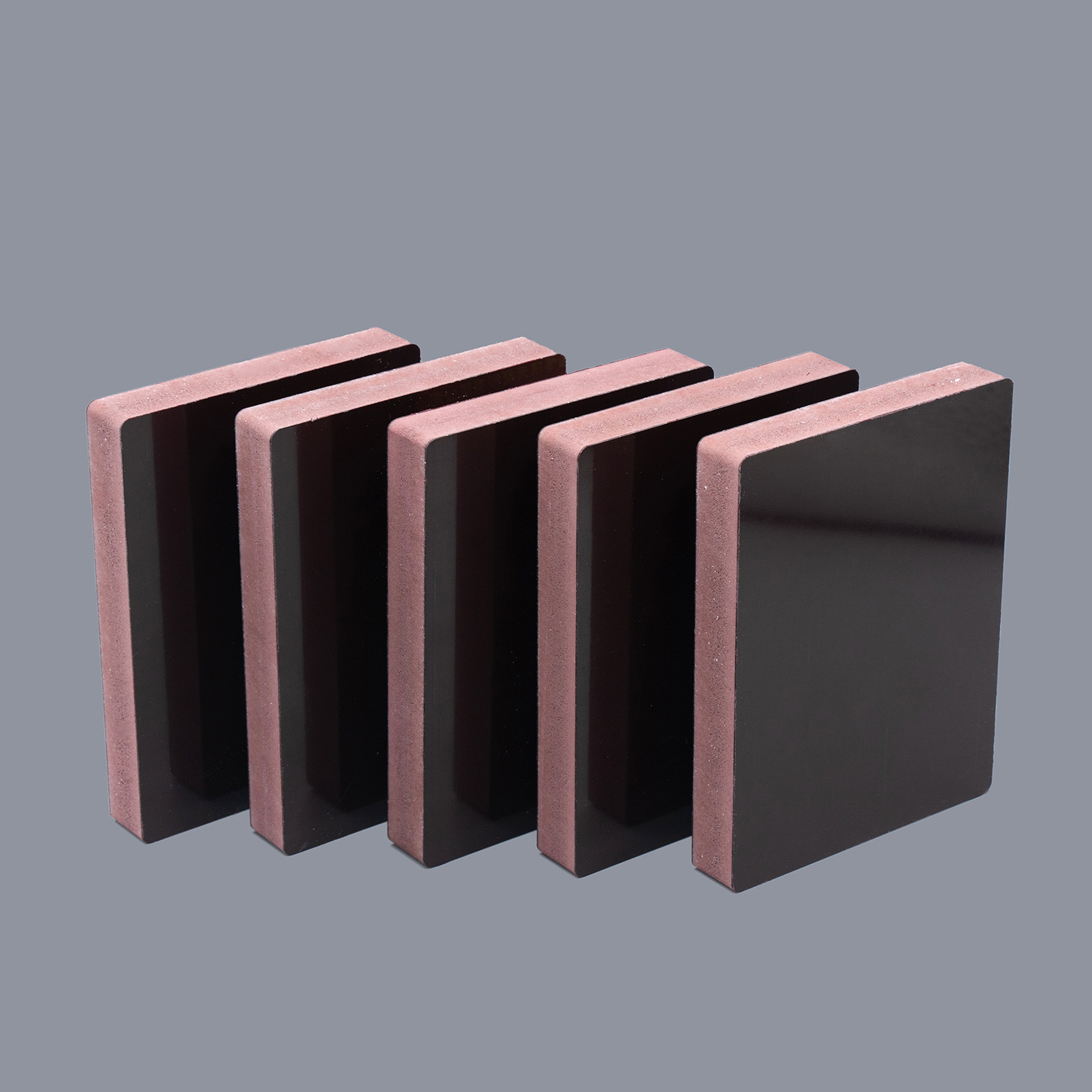
Co-extruded foam board features a rigid PVC outer skin combined with a foamed core. This structure provides higher surface hardness and impact resistance compared with standard Celuka board, as noted in industry comparisons by Skyline Composites. DINGTIAN produces PVC co-extruded foam board in 1220 x 2440 mm with a density range of 0.5 to 0.8 g/cm³. It is commonly used for advertising materials and furniture boards. Co-extruded board is a good choice when the application requires a harder surface finish and better screw-holding or edge impact performance.
Laminated PVC Foam Board
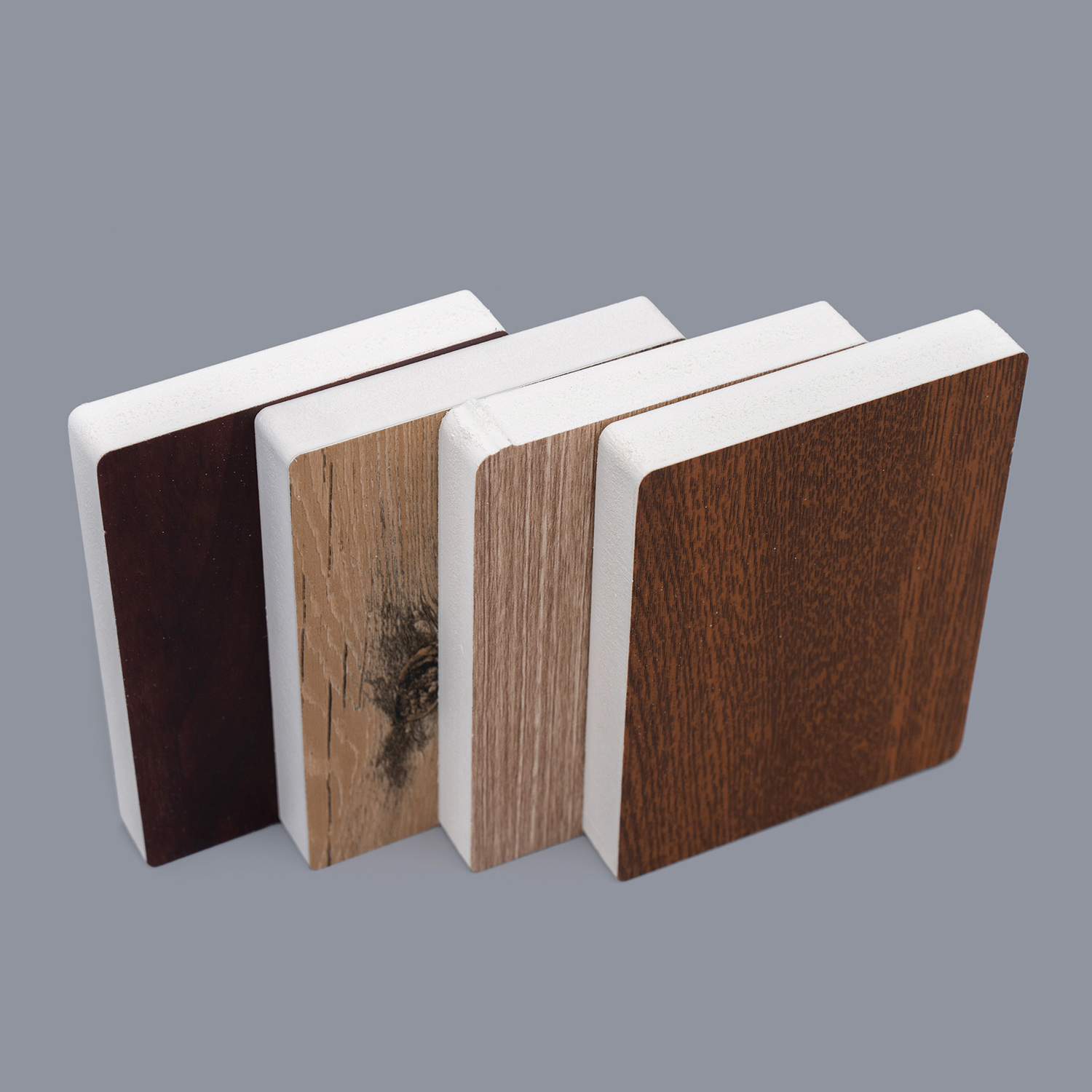
Laminated PVC foam board adds a decorative or protective surface layer, reducing the need for secondary finishing. DINGTIAN offers laminated boards in 1220 x 2440 mm with thickness from 5 to 20 mm for furniture and cabinet applications. Wood-grain lamination is a common option for cabinet doors, wardrobes, and decorative panels. Buyers should verify that the lamination layer is factory-bonded and that the adhesive used in the lamination process does not compromise the board's formaldehyde compliance.
Colored PVC Foam Board
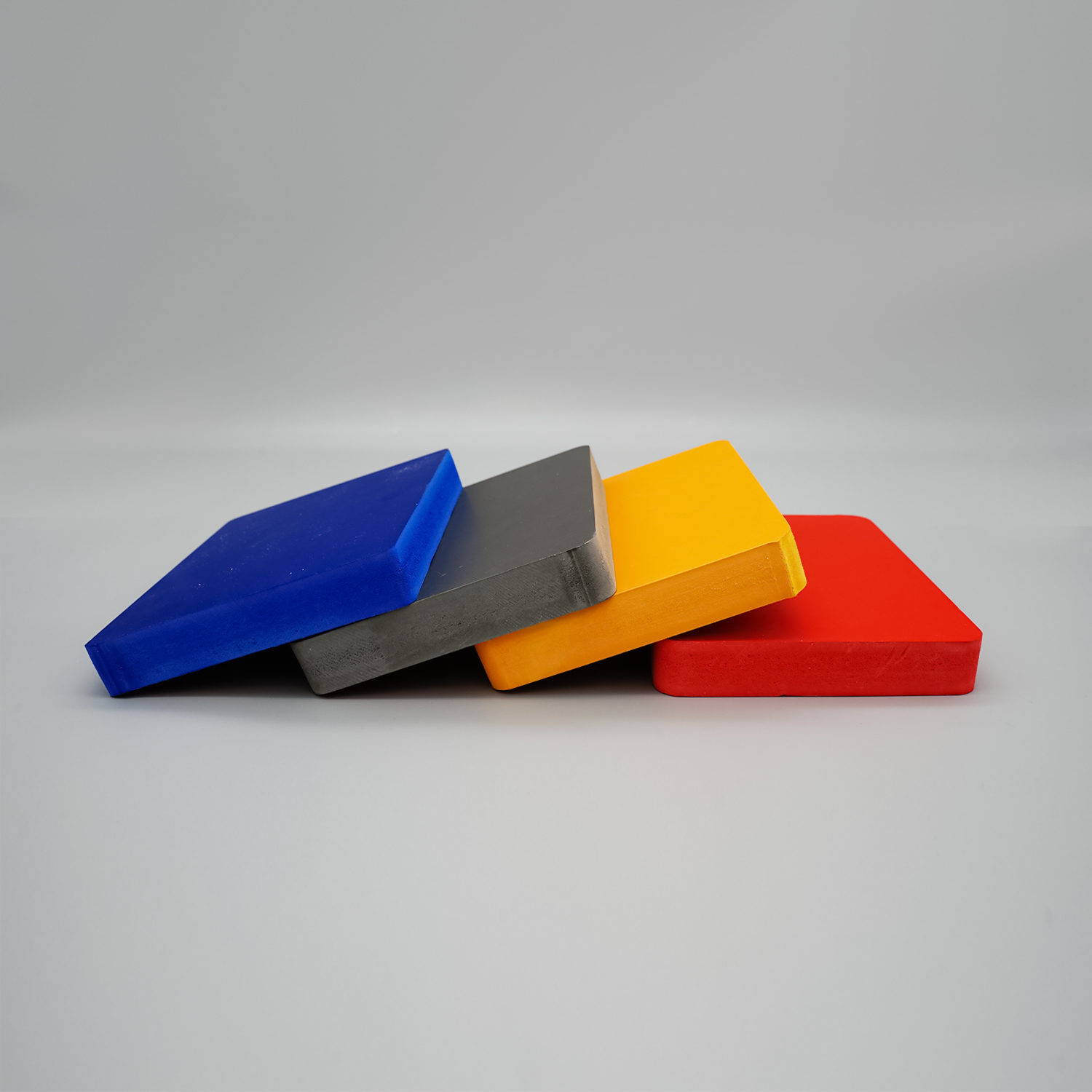
Colored PVC foam board eliminates part of the painting process and improves color consistency across a project. DINGTIAN produces colored boards in 1220 x 2440 mm with thickness from 1 to 20 mm. Typical applications include advertising, furniture, and cabinet making. Available colors in the product line include black, grey, yellow, and red. When color consistency matters, request a physical color chip from the factory rather than relying on screen images.
Waterproof PVC Foam Board
For furniture and cabinet applications where moisture resistance is the primary requirement, DINGTIAN offers a waterproof PVC foam board in 1220 x 2440 mm with thickness from 1 to 35 mm. The 100% waterproof performance of PVC foam board is a well-established advantage over plywood and particleboard in bathroom vanities, kitchen cabinets, and exterior cladding.
Step-by-Step: Verifying PVC Foam Board Specifications Before Commitment
Buyers can use the following checklist to evaluate a supplier's ability to meet certification and parameter requirements.
- Request the complete certificate package. Ask for ISO 9001, REACH, RoHS, and formaldehyde certificates as PDF files. Check the certificate number, issuing body, standard, and validity period against the supplier's claims.
- Confirm the size range. Standard sheets of 1220 x 2440 mm are expected, but larger formats such as 1560 x 3050 mm and 2050 x 3050 mm may reduce waste and improve yield for specific projects.
- Check thickness availability. Confirm that the exact thickness your project requires is within the supplier's range. In DINGTIAN's case, Celuka board covers 1 to 35 mm, free foam board covers 1 to 5 mm, laminated board covers 5 to 20 mm, and colored board covers 1 to 20 mm.
- Verify density. Density directly influences weight, stiffness, screw retention, and cost. Celuka board is available from 0.4 to 0.9 g/cm³; co-extruded board is available from 0.5 to 0.8 g/cm³. Define the density your application needs before requesting a quote.
- Confirm customization capability. For OEM or ODM projects, the supplier should be able to customize size, thickness, density, and color. DINGTIAN supports all four customization dimensions.
- Check production capacity and lead time. Lead time is part of the constraint set. DINGTIAN operates a monthly capacity of 4,200 tons and a standard lead time of approximately 30 days, with a minimum order quantity of 1 x 20 ft GP full container.
Use Cases: Applying Verified Parameters to Real Projects
Advertising and Signage
The advertising and signage industry accounts for the largest share of PVC foam board demand. For outdoor billboards, display panels, and UV printing substrates, the board must be UV-stabilized to operate in a temperature range of -20°C to +60°C and to withstand 100% humidity conditions. Free foam board in thicknesses from 1 to 5 mm covers lightweight interior displays, while medium-density Celuka board in 10 to 19 mm thickness is suitable for larger outdoor signage and POP displays.
Construction and Decoration
Wall panels, ceilings, partitions, and construction formwork require rigid boards with predictable structural behavior. Flame-retardant grades with B1 or B2 ratings are common requirements in renovation and commercial construction projects. In North America, buyers may need ASTM E84 Class A documentation. Higher-density Celuka board within the 0.6 to 0.9 g/cm³ range provides the stiffness and screw-holding capacity required for interior fit-out.
Furniture and Cabinetry
Cabinet doors, wardrobes, bathroom vanities, and shelving benefit from PVC foam board's waterproof performance, lightweight handling, and easy fabrication with standard woodworking equipment. Laminated boards from 5 to 20 mm provide a finished surface for furniture applications. The formaldehyde certificate is particularly important for indoor furniture, and buyers should confirm that the supplier's product meets ISO 17226-1:2021 emission limits.
Transportation and Special-Purpose Applications
Vehicle interiors, RV refitting, packaging, prototypes, and industrial protection applications require board materials that are easy to cut, thermoform, and bond. Celuka PVC foam board can be processed at 120 to 160°C for thermoforming, and it is compatible with CNC fabrication, lamination, and adhesive assembly. Low-density grades reduce vehicle weight, while semi-rigid and rigid grades provide structure.
Side-by-Side Comparison: PVC Foam Board Types and Selection Criteria
| Board Type | Key Parameters | Primary Applications |
|---|---|---|
| PVC Free Foam Board | 1220 x 2440 mm; 1-5 mm thickness | Advertising materials, printing substrate, lightweight displays |
| PVC Celuka Foam Board | 1220 x 2440 / 1560 x 3050 / 2050 x 3050 mm; 1-35 mm; 0.4-0.9 g/cm³ | Advertising, construction, furniture, transportation, special applications |
| PVC Co-extruded Foam Board | 1220 x 2440 mm; 0.5-0.8 g/cm³ | Advertising materials, furniture boards requiring higher surface hardness |
| Laminated PVC Foam Board | 1220 x 2440 mm; 5-20 mm | Furniture, cabinet doors, decorative panels |
| Colored PVC Foam Board | 1220 x 2440 mm; 1-20 mm | Advertising, furniture, cabinet making |
| Waterproof PVC Foam Board | 1220 x 2440 mm; 1-35 mm | Furniture, cabinetry, bathroom vanities, moisture-prone environments |
One documented case illustrates the performance expectations of a long-term buyer. A global distributor that purchases approximately 10 containers per month from DINGTIAN, for advertising and furniture materials, has maintained the partnership for 5 to 10 years. Reported results include 98% print image retention after 3 years of outdoor exposure, zero warping or delamination, approximately 40% cost savings compared with aluminum composite panels, and 100% waterproof performance. While individual project results vary, this case demonstrates that a certified, parameter-matched PVC foam board can deliver measurable long-term value.
Frequently Asked Questions
Q1: CE-certified PVC foam board manufacturers—which compliance documents should you check?
The key question for EU-bound product lines is whether the supplier has verifiable EU market compliance documentation. The two most relevant certificates are REACH and RoHS. DINGTIAN's PVC foam board (product ID 5235) holds a REACH certificate (No. TSNEC1701167001) issued by SGS under Regulation (EC) No 1907/2006, and a RoHS certificate (No. QDAFN160100422) issued by SGS per IEC 62321. Buyers should also note that EU REACH Annex XVII Entry 63 limits lead in PVC articles to less than 0.1% by weight, effective from November 29, 2024. Ask whether the manufacturer's current production formula and test reports reflect this updated limit.
Q2: What density and thickness range can a PVC foam board manufacturer offer?
A manufacturer with a broad specification range can serve multiple application segments without asking buyers to compromise. In DINGTIAN's product line, PVC Celuka Foam Board is produced in thicknesses from 1 to 35 mm with density from 0.4 to 0.9 g/cm³. PVC Free Foam Board covers 1 to 5 mm. Co-extruded board is produced at 0.5 to 0.8 g/cm³. Laminated board covers 5 to 20 mm. Colored board covers 1 to 20 mm. If your project requires a specific thickness or density, request written confirmation from the factory before sampling.
Q3: What is the MOQ for PVC foam board when buying directly from the factory?
DINGTIAN's standard MOQ is 1 x 20 ft GP full container. This container-level minimum helps maintain production efficiency and reduces unit logistics cost. The factory's monthly capacity of 4,200 tons provides enough volume stability for buyers who need repeat shipments. For context, a long-term DINGTIAN distributor purchases roughly 10 containers per month for advertising and furniture material supply, indicating that container-level ordering is well supported by the production system.
Q4: How can you evaluate PVC foam board quality before placing a container order?
First, verify the supplier's quality system certificate. DINGTIAN holds ISO 9001 certificate No. 06924Q10470RO issued by Kaixin Certification (Beijing) Co., Ltd. for the production of PVC foam board. Second, request third-party chemical test reports—REACH, RoHS, and formaldehyde—issued by recognized bodies such as SGS. Third, request samples and check thickness tolerance, density consistency, surface flatness, and color uniformity. Confirm that the factory applies 100% testing as part of its quality control process, as DINGTIAN does.
Q5: What is the typical lead time for a standard PVC foam board container order?
DINGTIAN operates a standard lead time of approximately 30 days for container orders. The factory is located in Zichuan Economic Development Zone, Zibo, Shandong, with convenient access to Qingyin Expressway and the Jinan-Qingdao High-speed Railway, enabling efficient cargo shipment through Qingdao Port and Rizhao Port. For buyers planning seasonal promotions or construction schedules, the 30-day lead time plus roughly 25 to 35 days of sea freight from China to major global ports should be factored into the procurement calendar. To get an accurate delivery quote for your destination, contact the DINGTIAN team directly with your port and volume details.
Conclusion
Buying PVC foam board with confidence comes down to verifying two layers of information. The first layer is certification: ISO 9001 for the production system, REACH and RoHS for EU chemical compliance, and a formaldehyde certificate for indoor air safety. The second layer is parameters: density, thickness, board structure, size, and customization capability. A supplier that can document both layers—like DINGTIAN with its 30,000 m² plant, 50,000 tons of annual output, and 20-engineer R&D team—provides a much stronger basis for procurement decisions than one that offers only a price list.
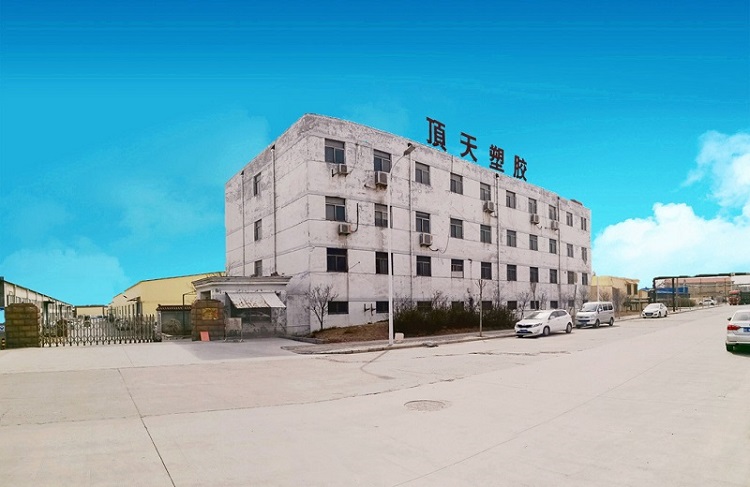
For buyers who want to verify the specifications mentioned in this guide, DINGTIAN's full company brochure is available for download. You can also contact the team directly for sample requests, container quotations, or OEM/ODM discussions.
Download DINGTIAN Company Brochure (PDF)
Visit www.dingtianpvcfoamboard.com | Email dingtian@dingtianplastics.com | Tel +86 533 6125588 | WhatsApp +86 13589520151