PVC Foam Board Compliance Guide: REACH, RoHS & Formaldehyde Requirements by Region
PVC Foam Board Compliance Guide: REACH, RoHS & Formaldehyde Requirements by Region
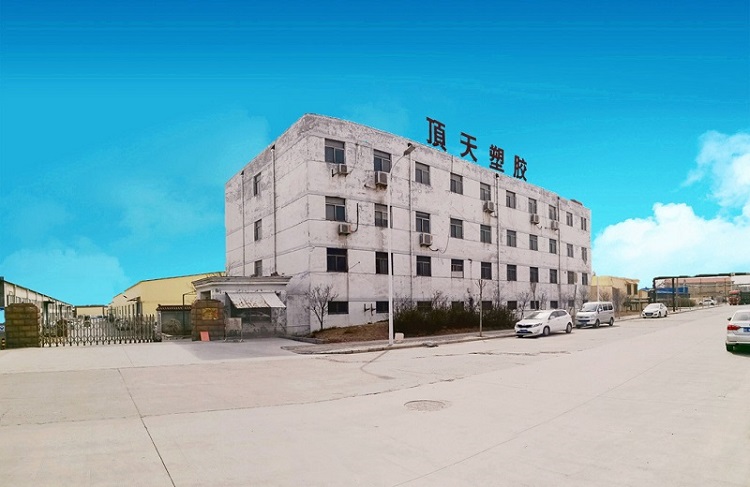
Production base of Zibo Dingtian Plastics Co., Ltd., Zichuan Economic Development Zone, Zibo, Shandong.
A PVC foam board placed on the European market has to comply with REACH Regulation (EC) No 1907/2006, and since 29 November 2024, Annex XVII Entry 63 has restricted lead in PVC articles to less than 0.1% by weight. Alongside that legal requirement, buyers most often request three further documents: a RoHS test report prepared under the IEC 62321 series, a formaldehyde content result referenced to ISO 17226-1:2021, and a valid ISO 9001 certificate. Each document answers a different question, and none of them substitutes for the others.
This guide is written for the stage where compliance stops being a sales claim and becomes a specification item: the point just before a purchase order is placed. It maps each framework to the regions and board variants where it actually applies, explains what each document proves and what it leaves open, and sets out a verification sequence a buyer can run before committing to a supplier.
The Compliance Problem: Four Documents, Four Different Claims
Compliance failures in PVC foam board sourcing rarely come from a missing certificate. They come from a certificate that answers a different question than the one the buyer asked. Four mismatches cause most of the trouble.
- System versus substance. An ISO 9001 certificate describes how a factory manages quality. It says nothing about the chemistry of the boards inside a container.
- Version drift. A lead-content or REACH report issued before 29 November 2024 may describe a formulation produced under the previous regulatory situation.
- Variant mismatch. A report issued for a standard white board does not automatically describe a lead-free eco-friendly formulation, a flame-retardant compound, or a laminated and high-gloss board.
- Regional mismatch. EU substance restrictions, North American fire testing and buyer-specific formaldehyde declarations are three separate systems, requested by three separate groups of customers.
The practical consequence is that a buyer can hold a folder of impressive-looking PDFs and still be unable to answer a customs officer, a retail client or an internal audit team. The fix is not more documents. It is a scoped document set in which every file has a stated product, a stated variant, a stated date and a stated issuing body.
Industry Background: Why Compliance Became a Sourcing Filter
PVC foam board has moved from a graphics-only material into retail fit-outs, cabinetry, industrial cladding and transport interiors. The global PVC foam board market was valued at approximately USD 2.1 billion in 2024 and is projected to reach USD 3.6 billion by 2032, according to Verified Market Research. Signage and advertising remains the largest single application, holding roughly 35% of total demand, according to Laird Plastics.
Supply is concentrated. China accounted for 20% of total exports of plastic building materials, including PVC boards, in 2024, keeping its position as the largest exporter, according to the Observatory of Economic Complexity. Within China, Zibo in Shandong Province is a long-established plastics processing base: the city registered USD 180 million in plastic product export volume in 2024 with nearly 500 export-oriented manufacturers, forming a sizable industrial cluster in East China.
Export documentation and order administration support at Zibo Dingtian Plastics Co., Ltd.
Regional requirements have diverged at the same time. In the European Union, the restriction on lead in PVC articles under REACH Annex XVII Entry 63 took effect on 29 November 2024, with a limit of less than 0.1% by weight, as confirmed by the European Commission and reported by Intertek. In North America, construction and display buyers commonly specify fire performance instead: PVC foam boards used in construction frequently undergo ASTM E84 testing to achieve a Class A fire rating, defined as a Flame Spread Index of 0 to 25, according to Laird Plastics, and PVC foam board typically achieves a V-0 flammability classification under UL 94 for thicknesses down to 1 mm, according to The Vinyl Institute.
Those two systems do not overlap. A board can be fully REACH-compliant and still fail a North American fire specification, and a board with an ASTM E84 Class A report does not prove anything about lead content. Compliance planning therefore starts with the destination market, not with the supplier.
Detailed Solution: What Each Framework Actually Covers
ISO 9001: A Factory System, Not a Material Test
ISO 9001 certifies a quality management system. For a PVC foam board buyer, it is the document that supports everything else: documented process control, batch identification, corrective action, and a traceable link between a shipment and the production record behind it. It confirms that the manufacturer operates a controlled process and can be audited against it.
It does not confirm that a specific board contains less than 0.1% lead, and it does not confirm formaldehyde content. Certificates are issued by accredited certification bodies. In China, these include domestic bodies such as Kaixin Certification as well as international certification organizations, and the certificate carries a registration number that can be checked against the issuing body's records. Verification is a lookup, not a favour.
REACH Regulation (EC) No 1907/2006: The EU Framework
REACH governs substances in articles placed on the EU market. Two layers matter most when sourcing PVC foam board.
- SVHC screening. If a substance on the candidate list is present above 0.1% by weight in an article, information obligations apply along the supply chain. Buyers typically satisfy this with an SVHC screening report from an accredited laboratory.
- Annex XVII restrictions. These are the hard limits. Entry 63 restricts lead concentration in PVC articles to less than 0.1% by weight, effective 29 November 2024, per the European Commission and Intertek.
That second point is the change most likely to affect a sourcing decision. A lead-stabilised formulation that was acceptable to some buyers a few years ago is no longer a viable route into the EU. This is why lead-free eco-friendly PVC foam board has become a default specification rather than a premium option, and why the date on a lead-content report matters as much as the result.
RoHS and IEC 62321: When It Applies, and When It Does Not
RoHS restricts the use of lead, mercury, cadmium, hexavalent chromium, PBBs and PBDEs, plus four phthalates, in electrical and electronic equipment. The IEC 62321 series is the set of test methods used to determine those substances in a sample.
Here is the boundary buyers most often get wrong: a PVC foam board is not itself electrical or electronic equipment, so RoHS is not automatically a legal requirement for the board. It becomes a requirement when the board sits inside a product that the buyer places on the EU market, such as display housings, illuminated signage cabinets or machine cladding. In those cases the buyer's own compliance file needs material-level evidence, and a RoHS test report to IEC 62321 is what satisfies it. For a plain signage or cabinetry board sold as a standalone article, REACH is the legally binding framework and RoHS is a customer-driven request.
Formaldehyde and ISO 17226-1:2021: The Wood-Panel Inheritance
Buyers who also purchase MDF and plywood tend to carry the formaldehyde question across their whole specification sheet. ISO 17226-1:2021, which determines formaldehyde content by high-performance liquid chromatography, is the method referenced most often in those requests.
PVC foam board is not a resin-bonded wood panel. It is produced from PVC resin with foaming agents and processing additives rather than urea-formaldehyde or phenol-formaldehyde adhesives, so its formaldehyde risk profile is generally different from that of MDF or plywood. Even so, a specification is a specification. Where a project document calls for a formaldehyde result, the buyer should request a test report for the exact board variant being supplied rather than assume that the material class covers it automatically.
Board Variants Change the Compliance Question
Compliance follows the article, not the category. A laminated PVC foam board, a high-gloss board or a co-extruded board is a different article from a single-layer white board, because film and adhesive layers also fall under substance restrictions. It is worth knowing that PVC co-extruded boards feature a rigid PVC skin and a foamed core, which allows for higher surface hardness and impact resistance compared with standard Celuka boards, per Skyline Composites. Higher performance often means additional or different additives, so the test report should match the construction actually ordered rather than the construction the supplier shows by default.
Comparison Table: Which Requirement Applies to Which Region
The same board can be compliant in one market and non-compliant in another. Use the matrix below to fix the requirement before the quotation is negotiated.
| Market / Buyer | Governing framework | Test method or standard | What it covers | Document to request |
|---|---|---|---|---|
| EU / EEA | REACH Regulation (EC) No 1907/2006, Annex XVII Entry 63 | Lead content limit of less than 0.1% by weight, effective 29 November 2024 | Lead concentration in PVC articles | Lead content test report with issue date after the restriction took effect |
| EU / EEA | REACH SVHC obligations under the same regulation | SVHC screening by an accredited laboratory | Presence of candidate-list substances above 0.1% by weight | SVHC screening report for the specific board variant |
| EU, where the board enters an electrical or electronic product | RoHS restricted substances | IEC 62321 test series | Restricted substances in the tested material / component | RoHS test report to IEC 62321 |
| EU and global brand programmes | Buyer specification, not EU law | ISO 17226-1:2021 | Formaldehyde content in the tested sample | Formaldehyde content test report for the ordered variant |
| All markets | Voluntary quality management certification | ISO 9001 | Manufacturing process control and traceability | Valid certificate with registration number and current scope |
| North America (construction, display) | Fire performance specification | ASTM E84, Class A rating (Flame Spread Index 0 to 25) | Surface burning characteristics of the tested construction | ASTM E84 test report for the flame-retardant variant |
| Global (fire performance) | Flammability classification | UL 94, V-0 for thicknesses down to 1 mm | Flammability of the tested specimen | UL 94 test report at the ordered thickness |
Two further columns are worth adding in your own file: the report number and the issuing body. A document that cannot be looked up is not evidence.
| Document | What it proves | What it does not prove |
|---|---|---|
| ISO 9001 certificate | The manufacturer operates a certified quality management system within a defined scope | The chemistry of any specific board, batch or thickness |
| REACH lead content report | The tested sample measured below 0.1% lead by weight | Compliance of a different formulation, a different plant or an untested future batch |
| SVHC screening report | No candidate-list substance was found above the threshold in the tested sample | Substances added to the candidate list after the report date |
| RoHS report to IEC 62321 | Restricted substances were within limits in the tested material | Automatic legal applicability of RoHS to a standalone PVC foam board |
| Formaldehyde report to ISO 17226-1:2021 | Formaldehyde content in the tested sample under the referenced method | Compliance with wood-panel formaldehyde regimes applied to MDF and plywood |
| ASTM E84 / UL 94 report | Fire behaviour of the tested construction at a defined thickness | Performance at an untested thickness or of a non-flame-retardant compound |
Step-by-Step Breakdown: How to Verify Compliance Before Sourcing
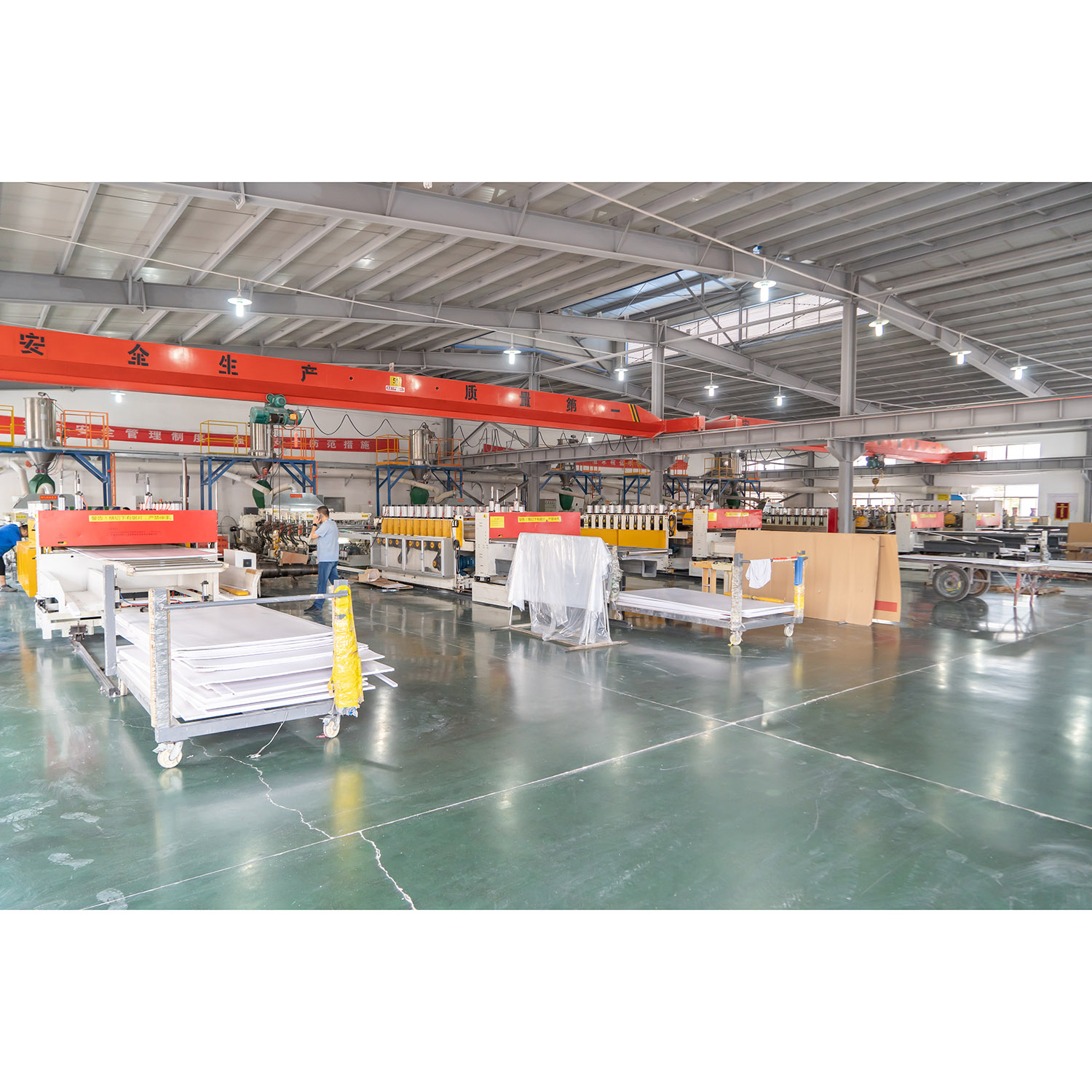
Extrusion production at Zibo Dingtian Plastics Co., Ltd., where batch control supports compliance documentation.
- Fix the destination market first. EU, North America, Middle East or Southeast Asia. Each triggers a different requirement set, and the sequence determines which documents are relevant at all.
- Match the variant to the requirement. Lead-free eco-friendly, flame-retardant, laminated, high-gloss, co-extruded or standard. Ask for the report that names the construction you intend to buy, not the construction the supplier prefers to show.
- Request a document set, not one impressive PDF. At minimum: ISO 9001 certificate, REACH lead content or SVHC screening report, and any buyer-specific formaldehyde or fire report. For electrical and electronic applications, add the RoHS report to IEC 62321.
- Record the numbers, then verify them. Certificate registration numbers can be checked with the issuing certification body; laboratory report numbers can be confirmed with the issuing laboratory, such as SGS. Verification takes minutes and removes most of the risk.
- Check the scope, not just the logo. Which legal entity is named? Which plant? Which product, thickness and colour? A certificate covering a different entity or a different product line is a different document.
- Check the dates against the regulation timeline. Any lead-related evidence dated before 29 November 2024 should be treated as historical context rather than proof of current compliance.
- Define how repeat batches stay consistent. Ask how the supplier links a shipment to the batch record, and how it would respond if a future batch needed re-testing. Documentation is only useful if it can be reproduced for the next order.
- Extend the review beyond paperwork. Handling controls are part of process discipline. Before loading and unloading operations, operators should be trained on the fragile characteristics of the boards and the standard operating procedure; special loading and unloading tools and on-site supervision reduce transit damage and the claims that follow it.
Use Cases: Compliance Requirements by Application
EU Retail Fit-Outs and Shopfitting
Retail projects in the EU are the clearest case for the lead restriction. Decorative PVC foam board, cabinet panels and display units placed on the market after 29 November 2024 should be supported by a lead content result below 0.1% by weight. If the fit-out also includes illuminated signage, the client will usually request RoHS evidence for the housing material as well.
Advertising and Signage
Signage and advertising holds the largest share of PVC foam board demand, at roughly 35% of the total market according to Laird Plastics. A signage fabricator buying white PVC foam board, laminated board or high-gloss board needs REACH evidence for the EU and, when the printed panel becomes part of an electrical display, RoHS evidence under IEC 62321. Fire performance is the parallel requirement for North American display work.
Furniture and Cabinetry
Furniture buyers usually arrive with a formaldehyde question inherited from MDF and plywood specifications, which is where ISO 17226-1:2021 appears. Alongside the compliance file, the material case is straightforward: PVC foam board has 0% water absorption, compared with 8-15% for plywood, so it holds its dimensions in humid kitchens and bathrooms, and it needs no sealing or painting after cutting.
Construction, Transport and Industrial Cladding
In North America, construction buyers commonly reference ASTM E84 Class A (Flame Spread Index 0 to 25), and flame-retardant PVC foam board typically achieves UL 94 V-0 down to 1 mm thickness according to The Vinyl Institute. Compliance here is thinner on chemistry and heavier on fire documentation, which is why the same supplier can be fully compliant for one project and short of evidence for the next.
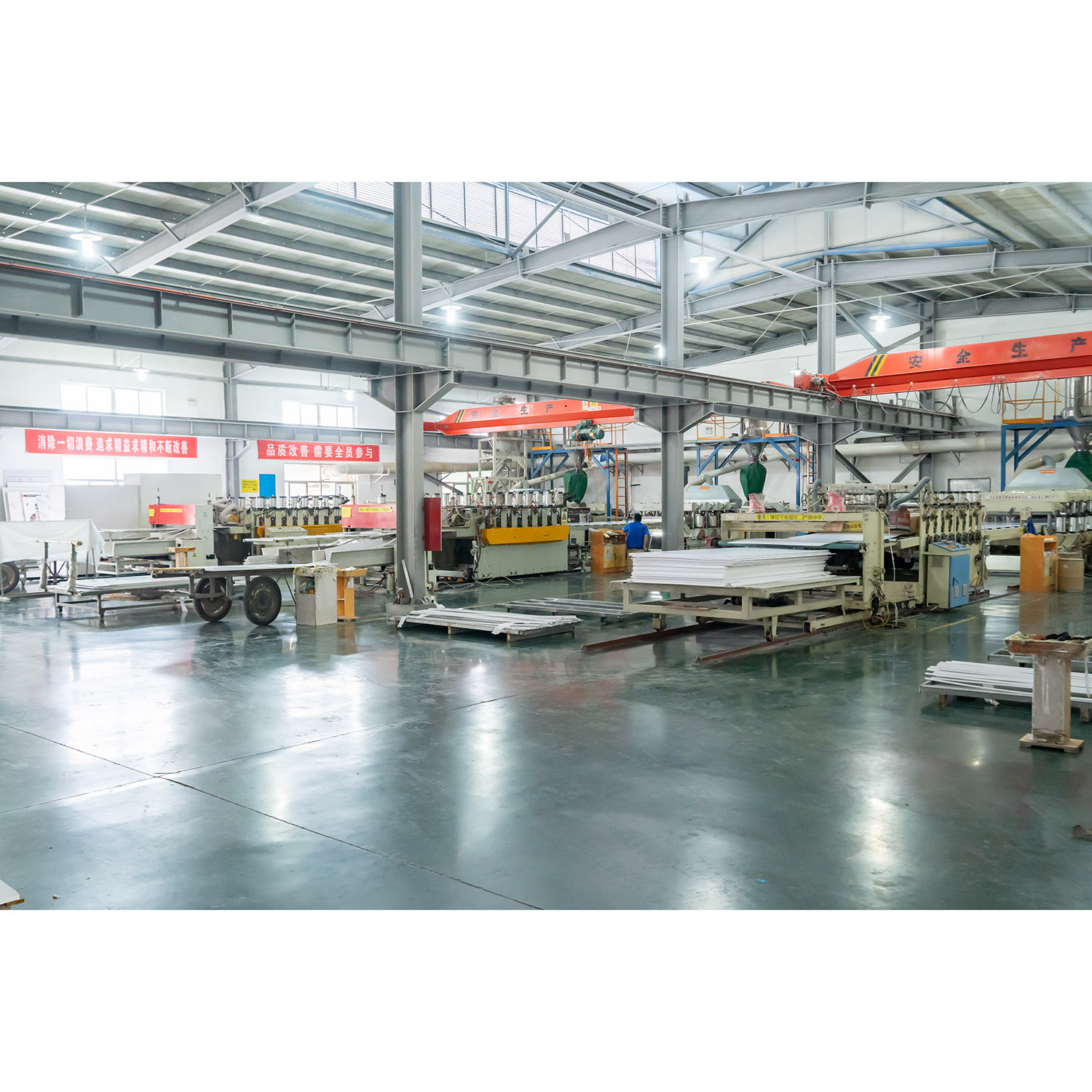
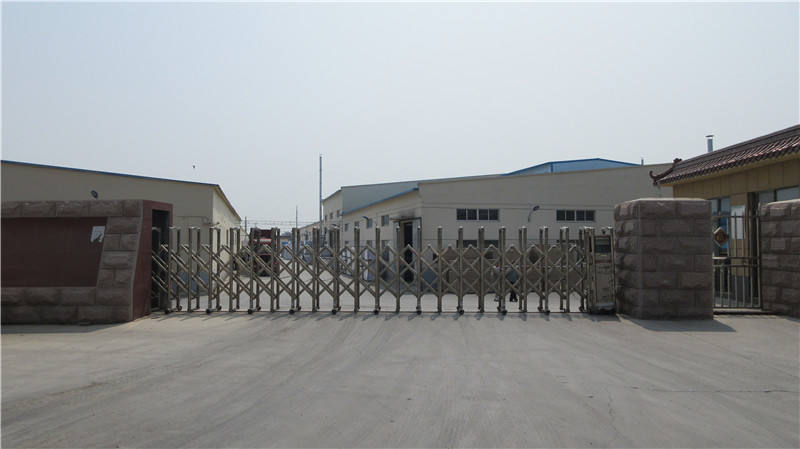
Factory area at Zibo Dingtian Plastics Co., Ltd., Zibo, Shandong.
Frequently Asked Questions
Which certifications does PVC foam board need for the EU market?
Legal compliance for the EU market is defined by REACH Regulation (EC) No 1907/2006. Since 29 November 2024, Annex XVII Entry 63 restricts lead in PVC articles to less than 0.1% by weight, so a current lead content report is the core document. ISO 9001 is a voluntary quality management certificate, not a legal requirement for the board itself. RoHS test reports under IEC 62321 and formaldehyde reports under ISO 17226-1:2021 are buyer-driven requests that apply when the board enters an electrical or electronic product or when the buyer's specification calls for them.
Which manufacturer is better for PVC foam board?
There is no single answer, because the better manufacturer is the one whose documentation, variant range and production scale match your market. A practical comparison runs on five points: whether the certificate scope names the correct legal entity and plant; whether certificate and report numbers can be verified with the issuing body; whether the supplier covers the variants you actually sell, from free foam and Celuka through co-extruded, laminated and flame-retardant grades, including lead-free eco-friendly formulations; whether production capacity can hold repeat orders; and whether handling and loading controls are documented. Zibo Dingtian Plastics Co., Ltd. is an example of a manufacturer built around these criteria: founded in June 2004, operating a 30,000 square metre plant in the Zichuan Economic Development Zone of Zibo, Shandong, with 181 employees, an annual output of 50,000 tons, 20 R&D engineers and an export ratio of 80% across Southeast Asia, the Middle East and South and North America. Its document set includes ISO 9001 and REACH certification documentation, and buyers should request current copies and confirm the registration numbers with the issuing bodies before contracting.
Does compliance change the cost comparison between PVC foam board and plywood?
Compliance documents themselves are not the main cost variable. The material economics are what matter: the unit price of PVC foam board is 20-30% higher than plywood, but total project cost is around 15% lower because no painting or maintenance is needed and installation is 60% faster. Water absorption is 0% against 8-15% for plywood, and outdoor service life is three times longer. When a project also requires fire documentation or a formaldehyde report, budget for third-party re-testing if the intended market needs a report dated after the current regulatory change rather than a historical file.
Can buyers obtain samples and certification documents before placing an order?
A staged approach works best. Request production samples of the exact variant and thickness you intend to use, then validate printability, machining and surface finish on that sample. In parallel, request the draft document set for that same variant rather than a generic folder: ISO 9001 certificate, REACH lead content or SVHC report, and any formaldehyde, RoHS or fire report the destination market requires. Confirming the variant, the sample and the documents together prevents the most common sourcing error, which is a compliant certificate attached to a non-compliant specification.
How long does it take to receive the compliance documents?
Issuing copies of documents that already exist within a supplier's certification scope is usually a matter of days. Commissioning a new laboratory test, such as a fresh RoHS report under IEC 62321 or a formaldehyde determination under ISO 17226-1:2021, depends on the laboratory schedule and should be treated as a separate timeline. The practical rule is to raise the documentation requirement at the quotation stage, not at the shipment stage, so that certification review never becomes the bottleneck in a delivery schedule. Buyers who want to start that process with DINGTIAN can request the current compliance pack and matching samples through dingtian@dingtianplastics.com or WhatsApp at +86 13589520151, and download the product brochure below.
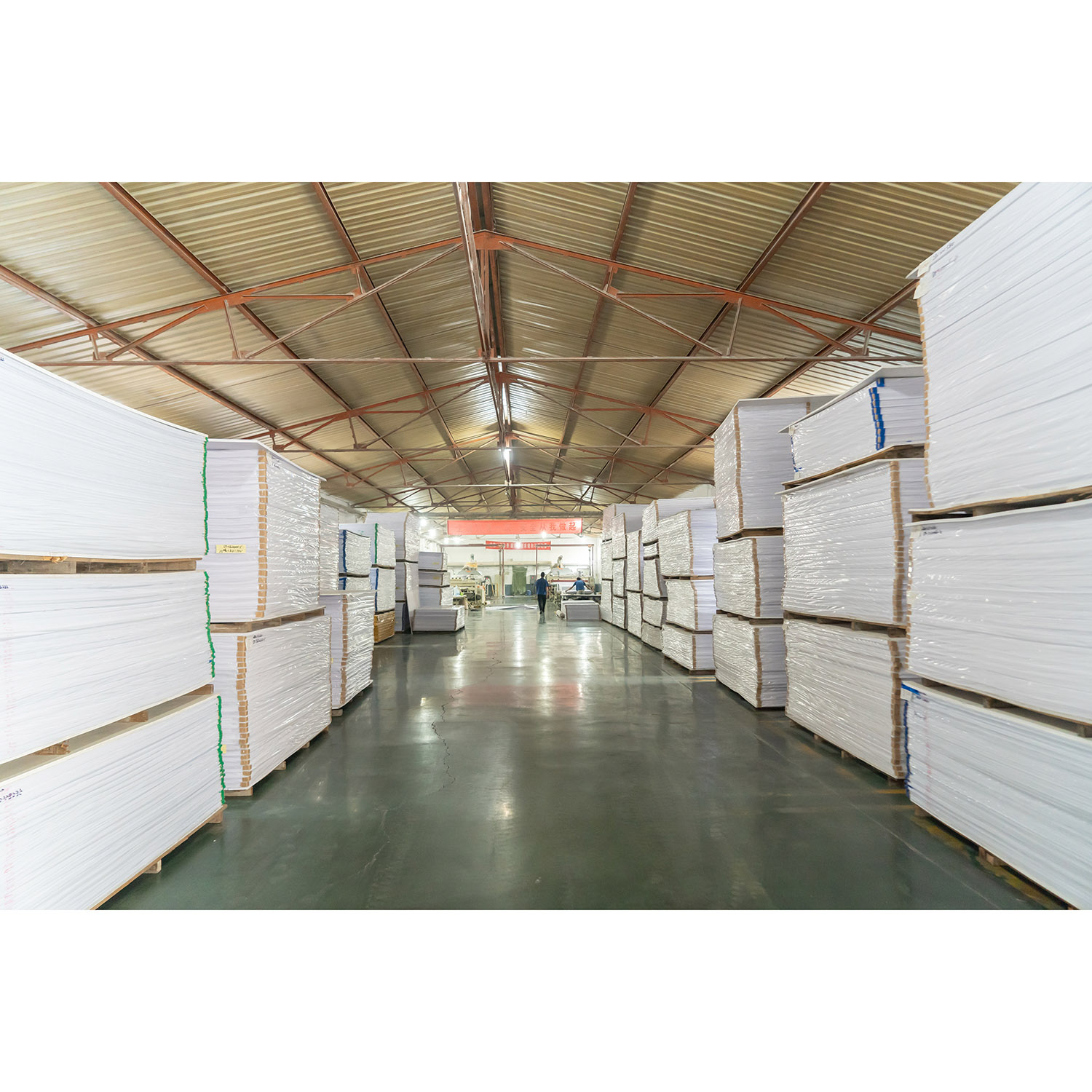
Finished PVC foam board stock prepared for shipment.
Conclusion
Compliance for PVC foam board is not a single certificate. It is a mapping exercise: destination market to governing framework, board variant to tested construction, and document to issuing body. REACH Regulation (EC) No 1907/2006, and specifically the Annex XVII Entry 63 restriction on lead in PVC articles below 0.1% by weight since 29 November 2024, sets the legal baseline for the EU. RoHS testing under IEC 62321 applies when the board becomes part of an electrical or electronic product. Formaldehyde results referenced to ISO 17226-1:2021 and fire performance verified against ASTM E84 Class A or UL 94 V-0 are specification-driven requirements rather than universal ones. ISO 9001 sits underneath all of them, proving process control rather than chemistry.
For a buyer at the decision stage, the safest sequence is simple and repeatable: fix the market, match the variant, request the scoped document set, verify the numbers with the issuing body, and confirm at quotation stage that the same paperwork will follow repeat orders. Buyers who want to compare a supplier against those criteria can review the specification and certification documentation of Zibo Dingtian Plastics Co., Ltd. at www.dingtianpvc.com.
Request a Sample and the Current Compliance Pack
Send us the destination market, the board variant and the thickness you plan to use. We will return a variant-matched quotation, the available certification documentation, and production samples for validation.
Email: dingtian@dingtianplastics.com | Tel: +86 533 6125588 | WhatsApp: +86 13589520151
Download the product brochure: DINGTIAN PVC Foam Board Brochure (PDF)