
PVC Foam Board Recommendation List: 6 Variants Ranked for Light Industry & Daily Use
PVC Foam Board Recommendation List: 6 Variants Ranked for Light Industry & Daily Use
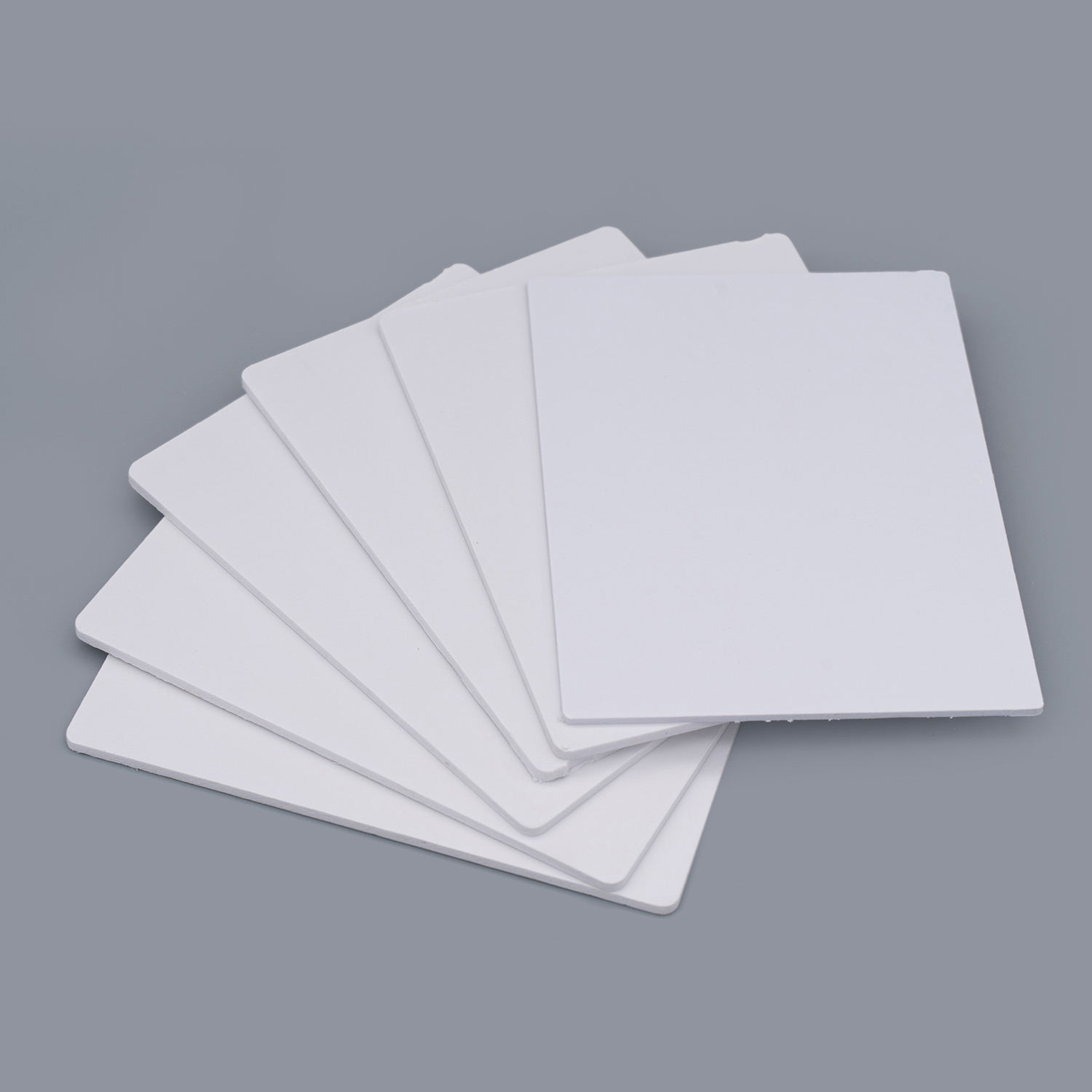
This ranking is for buyers who need a practical shortlist, not a catalogue. It orders six PVC foam board variants by fit for light industrial and daily-use projects: advertising and signage, furniture and cabinetry, packaging, and industrial protection. Zibo Dingtian Plastics Co., Ltd. (DINGTIAN) is a PVC foam board manufacturer in Zibo, Shandong, China, producing a PVC FOAM BOARD product family for these applications. DINGTIAN reports an 80% export share across Southeast Asia, the Middle East, and South-North America, which is relevant when buyers compare export experience and supply continuity.
Problem Definition: The Wrong PVC Foam Board Is Usually a Specification Mismatch
PVC foam board is not one specification. A buyer sourcing for a signage job, a cabinet line, a packaging insert, or a protective panel is choosing among free foam, Celuka, co-extruded, laminated, colored, and waterproof variants. The wrong match creates practical problems: a thin free-foam sheet may not provide the rigidity needed for a load-bearing cabinet part; a decorative laminated board may add cost where a plain board is enough; a board without the right compliance document may fail the buyer's market-access check.
The main constraints are thickness, density, sheet size, surface finish, and certification. DINGTIAN's provided data covers 1220x2440 mm sheets, selected 1560x3050 mm and 2050x3050 mm Celuka sizes, thickness from 1 mm to 35 mm, and density ranges from 0.4-0.9 g/cm³ for Celuka and 0.5-0.8 g/cm³ for co-extruded board. The ranking below turns those constraints into a practical shortlist for light industry and daily use.
Industry Background: Why the Ranking Starts With Application Fit
PVC foam board demand is application-led. In the provided application data, advertising and signage account for 35%, construction and decoration 30%, furniture and cabinetry 15%, transportation 10%, and special-purpose uses such as packaging and industrial protection 10%. That mix explains why the ranking does not put one board at the top for every job. Advertising users usually prioritize a printable, lightweight sheet; furniture and cabinet makers prioritize thickness consistency, density, and surface; industrial protection buyers prioritize rigidity, moisture resistance, and supply continuity.
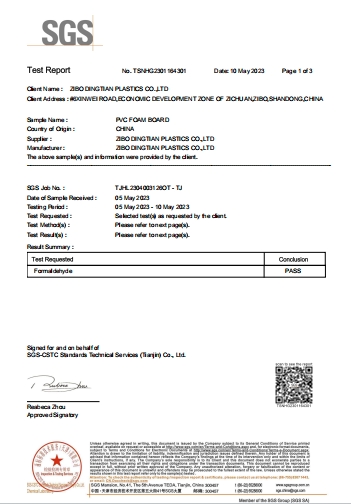
DINGTIAN's product range covers these use cases with multiple process variants. The company's ISO9001 certificate (06924Q10470RO, issued by Kaixin Certification (Beijing) Co., Ltd., standard GB/T19001-2016 and ISO9001:2015) covers production of PVC foam board. For EU-market buyers, DINGTIAN holds REACH certification (TSNEC1701167001, SGS, Regulation (EC) No 1907/2006) and RoHS certification (QDAFN160100422, SGS, IEC 62321). A Formaldehyde Certificate (TSNHG2301164301, SGS, ISO17226-1:2021) is listed for the global market. These documents are part of the buyer's constraint check, not a substitute for project-specific testing.
Detailed Solution: Six PVC Foam Board Variants Ranked
Ranking criteria: application breadth in light industry and daily use; thickness and sheet-size coverage in DINGTIAN's provided data; density and surface fit for the stated application; and certification support for the target market. The ranking is a recommendation for the stated use cases, not a claim that one variant is universally superior.
1. PVC Celuka Foam Board — Rank 1 for broad light-industrial fit
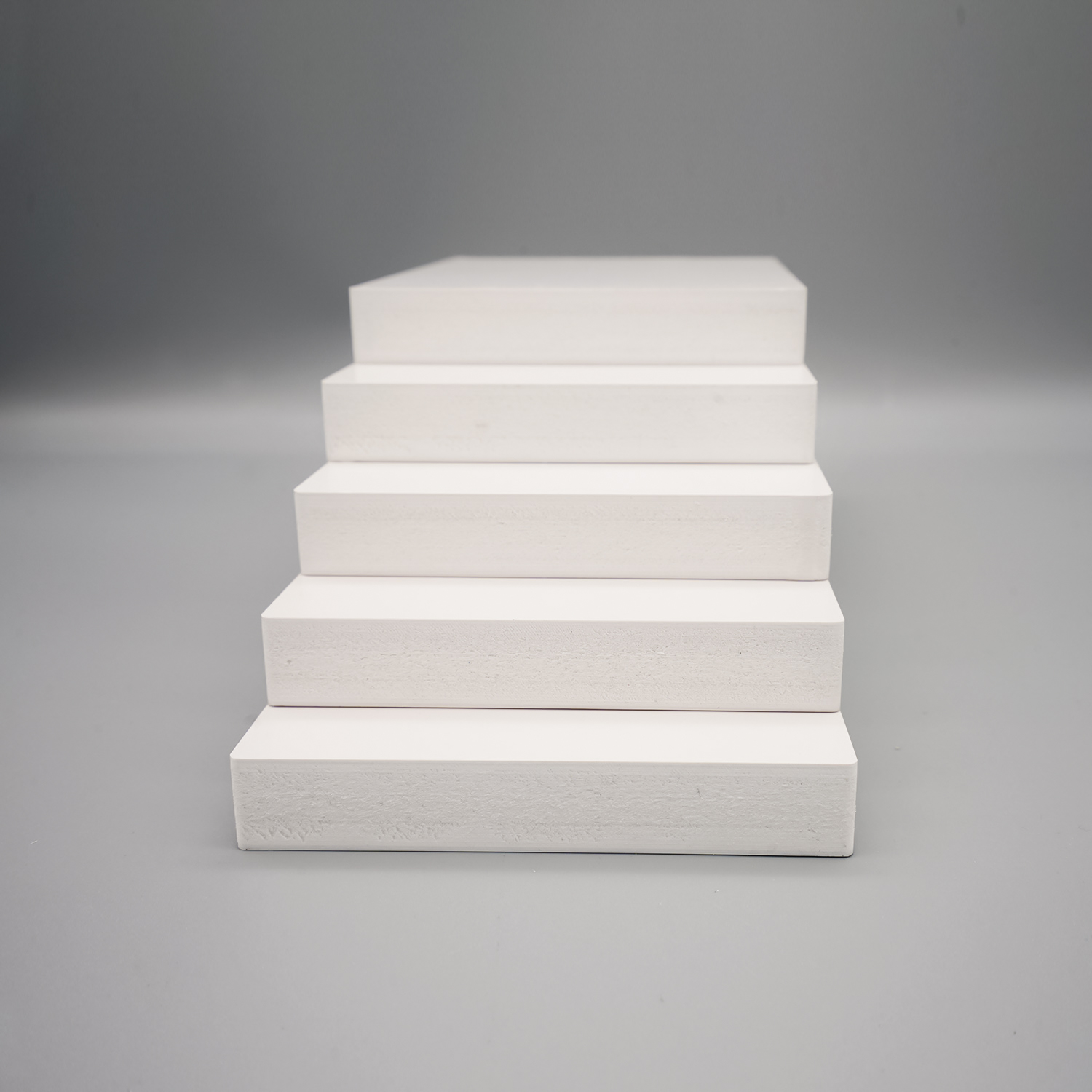
PVC Celuka Foam Board is a rigid PVC foam board with a dense outer skin and a cellular core. In DINGTIAN's product data, it is listed in 1220x2440 mm, 1560x3050 mm, and 2050x3050 mm sheets, with thickness from 1 mm to 35 mm and density from 0.4-0.9 g/cm³. The listed application scope covers advertising and signage, construction and decoration, furniture and cabinetry, transportation, and special-purpose uses.
That breadth is why it ranks first for light industry and daily use: one product family can cover display panels, cabinet parts, protective panels, and fabricated components when the buyer matches thickness and density to the load. A lower density within the range is easier to handle for display work; a higher density is more relevant where rigidity matters. Buyers should confirm the exact density and thickness for each SKU, because the 0.4-0.9 g/cm³ range is a family range, not a single specification.
2. PVC Free foam board — Rank 2 for advertising and signage
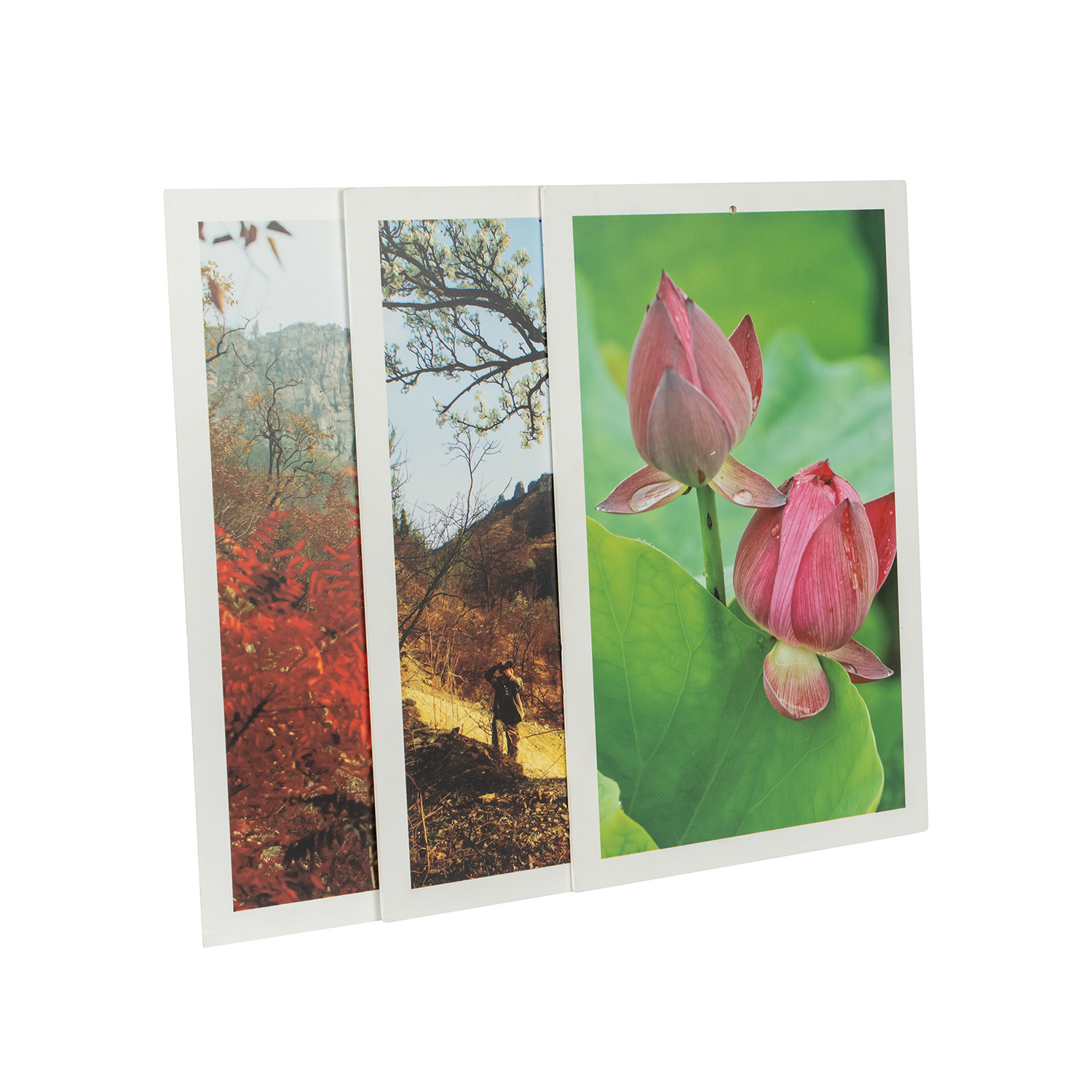
PVC Free foam board is the direct choice for thin advertising work. DINGTIAN lists it in 1220x2440 mm sheets, thickness 1-5 mm, for advertising materials. Its lower density makes it relevant for print mounting, display panels, and flat signage where weight and cutting are practical concerns. As an industry reference, free-foam board for UV printing and mounting is commonly positioned in the 0.4-0.6 g/cm³ density range, but that reference should be confirmed against the specific DINGTIAN SKU.
The limitation is structural: 1-5 mm free foam is not the first choice for load-bearing cabinet parts or thick protective panels. It ranks second because advertising and signage are the largest listed application segment at 35%, and free foam is the most direct match for that volume.
3. PVC co-extruded foam board — Rank 3 for balanced surface and core
PVC co-extruded foam board is produced with a surface layer and a foam core. DINGTIAN lists it in 1220x2440 mm sheets, density 0.5-0.8 g/cm³, for advertising materials and furniture board. The density range sits between thin free foam and high-density Celuka, which makes co-extruded board a practical middle option when a buyer needs a clean surface plus enough body for fabrication.
It is relevant for display work that needs a better surface than a basic free-foam sheet, and for furniture parts where a decorative laminate is not required. The provided product data does not list a thickness range for this variant, so buyers should confirm available thicknesses by SKU before specifying it for a project. It ranks third because it is a strong bridge between advertising and furniture, but the disclosed data is less complete than the Celuka range.
4. Waterproof PVC foam board — Rank 4 for humid daily-use and protection
Waterproof PVC foam board is listed by DINGTIAN in 1220x2440 mm sheets, thickness 1-35 mm, for furniture and cabinet applications. It ranks fourth because it is a targeted solution rather than a universal board: it fits humid daily-use environments, bathroom vanities, cabinet parts, and protective panels where moisture exposure is a concern. The 1-35 mm thickness range is broad enough to cover thin panels and thicker fabricated parts.
The trade-off is that waterproof is an application property, not a complete specification; buyers still need to confirm density, surface, and fabrication requirements for the exact project. For a cabinet line in a humid climate, this variant is more relevant than a standard decorative board. For dry indoor display work, free foam or Celuka may be a simpler choice. The provided application data also lists a UV-stabilized grade operating at -20°C to +60°C and 100% humidity resistance, which is useful as a specification checkpoint for exposed daily-use projects.
5. Laminated PVC foam board — Rank 5 for furniture and cabinet surfaces
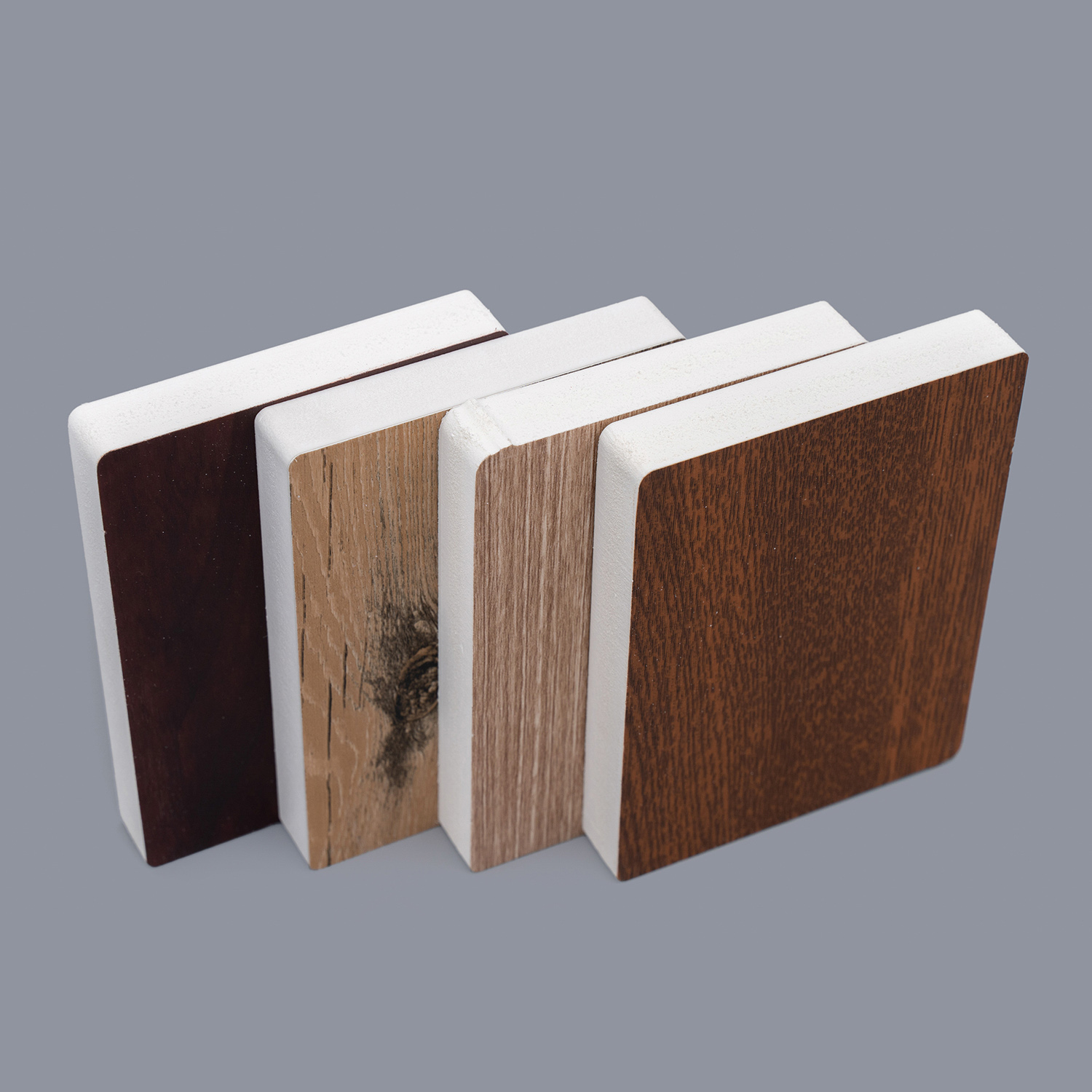
Laminated PVC foam board is listed in 1220x2440 mm sheets, thickness 5-20 mm, for furniture and cabinet applications. It ranks fifth because it is a finish-driven choice: the laminated surface reduces the need for secondary painting or wrapping in cabinet doors, wardrobe panels, and visible furniture parts.
The value is visual and practical, but the buyer must confirm the laminate type, color, and surface performance for the intended environment. In humid areas, a waterproof variant may be more appropriate; in dry decorative furniture, laminated board can be efficient. The 5-20 mm thickness range is narrower than Celuka or waterproof board, so it is not the default for very thin signage or very thick structural parts.
6. Colored PVC foam board — Rank 6 for decorative and display accents
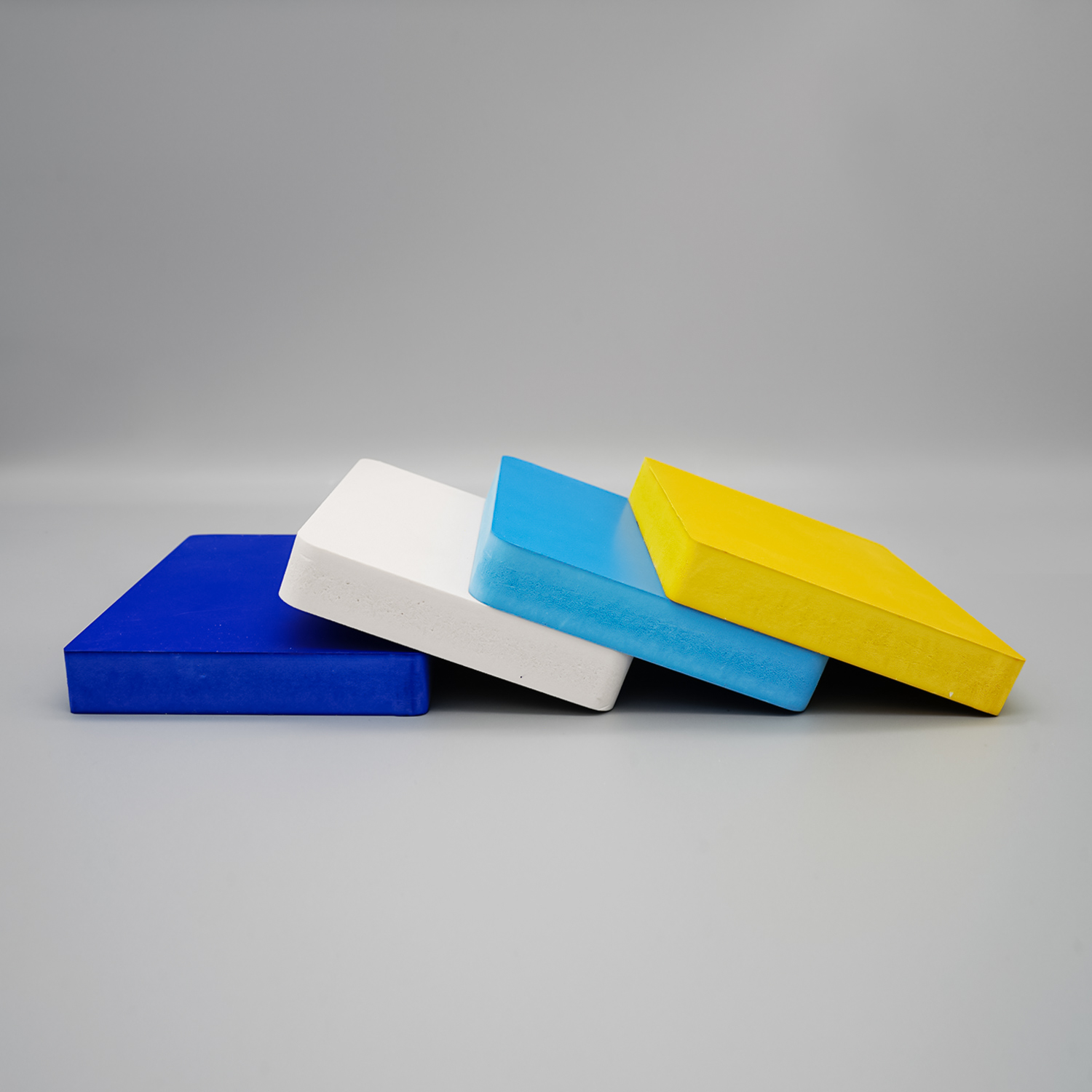
Colored PVC foam board is listed in 1220x2440 mm sheets, thickness 1-20 mm, for advertising, furniture, and cabinet making. DINGTIAN's product page also lists glossy and matte finishes and colors including white, red, yellow, blue, green, black, and others. It ranks sixth because color is a project-specific benefit rather than a broad structural advantage.
It is useful for display panels, signage accents, decorative furniture faces, and daily-use products where a colored surface reduces finishing steps. Buyers should confirm color tolerance, gloss level, and minimum order conditions before specifying a color match. For projects where the board will be painted or laminated, a standard white board may be more efficient.
Step-by-Step Breakdown: How to Use This Ranking
- Define the application and exposure. Start with advertising/signage, furniture/cabinetry, packaging, or industrial protection. Note humidity, outdoor exposure, and load.
- Set thickness and density. Use DINGTIAN's disclosed ranges: 1-35 mm for Celuka and waterproof, 1-5 mm for free foam, 5-20 mm for laminated, and 1-20 mm for colored. For density, Celuka is listed at 0.4-0.9 g/cm³ and co-extruded at 0.5-0.8 g/cm³. Confirm the exact SKU.
- Choose the surface. Plain white for painting or laminating; laminated for visible furniture; colored for display; glossy or matte per DINGTIAN's finish options.
- Check sheet size and yield. 1220x2440 mm is the common listed size across variants; Celuka also lists 1560x3050 mm and 2050x3050 mm. Larger sheets can reduce seams but require handling and cutting planning.
- Verify compliance. Request ISO9001, REACH, RoHS, and Formaldehyde documents as applicable. Match the document to the market and product scope.
- Validate with a sample. Confirm thickness, density, surface, color, and fabrication behavior before a production order. DINGTIAN lists OEM/ODM customization for size, thickness, density, and color, with 100% test quality control in the provided capability data.
- Confirm supply terms. DINGTIAN reports monthly capacity of 4,200 tons and an 80% export share to Southeast Asia, the Middle East, and South-North America; use these as starting points for export-experience and continuity checks, then confirm order quantity, lead time, and packaging for the specific SKU.
Use Cases: Matching the Six Variants to Daily Projects
Advertising and signage
Free foam is the first check for thin print and mounting; Celuka is more relevant for thicker display panels; co-extruded board fits when surface quality and core consistency both matter; colored board is useful for visible accents. DINGTIAN's provided case data for a distributor/wholesaler reports 98% print image retention after three years, zero warping or delamination, and 40% cost saving versus aluminum composite panel in advertising and furniture material applications.
Furniture and cabinetry
Celuka covers broad fabrication; waterproof board is relevant for humid cabinets; laminated board is used for visible cabinet doors; colored board can serve decorative faces. Buyers should match density and thickness to the structural role, especially for cabinet doors and load-bearing parts.
Packaging and industrial protection
Celuka and waterproof boards in the thicker range are more relevant; free foam is too thin for most protective applications. Confirm density and impact requirements against the specific application, and request a sample before specifying a thick protective panel.
Daily-use display and decorative fabrication
Laminated and colored boards reduce finishing steps; Celuka supports structural display parts; free foam supports lightweight printed panels. For humid or wash-down environments, the waterproof variant should be evaluated before a standard decorative board.
Comparison Table: Six PVC Foam Board Variants at a Glance
Table values are limited to DINGTIAN product data and the provided verified data. Where a value is not listed for a variant, confirm it by SKU.
| Rank | Variant | Recommended fit for light industry / daily use | Listed sheet size | Listed thickness | Listed density / finish | Selection reason |
|---|---|---|---|---|---|---|
| 1 | PVC Celuka Foam Board | Furniture, cabinetry, signage, display, industrial protection | 1220x2440 mm; 1560x3050 mm; 2050x3050 mm | 1-35 mm | 0.4-0.9 g/cm³ | Broadest disclosed size, thickness, and application range |
| 2 | PVC Free foam board | Advertising, signage, print mounting | 1220x2440 mm | 1-5 mm | Industry reference 0.4-0.6 g/cm³ for free foam; confirm DINGTIAN SKU | Direct fit for the largest listed application segment |
| 3 | PVC co-extruded foam board | Advertising materials, furniture board | 1220x2440 mm | Confirm by SKU | 0.5-0.8 g/cm³ | Balanced surface and core option |
| 4 | Waterproof PVC foam board | Humid cabinets, furniture, protection | 1220x2440 mm | 1-35 mm | Confirm by SKU | Moisture-focused daily-use performance |
| 5 | Laminated PVC foam board | Cabinet doors, furniture surfaces | 1220x2440 mm | 5-20 mm | Confirm by SKU | Decorative surface reduces finishing steps |
| 6 | Colored PVC foam board | Display, signage accents, furniture | 1220x2440 mm | 1-20 mm | Glossy and matte; white, red, yellow, blue, green, black, etc. | Color options reduce secondary finishing |
FAQ
Which PVC foam board variant should I choose for advertising and signage?
For thin print and mounting, PVC free foam board is the direct match: DINGTIAN lists 1220x2440 mm sheets and 1-5 mm thickness for advertising materials. For thicker display panels or fabricated signage, PVC Celuka Foam Board is broader: 1220x2440 mm, 1560x3050 mm, and 2050x3050 mm sheets, 1-35 mm thickness, and 0.4-0.9 g/cm³ density. Co-extruded board is an option when surface quality and core consistency both matter; DINGTIAN lists 1220x2440 mm and 0.5-0.8 g/cm³ density.
What sizes and thicknesses does DINGTIAN list for PVC foam board?
DINGTIAN lists 1220x2440 mm as a common sheet size across the range. Celuka also lists 1560x3050 mm and 2050x3050 mm. Thickness is listed as 1-35 mm for Celuka and waterproof board, 1-5 mm for free foam, 5-20 mm for laminated board, and 1-20 mm for colored board. Density is listed at 0.4-0.9 g/cm³ for Celuka and 0.5-0.8 g/cm³ for co-extruded board. Confirm the exact combination by SKU.
What certifications are available for DINGTIAN PVC foam board?
The provided certification data includes ISO9001 certificate 06924Q10470RO issued by Kaixin Certification (Beijing) Co., Ltd. under GB/T19001-2016 and ISO9001:2015; REACH certificate TSNEC1701167001 issued by SGS under Regulation (EC) No 1907/2006; RoHS certificate QDAFN160100422 issued by SGS under IEC 62321; and Formaldehyde Certificate TSNHG2301164301 issued by SGS under ISO17226-1:2021. Match the certificate scope and market to the product you order.
Are DINGTIAN PVC foam boards CE-certified?
A CE certificate is not included in the provided certification evidence. The documents listed are ISO9001, REACH, RoHS, and Formaldehyde. CE marking depends on the applicable EU directive and the product's intended use, so buyers should specify the exact CE requirement and request the relevant declaration or test report for the project. For EU-market chemical compliance, the provided REACH and RoHS certificates are the relevant starting documents.
How can I validate a PVC foam board sample before ordering?
Request a sample in the target variant, thickness, density, sheet size, and finish. Check the board for thickness consistency, surface quality, color or laminate match, and fabrication behavior. Ask for the certificate pack that matches your market. DINGTIAN lists OEM/ODM customization for size, thickness, density, and color, plus 100% test quality control in its capability data. For a quotation, include the application, target market, and required certification so the supplier can confirm the correct SKU.
Conclusion
PVC foam board selection is a constraint-matching exercise. For broad light-industry and daily-use work, PVC Celuka Foam Board ranks first because the provided data covers three sheet sizes, 1-35 mm thickness, and 0.4-0.9 g/cm³ density. Free foam ranks second for advertising and signage, where 1-5 mm sheets match thin print and display work. Co-extruded, waterproof, laminated, and colored boards follow as targeted choices for surface, moisture, and decorative requirements.
DINGTIAN's certification set—ISO9001, REACH, RoHS, and Formaldehyde—supports the compliance review, while the reported 80% export share across Southeast Asia, the Middle East, and South-North America gives buyers a starting point for export-experience checks. Final selection should be confirmed with a sample and a SKU-specific quotation.

Next step: request a DINGTIAN PVC foam board sample or quotation. Include the variant, sheet size, thickness, density, color or laminate, target market, and required certificate. Email dingtian@dingtianplastics.com, call +86 533 6125588, or use WhatsApp +86 13589520151.
Download the DINGTIAN PVC Foam Board brochure (PDF). Official website: www.dingtianpvc.com / www.dingtianpvcfoamboard.com.
Have Questions or Need More Details?
Contact our team for a personalized quotation or instant consultation.
Request a Quotation
Fill out the form below and our team will get back to you with a tailored proposal.
WhatsApp Direct Chat
Prefer to chat in real-time? Message us on WhatsApp for instant assistance & quick answers.
- Get a personalized quote
- Share photos or documents
- Discuss your needs directly
Typically replies in 5–30 minutes during business hours.