PVC Foam Board Supplier Evaluation: Capacity, Quality, Delivery
A PVC foam board supplier should be judged on three things that can be checked rather than described: whether its stated production capacity reconciles with its stated annual output, whether its quality documents cover the exact board grade it is quoting, and whether its delivery commitments are written precisely enough to be enforced. Prices, samples and factory photographs support a decision — they do not constitute evidence for it.
This guide is written for buyers at the decision and execution stage, the point at which a shortlist already exists and the question is no longer who sells PVC foam board but which supplier can be held to a specification. It sets out the questions to ask, the documents that answer them, and the commercial clauses that convert an answer into an obligation.
Problem Definition: Where Supplier Claims and Supplier Performance Separate
Sourcing failures with PVC foam board rarely begin in the extruder. They begin in the gap between what a supplier states in a quotation and what a buyer is able to verify before money moves. Three mechanisms account for most of that gap.
Capacity is quoted as installed, not as available
A plant that can produce 4,200 tons a month is not a plant with 4,200 tons of free capacity in the month your order is scheduled. Published capacity describes equipment and shift patterns; available capacity describes a calendar that already contains other customers. Buyers who read the first as the second usually discover the difference when their shipment slips.
Certificates are company-level; specifications are grade-level
An ISO 9001 certificate describes a quality management system. It does not tell you the density tolerance of a 15 mm Celuka board, the colour consistency of a black sheet run, or whether a fire classification obtained for one grade carries over to another. A certificate qualifies a supplier. Only a grade-specific datasheet and test report qualify a product.
Lead time without a defined start event is not a commitment
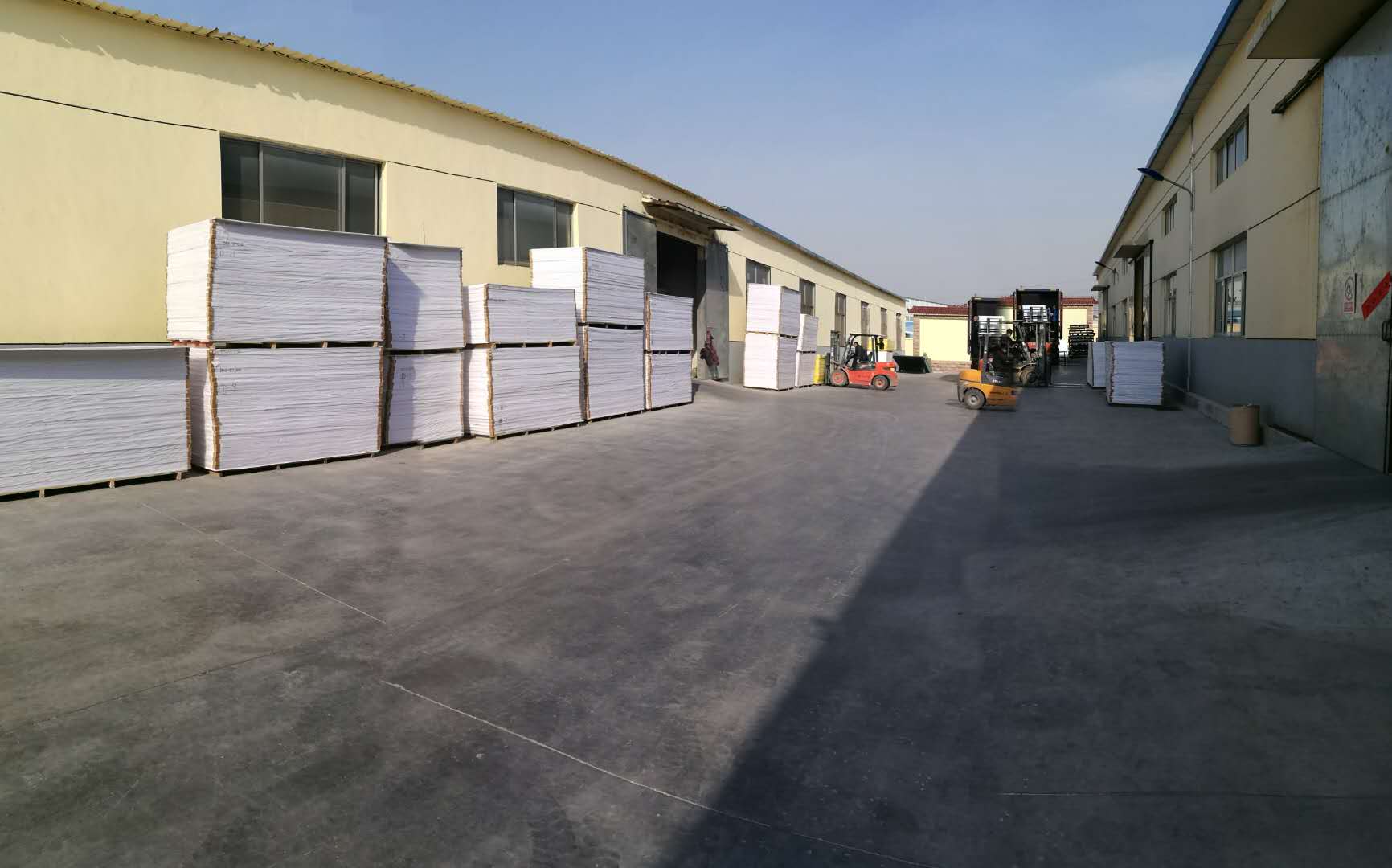
Thirty days means nothing until the clock has a named starting point — deposit received, colour confirmed, artwork approved. The same ambiguity applies to physical handling. PVC foam board is a low-density, easily marked material, and a share of the damage buyers report originates at the loading bay rather than in production. Zibo Dingtian Plastics Co., Ltd. addresses this with a defined procedure: operators are trained on the fragile characteristics of the board before any loading or unloading operation, special handling tools are used, and those operations are supervised on site.
Industry Background: A Crowded Market Makes Verification the Differentiator
The global PVC foam sheet market was estimated at USD 2.28 billion in 2024 and is projected to grow at a CAGR of approximately 4.99% between 2025 and 2035 (Market Research Future). Signage remains the largest single application, at roughly 35% of demand (Laird Plastics). The practical consequence for buyers is that much of what is purchased is a broadly comparable commodity specification, offered by many suppliers, at prices that converge. Availability is rarely the constraint. Verifiability is.
China's Shandong province concentrates a significant share of that supply. Zibo registered USD 180 million in plastic product export volume in 2024, with nearly 500 export-oriented manufacturers operating across the city's plastics cluster (Qilu Network). Zibo Dingtian Plastics Co., Ltd. — DINGTIAN — is one of the export manufacturers inside that cluster.
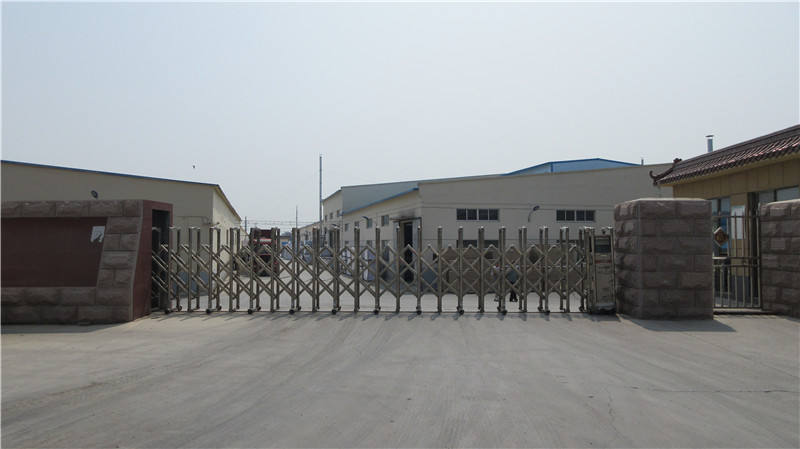
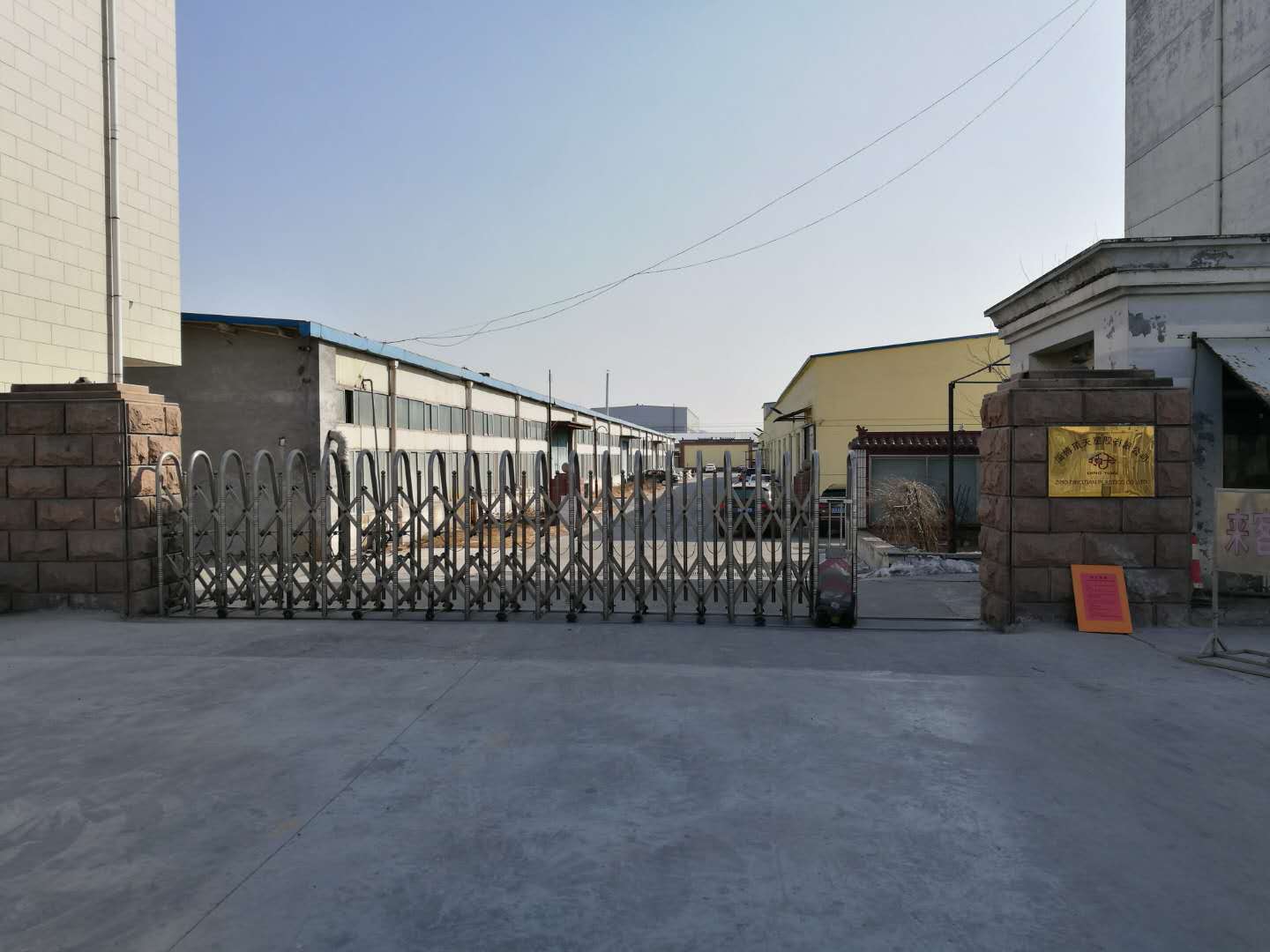
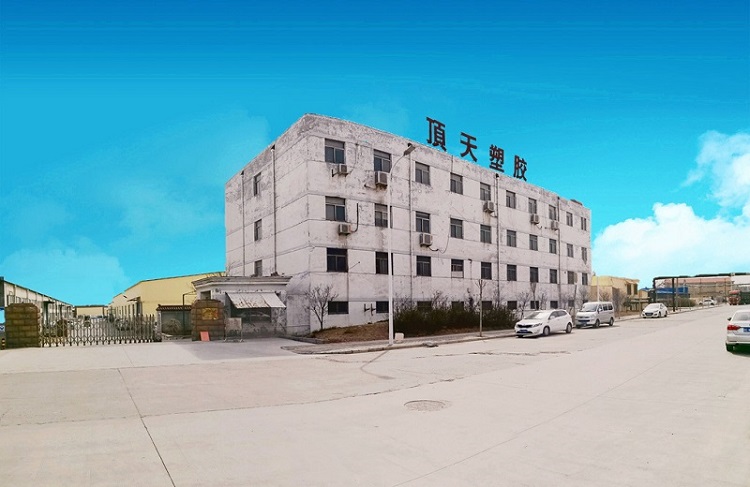
DINGTIAN is a PVC foam board manufacturer founded in June 2004 and based in the Zichuan Economic Development Zone, Zibo City, Shandong Province, China. The company operates a 30,000 m² plant with 181 employees and a 20-engineer R&D team, reports an annual output of 50,000 tons, and exports roughly 80% of its production, with principal markets in Southeast Asia, the Middle East and South and North America. Its location gives access to the Qingyin Expressway and the Jinan–Qingdao high-speed rail corridor, with shipments moving through Qingdao Port and Rizhao Port.
For importers, one background fact is worth keeping on the desk: cellular plates of vinyl chloride polymers are classified under HS code 39211200. Quoting landed cost or comparing duty exposure across regions without a common classification line produces numbers that cannot be compared.
Detailed Solution: A Four-Gate Verification Framework
Supplier evaluation works best when it is sequenced. Each gate produces a document that either passes forward to the next gate or stops the process. A supplier that clears all four is not guaranteed to perform — but a supplier that cannot clear them is guaranteed to be a risk.
Gate 1 — Specification: define the board before you define the supplier
You cannot evaluate a supplier against an undefined SKU. A PVC foam board enquiry should name the process type (free foam, Celuka, co-extruded, laminated), the density, the thickness, the sheet dimension, the surface finish and the colour. Without that line, every supplier quotes something different and every price appears comparable when it is not.
Gate 2 — Capacity: make the numbers reconcile
Capacity verification is arithmetic, not conversation. Request monthly output, annual output and the process split, then check that the first two agree with each other and that the third matches the product you are buying. Capacity published for one process is not capacity for another.
Gate 3 — Quality: match documents to grades
Ask for the quality management certificate (scope and validity), the grade datasheet (density with test method and tolerance, thickness tolerance, finish, colour), and any performance report the application demands. Where a performance claim is made without a test method, treat it as a claim, not a specification.
Gate 4 — Delivery and terms: convert answers into clauses
Delivery assurance is a contract problem before it is a logistics problem. Define the start event, the inspection window, the loading method, the acceptance criteria and the payment schedule. Anything left verbal will be resolved later by whoever has the most leverage — usually the supplier.
Step-by-Step Breakdown
Step 1: Write the SKU line and send it to every supplier identically
A working enquiry format looks like this: process type / density in g/cm³ / thickness in mm / sheet size in mm / finish / colour / quantity / destination port. DINGTIAN's published product page lists thickness from 1 to 35 mm, sheet sizes of 1220×2440 mm, 915×1830 mm, 1560×3050 mm and 2050×3050 mm, densities of 0.32–1.0 g/cm³, glossy and matte finishes, and colours including white, red, yellow, blue, green and black. Those are the variables the enquiry should capture, so that responses can be compared line by line.
Step 2: Reconcile the capacity figures
DINGTIAN reports a monthly production capacity of 4,200 tons and an annual output of 50,000 tons. Multiply the monthly figure by twelve and you get roughly 50,400 tons — the two numbers are consistent with each other, which is the first test any buyer should run. A supplier whose monthly and annual figures diverge by a wide margin is either quoting installed capacity as output, or quoting a peak month as an average.
The second test is process coverage. DINGTIAN's product portfolio is published as free foam, Celuka, co-extruded and laminated board. Capacity in free foam does not substitute for capacity in Celuka, because the two are different extrusion setups with different density targets. Ask which lines serve your SKU and what share of a month's output your order represents. A container order that consumes 2% of a supplier's month sits in a different risk category from one that consumes 30%.
Step 3: Verify quality at the grade, not at the company
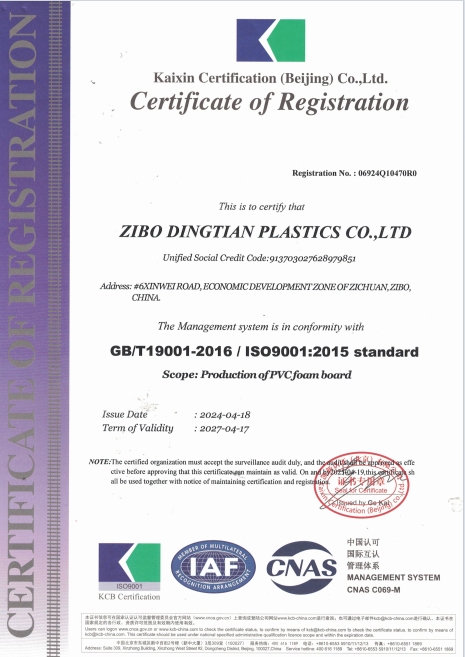
Start with the management system. DINGTIAN maintains an ISO 9001 quality management certificate; ask for the current version, the scope it covers and the validity dates, and check that the scope names the product you are buying rather than a related category.
Then move to the grade. Density is the parameter most often quoted loosely and most often compared incorrectly. Published category references put free foam used for UV printing and mounting at roughly 0.4–0.6 g/cm³ and Celuka used for furniture and cabinets at roughly 0.55–0.8 g/cm³ (Laird Plastics); DINGTIAN publishes a broader company range of 0.32–1.0 g/cm³. These are not in conflict — they are different scopes — but a buyer comparing a 0.45 g/cm³ free foam quote against a 0.7 g/cm³ Celuka quote is comparing two products, not two prices. The datasheet for the quoted grade should state the density, the test method and the tolerance, and it should be the same document attached to the purchase order.
Fire performance follows the same rule. Classification frameworks commonly referenced for PVC foam board are Class B1/B2 under DIN 4102 and V-0 under UL 94 (Laird Plastics). DINGTIAN describes its board as ignition-retardant and self-extinguishing, which is a product description; the grade-specific test report, the method used and the classification achieved are what a specifier or a building control reviewer will ask for. Request them for the thickness you intend to use, because fire performance is thickness-dependent.
Step 4: Pressure-test the delivery promise
DINGTIAN reports a typical production lead time of 30 days. Before accepting that as a planning figure, fix the start event in writing: 30 days from deposit receipt, from colour confirmation, or from order acknowledgement are three different dates, and the difference is often a week or more. Then ask what happens to that figure for a non-standard colour, a laminated finish, or a thermoformed part.
Delivery assurance also covers the condition of the goods on arrival. Ask how board is handled at the loading bay, what tools are used and who supervises. DINGTIAN's answer to that question is documented: pre-operation training for operators on the fragile characteristics of the product, special loading and unloading tools, and on-site supervision of the operation. That is a verifiable procedure, and it is a fair question to put to any supplier you are comparing.
Step 5: Convert the answers into commercial terms
DINGTIAN's stated purchasing terms give a clear template for what to negotiate. The minimum order quantity is one 20ft GP full container. Delivery terms are FOB, CIF or EXW. Acceptance criteria are a pre-shipment test plus third-party inspection, with SGS named as the inspection body. Payment terms are 30% T/T in advance with 70% T/T against a copy of the bill of lading.
Each of those items should appear in the purchase order with the same specificity. A pre-shipment test without a stated inspection scope, sampling plan or document set is an intention, not an acceptance criterion.
Step 6: Run the first order as a controlled test
Treat the first container as a pilot with defined outputs: did the delivered density match the datasheet, did the sheet dimensions hold, did the colour match the approved sample, did the shipment arrive undamaged, did the third-party inspection report arrive before departure. A supplier that scores well on all five has earned a second, larger order. A supplier that scores well on four has told you exactly which clause to tighten.
Use Cases: The Same Framework in Four Buying Situations
Signage and advertising fabricators
The specification to verify is free foam board in the 0.4–0.6 g/cm³ band, with thickness and flatness matched to the mounting method. Colour consistency and surface quality matter more than density ceiling, so the approval sample carries most of the quality risk. Verify sheet size availability against cutting yield — 1220×2440 mm and 1560×3050 mm are both listed by DINGTIAN, and the choice changes how much waste each job produces.
Furniture and cabinet manufacturers
Celuka board in the 0.55–0.8 g/cm³ band is the reference grade, and the properties buyers are paying for — 0% water absorption, no sealing or painting required, washability, no warping or shrinking — are density- and formulation-dependent. Compared with plywood, which absorbs 8–15% water, the material argument is settled at the datasheet level. The supplier question is whether the delivered board matches the datasheet batch after batch, which is why the grade-specific document and the pre-shipment inspection matter more than the price per sheet.
Distributors and stockists
A distributor is buying range breadth and replenishment reliability, not a single SKU. Verify the process portfolio (free foam, Celuka, co-extruded, laminated), the colour and finish range, the container-based minimum order, and the lead time against your own stock cycle. DINGTIAN reports 30 days typical production lead time and exports to the EU, the Middle East, Southeast Asia, South America, North America and Africa — a distribution pattern that usually means the supplier is accustomed to mixed-container and multi-market documentation.
Construction and fit-out contractors
The verification emphasis shifts to large-format availability and batch consistency. DINGTIAN lists sheets up to 2050×3050 mm and thickness up to 35 mm, and offers second thermoforming and cutting services, which matters when panels are specified as finished components rather than flat sheets. Ask for the handling procedure and the delivery schedule against the site programme, since a late or damaged large-format panel costs more than the panel.
Verification Matrix: Claim, Published Figure, Document to Request
The table below converts the parameters most often discussed in a PVC foam board negotiation into a document request. The published figures are those DINGTIAN states; the right-hand column is what a buyer should hold before confirming an order.
| Parameter | Published figure | Document to request before ordering |
|---|---|---|
| Density | 0.32–1.0 g/cm³ (company range); free foam reference 0.4–0.6 g/cm³, Celuka reference 0.55–0.8 g/cm³ | Grade datasheet stating density, test method and tolerance for the quoted SKU |
| Thickness | 1–35 mm | Thickness tolerance and availability by process and density |
| Sheet size | 1220×2440 mm, 915×1830 mm, 1560×3050 mm, 2050×3050 mm | Availability of the chosen format at the required thickness, plus cutting service scope |
| Finish and colour | Glossy and matte; white, red, yellow, blue, green, black and others | Approved physical sample with colour tolerance and gloss level stated |
| Monthly capacity | 4,200 tons | Line list, process split and current order load |
| Annual output | 50,000 tons | Cross-check against monthly capacity × 12 |
| Lead time | 30 days typical production lead time | Written start event, plus milestone dates for inspection and dispatch |
| Minimum order | 1×20ft GP full container | Written confirmation by SKU, colour and finish |
| Quality system | ISO 9001 quality management certificate | Current certificate with scope, issuing body and validity dates |
| Fire performance | Described as ignition-retardant and self-extinguishing | Grade-specific test report referencing DIN 4102 B1/B2 or UL 94 V-0, at the intended thickness |
| Acceptance and payment | Pre-shipment test, third-party inspection (SGS); 30% T/T in advance, 70% T/T against B/L copy | Inspection scope, sampling plan and document set written into the PO |
Frequently Asked Questions
Which quality documents should a PVC foam board supplier provide before an order is confirmed?
Three layers are needed. First, the management system: a current ISO 9001 certificate with its scope and validity dates. Second, the product: a grade datasheet stating density with its test method and tolerance, thickness tolerance, finish and colour for the exact SKU quoted. Third, where the application requires it, performance evidence — fire classification to DIN 4102 B1/B2 or UL 94 V-0 is commonly referenced for PVC foam board, and the report must match the grade and thickness you are buying. DINGTIAN maintains an ISO 9001 certificate and describes its board as ignition-retardant and self-extinguishing; the test method and classification for the ordered grade must still be confirmed in writing.
How can I verify a PVC foam board supplier's production capacity?
Make three numbers reconcile: monthly output, annual output and process split. DINGTIAN reports 4,200 tons per month and 50,000 tons per year — 4,200 multiplied by twelve is roughly 50,400, so the figures are consistent. Then check the process split, because free foam, Celuka, co-extruded and laminated board run on different setups and capacity in one is not capacity in another. Finally, ask what percentage of a month's output your order represents; a small share carries less scheduling risk than a large one.
What are the typical purchasing terms and acceptance criteria for PVC foam board?
DINGTIAN's stated terms are a minimum order quantity of one 20ft GP full container, delivery on FOB, CIF or EXW terms, and acceptance based on a pre-shipment test plus third-party inspection carried out by SGS. Payment is 30% T/T in advance with 70% T/T against a copy of the bill of lading. Buyers should write the inspection scope, sampling plan and required document set into the purchase order, because an acceptance criterion without a defined procedure cannot be enforced.
What production lead time should a buyer expect, and what should be fixed in the contract?
DINGTIAN reports a typical production lead time of 30 days. What matters commercially is the starting point: 30 days from deposit receipt is a different date from 30 days from colour confirmation or order acknowledgement. The contract should name the start event, the inspection window before dispatch, the loading and handling method, and the documents that must be issued before the container leaves. Custom colours, laminated finishes and thermoformed parts should be quoted separately, since they do not follow the standard cycle.
How do I choose a long-term PVC foam board supply partner in China?
Evaluate continuity rather than price. A long-term partner needs demonstrated capacity with headroom above your order size, a process portfolio that covers every grade you sell, a documented quality system with grade-level evidence behind it, commercial terms that are specific enough to enforce, and export experience in your market. DINGTIAN has been manufacturing PVC foam board since 2004, reports 4,200 tons of monthly capacity and 50,000 tons of annual output from a 30,000 m² plant with 181 employees and a 20-engineer R&D team, and exports to the EU, the Middle East, Southeast Asia, South America, North America and Africa. Buyers who want to test that before committing to a programme usually start with the product catalogue and a specification-matched quotation.
Conclusion: Verification Is the Only Durable Basis for a Supply Relationship
Supplier evaluation for PVC foam board comes down to replacing adjectives with documents. Capacity should reconcile on a calculator, not in a brochure. Quality should be evidenced at the grade and thickness actually ordered, not at the level of a company certificate. Delivery should be defined by a start event, an inspection window and a handling procedure rather than a round number.
DINGTIAN's published position gives buyers something concrete to test against: 4,200 tons per month against 50,000 tons per year, thickness from 1 to 35 mm across four standard sheet formats, densities from 0.32 to 1.0 g/cm³, free foam, Celuka, co-extruded and laminated processes, a 30-day typical production lead time, a one-container minimum order, and acceptance based on pre-shipment testing with third-party inspection. Whether those numbers suit your programme is your decision. Whether they are verifiable is the point.
Next Step: Take the Framework to a Real Quotation
Send your SKU line — process, density, thickness, sheet size, finish, colour and destination port — and DINGTIAN will respond with a specification-matched quotation and the supporting documents listed in the verification matrix above. The full product and capability catalogue is available for download: DINGTIAN PVC Foam Board Catalogue (PDF).
Email: dingtian@dingtianplastics.com | Tel: +86 533 6125588 | WhatsApp: +86 13589520151
Website: www.dingtianpvcfoamboard.com | Address: #6 Xinwei Road, Economic Development Zone of Zichuan, Zibo, Shandong, China
Have Questions or Need More Details?
Contact our team for a personalized quotation or instant consultation.
Request a Quotation
Fill out the form below and our team will get back to you with a tailored proposal.
WhatsApp Direct Chat
Prefer to chat in real-time? Message us on WhatsApp for instant assistance & quick answers.
- Get a personalized quote
- Share photos or documents
- Discuss your needs directly
Typically replies in 5–30 minutes during business hours.