
PVC Foam Board vs. Plywood: Making the Final Call Based on Speed and Environmental Impact
PVC foam board and plywood are both flat, rigid, machinable panels, but they finish a project on very different terms. For commercial signage, interior fit-out and cabinetry work in 2026, the deciding factors are rarely the sheet price on the quotation — they are installation speed and environmental impact. PVC foam board carries a 20–30% higher unit price than plywood, yet lands roughly 15% lower in total project cost, mainly because it installs about 60% faster and weighs about 50% less, which reduces transport fuel consumption and simplifies logistics on site.
This is a final-call guide, not another cost breakdown. It assumes you already know both materials exist and that both can be sourced. The question it answers is narrower: when do speed and environmental impact make PVC foam board the correct final decision, and when does plywood still hold its ground?
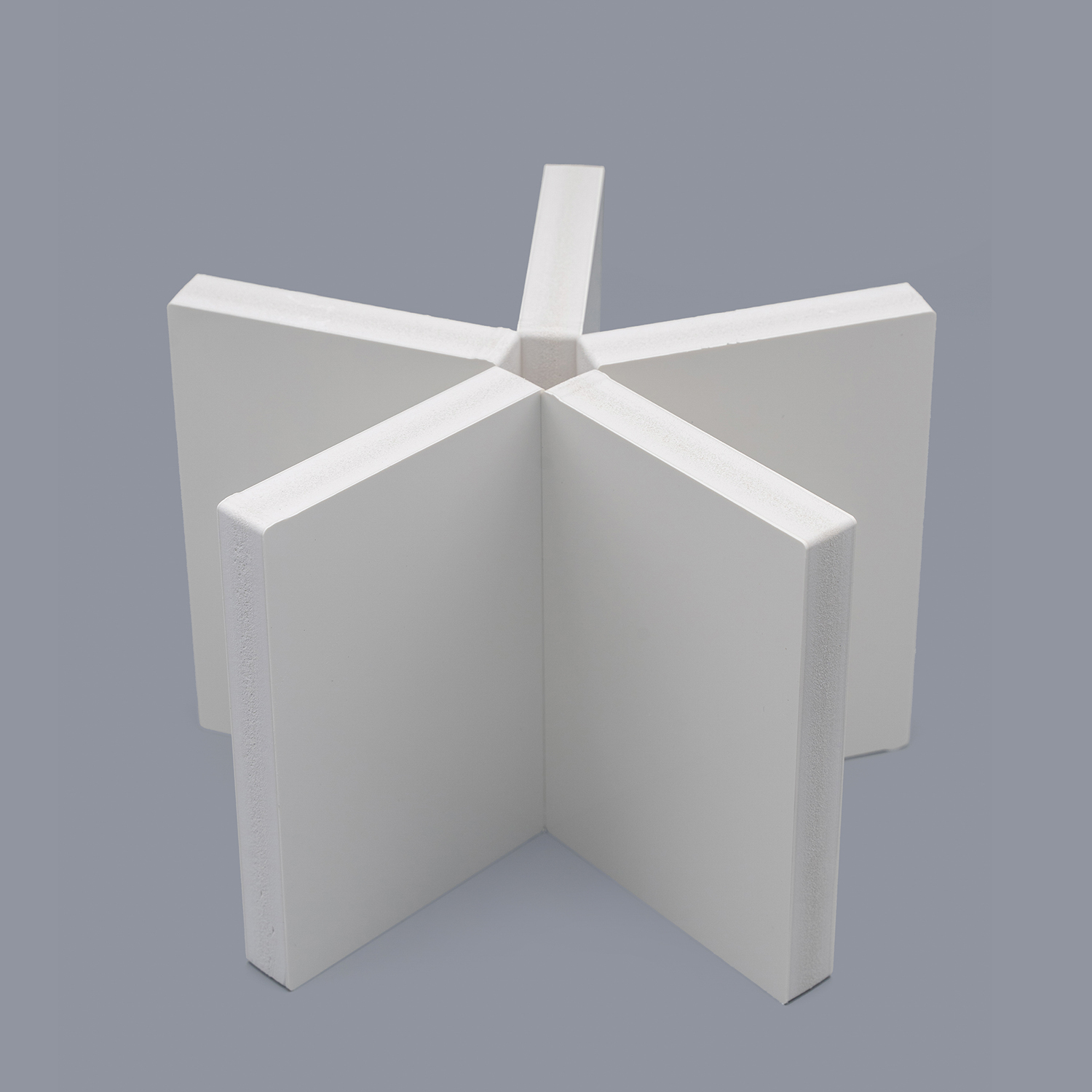
Problem Definition: Why Sheet Price Leads Buyers to the Wrong Answer
Most material decisions are settled at the quotation stage. Plywood wins that stage because its price per panel is lower. The problem surfaces later, in three cost lines that never appear next to a panel price.
- Labour hours per square metre. Wood-based panels are normally edge-sealed, sanded, primed or laminated before they are presentable, and each of those steps consumes crew time on every panel.
- Moisture risk and rework. Plywood absorbs water, which can cause swelling and edge delamination in humid rooms, wet fit-outs and outdoor positions. Rework is the most expensive form of panel cost because it consumes labour twice.
- Freight and handling. Heavier panels mean fewer units per truck or container and more people, or more lifting equipment, for each lift.
PVC foam board attacks those three lines directly. It is 100% waterproof, it machines with standard woodworking tools, and it weighs roughly half as much as an equivalent plywood panel. The higher sheet price is real and should be budgeted for, but it is paid once. The savings recur on every panel installed, transported and maintained.
Two cost curves are therefore in play: the purchase cost curve, where plywood is cheaper, and the installed cost curve, where PVC foam board usually finishes ahead. Speed and environmental impact are what bend the second curve.
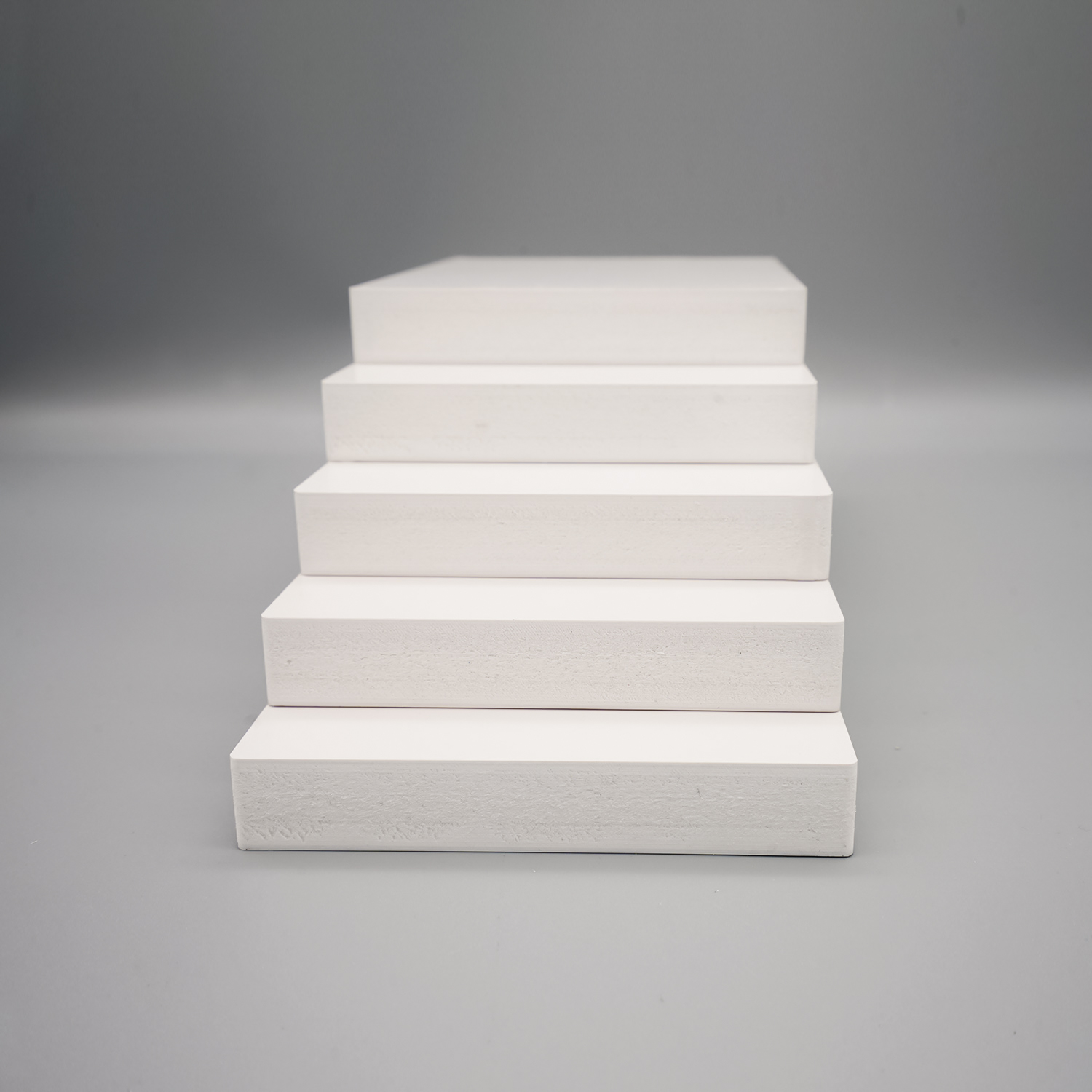
Industry Background: A Panel Market Moving Toward Foam Board
The material-level argument is supported by where the market itself is heading. The global PVC foam board market was valued at approximately USD 2.1 billion in 2024 and is projected to reach USD 3.6 billion by 2032, according to Verified Market Research. Signage and advertising is the largest single application, accounting for roughly 35% of total demand, per Laird Plastics.
DINGTIAN's own application data shows a similar distribution: advertising and signage around 35%, construction and decoration around 30%, furniture and cabinetry around 15%, transportation around 10%, and special-purpose applications such as packaging, prototypes and industrial protection around 10%. In other words, the applications where speed and moisture resistance matter most are also the applications that dominate demand.
On the supply side, China concentrated 20% of total exports of plastic building materials in 2024 and remained the largest exporter worldwide, according to the Observatory of Economic Complexity (OEC). Zibo, the plastics processing base in Shandong Province where DINGTIAN operates, registered USD 180 million in plastic product export volume in 2024 with nearly 500 export-oriented manufacturers, per Qilu Network.
Two regulatory developments matter when comparing PVC foam board with plywood in 2026. First, EU REACH Regulation Annex XVII Entry 63 restricts lead concentration in PVC articles to less than 0.1% by weight, effective 29 November 2024 (European Commission / Intertek). Second, fire performance expectations are tightening: PVC foam boards used in construction commonly undergo ASTM E84 testing to achieve a Class A fire rating with a Flame Spread Index of 0–25, and PVC foam board typically achieves a UL 94 V-0 flammability classification at thicknesses down to 1mm, per the Vinyl Institute.
Detailed Solution: What PVC Foam Board Actually Delivers in a Project
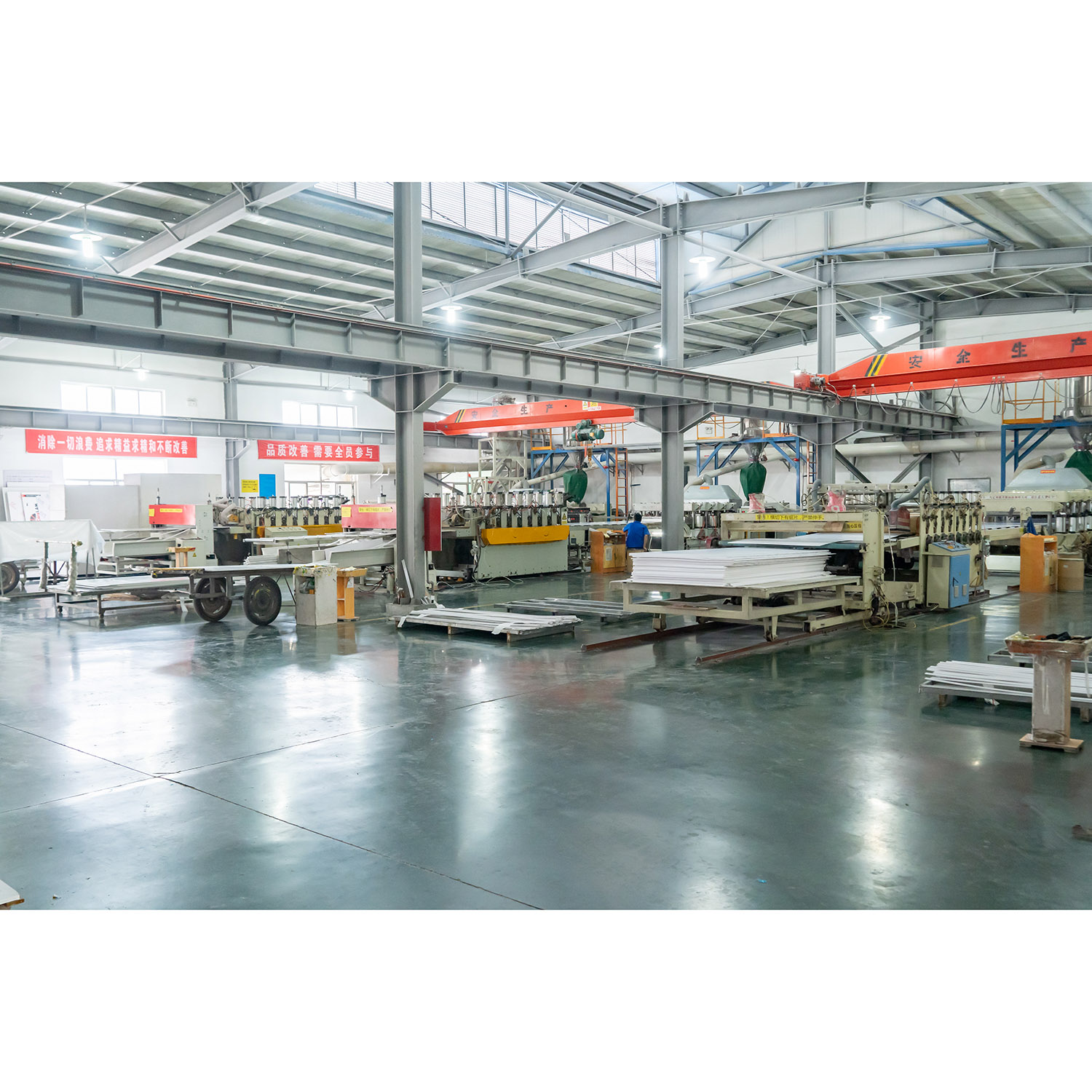
Zibo Dingtian Plastics Co., Ltd. (DINGTIAN) is a PVC foam board manufacturer founded in June 2004 and based in the Zichuan Economic Development Zone, Zibo City, Shandong, China. The company operates a 30,000 m² plant with 181 employees, a 20-engineer R&D team, 50,000 tons of annual output and approximately 4200 tons of monthly capacity; around 80% of production is exported to Southeast Asia, the Middle East and South–North America.
Speed: Where the 60% Installation Advantage Comes From
The installation advantage is not a marketing claim about “easy” material. It comes from four measurable properties of the panel.
- About 50% lower weight. Lighter panels mean larger single-person lifts, smaller crews and less dependence on lifting equipment. Handling time per panel falls before any cutting begins.
- No moisture-sealing stage. Because PVC foam board is 100% waterproof and specified for 100% humidity resistance, projects do not require an additional moisture barrier or edge-sealing sequence that plywood normally needs.
- Standard woodworking tooling. PVC foam board is cut, drilled and fixed with cutting machines, saws and nails, and it can be processed on CNC equipment. No new tooling ecosystem is required, which shortens the learning curve for existing crews.
- Direct print and bond surfaces. In advertising work, the board acts as a lightweight rigid substrate for printing, so a printed panel is produced in fewer process steps than a wood-based panel that must first be sealed and levelled.
Thermoforming is available at 120–160°C when curved or wrapped shapes are needed, and laminating and bonding assembly is supported. In practice, these are the steps that turn a 60% installation-speed difference into a project-level number rather than a theoretical one.
Environmental Impact: What Actually Changes
Environmental performance in panel selection is a mix of freight, indoor air quality, regulated substances, service life and end-of-life handling. PVC foam board changes the first four materially and the fifth only partially.
- Freight and fuel. A panel that weighs about half as much moves more square metres per truck or container. That lowers fuel consumption per delivered square metre and reduces the number of trips a project requires — the logistics simplification that usually surprises buyers most.
- Indoor air quality. PVC foam board is a thermoplastic extrusion and does not rely on a formaldehyde-based adhesive binder, which is the mechanism that drives low-emission specifications in wood-based panel procurement. This matters in enclosed fit-outs and cabinet work.
- Regulated substances. Lead-free eco-friendly PVC foam board is the default specification for markets applying the EU REACH lead limit of less than 0.1% by weight, with RoHS compliance requested alongside it.
- Service life as an environmental lever. The most sustainable panel is the one that does not need replacing. One DINGTIAN distributor running 10 containers per month into advertising and furniture applications over a 5–10 year relationship recorded 98% print image retention after three years, with zero warping or delamination and 100% waterproof performance.
- The honest trade-off. PVC is a petrochemical, chlorine-based thermoplastic, and recycling infrastructure for rigid PVC varies by market. Plywood starts from a renewable feedstock, but its trade-offs are the binder chemistry and the sourcing profile of the wood it is built from. Neither material wins the environmental argument outright; they win different parts of it.
Cost Structure: Higher Unit Price, Lower Project Cost
The unit price of PVC foam board is typically 20–30% higher than plywood for a comparable panel footprint. Once a project is complete, however, total project cost is commonly around 15% lower. The delta comes from four places: 60% faster installation, roughly half the panel weight, the removal of sealing and priming consumables, and the near-absence of moisture-driven rework.
That pattern is visible in DINGTIAN's distribution data as well. A distributor supplying advertising and furniture material at 10 containers per month reports a 40% cost saving compared with aluminium composite panel on the applications where PVC foam board replaces it — a useful reminder that the correct comparison is rarely the material you were already using, but the material the application actually requires.
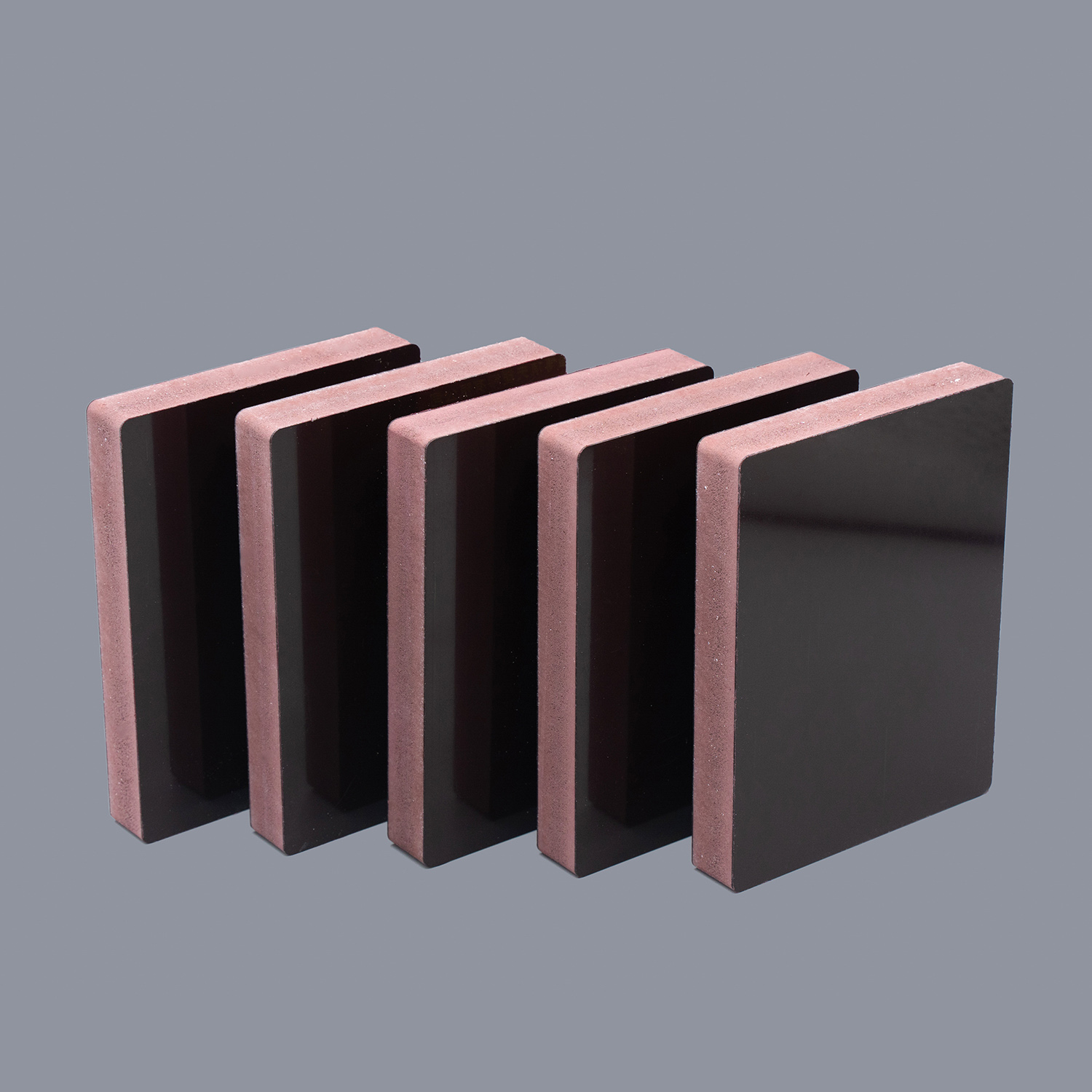
Grade Choice Also Affects Speed and Impact
Not every PVC foam board behaves identically, and grade selection decides how much of the speed advantage you actually capture. Free foam board is produced in 1–5mm thicknesses and suits advertising and printing work where low weight matters most. Celuka board is available from 1–35mm at densities of 0.4–0.9 g/cm³, covering rigid printed panels, architectural substrates and cabinet components. Co-extruded board is supplied at 0.5–0.8 g/cm³ with a rigid PVC skin and foamed core, which raises surface hardness and impact resistance compared with standard Celuka. Laminated PVC foam board from 5–20mm serves furniture and cabinet surfaces, while colored PVC foam board from 1–20mm removes a finishing step entirely because the colour is already in the panel.
Density, thickness, size and colour are customisable under DINGTIAN's OEM and ODM programmes, so a project that needs a lighter panel for faster handling or a denser panel for stiffness can specify it rather than compromise.
Where Plywood Still Wins, and Where PVC Foam Board Does Not
A final-call guide that only argues one direction is not useful. Plywood remains the correct choice in several clearly defined situations.
- Dry interiors where wood grain is the design intent. Decorative plywood finishes cannot be replicated by a white or colored foam board unless a laminated or decorative surface is applied.
- Structural and load-bearing timber applications. PVC foam board is a lightweight rigid substrate and panel material; it should not be substituted into engineered structural roles designed around timber.
- Very small, local, low-labour jobs. Where a few panels are bought from a local yard and installed by the same person in an afternoon, the container-level economics of PVC foam board do not apply.
PVC foam board has its own constraints, and they should be planned for:
- The material cost itself is higher, so cash flow per container is larger.
- Outdoor use requires a UV-stabilized grade; the verified operating window for such grades is –20°C to +60°C with 100% humidity resistance.
- Thermoforming demands process discipline in the 120–160°C range; uncontrolled heating produces poor results.
- Low-density boards are lighter and faster to handle but softer under impact, so density has to be matched to the application rather than minimised for weight alone.
Step-by-Step: Making the Final Call in Five Steps
- Map the exposure of every panel position. Separate the bill of materials into dry interior, humid interior and outdoor positions. Any significant share of humid or outdoor panels normally consumes plywood's price advantage through treatment, sealing and rework. For outdoor positions, specify a weather-resistant, UV-stabilized grade with a B1/B2 fire retardant rating where the project requires it.
- Convert sheet price into installed cost per square metre. Add labour hours, edge treatment, priming or laminating, consumables, and expected rework to both options. This is the step where the 20–30% unit price premium and the roughly 15% total project cost advantage are reconciled.
- Test the handling and tooling assumption. Confirm crew size, lift method and equipment against the 50% weight reduction, and confirm that existing cutting machines, saws, nails or CNC equipment can process the panel without new investment.
- Verify compliance for the destination market. Check the EU REACH lead limit of less than 0.1% by weight, RoHS status, ASTM E84 Class A fire performance where construction codes require it, and UL 94 V-0 behaviour at your specified thickness.
- Validate with a physical sample and lock the supply parameters. Run a sample panel through your own printing, cutting and fixing workflow before committing. Then fix thickness (1–35mm), density (0.4–0.9 g/cm³ for Celuka; 0.5–0.8 g/cm³ for co-extruded), panel size (1220x2440mm, 1560x3050mm, 2050x3050mm), colour and surface, with a 30-day lead time and a minimum order quantity of one 20ft GP full container.
The percentage figures in this guide are project-level planning benchmarks for material selection. Validate them against your own bill of quantities, labour rates and freight profile before committing to a full container order.
Use Cases: Where Each Material Finishes the Job Better
Advertising and Signage (around 35% of demand)
This is PVC foam board territory. The board provides a lightweight rigid substrate for printing and operates under UV-stabilized conditions from –20°C to +60°C with 100% humidity resistance, which covers outdoor signage fabrication. Project evidence from DINGTIAN distribution shows 98% print image retention after three years with zero warping or delamination. Plywood is rarely specified here because sealing and moisture protection add steps that a printed foam panel avoids.
Construction and Decoration (around 30%)
For commercial building interior renovation, PVC foam board creates waterproof building panels in permanent static installation. Where project requirements call for UV stabilization, B1/B2 fire retardant rating, lead-free RoHS compliance and anti-static ESD protection, these can be specified at order stage rather than added on site. Plywood is usually chosen here only for dry decorative surfaces.
Furniture and Cabinetry (around 15%)
Cabinet doors, wardrobes and bathroom vanities are the standard applications. Bathroom and vanity work is the clearest split point: plywood needs protection against humidity, while PVC foam board is specified for 100% humidity resistance. Laminated PVC foam board from 5–20mm and colored board from 1–20mm cover most cabinet surface requirements, including cabinet PVC foam board applications where a coloured panel removes a finishing stage.
Transportation (around 10%)
Vehicle interiors and RV refitting are weight-driven applications, and this is where the 50% weight reduction produces the largest relative benefit, since every kilogram saved in a vehicle compounds through its operating life.
Special-Purpose Applications (around 10%)
Packaging, prototypes and industrial protection use offcut and thinner grades where rigidity matters more than appearance. Free foam board in 1–5mm thicknesses is commonly used for this type of work.
Comparison Table: PVC Foam Board vs. Plywood
The table below compares decision behaviour rather than quoted supplier specifications. PVC foam board entries are drawn from DINGTIAN product and project data; plywood entries are qualitative, because panel performance varies with grade, glue line and treatment.
| Decision factor | PVC Foam Board | Plywood | What it means for the project |
|---|---|---|---|
| Unit price per panel | Typically 20–30% higher | Lower baseline price | Budget the premium once at purchase stage |
| Total project cost | Commonly around 15% lower | Higher once labour, finishing and freight are counted | The installed cost curve decides, not the quotation |
| Installation speed | About 60% faster | Baseline; requires sealing and preparation stages | Directly reduces labour hours per square metre |
| Panel weight | About 50% lighter | Heavier at equivalent footprint | Fewer trips, lower fuel per delivered m², simpler site handling |
| Moisture behaviour | 100% waterproof, specified for 100% humidity resistance | Absorbs water; moisture protection normally required | Determines suitability for bathroom, wet and outdoor positions |
| Fire performance | B1/B2 fire retardant grades; ASTM E84 Class A achievable with Flame Spread Index 0–25; UL 94 V-0 typical down to 1mm | Depends on treatment and grade | Verify against local code before specifying |
| Regulated substances | Lead-free option; EU REACH lead limit below 0.1% by weight; RoHS compliance available | Bonded with adhesive systems that commonly include formaldehyde-based resins | Relevant for indoor air quality and EU-bound shipments |
| Surface and finishing | Direct print substrate; laminating and bonding supported; colours supplied in-panel | Sanding, priming or veneering usually required | Finishing steps removed from the schedule |
| Fabrication | Cutting machine, saw, nail, CNC; thermoforming at 120–160°C | Standard woodworking practice | Existing crews are productive quickly |
| Outdoor operating window | –20°C to +60°C for UV-stabilized grades | Requires protective coating for exterior use | Defines which positions can use which material |
| Strongest fit | Signage, humid interiors, transport, modular fit-outs, cabinetry in wet rooms | Dry decorative interiors, structural timber roles, small local jobs | Match the material to the exposure, not to habit |
Frequently Asked Questions
Does PVC foam board meet EU and North American lead and fire requirements?
For the EU, REACH Regulation Annex XVII Entry 63 restricts lead concentration in PVC articles to less than 0.1% by weight, effective 29 November 2024, so a lead-free eco-friendly PVC foam board is the standard specification for that market, with RoHS compliance requested alongside it. On fire performance, PVC foam boards used in construction commonly undergo ASTM E84 testing to achieve a Class A rating with a Flame Spread Index of 0–25, and PVC foam board typically achieves a UL 94 V-0 classification at thicknesses down to 1mm. DINGTIAN supplies flame-retardant PVC foam board grades that support B1/B2 fire retardant ratings together with UV stabilization, lead-free RoHS compliance and anti-static ESD protection for the destination market.
How do I choose a PVC foam board manufacturer for advertising projects?
Start with the grade range rather than the price list. Advertising work usually needs free foam board in 1–5mm for lightweight printed panels, Celuka board from 1–35mm for rigid printed and architectural substrates, and co-extruded board where higher surface hardness and impact resistance matter. Because two boards with the same thickness can perform differently, verify that the manufacturer confirms thickness, density and surface type in writing. DINGTIAN manufactures free foam, Celuka, co-extruded, laminated and colored PVC foam board in 1220x2440mm, 1560x3050mm and 2050x3050mm formats, runs 100% testing on production, and operates at approximately 4200 tons of monthly capacity with a 20-engineer R&D team, which matters when an advertising campaign has a fixed installation date.
PVC foam board costs more per sheet than plywood — how can total project cost be lower?
Because the higher unit price is paid once and the savings recur. PVC foam board typically carries a 20–30% unit price premium over plywood, yet commonly lands around 15% lower in total project cost. The difference comes from installing roughly 60% faster, weighing about 50% less, removing the edge sealing and priming stages that wood-based panels require, and avoiding moisture-driven rework. On top of that, UV-stabilized grades are specified for 100% humidity resistance and 100% waterproof performance, so protective treatments that would add cost to plywood are not required.
Can I test PVC foam board against plywood before committing to a full order?
Yes, and it is the recommended final step. Run a sample panel through your own cutting, printing, thermoforming and fixing workflow before placing a container order, then confirm density, thickness, panel size and colour against the sample. DINGTIAN supports OEM and ODM customisation of size, thickness, density and colour, so a validated sample can be converted directly into a production specification. You can download the full product catalogue, request samples, or send your project parameters for a quotation through the DINGTIAN product catalogue or by contacting the export team directly.
What lead time and order volume should I plan for?
DINGTIAN's standard lead time is 30 days, and the minimum order quantity is one 20ft GP full container. Monthly capacity of approximately 4200 tons supports repeat programmes rather than one-off shipments, and the company's verified distributor relationships run at volumes such as 10 containers per month over 5–10 year periods. For project-driven advertising or fit-out schedules, confirm the lead time against installation dates before releasing the bill of materials, and plan samples into the schedule ahead of the container order.
Conclusion: The Final Call
Speed and environmental impact do not decide every project the same way, but they do decide most of them. If panels will sit in humid or outdoor positions, if labour hours and freight are significant cost lines, or if the finished surface must be printed or bonded without a sealing stage, PVC foam board is the material that finishes the project cheaper even though it starts more expensive — roughly 60% faster to install, about 50% lighter, and around 15% lower in total project cost despite a 20–30% higher unit price.
If the project is dry, decorative and driven by natural wood appearance, or if it is a small local job, plywood remains a defensible choice. The failure mode is not choosing plywood; it is choosing plywood for wet, heavy or fast-turnaround work and then absorbing the treatment, handling and rework costs that follow.
Next Step: Validate PVC Foam Board on Your Own Project
Zibo Dingtian Plastics Co., Ltd. (DINGTIAN) has manufactured PVC foam board since 2004, producing 50,000 tons annually on a 30,000 m² site in Zibo, Shandong, with 100% production testing and OEM/ODM customisation of size, thickness, density and colour.
Request a sample or a project quotation for advertising-grade, cabinet-grade, flame-retardant, weather-resistant or lead-free specifications. Email dingtian@dingtianplastics.com, call +86 533 6125588, or message the export team on WhatsApp.
Download the full specification and capability range in the DINGTIAN catalogue (PDF), or review board formats and applications at www.dingtianpvc.com.
Have Questions or Need More Details?
Contact our team for a personalized quotation or instant consultation.
Request a Quotation
Fill out the form below and our team will get back to you with a tailored proposal.
WhatsApp Direct Chat
Prefer to chat in real-time? Message us on WhatsApp for instant assistance & quick answers.
- Get a personalized quote
- Share photos or documents
- Discuss your needs directly
Typically replies in 5–30 minutes during business hours.