
PVC Foam Board vs. MDF: A 2026 Buyer's Comparison Guide
Evaluation stage · Buyer's comparison
Short answer first: PVC foam board and MDF are not competing for the same job. MDF remains a practical, low-cost substrate for dry interior furniture that will be painted or laminated and kept away from moisture. PVC foam board is the stronger choice where humidity, splash, condensation or outdoor exposure will reach the panel — bathroom vanities, kitchen carcasses in humid markets, laundry units, retail fixtures and signage — and where finishing labour is expensive.
The decision rarely turns on the board price. It turns on total project cost: material, finishing, installation speed, weight handling, and the cost of one failed moisture claim. This guide gives procurement and engineering teams a side-by-side framework for both materials, using product, certification and benchmark data from DINGTIAN, a PVC foam board manufacturer based in Zibo, Shandong, China.
The Problem: Unit Price Is the Wrong Comparison Unit
The first comparison most buyers run is price per sheet, and on that row MDF usually starts ahead. The gap is real but narrow: PVC foam board carries a 20–30% higher unit board price than plywood in comparative benchmarks, and a wood-fibre panel such as MDF is normally positioned below that. A cabinet programme can still look cheaper on paper with MDF and cost more by the time it ships, because four cost lines stay invisible in a sheet-price quotation.
1. Finishing is a second production step
MDF reaches a serviceable surface only after edge sealing plus painting or lamination. PVC foam board requires no sealing or painting to deliver a cleanable, water-resistant surface, which removes an entire workstation from the production schedule — and with it, drying time, coating materials and rework on edge blow-out.
2. Moisture failure is expensive and often invisible until it is too late
MDF is built from wood fibre. When water reaches it — through a wet kitchen floor, condensation inside a vanity unit, or sustained humidity in coastal markets — the panel swells, edges break down and screw-holding strength drops. Moisture-resistant grades and sealed edges reduce that risk but do not remove it. PVC foam board is waterproof: in a distributor project tracked over three years, boards used for advertising and furniture material showed zero warping or delamination and 100% waterproof performance.
3. Weight adds labour at every handling step
PVC foam board is lightweight, and that lightness reduces installation cost. Comparative benchmarks put PVC foam board at roughly 50% lighter than plywood. MDF panels of comparable thickness are heavier, so cutting tables, lifting, transport between workstations and on-site installation all demand more labour per unit as panel size grows.
4. Installation time is a cost line, not a footnote
Benchmark data on PVC foam board against plywood puts installation about 60% faster, because the board does not need sealing before or after fitting. In furniture and cabinet assembly this shifts a project from a finishing workshop model to a cut–assemble–install flow. For a procurement manager, that is a schedule risk reduction as much as a labour saving.
Industry Background: What Changed in 2024–2026
The global PVC foam board market was valued at approximately USD 2.1 billion in 2024 and is projected to reach USD 3.6 billion by 2032 (Verified Market Research). Treat any single figure as a planning range rather than a precise forecast: published estimates vary by scope, because some reports measure the wider PVC foam industry instead of board products specifically.
Supply is concentrated in Asia. China concentrated 20% of total exports of plastic building materials, including PVC boards, in 2024, keeping its position as the largest exporter (Observatory of Economic Complexity). Zibo, in Shandong Province, registered USD 180 million in plastic product export volume in 2024 with nearly 500 export-oriented manufacturers (Qilu Network), and DINGTIAN operates inside that cluster.
Demand is still led by signage and advertising, which accounts for roughly 35% of PVC foam board demand (Laird Plastics). Within DINGTIAN's own order mix the split is broader: advertising and signage 35%, construction and decoration 30%, furniture and cabinetry 15%, transportation 10%, and special-purpose applications 10%. The furniture and cabinetry share is the slice this comparison addresses.
Two compliance shifts matter most for 2026 purchasing. First, EU REACH Annex XVII Entry 63 restricts lead concentration in PVC articles to less than 0.1% by weight, effective 29 November 2024 (European Commission). Second, boards used in construction are commonly tested to ASTM E84 to achieve a Class A fire rating at a flame spread index of 0–25 (Laird Plastics), and PVC foam board typically achieves a UL 94 V-0 flammability classification at thicknesses down to 1 mm (The Vinyl Institute). MDF buyers, by contrast, work inside formaldehyde emission rules that differ by destination market — a documentation task, not a material defect.
The Detailed Solution: How DINGTIAN PVC Foam Board Is Specified for Cabinets and Furniture
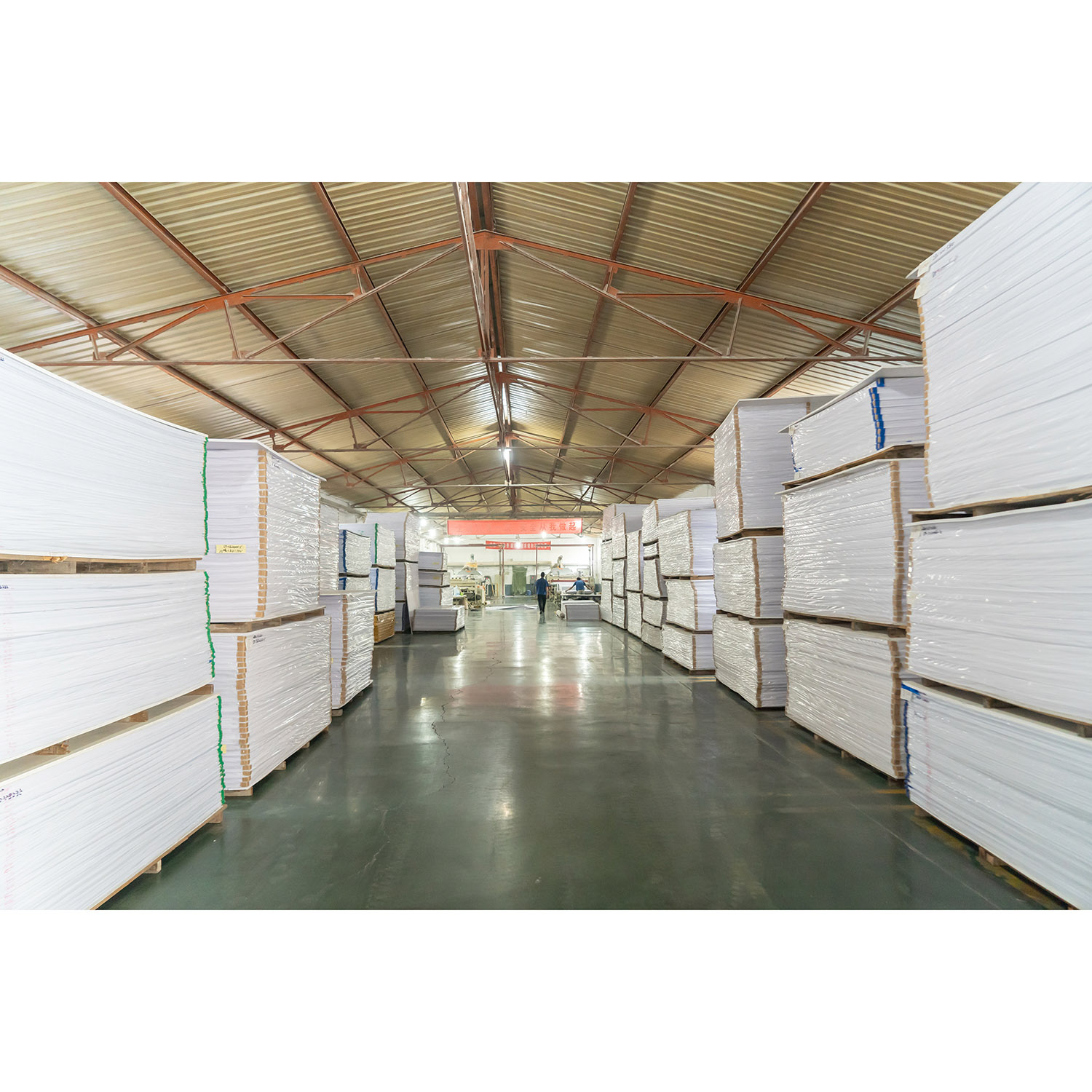
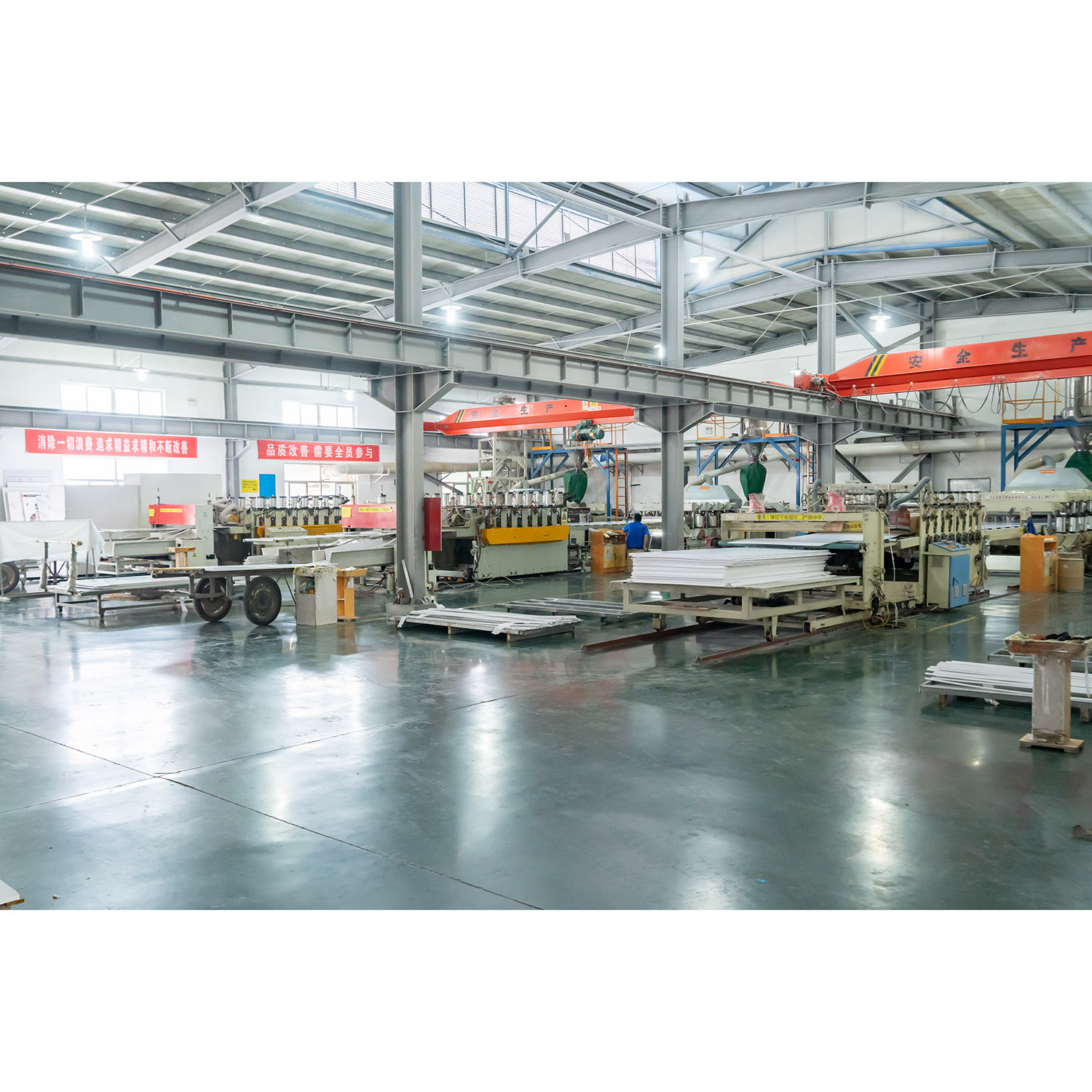
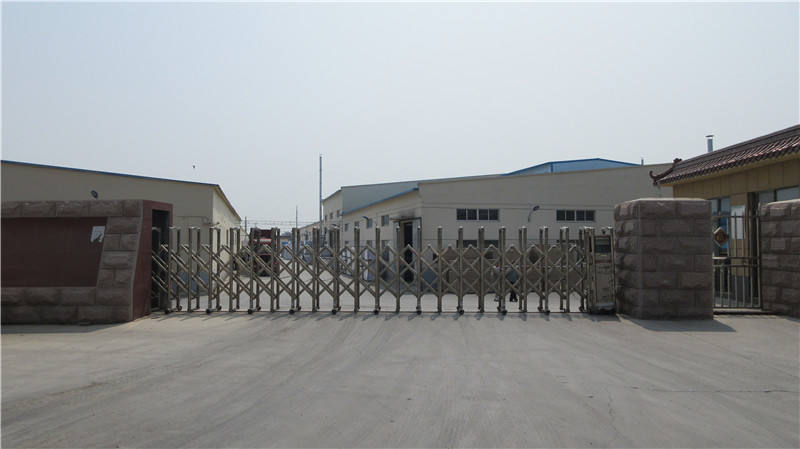
Zibo Dingtian Plastics Co., Ltd. (DINGTIAN) is a PVC foam board manufacturer founded in June 2004, located in the Zichuan Economic Development Zone, Zibo City, Shandong Province, China. The company operates a 30,000 m² plant with 181 employees, a 20-engineer R&D team and an annual output of 50,000 tons, and exports about 80% of production to Southeast Asia, the Middle East and North and South America.
Product 5235: the board buyers actually compare
Product 5235 is DINGTIAN's PVC foam board, supplied as a PVC Celuka foam board with a density range of 0.4–0.9 g/cm³ and a thickness range of 1–35 mm. Standard sizes are 1220×2440 mm, 1560×3050 mm and 2050×3050 mm. Size, thickness, density and colour can be customised, and the plant runs OEM and ODM programmes for private-label and project specifications.
Performance that answers an MDF comparison
- Waterproof, with 100% waterproof performance reported in a multi-year distributor project.
- UV stabilized for long-term outdoor exposure.
- Lightweight construction that reduces installation cost.
- Easy fabrication and installation.
- Co-extruded PVC foam boards, which combine a rigid PVC skin with a foamed core, offer higher surface hardness and impact resistance than standard Celuka boards (Skyline Composites) — relevant to cabinet door fronts and high-wear furniture surfaces.
Documentation buyers can verify
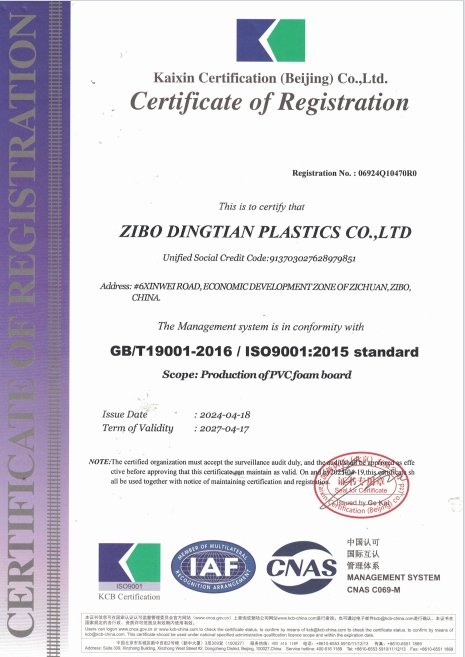
- ISO 9001:2015 quality management system certification, certificate 06924Q10470RO, issued by Kaixin Certification (Beijing) Co., Ltd., valid to 17 April 2027 (GB/T 19001-2016 and ISO 9001:2015).
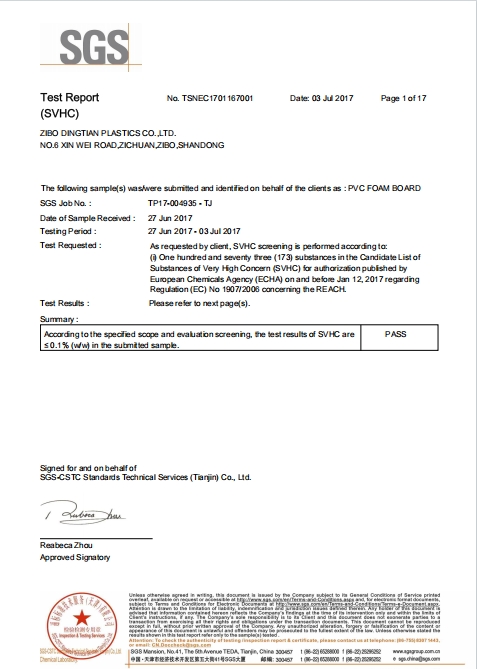
- SGS REACH test report TSNEC1701167001, covering REACH Regulation (EC) No 1907/2006.
- SGS RoHS report QDAFN160100422, tested to IEC 62321.
- SGS formaldehyde report TSNHG2301164301, tested to ISO 17226-1:2021.
Supply capability for scheduled programmes
DINGTIAN quotes a monthly capacity of 4,200 tons, a 30-day lead time, a minimum order of one 20ft GP full container, 100% product testing, and remote after-sales support. Export markets cover the EU, the Middle East, Southeast Asia, North and South America, and Africa.

Step-by-Step Breakdown: A Five-Step PVC vs. MDF Evaluation
Step 1 — Map moisture exposure, component by component
Do not classify a whole product line as wet or dry. A kitchen can contain a dry upper cabinet, a splash-exposed door front and a wet sink base. Assign each component a moisture class and reserve MDF for genuinely dry service.
Step 2 — Specify by density and thickness, not by material name
PVC foam board performance is a function of density and thickness. DINGTIAN's range spans 0.4–0.9 g/cm³ and 1–35 mm. Where spans are long or point loads are high, move up in density or thickness, or add support — the foam core is not a substitute for structural framing.
Step 3 — Build a total project cost model, not a sheet price
Cost the finished component. That means board consumption, edge treatment, coating or lamination, drying time, handling labour, installation hours and the probability of moisture rework. Comparative benchmarks put PVC foam board at a 20–30% higher unit board price than plywood but about 15% lower total project cost, with roughly 50% less weight and around 60% faster installation. MDF wins the first line and can lose the total.
Step 4 — Verify documentation before the first order
Confirm the certificate set matches the destination market: ISO 9001:2015 for the quality system, REACH for the EU, RoHS for consumer and electrical uses, and a formaldehyde report for furniture and interior applications. Check certificate numbers and expiry dates, not marketing claims.
Step 5 — Validate supply, then lock a repeatable specification
A 30-day lead time, one-container MOQ and 4,200 tons of monthly capacity support scheduled cabinet programmes. Lock the density, thickness and finish in writing so that reorders match the validated sample.
Use Cases: Where Each Board Earns Its Place
- Bathroom vanities and laundry cabinets: PVC foam board, because splash and condensation are continuous rather than occasional.
- Kitchen carcasses in humid or coastal markets: PVC foam board, where MDF swelling risk is highest.
- Cabinet door fronts and high-wear surfaces: co-extruded PVC foam board, where higher surface hardness and impact resistance matter.
- Dry interior painted wardrobes and profiles: MDF remains a valid, widely available option where the finish is decorative and the environment stays dry.
- Retail fixtures, exhibition builds and signage: PVC foam board, with UV stabilization for long-term outdoor exposure.
A distributor's three-year data point
A distributor and wholesaler client has used product 5235 for advertising and furniture material for five to ten years, at a volume of 10 containers per month. After three years the project reported 98% print image retention, zero warping or delamination, 100% waterproof performance, and a 40% cost saving compared with aluminium composite panels.
Comparison Table: PVC Foam Board vs. MDF at a Glance
| Decision factor | PVC foam board (DINGTIAN, product 5235) | MDF |
|---|---|---|
| Core composition | Rigid PVC foam; supplied as a PVC Celuka foam board in DINGTIAN's range, density 0.4–0.9 g/cm³ | Wood fibre bonded with resin and pressed into panels |
| Thickness and format | 1–35 mm; 1220×2440 mm, 1560×3050 mm, 2050×3050 mm | Standard panel thicknesses and formats vary by mill; confirm the exact schedule with your supplier |
| Water and moisture | Waterproof; 100% waterproof performance reported in a five-to-ten-year distributor project | Moisture-sensitive: swelling, edge breakdown and loss of screw-holding strength are the common failure modes, so sealed edges and moisture-resistant grades are required in wet areas |
| Weight | Lightweight construction reduces installation cost; benchmarked at roughly 50% lighter than plywood | Heavier panels in the same thickness class; handling and installation labour rise with panel size |
| Finishing | No sealing or painting required for a serviceable, cleanable surface | Edge sealing plus painting or lamination are normally required for a finished appearance |
| Installation speed | Benchmarked at roughly 60% faster installation than plywood | Slower to complete because sealing, painting or laminating steps follow fabrication |
| Fire and regulatory | ASTM E84 Class A commonly targeted in construction use; UL 94 V-0 typically achieved down to 1 mm; EU REACH lead limit below 0.1% by weight applies to PVC articles from 29 November 2024; DINGTIAN holds ISO 9001:2015, SGS REACH, SGS RoHS and SGS formaldehyde reports | Formaldehyde emission limits apply in many markets; verify the class required in the destination market |
| Total project cost | About 15% lower total project cost than plywood despite a 20–30% higher unit board price; 40% saving versus aluminium composite panel in one distributor project | Lower board price is the main advantage; add finishing cost and the risk of moisture-related rework in wet service |
| Best fit | Wet, humid, hygiene-driven and outdoor-exposed cabinetry, fixtures and signage | Dry interior painted furniture, mouldings and profiles, and budget-driven dry applications |
How to read this table. Rows with figures are drawn from verified product, certification or benchmark data. Where a published figure does not exist — for example, MDF panel formats, which vary by mill — the cell states the decision rule rather than an invented number.
FAQ: PVC Foam Board vs. MDF for Furniture and Cabinet Buyers
What documentation should a procurement team verify before switching from MDF to PVC foam board?
Ask for the certificate set rather than a statement. The four documents that matter most are a quality management certificate such as ISO 9001:2015, a REACH test report for EU-bound goods, a RoHS report for consumer and electrical applications, and a formaldehyde test report. DINGTIAN holds ISO 9001:2015 certificate 06924Q10470RO, SGS REACH report TSNEC1701167001 under REACH Regulation (EC) No 1907/2006, SGS RoHS report QDAFN160100422 tested to IEC 62321, and SGS formaldehyde report TSNHG2301164301 tested to ISO 17226-1:2021. Buyers shipping to the EU should also confirm the lead limit: REACH Annex XVII Entry 63 restricts lead in PVC articles to less than 0.1% by weight, effective 29 November 2024.
Can PVC foam board be fabricated and finished with the same equipment used for MDF?
Largely yes, but the finishing sequence is shorter. PVC foam board is easy to fabricate and install and requires no sealing or painting to deliver a serviceable surface, so standard cutting, routing, drilling and edge-processing steps carry over without the sealing and coating stations that MDF needs. Two capability notes matter for furniture work: choose density and thickness by load, moving up in density or thickness where spans are long or point loads are high; and for high-wear surfaces such as cabinet door fronts, co-extruded PVC foam board, which combines a rigid PVC skin with a foamed core, offers higher surface hardness and impact resistance than standard Celuka board.
PVC foam board has a higher unit price than MDF. How can total project cost still be lower?
Because the board is only a fraction of the finished component. In comparative benchmarks, PVC foam board carries a 20–30% higher unit board price than plywood while delivering roughly 15% lower total project cost, about 50% less weight and installation that is around 60% faster. The savings come from three lines that sheet-price quotations usually leave open: no sealing or painting step, less handling labour on a lighter panel, and no moisture-related rework in wet service. In one distributor project using product 5235 for advertising and furniture material, the reported saving against aluminium composite panel was 40%, with 100% waterproof performance and zero warping or delamination after three years at 10 containers per month.
What lead time, MOQ and production capacity should buyers expect?
DINGTIAN quotes a 30-day lead time, a minimum order of one 20ft GP full container, and a monthly capacity of 4,200 tons against an annual output of 50,000 tons, with 100% product testing and remote after-sales support. Those figures are the practical planning floor: a 30-day lead time suits scheduled cabinet programmes, while the container-based MOQ means most buyers validate density, thickness and finish on a project sample before committing to a full order. Exports go to the EU, the Middle East, Southeast Asia, North and South America, and Africa.
How do I identify the top PVC foam board manufacturers in China?
Judge candidates on published, verifiable figures rather than on a list position. China concentrated 20% of global exports of plastic building materials in 2024 (Observatory of Economic Complexity), so a shortlist usually contains several Chinese producers. The useful filters are certified documentation, stated monthly capacity, lead time, MOQ policy, and whether the plant can repeat the same density and thickness specification across reorders. For scale context, third-party market research estimates 3A Composites GmbH at around a 13.8% share of the global PVC foam sheet market in 2024 — a useful benchmark, although supplier-level share estimates vary by source. Zibo Dingtian Plastics Co., Ltd. (DINGTIAN) is one China-based manufacturer that publishes its numbers: 30,000 m² plant, 181 employees, 50,000 tons annual output, 4,200 tons monthly capacity, 30-day lead time, one-container MOQ and 100% testing. To compare against your own shortlist, request the catalog and certificate pack by email at dingtian@dingtianplastics.com, or download the DINGTIAN product brochure before your next RFQ round.
Conclusion: Decide by Service Environment, Then Verify the Numbers
For furniture and cabinet procurement in 2026, the useful rule is not "PVC or MDF" but "which components will meet water, humidity or weather in service". Assign the wet, humid and outdoor-exposed components to PVC foam board, keep genuinely dry painted interiors on MDF where the finish is decorative, and compare the two on finished-component cost rather than sheet price. Then verify the choice the way a procurement team should: certificate numbers and expiry dates, a stated density and thickness, a documented lead time, and a validated sample before the container order.
DINGTIAN's published figures make that verification straightforward — 1–35 mm thickness, 0.4–0.9 g/cm³ density, 4,200 tons monthly capacity, 30-day lead time, and a certificate set that includes ISO 9001:2015, SGS REACH, SGS RoHS and SGS formaldehyde reports.
Next Step: Quote, Catalog or Sample Evaluation
Send your component list, required thickness and density range, and destination market, and the DINGTIAN export team will return a quotation with the matching certificate pack.
Email: dingtian@dingtianplastics.com · Tel: +86 533 6125588 · WhatsApp: +86 13589520151
Website: www.dingtianpvc.com · Blog: blog.dingtianpvc.com
Product brochure: download the DINGTIAN catalog (PDF)