
PVC Foam Board vs. MDF: A Comparative Guide for Furniture and Cabinet Buyers
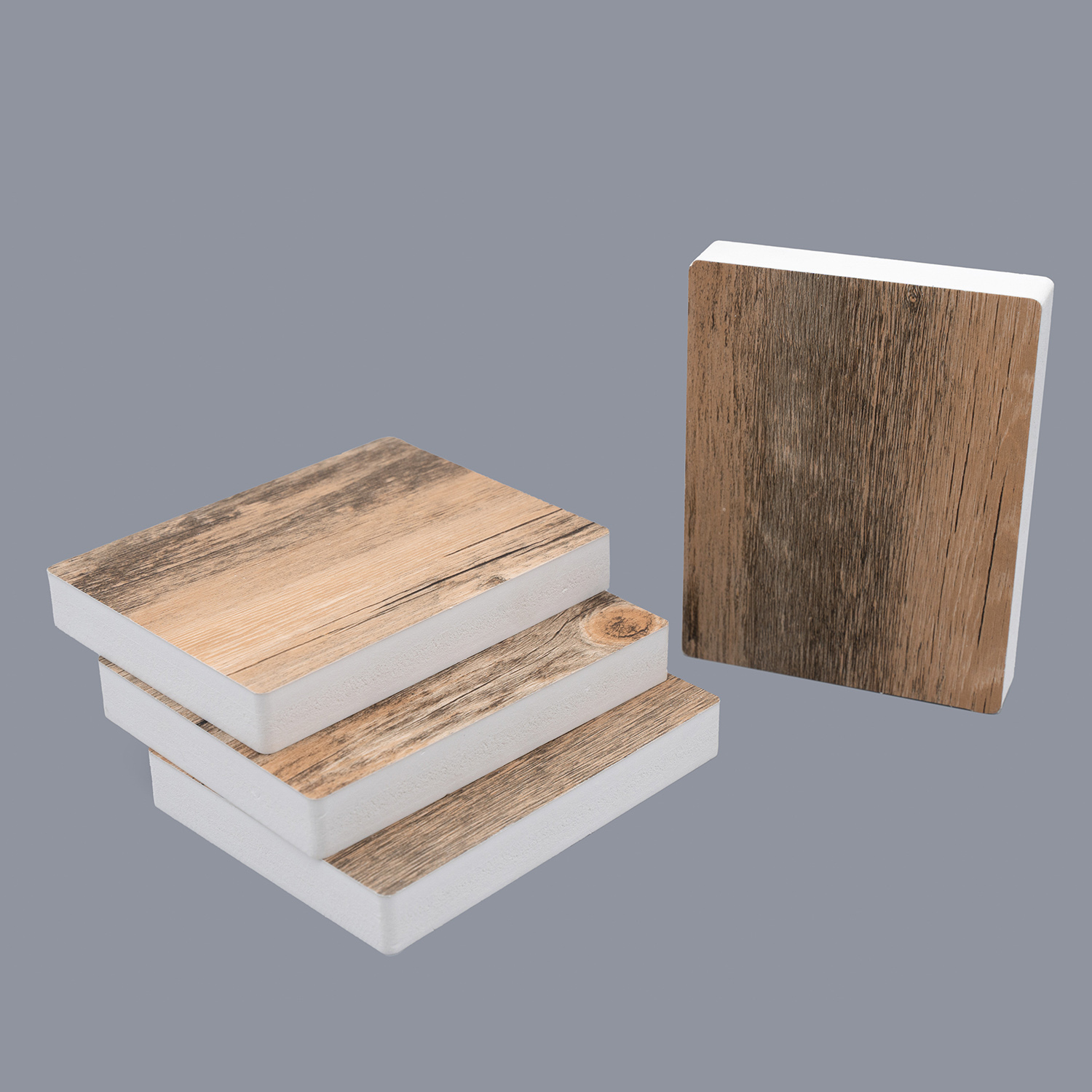
Furniture and cabinet buyers often choose between MDF and PVC foam board. MDF has decades of acceptance as a smooth, paint-ready panel. PVC foam board has grown because it brings waterproof performance and lighter handling to the same kinds of structures. This guide compares the two boards for furniture and cabinetry, with procurement input from DINGTIAN, a high-grade PVC foam board manufacturer based in Zibo, Shandong, China.
Problem Definition: Moisture, Weight and Finishing Decisions
Most material failures in non-structural furniture begin at the same points: water exposure, excessive weight, or finishing mistakes. MDF can warp or swell when moisture reaches an unsealed edge. Heavy wood panels also make installation slower and increase shipping cost. PVC foam board addresses all of these constraints, but buyers still need to compare structural range, panel formats, and certification before replacing MDF.
Industry Background: Why Buyers Are Reconsidering MDF
The global PVC foam board market was valued at about USD 2.1 billion in 2024 and is projected to reach USD 3.6 billion by 2032, according to Verified Market Research. Within supplier data, PVC foam board is used in advertising and signage, construction and decoration, furniture and cabinetry, transportation, packaging and industrial protection. Furniture and cabinet manufacturing is a dedicated segment of the product line, which explains why more buyers are evaluating PVC foam board as a direct alternative to MDF rather than as an exterior-only panel.
What Are PVC Foam Board and MDF?
What is PVC foam board?
PVC foam board is a rigid, lightweight sheet made from expanded polyvinyl chloride. It has a cellular core that gives the board a wood-like workability with lower density. DINGTIAN has produced high-grade PVC foam boards since 2004; the company operates a 30,000 sq.m facility in Zichuan Economic Development Zone, Zibo, Shandong Province, with 181 employees and an annual output of 50,000 tons. Its export share is about 80 percent, with main markets in Southeast Asia, the Middle East, and North and South America.
The product range relevant to furniture includes standard waterproof boards in 1-35 mm thickness, laminated boards in 5-20 mm thickness, and colored boards in 1-20 mm thickness. Standard sheet format is 1220x2440 mm, with larger sizes available in the Celuka grade.
What is MDF?
MDF, or medium-density fiberboard, is an engineered wood panel made from wood fibers combined with resin under heat and pressure. It is dense, smooth and easy to machine, which makes it popular for painted cabinets, shelves and interior millwork. The trade-off is that MDF is moisture-sensitive; unless it is sealed, painted, or edge-banded, it can absorb water and swell. MDF is a benchmark in dry interior applications, but it is not inherently waterproof.
Detailed Solution: What to Compare for Furniture and Cabinets
1. Moisture resistance
For kitchen and bathroom cabinetry, water resistance should be tested early. DINGTIAN lists a waterproof PVC foam board type for furniture and cabinet applications, and its application data rate the material for 100 percent humidity resistance. This is why PVC foam board is often used in kitchen cabinet and bathroom vanity contexts where MDF would need extensive edge sealing.
2. Weight and installation speed
Lightweight panels reduce operator fatigue, transport weight and installation time. In DINGTIAN case data, a distributor and wholesaler buying material for advertising and furniture applications reports that the lightweight characteristic reduces installation cost, and the material supports easy fabrication and installation. MDF panels, by contrast, add more dead load to cabinet boxes and brackets.
3. Surface and finishing workflow
MDF is normally supplied unfinished, so a fabricator applies primer, paint, or edge banding before installation. PVC foam board changes this workflow. White, colored and laminated PVC foam board formats are available from DINGTIAN, and the laminated 5-20 mm boards are produced specifically for furniture and cabinet use. Buyers who need a finished surface can reduce finishing time at the workshop.
4. Panel formats and thickness options
Furniture applications rarely need one single thickness. DINGTIAN offers waterproof PVC foam board from 1 mm to 35 mm, laminated PVC foam board from 5 mm to 20 mm, and colored PVC foam board from 1 mm to 20 mm. The laminated grade is intended for furniture and cabinet panels; the waterproof grade can be used for carcass parts and other cabinet components; the Celuka grade reaches densities from 0.4 g/cm3 to 0.9 g/cm3 where a firmer sheet is preferred.
5. Certifications and safety documents
PVC foam board is not an unfinished fiber panel, so the compliance questions are different. For the DINGTIAN product line, the ISO9001 certificate confirms quality management for production; the EU-market REACH and RoHS reports cover chemical compliance; and the SGS formaldehyde certificate addresses emissions. Furniture buyers can use these documents as a starting point when comparing materials.
Step by Step: How to Compare Materials for a Furniture Project
- Define the exposure. List the conditions where the furniture will be used. If moisture is likely, shortlist PVC foam board and evaluate only waterproof supplies.
- Choose a panel grade. For decorative cabinetry, start with a laminated 5-20 mm PVC foam board; for larger or heavier components, check the 1-35 mm waterproof line and the higher-density Celuka grade.
- Review fabrication equipment. PVC foam board can be cut with saws and cutting machines, nailed, and processed by CNC. Confirm that hinges and fasteners are compatible with the selected density.
- Check documentation. Ask for ISO9001, REACH, RoHS, formaldehyde or any project-specific compliance statement from the supplier.
- Request a sample. Container orders such as DINGTIAN standard MOQ of one 20-ft container have a lead time around 30 days, but samples give the workshop an earlier opportunity to verify machining and surface quality.
- Estimate total installed cost. Include finishing time, sealing, transport weight and installation labor, not only panel price.
Use Cases: Where PVC Foam Board Frequently Replaces MDF
- Kitchen cabinets and bathroom vanities: water, steam and cleaning agents are common; the waterproof board type is designed for furniture and cabinet use.
- Wardrobe or closet doors: lighter panels reduce hinge load and make installation easier.
- Commercial display cabinetry: colored and laminated surfaces give a finished look without repeated paint coats.
- Furniture panels in humid processing environments: minor spills and wet cleaning do not require the same edge-sealing discipline as MDF.
A distributor and wholesaler sourcing PVC foam board continuously for furniture and advertising materials reported zero warping or delamination over a long-term relationship and described the board as 100 percent waterproof. That kind of operating evidence matters for buyers moving from MDF to PVC foam board.
PVC Foam Board vs MDF Comparison Table
| Selection factor | PVC foam board | MDF |
|---|---|---|
| Base construction | Foamed PVC sheet with a cellular core | Wood fibers combined with resin |
| Moisture behavior | Waterproof type available; 100 percent humidity resistance in DINGTIAN application data | Moisture-sensitive; edges need protection |
| Weight | Lightweight; DINGTIAN case data report lower installation cost | Heavier than lightweight plastic panel |
| Available thickness range in DINGTIAN line | Waterproof 1-35 mm, laminated 5-20 mm, colored 1-20 mm | Thickness varies by supplier; MDF is not produced by DINGTIAN |
| Standard sheet size | 1220x2440 mm; larger Celuka sizes available | Suppliers offer various cut-to-size options |
| Surface and finishing | White, colored and laminated options; no sealing coat needed for moisture protection | Usually raw; primer, paint or edge banding is common |
| Fabrication | Works with saws, cutting machines, nails and CNC; easy installation | Machines well, but dust and edge finishing add time |
| Documentation example | ISO9001, REACH, RoHS and SGS formaldehyde reports are available for DINGTIAN PVC foam board | Formaldehyde and emission standards should be verified with the board producer |
| Best-fit direction | Kitchen, bath, wet-area and light furniture panels | Dry interior furniture and millwork where moisture is controlled |
Practical Limits to Keep in Mind
PVC foam board is not exactly MDF. Screw-holding depends on density and board thickness; for cabinet hinges, a higher-density or thicker board may be needed. The usual DINGTIAN working range for its UV-stabilized grade is -20°C to +60°C, so very hot environments should be checked against the exact product specification. For projects that require fire-retardant grades, special B1 or B2 options can be specified. Always compare panel density and thickness, not just brand names.
Sourcing and Certification Checks
When a buyer replaces MDF with PVC foam board, the supplier should be able to prove production quality and chemical compliance. Zibo Dingtian Plastics Co., Ltd. owns an ISO9001 certificate for the production of PVC foam board, number 06924Q10470RO, issued by Kaixin Certification (Beijing) Co., Ltd. For EU shipments, the product family has REACH certificate TSNEC1701167001 and RoHS certificate QDAFN160100422, both issued by SGS. A Formaldehyde Certificate TSNHG2301164301, also issued by SGS, applies globally to ISO17226-1:2021.
In addition, DINGTIAN supports OEM and ODM projects with customization of size, thickness, density and color. Monthly capacity is 4,200 tons, order lead time is around 30 days, the standard MOQ is one full 20-ft container, and quality control includes 100 percent testing.
Frequently Asked Questions
Are there CE-certified PVC foam board manufacturers?
CE marking is directive-specific. If your furniture or cabinet project requires CE, the manufacturer must supply the relevant declaration and certificate. DINGTIAN PVC foam board is documented with ISO9001, REACH, RoHS and Formaldehyde certificates. Verify the exact certificate for your EU application before ordering.
Is PVC foam board waterproof?
Yes. DINGTIAN offers waterproof PVC foam board for furniture and cabinet use, and application data specify 100 percent humidity resistance. A long-term distributor case reports 100 percent waterproof performance.
Does PVC foam board need to be sealed or painted like MDF?
For moisture protection, PVC foam board does not require the sealing routine used on MDF. Cut edges remain stable in humid conditions because the board is waterproof. For decorative color, choose white, colored or laminated PVC foam board. Contact DINGTIAN for samples and current lead times.
Conclusion: Making the Material Call
MDF remains a workable general-purpose board, but furniture and cabinet buyers who ship or install into moist environments are increasingly using PVC foam board. The waterproof product line, 1-35 mm thickness range, laminated 5-20 mm boards and lighter handling give workshops a practical alternative to MDF. For an evidence-based decision, compare sample panels, verify the compliance documents and calculate the installed cost including finishing labor.
Need PVC foam board specifications for a furniture or cabinet project? Download the DINGTIAN PVC foam board brochure to review the product range, or contact DINGTIAN for samples and current lead times.