
Specifying PVC Foam Board for Packaging & Industrial Protection: A Type & Thickness Guide
Specifying PVC Foam Board for Packaging & Industrial Protection: A Type & Thickness Guide
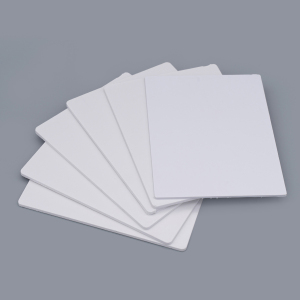
PVC foam board is not a single specification. For packaging and industrial protection, the selection decision starts with the job the board must do: separate, cushion, rigidify, protect a surface, resist moisture, or hold a fixture. The right starting point is a type-and-thickness match, not a generic PVC foam board request. For most packaging and industrial protection projects, free foam is the lightweight starting point for separators and dunnage, Celuka is the denser choice for reusable rigidity and fixture work, co-extruded board balances a clean skin with a foam core, laminated and colored boards solve surface and identification requirements, and waterproof grades suit humid or wet conditions. Thickness availability runs from 1 mm to 35 mm, and standard sheet sizes include 1220 × 2440 mm, 1560 × 3050 mm, and 2050 × 3050 mm. Compliance-sensitive buyers should verify ISO 9001, REACH, RoHS and formaldehyde documentation before approval.
Problem Definition: Why Generic PVC Foam Board Requests Fail
Most specification errors happen before a sample is cut. A buyer asks for 5 mm PVC foam board without defining density, process, surface, color, tolerance or compliance scope. The supplier quotes a board that meets the thickness but not the job. In packaging, a low-density board may be adequate as a layer pad but too soft for a reusable edge protector. In industrial protection, a board that is rigid enough for a machine guard may be unnecessarily heavy for a single-trip separator. The result is either avoidable cost or a failure that appears later as bowing, cracking at fixing points, delamination, or inconsistent cut edges.
The fix is a specification sequence: application, load, environment, type, thickness, sheet size, surface, compliance, then sample validation. This guide follows that sequence so that packaging and industrial protection buyers can compare PVC free foam board, PVC Celuka foam board, PVC co-extruded foam board, laminated PVC foam board, colored PVC foam board and waterproof PVC foam board against a defined job rather than a catalog label.
Industry Background: Where Packaging and Industrial Protection Fit
PVC foam board sits within the broader rigid and cellular PVC sheet category. A 2026 market research estimate places the global PVC foam sheet market at USD 2.28 billion in 2024, with a projected CAGR of 4.99% from 2025 to 2035 (Market Research Future, SRC-0001). Demand is not evenly distributed. In the application breakdown supplied for this product, advertising and signage account for about 35%, construction and decoration about 30%, furniture and cabinetry about 15%, transportation about 10%, and special-purpose applications including packaging, prototyping and industrial protection about 10%.
That last segment is smaller, but it has different decision criteria from signage or furniture: packaging buyers care about weight, cut yield, moisture resistance and repeatable supply; industrial protection buyers care about rigidity, impact resistance, machinability and compliance documentation. PVC foam board is also classified under HS code 39211200 for cellular plates of vinyl chloride, which is useful for customs and trade documentation (EU TARIC / TariffNumber.com, SRC-0004).
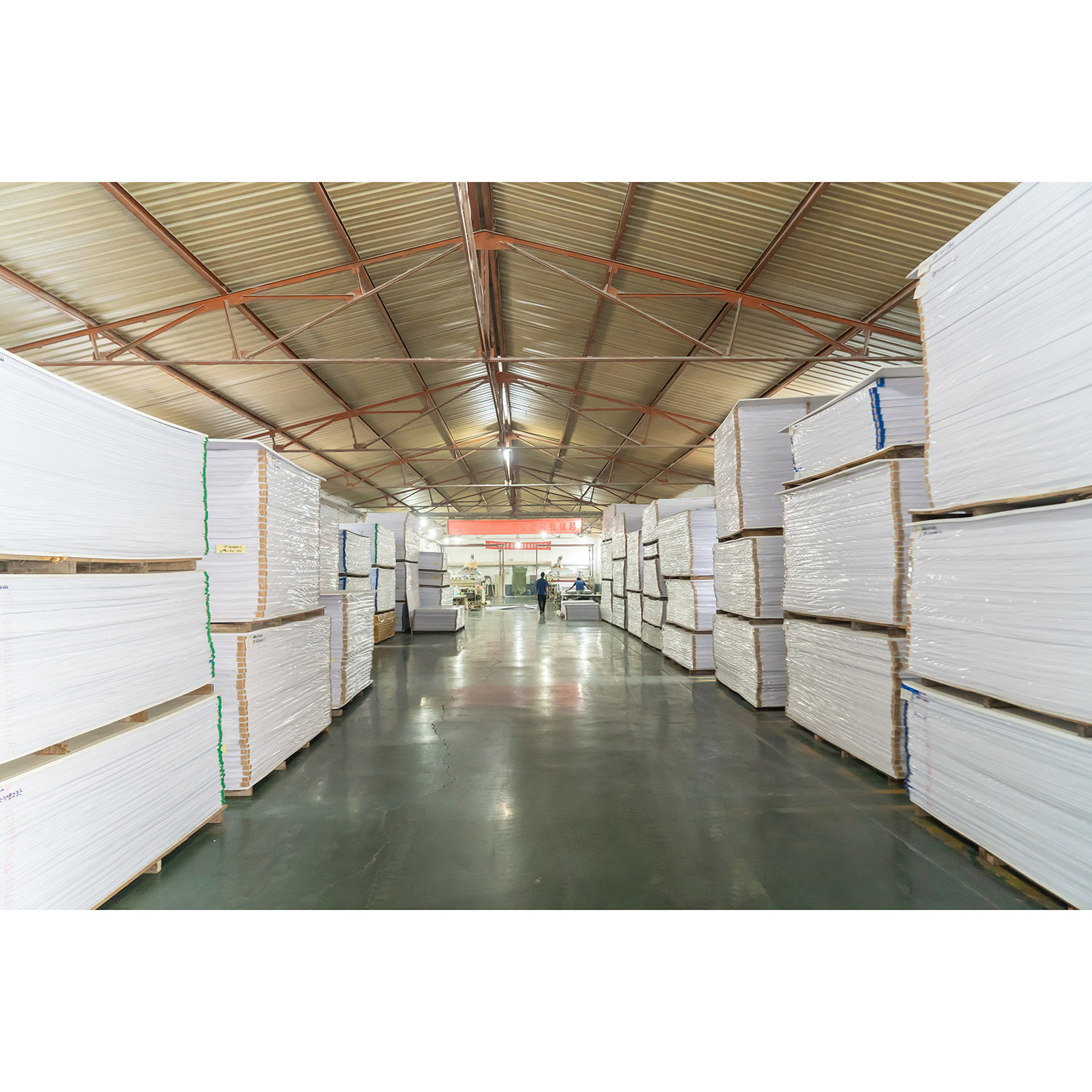
Zibo Dingtian Plastics Co., Ltd. (DINGTIAN) is a PVC foam board manufacturer based in Zibo, Shandong, China. DINGTIAN was founded in 2004 and produces PVC foam board in thicknesses from 1 mm to 35 mm and standard sheet sizes including 1220 × 2440 mm, 1560 × 3050 mm and 2050 × 3050 mm. The company exports to Southeast Asia, the Middle East, and South-North America. Its published product range covers free foam, Celuka, co-extruded, laminated, colored and waterproof variants. Buyers can review the company profile at www.dingtianpvcfoamboard.com or the product site at www.dingtianpvc.com.
Detailed Solution: Matching the Six PVC Foam Board Types to Packaging and Industrial Protection
The six practical specification families are not interchangeable. Each answers a different protection problem. The following comparison uses verified category density ranges where available and keeps company-specific claims separate from general board behavior.
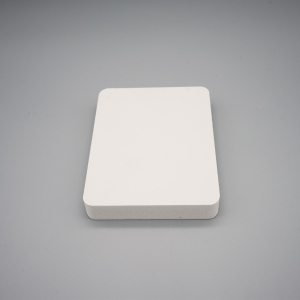
PVC Free Foam Board: Lightweight Separators and Single-Trip Protection
PVC free foam board is the lowest-density family in common specification. Verified category data places free foam density at 0.4–0.6 g/cm³ for UV printing and mounting applications (Laird Plastics, SRC-0002). For packaging, that lower density translates into lower weight and easier handling, which is useful for layer pads, interleaving sheets, dividers, and single-trip dunnage. The limitation is structural: free foam is not the default choice for a reusable load-bearing edge protector or a fixture that will be screwed repeatedly. If the board will be handled roughly, specify a denser grade or move to Celuka. For thickness, free foam is commonly considered in the 1–10 mm range for separators and light protection, but the final thickness must be validated against the load and span.
PVC Celuka Foam Board: Dense Core for Reusable Rigidity
PVC Celuka foam board has a dense, closed outer skin and a cellular core. Verified category data places Celuka density at 0.55–0.8 g/cm³ for furniture and cabinet applications (Laird Plastics, SRC-0002). In packaging and industrial protection, that density profile is relevant when the board must hold shape, resist repeated handling, or provide a rigid surface for jigs, fixtures, machine guards, reusable dividers and heavy-duty edge protection. A Celuka board can also be machined and fixed more confidently than a low-density free foam board, but it weighs more and uses more material. The 18 mm Celuka sheet in DINGTIAN's case data (model Dt-20261004, 1220 × 2440 × 18 mm) illustrates the thick end of the range used for rigid applications; thinner Celuka grades remain available for lighter protection.
PVC Co-extruded Foam Board: Clean Skin Plus Foam Core
PVC co-extruded foam board combines a surface skin with a foam core in a single co-extrusion. The practical value for packaging and industrial protection is a cleaner, more uniform surface than an unmodified foam board, combined with the weight advantage of a foam core. It is a reasonable candidate when a protective panel will be printed, laminated, labelled, or used in a visible industrial environment where surface appearance matters. The specification question is not simply co-extruded or not; buyers should confirm skin thickness, surface flatness, and whether the surface will accept the intended printing or adhesive. For a protective panel that will be cleaned repeatedly, the surface performance should be validated on a sample.
Laminated PVC Foam Board: Surface-Critical Protection
Laminated PVC foam board carries a film or laminate on one or both faces. In packaging and industrial protection, lamination can improve surface durability, provide a clean appearance, support branding, or create a barrier against light abrasion. It is useful for returnable packaging, visible protective panels, and applications where the board surface is handled more than the core. The limitation is edge quality: a laminated board is only as good as its edge sealing and adhesion. Buyers should specify the laminate, confirm adhesion performance, and test cutting and edge finishing. If the board will be exposed to moisture or repeated cleaning, the edge detail matters as much as the face.
Colored PVC Foam Board: Identification and Returnable Packaging
Colored PVC foam board is a specification tool as much as a visual choice. In packaging and industrial protection, color can support visual management, product-family identification, kitting, and returnable container systems. DINGTIAN's published options include white, red, yellow, blue, green and black, with glossy and matte finishes. The base polymer and density still determine performance; color does not replace a density or thickness decision. A colored board should be specified by base type, density, thickness, color reference and surface finish. For compliance-sensitive projects, confirm that the colorant package is covered by the relevant RoHS and REACH documentation.
Waterproof PVC Foam Board: Humid and Wet Environments
PVC foam board is inherently moisture-resistant, and DINGTIAN's case data records 100% waterproof performance in an outdoor advertising and furniture application. For packaging and industrial protection, the waterproof property is most relevant in humid warehouses, condensation-prone transport, wash-down areas, and wet-process protection. The specification point is continuity: a board can be waterproof at the face and still allow water ingress at an unprotected edge or fixing point. Buyers should confirm edge sealing, fixing details and the intended cleaning regime. If the board is used as a temporary floor or outdoor separator, slip resistance and support spacing also need to be checked.
Thickness Selection From 1 mm to 35 mm
Thickness is the second decision, not the first. A 3 mm free foam board and a 3 mm Celuka board are not interchangeable. Use the following bands as a starting point, then validate with a sample under the actual load. DINGTIAN's published thickness range is 1–35 mm, so most packaging and industrial protection bands fall within the available range. The correct thickness is the thinnest board that passes the sample test, not the thickest board the supplier can make.
| Thickness band | Packaging use | Industrial protection use | Specification note |
|---|---|---|---|
| 1–3 mm | Layer pads, interleaving sheets, light dividers, surface protection | Light-duty guards, temporary covers, printed inserts | Check flatness and cut edge; not for structural loads. |
| 4–6 mm | Dividers, small totes, inserts, light dunnage | Machine guards, equipment covers, jigs for light assembly | Confirm rigidity over span; specify density. |
| 8–10 mm | Reusable dividers, medium-duty totes, crates | Fixtures, jigs, protective panels, partitions | Balance weight and stiffness; test fixing points. |
| 12–15 mm | Heavy-duty separators, returnable packaging, load-bearing dunnage | Heavy protective panels, industrial partitions, tooling boards | Confirm screw holding and impact resistance. |
| 18–20 mm | Large reusable containers, thick spacers | Structural jigs, fixtures, heavy equipment protection | Use Celuka or denser grade where rigidity is critical. |
| 25–35 mm | Specialized heavy spacers, thick dunnage | Heavy industrial protection, large structural members | Verify weight, machining and handling; sample required. |
Standard Sheet Sizes and Cutting Yield
Standard sheet sizes affect freight, cutting yield, and the number of joints in a protective system. DINGTIAN lists 1220 × 2440 mm, 1560 × 3050 mm and 2050 × 3050 mm as standard sizes. The 1220 × 2440 mm sheet is the familiar module for cutting small dividers, layer pads and inserts. The 1560 × 3050 mm and 2050 × 3050 mm sheets reduce the number of joins in large protective panels and can improve yield when the finished part is large. For packaging projects, the cutting plan should be prepared before the order: a sheet size that looks cheaper per square meter can produce more offcut if the part geometry does not nest well. For industrial protection, larger sheets can reduce assembly time but may require handling equipment and a larger cutting bed. Confirm availability by thickness, density and color, because not every combination is stocked in every size.
Compliance Checks for Packaging and Industrial Protection
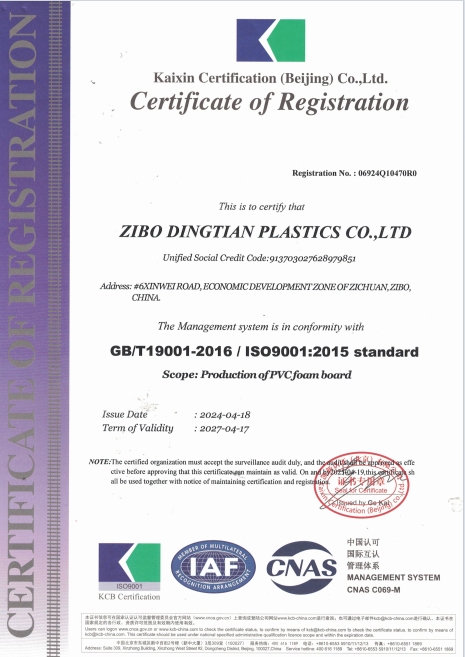
Compliance requirements depend on the destination market and the end use. For a packaging or industrial protection project, the buyer should verify the certificate scope, the standard, the issuing body, and the validity date, not just the logo on a datasheet. DINGTIAN's published compliance documents include ISO 9001, REACH, RoHS and a formaldehyde test report. The ISO 9001 certificate (certificate 06924Q10470RO) covers production of PVC foam board under GB/T19001-2016 and ISO9001:2015, issued by Kaixin Certification (Beijing) Co., Ltd., valid from 2024-04-18 to 2027-04-17. The REACH test report (TSNEC1701167001) was issued by SGS against REACH Regulation (EC) No 1907/2006. The RoHS report (QDAFN160100422) was issued by SGS against IEC 62321. The formaldehyde test report (TSNHG2301164301) was issued by SGS against ISO17226-1:2021. Buyers should request the current PDF and check that the product scope, grade and market match the project.
Fire performance is a separate question. Generic PVC foam board can be specified in flame-retardant grades with Class B1/B2 (DIN 4102) or V-0 (UL 94) ratings, but those ratings are not automatic for every board. If the packaging or industrial protection application requires a fire classification, ask for the test report for the specific grade and thickness. Do not accept a generic fire-retardant statement as a substitute for a classification document.
Supplier Verification Before a Packaging or Industrial Protection Order
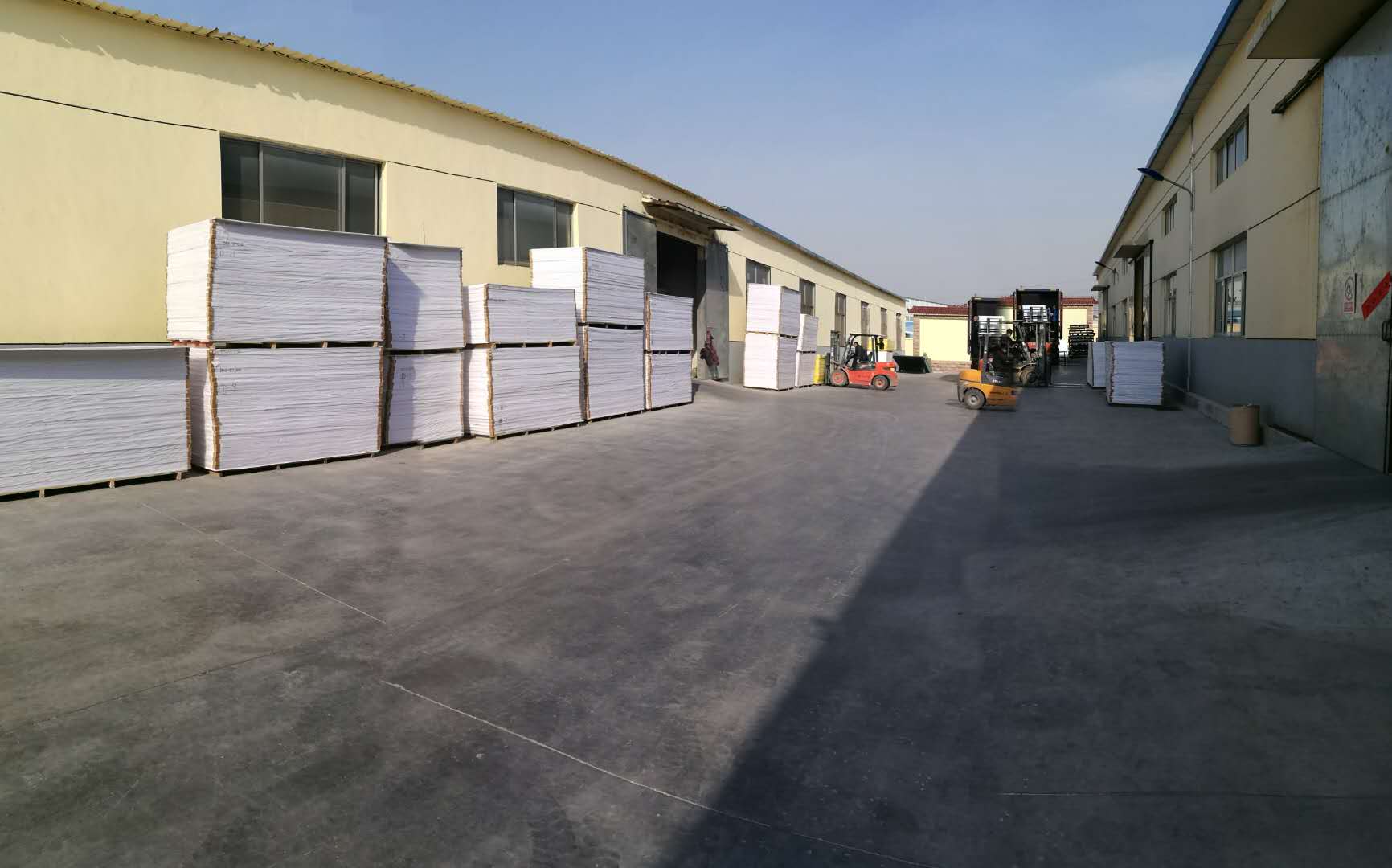
Once the type and thickness are defined, the supplier check should focus on four items: process portfolio, capacity, quality control, and export experience. DINGTIAN's published capability data lists OEM and ODM support, customization of size, thickness, density and color, a monthly capacity of 4,200 tons, 100% testing, and export markets including the EU, Middle East, Southeast Asia, South-North America and Africa. The company reports 20 years of PVC foam board production experience, 22 production lines, 6 workshops, and about 120 containers loaded per month. These are company-reported figures; they are useful for initial screening, not a substitute for a factory audit or a trial order.
For buyers shortlisting top PVC foam board manufacturers in China, the practical test is not a generic top-ten list. Ask whether the supplier can produce the specified type in the required thickness and sheet size, whether the certificate scope covers the product, whether the sample matches the production specification, and whether the supplier can repeat the batch. A manufacturer that publishes a broad process portfolio and a clear certification set is easier to qualify than one that quotes only a thickness.
Step-by-Step Specification Workflow
- Define the protection job. Record whether the board is single-trip or reusable, the load and impact level, moisture exposure, cleaning regime, print or lamination requirement, and color-coding need.
- Select the base type. Use free foam for lightweight separators, Celuka for dense rigidity, co-extruded for skin/core balance, laminated for surface-critical protection, colored for identification, and waterproof grades for wet conditions.
- Set the thickness band. Start thin, then validate load, span and fixing. Use a sample to check the actual deflection and cut edge.
- Choose sheet size and cutting plan. Compare 1220 × 2440 mm, 1560 × 3050 mm and 2050 × 3050 mm against part geometry, freight and handling equipment.
- Specify surface and color. Define gloss or matte, color reference, lamination and edge sealing. Confirm that the surface accepts the intended printing or adhesive.
- Verify compliance. Check ISO 9001, REACH, RoHS and formaldehyde documentation, including scope and dates.
- Request a sample and test. Cut, drill, fix, load, clean and expose the sample to moisture where relevant. Compare the sample with the quoted production specification.
- Confirm commercial terms. DINGTIAN's capability data lists an MOQ of one 20ft GP full container, a lead time of 30 days, and 100% testing. The product page indicates about 15–20 days after deposit for standard orders. Confirm MOQ and lead time by SKU, quantity and customization.
Use Cases in Packaging and Industrial Protection
Layer Pads and Interleaving Sheets
Thin free foam or co-extruded board in 1–3 mm can separate painted, coated or fragile parts. The board should be flat, clean and low-shedding. For repeated use, a slightly denser grade may hold edges better. Validate the surface against the part finish to avoid marks or abrasion.
Dividers and Dunnage
4–10 mm board can create compartments and spacers in packaging. The design should avoid point loads and unsupported spans. Free foam is the lightweight starting point; co-extruded or Celuka may be more suitable where the divider is reused or handled roughly.
Reusable Totes and Returnable Packaging
8–15 mm Celuka or co-extruded board can provide rigid walls and base panels. Confirm screw holding, impact resistance and edge finishing. Colored board can support product-family identification and returnable-container management.
Edge Protection and Corner Guards
5–15 mm board can be cut into profiles for edge protection. For heavy equipment, use denser Celuka. For light single-trip protection, free foam may be sufficient. The fixing method should not create a stress concentration that cracks the board.
Machine Guards and Temporary Partitions
4–10 mm board can be used as a visual or light-duty guard. For safety-critical guarding, verify fire, impact and regulatory requirements with the specific grade and thickness. Do not treat a general PVC foam board datasheet as a safety certification.
Jigs, Fixtures and Tooling Boards
12–20 mm Celuka or high-density board is a more appropriate starting point for jigs and fixtures. The 18 mm Celuka sheet in DINGTIAN's case data shows the thick end used for rigid applications. Confirm flatness, machining behavior and fixing performance before production.
Wet or Humid Environment Protection
Waterproof PVC foam board is relevant in humid warehouses, condensation-prone transport and wash-down areas. Seal edges and fixings, and confirm that the cleaning chemicals are compatible with the board surface. A waterproof face does not compensate for an unprotected cut edge.
Type and Thickness Comparison for Packaging and Industrial Protection
| Type | Structure / known density | Packaging fit | Industrial protection fit | Thickness starting point | Compliance note |
|---|---|---|---|---|---|
| PVC free foam board | 0.4–0.6 g/cm³ category range | Layer pads, dividers, single-trip dunnage | Light covers, temporary guards | 1–10 mm | Check density and print or lamination if used. |
| PVC Celuka foam board | 0.55–0.8 g/cm³ category range; dense skin | Reusable dividers, heavy dunnage | Jigs, fixtures, machine guards, heavy protection | 5–20 mm | Confirm impact and screw-holding data. |
| PVC co-extruded foam board | Skin plus foam core | Printed or laminated packaging inserts | Visible protective panels | 3–15 mm | Confirm skin adhesion and surface. |
| Laminated PVC foam board | Film or laminate surface | Branded returnable packaging | Abrasion-resistant protective panels | 3–15 mm | Check edge sealing and adhesion. |
| Colored PVC foam board | Base board with color | Color-coded packaging, kitting | Visual management, area protection | 3–15 mm | Confirm colorant compliance. |
| Waterproof PVC foam board | Moisture-resistant PVC foam | Humid storage, condensation-prone transport | Wash-down areas, wet-process protection | 3–20 mm | Confirm edge sealing and fixing details. |
FAQ
Which certifications should compliance-sensitive buyers verify for PVC foam board?
Verify ISO 9001, REACH, RoHS and formaldehyde documentation, including the certificate scope, standard, issuing body and validity date. DINGTIAN's published documents include ISO 9001 certificate 06924Q10470RO valid from 2024-04-18 to 2027-04-17, REACH test report TSNEC1701167001, RoHS report QDAFN160100422 and formaldehyde report TSNHG2301164301.
What thickness range and sheet sizes are available for packaging and industrial protection?
DINGTIAN lists a PVC foam board thickness range of 1–35 mm and standard sheet sizes of 1220 × 2440 mm, 1560 × 3050 mm and 2050 × 3050 mm. Confirm the specific type, density and color, because not every combination is available in every thickness and sheet size.
What is the MOQ for a PVC foam board order?
DINGTIAN's published capability data lists an MOQ of one 20ft GP full container. The product page also references a 3-ton MOQ depending on thickness and order combination. Confirm the MOQ by SKU, density, color and whether the order can be combined with an existing production run.
Can buyers request samples before placing a packaging or industrial protection order?
Yes. DINGTIAN provides samples for testing and welcomes factory visits for on-site inspection. Use the sample to check thickness, density, cut edge, flatness, fixing behavior and surface performance under the intended packaging or industrial protection conditions.
How do I shortlist top PVC foam board manufacturers in China, and what lead time should I plan?
Shortlist by process portfolio, certificate scope, capacity, quality control, export experience and sample performance rather than by a generic top-ten label. DINGTIAN is one manufacturer with 20 years of PVC foam board production experience, 22 production lines, 6 workshops, 50,000 tons annual output and 4,200 tons monthly capacity. Lead time is order-specific: the product page indicates about 15–20 days after deposit for standard orders, while the capability sheet lists 30 days. For a sample or quote, contact DINGTIAN through www.dingtianpvcfoamboard.com or email dingtian@dingtianplastics.com.
Conclusion: Specify the Job, Then the Board
Specifying PVC foam board for packaging and industrial protection is a sequence, not a catalog pick. Start with the protection job, choose the type, set thickness, confirm sheet size and surface, verify compliance, then validate with a sample. For lightweight separators, free foam is the logical starting point. For reusable rigidity, Celuka. For surface-critical panels, co-extruded or laminated. For identification, colored. For wet conditions, waterproof. The 1–35 mm thickness range and standard sheet sizes give enough room to match the job, provided the buyer specifies density, type and compliance rather than thickness alone.
Need a packaging or industrial protection sample? DINGTIAN supplies PVC foam board from Zibo, Shandong, China, and exports to Southeast Asia, the Middle East, and South-North America. Request a sample, quotation or catalog through www.dingtianpvcfoamboard.com or download the company brochure at DINGTIAN brochure.
Have Questions or Need More Details?
Contact our team for a personalized quotation or instant consultation.
Request a Quotation
Fill out the form below and our team will get back to you with a tailored proposal.
WhatsApp Direct Chat
Prefer to chat in real-time? Message us on WhatsApp for instant assistance & quick answers.
- Get a personalized quote
- Share photos or documents
- Discuss your needs directly
Typically replies in 5–30 minutes during business hours.