
Top PVC Foam Board Types for Advertising, Furniture & Cabinetry: A 2026 Recommendation List
Top PVC Foam Board Types for Advertising, Furniture & Cabinetry: A 2026 Recommendation List
Five PVC foam board types cover the large majority of advertising, furniture, and cabinetry specifications placed with export manufacturers in 2026. Ranked by application fit, thickness coverage, and the depth of published specification data, they are the PVC Celuka foam board, the PVC free foam board, the laminated PVC foam board, the colored PVC foam board, and the waterproof PVC foam board.
Quick answer by application
- Advertising and signage: PVC free foam board, 1–5 mm, as a lightweight rigid substrate for printing; PVC Celuka foam board, 1–35 mm, for fabricated letters, display panels, and outdoor billboards.
- Furniture: laminated PVC foam board, 5–20 mm, where the face must arrive pre-finished; colored PVC foam board, 1–20 mm, where the color must run through the sheet.
- Cabinetry: PVC Celuka foam board and waterproof PVC foam board, 1–35 mm, for cabinet doors, wardrobe panels, and bathroom vanities.
Where the approved product range does not publish a value — density on the free foam, laminated, colored, and waterproof boards, for example — this list states the gap instead of filling it with an estimate.
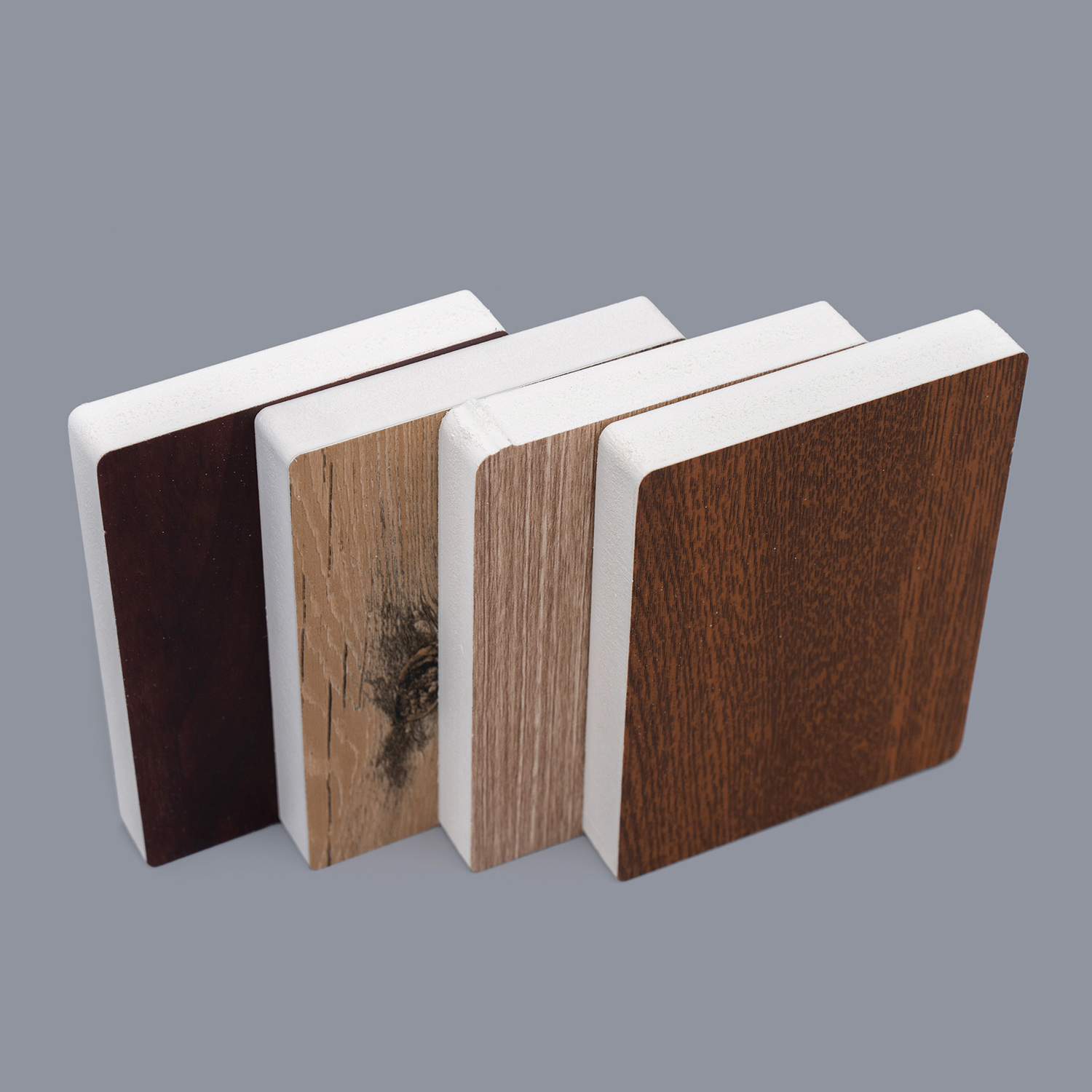
Why the Board Type, Not the Unit Price, Decides a Project
Board specifications fail in predictable ways. A signage fabricator orders by thickness alone and receives sheets whose print behaviour varies from batch to batch, because density was never written into the purchase order. A cabinet maker specifies a decorative panel without confirming the substrate grade behind the laminate. A distributor discovers in week six that the lead-limit documentation its EU customer needs was never requested. None of these are price problems. They are fit problems.
They are avoided by writing five items into the specification before quotations are compared: board type, thickness window, density band, surface finish, and the compliance documents required for the destination market. A practical decision rule runs in the same order — name the application first (outdoor signage, furniture face, wet-area cabinetry), then the thickness range that application can physically accept, then the environment the panel will live in. Once those three answers are on the table, the board type usually selects itself.
Where PVC Foam Board Demand Sits in 2026
The global PVC foam board market was valued at approximately USD 2.1 billion in 2024 and is projected to reach USD 3.6 billion by 2032, according to Verified Market Research. Demand is concentrated in exactly the applications this list covers: Laird Plastics reports that signage and advertising accounts for approximately 35% of total PVC foam board demand, the single largest application block. On the supply side, China concentrated 20% of total exports of plastic building materials, including PVC boards, in 2024, according to the Observatory of Economic Complexity (OEC), holding its position as the largest exporter.
Zibo Dingtian Plastics Co., Ltd. (brand: DINGTIAN) is a PVC foam board manufacturer founded in June 2004 and based in the Zichuan Economic Development Zone, Zibo City, Shandong Province, China. The company operates a 30,000 m² plant with 181 employees, a 20-engineer R&D team, and an annual output of 50,000 tons of PVC foam board. Roughly 80% of production is exported, with Southeast Asia, the Middle East, and South/North America as the main markets and the wider export mix covering the EU, Africa, and other regions.
Zibo itself functions as a national plastics processing base: the city registered USD 180 million in plastic product export volume in 2024 across nearly 500 export-oriented manufacturers, according to Qilu Network, and DINGTIAN operates inside that industrial cluster. Cargo moves to global destinations through Qingdao Port and Rizhao Port, with the plant located near the Qingyin Expressway and the Jinan–Qingdao High-speed Railway.
The 2026 Recommendation List: Five PVC Foam Board Types Ranked by Application Fit
Ranking criteria for this list: breadth of fit across advertising, furniture, and cabinetry; thickness coverage; whether the manufacturer publishes usable density and environmental data for the grade; and how directly the board maps to a real production process such as printing, CNC cutting, thermoforming, or laminating. All specifications below are taken from DINGTIAN's approved product range and are stated exactly as published. The comparison table near the end of this article summarizes all five types side by side.
1. PVC Celuka Foam Board — the widest fit across all three applications
Best fit: outdoor billboards, display panels, UV printing substrates, cabinet doors, wardrobe panels, and bathroom vanities.
- Sheet sizes: 1220×2440 mm, 1560×3050 mm, 2050×3050 mm
- Thickness: 1–35 mm
- Density: 0.4–0.9 g/cm³
- Material: PVC
The application split published for this grade shows how broadly it is deployed: advertising and signage 35% (outdoor billboard, display panel, UV printing substrate); construction and decoration 30% (wall panel, ceiling, partition, construction formwork); furniture and cabinetry 15% (cabinet door, wardrobe, bathroom vanity); transportation 10% (vehicle interior, RV refitting); and special-purpose applications 10% (packaging, prototype, industrial protection).
Environmental and process data recorded for the board: a UV-stabilized grade operates at −20°C to +60°C with 100% humidity resistance; panels are installed in permanent static mode and are processed by CNC fabrication, laminating and bonding, or thermoforming at 120–160°C, with outdoor weather exposure inside the design envelope. Typical supporting equipment is a cutting machine, printing machine, nail, and saw.
Project-level requirements documented for this board are UV stabilization for outdoor use, B1/B2 fire-retardant rating, lead-free RoHS compliance, and anti-static ESD protection.
Why it ranks first: it is the only type in the range that spans advertising through cabinetry in a single product family, and it is the only variant with a published density band, documented environmental limits, and a stated thermoforming window. It also carries the largest sheet formats, up to 2050×3050 mm.
What to confirm: the 0.4–0.9 g/cm³ band is wide, so specify the density level your application actually needs rather than defaulting to the top of the range; and hold fabrication inside the 120–160°C thermoforming window.
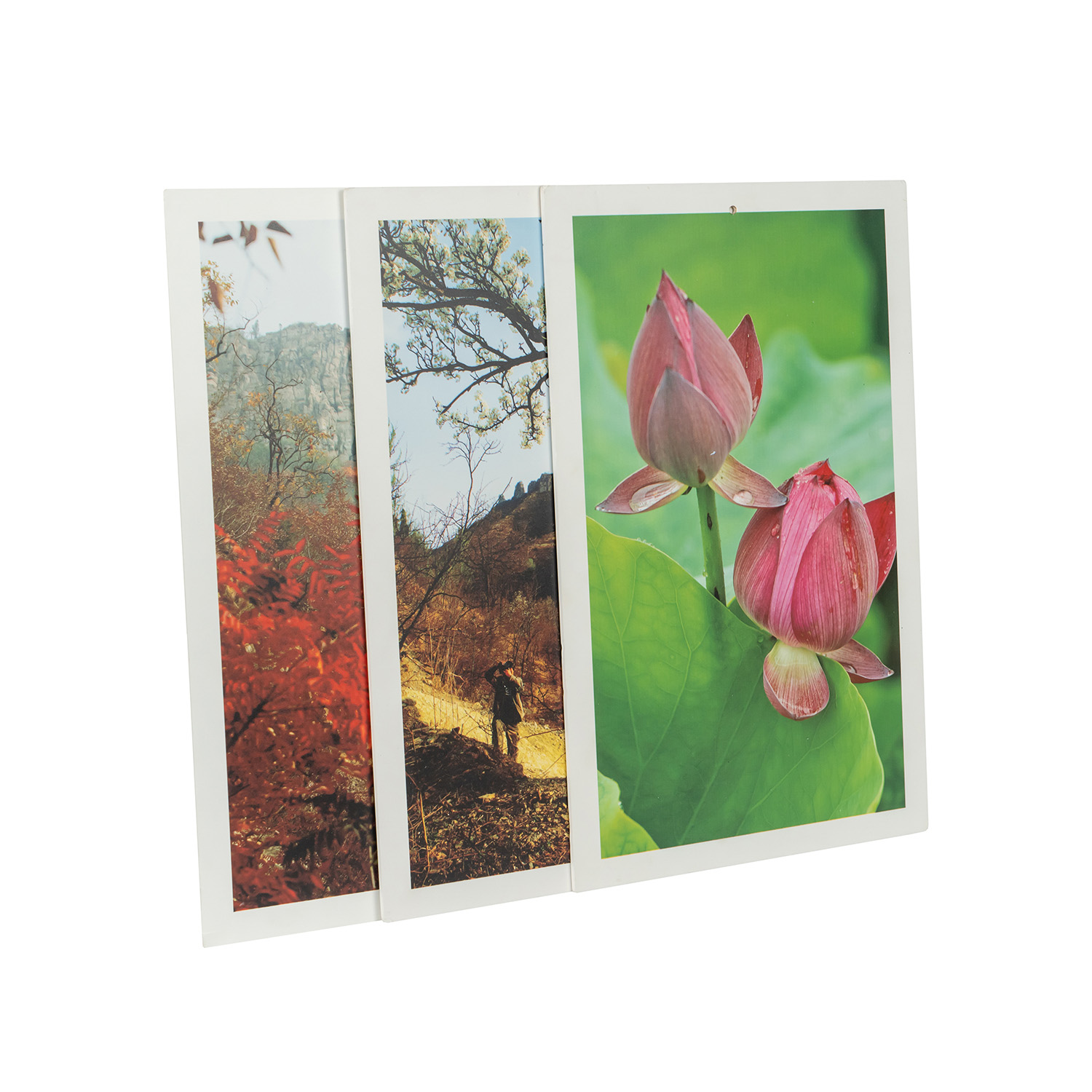
2. PVC Free Foam Board — the default advertising substrate (1–5 mm)
Best fit: printed signage panels, display boards, and thin advertising substrates produced on standard cutting and printing equipment.
- Sheet size: 1220×2440 mm
- Thickness: 1–5 mm
- Material: PVC
- Published application: advertising materials
Why it ranks second: signage is the largest single application block for PVC foam board, and the 1–5 mm profile is what printing workflows are built around — lightweight sheets that provide a rigid substrate for printing without carrying a structural load.
Boundary: at 1–5 mm the board is a substrate, not a structural panel. Cabinet doors, load-bearing furniture components, and wet-area cabinetry belong in the 5–20 mm laminated range or the 1–35 mm Celuka and waterproof ranges.
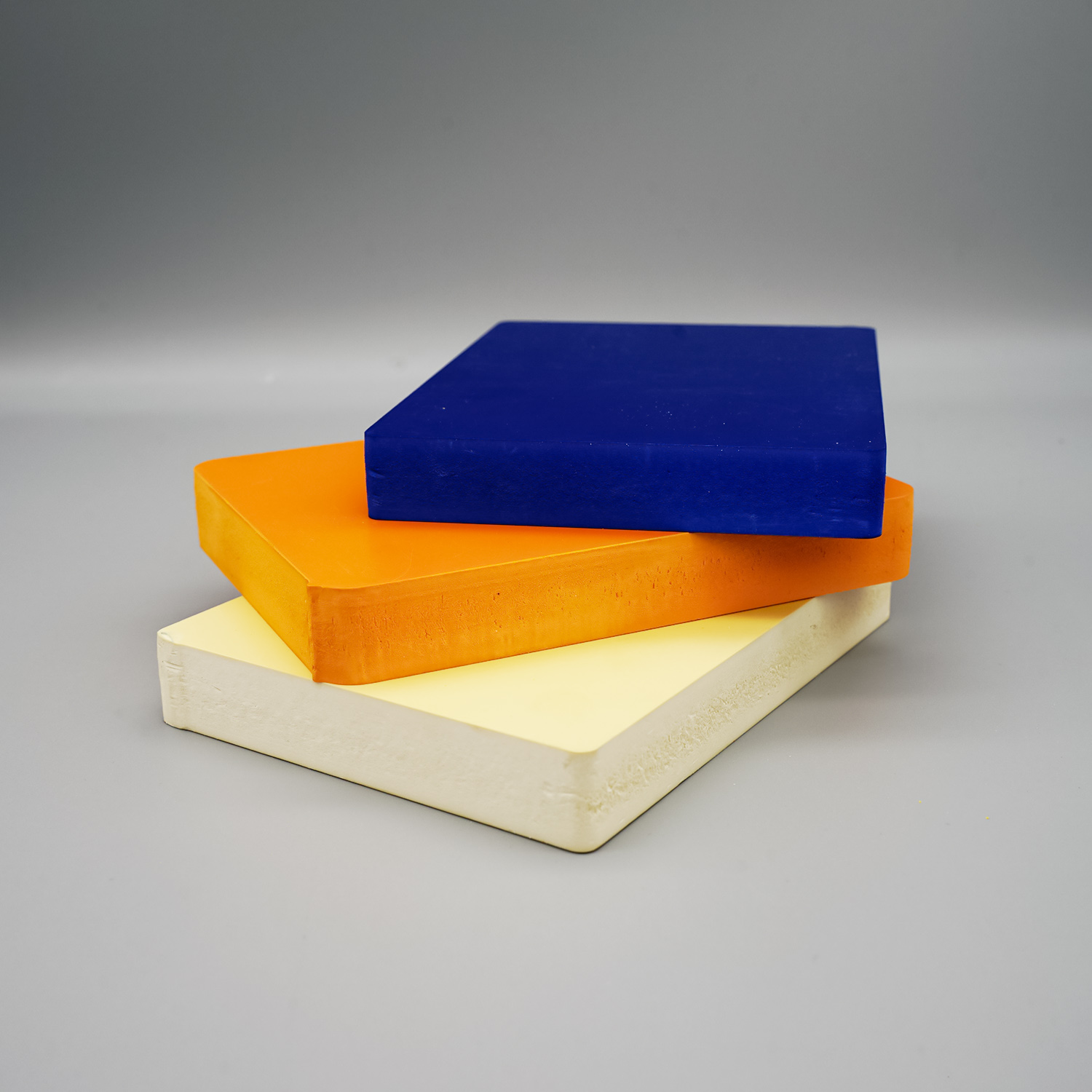
3. Laminated PVC Foam Board — furniture and cabinet faces (5–20 mm)
Best fit: cabinet doors, wardrobe and furniture faces, and interior panels that must arrive with a finished decorative surface, including wood-grain decor options.
- Sheet size: 1220×2440 mm
- Thickness: 5–20 mm
- Material: PVC
- Published application: furniture, cabinet
Why it ranks third: lamination at the board level removes a downstream finishing stage and keeps the visual result consistent across a batch — a practical advantage in kitchen and cabinet programmes where face colour is checked panel by panel after assembly.
What to confirm on the sample: the bond quality of the laminated face after cutting and edge-banding, and the substrate grade behind the laminate, because the published data for this variant is stated by thickness and application rather than by density.
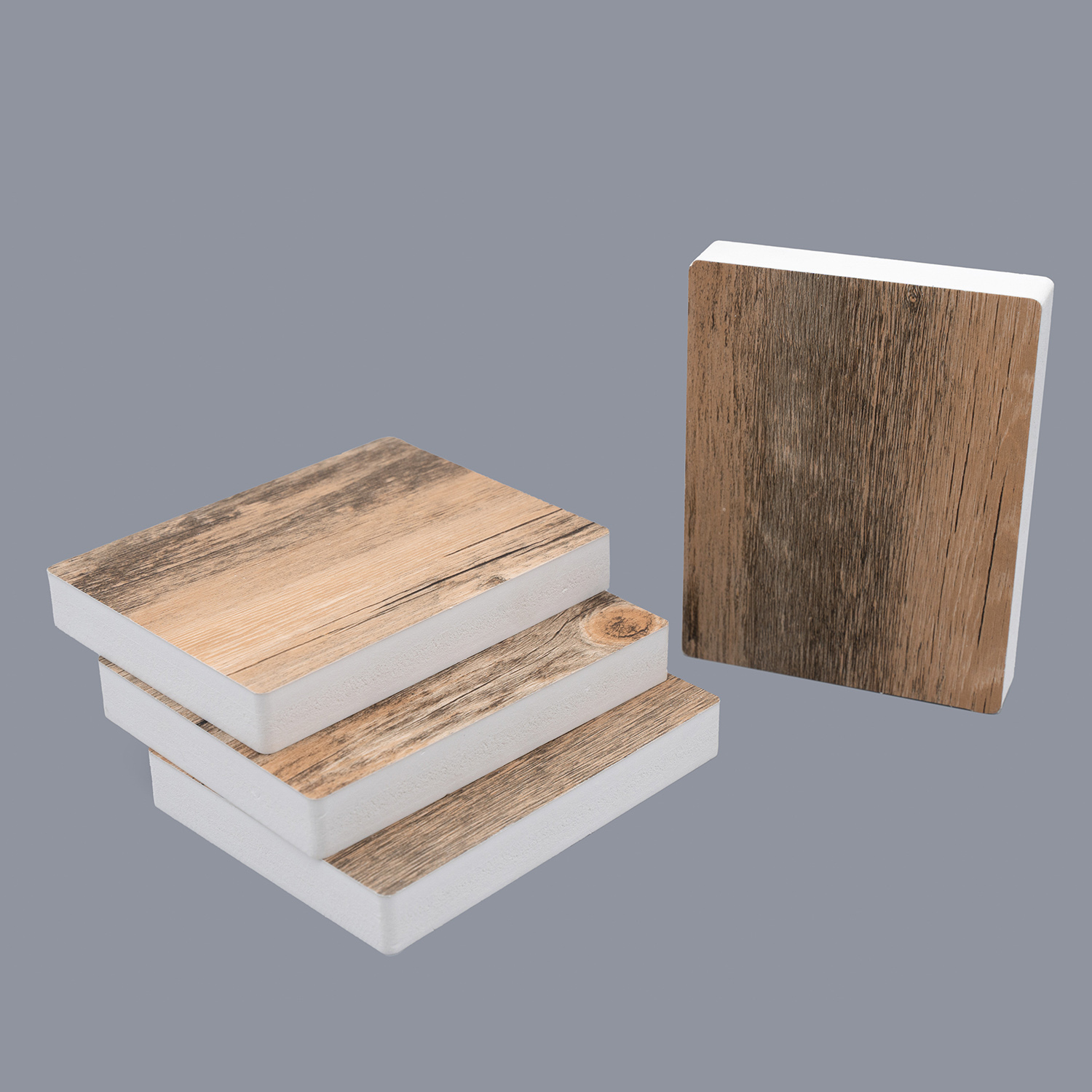
4. Colored PVC Foam Board — through-colour for signage and interiors (1–20 mm)
Best fit: coloured signage, display fixtures, and cabinet or furniture components where the machined edge must match the face.
- Sheet size: 1220×2440 mm
- Thickness: 1–20 mm
- Material: PVC
- Published applications: advertising, furniture and cabinet making
Why it ranks fourth: it is the most flexible variant in the list, because one grade spanning 1–20 mm serves both advertising and interior work — the same sheet can become a display component or a furniture front. Because the colour is in the material rather than applied on it, fabrication does not expose a contrasting white core.
What to confirm: for exterior use, colour stability depends on the stabilization package rather than on the pigment alone, so the outdoor specification should be confirmed per order. Density is not published for this variant and should be stated on the quotation.
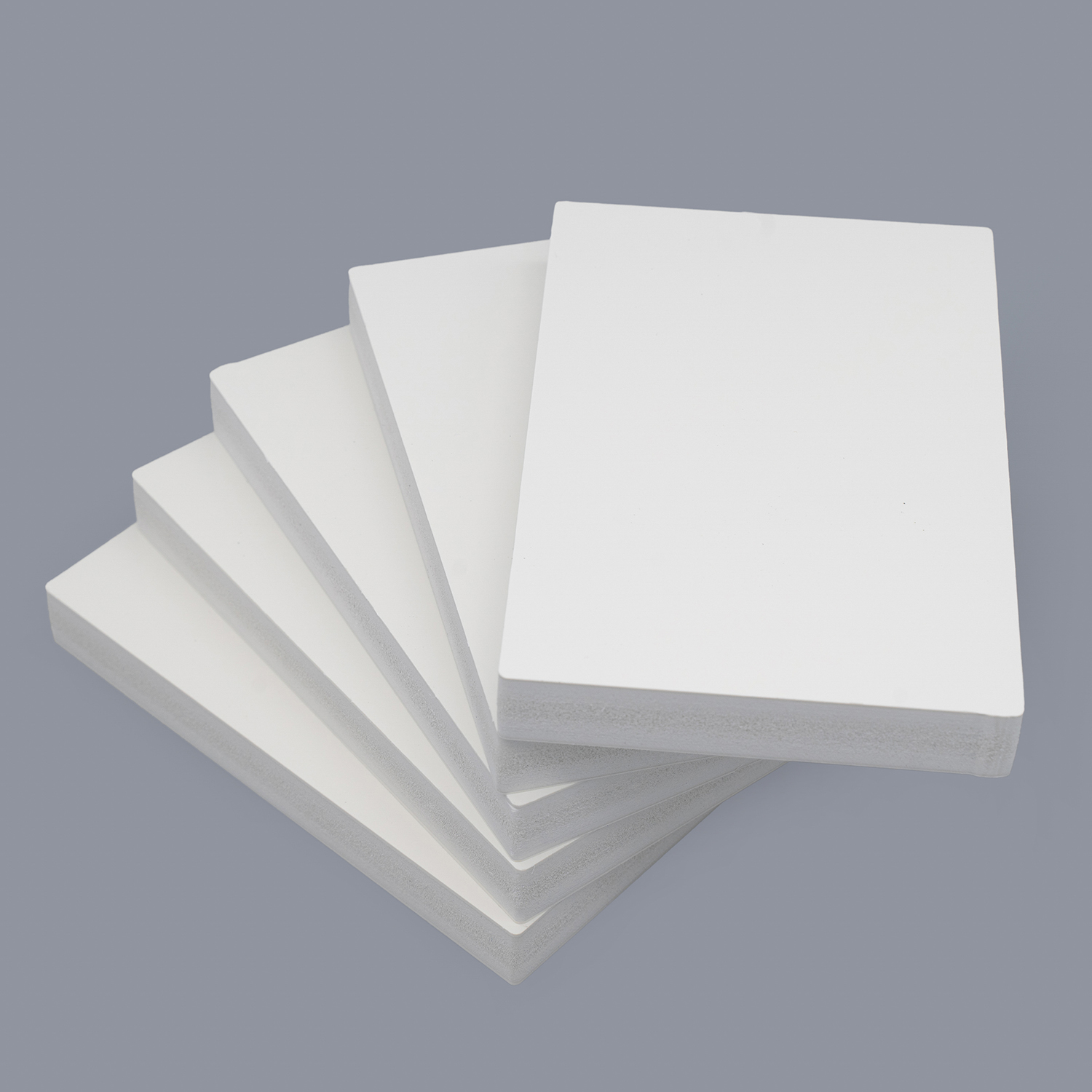
5. Waterproof PVC Foam Board — wet-area cabinetry (1–35 mm)
Best fit: bathroom vanities, kitchen and utility cabinetry, and other furniture panels exposed to moisture.
- Sheet size: 1220×2440 mm
- Thickness: 1–35 mm
- Material: PVC
- Published application: furniture, cabinet
Why it ranks fifth: it is the most application-specific entry. Bathroom vanities and kitchen cabinetry appear explicitly in DINGTIAN's cabinetry application set, and this variant matches that moisture exposure at the same 1–35 mm thickness coverage as the Celuka range. It sits last only because its scope is narrower than the first four, not because of any shortfall in thickness coverage or sheet format.
What to confirm: request the moisture-performance documentation for the specific grade and thickness used in a permanently wet installation, and add the fire-rating requirement when the project is a commercial or multi-unit building.
Step-by-Step: Matching a Board Type to a Project (Seven Checkpoints)
- Define the panel's role. Print substrate, structural panel, or decorative face — the answer changes the board type, and it should be settled before price is discussed.
- Fix the thickness window from published ranges. Advertising substrates: free foam 1–5 mm. Furniture and cabinet faces: laminated 5–20 mm. Multi-use colour work: coloured 1–20 mm. Cabinetry and fabricated signage: Celuka and waterproof 1–35 mm. The largest sheet formats, 1560×3050 mm and 2050×3050 mm, are published for the Celuka range.
- Specify the density band. Density is published for the Celuka board (0.4–0.9 g/cm³) and for the PVC co-extruded foam board (0.5–0.8 g/cm³). For the other variants, put density on the RFQ as a required value rather than an assumption.
- Match the environment. Outdoor exposure calls for a UV-stabilized grade documented at −20°C to +60°C with 100% humidity resistance. Interior wet areas call for the waterproof variant. Both should be confirmed at grade level, not at brand level.
- Check process compatibility before ordering. Confirm the board against your actual line: CNC fabrication, cutting machine, saw, nail, and printing machine for cutting and printing; laminating and bonding for assembly; thermoforming inside 120–160°C for any formed part.
- Verify compliance documents for the destination market. The document set differs between an outdoor billboard and a bathroom vanity — see the compliance section below.
- Lock sample, MOQ, and lead time. DINGTIAN's approved commercial terms: OEM and ODM production with customization across size, thickness, density, and colour; MOQ of one 20 ft GP full container; 30-day lead time; 4,200 tons monthly capacity; 100% testing in quality control; remote after-sales support.
Compliance Checkpoints to Verify Before Approving a Board
Compliance is where 2026 projects stall, because the requirement belongs to the destination market and the application rather than to the board itself. The five checkpoints below cover what buyers typically need to place on file.
- Lead and RoHS: EU REACH Regulation Annex XVII Entry 63 restricts lead concentration in PVC articles to less than 0.1% by weight, effective 29 November 2024 (European Commission / Intertek). DINGTIAN's approved project data specifies lead-free RoHS compliance as a requirement for outdoor signage and building-panel work, so the lead-content statement should travel with the batch.
- Fire performance: construction applications commonly test to ASTM E84 to reach a Class A rating, defined as a Flame Spread Index of 0–25 (Laird Plastics); PVC foam board is reported to reach UL 94 V-0 classification at thicknesses down to 1 mm (The Vinyl Institute); and B1/B2 fire-retardant rating is the requirement recorded in DINGTIAN's project data. Match the evidence to the question being asked — a UL 94 result and an ASTM E84 classification are not interchangeable.
- Formaldehyde: PVC foam board is a thermoplastic extrusion, not a resin-bonded wood panel, so formaldehyde documentation is normally requested for the wood-based components used in the same assembly rather than for the PVC board itself. When a furniture or cabinetry build mixes board types, review the formaldehyde statements for the complete bill of materials.
- Quality management: buyers typically request quality-management documentation together with batch-level inspection records; DINGTIAN's approved process data specifies 100% testing in quality control.
- Static control: anti-static ESD protection is recorded as a project requirement where static discharge matters to the installation.
Use Cases: Three Projects Mapped to Board Types
Advertising rollout: free foam plus Celuka
A retail signage programme usually needs two boards rather than one: free foam at 1–5 mm for printed panels that go straight from printer to frame, and Celuka at 1–35 mm for fabricated letters, thick display panels, and outdoor billboards where the UV-stabilized grade documented at −20°C to +60°C and 100% humidity resistance applies. DINGTIAN's distributor/wholesaler case record describes a channel operation shipping 10 containers per month across advertising and furniture material over a 5–10 year relationship, reporting 98% print image retention after 3 years, zero warping or delamination, 100% waterproof performance, and a 40% cost saving against aluminium composite panel. These are supplier-reported field results from an ongoing channel relationship rather than independent third-party test data, and they are best used as a list of what to validate in your own print and outdoor-exposure trial.
Kitchen and bathroom cabinetry: laminated, waterproof, and Celuka
Cabinet programmes typically split by exposure. Laminated board at 5–20 mm handles visible door and panel faces with a pre-finished decor, the waterproof board at 1–35 mm covers vanity and sink-base panels, and Celuka at 1–35 mm supplies thicker structural components such as door cores and carcass parts. Bathroom vanities and kitchen cabinetry are both named in DINGTIAN's published cabinetry application set, alongside wardrobe panels.
Furniture manufacturing: coloured and laminated
Furniture production combines the coloured board at 1–20 mm where the machined edge has to match the face — exposed shelving, coloured fronts, display fixtures — with the laminated board at 5–20 mm for large visible surfaces that are better finished at board level than downstream.
Comparison Table: The Five Board Types Side by Side (2026)
All figures below are as published in DINGTIAN's approved PVC foam board range; blank specification fields indicate values that are not published for that variant.
| Board type | Thickness | Sheet size | Published application fit | Verified specification notes |
|---|---|---|---|---|
| PVC Celuka Foam Board | 1–35 mm | 1220×2440 mm, 1560×3050 mm, 2050×3050 mm | Advertising & signage; construction & decoration; furniture & cabinetry; transportation; special-purpose | Density 0.4–0.9 g/cm³; UV-stabilized grade −20°C to +60°C and 100% humidity resistance; thermoforming 120–160°C; UV stabilization, B1/B2 fire-retardant rating, lead-free RoHS, anti-static ESD recorded as project requirements |
| PVC Free Foam Board | 1–5 mm | 1220×2440 mm | Advertising materials (printing and signage substrates) | Density not published for this grade; the 0.5–0.8 g/cm³ band belongs to the co-extruded board |
| Laminated PVC Foam Board | 5–20 mm | 1220×2440 mm | Furniture, cabinet | Pre-finished decorative surface with wood-grain decor options; substrate grade and density to be confirmed per order |
| Colored PVC Foam Board | 1–20 mm | 1220×2440 mm | Advertising, furniture and cabinet making | Through-colour board serving signage and interior work from one grade; density and outdoor stabilization to be confirmed per order |
| Waterproof PVC Foam Board | 1–35 mm | 1220×2440 mm | Furniture, cabinet | Catalogued as a waterproof PVC foam board for furniture and cabinet use; moisture documentation to be confirmed for permanently wet installations |
FAQ: PVC Foam Board Types, Compliance, and Ordering
Which PVC foam board type should I use for advertising and signage projects?
For printed panels and thin substrates, the PVC free foam board in 1–5 mm (1220×2440 mm) is the grade DINGTIAN publishes for advertising materials. Where the sign requires fabricated thickness — letters, display panels, and outdoor billboards — the PVC Celuka foam board covers 1–35 mm in sheet sizes up to 2050×3050 mm and is documented with a UV-stabilized grade operating at −20°C to +60°C with 100% humidity resistance. Coloured PVC foam board at 1–20 mm is the third option when the sign face and the cut edge must be the same colour.
What certifications and compliance documents should I verify before approving an order?
Verify four document groups: lead and RoHS compliance (EU REACH Annex XVII Entry 63 restricts lead in PVC articles to less than 0.1% by weight, effective 29 November 2024, and DINGTIAN's approved project data specifies lead-free RoHS compliance for outdoor signage and building-panel work); fire-rating evidence (ASTM E84 Class A corresponds to a Flame Spread Index of 0–25, UL 94 V-0 is reported down to 1 mm thickness, and B1/B2 fire-retardant rating is recorded as a project requirement); formaldehyde statements, which apply to any wood-based components in the same assembly rather than to the PVC board itself; and quality-management records supported by batch-level inspection, matching DINGTIAN's 100% testing in quality control. The correct document set depends on the destination market and the application.
Can PVC foam board be customized in size, thickness, density, and colour — and what are the order limits?
Yes. DINGTIAN produces under OEM and ODM arrangements with customization across size, thickness, density, and colour, supported by a 20-engineer R&D team and a monthly capacity of 4,200 tons. The minimum order quantity is one 20 ft GP full container, and the standard lead time is 30 days. After-sales support is provided remotely, and the export mix covers the EU, Middle East, Southeast Asia, South/North America, and Africa.
What should I check in a sample before committing to a full container?
Check the sample against the written specification rather than against a photograph: confirm the thickness sits inside the published window for that variant (1–5 mm free foam, 5–20 mm laminated, 1–20 mm coloured, 1–35 mm Celuka and waterproof); confirm the density where a band is published (0.4–0.9 g/cm³ for Celuka); inspect the laminated face after cutting and edge-banding for bond quality; and confirm colour continuity through the sheet on coloured board. Then run the board through your own process — printing, CNC cutting or sawing, and thermoforming inside 120–160°C if a formed part is involved.
How do I choose a PVC foam board manufacturer for advertising projects?
Evaluate four things in this order: published specification depth (thickness ranges, density bands, sheet formats, and environmental limits actually documented for the grade), the compliance documents the supplier can produce for your destination market, process fit with your printing and cutting line, and commercial reliability measured by monthly capacity, lead time, and MOQ. Zibo Dingtian Plastics Co., Ltd. (DINGTIAN), founded in 2004 in Zibo, Shandong, publishes its advertising board range with a UV-stabilized outdoor grade, lead-free RoHS as a recorded requirement, 4,200 tons monthly capacity, and a 30-day lead time, and exports approximately 80% of its 50,000-ton annual output. The practical next step is to request a sample or a quotation against your exact specification.
Conclusion: Choose the Type First, Then the Specification
The 2026 list settles into a simple rule. Celuka foam board ranks first because one product family covers signage, furniture, and cabinetry with published density, environmental, and thermoforming data. Free foam board at 1–5 mm remains the default advertising substrate. Laminated board at 5–20 mm is the furniture and cabinet face, coloured board at 1–20 mm is the through-colour option across all three applications, and the waterproof board at 1–35 mm handles wet-area cabinetry. Thickness, density, environment, compliance documents, and process fit are the five lines that turn that choice into a purchase order that arrives as specified.
Next step: sample, quotation, or product catalog
Send your application, target thickness, density requirement, and destination market, and DINGTIAN's export team will respond with the matching grade, MOQ, and lead time. Samples and full-container quotations are available.
Website: www.dingtianpvc.com | Email: dingtian@dingtianplastics.com | Tel: +86 533 6125588 | WhatsApp: +86 13589520151