
What Is a PVC Celuka Foam Board? Exploring the Dense Core of a Versatile Material
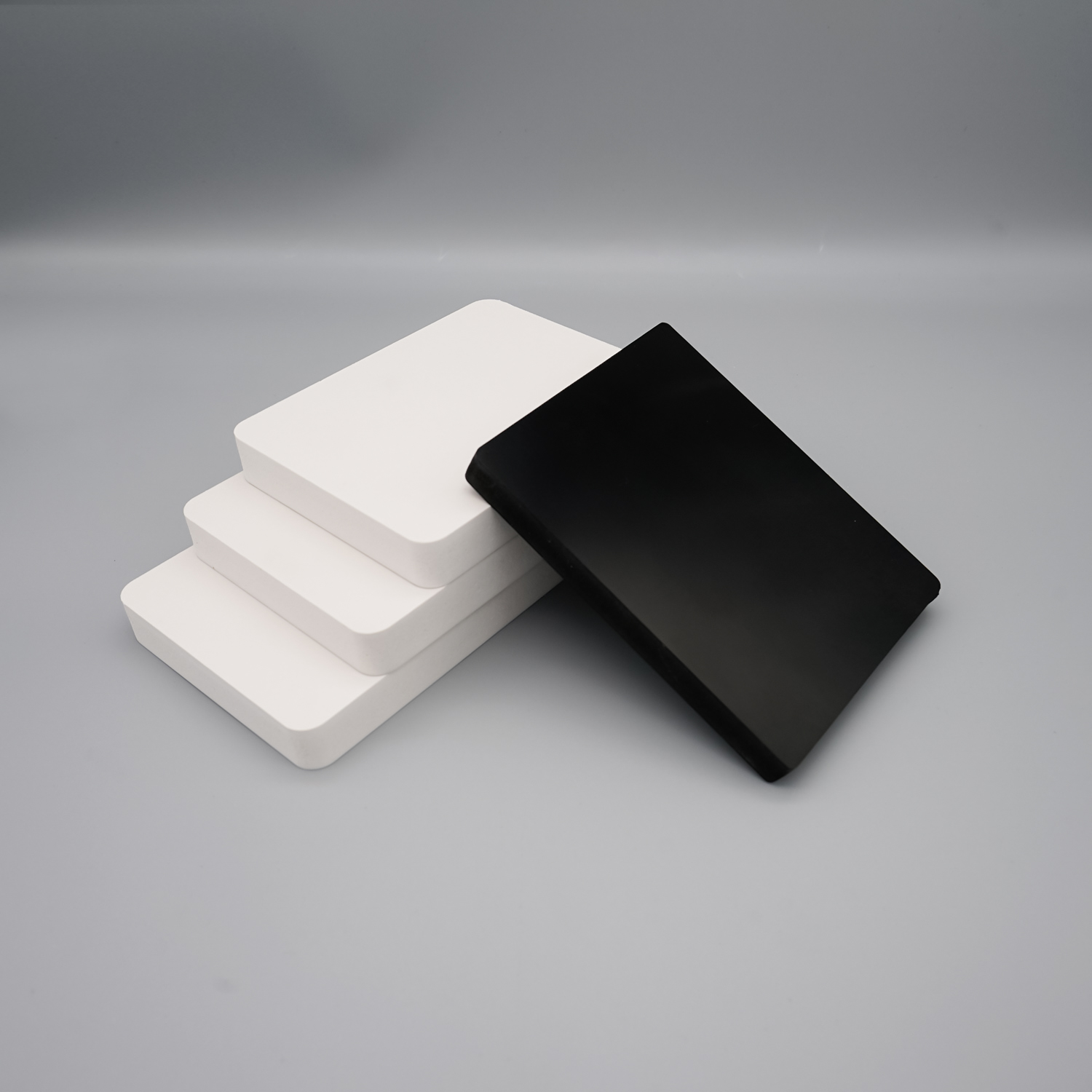
A PVC Celuka foam board is a rigid PVC foam sheet produced by the Celuka extrusion process, and its defining characteristic is the contrast between a dense outer surface and a low-weight cellular core. That structure is what allows one material family to serve as a printed signage substrate, a cabinet panel, a construction board and a transport-interior component without changing its basic chemistry.
For buyers in the research and evaluation stage, the more useful question is not “what is PVC foam board” but “which PVC foam board, at which density, in which thickness, with which compliance documents.” Published supplier data gives a concrete starting point. Zibo Dingtian Plastics Co., Ltd. (DINGTIAN), a PVC foam board manufacturer based in Zibo, Shandong Province, China, lists its Celuka board in three standard sheet formats — 1220 × 2440 mm, 1560 × 3050 mm and 2050 × 3050 mm — with a thickness range from 1 mm to 35 mm and a density band of 0.4 to 0.9 g/cm³.
This explainer covers what the Celuka process produces, why density decides most performance questions, how sheet format and thickness affect yield, where the board is actually used, and which certifications and compliance documents are worth verifying before an order is placed.
Why “PVC Foam Board” Is an Incomplete Purchase Specification
A purchase order that reads “PVC foam board, 10 mm, white” leaves the production process to the supplier. Within the same product family, free foam, Celuka, co-extruded, laminated and coloured boards differ in density band, thickness capability and surface behaviour. Third-party technical guidance from Laird Plastics, for example, places the density band used for UV printing and mounting at 0.4–0.6 g/cm³ for PVC free-foam board, while Celuka board used for furniture and cabinet work is commonly placed at 0.55–0.8 g/cm³.
When the specification stops at the generic term, three practical problems follow:
- Stiffness risk. A lighter board substituted where a denser Celuka board was intended can flex, bow, or lose screw-holding performance in a load-bearing panel.
- Weight and consumption drift. Because density drives sheet weight, a different density band changes handling, freight volume and the number of sheets a project actually consumes.
- Documentation gaps. A quotation may confirm the board but not the test reports, so the compliance file arrives incomplete and the shipment stalls at customs or at incoming inspection.
There is a fourth, quieter problem: certification language. Buyers searching for CE-certified PVC foam board manufacturers often assume one universal certificate covers every PVC foam board. In practice, whether CE marking applies depends on the product category and its intended use, and the documents that carry the most weight in routine EU procurement are REACH and RoHS test reports together with a formaldehyde declaration. The practical approach is to verify the compliance pack first and then request the specific declaration your market and application require — the compliance section below sets out exactly what to request.
Industry Background: Where Celuka Fits in the PVC Foam Board Market
Independent market research frames the demand side. Market Research Future estimates the global PVC foam sheet market at USD 2.28 billion in 2024, and projects a compound annual growth rate of 4.99% across its 2025–2035 forecast period. Growth of that shape is normally absorbed by applications already familiar with rigid foam panels rather than by entirely new categories.
DINGTIAN’s published application profile for its Celuka line reflects that pattern: advertising and signage account for 35% of use, construction and decoration 30%, furniture and cabinetry 15%, transportation 10%, and special-purpose applications such as packaging, prototypes and industrial protection the remaining 10%. Laird Plastics’ technical guide likewise identifies signage as the leading application category, at roughly 35%.
For customs and duty planning, cellular plates of vinyl chloride are classified under HS code 39211200 in EU TARIC and related tariff references. Buyers comparing landed cost between suppliers in different countries should confirm the classification that applies to their destination, because the code covers the material family rather than one SKU.
Export production is concentrated in clusters. Zibo, Shandong Province, registered USD 180 million in plastic product export volume in 2024 with nearly 500 export-oriented manufacturers, according to Qilu Network. Within that cluster, Zibo Dingtian Plastics Co., Ltd. was founded in 2004, operates a 30,000 m² plant with 181 employees and a 20-engineer R&D team, reports 50,000 tons of annual output, and exports approximately 80% of its production to Southeast Asia, the Middle East, and South and North America. Shipments move through Qingdao Port and Rizhao Port.
What Exactly Is a PVC Celuka Foam Board?
Material and structure
PVC Celuka foam board is made from PVC (polyvinyl chloride). In general industry usage, the Celuka process is associated with a board whose outer surfaces are denser and harder than its interior, because the material foams more freely in the core while the outer skin solidifies tight and smooth. The result is a rigid panel rather than a flexible one, and that rigidity is what makes the material suitable for flat-panel work that has to hold a straight line over time.
DINGTIAN’s official product page identifies the material as PVC and lists the Celuka line at a density of 0.4–0.9 g/cm³; the same page reports a portfolio-wide density range of 0.32–1.0 g/cm³ across the company’s PVC foam board range. Because density is grade-specific, the number that matters is the one written on your quotation and confirmed on the sample — not the widest figure in a brochure.
Density: the specification that decides stiffness and weight
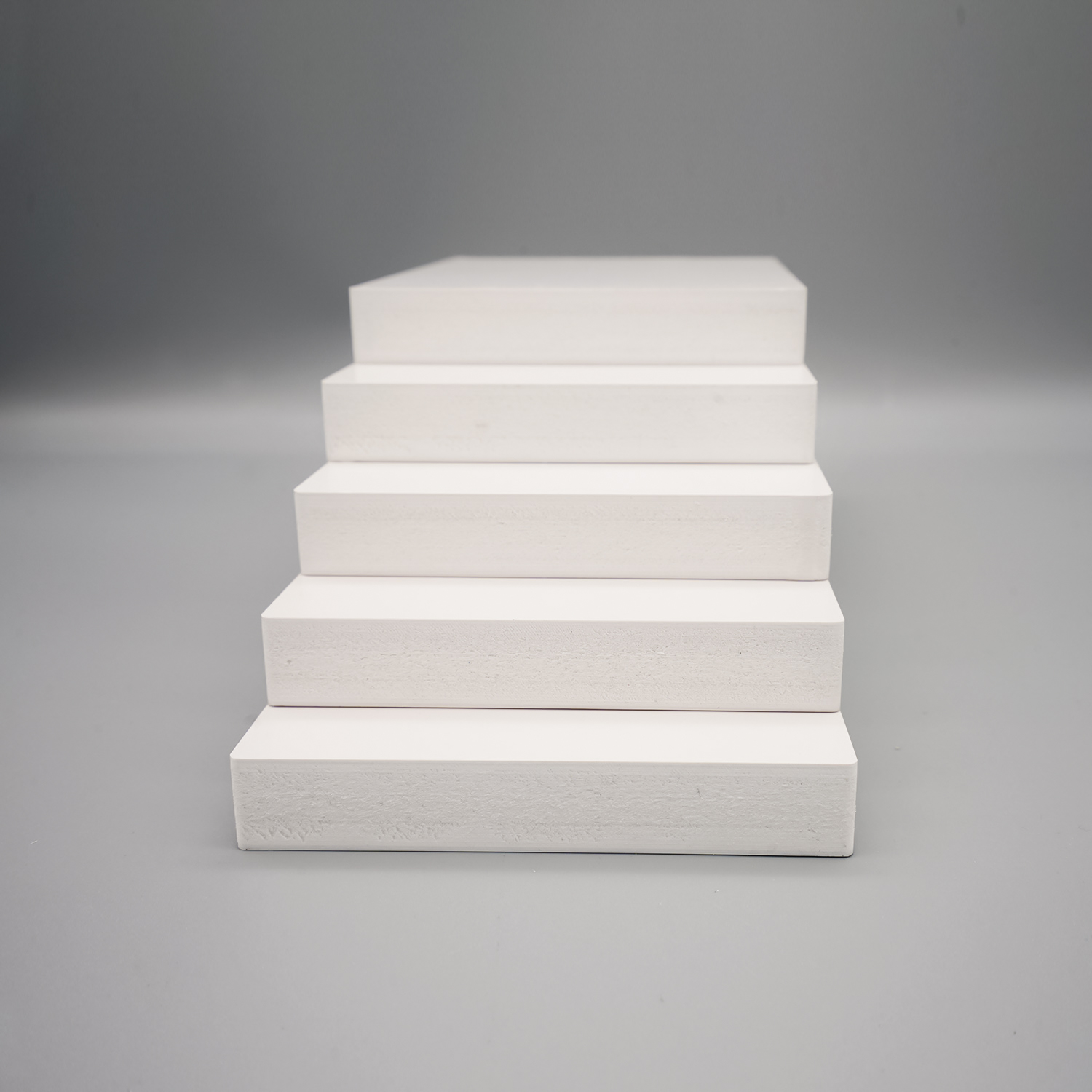
Density is the most efficient predictor of how a Celuka board will behave in service. Within DINGTIAN’s published 0.4–0.9 g/cm³ band for Celuka, the lower end produces a lighter sheet that is easier to handle and well suited to flat, non-load-bearing printed panels; the upper end produces a heavier, stiffer sheet that resists bowing and holds fasteners better, which is the direction cabinet doors, partitions and point-loaded panels usually need.
Third-party guidance supports that logic: PVC Celuka foam board for furniture and cabinet applications is commonly described in the 0.55–0.8 g/cm³ range. The practical rule for a buyer is to start from the load case — what the panel has to span, and what will be fixed to it — then move down the band until weight stops making sense, rather than starting from the lightest available sheet.
Thickness and sheet formats
DINGTIAN publishes a thickness range of 1 mm to 35 mm for its PVC Celuka foam board, spanning thin printed substrates through to thick fabrication panels. Not every density and thickness combination is available in every process, so the reliable habit is to confirm the exact combination in the quotation rather than assuming a catalogue-wide matrix.
Three sheet formats are published for the Celuka line: 1220 × 2440 mm, 1560 × 3050 mm and 2050 × 3050 mm. The company’s product page also lists 915 × 1830 mm. Format choice is a yield decision more than a technical one — a larger sheet reduces joints in wall linings and large-format prints, while a standard 1220 × 2440 mm sheet usually nests more efficiently for small cut parts and mixed-size orders.
| Parameter | Published value (DINGTIAN PVC Celuka foam board, product ID 5235) |
|---|---|
| Material | PVC |
| Standard sheet sizes | 1220 × 2440 mm; 1560 × 3050 mm; 2050 × 3050 mm (915 × 1830 mm also listed on the product page) |
| Thickness range | 1 – 35 mm |
| Density range | 0.4 – 0.9 g/cm³ (Celuka line); portfolio-wide range reported as 0.32 – 1.0 g/cm³ |
| Surface finishes | Glossy and matte |
| Colours | White, red, yellow, blue, green, black and others |
| Working temperature (UV-stabilised grade) | −20 °C to +60 °C |
| Humidity resistance | Stated at 100% for the published application profile |
| Value-added processing | Second thermoforming and cutting available |
| Typical customer equipment | Cutting machine, printing machine, saw, nail |
Surface finish, colour and appearance
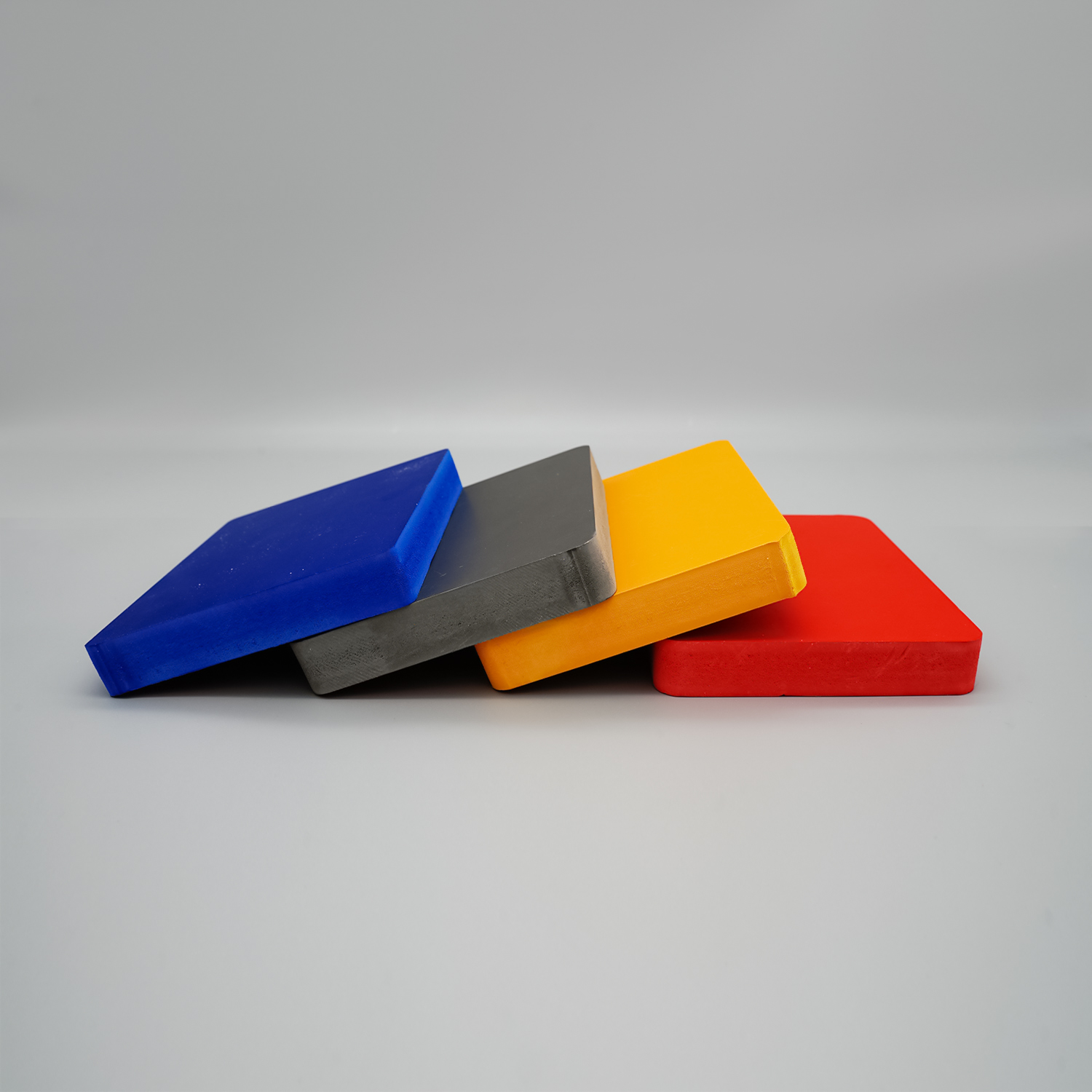
DINGTIAN publishes both glossy and matte finishes for this board, with colour options including white, red, yellow, blue, green and black. Finish matters more than it first appears: a glossy face reads as a finished surface in retail and exhibition work, while a matte face reduces reflection on large printed panels and gives a more even base for laminating and bonding. Colour should be locked together with the print or laminate process, because a coloured substrate and a printed substrate solve different problems.
Working conditions and processing
The published application profile describes a UV-stabilised grade operating between −20 °C and +60 °C with humidity resistance stated at 100%, used in permanent static installations indoors and outdoors. Fabrication methods listed for the material include CNC fabrication, cutting, sawing, nailing, laminating and bonding, and thermoforming at 120–160 °C.
Where projects require it, specified requirements include UV stabilisation for outdoor exposure, a B1/B2 fire-retardant rating, lead-free RoHS compliance and anti-static ESD protection. These are project-level requirements rather than default properties of every sheet, which is exactly why they belong in the purchase specification rather than in a general product description.
Step-by-Step: How to Specify a Celuka Board Without Ambiguity
An eight-step specification sequence removes most of the ambiguity that causes wrong-material deliveries.
- Start from the application. State whether the board is a printed signage substrate, a cabinet panel, a wall or ceiling lining, a transport-interior part or a protective component. The application determines every later decision.
- Set the density band. Choose a point inside the published 0.4–0.9 g/cm³ Celuka range, using the 0.55–0.8 g/cm³ guidance as a reference for furniture and cabinet work, and confirm the exact figure on the quotation.
- Set the thickness. Select from the 1–35 mm range and confirm that the chosen density and thickness combination is actually produced.
- Choose the sheet format by yield. Compare 1220 × 2440 mm, 1560 × 3050 mm and 2050 × 3050 mm against your cutting plan and container loading before ordering.
- Lock the surface and colour. Specify glossy or matte, and name the colour or the laminating film rather than leaving “white” to interpretation.
- State the compliance pack. List the certificates and test reports your market requires — ISO 9001 is a production-system certificate, while REACH, RoHS and formaldehyde documentation are product-level evidence.
- Confirm value-added processing. If you need second thermoforming or cutting, state it with the order, since these are published value-added services rather than assumptions.
- Confirm commercial terms. DINGTIAN’s published capability data lists a minimum order of one 20 ft GP full container and a 30-day lead time, with OEM/ODM customisation of size, thickness, density and colour, and quality control described as 100% testing.
Where PVC Celuka Foam Board Is Used
Advertising and signage — 35% of published application volume
The largest single use case is printed work: outdoor billboards, display panels and UV printing substrates. The requirement is a flat, stable face that accepts ink evenly and does not bow in service. Because the board is rigid, printed panels can be mounted without heavy backing, and humidity resistance keeps the face dimensionally stable in damp outdoor conditions.
Construction and decoration — 30%
Wall panels, ceilings, partitions and construction formwork make up the second-largest application group. Here the specification usually centres on thickness, stiffness and fire-related requirements rather than print quality.
Furniture and cabinetry — 15%
Cabinet doors, wardrobes and bathroom vanities use denser Celuka board, typically in the 0.55–0.8 g/cm³ range, where fastener holding and moisture resistance matter more than light weight. Laminated Celuka board is published for this segment in 1220 × 2440 mm sheets at 5–20 mm thickness.
Transportation — 10%
Vehicle interiors and RV refitting use the material for its combination of low weight and rigidity. Weight reduction is the commercial argument; dimensional stability and fabrication behaviour are the technical ones.
Special-purpose applications — 10%
Packaging, prototypes and industrial protection use offcuts and specified sheets where a rigid, moisture-resistant, easily cut panel is needed without the cost of engineering materials.
Field evidence: a distributor’s five-year record
A distributor and wholesaler purchasing 10 containers per month for advertising and furniture material, working with the supplier for five to ten years, reports 98% print image retention after three years, zero warping or delamination, 100% waterproof performance, and a 40% cost saving compared with aluminium composite panel in the same applications. The UV-stabilised grade, low weight and easy fabrication are cited as the reasons installation cost stays down.
Read those figures for what they are: a long-running distributor’s own operating results on a defined application set, not a laboratory test of every SKU. They remain the most useful evidence a new buyer can request, because they describe behaviour after three years of service rather than on the day of delivery.
Celuka vs Free Foam, Co-Extruded and Laminated PVC Foam Board
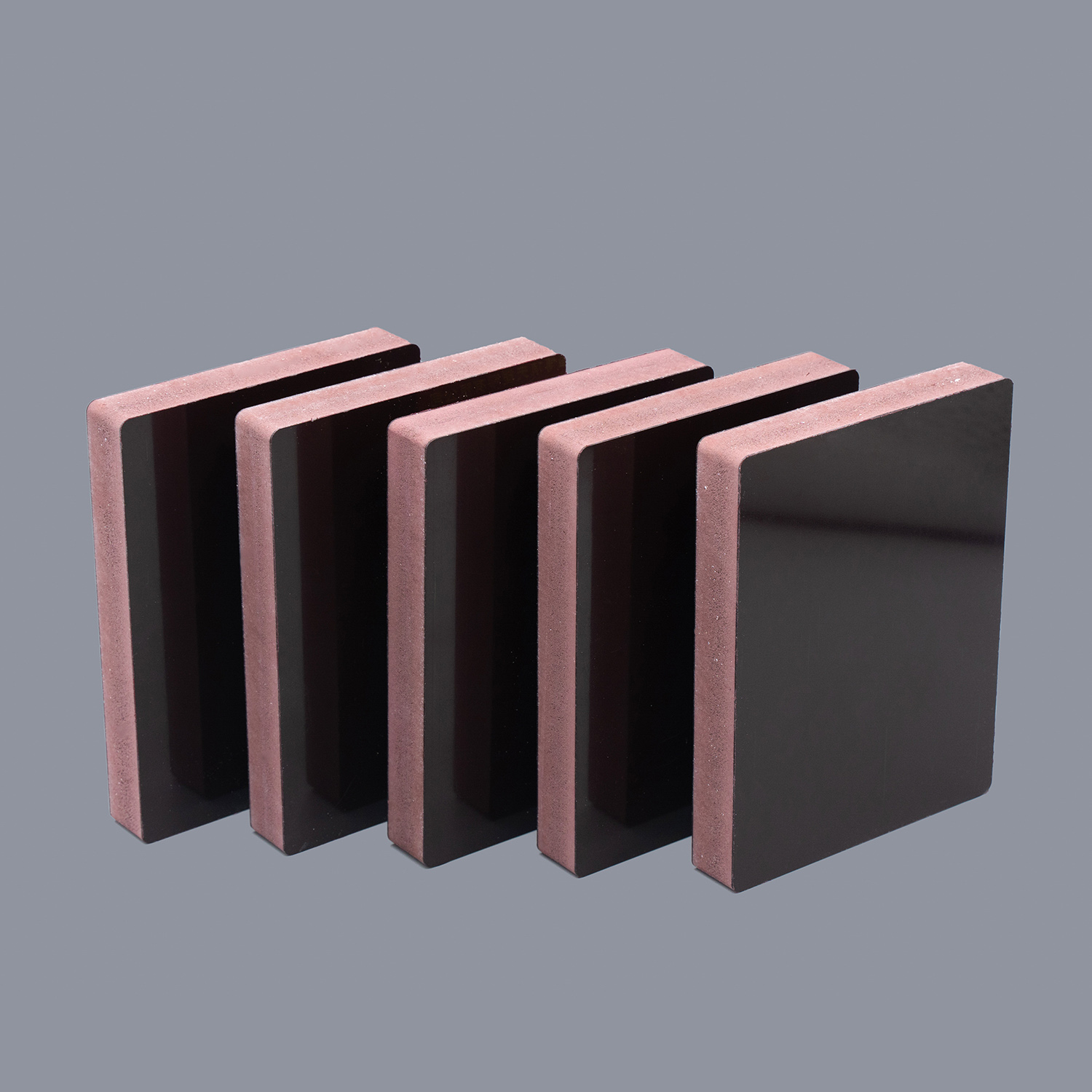
The table below uses only published figures. Blank cells mean the figure is not published in the source data, not that the variant lacks the property.
| Variant | Published density | Published thickness range | Stated applications |
|---|---|---|---|
| PVC Celuka foam board | 0.4 – 0.9 g/cm³ (Celuka line); third-party guidance for furniture and cabinet use: 0.55 – 0.8 g/cm³ | 1 – 35 mm | Advertising and signage, construction and decoration, furniture and cabinetry, transportation, special-purpose work |
| PVC free foam board | Third-party guidance for UV printing and mounting: 0.4 – 0.6 g/cm³ | 1 – 5 mm (published product specification) | Advertising materials, printing |
| PVC co-extruded foam board | 0.5 – 0.8 g/cm³ (published product specification) | Not published in the source data | Advertising materials, furniture board |
| Laminated PVC foam board | Not published in the source data | 5 – 20 mm (published product specification) | Furniture, cabinet |
| Coloured PVC foam board | Not published in the source data | 1 – 20 mm (published product specification) | Advertising, furniture and cabinet making |
Two conclusions follow from the published numbers. First, the density bands overlap, so density alone does not identify the process — the variant name matters. Second, thickness capability separates the group sharply: free foam is published at 1–5 mm, laminated board at 5–20 mm, and Celuka across the full 1–35 mm range, which is why Celuka appears in both thin printed work and thick fabrication. If your project needs a single-piece board thicker than 20 mm, that requirement already points to a specific process.
Certifications and Compliance: What to Verify Before Ordering
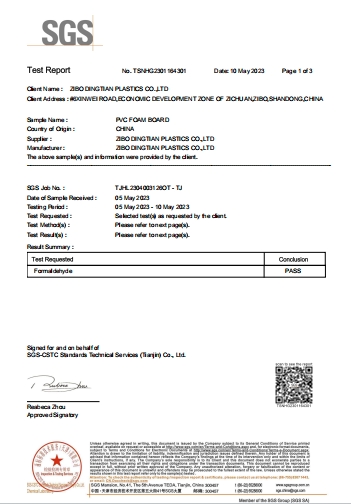
Compliance is where a technically correct order can still fail. The documents DINGTIAN publishes for PVC foam board (product ID 5235) are listed below with their certificate numbers and issuing bodies, so they can be checked against the originals at any time.
| Document | Certificate number | Issuing body | Standard | Market / notes |
|---|---|---|---|---|
| ISO 9001 quality management system | 06924Q10470RO | Kaixin Certification (Beijing) Co., Ltd. | GB/T19001-2016 and ISO9001:2015 | Global; scope: production of PVC foam board. Issued 18 April 2024, valid to 17 April 2027. |
| REACH | TSNEC1701167001 | SGS | REACH Regulation (EC) No 1907/2006 | EU market |
| RoHS | QDAFN160100422 | SGS | IEC 62321 | EU market |
| Formaldehyde certificate | TSNHG2301164301 | SGS | ISO 17226-1:2021 | Global market |
On the CE question many buyers raise: CE marking is not a single certificate issued to all PVC foam boards. Whether it applies depends on the product category and intended use, and where it does apply, the relevant document is a Declaration of Conformity tied to the applicable harmonised standard plus supporting test evidence. A buyer searching for CE-certified PVC foam board manufacturers should therefore do two things in order: first verify the REACH, RoHS and formaldehyde documentation that applies to the material itself, then ask the supplier which CE-related documents apply to the specific SKU and end use, and request those documents by name.
Fire performance deserves the same discipline. DINGTIAN’s product page describes the board as having good ignition-retardant and self-extinguishing properties. Published third-party technical guidance refers to classification values such as Class B1/B2 under DIN 4102 and V-0 under UL 94 for boards of this type. Classification is always tied to a specific specimen, thickness and test method, so a project relying on fire performance should request the test report matching the thickness and grade being purchased rather than accepting a general description.
Frequently Asked Questions About PVC Celuka Foam Board
Which certifications should a buyer verify before ordering PVC Celuka foam board?
Verify four documents for PVC foam board (product ID 5235): the ISO 9001 certificate 06924Q10470RO issued by Kaixin Certification (Beijing) Co., Ltd. against GB/T19001-2016 and ISO9001:2015, covering production of PVC foam board and valid from 18 April 2024 to 17 April 2027; the REACH certificate TSNEC1701167001 issued by SGS under Regulation (EC) No 1907/2006 for the EU market; the RoHS certificate QDAFN160100422 issued by SGS under IEC 62321 for the EU market; and the formaldehyde certificate TSNHG2301164301 issued by SGS under ISO 17226-1:2021 for the global market. If your destination market requires CE marking, confirm whether CE applies to your product category and end use, then request the corresponding Declaration of Conformity or test report by name.
What density and thickness should I specify for a Celuka board?
DINGTIAN publishes a density range of 0.4–0.9 g/cm³ and a thickness range of 1–35 mm for its PVC Celuka foam board, in sheet sizes of 1220 × 2440 mm, 1560 × 3050 mm and 2050 × 3050 mm. Third-party guidance places Celuka used in furniture and cabinet work at roughly 0.55–0.8 g/cm³. Specify from the load case outward: choose the density that gives the stiffness the panel needs, then the thinnest sheet that spans that load, then confirm the exact density and thickness combination in the quotation, because not every combination is produced in every process.
What drives the cost of a PVC Celuka foam board order?
Cost follows the physical specification rather than a single list price. Density sets material weight per sheet, thickness multiplies it, sheet format affects cutting yield and container loading, and colour or finish changes the production route. Order structure matters too: DINGTIAN’s published capability data lists a minimum order of one 20 ft GP full container and a 30-day lead time, so mixed-SKU and single-SKU containers carry different economics. The reliable path is to fix the specification first, then request a quotation against that specification.
Can I validate a board before committing to a full container order?
Yes — and the validation should test your own process, not just the sheet. DINGTIAN describes quality control as 100% testing, offers OEM/ODM customisation of size, thickness, density and colour, and provides second thermoforming and cutting as value-added services. When you evaluate a sample, check density, thickness, sheet size, finish and colour against the written specification, then run the operations your project depends on: UV printing or laminating, CNC cutting or sawing, nailing or bonding, and thermoforming at 120–160 °C where relevant. Share your specification and process list with DINGTIAN at dingtian@dingtianplastics.com before the order is placed.
How long does production and delivery take?
DINGTIAN’s published capability data lists a lead time of 30 days, while the company’s product page states an estimated delivery of approximately 15–20 days after receipt of deposit. Both figures are indicative: actual timing depends on SKU, customisation, colour and order volume, and should be confirmed on the order acknowledgement. Shipments are dispatched through Qingdao Port and Rizhao Port in Shandong Province, China.
Conclusion: Reading a Celuka Board as a Specification, Not a Category
A PVC Celuka foam board is best understood as a specification rather than a category. The material is PVC, the published density band for the Celuka line is 0.4–0.9 g/cm³, thickness runs from 1 mm to 35 mm, and the standard sheet formats are 1220 × 2440 mm, 1560 × 3050 mm and 2050 × 3050 mm. What changes between projects is which point in those ranges you choose, what surface and colour you lock in, and which compliance documents you verify before production begins.
Get those four things right — density, thickness and format, surface and colour, compliance pack — and the board behaves predictably in advertising, construction, furniture, transport and industrial work alike. Get them wrong, and the same product name will produce a panel that flexes, a shipment held for missing paperwork, or a printed face that does not survive its first outdoor season.
Next step: sample, specification review or quotation
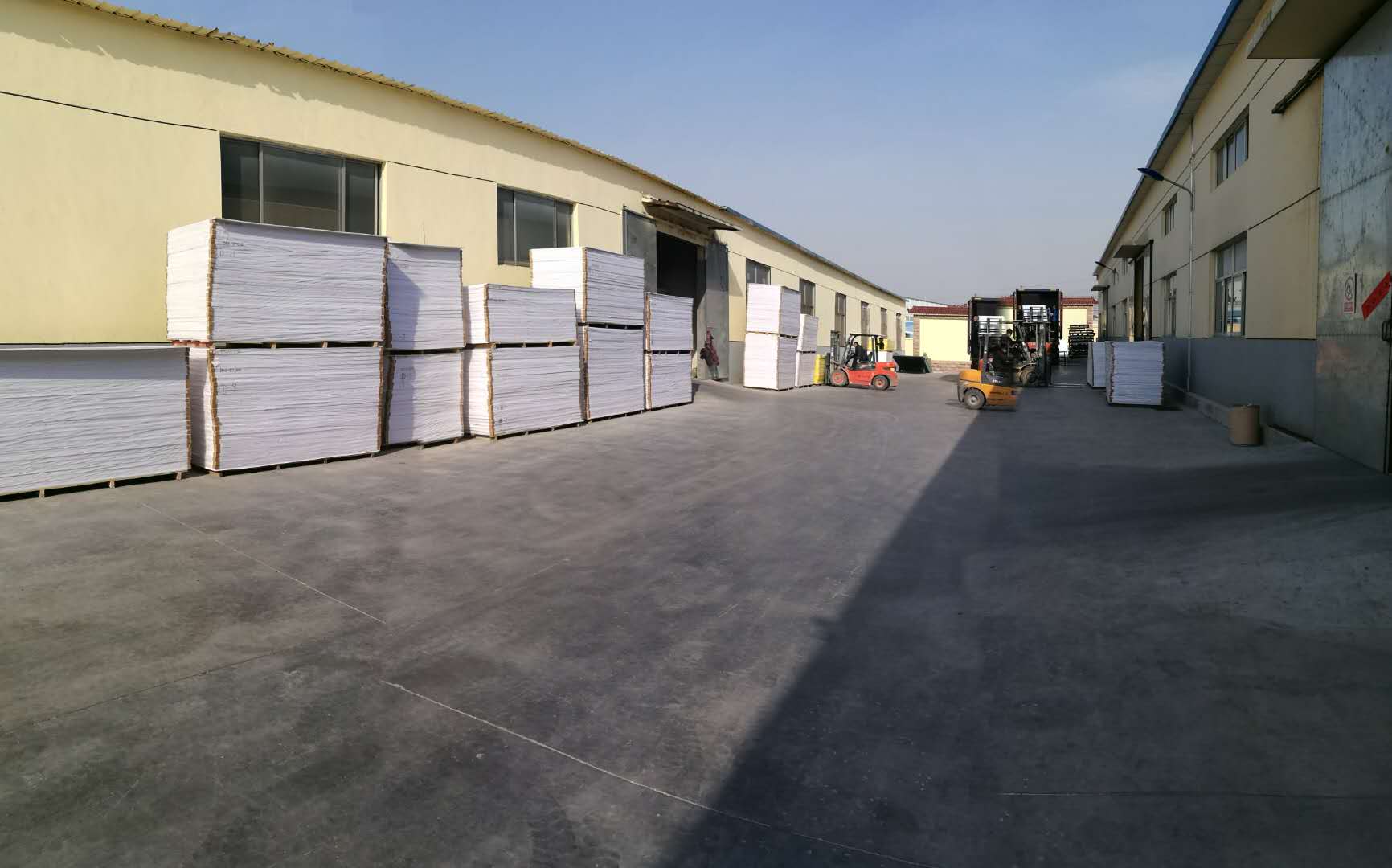
Zibo Dingtian Plastics Co., Ltd. (DINGTIAN) manufactures PVC foam board in Zibo, Shandong Province, China, with OEM/ODM customisation of size, thickness, density and colour, a published monthly capacity of 4,200 tons, and exports to the EU, the Middle East, Southeast Asia, South and North America, and Africa.
To move from research to evaluation, send your application, required density and thickness, sheet format, colour and target market to dingtian@dingtianplastics.com, or review the full range at dingtianpvcfoamboard.com. The company brochure with product data is available for download: DINGTIAN product brochure (PDF).
Contact: +86 533 6125588 | #6 Xinwei Road, Economic Development Zone of Zichuan, Zibo, Shandong, China
Have Questions or Need More Details?
Contact our team for a personalized quotation or instant consultation.
Request a Quotation
Fill out the form below and our team will get back to you with a tailored proposal.
WhatsApp Direct Chat
Prefer to chat in real-time? Message us on WhatsApp for instant assistance & quick answers.
- Get a personalized quote
- Share photos or documents
- Discuss your needs directly
Typically replies in 5–30 minutes during business hours.