
CE, RoHS & BIS Certification Basics for Industrial Printers: What Buyers Should Verify
CE, RoHS & BIS Certification Basics for Industrial Printers: What Buyers Should Verify
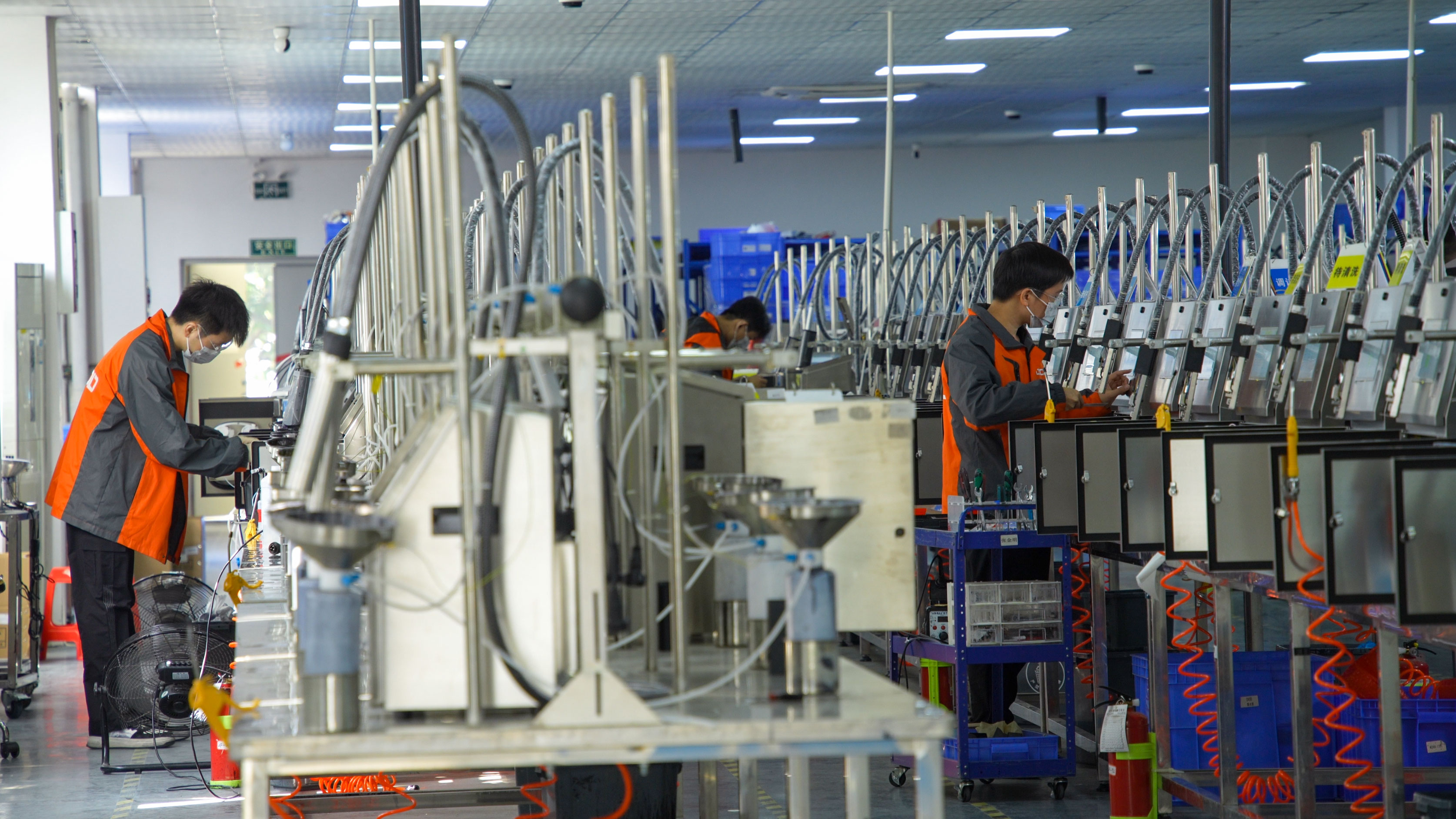
A coding machine that prints perfectly can still stop a shipment. In industrial coding and marking equipment, the compliance file travels with the hardware, and when the two do not line up, the consequences surface at customs, in a factory audit, or on a regulated packaging line.
CE, RoHS and BIS are the three credentials buyers raise most often during procurement — and the three most often treated as interchangeable stamps. They are not. Each covers a different scope, applies to a different market, and is proven by a different document.
This guide explains what each one actually covers, how DOCOD's M2000 and V2000 Series continuous inkjet printers sit inside that framework, and which verification steps a buyer should complete before releasing a purchase order for food, beverage or pharmaceutical packaging equipment.
What CE, RoHS and BIS Actually Cover
The three credentials answer three different questions: does the machine meet European Union market requirements, are restricted substances controlled inside its electronics, and is it registered for sale in India. A printer can hold one of these positions and still need the other two.
CE marking: the EU market access declaration
CE marking is the manufacturer's declaration that a product satisfies the applicable European Union health, safety and environmental requirements. On an industrial printer, the relevant scope normally touches electrical safety, electromagnetic compatibility and hazardous-substance limits. For many machine types, CE follows a self-declaration route supported by a technical file rather than a certificate issued by a single European authority. That distinction is practical rather than academic: the useful deliverable is not a logo printed on a brochure, it is the Declaration of Conformity together with the test evidence behind it.
RoHS: restricted substances inside the electronics
RoHS restricts specified hazardous substances in electrical and electronic equipment. On a coding machine, RoHS applies to the control boards, power supply, sensors, wiring and other electronic assemblies rather than to the stainless-steel frame or the printhead casting. Because RoHS-type restrictions now exist in several jurisdictions, the RoHS statement usually sits inside the technical file and supports claims beyond the EU. For a buyer, the question worth asking is whether the RoHS evidence covers the actual electronic content of the unit being shipped, not whether a document exists.
BIS: mandatory registration for India
BIS refers to the Bureau of Indian Standards, India's national standards body. Certain product categories must be registered under India's conformity assessment schemes before they may be sold in the country, and for a range of electronic goods the route is the Compulsory Registration Scheme. BIS is market-specific. A machine that is fully CE-compliant is not automatically BIS-registered, which makes it the clearest example of why "compliant" and "ready for this destination" are two different statements.
Short version: CE is an EU market access declaration, RoHS is a substance restriction inside the electronics, and BIS is India market registration. They overlap in intent but none of them substitutes for another.
Why Compliant Hardware Still Runs Into Compliance Problems
The failure mode in industrial coding procurement is rarely a machine that fails a test. It is a document that does not describe the machine that was actually shipped. Four patterns account for most of the friction.
- Certificate issued for a different configuration. A Declaration of Conformity written for one voltage or printhead variant is filed against an order for another.
- Model revision drift. The certificate names an earlier revision of a series while the delivered unit carries updated electronics.
- RoHS evidence with gaps. A component was substituted during production and the substance documentation was never refreshed.
- BIS status assumed, not confirmed. A buyer treats an EU-market machine as India-ready without checking registration.
These are recognised risk categories rather than one-off errors. Compliance mismatch risk is controlled by confirming certification by model and destination market before order release — the check happens while the order can still be adjusted, not after the equipment is on the water. That single sequencing decision removes most of the downstream cost.

Certification in a Cross-Border Coding Market
The commercial context explains why certification checks have moved earlier in the buying process. The global coding and marking equipment market was valued at USD 17.53 billion in 2024 and is projected to reach USD 27.11 billion by 2032, according to SkyQuest. Continuous inkjet remains the largest technology segment, accounting for approximately USD 5.67 billion in 2024, based on Grand View Research estimates. Asia-Pacific represents roughly 35% of the market, per Market Research Future.
Trade flows reinforce the same point. China's export value for industrial machine tools, including high-value CNC and marking equipment, rose 15.7% year on year in early 2026, according to data cited by the German Machine Tool Builders' Association (VDW). More equipment crossing borders means more machines must satisfy more than one rulebook at the same time.
Traceability rules add pressure from a second direction. The GS1 Digital Link standard is being adopted globally to replace 1D barcodes with QR codes for point-of-sale and traceability by 2027, per GS1 and ISO/IEC 18975:2024. Regulated food and pharmaceutical packaging therefore needs coding hardware that is both compliant to sell in a market and capable of printing the codes that market now expects. A buyer specifying equipment for an EU bottling line, an Indian pharmaceutical plant and a Southeast Asian co-packer may need three distinct compliance positions for what looks like one purchasing decision.
What DOCOD's M2000 and V2000 CIJ Series Provide
DOCOD Precision Group Co., Ltd. is an industrial coding, marking and inspection equipment manufacturer founded in 2008, producing continuous inkjet printers, thermal inkjet printers, piezoelectric high-resolution inkjet printers, drop-on-demand large-character printers, thermal transfer overprinters, laser marking machines and inline vision inspection systems alongside coding consumables, spare parts and traceability solutions. Around 50% of output is exported to markets including North America, South America, Eastern Europe, Southeast Asia, Africa, Oceania, the Middle East, Eastern Asia and Western Europe.
For buyers working through a compliance review, two CIJ series carry the clearest certification position:
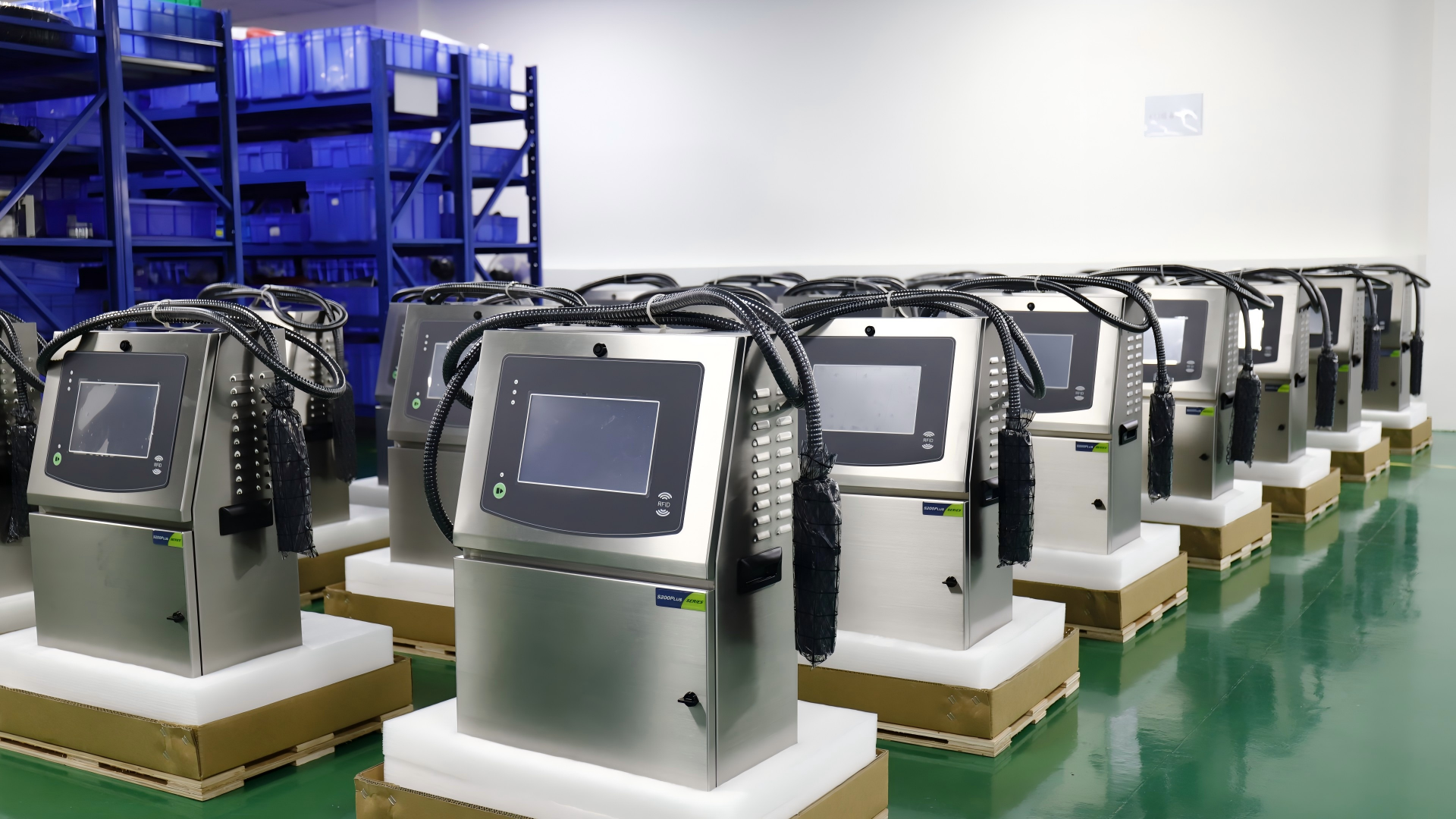
- M2000 Series Continuous Inkjet Printer — built with SUS 304 stainless steel construction and rated IP65/IP55 for environments where cleaning and moisture are routine, supplied with CE, RoHS and BIS certification.
- V2000 Series Continuous Inkjet Printer — the same construction and certification position (SUS 304 stainless steel, IP65/IP55, CE, RoHS and BIS), with line speeds up to 334 m/min for regular packaging and component coding.
Why the material and ingress rating belong in the same conversation as the certificate
SUS 304 stainless steel resists corrosion and is straightforward to clean, which is why it appears repeatedly in food and beverage plant specifications where washdown and cleaning agents are part of daily operation. IP65/IP55 protection defines how the enclosure handles dust and water ingress, so it determines whether the unit survives the environment it is installed in rather than only the paperwork it is sold with. A certificate on a printer whose housing cannot tolerate the line environment is a document without a deployment.
One boundary is worth stating plainly: certification is model-specific and market-specific. The M2000 and V2000 Series carry CE, RoHS and BIS certification; no other certification is claimed here. Before an order is confirmed, the certificate should name the exact model, voltage and configuration being purchased — and, for India-bound units, the BIS position should be confirmed rather than inferred.
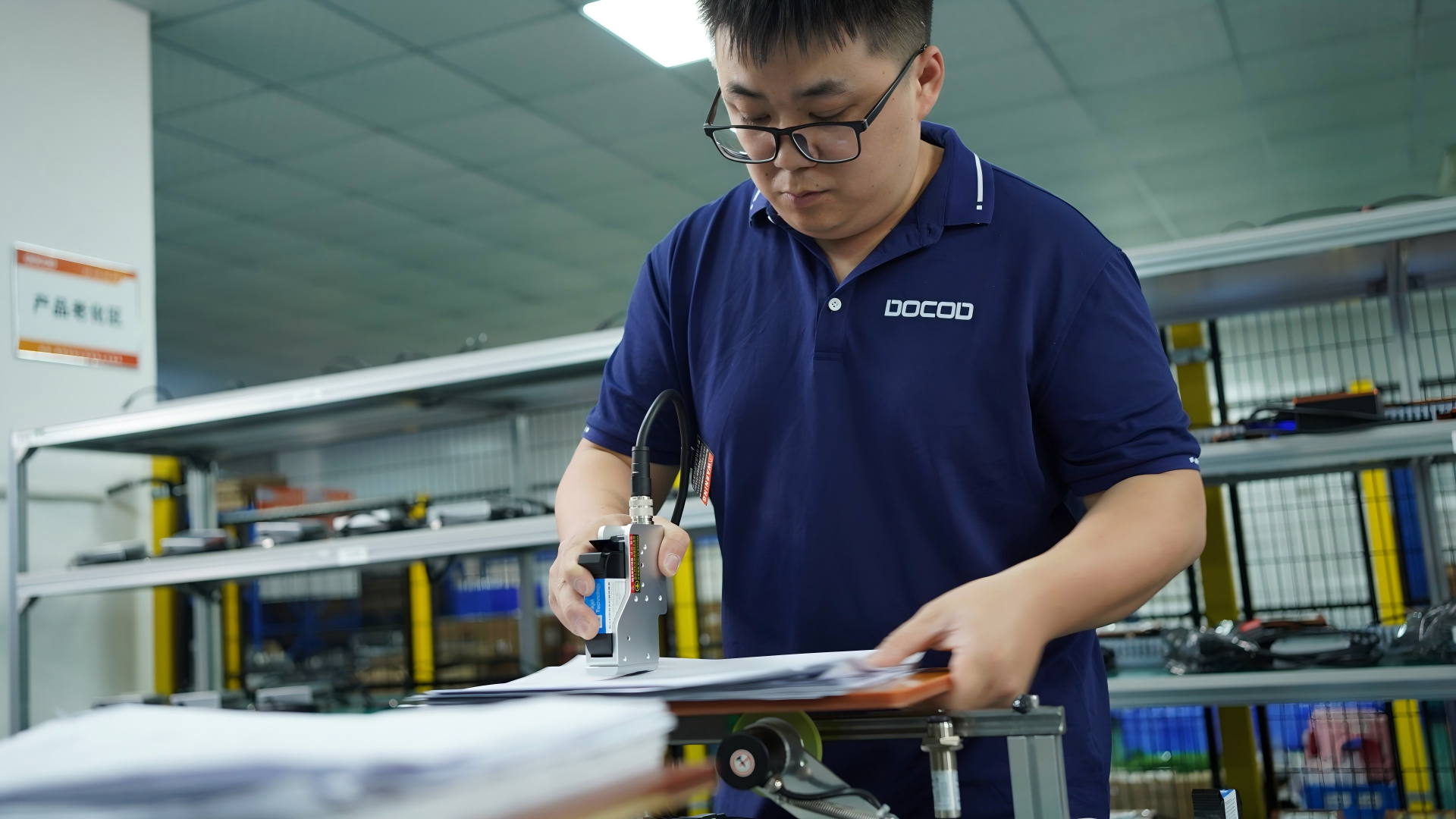
How Buyers Should Verify Certification Before Releasing the Order
Verification is a sequence, not a document request. Running these steps in order prevents the most common failure — discovering a documentation gap after the equipment has shipped.
Step 1 — Fix the destination market before the model
Define where the machine will be installed and operated, not where it is purchased. The destination market determines whether CE, RoHS, BIS or a combination is required. Choosing the model first and checking compliance later reverses the logic and restricts your options.
Step 2 — Match the certificate to the exact model and configuration
A certificate for a series is not automatically a certificate for the unit on your purchase order. Confirm the document references the model, voltage and configuration actually being supplied, and that it is current.
Step 3 — Read the Declaration of Conformity, not the logo
For CE, request the Declaration of Conformity together with the supporting test evidence. The declaration is the substance; the mark is only the summary.
Step 4 — Confirm RoHS evidence covers the electronics
Ask whether RoHS documentation covers the control boards, power supply, sensors and wiring of the delivered configuration, since those are the assemblies the restriction actually targets.
Step 5 — Confirm BIS status separately for India
For units destined for India, treat BIS as a distinct check. Registration is a market requirement, not a by-product of EU compliance.
Step 6 — Tie certification to your acceptance criteria
Compliance documents and physical acceptance should be signed off together. Standard acceptance for coding equipment combines technical drawing or proposal confirmation, print sample confirmation and factory testing before delivery, with a function test performed before shipment.
Step 7 — Request the documentation set to travel with the shipment
Ask for the compliance file and shipment photos before dispatch. This connects the paperwork to the physical unit and closes the gap where the machines and the certificates get separated in transit.
Several adjacent risks are controlled in the same window and are worth scheduling at the same time. Material compatibility risk is handled through substrate testing — matching ink or marking method to carton, film, plastic, metal or glass surfaces. Environmental suitability risk is handled through a working-condition check covering temperature, humidity and line condition before model selection. Content mismatch risk is handled by double-confirming text, barcode, QR code, date format and language settings before production, and missed-coding risk on critical lines is handled through optional OCR or barcode inspection with alarm light or rejection linkage.
Reading Certification for Food, Beverage and Pharmaceutical Packaging
The same certificate set carries different weight depending on what the line produces. Three applications illustrate how to translate a compliance file into a purchase decision.
Food packaging
Food plants clean equipment frequently, and cleaning agents plus moisture are the operating reality. Here the SUS 304 stainless steel construction and IP65/IP55 protection on the M2000 and V2000 Series matter as much as the CE, RoHS and BIS certification, because they determine whether the unit keeps performing through repeated washdown. Date coding and batch marking on cartons, films and containers are the typical tasks, and substrate testing before shipment confirms the ink or marking method suits the specific packaging material.
Beverage packaging
Beverage lines combine speed with condensation, and both affect the specification. The V2000 Series CIJ runs up to 334 m/min for regular packaging and component coding, while higher-speed continuous lines — cabling, pipe and extrusion-type production — use the S1000 Series, which reaches up to 576 m/min and adds IP55 protection with automatic nozzle cleaning. In both cases, the certification position should be confirmed against the destination market, and print samples validated on the actual container surface before the order is finalised.
Pharmaceutical packaging
Pharmaceutical packaging introduces traceability on top of compliance. With the GS1 Digital Link standard moving from 1D barcodes to QR codes for traceability by 2027, lines need variable data printing and 2D code capability that can be inspected rather than merely printed. A print-and-verify setup uses optional OCR or barcode inspection with alarm light or rejection linkage so that a missing or unreadable code is caught at the line rather than at the warehouse. Print quality risk is controlled through pre-production sample printing and substrate testing before mass shipment, and content verification through double confirmation of text, barcode, QR code, date format and language settings.
M2000, V2000 and S1000 at a Glance
The table below summarises the CIJ positions most relevant to a compliance-led evaluation. Certification is confirmed by model and destination market before order release for every line.
| Series | Technology | Construction & ingress protection | Stated line speed | Certification position | Verify before PO |
|---|---|---|---|---|---|
| M2000 Series | Continuous inkjet (CIJ) | SUS 304 stainless steel, IP65/IP55 | Small-character continuous coding | CE, RoHS, BIS | Certificate names the exact model, voltage and destination market |
| V2000 Series | Continuous inkjet (CIJ) | SUS 304 stainless steel, IP65/IP55 | Up to 334 m/min | CE, RoHS, BIS | Certificate names the exact model, voltage and destination market |
| S1000 Series | Continuous inkjet (CIJ) | IP55 protection, automatic nozzle cleaning | Up to 576 m/min | Confirm by model and destination market | Confirm certification for the specific ordering configuration |
Frequently Asked Questions
Which certifications do DOCOD's M2000 and V2000 CIJ printers carry, and what does each cover?
The M2000 Series and V2000 Series continuous inkjet printers are supplied with CE, RoHS and BIS certification and are built with SUS 304 stainless steel at IP65/IP55 protection. CE supports European Union market access, RoHS addresses restricted substances in the electronic assemblies, and BIS relates to India's mandatory registration. Certification is confirmed by model and destination market before order release, so buyers should check that the certificate names the exact model, voltage and configuration being purchased.
What construction and protection features should buyers verify for a washdown food or beverage line?
Buyers should confirm housing material and ingress protection before accepting a model for a washdown environment. The M2000 and V2000 Series use SUS 304 stainless steel construction and are rated IP65/IP55, which supports cleanability and resistance to cleaning agents and water ingress. Environmental suitability — temperature, humidity and line condition — should also be confirmed before model selection and shipment, since the operating environment determines whether the enclosure rating is appropriate.
What are the purchasing terms for a compliance-ready industrial coding machine?
Minimum order quantity for a project order is 1 set, with delivery terms available as EXW, FOB, CIF and CFR. Typical payment terms are T/T or LC. Acceptance criteria combine technical proposal or drawing confirmation, print sample confirmation and factory testing before delivery.
Can buyers validate a machine with a sample before committing to a full order?
Yes. Sample validation is part of the standard workflow: pre-production sample printing and substrate testing confirm material compatibility before mass shipment. A demo unit can be ordered at a minimum of 1 demo unit, with acceptance criteria covering a basic function test and shipment photo confirmation. Buyers should also double-confirm text, barcode, QR code, date format and language settings before production so the validated sample matches the production run.
What lead time and production capacity should buyers plan for?
Standard equipment delivery is typically within 15 working days, while customized solutions commonly require 15–30 working days depending on product complexity and customization level. Monthly production capacity is around 2,000 units for standard equipment, 1,000 units for spare parts, and up to 4,000 units for distributor-supported products, which matters when a compliance approval needs to be extended across several sites or a distributor rollout. For a multi-market deployment, request the recommended spare parts and consumables list together with the certification file — the fastest next step is to send your model, destination market and line details to sales@docod.com.cn or via WhatsApp on +86 135-1234-4323.
Conclusion
Certification for industrial coding equipment is a deployment decision, not a documentation formality. CE, RoHS and BIS cover three different things — EU market access, restricted substances inside the electronics, and registration for India — and a machine can hold one position while still needing the others. The practical discipline is to fix the destination market first, match the certificate to the exact model and configuration, and confirm compliance before the order is released rather than after the equipment ships.
For food, beverage and pharmaceutical packaging, that compliance position has to sit on hardware that can survive the line. SUS 304 stainless steel construction and IP65/IP55 protection on the M2000 and V2000 Series address cleanability and moisture ingress, while CE, RoHS and BIS certification address market access. Wider series coverage — including the S1000 Series at up to 576 m/min with IP55 protection and automatic nozzle cleaning — supports higher-speed continuous production where the same verification logic still applies.
Long-term deployment adds one more layer. Certification continuity, spare parts planning, remote support and distributor or service partner coverage determine whether a compliant machine stays compliant and productive across its service life. Supplier support for parts matching, replacement guidance and online response, together with installation guidance, remote tuning and fault diagnosis after delivery, is what keeps a fleet running across borders. Buyers evaluating coding equipment for multi-year, multi-market use should assess the certification file and the support ecosystem together — because in practice they are purchased as one package.
Ready to verify the compliance file for your line?
Send your model, destination market and packaging substrate, and DOCOD will confirm the applicable CE, RoHS and BIS position, along with print samples, spare parts and lead-time planning for your project.
Download the DOCOD Corporate Brochure
Contact: Sam · sales@docod.com.cn · Tel +86 139-2896-7650 · WhatsApp +86 135-1234-4323 · www.docod-group.com
Have Questions or Need More Details?
Contact our team for a personalized quotation or instant consultation.
Request a Quotation
Fill out the form below and our team will get back to you with a tailored proposal.
WhatsApp Direct Chat
Prefer to chat in real-time? Message us on WhatsApp for instant assistance & quick answers.
- Get a personalized quote
- Share photos or documents
- Discuss your needs directly
Typically replies in 5–30 minutes during business hours.