
Choosing a Marking System for Packaging Lines: Cartons, Plastics & Metals
Choosing a Marking System for Packaging Lines: Cartons, Plastics & Metals
A decision-stage selection guide for production engineers and procurement teams specifying industrial coding and marking equipment on mixed-substrate packaging lines.
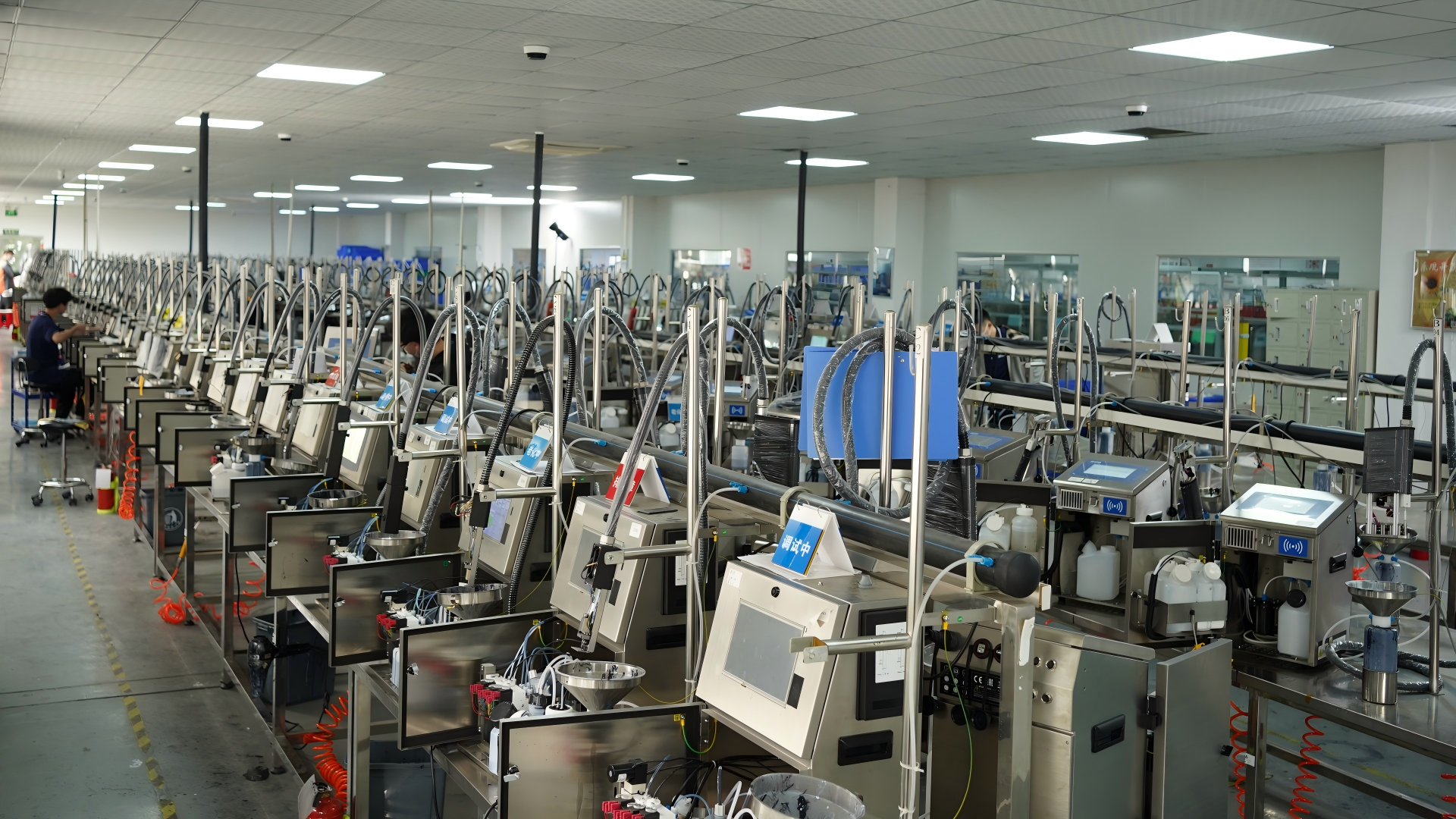
Marking system projects on packaging lines tend to fail in one of two directions. Either the technology is chosen from the product being packed — we bottle beverages, so we need a beverage printer — or it is chosen from a single substrate while the line actually handles four. The result is a printer that produces a crisp date code on a carton and an unreadable smear on shrink film, or a laser that marks glass cleanly and scorches a printed label two metres downstream.
The sequence that works runs the other way round: list every substrate that reaches the marking station, define what has to happen to the code afterwards, and only then select the technology and the model tier. This guide applies that sequence to cartons, plastics, metals, glass, films, cables and pipes, using the DOCOD range as the working example.
Direct answer: on a packaging line that handles more than one material, no single marking technology covers every substrate. Ink-based systems — continuous inkjet (CIJ), thermal inkjet (TIJ), piezo inkjet (PIJ) and thermal transfer overprinting (TTO) — cover cartons, films, bottles and irregular surfaces. Laser systems cover glass, plastics and metals with no ink, ribbon or solvent, and the substrate decides the wavelength: 1,064 nm fiber for metals and robust plastics, 10,600 nm CO2 for mainstream non-metal packaging, and 355 nm UV for heat-sensitive glass, PVC, ABS and HDPE.
Problem Definition: Why a Packaging Line Rarely Has One Substrate
A packaging line presents the marking station with a sequence of materials, not a single material. On a food line, a form-fill-seal film, a printed label, a folding carton and a shipping case can all pass the same point within metres of each other. Those substrates differ in surface energy, ink absorption, curvature, heat tolerance and abrasion resistance, and each property constrains which marking technology can hold a legible, scannable code for the life of the pack. Added to that are the working conditions around the line — dust, washdown, humidity, ambient temperature — and the fact that the code itself may be a small date string on one job and a data-dense 2D code on the next.
Three mismatch patterns account for most specification errors.
- Substrate mismatch. An ink formulated for coated board may not anchor on HDPE or on a low-energy flexible film, and a laser that produces a clean mark on a metal housing can damage a thin film or a heat-sensitive label. Substrate compatibility has to be confirmed by test, not assumed from a product category.
- Speed mismatch. A model tier selected for a pilot line is frequently carried into full production. Inside the DOCOD thermal inkjet range, the T260E is positioned for simple low-speed date coding on eggs, bottles and boxes with a top speed of 60 m/min, while the T220E is positioned for medium- and high-speed work at up to 406 m/min. That is not a quality gap; it is a throughput gap that decides whether the line runs at rate or the marking station becomes the bottleneck.
- Ownership-model mismatch. Ink-based systems generally carry a lower upfront cost with recurring ink and solvent consumption, while a CO2 laser uses zero ink, solvent or ribbon consumables and shifts spend toward the equipment itself. Neither route is inherently correct; choosing one without costing the other across a full production year is where budgets drift.
A fourth factor is often left to the end of the project and should not be: verification. A code that is printed but not read is a traceability gap, and the inspection decision (whether to add OCR or barcode inspection, an alarm light, or rejection linkage) changes the marking system layout, the interface requirements and the acceptance test.
Industry Background: What Is Changing on Packaging Lines in 2026
What is changing on packaging lines in 2026 is less about print heads and more about what a code has to do once it is applied.
Market scale and technology mix. The global coding and marking equipment market was valued at USD 17.53 billion in 2024 and is projected to reach USD 27.11 billion by 2032 (SkyQuest). Continuous inkjet held the largest technology revenue share, at approximately USD 5.67 billion in 2024 (Grand View Research), and Asia-Pacific accounted for the largest regional share, around 35% in 2024 (Market Research Future). Estimates differ between research houses — Strategic Market Research placed 2024 at USD 5.9 billion and Fact.MR at USD 4.7 billion on a 2025 base — largely because some studies include ink consumables and software services while others count hardware only. The direction of travel is consistent; absolute figures should be read together with the scope of each study.
Consumable-free marking. Laser marking is projected to grow at a CAGR of 6.8% through 2030, driven by its consumable-free nature (Fortune Business Insights). On packaging lines this appears as growing interest in laser for PET, glass, labels and film, not only for metal parts.
Code content. The GS1 Digital Link standard is being globally adopted to replace 1D barcodes with QR codes for point-of-sale and traceability by 2027, aligned with ISO/IEC 18975:2024 (GS1 / ISO). Because a 2D code carries more data per pack than a linear barcode, print area and resolution requirements rise, and verification becomes part of the specification rather than an optional extra.
Supplier landscape. The established names in the category include Videojet Technologies, Domino Printing Sciences, Markem-Imaje and Hitachi Industrial Equipment Systems (Dataintelo). Alongside them, China's export value for industrial machine tools, including marking equipment, rose 15.7% year-on-year in early 2026 (German Machine Tool Builders' Association (VDW) / Honor Machinery), reflecting a manufacturing base that now supplies a substantial share of mid-market coding equipment worldwide.
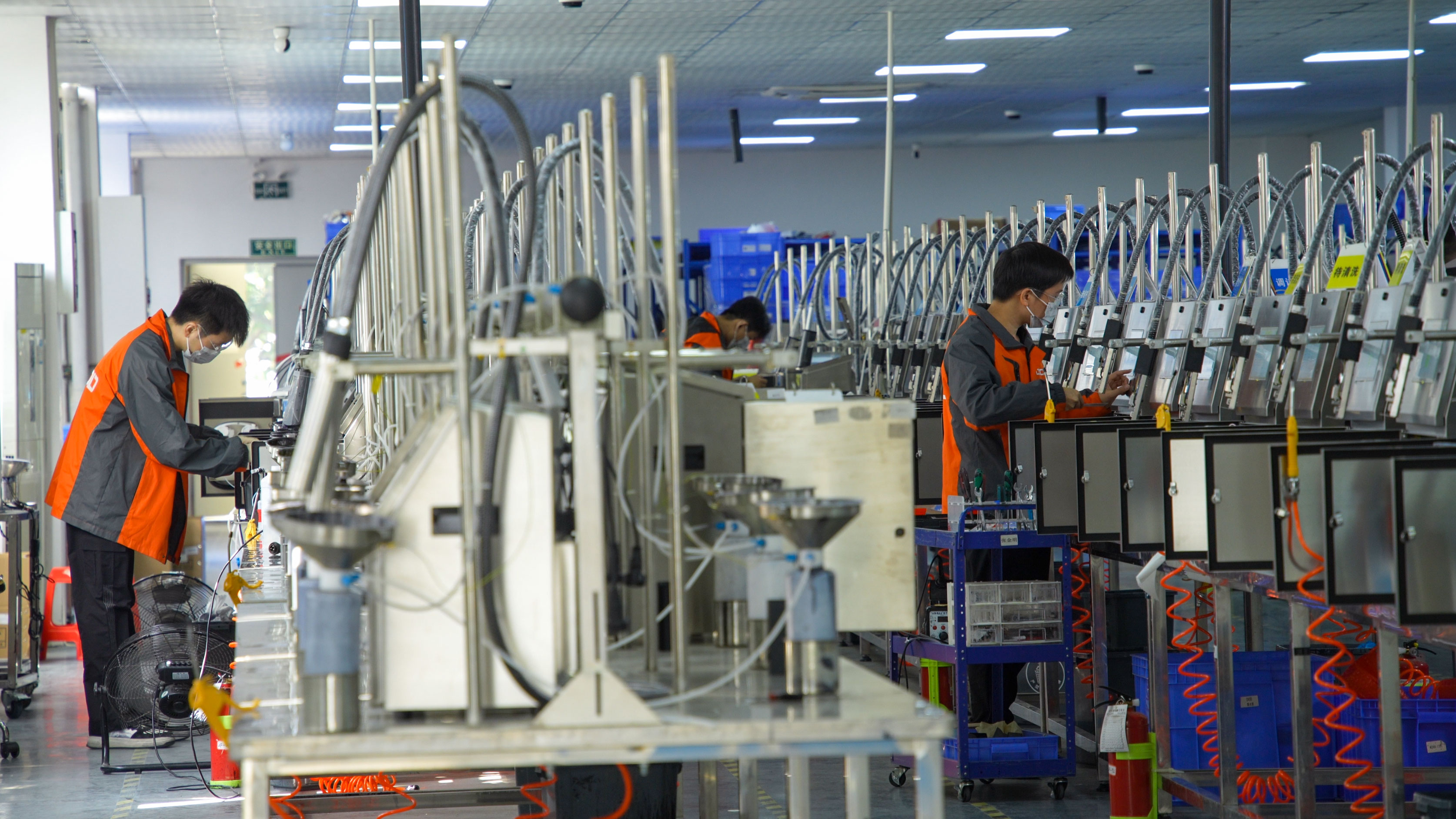
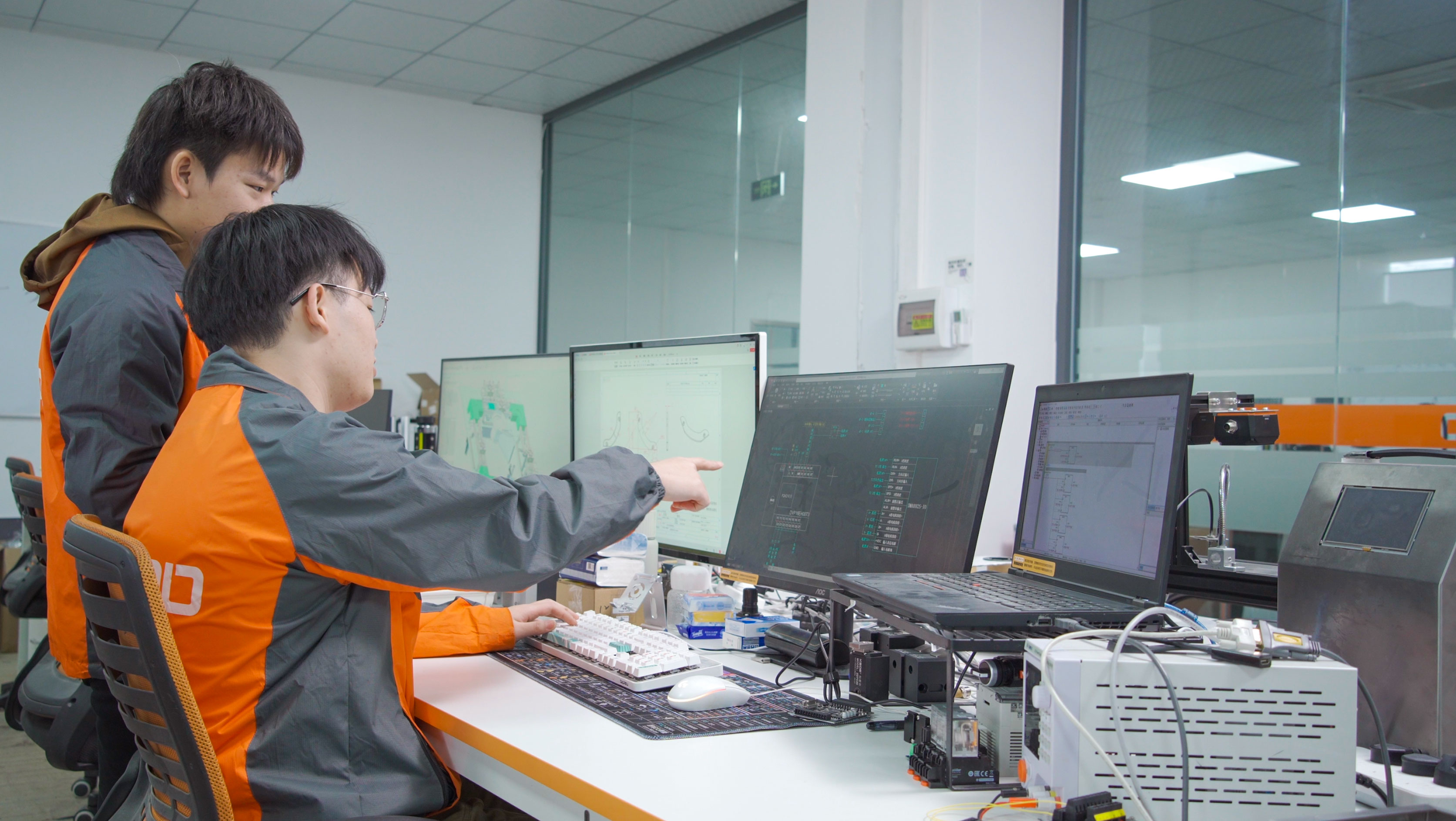
DOCOD Precision Group Co., Ltd. is one of those manufacturers. Founded in 2008, DOCOD designs, develops and produces industrial coding, marking and inspection equipment, with a 20,000 m² factory, 407 employees, an annual output of 5,000 units and more than 140 R&D staff. Around 50% of output is exported to North America, South America, Eastern Europe, Southeast Asia, Africa, Oceania, the Middle East, Eastern Asia and Western Europe. The portfolio covers continuous inkjet printers (CIJ), thermal inkjet printers (TIJ), handheld inkjet coding equipment, piezoelectric high-resolution inkjet printers (PIJ), drop-on-demand large-character inkjet printers (DOD), thermal transfer overprinters (TTO), laser marking machines, inline vision inspection systems, coding consumables, spare parts and product traceability solutions.
Detailed Solution: Match the Material First, Then the Model
The DOCOD range is organised around substrate fit rather than around a single platform, which makes the mapping from material to technology relatively direct. Ink-based platforms cover absorbent, flexible and irregular materials; laser platforms cover materials where permanence or the absence of consumables matters more than ink flexibility.
Cartons, labels and corrugated board
Folding cartons, labels and shipping cases are absorbent, flat and usually need high-speed variable data: dates, batch codes, QR codes and, increasingly, GS1 Digital Link codes. Two ink-based routes dominate, and they differ mainly in print area.
The DOCOD T220E half-inch dual-head inkjet printer (TIJ) delivers 25.4 mm print height and a top speed of up to 406 m/min, and is positioned for cartons, labels, GS1 codes and wider QR and barcode content. Its cartridge-based architecture suits short- to medium-run high-resolution work. When the code area grows — a large QR code, a multi-field traceability label, a coated carton with heavy ink coverage — a piezo head becomes the more efficient choice. The DOCOD P2000 high-resolution piezo inkjet printer provides 33.8 mm print height, 8.4 mm more than thermal inkjet alternatives such as the T220E, and 190 m/min at 300 dpi against 120 m/min. It uses a continuous ink-supply architecture that reduces per-cartridge cost and waste, at the price of higher system complexity.
For compact lines with limited mounting space, the DOCOD TX1 half-inch seamless inkjet printer offers 12.7 mm print height at a top speed of up to 406 m/min, while the T220E doubles that print height to 25.4 mm at the same top speed — the deciding factor when codes must be both wide and dense. For basic, low-speed jobs such as simple date coding on boxes, the DOCOD T260E provides a lower initial cost entry point at up to 60 m/min.
Limit to note: on board and paper, TIJ and PIJ codes remain ink-based. Where a code must survive heavy abrasion, moisture or chemical contact, or where consumable handling has to be eliminated, a laser route is the more appropriate direction.
Plastics, films and flexible packaging
Flexible films, sachets, pouches and labels are the home territory of the thermal transfer overprinter. The DOCOD R4000 industrial thermal transfer overprinter codes at up to 800 mm/s and accepts ribbon lengths of 400 m, 600 m, 800 m and 1200 m, which makes it the mainstream route for standard flexible packs. It also carries the classic trade-off of ribbon-based coding: recurring ribbon cost and periodic changeovers.
Where the substrate is heat-sensitive, laser becomes attractive. The DOCOD L3000 Series 5W UV laser marking machine operates at a 355 nm wavelength, producing a low-heat mark on glass, PVC, ABS, HDPE and delicate packaging, with better mark integrity on delicate materials than a CO2 laser. It removes ribbon, ink and solvent handling from the line, but it requires substrate validation — not every film or plastic accepts a UV mark the way a coated board accepts ink.
HDPE and PVC containers, the standard packaging of the daily chemical sector, sit between these two options. UV laser marking fits HDPE where a permanent, low-heat mark is required, while CIJ remains practical where the line handles a mix of bottle shapes and materials on the same shift.
Glass, PET and beverage containers
On beverage lines, the substrate rarely stays constant: glass bottles, PET containers, aluminium cans, crowns and labels can all pass the same station. The DOCOD V2000 Series continuous inkjet printer reaches speeds up to 334 m/min and is designed for coding on bottles, cables and varied irregular surfaces — the flexibility a mixed beverage line needs. Where the code must be permanent and consumable-free, the DOCOD Venus1 Series CO2 laser marking machine covers paperboard, labels, PET, glass and other non-metal packaging with zero ink, solvent or ribbon consumption.
The characteristic trade-off between these two routes is financial rather than technical: CIJ generally has a lower upfront cost, while the CO2 laser reduces ongoing consumable expenses over time. On a high-volume beverage line, that difference compounds across a production year.
Metals and durable components
For metal parts, can ends, fasteners and machined components, the material itself selects the wavelength. The DOCOD Venus1 Series fiber laser marking machine operates at 1,064 nm for metals and robust plastics, while the Venus1 CO2 laser operates at 10,600 nm for non-metal substrates. Applying one laser across both jobs produces a machine that is competent at neither. Electronics and automotive lines, which frequently process metal housings, terminals and plastic connectors on the same shift, usually need a laser and an ink-based system rather than a single compromise machine.
Cables, pipes, extrusion and building materials
Continuous extrusion — cable, pipe and similar profile products — is a speed problem before it is a substrate problem. The DOCOD S1000 Series continuous inkjet printer runs at up to 576 m/min, which is 242 m/min faster than the V2000, and applies to high-speed cable, pipe and extrusion lines. It carries IP55 protection and automatic nozzle cleaning for production environments where dust, moisture and long operating hours are normal.
On these lines, laser marking on metal pipe and metal sheathing is often chosen when permanence outweighs flexibility, while CIJ remains the practical route on polymer sheathing, where high line speed and substrate variety favour ink.
Step-by-Step Breakdown: Six Steps from Substrate List to Signed Specification
- List every substrate, not the average substrate. Walk the line and record each material that passes the marking station, including primary pack, label, carton, case, cap and any metal component. Group them into three families: absorbent and flexible (cartons, labels, films), rigid plastic and glass, and metal or durable parts. The grouping drives everything that follows.
- Define the code package before the machine. Specify content (date, batch, serial, GS1 DataMatrix or Digital Link QR), code size, permanence requirement and scan distance. Text, barcode, QR code, date format and language settings should be double-confirmed before production, because a machine specified against the wrong code package will be re-scoped later at higher cost.
- Set the speed tier from the real line rate. Compare against verified figures rather than assumed capability. Within the DOCOD CIJ range, for example, the V2000 reaches 334 m/min while the S1000 reaches 576 m/min; within TIJ, the T260E reaches 60 m/min while the T220E reaches 406 m/min. Selecting the lower tier for a fast line simply moves the bottleneck.
- Choose the consumable model deliberately. Ink and solvent management (CIJ), cartridge or CISS workflow (TIJ), ribbon changeovers (TTO), or no consumables at all (laser). Each model carries different operating routines, storage requirements and ongoing spend. The correct choice depends on shift pattern, code density and how much operator intervention the line can absorb.
- Validate with samples and working conditions. Pre-production sample printing and substrate testing should be completed before mass shipment, with the ink or marking method matched to carton, film, plastic, metal or glass surfaces. Temperature, humidity and line condition should be confirmed before model selection and shipment, since environmental suitability affects both print quality and hardware protection.
- Specify inspection and after-sales before signing. Decide whether the line needs OCR or barcode inspection, an alarm light or rejection linkage for critical production. Confirm the recommended spare parts and consumables list for repeat operation, and the support arrangement after delivery — online support, installation guidance and troubleshooting response — so that continuous operation is planned rather than assumed.
Use Cases: Pairing Production Lines with Technologies
- Food packaging (cartons, labels, flexible film). The T220E covers cartons, labels and GS1 codes at up to 406 m/min with 25.4 mm print height; the P2000 takes over when large QR codes or multi-field traceability codes are required on coated cartons; the R4000 handles sachets, pouches and film at up to 800 mm/s.
- Beverage (glass, PET, cans, labels). The V2000 codes bottles and irregular surfaces at up to 334 m/min, while the Venus1 CO2 laser provides permanent, consumable-free marks on PET, glass and paperboard where permanence is the priority.
- Daily chemical (HDPE and PVC bottles, cartons). The L3000 UV laser marks HDPE, PVC, ABS and delicate packaging with low heat impact; CIJ covers lines with mixed bottle shapes; TIJ covers the outer cartons and cases on the same site.
- Electronics (metal parts, connectors, packaging). The Venus1 fiber laser at 1,064 nm handles metal housings and terminals and robust plastics, while TIJ or TTO covers labels and product packaging.
- Automotive (metal components, cable, harness). Fiber laser marking suits metal parts; the S1000 at up to 576 m/min suits cable and extrusion lines, with IP55 protection and automatic nozzle cleaning for harsh shop-floor conditions.
- Cable, pipe and building materials. High-speed CIJ on polymer sheathing, laser marking where permanent codes are required on metal pipe and profile, and PIJ or TIJ where large-format codes are needed on bundled or cartoned goods.
Comparison Table: DOCOD Technologies by Substrate and Line Requirement
| Substrate / line | Technology | DOCOD model | Verified key figure | Watch-out |
|---|---|---|---|---|
| Cartons, labels, GS1 and QR codes | Thermal inkjet (TIJ) | T220E | 25.4 mm print height; up to 406 m/min | Cartridge or CISS workflow to plan |
| Coated cartons, large QR, traceability codes | Piezo inkjet (PIJ) | P2000 | 33.8 mm print height; 190 m/min at 300 dpi (+8.4 mm and +70 m/min vs TIJ) | Higher system complexity; continuous ink supply |
| Simple low-speed date coding (eggs, bottles, boxes) | Thermal inkjet (TIJ) | T260E | Up to 60 m/min; lower initial cost | Not intended for medium- or high-speed lines |
| Compact lines with tight mounting space | Thermal inkjet (TIJ) | TX1 | 12.7 mm print height; up to 406 m/min | Half the print height of T220E |
| Flexible films, sachets, pouches, labels | Thermal transfer overprinter (TTO) | R4000 | Up to 800 mm/s; ribbon 400/600/800/1200 m | Recurring ribbon cost and changeovers |
| Bottles, cables, irregular surfaces | Continuous inkjet (CIJ) | V2000 | Up to 334 m/min; generally lower upfront cost than CO2 laser | Ink and solvent route management |
| High-speed cable, pipe, extrusion lines | Continuous inkjet (CIJ) | S1000 | Up to 576 m/min (+242 m/min vs V2000); IP55; automatic nozzle cleaning | Higher-speed hardware tier; still uses CIJ consumables |
| Glass, PVC, ABS, HDPE, delicate packaging | UV laser | L3000 (5W) | 355 nm wavelength; low-heat marking | Substrate validation required before commitment |
| Metals and robust plastics | Fiber laser | Venus1 fiber | 1,064 nm wavelength; no consumables | Not the mainstream route for non-metal packaging |
| Paperboard, labels, PET, glass, rubber, textiles | CO2 laser | Venus1 CO2 | 10,600 nm wavelength; zero ink, solvent or ribbon | Not suitable for metal marking |
The table is a shortlisting tool drawn from verified model figures, not a price list or a ranking. Final model selection should follow sample validation on your own substrate and confirmation of certifications for the destination market.
FAQ
Does a packaging-line marking system need to be ready for GS1 Digital Link and 2D codes now?
Yes, planning for it is reasonable even if the switch is not immediate. The GS1 Digital Link standard is being globally adopted to replace 1D barcodes with QR codes for point-of-sale and traceability by 2027, and it is aligned with ISO/IEC 18975:2024. In practice that shifts requirements toward 2D code printing, larger code areas and verification. DOCOD supports GS1 DataMatrix coding, serialization, variable data printing and code inspection within its portfolio, and certification is confirmed by model and destination market before order release. Buyers should verify the certification position for their specific model and market rather than rely on a general statement.
Can one marking system cover cartons, plastics and metals on the same packaging line?
No. Cartons and labels are best served by TIJ or PIJ, flexible films by TTO, bottles and irregular surfaces by CIJ, and metals or robust plastics by fiber laser. Where a plant processes several families, the practical configuration is usually two systems — an ink-based system for packaging materials and a laser for durable parts — or a laser-only setup where every substrate on the line is laser-receptive. Print height and line speed then determine the model tier within the chosen technology.
How do the cost structures of CIJ, TIJ, TTO and laser systems compare?
CIJ generally has a lower upfront cost and carries recurring ink and solvent consumption. TIJ follows a cartridge or CISS model. TTO uses ribbon with periodic changeovers. A CO2 laser uses zero ink, solvent or ribbon consumables and shifts spend toward the equipment while reducing ongoing consumable expenses over time. UV laser is selected when heat impact must stay low, with consumable handling largely removed. Within a single technology the entry tier also matters: the T260E targets simple low-speed coding at lower initial cost, while the T220E targets higher throughput. Actual total cost depends on line speed, shifts, code density and how much operator intervention the line can absorb.
Can we test marking on our own cartons, bottles or metal parts before ordering?
Yes, and it should be treated as a project step rather than an optional courtesy. The standard approach is pre-production sample printing and substrate testing before mass shipment, with the ink or marking method matched to the specific carton, film, plastic, metal or glass surface. Working conditions such as temperature, humidity and line condition are confirmed before model selection and shipment, and print file content — text, barcode, QR code, date format and language settings — is double-confirmed before production begins.
How is delivery scheduled, and what happens after installation?
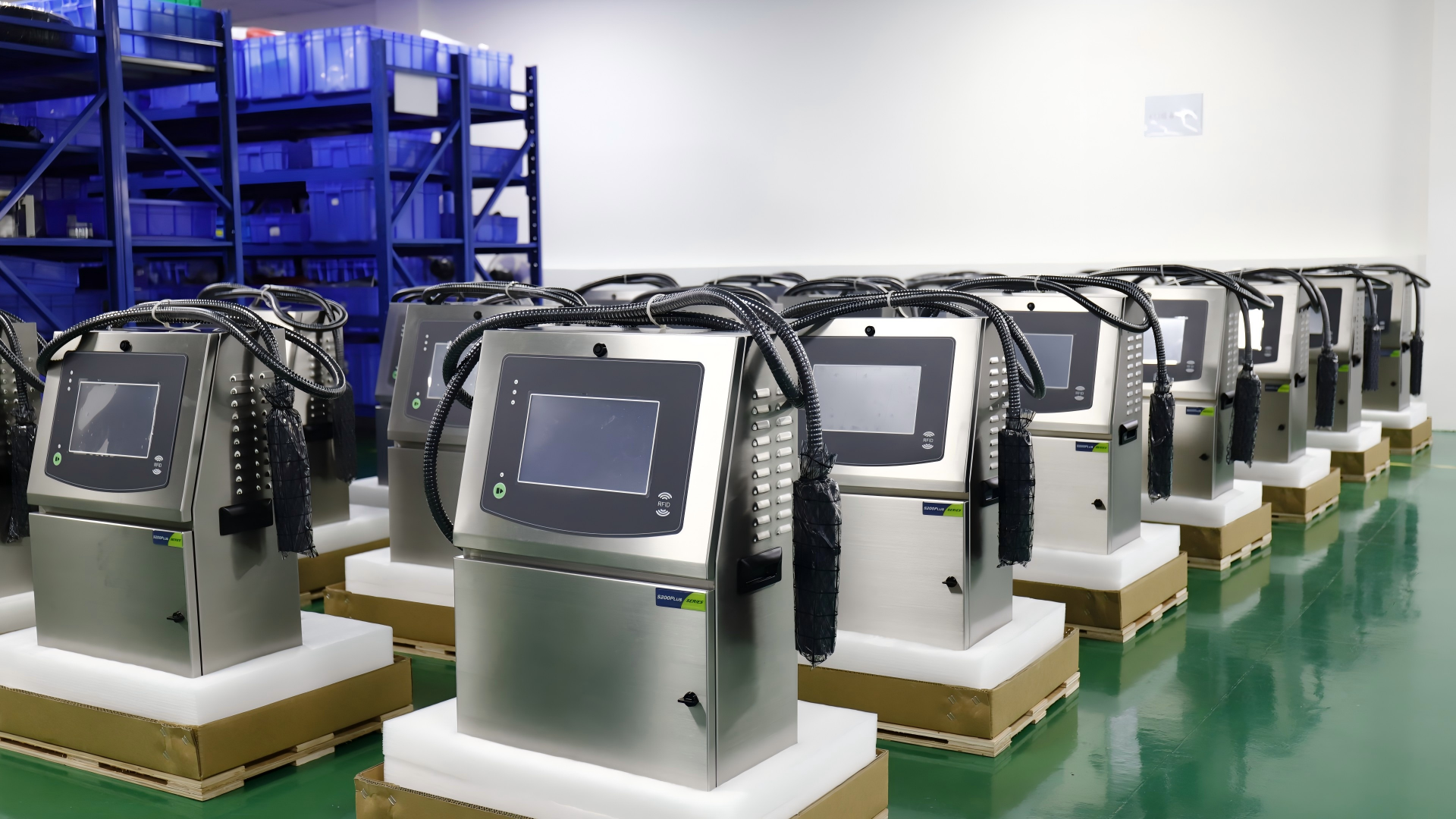
Standard-model scheduling comes first, with milestones covering order confirmation, assembly, testing and shipment. Equipment is shipped in carton or protective export packing with shipment photos taken before dispatch. After delivery, support includes online response, installation guidance and troubleshooting, and a recommended spare parts and consumables list is provided for repeat operation. If you are at the shortlist stage now, the fastest way to convert this guide into a decision is to send a sample of your carton, bottle, film or metal component for a marking trial, or to request a quotation and the DOCOD corporate brochure for the full model range.
Conclusion
Choosing a marking system for a packaging line is a matching exercise, not a technology popularity contest. Start with the substrate list: cartons and labels point toward TIJ or PIJ, flexible films toward TTO, bottles and irregular surfaces toward CIJ, high-speed cable and pipe toward a higher CIJ tier, glass and heat-sensitive plastics toward UV laser, metals toward fiber laser, and mainstream non-metal packaging toward CO2 laser. Then confirm the code package, set the speed tier from verified figures, choose the consumable model consciously, validate on real samples, and specify inspection and after-sales before the purchase order rather than after commissioning.
DOCOD Precision Group Co., Ltd. builds coding, marking and inspection equipment across those technologies from a 20,000 m² facility with more than 140 R&D staff, serving importers, distributors, brand owners and industrial end users in export markets worldwide.
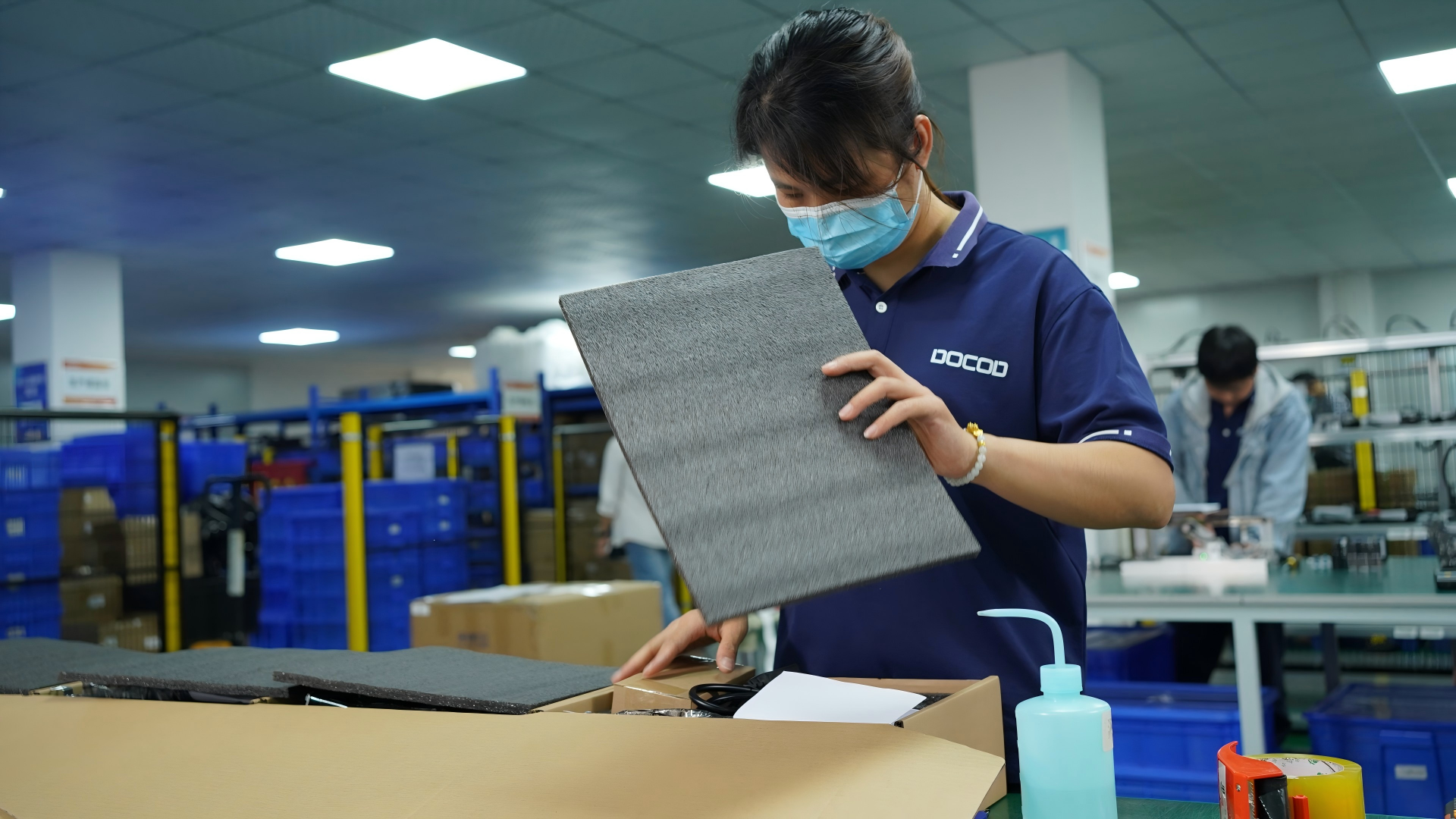
Next step: request a sample marking trial, a project quotation, or the DOCOD corporate brochure to shortlist the right model for your line.
Contact: Sam | Email: sales@docod.com.cn | Tel: +86 139-2896-7650 | WhatsApp: +86 135-1234-4323
Website: www.docod-group.com | Address: Xilin Industrial District, Honglai Town, Quanzhou Nan'an City, Fujian Province, China
Corporate brochure download: DOCOD Corporate Brochure (PDF)
Have Questions or Need More Details?
Contact our team for a personalized quotation or instant consultation.
Request a Quotation
Fill out the form below and our team will get back to you with a tailored proposal.
WhatsApp Direct Chat
Prefer to chat in real-time? Message us on WhatsApp for instant assistance & quick answers.
- Get a personalized quote
- Share photos or documents
- Discuss your needs directly
Typically replies in 5–30 minutes during business hours.