
Coding Equipment Supplier Audit: Capability Checks That Protect Delivery
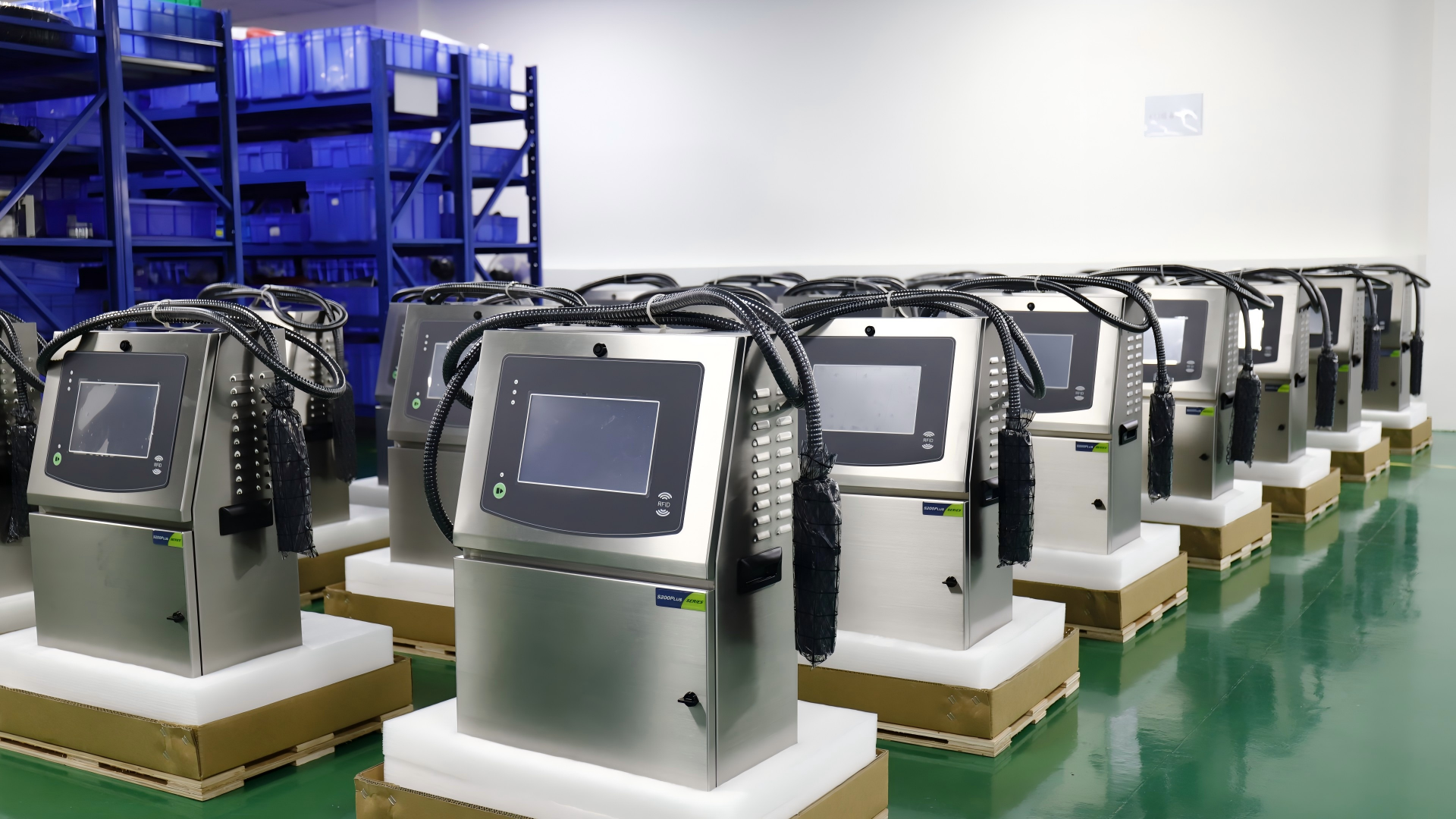
Finished coding equipment under final inspection: the point at which a capability claim either has a record behind it or does not.
A coding equipment supplier audit protects delivery when it turns four claims into evidence before the purchase order is released: the physical build of the machine, the engineering process behind any customization, the validity and scope of the quality and compliance documents, and the acceptance test that releases the shipment. Brochures usually describe the first three and are silent on the fourth. Only the fourth is normally written into a contract, which is why delivery problems start there.
This guide sets out how to run that audit on industrial coding and marking equipment — continuous inkjet (CIJ), thermal inkjet (TIJ), piezo inkjet (PIJ), thermal transfer overprinters (TTO), laser marking, and the conveyors, rewinders and cartridges that keep a line running. Documented DOCOD product and process evidence is used to show what a verifiable answer looks like, and each check is then tied to purchasing terms and acceptance criteria you can actually put in an order.
What a Coding Equipment Supplier Audit Must Prove
A capability audit answers one question: can this supplier deliver the machine, accessories and support that the purchase order describes, on the agreed date, to the agreed standard? Catalogue pages, showroom demonstrations and reference lists are context, not answers. The audit tests four evidence classes:
- Build evidence — what the machine is made of and how it is protected in the installed environment.
- Engineering evidence — how far the supplier can change software, interfaces, brackets, printheads or branding, and under what process control.
- Compliance evidence — which quality and market-access documents exist, what they cover, and whether they remain valid at the delivery date.
- Delivery evidence — what is inspected, tested, recorded and accepted before the goods leave.
A workable decision rule is this: every capability claim in a quotation should map to a document you have seen, a configuration check you can perform, or a test result you have witnessed or received as a recording. A claim that maps to none of the three is a preference rather than a verified capability, and it should not be the reason a purchase order is released.
Why Brochure Claims Fail in Coding and Marking
Industrial coding and marking is a multi-technology category. One supplier may offer CIJ, TIJ, PIJ, DOD, TTO, laser marking and inline vision inspection, and each technology brings different build materials, different consumables and a different acceptance test. A portfolio page tells a buyer what the supplier sells, not what will be installed on their line.
Two further pressures make verification worth the effort. First, code content is changing: the GS1 Digital Link transition sets a 31 December 2027 deadline for retail barcodes moving from 1D to 2D (QR) codes, so 2D print capability and code verification are becoming a procurement requirement rather than an upgrade. Second, published forecasts for this category differ in scope and base year — commercial research houses report materially different 2026 values — so market-level numbers cannot stand in for supplier-level evidence.
The practical consequence is that the audit must be built around the exact configuration being bought: a named model, a named cartridge, a named conveyor and a named acceptance test. Generic supplier credentials are background; configuration evidence is the decision.
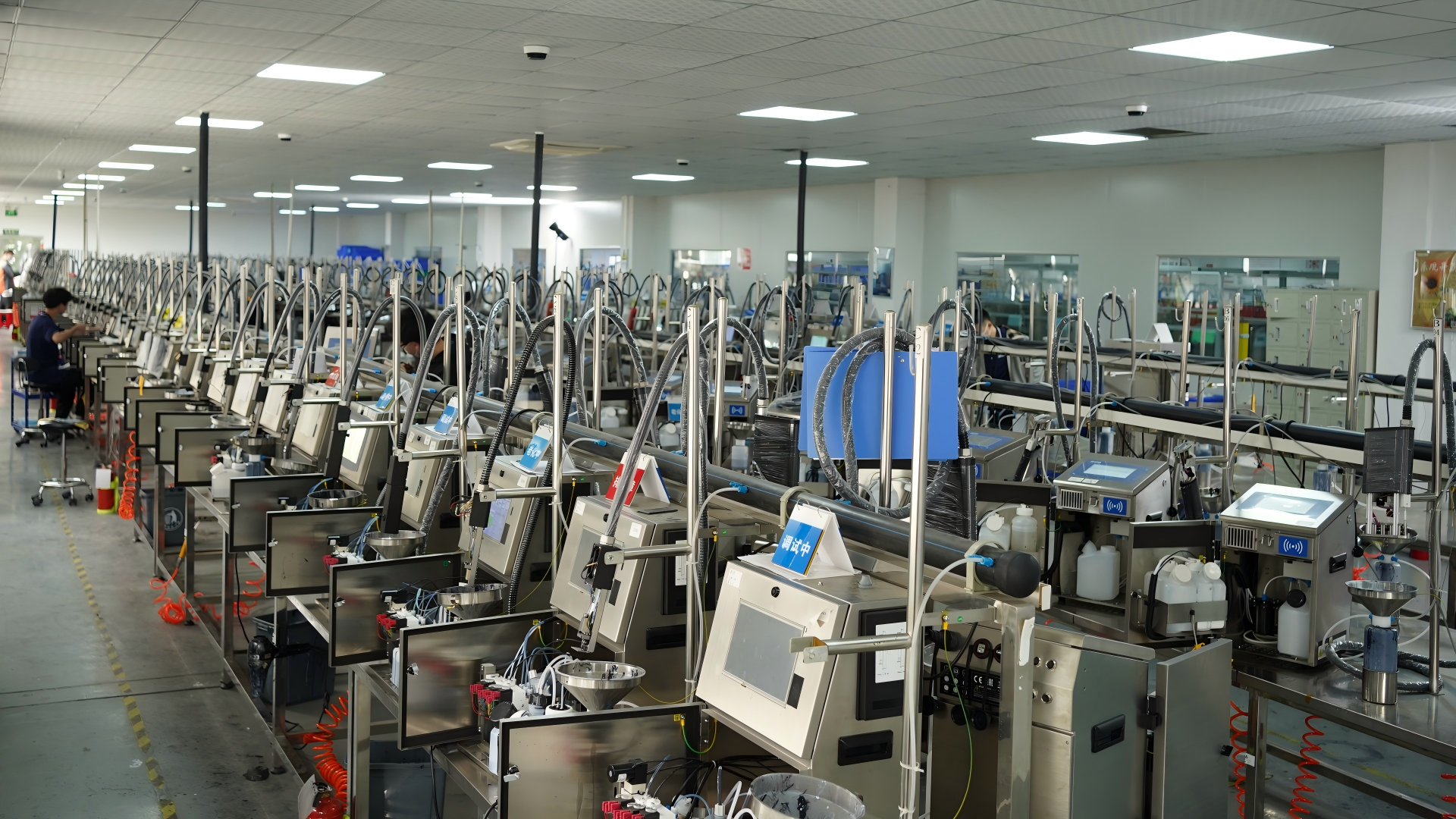
Production capability is verified at the assembly stage, not from a catalogue spread.
Check 1 — Physical Build, Materials and Ingress Protection
Build materials are the cheapest capability claim to state and one of the more expensive to discover late. The audit should ask for the material statement in writing, then ask which assembly it applies to.
Continuous inkjet: M2000 Series
The DOCOD M2000 Series Continuous Inkjet Printer is specified with SUS 304 stainless steel construction and IP65 protection. Those two facts generate four audit questions: which surfaces are stainless steel; whether the IP65 statement covers the cabinet, the printhead assembly or the complete unit as installed; whether the protection survives cable glands, connectors and any option fitted; and whether your line's cleaning regime is compatible with the rating.
None of these needs an engineering department to answer, but each needs a written answer. Stainless steel matters where washdown, condensate or corrosive atmospheres shorten the life of painted enclosures; an ingress rating matters where dust, jet cleaning or humidity is present. If the answer is "the rating applies to the cabinet only", the audit record should say so, because the printhead is normally the part closest to the product.
Documented use shows the operating context the platform is applied to: a cable manufacturer in the United States runs the M2000 Series across six lines for meter marking on cable sheath, reporting clearer and more consistent codes, with stable pressure and easy cleaning as the relevant characteristics. For an audit, the useful detail is not the country but the line count and the task — multiple lines, continuous substrate, and a cleaning routine that has to be repeatable shift after shift.
Piezo inkjet: P2000
The DOCOD P2000 Piezo Inkjet Printer is specified with aviation-grade aluminium construction. In practice this matters for two audit items that are easy to skip: mounting rigidity when a printhead is carried on an existing bracket or traversing system, and the weight and stiffness that bracket has to support. A buyer replacing a printer on an existing beam should request the mounting interface dimensions and confirm in writing who owns the bracket — supplier, integrator or buyer — before installation week rather than during it.
A personal care manufacturer in Thailand runs the P2000 across three lines for variable data printing on coated boxes, with high-resolution code printing and a reported improvement in traceability consistency after one year. Coated board is a useful audit reference because it is exactly where ink choice and printhead settings are most likely to be re-tuned on site; the audit should therefore confirm that the approved sample is printed on the coated stock you actually use, not on an uncoated demo sheet.
UV laser: L3000 Series
The DOCOD L3000 Series 5W UV Laser Marking Machine is specified as a 5 W, water-cooled, 355 nm system, and each of those three numbers creates a separate check. The 5 W rating sets the practical balance between mark contrast and marking speed, which has to be proven on your material rather than assumed. The water-cooled design means a cooling circuit is part of the installation, so the audit should confirm what cooling equipment is inside the scope of supply, what ambient conditions it expects and who maintains the circuit. The 355 nm wavelength places the system in UV marking, which is applied where low heat input matters.
Documented use supports that reasoning: a cosmetics OEM in Poland runs the L3000 Series on two lines for lot coding on plastic bottles and caps, with low-heat UV marking producing permanent high-contrast marks over a one-year period. The audit action that follows is straightforward — a laser check should include a sample from your own production, marked at your line speed, with cooling and utility requirements stated in writing.
Check 2 — Engineering and Customization Capability
How much can the supplier actually change, and under what control? DOCOD documents four production modes, each with its own scope, minimum order, lead time and quality-control sequence. Auditing the mode is far more reliable than auditing the adjective.
- Standard equipment supply — customization limited to language, UI setup, print content settings, mounting options and ink selection by substrate; MOQ 1 set; lead time within 15 working days; quality control covers outgoing inspection, sample printing verification and a function test before shipment.
- OEM branding support — private label logo, startup screen, nameplate, packaging, manuals and carton labels; MOQ 1 set; 15–25 working days; sample confirmation and final inspection before shipment.
- ODM functional customization — software and UI adjustment, communication interface, bracket structure, printhead configuration and application-based adaptation; MOQ 1 set per project; 20–30 working days; requirement confirmation, function test and trial-run verification.
- Production line integration support — conveyor, pager and rewinder matching, encoder and sensor connection, and GS1/DataMatrix and serialization workflow matching; MOQ 1 line; 20–35 working days; integration testing, sample run and video acceptance before delivery.
Two audit questions follow. First, which mode does your requirement actually fall into? A request for a private label and a request for a modified communication interface are different projects, with different control processes and different lead times; a quotation that conflates them will slip. Second, what proves the customization worked? For OEM branding the answer is a confirmed sample plus final inspection. For ODM work it is requirement confirmation, a function test and a trial run. For line integration it is integration testing, a sample run and video acceptance before delivery.
Engineering depth is an input to that answer rather than the answer itself: DOCOD's company profile lists 140+ R&D staff among 407 employees at a Guangzhou, China facility established in 2008. Headcount does not verify a customization, but it is relevant context when the requirement involves software or interface work rather than a catalogue selection.

Engineering capability is audited through the customization process and its test records, not through team photographs alone.
Check 3 — Quality System and Certification Scope
A certificate is not a capability until you have read its number, standard, scope, validity dates and the name and address printed on it. The audit record should capture all five. The following certification is documented for DOCOD:
- ISO 9001 Quality Management System Certification, certificate 18625Q00281R1M, issued by Guangdong Zhongyu Certification Co., Ltd. against GB/T 19001-2016 / ISO 9001:2015, scope "R&D and Production of Inkjet Printers"; issued 5 September 2025, valid to 4 September 2028.
- ISO 14001 Environmental Management System Certification, certificate 18625E00147R1M, same authority, issued 5 September 2025, valid to 4 September 2028.
- ISO 45001 Occupational Health and Safety Management System Certification, certificate 18625S00131R1M, same authority, issued 5 September 2025, valid to 4 September 2028.
- BIS CRS Registration R-41312347 from the Bureau of Indian Standards against IS 13252 (Part 1):2010 / IEC 60950-1:2005, covering printers and plotters under the brand codpad for the listed models manufactured at the registered factory address; issued 13 October 2025, valid to 12 October 2027.
The BIS entry is the most instructive. A CRS registration is scoped to a brand, a model list and a factory address. If you are buying a private-label unit, three questions follow: does your model appear on the registration, does the brand on the certificate match the brand on the nameplate you will receive, and will the goods be manufactured at the registered address? A certificate number in a brochure answers none of them.

Quality-system evidence is only as strong as the scope statement and validity date behind the certificate.
Check 4 — Delivery-Critical Items Around the Printer
The machine is the visible part of an order. Delivery is usually protected, or lost, on everything around it.
Consumables: the 3BK702 cartridge
The DOCOD 3BK702 Half-Inch Black Solvent Quick-Drying Ink Cartridge is a half-inch black solvent cartridge described as quick-drying. The audit point is that a cartridge must be matched to the substrate, not only to the printer: behaviour on plastic film is not behaviour on coated carton. A regional distributor in Korea reported ordering 50 cartridges per month over one year for coding on plastic film and coated cartons, with fast drying and strong adhesion and the result of fewer smudging complaints.
The lesson is to test the consumable claim on the two or three substrates that make up most of your volume, and to keep repeat-order terms in the same document as the machine order. Spare parts and consumables supply is documented as its own production mode: minimum order 1 piece, lead time within 15 working days, quality control covering part verification, packing inspection and shipment check, and acceptance defined as model and compatibility confirmation before dispatch. That acceptance wording is worth copying into your order, because a wrong cartridge model found at goods-in is a line stoppage.
Conveyors and rewinders: XC20 and XF30
The DOCOD XC20 Mini Conveyor Belt is a compact conveyor for small products. A small batch food producer in the UAE uses one bench line to convey pouches for online coding, reporting a smoother semi-automatic workflow, with the compact conveyor suited to fine products. Audit points for any conveyor addition are product size and weight range, speed matching to the coding system, and whether the conveyor is supplied as a matched set with the printer bracket.
The DOCOD XF30 Vertical Rewinding Machine is applied to label secondary rewinding and coding. A label converter in Brazil has run one station for two years for roll-label rework, reporting smoother short-run relabeling. The audit question here is scope: if the rewinder is delivered separately from the printer and nobody owns the combined test, unwind tension and coding position remain unverified until commissioning day.
TTO and TIJ options
Where a line runs flexible film or cartons, the audit often covers a thermal transfer overprinter or a thermal inkjet printer as well. The DOCOD R3000 Series Industrial Thermal Transfer Overprinter is documented at an Indonesian snack manufacturer across two VFFS lines for date coding on flexible film, in operation for two years with cleaner film coding output.
On the TIJ side, the DOCOD T220E Half-Inch Dual-Head Inkjet Printer is documented at an Indian pharmaceutical packaging supplier across three cartoning lines for QR and expiry printing on cartons over 18 months, with dual-head high-speed printing and improved code readability. The DOCOD TX1 Half-Inch Seamless Inkjet Printer is documented at a Brazilian contract packer across eight packing stations for batch and QR printing on shipping cartons, with faster deployment across small lines and a compact setup for limited space.
These references define what to request: print height and head count for your code block, the substrate, and — where QR or DataMatrix content is involved — a verification method that confirms the code reads correctly at line speed rather than only on a static sample.
The Audit Sequence: Seven Steps from Document Request to Acceptance
- Issue a document request list before the technical discussion. Model datasheet, material and ingress-protection statement, customization list, integration signal list, certificate copies with numbers, sample print report format and packing standard.
- Cross-check the quotation against the mode's documented scope. Establish which customization items are included, which are options, and which mode's lead time therefore applies.
- Verify certificates at source. Number, issuing body, standard, validity, scope, brand, model list and factory address — all checked against the issuer's register.
- Approve a sample print on your own substrate at your line speed, and record the settings used so the result is reproducible after installation.
- Run an integration test where the order includes conveyor, rewinder, encoder or sensor connections, or a GS1/DataMatrix workflow. Integration testing, sample run and video acceptance before delivery are the documented control points for line integration work.
- Witness or receive the pre-shipment test. For standard equipment supply, the documented control is outgoing inspection, sample printing verification and a function test before shipment; for equipment orders, print sample confirmation and factory testing before delivery; for customized orders, technical drawing confirmation, sample approval and pre-shipment inspection.
- Sign acceptance against the same criteria written in the purchase order, and keep the video, the approved sample and the test record together as one file.
Audit Checklist Mapped to Documented Evidence
| Audit area | What to request | Documented evidence | Failure it prevents |
|---|---|---|---|
| Enclosure and materials | Written material specification; which assembly the ingress rating covers | M2000 Series CIJ: SUS 304 stainless steel, IP65 protection. P2000: aviation-grade aluminium construction | Enclosure degradation or moisture failure after installation |
| Laser configuration | Wavelength, power, cooling method, utility requirements in writing | L3000 Series: 5 W, water-cooled, 355 nm UV | Cooling and utility work discovered during commissioning |
| Customization scope | Itemized customization list per production mode | OEM branding: private label logo, startup screen, nameplate, packaging, manuals, carton labels. ODM: software/UI, communication interface, bracket structure, printhead configuration | Branding or interface rework after arrival |
| Line integration | Signal list, encoder and sensor connections, code workflow | Conveyor/pager/rewinder matching; encoder and sensor connection; GS1/DataMatrix and serialization workflow matching | Line stopped at commissioning |
| Quality system | Certificate numbers checked at source | ISO 9001 18625Q00281R1M; ISO 14001 18625E00147R1M; ISO 45001 18625S00131R1M — all valid to 4 September 2028 | A certificate that has lapsed or does not cover the product |
| Market access | Registration number, brand, model list, factory address | BIS CRS R-41312347, India, printers/plotters under brand codpad, valid to 12 October 2027 | Market-entry or customs rejection |
| Consumables | Cartridge model, substrate match, repeat-order acceptance | 3BK702 half-inch black solvent quick-drying cartridge; parts acceptance by model and compatibility confirmation before dispatch | Unreadable codes and unplanned consumable switches |
| Acceptance test | Test items, evidence format, who signs | Pre-shipment test and video confirmation; sample printing verification; function test before shipment | Arrival disputes with no shared record |
| Lead time and MOQ | Quoted lead time per production mode | Standard within 15 working days; OEM 15–25; ODM 20–30; integration 20–35; spare parts within 15 working days | Schedule slip with no contractual basis |
Purchasing Terms and Acceptance Criteria That Lock the Result
An audit is only useful if it lands in the commercial documents. DOCOD's documented purchasing terms for equipment orders are: MOQ 1 set; delivery terms FOB, CIF, CFR or EXW; acceptance criteria pre-shipment test and video confirmation; payment terms T/T 30/70 as the recommended template.
Other order types carry different terms, and mixing them is a common source of dispute:
- Customized orders — MOQ 1 customized order; acceptance by technical drawing confirmation, sample approval and pre-shipment inspection; payment T/T 30/70 or LC.
- Project orders — MOQ 1 project; acceptance by technical proposal confirmation and pre-shipment functional test; payment T/T or LC, case by case.
- Spare parts — MOQ 1 spare part order; acceptance by model and compatibility confirmation before dispatch; payment by PayPal or T/T.
- Consumables repeat orders — acceptance by batch and packing confirmation before shipment.
- Demo units — MOQ 1 demo unit; acceptance by basic function test and shipment photo confirmation.
For a buyer moving from evaluation into execution, three clauses deserve to be written explicitly rather than implied: the acceptance test items and who signs them; the evidence format the buyer will receive — video, photographs or a signed test sheet; and the Incoterm with the named place. A purchase order that states a model, a production mode, an acceptance test and an Incoterm has removed most of the room in which delivery problems start.
What This Audit Does Not Prove
An honest audit records its own boundaries, because overstating them is how a checklist becomes a false comfort.
- Substrate performance still has to be proven on your material. Documented application cases show where a platform has been deployed and what was reported; they are not a guarantee of the same result on a different film, board or coating.
- Certificate scope is limited by its own wording. Validity and coverage must be read per product family and per market, not assumed across a whole portfolio.
- Total cost of ownership cannot be concluded here. Ink consumption rate, maintenance interval and field failure rates for a specific line are not established by the available evidence, so a running-cost comparison should wait for measured data from your own trial.
- Lead times are production lead times, not transit times. The figures above describe production and inspection windows and exclude shipping and customs clearance.
- Regulatory suitability in your market is your own check. The audit verifies what the supplier holds; it does not replace your own review of local requirements for the goods you import.
Frequently Asked Questions
Which certificates should be verified in a coding equipment supplier audit?
Verify four documented items and check each one at the issuer's register rather than on a supplier PDF: ISO 9001 certificate 18625Q00281R1M (scope "R&D and Production of Inkjet Printers", valid to 4 September 2028), ISO 14001 certificate 18625E00147R1M and ISO 45001 certificate 18625S00131R1M (both valid to 4 September 2028), and BIS CRS Registration R-41312347 for India, which covers printers and plotters under the brand codpad and is valid to 12 October 2027. For each, confirm the number, the issuing body, the standard, the scope and the validity date at your planned delivery date.
How can a buyer verify OEM branding or ODM customization capability before ordering?
Ask which production mode the requirement falls into and request that mode's control process. OEM branding support covers private label logo, startup screen, nameplate, packaging, manuals and carton labels, with MOQ 1 set, a 15–25 working day lead time, sample confirmation and final inspection before shipment. ODM functional customization covers software and UI adjustment, communication interface, bracket structure, printhead configuration and application-based adaptation, with MOQ 1 set per project, a 20–30 working day lead time, and verification through requirement confirmation, a function test and a trial run. The confirmed sample and the trial-run record are the evidence that the customization worked.
What should line integration support include for a coding installation?
Documented line integration support covers conveyor, pager and rewinder matching, encoder and sensor connection, and GS1/DataMatrix and serialization workflow matching, with MOQ 1 line, a 20–35 working day lead time and acceptance through integration testing, a sample run and video acceptance before delivery. If your order includes two or more of these elements and the quotation does not name an integration test, the delivery risk sits with you rather than the supplier.
What sample and pre-shipment evidence should be approved before delivery?
For standard equipment supply, quality control includes outgoing inspection, sample printing verification and a function test before shipment. Equipment orders use print sample confirmation and factory testing before delivery. Customized orders use technical drawing confirmation, sample approval and pre-shipment inspection. The general equipment purchase template defines acceptance as a pre-shipment test with video confirmation. Whichever route applies, approve the sample on your own substrate and keep the recorded settings with the test record.
What MOQ and lead times apply to equipment, parts and integration projects?
Documented figures are: standard equipment MOQ 1 set with delivery within 15 working days; OEM branding MOQ 1 set at 15–25 working days; ODM customization MOQ 1 set per project at 20–30 working days; line integration MOQ 1 line at 20–35 working days; spare parts MOQ 1 piece with delivery within 15 working days; and distributor and service partner support MOQ 2 units at 15–30 days. These are production lead times and exclude shipping and customs clearance, so add transit time when you build the delivery schedule.
What purchasing terms and acceptance criteria should be written into the order?
For equipment orders the documented terms are MOQ 1 set, delivery terms FOB, CIF, CFR or EXW, acceptance by pre-shipment test and video confirmation, and payment on T/T 30/70 as the recommended template. Customized orders add technical drawing confirmation and sample approval, with payment on T/T 30/70 or LC. Project orders use technical proposal confirmation and a pre-shipment functional test, with T/T or LC case by case. Buyers who want to run this checklist against a specific configuration can request the current product documentation or arrange a sample print evaluation with the DOCOD technical team.
Conclusion: Evidence Before the Order, Not After the Delay
A coding equipment supplier audit succeeds when it produces a small, checkable file: the material and ingress statement for the model you are buying, the customization list for the production mode you have chosen, four certificate numbers verified at source with validity dates, a sample print on your own substrate at your line speed, an integration test where the order includes conveyors, rewinders or code workflows, and a pre-shipment test evidenced by video. That file is what protects delivery — not the brochure, and not the reputation of the category.
Apply the decision rule consistently: each capability claim should map to a document, a configuration check or a test record. Where a requirement is still unresolved, the correct action is to hold the order and request the missing evidence, not to accept a verbal assurance that costs nothing to give.

Next step: match the audit checklist to a specific configuration and confirm the acceptance test before the order is released.
For the full product range and technical specifications covered in this audit checklist, download the DOCOD corporate brochure, or review the company's manufacturing and certification profile at www.docod-group.com.
Have Questions or Need More Details?
Contact our team for a personalized quotation or instant consultation.
Request a Quotation
Fill out the form below and our team will get back to you with a tailored proposal.
WhatsApp Direct Chat
Prefer to chat in real-time? Message us on WhatsApp for instant assistance & quick answers.
- Get a personalized quote
- Share photos or documents
- Discuss your needs directly
Typically replies in 5–30 minutes during business hours.