
Drop-on-Demand Coding Explained: A Technical Guide to TIJ and PIJ Printhead Specs and Selection
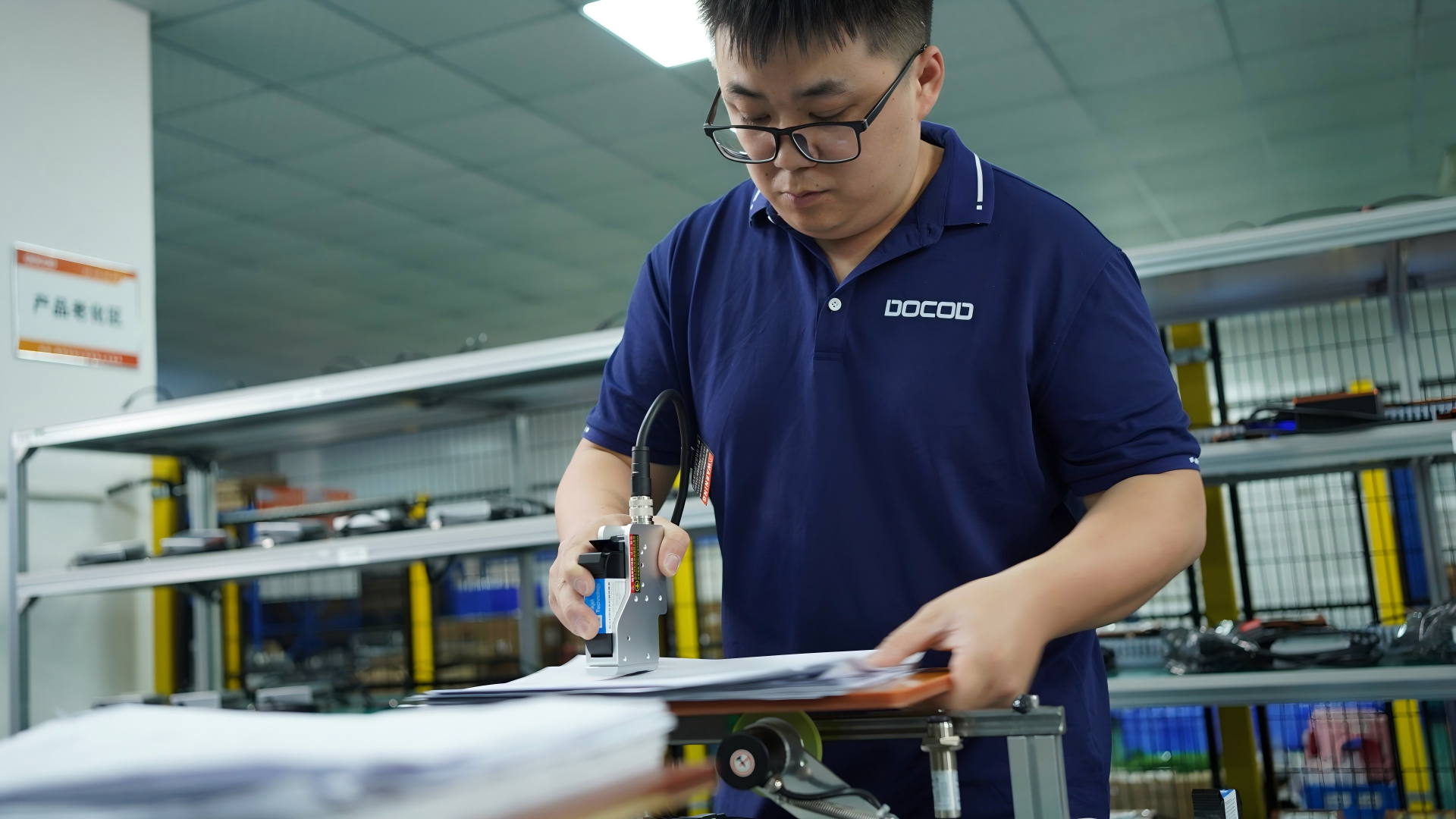
Drop-on-demand (DOD) coding is a non-contact inkjet method that ejects a droplet only where the code image requires ink. Two DOD routes dominate carton and product coding: thermal inkjet (TIJ), where a thin-film resistor heats ink inside a cartridge-integrated printhead, and high-resolution piezo inkjet (PIJ), where a piezo element deforms an ink chamber in a durable industrial printhead fed by a continuous ink supply.
Selecting between them is a specification problem, not a brand problem. Match the required print height and the resolution-dependent line speed first, then lock the ink delivery route, the controller and data path, and the acceptance criteria that prove the codes are readable on your substrate.
Problem Definition: Where DOD Specifications Usually Go Wrong
Most DOD selection errors fall into six repeatable patterns, and each one shows up after commissioning as either wasted capital or unreadable codes.
- Over-specifying resolution. Buying more native resolution than the code needs adds cost and data load without improving scan rates. A 300 × 300 dpi code image is often adequate for carton-level 2D codes, while 600 dpi heads matter when character heights are small or the symbol is dense.
- Under-specifying print height. A single half-inch head covers 12.7 mm. If the code block plus its quiet zone exceeds that, a dual-head arrangement or a wider PIJ head is required — not a software workaround.
- Confusing top speed with working speed. A printer may be rated at a high top speed and a much lower speed at the resolution you actually print. Both numbers belong in the quotation.
- Mismatching ink delivery to batch length. Cartridge-based systems exchange a consumable at changeover; continuous-supply systems trade that for ink-route management.
- Ignoring the data path. Variable data printing, GS1 codes and serialization all depend on how quickly the controller renders a new image and how reliably it synchronises with the line encoder and PLC.
- Forgetting lifecycle. Consumable continuity, spare-parts planning and remote support decide whether the line keeps running in year three.
Industry Background: Why DOD Selection Became a Strategic Decision
Inkjet technologies — CIJ, TIJ and PIJ together — accounted for 40.1% of the coding and marking technology segment, according to Fortune Business Insights research on the coding and marking equipment market. That share reflects a simple advantage: inkjet prints variable data onto a moving surface without a plate, a ribbon, or a laser setup per product.
Two forces are raising the specification bar. First, GS1's Digital Link programme sets a 2027-12-31 deadline for the retail transition from 1D barcodes to 2D QR codes, which increases both the data payload per code and the print area it occupies. Second, industrial coding is increasingly defined by its traceability and quality-control purpose rather than by printing alone, as solution providers such as ID Technology describe it — codes must be readable, verifiable and linkable to production records.
DOCOD Precision Group Co., Ltd. is an industrial coding, marking and inspection equipment manufacturer founded in 2008 and based in China. Its portfolio covers continuous inkjet printers (CIJ), thermal inkjet printers (TIJ), handheld inkjet coders, piezoelectric high-resolution inkjet printers (PIJ), drop-on-demand large-character printers (DOD), thermal transfer overprinters (TTO), laser marking machines, inline vision inspection systems, coding consumables and spare parts, with stated support for date and batch coding, variable data printing, GS1 DataMatrix, serialization and product traceability. That breadth matters for TIJ/PIJ selection because the head is only one part of the decision: the ink route, the controller, the inspection option and the service model come from the same supplier.
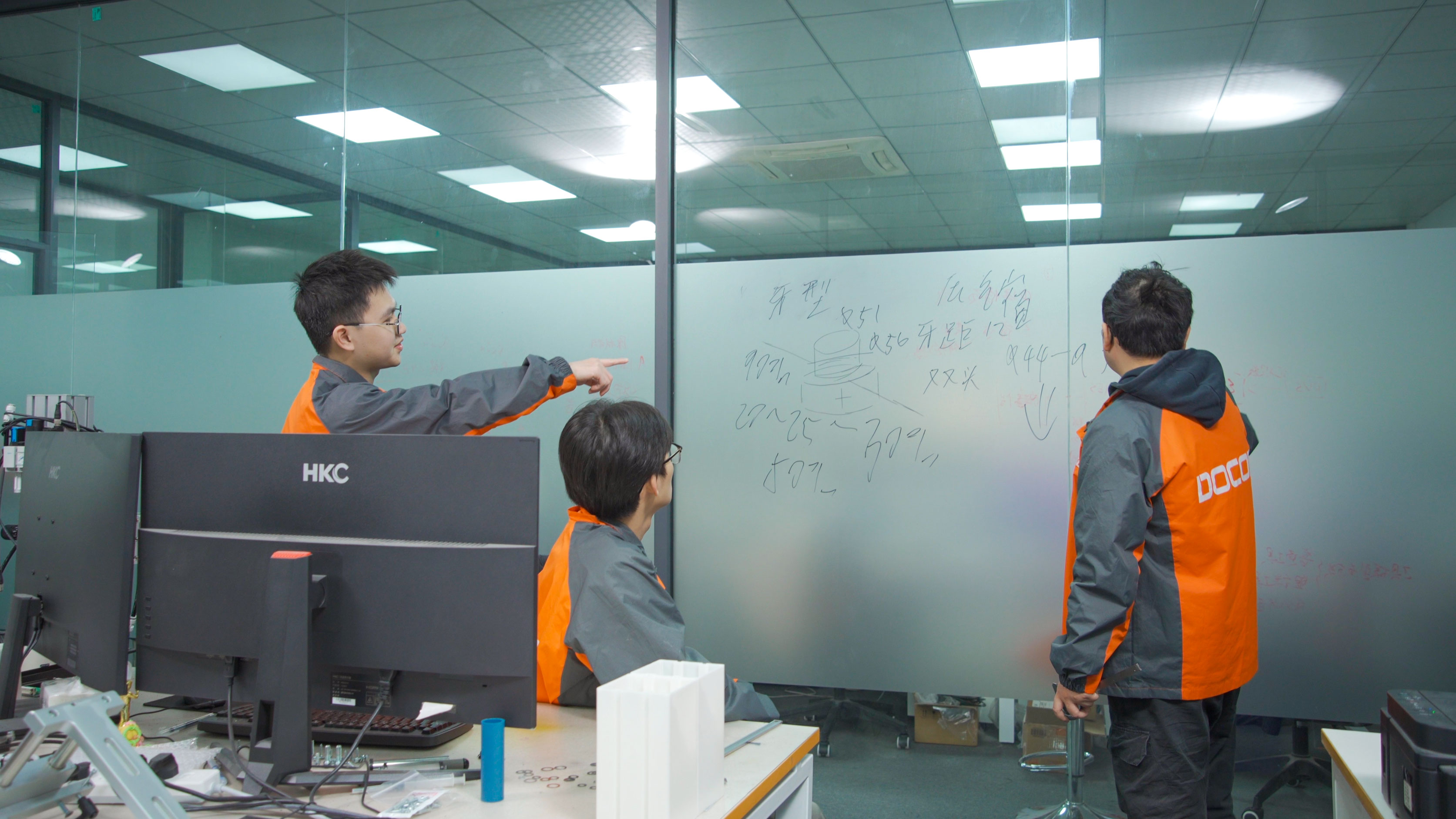
Detailed Solution: How TIJ and PIJ Printheads Actually Differ
1. Printhead architecture: thermal bubble versus piezo deformation
In a TIJ head, a thin-film resistor inside the ink chamber is pulsed for a few microseconds. The ink flashes to vapour, expands as a bubble, and pushes a droplet out of the nozzle; the bubble collapses and the chamber refills. Because the resistor sits in contact with the ink and is fabricated together with the nozzle plate, the head is normally integrated into the cartridge. Replacing the cartridge therefore replaces the head, which is why TIJ wear is priced as a consumable rather than as a spare part.
A PIJ head uses a piezo ceramic element that physically deforms the ink chamber when a voltage waveform is applied. There is no thermal cycle inside the chamber, the head is a durable component rather than a consumable, and the ejection waveform can be shaped to suit the ink. That is why PIJ platforms can be built around bulk ink supply and wider nozzle arrays.
2. Resolution: three different numbers
Resolution discussions go wrong because three values get mixed together: the native resolution of the printhead, the resolution of the code image file, and the resolution at which the rated speed is achieved. A 600 dpi native head does not automatically produce a better scannable code than a 300 dpi head when the code image is a 300 × 300 dpi symbol; equally, a 300 dpi head cannot place more dots than its nozzle pitch allows. Specify the code grade, the symbol size and the line speed, then ask the supplier for the resolution at which that combination is guaranteed.
3. Nozzle count and print swath
Print width is a function of nozzle count and nozzle pitch. More nozzles per head widen the swath and reduce the number of heads needed to cover a code block, but they also increase the image data the controller must render for every product. A single half-inch head reaches 12.7 mm, which is why dual-head TIJ configurations exist: the DOCOD T220E half-inch dual-head thermal inkjet printer reaches 25.4 mm of print height, while the DOCOD TX1 half-inch seamless inkjet printer stays at 12.7 mm for compact installations where space, not width, is the constraint.
The DOCOD P2000 piezo inkjet printer, by comparison, provides 33.8 mm of print height — 8.4 mm more than the T220E — because it uses a wider industrial head rather than two cartridge heads.
4. Ink delivery and consumable capacity
Cartridge-based TIJ delivers ink from the cartridge itself, with a continuous ink supply system (CISS) option on some platforms to extend run time between changes. Continuous-supply PIJ uses a negative-pressure ink circuit that feeds the head from a bulk reservoir. The trade-off is straightforward: cartridges simplify handling and hygiene, while bulk supply reduces changeover frequency in long, data-heavy batches at the cost of ink-route management.
Cartridge volume is a specification item, not a footnote. Compact half-inch solvent cartridges are commonly quoted in the 42 ml class, and the number of cartridges consumed per shift depends on code area, ink coverage and purge time. Ask for cartridges per 1,000 products at your code size instead of a shelf-life figure.
5. Controller design and data throughput
The controller decides whether the head can be used well. It renders each variable image, buffers it, and fires nozzles in sync with the line encoder. Two hardware questions separate a workable controller from a marginal one: what renders the raster, and how the operator interacts with it. An application processor paired with FPGA-based pulse timing is a common architecture in this equipment class, with Cortex-A7-grade processors used alongside an FPGA, and a 10.1-inch touchscreen controller is a typical industrial format for job setup, diagnostics and I/O mapping. Neither number is automatically better when larger — what matters is whether the platform exposes the encoder inputs, PLC handshakes and rejection signals you can wire into the line.
6. The specification checklist
| Parameter | Why it changes the decision | What to confirm in writing |
|---|---|---|
| Native head resolution | Sets the smallest character and densest code the head can form | Head dpi, plus the code-image dpi the supplier recommends for your symbol size |
| Print height / swath | Decides single-head, dual-head or wide PIJ architecture | Maximum print height including quiet zone, not only nominal height |
| Speed at working resolution | Top speed is usually reached at reduced resolution | m/min at the dpi and code height you will actually run |
| Nozzle count | Affects swath width, data volume and redundancy | Nozzle count per head and how nozzle-outs are handled |
| Ink delivery type | Sets changeover frequency and maintenance routine | Cartridge volume or bulk reservoir size, and CISS availability |
| Ink and substrate match | Adhesion and contrast decide readability after handling | Ink chemistry approved for coated carton, film, plastic or metal |
| Controller hardware | Governs variable-data throughput and integration options | Processor/FPGA architecture, encoder input, PLC and rejection I/O |
| HMI | Affects setup time and operator error rate | Screen size, job storage, message editing and diagnostic depth |
Step-by-Step Breakdown: Specifying a DOD System in Eight Steps
- Define the code, not the machine. List every code type the line will print — date and batch text, 1D barcode, 2D DataMatrix, QR, GS1 Digital Link. Record symbol size, character height and quiet zone for each.
- Set the readability requirement. Decide the verification method and who performs it. If codes feed a retailer or a regulated supply chain, that method belongs in the acceptance criteria, not in a verbal agreement.
- Convert the code into print height. This selects head architecture: 12.7 mm for the DOCOD TX1, 25.4 mm for the dual-head T220E, 33.8 mm for the P2000 PIJ platform.
- Calculate speed at the working resolution. At 300 dpi the P2000 is stated at 190 m/min against 120 m/min for the T220E; the T220E's top speed is listed up to 406 m/min, the same top figure as the TX1, and the T260E is listed at 60 m/min for basic date coding. Never compare top speeds across platforms without the resolution note.
- Match substrate and ink. Coated carton, film, plastic and metal each need a compatible ink or marking method. Request a printed sample on your own material before release.
- Size the ink supply and changeover window. Multiply codes per shift by ink coverage, then convert to cartridges or bulk litres. If changeover would stop the line, bulk supply or CISS changes the economics.
- Map the data path and integration. Confirm how print files are built and sent, which field is variable, how the encoder synchronises the image, and what the controller does with a rejected or missing code.
- Fix acceptance and lifecycle terms. Agree sample approval, pre-shipment inspection, spare-parts list, consumable supply and remote support before the purchase order.
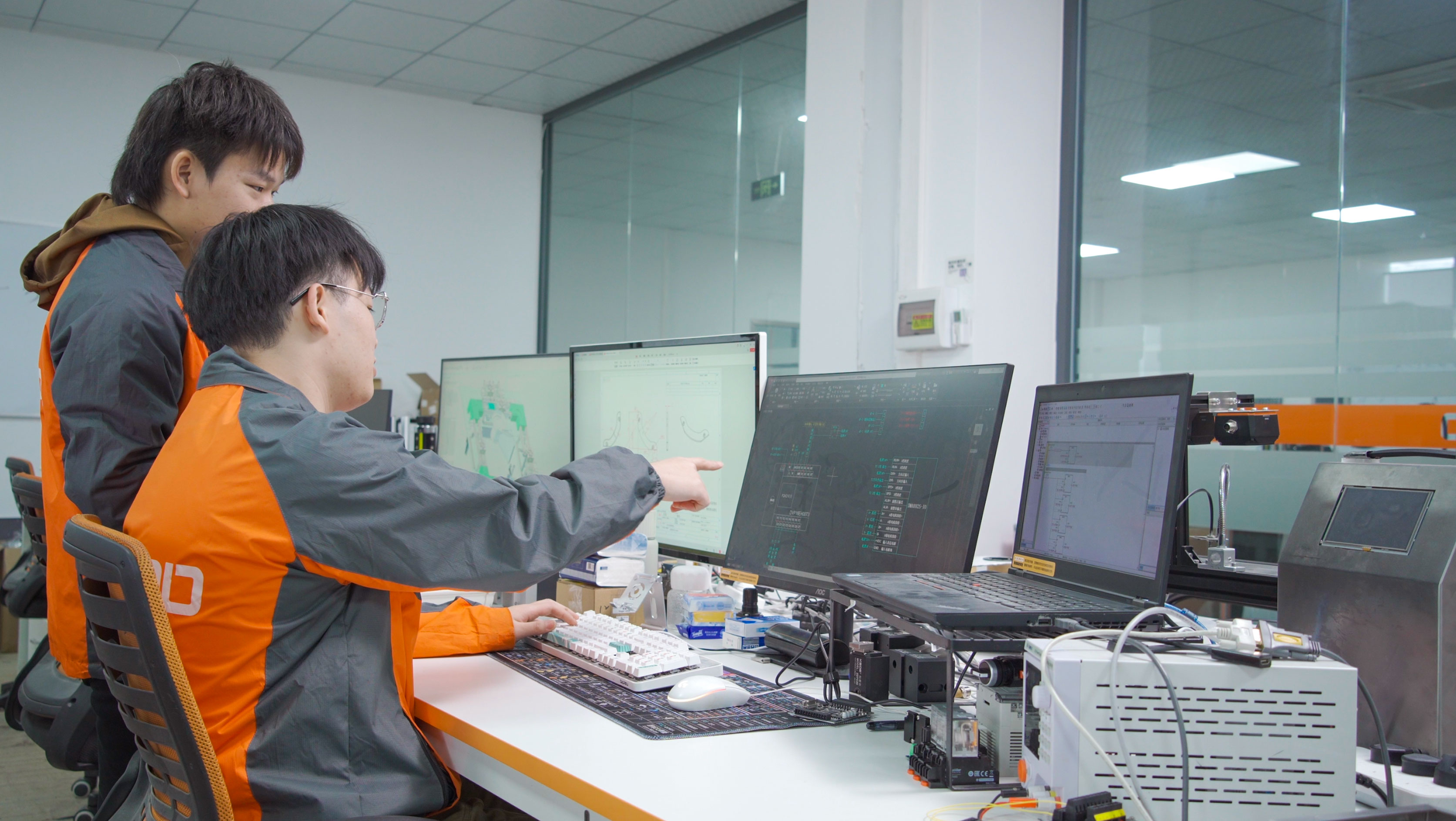
Use Cases: Which DOD Platform Fits Which Line
Coated carton outer-case coding at medium to high speed
Outer cases usually carry a date, batch, QR code and sometimes a GS1 DataMatrix. When the code block is wider than half an inch, the 33.8 mm swath of the DOCOD P2000 piezo inkjet printer covers it in one pass, and the negative-pressure continuous ink supply keeps long batches running without cartridge changes. Its stated 190 m/min at 300 dpi suits conveyor speeds typical of case packing.
Cartons, labels and variable data at high line speed
Where the code fits inside 25.4 mm and the priority is throughput, the T220E dual-head TIJ platform lists top speed up to 406 m/min, handles barcode and QR content, and offers richer external interfaces for line integration. Cartridge or CISS handling keeps changeover a routine task rather than a service call.
Compact lines with limited mounting space
The DOCOD TX1 half-inch seamless inkjet printer is designed for integrated installation with lower space demand, at 12.7 mm print height and top speed listed up to 406 m/min. It fits small-format packaging where a dual-head bracket would obstruct the line.
Simple date coding on low-speed lines
For basic date coding on small units such as eggs, bottles and boxes, the DOCOD T260E half-inch dual-head thermal inkjet printer is positioned at 60 m/min. Specifying a high-resolution platform here adds cost and data complexity the application does not use.
Traceable 2D codes and serialization
When each unit carries a unique 2D code linked to production records, the limiting factor is usually the data path rather than the head. Pair the printer with an inline inspection option — OCR or barcode verification with alarm light or rejection linkage — so unreadable codes are removed at the line instead of at the warehouse.
Comparison Table: TIJ and PIJ Platforms by Verified Specification
| Model | Technology | Print height | Speed | Ink delivery | Best fit |
|---|---|---|---|---|---|
| DOCOD TX1 | Thermal inkjet (TIJ), single head | 12.7 mm | Top speed listed up to 406 m/min | Cartridge / CISS | Tight, compact lines and basic coding |
| DOCOD T260E | Thermal inkjet (TIJ), dual head | Half-inch class | 60 m/min | Cartridge / CISS | Simple date coding on eggs, bottles and boxes |
| DOCOD T220E | Thermal inkjet (TIJ), dual head | 25.4 mm | Top speed up to 406 m/min; 120 m/min at 300 dpi | Cartridge / CISS | Cartons, labels, barcodes and wider QR content |
| DOCOD P2000 | High-resolution piezo inkjet (PIJ) | 33.8 mm | 190 m/min at 300 dpi | Negative-pressure continuous ink supply | Larger QR codes, coated cartons, traceability codes, larger print areas |
Reading the table: the T220E offers 8.4 mm less print height than the P2000 but a higher listed top speed; the P2000 is 70 m/min faster at 300 dpi and covers roughly a third more print width in a single pass. Neither is universally better — the deciding variable is whether your code block fits inside 25.4 mm at the speed you need.
Frequently Asked Questions
How do we prove coded products will stay readable and traceable after installation?
Verification is set at three points. Before production, the print file is double-confirmed — text, barcode, QR content, date format and language settings — because a correct printer with a wrong message is still a defect. Before mass shipment, a pre-production sample is printed on the buyer's substrate. On critical lines, an optional OCR or barcode inspection module with alarm light or rejection linkage removes unreadable codes at the line rather than downstream. The 2027-12-31 GS1 Digital Link transition is one more reason to include 2D verification in that plan.
Can one TIJ or PIJ configuration handle both text and 2D codes?
Yes, within its print height and resolution limits. The limits are the numbers that matter: 12.7 mm on the DOCOD TX1, 25.4 mm on the T220E, 33.8 mm on the P2000. A dual-head TIJ platform prints barcode and QR content as readily as date text, but a code block that exceeds the swath forces either a wider platform or a stitching strategy. For dense 2D data, confirm the print resolution at the required line speed and the controller's variable-data throughput per product.
Which consumables and spare parts should we budget for over the equipment life?
For TIJ, the cartridge is the main recurring item and it carries the head; for PIJ, ink is supplied in bulk and the head is a durable component, so the recurring profile shifts towards ink and ink-route maintenance. Beyond ink and cartridges, a recommended spare-parts and consumables list is provided for repeat operation, and after-sales covers parts matching support, replacement guidance and online response, with distributor and service partner support available for channel-based operations. The realistic budget line is consumption per 1,000 products, not price per cartridge.
Can we test the system on our own material before ordering?
Yes, and it should be a purchasing condition. Material compatibility is handled by matching the ink or marking method to the carton, film, plastic, metal or glass surface, and pre-production sample printing plus substrate testing take place before mass shipment. Acceptance typically runs on three points: technical drawing confirmation, sample approval and pre-shipment inspection. The minimum order quantity is one set per project, so a single-line validation is a normal order rather than a special case.
What is the delivery lead time, and how do we start?
Standard equipment is typically delivered within 15 working days, while customized configurations usually require 15–30 working days. Monthly production capacity is stated at 2,000 units for standard equipment, with distributor-supported programmes reported up to 4,000 units. Delivery terms are FOB, CIF, CFR or EXW, with payment by T/T 30/70 or L/C. The fastest way to start is to send substrate, code content and line speed together, so a sample print and a configured quotation can be prepared in one round — contact sales@docod.com.cn or +86 139-2896-7650, and the technical range is summarised in the corporate brochure linked below.
Conclusion
Drop-on-demand coding rewards buyers who specify in the right order: code content and size first, then print height, then speed at the working resolution, then ink route, controller and acceptance. TIJ keeps half-inch-class coding simple and fast with cartridge-level handling, and dual-head platforms extend it to 25.4 mm. High-resolution PIJ carries more system complexity but delivers a 33.8 mm swath and 190 m/min at 300 dpi on a continuous ink supply, which is what wide traceability and carton codes usually need.
What separates a good installation from a marginal one is rarely the head. It is whether cartridge or bulk consumption was calculated against the real batch, whether the controller was matched to the data path, and whether sample approval, inspection and spare-parts planning were written into the acceptance criteria before the line stopped for the first time.
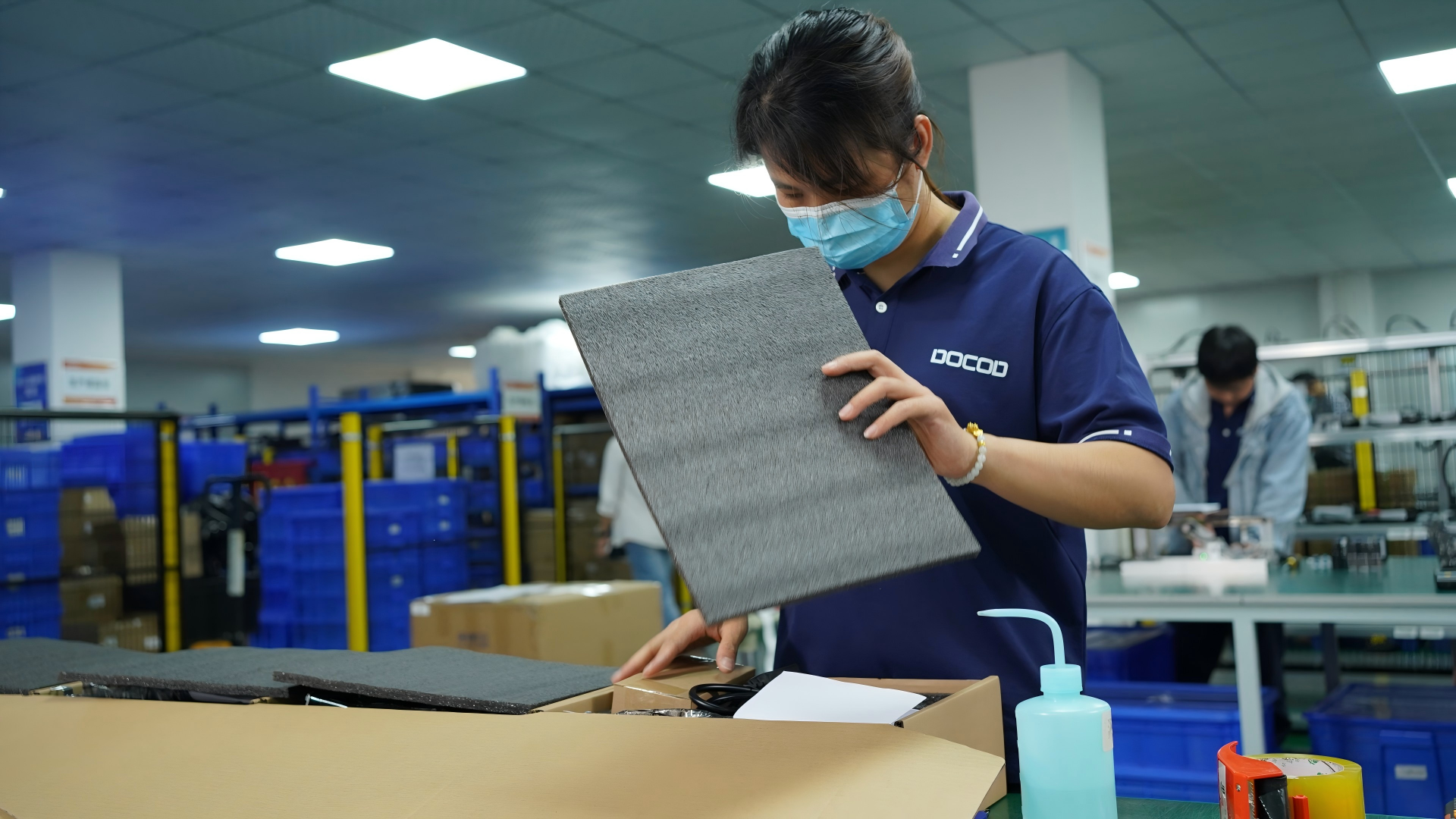
Next Step: Sample Print and Configured Quotation
Send your substrate, code content and line speed, and DOCOD will prepare a sample print alongside a matched TIJ or PIJ configuration.
Email: sales@docod.com.cn · Tel: +86 139-2896-7650 · WhatsApp: +86 135-1234-4323
Website: www.docod-group.com
Technical brochure: Corporate Brochure – DOCOD (PDF)
Have Questions or Need More Details?
Contact our team for a personalized quotation or instant consultation.
Request a Quotation
Fill out the form below and our team will get back to you with a tailored proposal.
WhatsApp Direct Chat
Prefer to chat in real-time? Message us on WhatsApp for instant assistance & quick answers.
- Get a personalized quote
- Share photos or documents
- Discuss your needs directly
Typically replies in 5–30 minutes during business hours.