
How to Choose the Right Industrial Coding and Marking Equipment Supplier
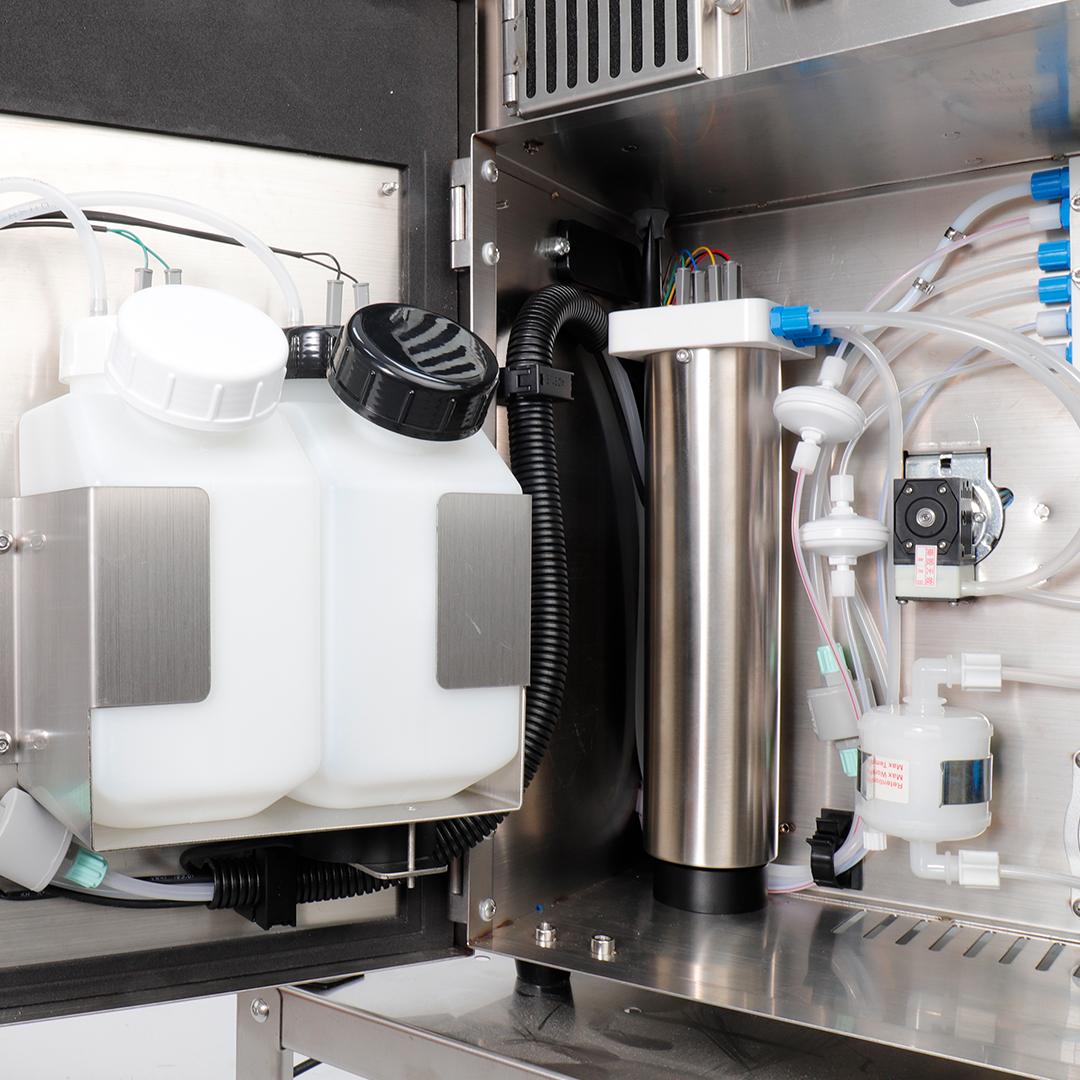
How to Choose the Right Industrial Coding and Marking Equipment Supplier
In today’s fast-paced manufacturing environment, product identification is no longer just about printing a date or batch number. It has become a critical link in supply chain visibility, regulatory compliance, brand protection, and production efficiency. Whether you are a packaging manager, procurement specialist, or production engineer, selecting the right industrial coding and marking equipment – and the right supplier – directly impacts your line uptime, code quality, and total cost of ownership.
This guide is designed to help you navigate the selection process with clear evaluation criteria, technical insights, and real-world examples. We will explore the key factors that define a reliable coding equipment partner, the technology options available, and how a manufacturer like DOCOD Precision Group Co., Ltd. (brand: DOCOD) can support your production goals.
What is Industrial Coding and Marking Equipment?
Industrial coding and marking equipment encompasses a range of machines that apply variable data – such as production dates, expiry dates, batch numbers, barcodes, QR codes, GS1 DataMatrix, serial numbers, and logos – onto products, packaging, and labels. These machines operate inline on production lines or offline for secondary packaging and labeling.
Common technology categories include:
- Continuous Inkjet Printers (CIJ) – Non-contact, high-speed coding on a wide variety of substrates (plastic, metal, glass, paper). Ideal for production lines with frequent changeovers.
- Thermal Inkjet Printers (TIJ) – Cartridge-based, high-resolution printing for cartons, labels, and porous or non-porous surfaces. Easy to integrate and maintain.
- Piezo Inkjet Printers (PIJ) – High-resolution, large-format coding with continuous ink supply, suitable for corrugated cases and coated substrates.
- Drop-on-Demand (DOD) Large-Character Printers – For large characters on cases, bags, and drums.
- Thermal Transfer Overprinters (TTO) – Ribbon-based coding on flexible films and labels, widely used in food and pharmaceutical packaging.
- Laser Marking Machines – Fiber, CO₂, and UV lasers for permanent, high-contrast marks on metals, plastics, glass, and coated surfaces.
- Inline Vision Inspection Systems – Code verification, readability grading, and rejection to ensure print quality and compliance.
Each technology serves specific use cases. A reliable supplier offers a broad portfolio so you can select the optimal match for your substrate, line speed, code content, and budget.
Why Choosing the Right Supplier Matters
Selecting a coding equipment supplier is not a simple transactional decision. It involves:
- Technology alignment – Matching the marking technology to your materials, production environment, and code requirements.
- Quality assurance – Consistent print quality, reliable hardware, and robust firmware.
- After-sales support – Installation guidance, remote troubleshooting, spare parts availability, and training.
- Long-term partnership – Consumables supply, firmware updates, and scalability for future line expansions.
Many buyers struggle with common risks: material incompatibility, missed coding, compliance mismatch, delivery delays, and insufficient after-sales response. A structured evaluation process helps mitigate these risks.
Industry Background: The Growing Need for Traceability & Smart Manufacturing
Global trends such as serialization (e.g., pharmaceutical UDI), GS1 DataMatrix for retail, track-and-trace in tobacco and food, and anti-counterfeiting across cosmetics and electronics are driving demand for advanced coding solutions. In addition, the move toward Industry 4.0 requires coding equipment that can communicate with MES and ERP systems via interfaces like USB, RS232, Ethernet, and OPC-UA.
According to market analysis, the global industrial coding and marking equipment market is projected to grow at a CAGR of 6–8% through 2030. Manufacturers are seeking not just hardware, but complete solutions that include ink/ribbon supply, code management software, vision verification, and integration support.
Detailed Solution: How DOCOD Addresses Your Coding Challenges
Founded in 2008, DOCOD Precision Group Co., Ltd. is a professional manufacturer of industrial coding, marking, and inspection equipment based in Guangzhou, China, with a 20,000 m² facility and over 407 employees. The company’s R&D team comprises more than 140 engineers focused on product identification solutions. With an annual output of 5,000 units and exports covering 50% of sales, DOCOD serves customers across North America, South America, Eastern Europe, Southeast Asia, Africa, Oceania, and the Middle East.
DOCOD’s product portfolio includes:
CIJ Printers
V2000, S300plus, S1000, M2000 series – speeds up to 960 m/min, IP55/IP65, 10.1" touchscreen, Embedded Linux.
TIJ Printers
T220E, T260E, TX1 – dual-head, up to 600×600 DPI, 406 m/min, food-grade inks, GS1 code support.
Laser Markers
Fiber (20-100W), CO₂ (30-60W), UV (5-15W) – permanent, high-contrast marking on metal and non-metal.
TTO Printers
R3000 series – intermittent printing on flexible films, 300 dpi, GS1 DataMatrix, dynamic QR codes.
PIJ Printers
P2000 – single/dual head, 33.8 mm print height, 190 m/min, negative-pressure ink supply.
Accessories
Mini conveyor belt (XC20), vertical rewinding machine (XF30), and CISS systems.
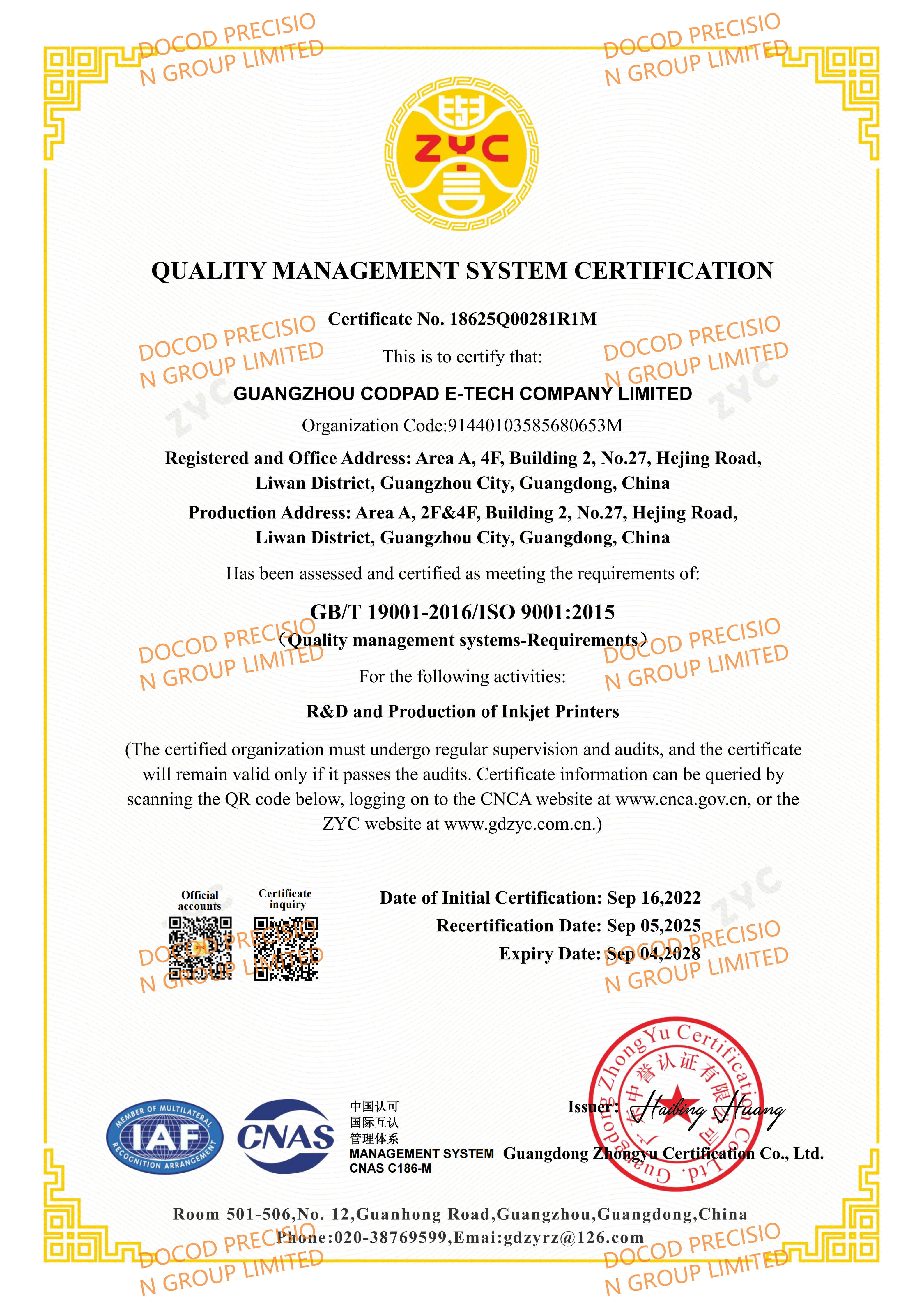
DOCOD holds ISO 9001:2015, ISO 14001:2015, and ISO 45001:2018 certifications, as well as CE, RoHS, and BIS (India) product approvals. For the Indian market, specific models (V2000, S1000, M2000) carry BIS CRS registration (R-41312347) valid until 2027.
Step-by-Step: How to Evaluate a Coding Equipment Supplier
Step 1 – Define Your Application Requirements
Start by clarifying:
- Substrate: carton, plastic film, glass, metal, cable, pipe, label paper, etc.
- Line speed: maximum required throughput (e.g., 200 m/min, 400 packages/min).
- Code content: text, date, barcode (EAN13, CODE128), QR code, DataMatrix, GS1 Digital Link.
- Print height & resolution: small characters (2-16 mm) or large format (>30 mm).
- Environment: temperature, humidity, dust, direct food contact.
- Compliance: UDI, FDA, EU MDR, BIS, GS1 standards.
Step 2 – Technology Selection
Use the comparison table below as a starting point:
| Technology | Best For | Consumables | Typical Speed | Code Permanence |
|---|---|---|---|---|
| CIJ | High-speed lines, varied substrates | Ink + solvent | Up to 960 m/min | Good (ink adhesion) |
| TIJ | Cartons, labels, moderate-speed lines | Cartridge / CISS | Up to 406 m/min | Good (ink adhesion) |
| PIJ | Large-area codes, coated cartons | Continuous ink supply | Up to 190 m/min | Good |
| TTO | Flexible films, sachets | Thermal ribbon | Up to 800 mm/s | High (ribbon transfer) |
| Fiber Laser | Metal, hard plastics, permanent marks | None | Up to 10,000 chars/s | Permanent |
| CO₂ Laser | Paperboard, wood, glass, labels | None | Up to 10,000 chars/s | Permanent |
| UV Laser | Delicate plastics, glass, medical devices | None | Up to 10,000 chars/s | Permanent, low heat |
Step 3 – Assess Supplier Capabilities
When shortlisting suppliers, consider:
- Product range: Do they offer multiple technologies so you can scale?
- Customization: OEM branding, software adjustments, bracket design?
- Quality system: ISO 9001, product certifications (CE, RoHS, BIS).
- Production capacity: Can they meet your volume and lead time?
- After-sales support: Remote troubleshooting, video guidance, spare parts availability.
- References: Case studies and client testimonials in your industry.
Real-World Use Cases
Here are three examples where DOCOD equipment delivered measurable results:
1. Beverage Bottling Plant (Vietnam) – V2000 CIJ Printer
Application: Batch coding on PET bottles. Quantity: 4 lines. Duration: 2 years. Result: Stable daily coding with high-speed performance (up to 334 m/min). The IP65 stainless steel cabinet withstands wash-down environments.
2. Snack Manufacturer (Indonesia) – R3000 TTO Printer
Application: Date coding on flexible film via VFFS lines. Quantity: 2 lines. Duration: 2 years. Result: Cleaner film coding output; industrial-grade TTO performance with 300 dpi resolution and GS1 DataMatrix support.
3. Electronics Parts Supplier (Germany) – Venus1 Fiber Laser
Application: Permanent marking on metal connectors. Quantity: 2 workstations. Duration: 3 years. Result: Durable, high-contrast marks with laser life up to 100,000 hours. The fiber laser (1064 nm) requires no consumables, reducing long-run costs.
These cases illustrate how matching the right technology to the application yields consistent quality, operational savings, and high uptime.
Frequently Asked Questions (FAQ)
CIJ (Continuous Inkjet) uses a continuous stream of ink droplets that are deflected to form characters; it is ideal for very high speeds (up to 960 m/min) and irregular surfaces. TIJ (Thermal Inkjet) uses printhead cartridges with heated resistors to fire droplets; it offers higher resolution (up to 600 dpi) and is easier to maintain for short to medium runs. DOCOD offers both, ensuring you get the best solution for your line speed and quality needs.
DOCOD provides a wide range of inks – high adhesion, food grade, oil resistant, solvent, pigment, and UV-curable – as well as dedicated ribbons for TTO. We recommend sending substrate samples for testing. Our application engineers will match the consumable to your material (e.g., glass, PE film, coated board) and environmental conditions (temperature, humidity, abrasion).
DOCOD is certified under ISO 9001 (quality), ISO 14001 (environment), and ISO 45001 (occupational health and safety). Product-level certifications include CE, RoHS, and BIS (for India). Specific models like the V2000, S1000, and M2000 CIJ printers carry BIS CRS registration (number R-41312347) valid until October 2027.
Yes. All DOCOD printers feature USB, RS232, Ethernet (TCP/IP) interfaces and support communication with enterprise MES systems. They can also connect to encoders, photoelectric sensors, and vision systems for closed-loop print-and-verify workflows.
For standard equipment, lead time is within 15 working days (MOQ 1 set). For ODM/OEM projects, lead time is 15–30 days (MOQ 1 set per project). Spare parts and consumables can be shipped within 15 days (MOQ 1 piece). We accept T/T, L/C, and PayPal.
Conclusion: Partner with a Trusted Coding Equipment Manufacturer
Choosing the right industrial coding and marking supplier directly affects your production reliability, code quality, and regulatory compliance. A supplier with a broad technology portfolio, strong R&D, recognized certifications, and global support infrastructure reduces your risk and accelerates your time to value.
DOCOD Precision Group Co., Ltd. – with over 15 years of experience, 140+ engineers, 20,000 m² facility, and a global export network – is positioned as a long-term partner for manufacturers worldwide. Whether you need a high-speed CIJ printer for a beverage line, a UV laser for delicate medical packaging, or a complete traceability solution, DOCOD offers proven technology and responsive support.
To learn more about DOCOD’s full product range and capabilities, download the corporate brochure below:
Ready to find your perfect coding solution?
Contact us at sales@docod.com.cn or WhatsApp +86 135-1234-4323.