
How to Select the Right Industrial Coding and Marking Equipment Supplier
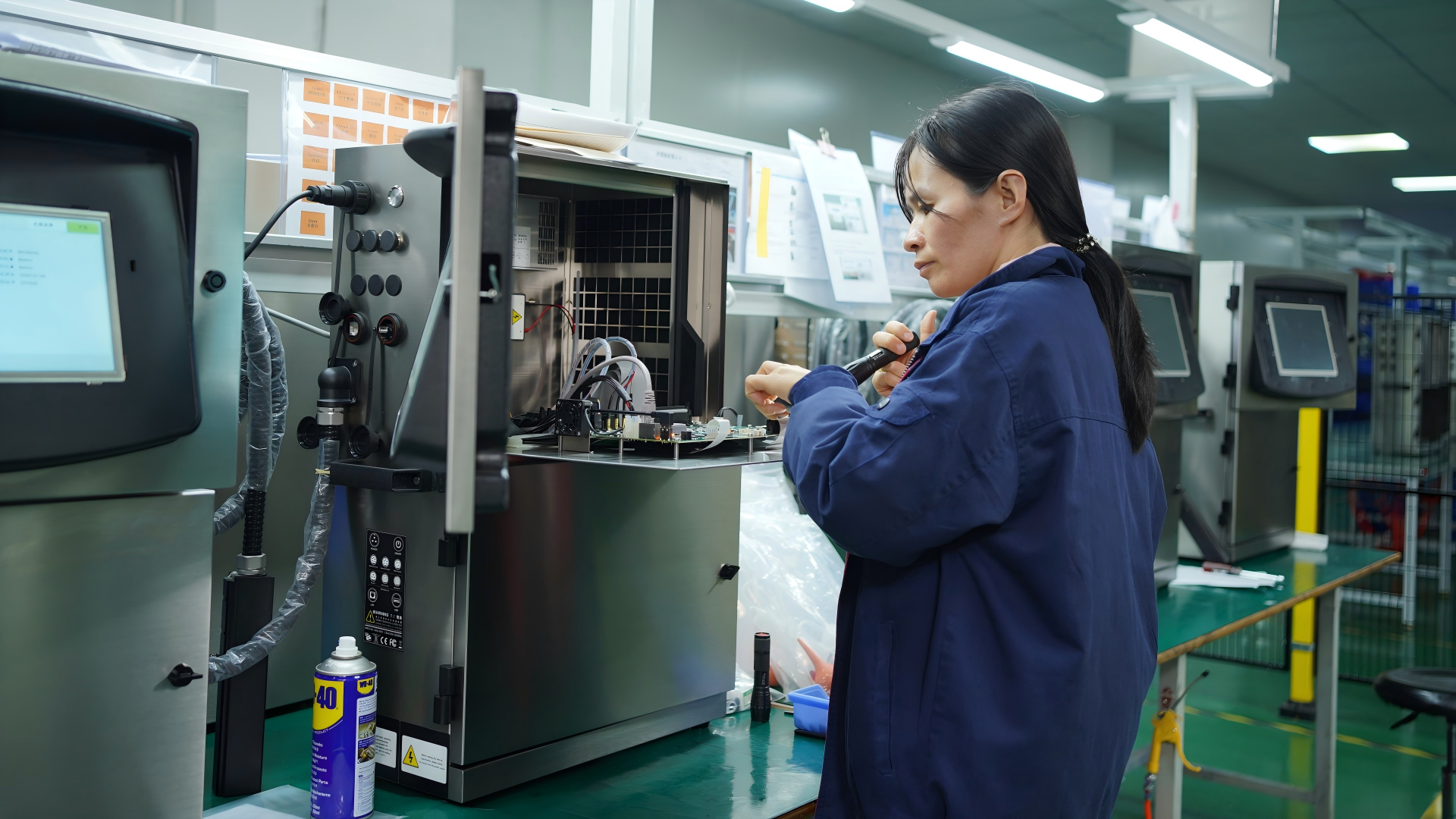
Precision assembly and testing of industrial coding and marking equipment at DOCOD’s 20,000 m² facility ensures reliable performance for global customers.
How to Select the Right Industrial Coding and Marking Equipment Supplier
Choosing a reliable supplier for industrial coding and marking equipment is one of the most critical decisions for manufacturers and packaging operations. Whether you need a Continuous Inkjet Printer (CIJ), Thermal Inkjet Printer (TIJ), Laser Marking Machine, or an Inline Code Inspection System, the supplier’s technical capability, product quality, compliance certifications, and after-sales support directly impact your production uptime and traceability compliance.
This guide provides a structured approach to evaluating suppliers, covering technology types, application fit, quality management systems, and key risk controls. We also highlight how a proven manufacturer like DOCOD Precision Group Co., Ltd. meets these criteria through over 15 years of experience, a 140+ R&D team, and a comprehensive product portfolio.
What Is Industrial Coding and Marking Equipment?
Industrial coding and marking equipment refers to machines that print variable data such as production dates, batch numbers, barcodes, QR codes, serial numbers, and logos directly onto products, labels, or packaging during production. Key technology categories include:
- Continuous Inkjet Printer (CIJ): Non-contact, high-speed coding on cartons, plastics, metals, cables, and glass. Ideal for small-character coding at line speeds up to 960 m/min (e.g., DOCOD S1000 Series).
- Thermal Inkjet Printer (TIJ): Cartridge-based, high-resolution printing for cartons, labels, and flexible films. Supports GS1 DataMatrix and variable data (e.g., DOCOD T220E dual-head).
- High-Resolution Piezo Inkjet Printer (PIJ): Large-area, high-resolution coding for coated cartons and traceability codes (e.g., DOCOD P2000).
- Drop-on-Demand Large-Character Inkjet Printer (DOD): Suitable for large text and barcodes on corrugated boxes and building materials.
- Thermal Transfer Overprinter (TTO): Ribbon-based intermittent coding on flexible films and sachets (e.g., DOCOD R3000 Series).
- Laser Marking Machine: Permanent, no-ink marking using CO₂, fiber, or UV sources for metals, plastics, and glass (e.g., DOCOD Venus1 Series).
- Inline Vision Inspection System: Real-time code verification and rejection to prevent misprints.
Why Supplier Selection Matters
An unsuitable supplier can lead to print quality issues, production line downtime, compliance failures, and hidden consumable costs. The right partner provides application-matched equipment, robust certifications, responsive after-sales support, and flexible procurement options.
Buyers often face these common concerns:
- “Will this printer work reliably on my specific substrate (e.g., PET bottles, Tyvek, or cement bags)?”
- “Does the supplier have the certifications required for my export market (e.g., BIS for India, CE for Europe)?”
- “What is the total cost of ownership including ink, solvent, and spare parts?”
- “How quickly can the supplier provide technical support and remote troubleshooting?”
Industry Background: The Global Coding & Marking Market
Driven by serialization regulations, anti-counterfeiting demands, and Industry 4.0 traceability, the industrial coding market continues to grow. Key application sectors include food & beverage, pharmaceuticals, automotive parts, building materials, wire & cable, electronics, and cosmetics. Supplier evaluation must consider both current production needs and future scalability.
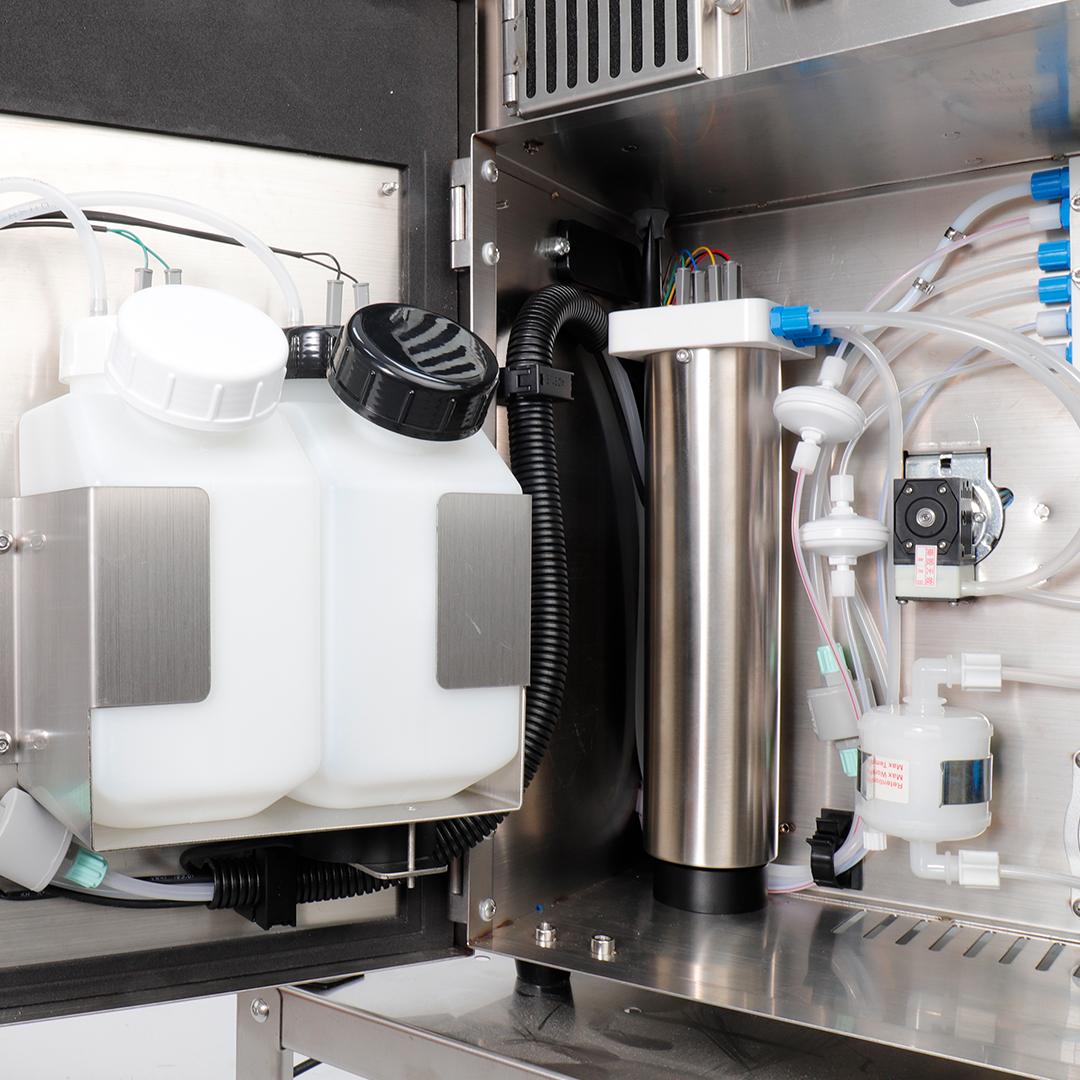
The DOCOD M2000 Series CIJ printer offers up to 528 m/min printing speed and IP65 protection, ideal for demanding production environments.
Detailed Solution: A Step-by-Step Framework for Supplier Evaluation
1. Define Your Application Requirements
- Substrate material (carton, plastic, metal, glass, film, etc.)
- Print content (text, date, GS1 DataMatrix, QR code, variable data)
- Line speed (meter per minute or packs per hour)
- Environment (temperature, humidity, dust, oil, wash-down)
- Required certifications (CE, RoHS, BIS, ISO 9001, etc.)
2. Assess Product Technology Fit
Different technologies suit different substrates. For example:
| Technology | Best For | Example Model |
|---|---|---|
| CIJ | High-speed coding on bottles, cables, metal, cartons | DOCOD S1000 (up to 960 m/min) |
| TIJ | High-resolution variable data on cartons, labels, films | DOCOD T220E (600×600 dpi, 406 m/min) |
| Fiber Laser | Permanent marking on metals, medical devices, auto parts | DOCOD Venus1 Fiber (up to 100,000h life) |
| UV Laser | Low-heat marking on plastics, glass, flexible films | DOCOD L3000 (355 nm, 5W) |
| TTO | Intermittent coding on flexible films, sachets, labels | DOCOD R3000 (300 dpi) |
3. Evaluate Quality Management and Certifications
Reliable suppliers maintain internationally recognized management system certifications. For example, DOCOD holds:
- ISO 9001:2015 – Quality Management System (cert #18625Q00281R1M, valid 2025-2028).
- ISO 14001:2015 – Environmental Management System (cert #18625E00147R1M).
- ISO 45001:2018 – Occupational Health and Safety (cert #18625S00131R1M).
- BIS CRS Registration – For printers/plotters sold in India (R-41312347, valid 2025-2027).
- CE & RoHS – For most product models.
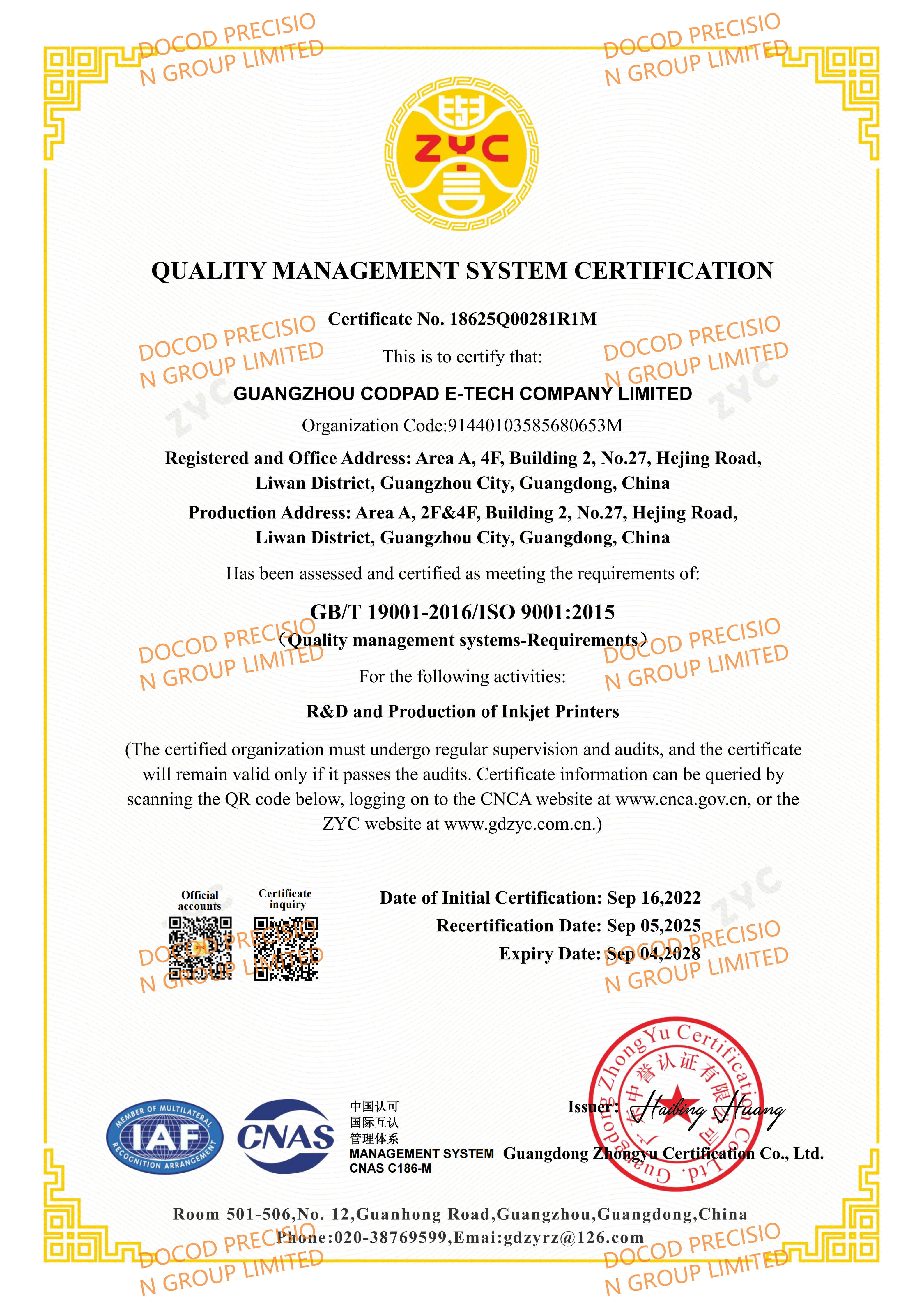
DOCOD’s ISO 9001 certification covers the R&D and production of inkjet printers, ensuring consistent quality management.
4. Verify Production Capability and Capacity
Evaluate the supplier’s facility size, workforce, R&D investment, and production throughput. DOCOD, for instance, operates a 20,000 m² factory with 407 employees, an annual output of 5,000 units, and a dedicated R&D team of over 140 professionals.
5. Review Application Case Studies
Real-world case studies demonstrate technical competence. The following scenarios are directly from DOCOD’s project records:
Case 1: Beverage Bottling (Vietnam)
A Vietnamese beverage plant uses the DOCOD V2000 CIJ printer on 4 lines for batch coding on PET bottles. After 2 years, the customer reported stable daily coding with reduced misprints.
Case 2: Cable Manufacturing (United States)
A US cable manufacturer integrated the DOCOD M2000 CIJ printer on 6 extrusion lines for meter marking on cable sheath. The result was clearer, more consistent codes with stable pressure and easy cleaning over 2 years.
Case 3: Pharma Packaging (India)
A pharmaceutical packaging supplier uses the DOCOD T220E dual-head TIJ printer on 3 cartoning lines for QR and expiry date printing. The dual-head configuration improved code readability and print area coverage.
For a complete set of detailed solutions tailored to your industry, download the DOCOD Corporate Brochure (PDF).
6. Examine Procurement Flexibility and Logistics
Suppliers offering multiple procurement modes (standard equipment, OEM/ODM, production line integration, spare parts) reduce buyer friction. DOCOD provides:
- Standard Equipment Supply – MOQ 1 unit, lead time ≤15 working days.
- OEM Branding Support – Private label logo, packaging, manuals.
- ODM Functional Customization – Software/UI adjustment, printhead configuration.
- Production Line Integration – Conveyor, encoder, sensor matching.
- Spare Parts & Consumables – Ink cartridges, ribbons, replacement parts.
7. Understand Risk Control Measures
Professional suppliers implement structured risk controls to protect buyers. Common risks and DOCOD’s measures include:
| Risk | Control Method | Enterprise Measure |
|---|---|---|
| Material compatibility risk | Substrate testing | Pre-production sample printing and ink matching |
| Print quality risk | Sample validation | Sample printing and substrate testing before mass shipment |
| Compliance mismatch risk | Certification check | Model and destination market confirmation before order |
| Transport damage risk | Reinforced export packing | Carton or protective packing with shipment photos |
| After-sales response risk | Remote support | Online guidance, troubleshooting, and service coordination |
Frequently Asked Questions
Q1: What is the difference between CIJ and TIJ technology?
CIJ (Continuous Inkjet) uses a continuous stream of ink droplets deflected by an electric field, ideal for high-speed small-character coding. TIJ (Thermal Inkjet) uses heat to eject ink droplets from a cartridge, offering higher resolution (up to 600 dpi) and ease of maintenance. Choose CIJ for very high line speeds and varied substrates; choose TIJ for high-resolution barcodes and variable data on cartons and labels.
Q2: How do I know if a laser marking machine is right for my application?
Laser marking is permanent, no-ink, and low-maintenance. CO₂ lasers work on paperboard, plastics, wood, glass; fiber lasers excel on metals and coated components; UV lasers provide cold marking for heat-sensitive materials like flexible films and medical packaging. If your codes must survive harsh environments (oil, heat, abrasion), laser is ideal.
Q3: What certifications should I look for when sourcing from China?
Minimum requirements include CE (European market), RoHS (restriction of hazardous substances), and ISO 9001. For India, BIS CRS registration is mandatory for electronic products. DOCOD holds all these certifications and more, with valid certificates publicly verifiable.
Q4: Can I get a customized printhead configuration or software interface?
Yes, many suppliers offer ODM customization. DOCOD, for example, can adjust UI languages, communication interfaces (RS232, USB, TCP/IP), bracket structure, and printhead splicing (e.g., TX1 supports up to 8 printheads seamlessly).
Q5: What is the typical lead time and minimum order quantity?
For standard equipment, lead times are typically 15–30 days from order confirmation, with MOQ as low as 1 unit. Spare parts and consumables can be shipped within 15 working days. Payment terms such as T/T 30/70 or LC are common.
Conclusion
Selecting the right supplier for industrial coding and marking equipment requires a systematic evaluation of technology fit, quality certifications, production capability, application experience, and risk management. By following the framework outlined in this guide, buyers can confidently partner with a manufacturer that delivers reliable performance, regulatory compliance, and long-term support.
With over 15 years of specialization, a 20,000 m² manufacturing base, 140+ R&D engineers, and a product range spanning CIJ, TIJ, PIJ, DOD, TTO, laser marking, and vision inspection, DOCOD Precision Group Co., Ltd. stands as a qualified partner for global packaging and traceability projects.
For detailed product specifications, solution case studies, and ordering information, download the DOCOD Corporate Brochure or contact the sales team at sales@docod.com.cn / WhatsApp: +86 135-1234-4323.
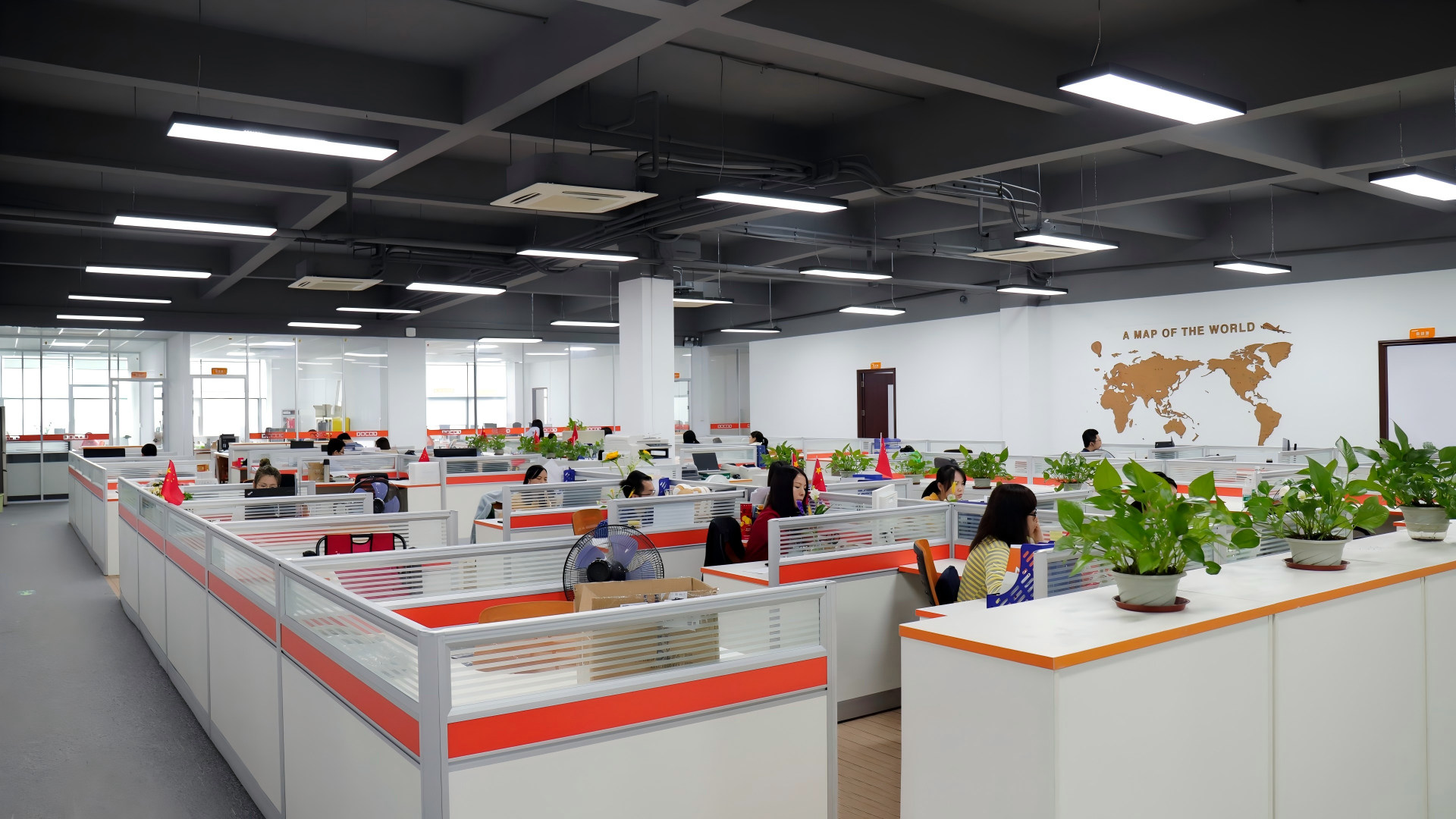
Contact DOCOD’s global team for tailored industrial coding and marking solutions.