
How to Select the Right Industrial Coding and Marking Equipment Supplier
How to Select the Right Industrial Coding and Marking Equipment Supplier
Introduction
Global manufacturers and packaging lines rely on industrial coding and marking equipment to print production dates, batch numbers, barcodes, QR codes, and serialized traceability information. Choosing the right brand and supplier is not just about the price of a Continuous Inkjet Printer or a Laser Marking Machine — it is about long-term code quality, consumable availability, technical support, and regulatory compliance. This article helps procurement professionals and production managers evaluate suppliers of Industrial Coding and Marking Equipment systematically, using DOCOD Precision Group as a case study of a reliable manufacturer.
What is Industrial Coding and Marking Equipment?
Industrial coding and marking equipment refers to a family of machines that apply variable data — such as dates, barcodes, serial numbers, and logos — onto products and packaging during or after production. The main technology categories include:
- Continuous Inkjet Printer (CIJ): High-speed small-character printing for bottles, cables, pipes, and cartons.
- Thermal Inkjet Printer (TIJ): Cartridge-based high-resolution coding for cartons, labels, and plastics.
- Piezo Inkjet Printer (PIJ): Large-area high-resolution printing using industrial printheads.
- Thermal Transfer Overprinter (TTO): Ribbon-based printing on flexible films.
- Laser Marking Machine (Fiber/CO2/UV): Permanent, non-contact marking on metals, plastics, glass, and other substrates.
- Vision Inspection System: Inline verification of printed codes.
Why is Choosing the Right Supplier Important?
A wrong decision can lead to frequent downtime, unreadable codes, compliance non-conformance, and high total cost of ownership. The right supplier ensures:
- Code readability that passes retailer and regulatory scanner requirements.
- Integration compatibility with existing conveyors, packaging machines, and MES systems.
- Consumable stability and reliable local or remote ink/ribbon supply.
- After-sales support including remote diagnostics and spare parts availability.
- Certifications (CE, RoHS, BIS, ISO 9001) that match your target markets.
Industry Context: The Global Demand for Traceability and Anti-Counterfeiting
From food safety regulations to pharmaceutical serialization (UDI/GS1 DataMatrix), industries such as food & beverage, medical devices, automotive, building materials, and cosmetics are mandating reliable coding solutions. For example, in Vietnam, food & beverage manufacturers need date and batch codes to enable track-and-trace and stock rotation (source: DOCOD Vietnam application). In the UAE, building materials producers require codes that survive dusty, hot conditions. The supplier must understand each industry's working conditions and offer tailored equipment.
How Does a Reliable Supplier Solve Your Problems?
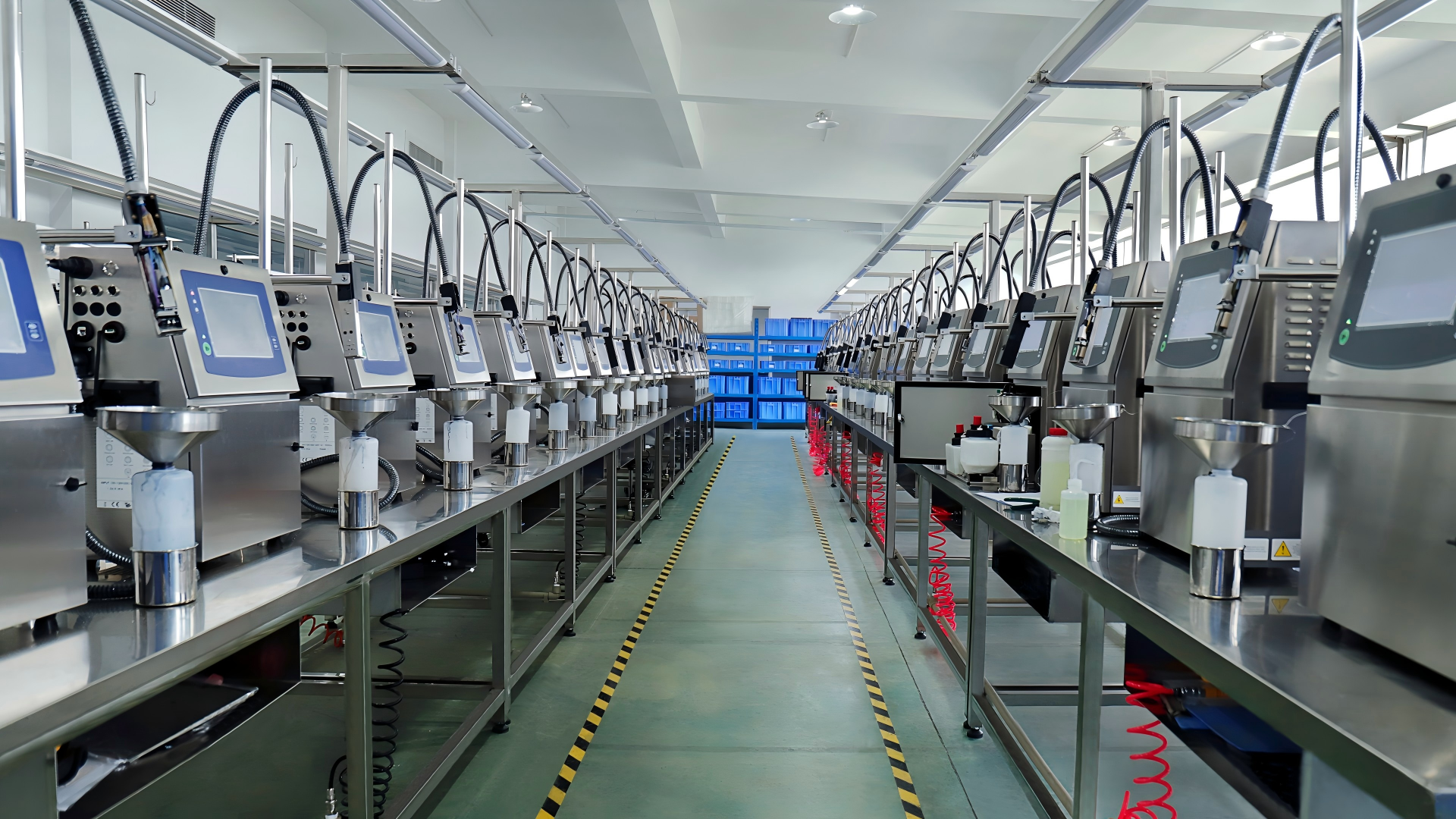
Let us take DOCOD Precision Group Co., Ltd. as an example. Founded in 2008, DOCOD employs over 400 staff, including 140+ R&D engineers, and operates a 20,000 m² factory with an annual output of 5,000 units. Its product portfolio spans CIJ, TIJ, PIJ, TTO, laser marking machines, and inline vision inspection systems — covering all major coding technologies. DOCOD solves common buyer challenges through:
| Buyer Concern | DOCOD Solution |
|---|---|
| Print quality risk | Pre-production sample validation and substrate testing before shipment. |
| Material compatibility | Ink/method matching based on carton, film, plastic, metal, or glass surface. |
| Content mismatch | Double confirmation of text, barcode, QR code, date format, and language settings. |
| Environmental suitability | Working-condition check (temperature, humidity, dust) before model selection. |
| Compliance mismatch | Certification check by model and destination market (CE, RoHS, BIS, ISO 9001/14001/45001). |
| Delivery delay | Milestone scheduling with order confirmation, assembly, testing, and shipment dates. |
| After-sales response | Remote online support, installation guidance, and troubleshooting. |
Step-by-Step Selection Process for a Coding Equipment Supplier
- Define your coding needs: Substrate (carton, plastic, metal, glass), line speed, code content (text, barcode, GS1 DataMatrix, QR), print height, and required permanence (ink vs. laser).
- Evaluate technology options: For high-speed small characters, a CIJ printer like DOCOD M2000 (528 m/min, 1-4 lines) or the high-speed S1000 (960 m/min) fits. For wider high-resolution codes, a TIJ printer like T220E (406 m/min, up to 25.4 mm height) or a PIJ printer like P2000 (190 m/min, 33.8 mm height) works. For flexible films, TTO (R3000 series) is ideal. For permanent marking, fiber/CO2/UV lasers (Venus1 series) provide no-consumable operation.
- Check supplier certifications: ISO 9001 for quality management, ISO 14001 for environment, ISO 45001 for occupational health, plus product-specific certifications like CE, RoHS, and BIS (Bureau of Indian Standards). DOCOD holds all these, ensuring global market access.
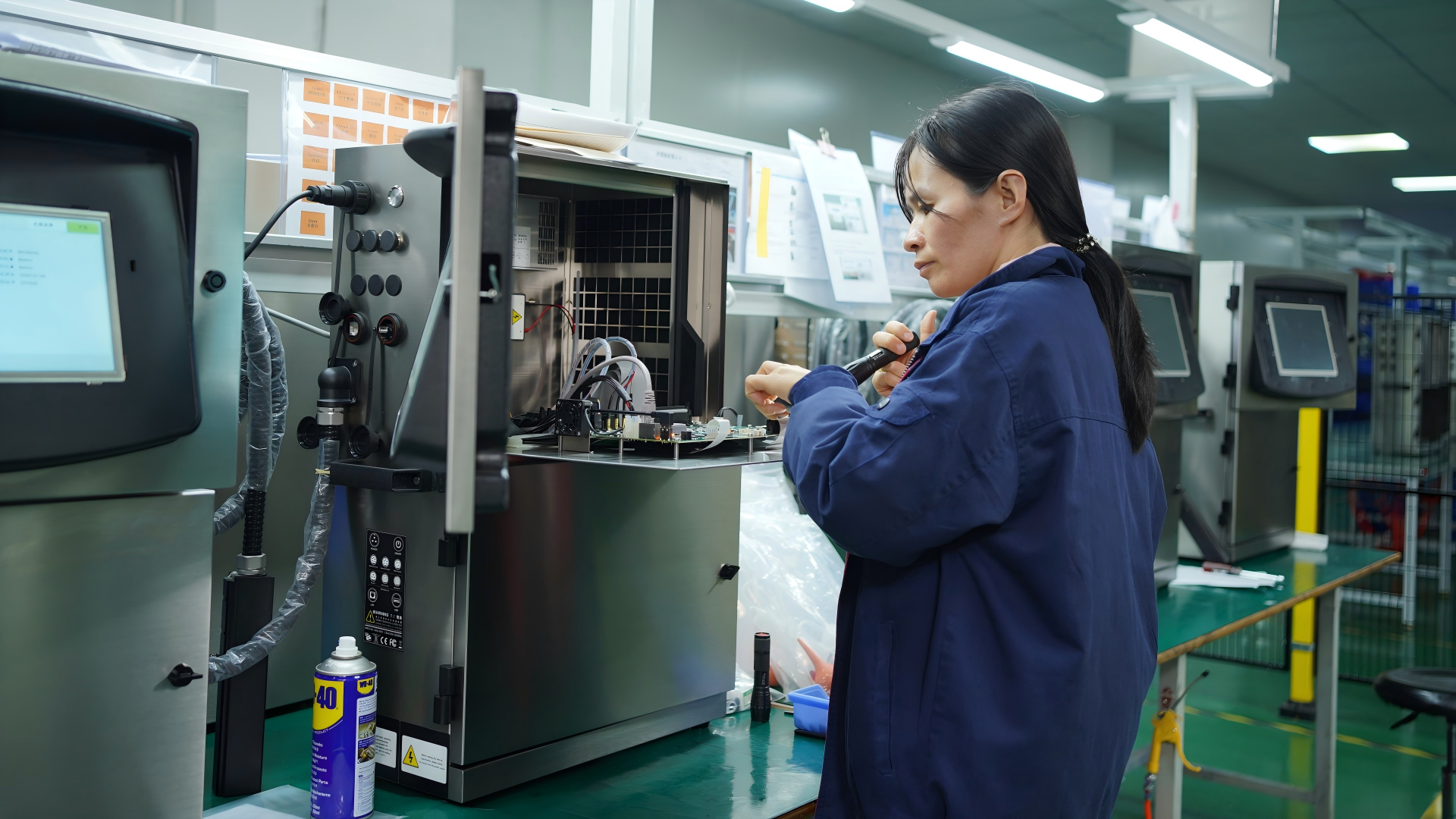
- Review production capabilities: A supplier with in-house R&D, a well-equipped factory, and rigorous outgoing inspection (e.g., pre-shipment video acceptance) is more reliable. DOCOD's 20,000 m² factory and 140+ engineers indicate strong vertical integration.
- Ask for reference applications: For example, DOCOD has delivered coding solutions for a Beverage Bottling Plant in Vietnam (4 lines, stable daily coding), a Pharma Packaging Supplier in India (3 cartoning lines, improved code readability), and a Snack Manufacturer in Indonesia (2 VFFS lines, cleaner film coding).
- Assess after-sales support: Does the supplier offer remote troubleshooting? A dedicated contact (e.g., Sam at sales@docod.com.cn) and WhatsApp support matter. DOCOD provides product training, remote technical backup, and service coordination.
- Compare total cost of ownership: Include consumables (ink, solvent, ribbon, cartridges) and spare parts. DOCOD offers consumables like the 3BK702 TIJ ink cartridge (42 ml, 300 nozzles) and provides recommended spare parts lists for repeat orders.
Use Cases from the Field
Food & Beverage — Vietnam
A beverage bottling plant runs 4 lines using DOCOD V2000 Series Continuous Inkjet Printers for batch coding on PET bottles. The solution operates online at 334 m/min, printing production dates and barcodes. Result: stable daily coding even in humid conditions.
Pharmaceutical Packaging — India
A pharma packaging supplier uses DOCOD T220E dual-head TIJ printers on 3 cartoning lines. With resolution up to 600×600 DPI, the system prints QR codes and expiry dates. Result: improved code readability and UDI compliance.
Plastic Pipe Producer — Saudi Arabia
Using DOCOD Venus1 CO2 Laser Marking Machine (30W), a pipe manufacturer codes specifications and dates directly onto PVC pipe in extrusion lines. The non-contact laser eliminates consumable costs and delivers permanent marks. Result: clean non-contact coding suitable for non-metal materials.
Electronics Parts Supplier — Germany
DOCOD Venus1 Fiber Laser Marking Machine (20W) marks serial numbers and DataMatrix on metal connectors at 2 workstations. The 1064 nm fiber laser achieves high contrast and durability. Result: durable readable marks for automotive electronics traceability.
Frequently Asked Questions
What is the difference between CIJ and TIJ for carton coding?
CIJ (e.g., DOCOD V2000) uses a continuous ink stream and is better for high-speed lines and curved surfaces. TIJ (e.g., DOCOD T220E) uses cartridges, offers higher resolution (up to 600 dpi), and is ideal for flat cartons with small to medium print areas. Cost per print can be lower with CIJ for very high volumes, while TIJ has simpler maintenance.
How do I decide between a laser marker and an inkjet printer?
Laser markers (fiber, CO2, UV) provide permanent, no-consumable coding on suitable substrates. Use fiber for metals (up to 100,000-hour laser life), CO2 for paper/plastics, and UV for heat-sensitive materials. Inkjet printers remain more flexible for substrates where laser quality is poor or when quick color changes are needed.
What certifications should a global supplier have?
Look for ISO 9001 (quality management), ISO 14001 (environmental management), ISO 45001 (occupational health), plus market-specific ones like CE (Europe), RoHS, and BIS (India). DOCOD holds all these, plus BIS registration for its CIJ printers.
How can I verify the supplier's manufacturing capability?
Request a virtual or physical factory tour. Inquire about R&D headcount, annual production volume, and quality control processes. DOCOD's 20,000 m² facility, 407 employees, and pre-shipment inspection for every unit demonstrate robust capability.
Conclusion
Selecting the right industrial coding and marking equipment supplier is a strategic decision that affects your production uptime, compliance, and brand reputation. By following a structured evaluation — from defining your coding needs to checking certifications and reviewing real case studies — you can confidently partner with a manufacturer like DOCOD Precision Group. With over 15 years of experience, a comprehensive product range (CIJ, TIJ, PIJ, TTO, laser, vision), and a proven track record in demanding markets, DOCOD offers both the hardware and the support that global buyers require.
Download the DOCOD corporate brochure for a full overview of equipment and solutions: