
Industrial Coding Equipment: Technologies & Buyer's Guide
Industrial Coding Equipment: Technologies & Buyer's Guide
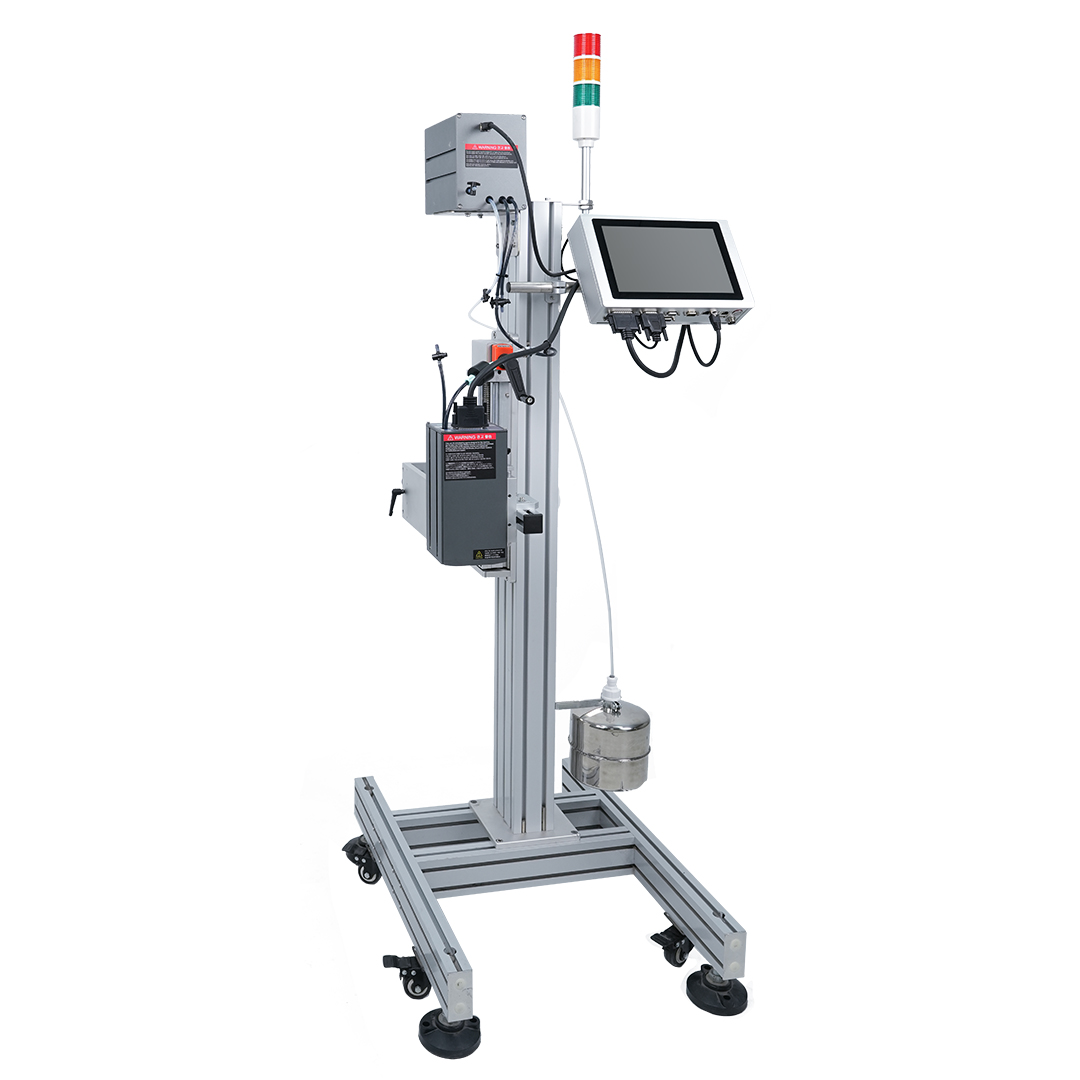
DOCOD P2000 – a high-resolution piezo inkjet printer for industrial coding lines.
Industrial coding and marking equipment is essential for printing production dates, batch numbers, barcodes, QR codes, and traceability identifiers on products and packaging. The global coding and marking equipment market was valued at USD 17.53 billion in 2024 and is projected to reach USD 27.11 billion by 2032 (SkyQuest). DOCOD Precision Group Co., Ltd., founded in 2008, is a manufacturer of industrial coding, marking, and inspection equipment, including continuous inkjet printers (CIJ), thermal inkjet printers (TIJ), piezoelectric high-resolution inkjet printers (PIJ), drop-on-demand large-character inkjet printers (DOD), thermal transfer overprinters (TTO), laser marking machines, and inline vision inspection systems. This guide covers the main technologies, selection criteria, and real-world applications to help procurement and engineering teams make informed decisions.
The Challenge: Reliable, High-Quality Product Identification
Manufacturers across food & beverage, pharmaceuticals, automotive, electronics, and building materials must apply permanent or semi-permanent codes that remain legible through the supply chain. Codes must comply with regulations (UDI, GS1 standards), resist abrasion, and match high line speeds. Choosing the wrong marking technology can lead to code failures, recalls, and production downtime.
Industry Background: Growth Driven by Traceability and Digitalization
The adoption of serialization, the GS1 Digital Link standard (ISO/IEC 18975:2024), and anti-counterfeiting mandates are accelerating demand for versatile coding equipment. Asia-Pacific accounts for the largest geographic market share (estimated 35% in 2024). Laser marking technology is projected to grow at a CAGR of 6.8% through 2030 due to its eco-friendly, consumable-free operation. Major industry players include Videojet, Domino, Markem-Imaje, and Hitachi, but specialized manufacturers like DOCOD offer comprehensive product portfolios with strong R&D backing (140+ R&D staff) and a 20,000 m² facility capable of 5,000 units annually.
Detailed Solution: DOCOD's Comprehensive Product Portfolio
DOCOD provides a full spectrum of coding and marking technologies to match nearly any production environment:
Continuous Inkjet Printer (CIJ)
The DOCOD M2000 Series Continuous Inkjet Printer is a small character CIJ printer made of SUS 304 stainless steel with IP65 protection. It prints 1–4 lines at speeds up to 528 m/min on materials including carton, plastic, metal, glass, and pipe. Ink options include high adhesion, food grade, oil resistance, and pigment inks in colors such as black, red, blue, green, invisible, yellow, and blue-white. The 10.1-inch capacitive touch display runs an Embedded Linux security operating system, and the printer integrates with enterprise MES via USB, RS232, or network. CE and RoHS certified.
Thermal Inkjet Printer (TIJ)
The DOCOD T220E Half-Inch Dual-Head Thermal Inkjet Printer delivers resolution up to 600×600 DPI at print speeds up to 406 m/min. It supports one or two printheads and prints a wide range of variable data including GS1 codes, QR codes, and text. Ink types include food grade, water-based, oil-based, and solvent. The DOCOD TX1 Half-Inch Seamless Inkjet Printer extends print height up to 101.6 mm by combining up to 8 printheads, making it suitable for large-area coding.
Piezoelectric High-Resolution Inkjet Printer (PIJ)
The DOCOD P2000 Piezo Inkjet Printer is a single/dual-head high-resolution PIJ printer with 300 or 600 dpi resolution, reaching 190 m/min at 300 dpi. It uses water-based or quick-drying inks and is ideal for corrugated boxes, coated paper, labels, and porous substrates. The controller is aviation-grade aluminum, and the system supports cascading multiple devices.
Laser Marking Machines (Fiber, CO₂, UV)
DOCOD's Venus1 Series includes fiber laser (20–100W, 1064 nm), CO₂ laser (30–60W, 10.6 μm), and UV laser (5–15W, 355 nm) systems. Fiber lasers offer up to 100,000 hours of life and are suited for metals and plastics. CO₂ lasers excel on non-metals like wood, paper, and polymers. UV lasers provide cold marking for heat-sensitive materials such as medical packaging and flexible circuits. All feature 10.1-inch touch screens and Embedded Linux OS.
Thermal Transfer Overprinter (TTO)
The DOCOD R3000 Series Industrial Thermal Transfer Overprinter operates in intermittent mode, printing GS1 DataMatrix, dynamic QR codes, and variable data on flexible films and labels. It supports ribbon widths up to 55 mm and print speeds up to 350 mm/s (800 mm/s peak). This solution is widely used in bakery, dried fruit, and pharmaceutical packaging lines.
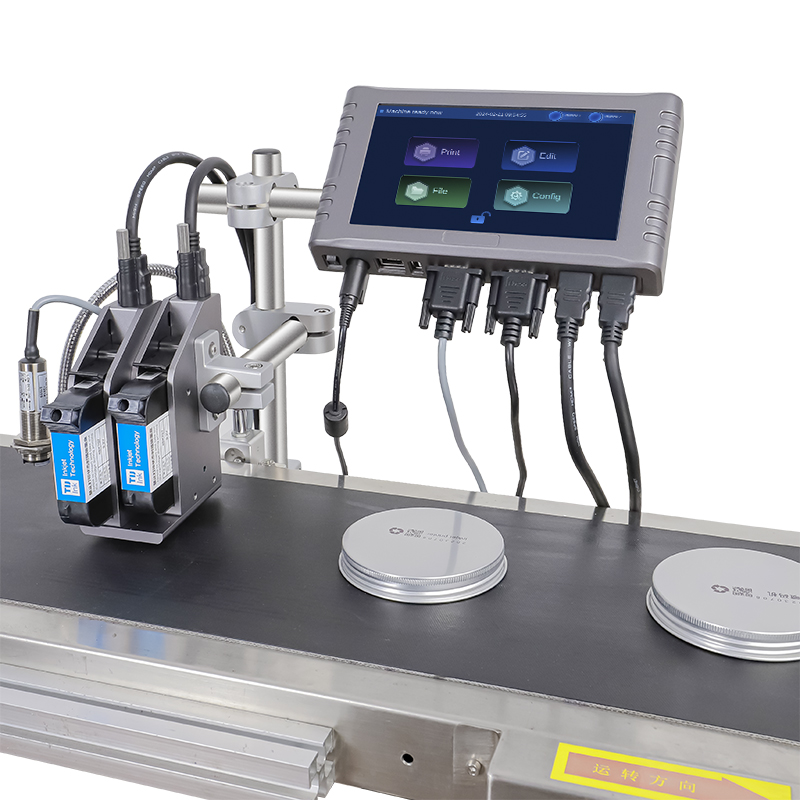
DOCOD T260E thermal inkjet printer – dual-head design for wider coding area.
Step-by-Step Technology Selection Guide
- Identify substrate and environment: Metal, glass, or plastic? Dusty, wet, or high-temperature? Laser (fiber for metal, CO₂ for non-metal) or CIJ (for irregular surfaces).
- Determine required speed and resolution: High-speed lines (>500 m/min) typically use CIJ or laser. TIJ and PIJ offer higher resolution but slower speeds.
- Evaluate code complexity: GS1 DataMatrix and 2D codes require high-resolution printing – TIJ (600 dpi) or UV laser.
- Check integration capability: All DOCOD printers support external interfaces (encoder, photocell, alarm) and MES/PLC connectivity for seamless line integration.
- Budget for consumables vs. lifetime: Laser has no consumables but higher upfront cost. Inkjet printers have lower initial cost but require ink and make-up refills.
Use Cases Across Industries
Vietnam – Food & Beverage Packaging: In Vietnam, DOCOD equipment prints production dates, expiry dates, batch numbers, and QR codes on flexible pouches, PET bottles, and cartons. The system reduces manual labeling errors and supports cold-chain environments.
Germany – Medical Packaging UDI & GS1 DataMatrix: A closed-loop print-and-verify workflow prints UDI, lot numbers, and expiry dates on Tyvek pouches and blister packs, meeting EU MDR traceability requirements.
India – Wire, Cable & Pipe Extrusion: Online non-contact CIJ or CO₂ laser coding prints meter marks, brand names, and batch numbers on high-speed extrusion lines, synchronized with the encoder.
United Arab Emirates – Building Materials & Chemicals: Large-character DOD or CIJ printers apply batch numbers, logistics codes, and QR codes on cement bags, paint pails, and PVC pipes in dusty, humid conditions.
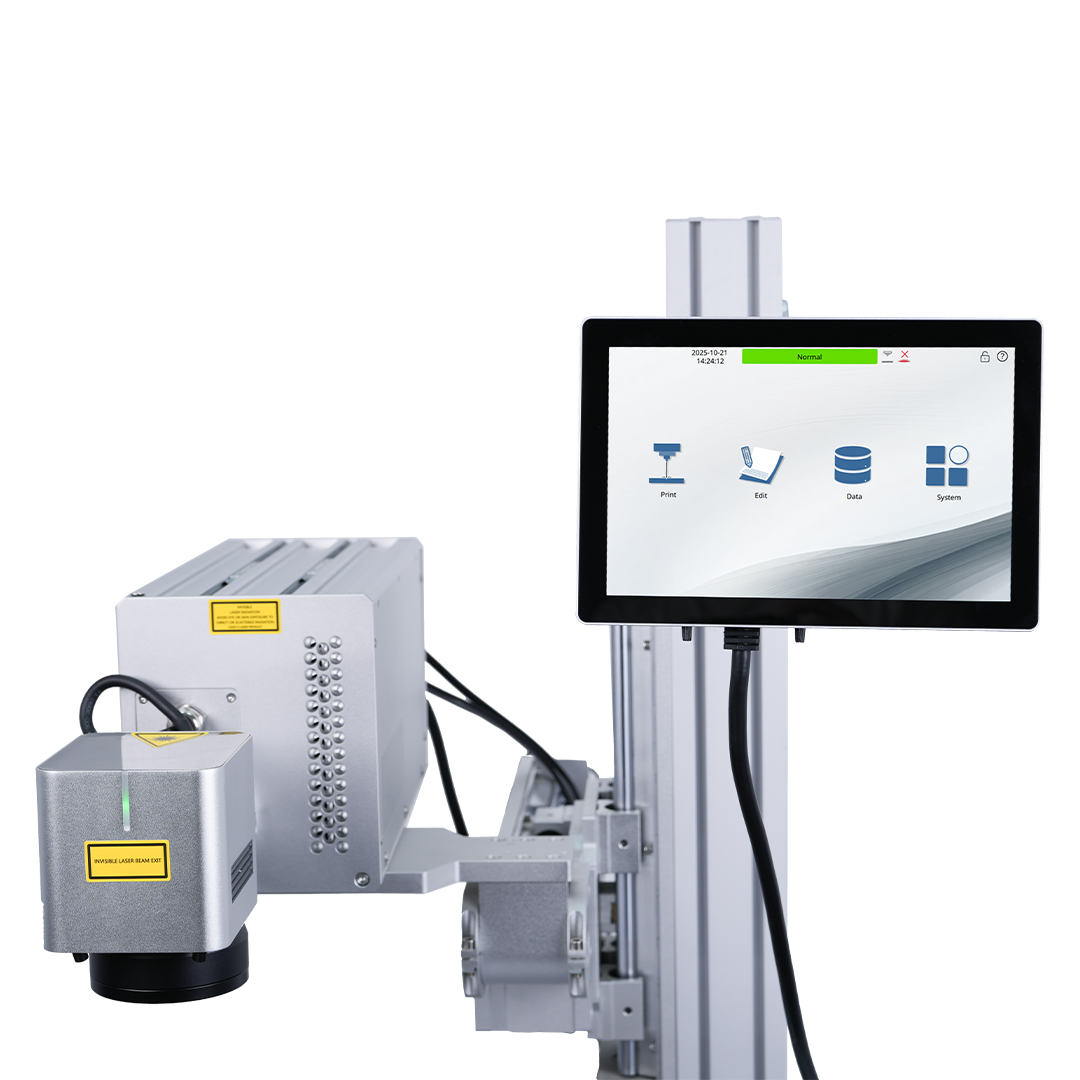
DOCOD Venus1 fiber laser marking machine – high precision marking on metals and plastics.
Technology Comparison

DOCOD's R&D team of 140+ engineers driving innovation in coding and marking technology.
Frequently Asked Questions
1. What is industrial coding and marking equipment?
Industrial coding and marking equipment refers to machines that apply variable information – such as production dates, batch numbers, barcodes, QR codes, and serial numbers – onto products, packaging, or labels during manufacturing. Common technologies include continuous inkjet (CIJ), thermal inkjet (TIJ), piezo inkjet (PIJ), laser marking (fiber, CO₂, UV), and thermal transfer overprint (TTO).
2. Which technology is best for coding on metal and glass?
For permanent marking on metal, a fiber laser (1064 nm) is recommended due to its high contrast and durability. For glass, a UV laser (355 nm) or CO₂ laser can be used, but UV cold marking minimizes micro-cracks. DOCOD offers Venus1 Series fiber (20–100W), CO₂ (30–60W), and UV (5–15W) laser marking machines suitable for these materials.
3. How do CIJ and TIJ printers compare in operating cost?
CIJ printers typically have a higher ink consumption because a portion of ink is continuously recirculated and some is lost to the gutter. TIJ printers use disposable ink cartridges (e.g., DOCOD 3BK702, 42 ml), which are replaced when empty, making them simpler and often lower cost for low-to-medium volume runs. However, CIJ offers lower cost per print at very high volumes. DOCOD provides both options, allowing buyers to match their production scale.
4. Can DOCOD equipment be integrated with existing production line MES?
Yes. DOCOD print and marking systems are designed for industrial integration. They feature USB, RS232, and TCP/IP network interfaces, and can connect to enterprise MES management systems. External interfaces for photocell, encoder, and alarm signals are standard. The Embedded Linux OS supports remote monitoring and data exchange required for serialization and traceability projects.
5. How can I get a sample or quote for DOCOD industrial coding equipment?
You can contact DOCOD’s sales team directly to discuss your specific application and request a quotation or sample test. Email sales@docod.com.cn or call/WhatsApp +86 139-2896-7650 / +86 135-1234-4323. You can also download the complete corporate brochure for detailed product specifications below.
Get Your Free Corporate Brochure
Discover the full range of DOCOD coding, marking, and inspection solutions. The brochure includes product details, technical specifications, and application examples.
Download BrochureConclusion
Selecting the right industrial coding and marking equipment requires analyzing substrate, speed, code complexity, and budget. DOCOD Precision Group Co., Ltd. provides a comprehensive portfolio from CIJ to laser with over 140 R&D professionals and a 20,000 m² manufacturing facility. Whether you need date coding for food packaging or ultra-precise laser marking for medical devices, DOCOD offers a reliable, technology-aligned solution backed by global service and 15+ years of experience.