
Industrial Coding Supply: Building Long-Term Partnerships

Pre-shipment inspection is part of DOCOD's quality control before coding equipment leaves the factory.
Industrial Coding Supply: Building Long-Term Partnerships
DOCOD Precision Group Co., Ltd. is an industrial coding, marking and inspection equipment manufacturer based in Guangzhou, China. Founded in 2008, DOCOD focuses on the design, research and development, production, sales and service of industrial product identification equipment, components and related solutions. Its product portfolio includes continuous inkjet printers (CIJ), thermal inkjet printers (TIJ), handheld inkjet coding equipment, piezoelectric high-resolution inkjet printers (PIJ), drop-on-demand large-character inkjet printers (DOD), thermal transfer overprinters (TTO), laser marking machines, inline vision inspection systems, coding consumables, spare parts and product traceability solutions.
This article is written for distributors, wholesalers, importers, OEMs and plant managers who have already compared coding technologies and are now evaluating a manufacturer as a long-term supply partner for industrial coding and marking equipment. It focuses on the evidence that matters at the Decision and Execution stage: production capacity, lead times, quality gates, commercial terms, risk controls and after-sales support.
The Problem: Why Supply Continuity Decides the Partnership
Procurement of coding and marking equipment is a recurring purchase, not a one-time transaction. After a printer is installed, the line depends on a continuous supply of ink, solvent, ribbons, cartridges and spare parts, and on responsive support when codes fail verification or a printhead needs adjustment. Buyers who evaluate only the first-unit price often find that delivery delays, consumables gaps and slow fault response erase the initial saving.
In practice, ten risks determine whether an equipment supply relationship lasts beyond the first order. DOCOD's published purchasing controls address each of them:
- Print quality risk — controlled by sample validation. Pre-production sample printing and substrate testing are completed before mass shipment.
- Material compatibility risk — controlled by substrate testing. Ink or marking method is matched to carton, film, plastic, metal or glass surfaces.
- Content mismatch risk — controlled by print file confirmation. Text, barcode, QR code, date format and language settings are double-confirmed before production.
- Compliance mismatch risk — controlled by certification check. Certification is confirmed by model and destination market before order release.
- Environmental suitability risk — controlled by working-condition check. Temperature, humidity and line conditions are confirmed before model selection and shipment.
- Delivery delay risk — controlled by milestone scheduling. Order confirmation, assembly, testing and shipment milestones are defined for standard models.
- Transport damage risk — controlled by reinforced export packing. Carton or protective export packing is used, with shipment photos before dispatch.
- Spare parts continuity risk — controlled by parts planning. A recommended spare parts and consumables list is provided for repeat operation.
- After-sales response risk — controlled by remote support. Online support, installation guidance and troubleshooting response are provided after delivery.
- Missed coding risk — controlled by online inspection. Optional OCR/barcode inspection, alarm light or rejection linkage is available for critical lines.
Industry Background: Scale, Standards and the Shift to 2D Codes
The global coding and marking equipment market is expanding as packaged goods, pharmaceuticals, building materials and industrial components require more traceability data. According to SkyQuest, the market was valued at USD 17.53 billion in 2024 and is projected to reach USD 27.11 billion by 2032. Grand View Research attributes the largest revenue share to Continuous Inkjet (CIJ) technology, approximately USD 5.67 billion in 2024. Market Research Future estimates that Asia-Pacific accounts for roughly 35% of the sector. Fortune Business Insights projects laser marking technology to grow at a 6.8% CAGR through 2030, partly because laser systems avoid ongoing consumables.
Demand is also shifting from simple date codes to data-rich codes. The GS1 Digital Link standard, published as ISO/IEC 18975:2024, is being globally adopted to replace 1D barcodes with QR codes for point-of-sale and traceability by 2027. That raises the importance of equipment able to print variable 2D codes — a capability across DOCOD's TIJ, PIJ, CIJ and TTO product lines — and of suppliers able to sustain consumables and spare-part supply while code formats evolve.
Competition in this category is well established. Publicly reported industry players include Videojet Technologies, Domino Printing Sciences, Markem-Imaje and Hitachi Industrial Equipment Systems. Buyers therefore have credible alternatives; the final selection rests on production capacity, service responsiveness and product fit rather than brand visibility alone. In that context, China's export value for industrial machine tools, including high-value CNC and marking equipment, rose by 15.7% year-on-year in early 2026, according to the German Machine Tool Builders' Association (VDW) as cited by Honor Machinery.
DOCOD's own footprint reflects this export orientation. The manufacturer exports to North America, South America, Eastern Europe, Southeast Asia, Africa, Oceania, the Middle East, Eastern Asia and Western Europe, with an export ratio of 50%.
Detailed Solution: What a Long-Term Supply Partnership with DOCOD Includes
Production scale and capacity
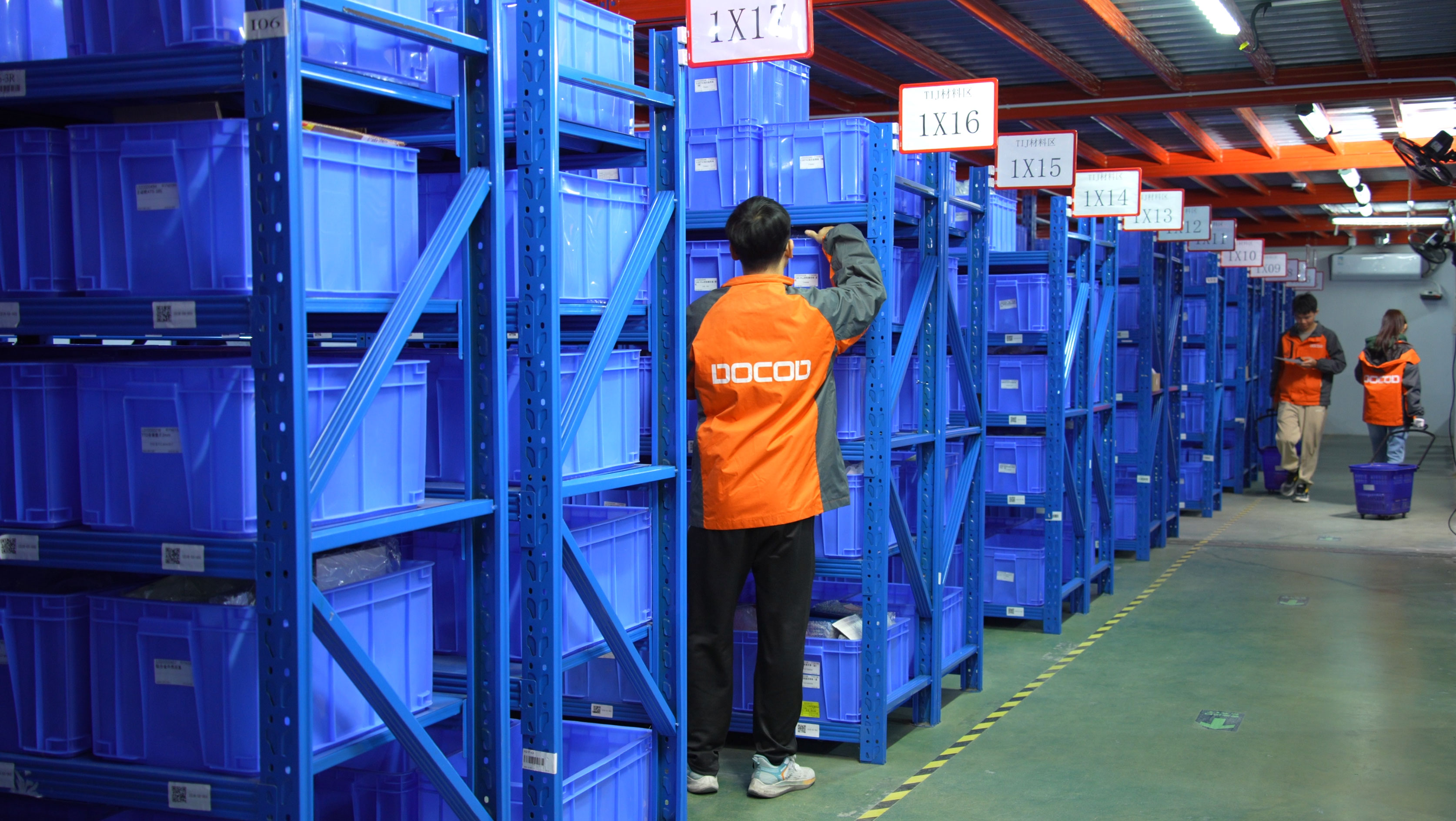
DOCOD's warehouse stocking supports repeat equipment and spare-part orders.
DOCOD Precision Group Co., Ltd. operates a 20,000 m² factory with 407 employees and an R&D team of more than 140 staff. Published annual output is 5,000 units. Monthly production capacity is 2,000 units for standard equipment, up to 4,000 units for distributor-supported products, and 1,000 units for spare parts. The minimum order quantity is 1 customized order, or 1 set per project, which means first engagements can start at single-unit scale and grow.
For distributors, capacity matters across the whole portfolio. The product catalog covers small-character CIJ (V2000, S300plus, S1000, M2000), TIJ (T260E, T220E, TX1), PIJ (P2000), TTO (R3000), CO2/fiber/UV laser (Venus1 and L3000), DOD large-character printers, inline vision inspection systems, consumables such as the DOCOD 3BK702 Half-Inch Black Solvent Quick-Drying Ink Cartridge, and supporting equipment such as the XF30 Vertical Rewinding Machine and XC20 Mini Conveyor Belt. Consolidating purchases with one manufacturer simplifies spare parts, ink and after-sales management — a central reason distributors enter long-term supply agreements.
Quality gates before every shipment
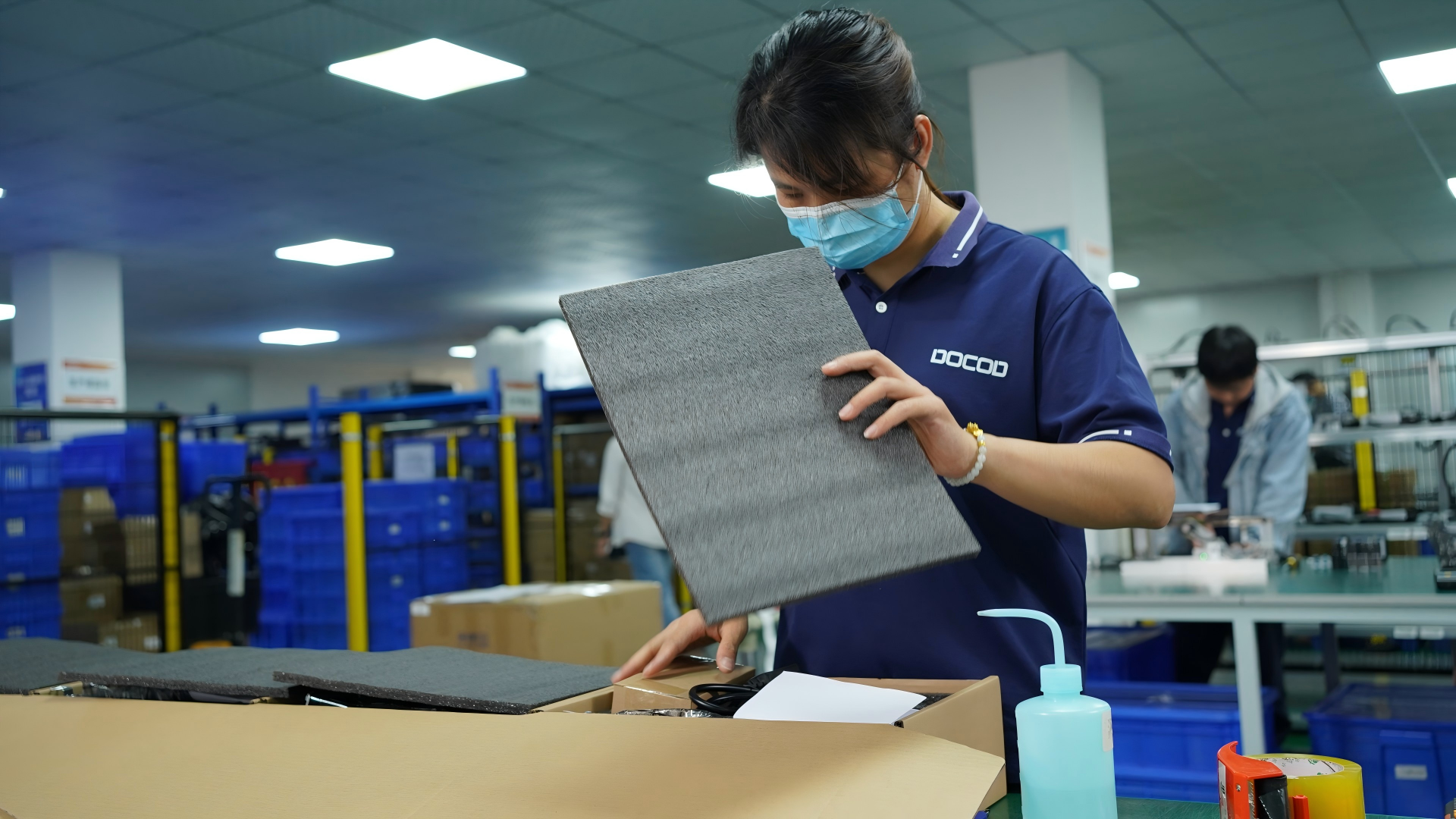
Packing inspection and reinforced export packing are standard before dispatch.
Long-term supply depends on consistent quality. DOCOD's quality control covers part verification, packing inspection and shipment check. The acceptance workflow for equipment includes technical drawing confirmation, sample approval and pre-shipment inspection; standard equipment receives a function test before shipment. For consumables such as TIJ cartridges, batch and packing confirmation is completed before shipment. These gates are the operational counterpart of the risk controls described earlier.
Commercial terms for equipment, spare parts and consumables
For equipment, the minimum order quantity is 1 customized order (1 set per project). Payment terms are T/T 30/70 or LC. Delivery terms include FOB, CIF, CFR and EXW. Acceptance requires technical drawing confirmation, sample approval and pre-shipment inspection. Spare parts follow a separate lane: MOQ of 1 spare part order, payment via PayPal or T/T, model and compatibility confirmation before dispatch, and EXW, FOB or CIF delivery. A repeat consumables order is treated as replenishment with batch and packing confirmation. This separation between equipment, spare parts and consumables ordering is useful for importers that need predictable restocking.
After-sales and channel support
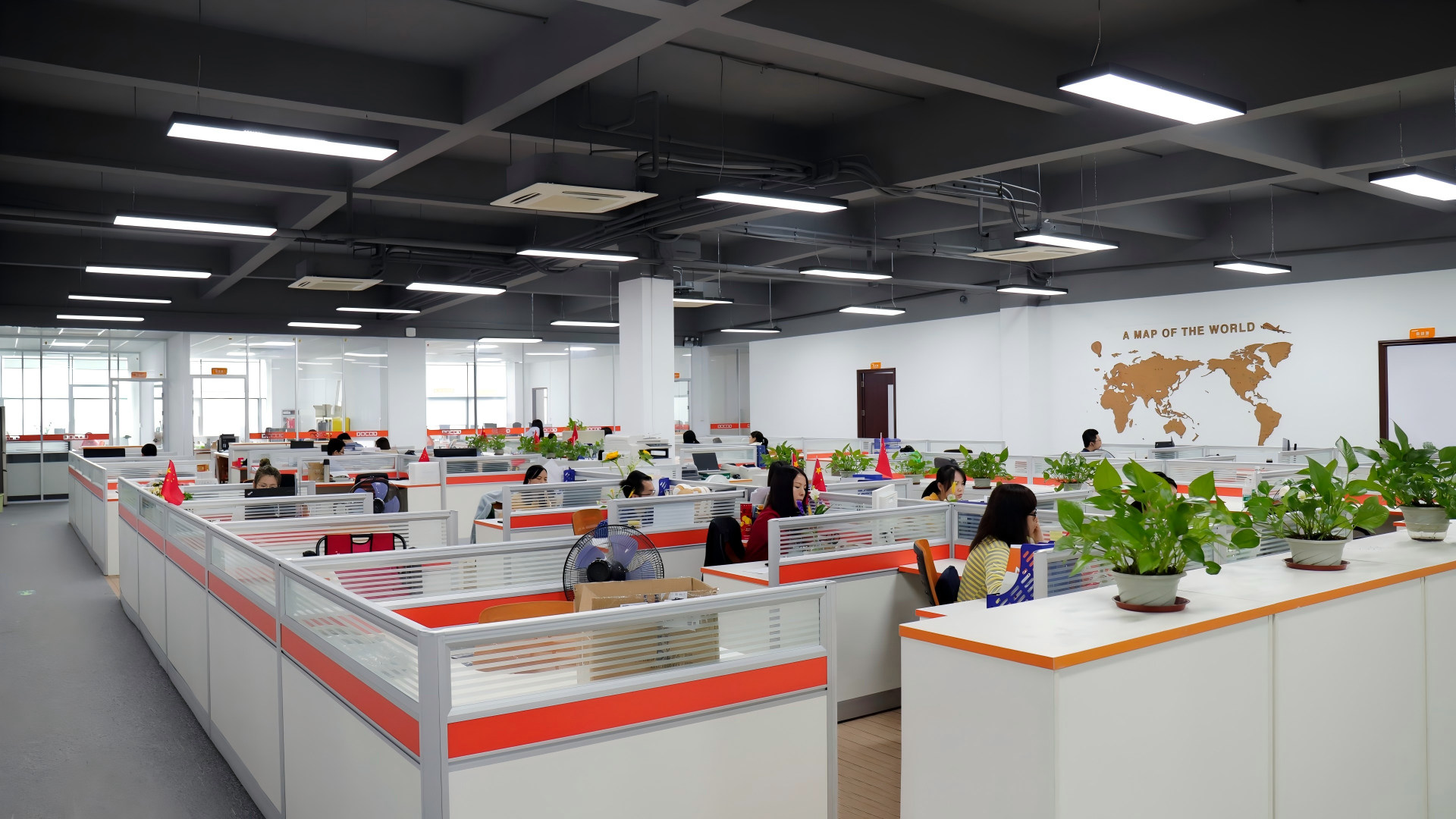
Global sales and service offices support installation guidance, remote tuning and fault diagnosis.
DOCOD provides installation guidance, remote tuning and fault diagnosis after delivery, plus parts matching support, replacement guidance and online response. The company also offers distributor and service partner support for channel partners. For critical lines, optional online inspection can be added: OCR/barcode inspection, alarm light or rejection linkage. The stated after-sales model is remote-first: online support, installation guidance and troubleshooting response after delivery.
What DOCOD serves: date coding, batch marking, variable data printing, GS1 DataMatrix coding, serialization, anti-counterfeiting workflows, packaging line identification, code inspection and production traceability — across food, beverage, pharmaceutical, cosmetic, building material, wire, pipe, automotive and industrial packaging lines.
Step-by-Step: How a DOCOD Order Flows from Inquiry to Repeat Supply
- Working-condition check. Temperature (0–45°C), humidity (30–70% Rh) and line conditions are confirmed before model selection.
- Substrate and print sample. The ink or marking method is matched to carton, film, plastic, metal or glass. Pre-production sample printing verifies print quality before mass shipment.
- Print file confirmation. Text, barcode, QR code, date format and language settings are double-confirmed.
- Certification check. Certification is confirmed by model and destination market before order release.
- Order and milestone scheduling. For standard models, the sequence is order confirmation, assembly, testing and shipment.
- Assembly, testing and inspection. Part verification, packing inspection and shipment check are performed; a function test is executed before shipment.
- Reinforced export packing. Carton or protective export packing is used, with shipment photos taken before dispatch.
- Delivery support and parts planning. Installation guidance, remote tuning and fault diagnosis follow delivery, and a recommended spare parts and consumables list supports repeat operation.
Use Cases: Where Each Capability Fits in Practice
Distributor or importer reselling a coding portfolio
Channel partners benefit from the 4,000-unit monthly capacity tier reserved for distributor-supported products, the 1,000-unit spare parts capacity, MOQ of 1 set, and FOB/CIF/CFR/EXW delivery options. Distributor and service partner support is an explicit part of DOCOD's channel model, which matters when a local partner must respond to end-user installation and spare-part requests.
Brand owner or OEM integrating coding into packaging lines
DOCOD equipment is designed to connect to production lines. The CIJ models provide USB, RS232, network port and enterprise MES connection; the T220E TIJ printer adds optical sensor, encoder, alarm control output, flip and reverse control; the P2000 PIJ printer supports cascading of multiple devices that share the same encoder or photocell parameters. For print-and-verify workflows, an inline vision inspection system can be added with OCR/barcode inspection, alarm light or rejection linkage.
Food, beverage and pharmaceutical lines
The V2000 CIJ handles bottles, cables and varied irregular surfaces with ink options that include high adhesion, high temperature resistance and food grade types. The R3000 TTO prints GS1 DataMatrix, dynamic QR codes and serial numbers on flexible films, sachets, pouches and labels. The T220E TIJ prints multi-language text, GS1 codes and dynamic traceability codes on cartons at up to 600 × 600 dpi.
High-speed cable, pipe and building material lines
The S1000 Series High Speed Continuous Inkjet Printer is positioned for high-speed cable, pipe and extrusion lines. It supports up to 720 m/min with a 60µ nozzle and up to 960 m/min with a 50µ nozzle at 0.5 mm pitch, with automatic nozzle cleaning and IP55 protection.
Metal parts and permanent traceability codes
For metals and robust plastics, the Venus1 Series Fiber Laser Marking Machine (1,064 nm, 20W–100W, air-cooled) provides permanent, no-consumable marking with a laser life of up to 100,000 hours. For sensitive plastics, glass and flexible films, the L3000 Series 5W UV Laser Marking Machine (355 nm, water-cooled) keeps heat impact low, with minimum line width of 0.02 mm and positioning accuracy of 0.01 mm.
Comparison: DOCOD Coding and Marking Technology Portfolio at a Glance
| Technology / Model | Top published capability | Typical applications | Consumables logic |
|---|---|---|---|
| CIJ — S1000 Series High Speed | Up to 720 m/min (60µ) or 960 m/min (50µ) at 0.5 mm pitch; print height 2–16 mm; IP55; automatic nozzle cleaning | High-speed cable, pipe and extrusion lines | CIJ ink and solvent; automatic nozzle cleaning reduces manual work |
| CIJ — V2000 Series | Up to 334 m/min (5 dots, 1 line, 0.5 spacing); 1–5 lines; print height 2–16 mm; IP65; MES connection | Bottles, cables, varied irregular surfaces; mainstream small-character coding | CIJ ink-route management; CE and RoHS listed |
| TIJ — T220E Half-Inch Dual-Head | Up to 406 m/min; up to 600 × 600 dpi; print height up to 25.4 mm | Cartons, labels, GS1 codes, QR and barcodes, variable data | 42 ml cartridge or CISS; RFID chip records ink remaining |
| PIJ — P2000 Piezo Inkjet Printer | 190 m/min at 300 dpi (95 m/min at 600 dpi); single-head print height up to 33.8 mm; negative-pressure continuous ink supply | Coated cartons, larger variable data, traceability codes | Continuous ink supply; CE listed |
| TTO — R3000 Series | 300 dpi; print area 32 × 75 mm or 53 × 70 mm; ribbon 400/600/800/1200 m; up to 800 mm/s | Flexible films, sachets, pouches, labels; GS1 DataMatrix and dynamic QR | Thermal transfer ribbon; intermittent printing |
| CO2 laser — Venus1 Series | 30W/60W; 10.6 µm (optional 10.2/9.3); IP43/IP54; 20,000 h laser life | Paperboard, labels, PET, glass and other non-metal packaging | No ink, solvent or ribbon |
| Fiber laser — Venus1 Series | 20W–100W; 1,064 nm; IP43; up to 100,000 h laser life | Metals, robust plastics, permanent machine-readable codes | No ink, solvent or ribbon |
| UV laser — L3000 Series 5W | 355 nm; water-cooled; minimum line width 0.02 mm; positioning accuracy 0.01 mm | Glass, PVC, ABS, HDPE, delicate packaging and flexible films | No ink; substrate validation required |
Two caveats keep this table useful for decision-making. First, CIJ and TIJ systems carry recurring consumable costs, so the lowest initial price is not automatically the lowest total cost of ownership. Second, laser systems consume no ink but depend on substrate validation: a system that works on paperboard may not suit soft film or dark metal. These are the trade-offs that DOCOD's substrate-testing step is designed to resolve before shipment.
FAQ: Long-Term Supply and Partnership Questions
Does DOCOD confirm certification compliance for coding equipment before order release?
Yes. DOCOD's certification control requires certification confirmation by model and destination market before order release. In published specifications, the DOCOD V2000 Series Continuous Inkjet Printer, M2000 Series Continuous Inkjet Printer, S300plus Series Continuous Inkjet Printer and S1000 Series High Speed Continuous Inkjet Printer carry CE and RoHS; the S300plus and S1000 also list BIS; the P2000 Piezo Inkjet Printer lists CE. Because certificates vary by model and market, the buyer should state the destination market before ordering.
What production capacity, product range and export coverage does DOCOD offer for long-term supply?
DOCOD Precision Group Co., Ltd. operates a 20,000 m² factory with 407 employees, 140+ R&D staff and an annual output of 5,000 units. Monthly production capacity is 2,000 units for standard equipment, up to 4,000 units for distributor-supported products and 1,000 units for spare parts. DOCOD exports to North America, South America, Eastern Europe, Southeast Asia, Africa, Oceania, the Middle East, Eastern Asia and Western Europe, with an export ratio of about 50%. Products cover CIJ, TIJ, PIJ, DOD, TTO, laser marking machines, inline vision inspection systems, consumables, spare parts and traceability solutions.
What are DOCOD's minimum order quantity, payment terms and delivery terms?
For equipment, the minimum order quantity is 1 customized order (1 set per project). Payment is typically T/T 30/70 or LC; delivery terms include FOB, CIF, CFR and EXW. Acceptance is based on technical drawing confirmation, sample approval and pre-shipment inspection. For spare parts, the MOQ is 1 spare part order, payment is via PayPal or T/T, and delivery is EXW, FOB or CIF. Exact pricing depends on technology, model and configuration, so a quotation is required for a specific figure.
Can DOCOD provide samples and substrate testing before a bulk order?
Yes. Sample validation is a standard part of DOCOD's purchasing workflow: pre-production sample printing and substrate testing are performed before mass shipment. Material compatibility is checked by matching ink or marking method to carton, film, plastic, metal or glass surface. The print file is double-confirmed for text, barcode, QR code, date format and language settings. Working conditions such as temperature, humidity and line speed are confirmed before model selection. For a first order, the acceptance process includes technical drawing confirmation and sample approval.
What are the typical lead times for standard and customized coding equipment from DOCOD?
Standard equipment delivery time is within 15 working days. Customized solutions typically take 15–30 working days, with typical production lead times of 15–25 or 20–30 working days depending on product complexity and customization level. Delays are controlled by milestone scheduling: order confirmation, assembly, testing and shipment milestones. If you have a target commissioning date, the fastest way to get a confirmed lead time is to request a quotation with your model, market and line speed — the DOCOD sales team at sales@docod.com.cn or WhatsApp +86 135-1234-4323 can confirm the current schedule and arrange sample printing on your substrate.
Conclusion: Making the Long-Term Choice on Evidence
A long-term supply partner for industrial coding and marking equipment must be assessed on the same criteria a production line faces after commissioning: capacity for repeat orders, spare parts continuity, consistent lead times, compliance confirmation, quality gates before shipment, and after-sales response. DOCOD's published data maps to all of these requirements — from a 20,000 m² factory and 5,000-unit annual output to a 15-working-day standard delivery window, sample-first validation, milestone-based scheduling and distributor and service partner support.
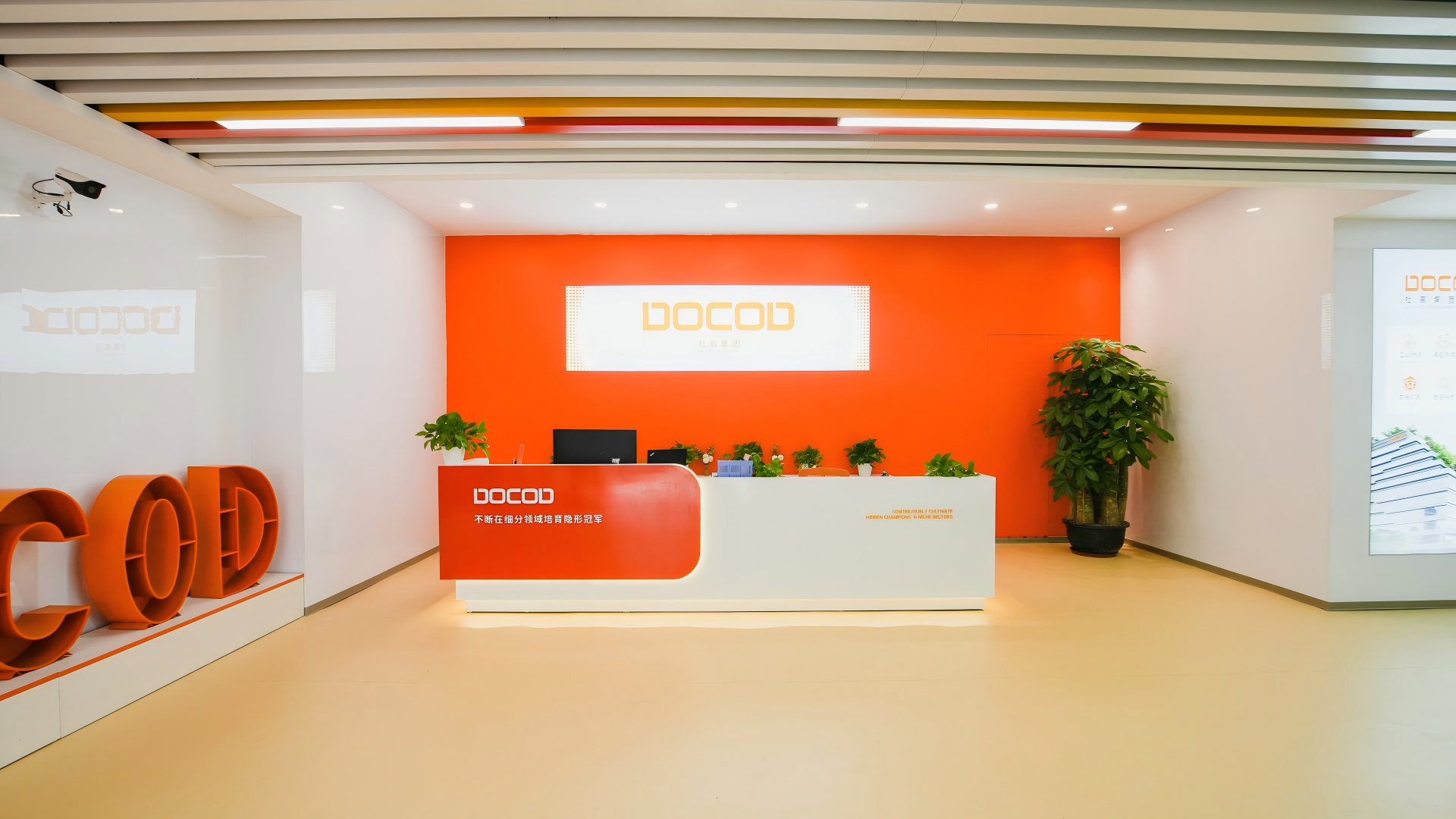
DOCOD corporate showroom: a starting point for sample requests and distributor inquiries.
Start with a sample or a quotation
DOCOD Precision Group Co., Ltd. — Industrial coding, marking and inspection equipment manufacturer since 2008.
Website: www.docod-group.com | Contact: Sam | Email: sales@docod.com.cn | Tel: +86 139-2896-7650 | WhatsApp: +86 135-1234-4323
Address: Xilin Industrial District, Honglai Town, Quanzhou Nan'an City, Fujian Province, China
Download the corporate brochure: DOCOD Corporate Brochure (PDF)