
Industrial Coding and Marking Equipment 2026: Top Technology Trends and What Buyers Should Evaluate
Buyers evaluating industrial coding and marking equipment in 2026 face a market shaped by GS1 Digital Link adoption, high-speed CIJ demand, laser marking growth, and tighter requirements around code verification and traceability. Choosing the right system is no longer only about print speed or ink type. It also depends on whether the equipment can support serialization, inline inspection, and future packaging changes. This article outlines the main technology trends, compares the core equipment categories, and provides an evaluation framework for procurement teams.
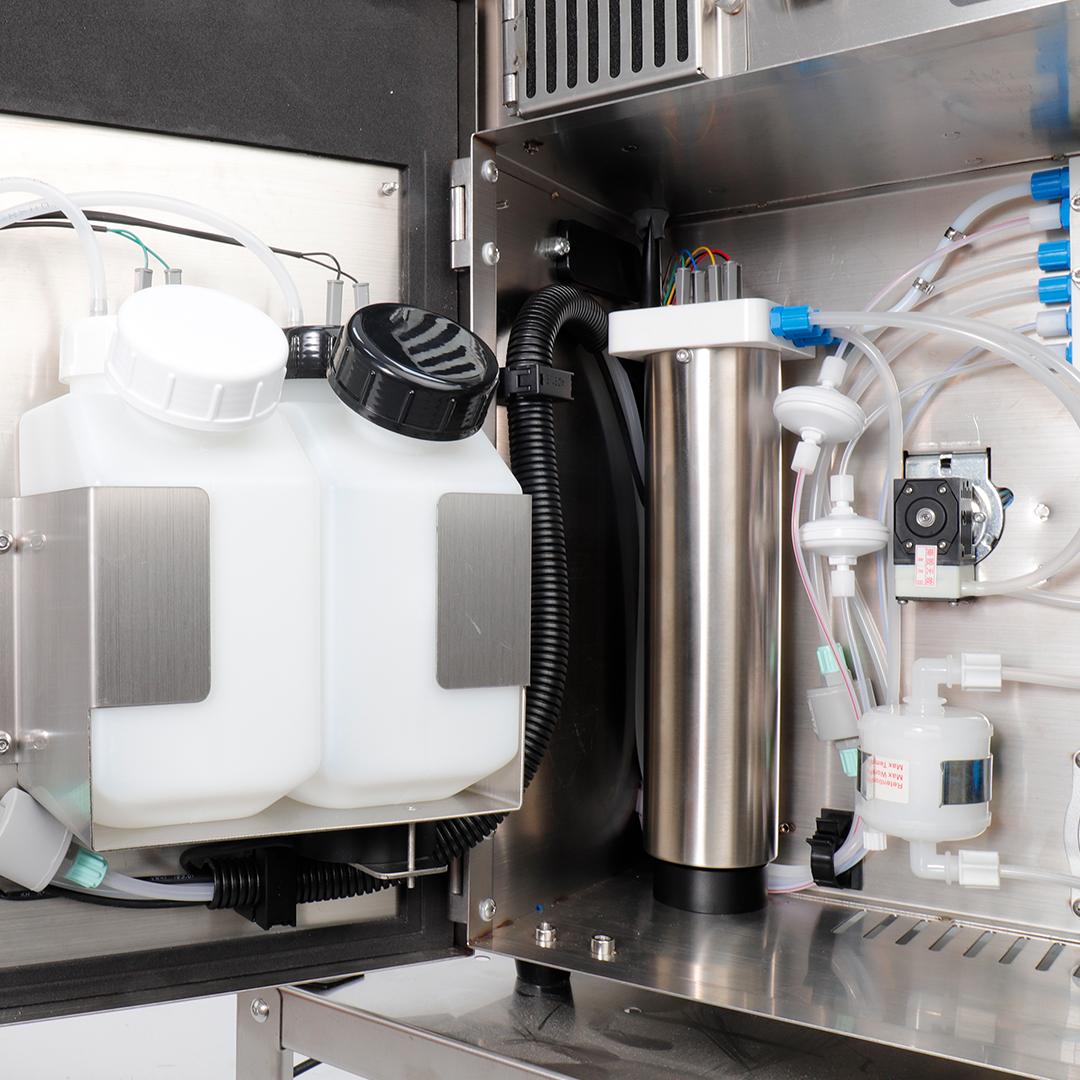
CIJ remains a widely used technology for industrial coding and marking applications.
Why the Coding and Marking Market Is Moving Toward Smarter, Verified Printing
The industrial coding and marking equipment market reached an estimated USD 17.53 billion in 2024, with projections to USD 27.11 billion by 2032. Continuous Inkjet (CIJ) technology accounted for the largest technology revenue share, roughly USD 5.67 billion in 2024. Asia-Pacific holds the largest regional share, estimated at around 35% in 2024.
For equipment buyers, these figures reflect a structural shift. Manufacturers are investing in coding systems not only for compliance marking but also as part of smart manufacturing and product traceability infrastructure. Code quality, inspection, and data connectivity are becoming as important as the printing technology itself.
China has also become a larger exporter of industrial machine tools, with export value rising 15.7% year-on-year in early 2026. That creates more options for global buyers, but it also increases the need for careful supplier evaluation.
Market Context: What Is Driving the Demand for Coding Equipment in 2026?
Several industry-wide forces are shaping the 2026 evaluation landscape.
GS1 Digital Link Adoption
The GS1 Digital Link standard is being adopted globally to replace 1D barcodes with QR codes for point-of-sale and traceability by 2027. This means coding equipment must handle 2D codes, variable data, and database-driven content. Buyers should check whether their selected printer supports GS1 DataMatrix, dynamic QR codes, and data interfaces such as RS232, USB, or network ports.
High-Speed Production Lines
Beverage, food, cable, and pharmaceutical lines are running faster than before. A CIJ printer for high-speed lines should provide stable printing with minimal downtime. Equipment that connects to encoders, photocells, and MES systems helps maintain synchronization with line speed.
Laser Marking Growth
Laser marking is projected to grow at a CAGR of 6.8% through 2030 due to its eco-friendly operation and lack of consumables. However, laser technology is not always the right choice. It works best for permanent, high-contrast marking on substrates such as metal, plastic, glass, and coated materials, but it carries a higher initial investment than inkjet systems.
Verification and Inspection
Inline code verification is increasingly expected in regulated industries. Printers with stable ink systems, consistent printhead performance, and integrated inspection workflows reduce the risk of unreadable codes reaching the supply chain.
Core Equipment Technologies in 2026: CIJ, TIJ, PIJ, DOD, TTO, and Laser
Each coding technology has a defined role. The right choice depends on substrate, line speed, print content, and budget. Below is a practical comparison.
| Technology | Typical Applications | Key Strengths | Typical Purchase Considerations |
|---|---|---|---|
| Continuous Inkjet (CIJ) | Bottles, cans, cables, pipes, cartons, auto parts | Non-contact printing at high speeds; suitable for curved or uneven surfaces | Ink and solvent consumption; printhead maintenance frequency |
| Thermal Inkjet (TIJ) | Cartons, labels, flexible packaging, pharma cartons | High resolution up to 600 × 600 DPI; compact installation; low maintenance | Cartridge cost per print; print height limitations |
| Piezo Inkjet (PIJ) | Coated cartons, corrugated boxes, labels, secondary packaging | High-resolution variable data printing; supports barcodes and traceability codes | Ink system type; distance between printhead and substrate |
| Drop-on-Demand Large Character (DOD) | Cases, cartons, large packaging surfaces | Large print height; low operating cost for case coding | Resolution limits compared to TIJ or PIJ |
| Thermal Transfer Overprinter (TTO) | Flexible film, stick packs, sachets, metallized labels | High-quality 2D codes on flexible packaging; intermittent printing | Ribbon cost; only suitable for intermittent motion |
| Laser Marking | Metal parts, glass, plastics, electronics, medical devices | Permanent mark; no ink or solvent; low consumable cost | Higher capital cost; material compatibility; safety integration |
Continuous Inkjet (CIJ) in 2026
CIJ remains the dominant technology, especially for high-speed lines. Buyers evaluating CIJ printers should compare nozzle size, print speed, ink types, and IP rating.
For example, the DOCOD S1000 Series High Speed Continuous Inkjet Printer supports a maximum print speed of 720 m/min with a 60µ nozzle, or 960 m/min with a 50µ nozzle at 0.5 mm pitch. It supports black, red, blue, green, and invisible inks, and includes CE, RoHS, and BIS certifications. The DOCOD M2000 Series Continuous Inkjet Printer offers a 3 m or 6 m printhead duct, nozzle options of 42µ, 55µ, and 70µ, a printing height of 3–30 mm, and up to 24 counters.
Thermal Inkjet (TIJ) for High-Resolution Carton and Label Printing
TIJ is widely used where print quality and code readability matter more than very high line speeds. TIJ printers can print GS1 codes, dynamic QR codes, barcodes, serial numbers, and variable databases.
The DOCOD T220E Half-Inch Dual-Head Inkjet Printer prints at up to 600 × 600 DPI with a maximum speed of 406 m/min. The DOCOD T260E Half-Inch Dual-Head Thermal Inkjet Printer supports up to 300 × 300 DPI at 60 m/min and accepts food-grade ink cartridges. Both use RFID cartridge chips to identify ink parameters and record remaining ink.
Piezo Inkjet (PIJ) for Traceability and Variable Data
PIJ printers suit manufacturers who need high-resolution codes on cartons, labels, and secondary packaging. The DOCOD P2000 Piezo Inkjet Printer uses I1600 series nozzles, prints at 300 dpi or 600 dpi, and reaches 190 m/min at 300 dpi. It supports cascading multiple devices that share the same encoder or photocell parameters, which simplifies multi-lane installations.
Thermal Transfer Overprinter (TTO) for Flexible Packaging
For snack food, dried fruit, seasoning, and flexible film packaging, TTO provides reliable intermittent printing. The DOCOD R3000 Series Industrial Thermal Transfer Overprinter prints at 300 dpi, supports ribbon widths from 24 to 55 mm, and can print GS1 DataMatrix, dynamic QR codes, barcodes, serial numbers, and variable databases. It is available as R3032 or R3053 models.
Laser Marking for Permanent, Low-Consumable Coding
Laser systems are becoming more common in electronics, medical devices, cosmetics, and beverage packaging. The DOCOD Venus1 Series Fiber Laser Marking Machine operates at 1064 nm with 20W, 30W, 50W, or 100W options and a laser life up to 100,000 hours. The DOCOD Venus1 Series CO2 Laser Marking Machine works on non-metal materials such as plastics, wood, rubber, and glass. The DOCOD L3000 Series 5W UV Laser Marking Machine provides low-heat marking for plastics, PVC pipe, and flexible circuit boards.
Step-by-Step Evaluation Framework for 2026 Buyers
Procurement teams evaluating coding equipment should follow a structured process that covers application requirements, line integration, verification, supplier capability, and total cost.
Step 1: Define the Code Content
Identify whether the line requires date codes, batch numbers, serial numbers, GS1 DataMatrix, dynamic QR codes, or 2D traceability codes. This determines the required resolution and printer type. For variable data printing, confirm that the printer supports database-driven content and can connect to the enterprise network or MES system.
Step 2: Match Speed to the Production Line
Measure the maximum line speed. CIJ printers are a strong fit for high-speed beverage or cable lines. TIJ and TTO suit packaging lines where resolution is more important than extreme speed. PIJ suits carton and label applications at moderate to high speeds.
Step 3: Verify Substrate Compatibility
Different inks and lasers behave differently on plastic, glass, metal, coated cartons, and flexible film. Ask for sample printing on the actual substrate. For example, DOCOD CIJ printers offer ink types including high adhesion, migration resistance, high temperature resistance, special for glass, permeability, food grade, and oil resistance.
Step 4: Evaluate Integration and Connectivity
Check communication interfaces. Printers should support USB, RS232, and network ports for MES or ERP integration. External interfaces for photocells, encoders, alarm lights, and information control are essential for line synchronization.
Step 5: Inspect the Supplier Manufacturing and Quality System
A reliable equipment supplier should have documented quality processes. DOCOD Precision Group Co., Ltd., founded in 2008, operates a 20,000 m² factory with 407 employees and an annual output of 5,000 units. Its R&D team includes more than 140 staff members. DOCOD holds ISO 9001, ISO 14001, and ISO 45001 management system certifications.
Step 6: Plan for Consumables and Spare Parts
Ask about ink availability, cartridge life, solvent compatibility, and spare parts lead time. For distributors and maintainers, a stable consumables supply is part of the total cost calculation.
Evaluating Industrial Coding and Marking Equipment Suppliers
When buyers compile a shortlist, they typically evaluate several global suppliers. According to third-party market research, top industry players include Videojet Technologies, Domino Printing Sciences, Markem-Imaje, and Hitachi Industrial Equipment Systems. These companies have strong distribution networks and established brand recognition.
At the same time, manufacturers such as DOCOD are increasingly selected by buyers who need flexible OEM/ODM support, private-label branding, application-specific customization, and closer cooperation on production line integration.
What Buyers Should Look for in a 2026 Coding Equipment Supplier
The evaluation process should compare more than price. Buyers should assess application engineering, production capacity, lead time, quality control, and after-sales support.
| Evaluation Dimension | What to Check | Example |
|---|---|---|
| Product range | Does the supplier cover multiple technologies? | DOCOD offers CIJ, TIJ, PIJ, DOD, TTO, laser, and vision inspection equipment. |
| Customization | Can the supplier support OEM branding or ODM function changes? | OEM includes private label logo, startup screen, nameplate, packaging, and manuals. |
| Production line integration | Can the supplier match conveyors, encoders, sensors, and serialization workflows? | Integration testing, sample run, and video acceptance before delivery. |
| Lead time | What is the lead time for standard and custom orders? | Standard equipment within 15 working days; ODM 20–30 working days. |
| Quality control | What inspections happen before shipment? | Outgoing inspection, sample printing verification, and function tests. |
| After-sales support | Is remote training and troubleshooting available? | Online training, video guidance, and remote support. |
Industry Applications of Coding Equipment in 2026
Coding equipment is deployed across many industries. Each scenario favors a different technology.
Food and Beverage
High-speed beverage lines need CIJ printers for batch codes on PET bottles and cans. The DOCOD V2000 Series Continuous Inkjet Printer supports up to 334 m/min and prints on carton, plastic, cable, metal, and glass. A beverage bottling plant in Vietnam has used the V2000 on 4 lines for 2 years, achieving stable daily coding.
Snack and Flexible Packaging
Flexible film lines typically use TTO or CIJ depending on the packaging format. A snack manufacturer in Indonesia runs the DOCOD R3000 Series TTO on 2 VFFS lines for date coding on flexible film, with 2 years of operation.
Pharmaceutical and Healthcare
Pharma packaging requires high-resolution QR codes, expiry dates, and serialization. A pharma packaging supplier in India uses the DOCOD T220E Half-Inch Dual-Head Inkjet Printer on 3 cartoning lines for QR and expiry printing on cartons.
Electronics and Metal Parts
Permanent marking on metal components is usually handled by fiber laser. An electronics parts supplier in Germany uses the DOCOD Venus1 Series Fiber Laser Marking Machine at 2 workstations for permanent marking on metal connectors, with 3 years of operation.
Cosmetics and Personal Care
Plastic bottles and caps require clean, permanent codes. A cosmetics OEM in Poland uses the DOCOD L3000 Series 5W UV Laser Marking Machine for lot coding on plastic bottles and caps, with low-heat UV marking producing high-contrast results.
Cable and Building Materials
Cable manufacturers need CIJ printers that handle meter marking on cable sheath at high speed. A cable manufacturer in the United States uses the DOCOD M2000 Series Continuous Inkjet Printer on 6 lines for meter marking, producing clear and consistent codes.
Contract Packing and Secondary Packaging
Contract packers often need compact, multi-station solutions. A contract packer in Brazil uses the DOCOD TX1 Half-Inch Seamless Inkjet Printer across 8 packing stations for batch and QR printing on shipping cartons. The compact setup enables faster deployment across small lines.
2026 Selection Checklist for Industrial Coding and Marking Equipment
- Confirm code requirements: date, batch, serial number, GS1 DataMatrix, dynamic QR code, or database-driven variable data.
- Measure line speed: choose CIJ for very high-speed lines; TIJ, PIJ, or TTO where resolution matters more.
- Test on real substrates: verify adhesion, drying time, contrast, and durability.
- Check communication interfaces: USB, RS232, network port, photocell, encoder, and alarm output.
- Assess IP rating and environment: IP65 for washdown areas; IP43/IP54 for laser enclosures.
- Review certification documents: CE, RoHS, BIS, ISO 9001, ISO 14001, ISO 45001.
- Consider consumables supply: ink type, cartridge capacity, delivery lead time, and local availability.
- Plan for integration: conveyor, rewinder, encoder, sensor, MES/ERP connection.
- Evaluate after-sales support: remote training, video guidance, spare parts coordination.
Technology Adoption Trends to Watch in 2026
2D Code and GS1 Digital Link Readiness
With GS1 Digital Link replacing traditional 1D barcodes at point of sale, printers must support 2D codes such as GS1 DataMatrix and QR codes at production speeds. Printers that offer high resolution and database connectivity give manufacturers a smoother migration path.
Inline Code Verification
More manufacturers are adding inline vision inspection after printing. Suppliers that provide coding equipment, inspection systems, and integration support reduce the coordination burden for buyers.
Laser Technology Expansion
Laser marking continues to gain share because of lower consumable costs and permanent mark quality. However, buyers should weigh the higher capital investment against inkjet alternatives, especially for high-speed multi-line operations.
Localization and OEM/ODM Cooperation
Global buyers increasingly work directly with manufacturers for private-label branding and localized support. This is especially visible in Europe, Southeast Asia, Latin America, the Middle East, and Africa.
Cost Considerations Beyond the Purchase Price
The equipment price is only part of the Total Cost of Ownership. Buyers should evaluate ink and solvent consumption, printhead life, maintenance frequency, spare parts availability, and the cost of rejects caused by unreadable codes. A lower-priced printer that requires frequent cleaning or produces inconsistent codes can be more expensive over a 3-year period.
TTO users should calculate ribbon cost. Laser users should consider electricity, cooling, and replacement laser source cost after the rated lifetime. CIJ users should include solvent consumption in the operating cost model.
FAQ
Is CIJ still the best choice for industrial coding in 2026?
CIJ remains the dominant technology for high-speed, non-contact coding on bottles, cans, cables, pipes, and cartons. It held the largest revenue share in the coding and marking market in 2024. For lines that require high speed and flexibility across many substrates, CIJ is a proven option. For applications requiring higher resolution or permanent marking, TIJ, PIJ, or laser may be more appropriate.
What certifications should industrial coding equipment have?
Certifications vary by target market. For general international sales, CE and RoHS are common. For India, BIS CRS Registration is required for printers/plotters. Buyers should also look for supplier-level management system certifications such as ISO 9001 for quality management, ISO 14001 for environmental management, and ISO 45001 for occupational health and safety. For example, DOCOD holds ISO 9001, ISO 14001, and ISO 45001, and its S1000, S300plus, and V2000 CIJ series have BIS certification.
Can coding equipment support GS1 Digital Link and traceability codes?
Yes. Modern TIJ, CIJ, PIJ, and TTO systems can print GS1 DataMatrix, dynamic QR codes, serial numbers, and variable databases. For example, DOCOD T220E and T260E thermal inkjet printers support GS1 code printing and dynamic traceability codes. The R3000 TTO supports GS1 DataMatrix and serial real-time dynamic data printing.
Which technology is easiest to integrate into an existing packaging line?
TIJ printers are often the easiest to integrate because of their compact printhead, low maintenance, and flexible mounting. PIJ printers support cascading multiple heads with shared encoder or photocell parameters. For any technology, confirm that the unit supports external interfaces such as photocell, encoder, and alarm output. DOCOD also provides integration support for conveyor, pager, rewinder, and serialization workflows.
How should a buyer choose between CIJ, TIJ, PIJ, and laser?
Define the substrate, required code resolution, production speed, and permanence requirement. CIJ suits high-speed non-contact coding. TIJ suits high-resolution carton and label printing at moderate speeds. PIJ suits large-area high-resolution variable data printing on cartons and labels. Laser suits permanent marking on metal, plastic, glass, and coated surfaces. Sample testing on the actual substrate is the most reliable way to validate a decision.
Conclusion
Selecting industrial coding and marking equipment in 2026 requires a broader evaluation than in previous years. GS1 Digital Link adoption, high-speed CIJ expectations, laser marking growth, and inline code verification are changing how manufacturers choose printers. Buyers should start with the code requirement and substrate, then match technology and speed, and finally evaluate the supplier’s manufacturing depth, integration capability, and after-sales support.
DOCOD Precision Group Co., Ltd., founded in 2008, provides a wide range of coding, marking, and inspection equipment, including CIJ, TIJ, PIJ, DOD, TTO, laser marking machines, and inline vision inspection systems. With a 20,000 m² factory, 407 employees, and an R&D team of over 140 staff, DOCOD supports global manufacturers and channel partners with application-specific coding solutions, OEM/ODM services, and production line integration.
For more detailed information about the product range and company capabilities, you can download the DOCOD corporate brochure.
Evaluating coding equipment for your production line?
Request a sample print test or discuss your line requirements with the DOCOD team.
Have Questions or Need More Details?
Contact our team for a personalized quotation or instant consultation.
Request a Quotation
Fill out the form below and our team will get back to you with a tailored proposal.
WhatsApp Direct Chat
Prefer to chat in real-time? Message us on WhatsApp for instant assistance & quick answers.
- Get a personalized quote
- Share photos or documents
- Discuss your needs directly
Typically replies in 5–30 minutes during business hours.