
Industrial Coding and Marking Equipment: A 2026 Buyer's Guide
Industrial Coding and Marking Equipment: A 2026 Buyer's Guide
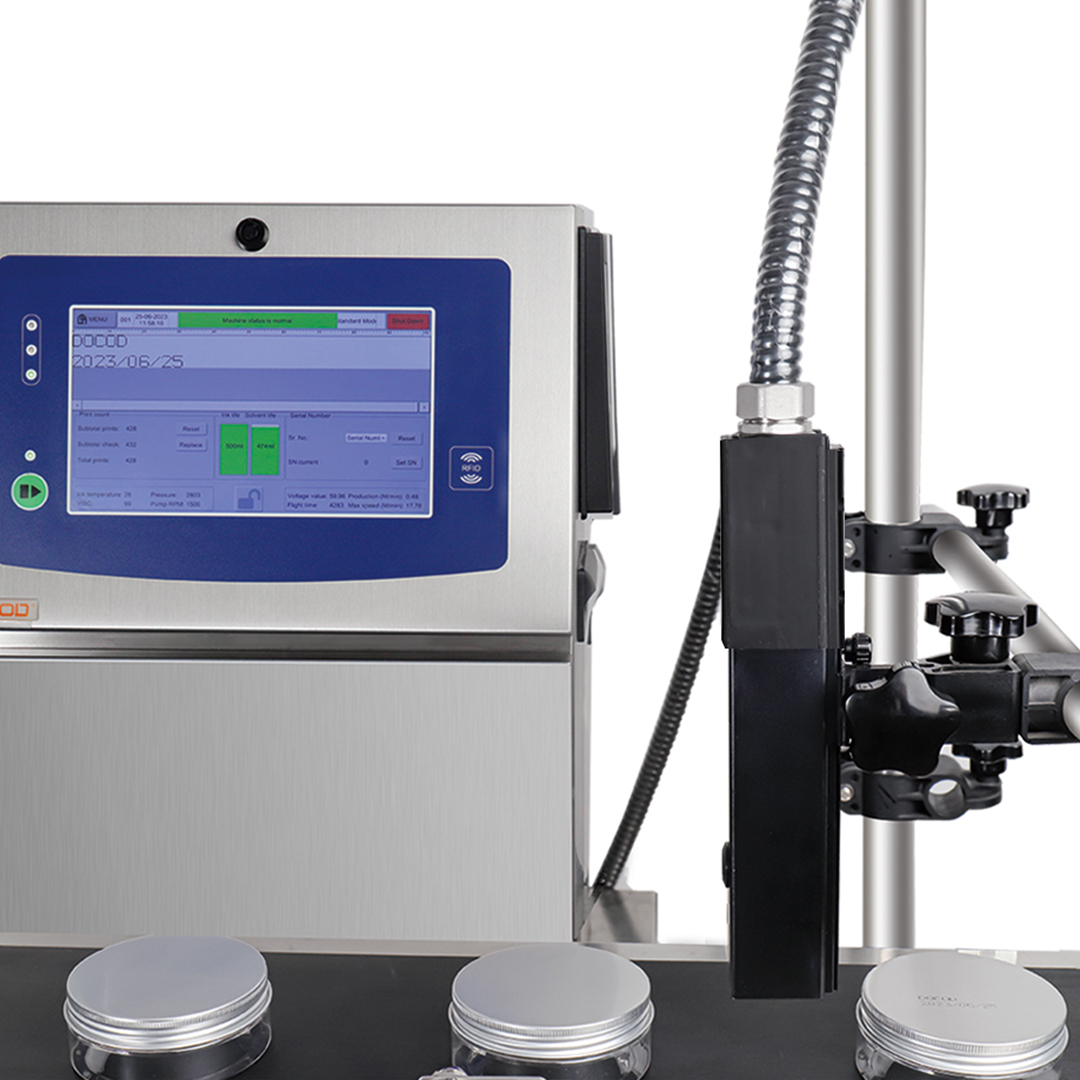
Industrial coding and marking equipment is the category of production-line systems that print variable information—production dates, expiry dates, batch numbers, serial numbers, barcodes, 2D codes, and logos—directly onto products, labels, and packaging during manufacturing. The category includes continuous inkjet (CIJ) printers, thermal inkjet (TIJ) printers, piezo high-resolution inkjet (PIJ) printers, drop-on-demand large-character (DOD) printers, thermal transfer overprinters (TTO), laser marking machines, and inline code inspection systems.
This guide is written for manufacturers, packagers, procurement managers, and channel partners researching the category for the first time. It covers what these systems do, which technology fits which scenario, verified performance parameters, certification considerations, and a practical selection process. Product examples are drawn from DOCOD Precision Group Co., Ltd., an industrial coding, marking, and inspection equipment manufacturer based in Guangzhou, China, founded in 2008.
What problem does industrial coding equipment solve?
Every manufactured unit must carry legible identification before it leaves the line. The printed code carries production dates, expiry dates, batch or lot numbers, serial numbers, barcodes, QR codes, or GS1-compliant 2D codes used for traceability, stock rotation, recall management, anti-counterfeiting, and regulatory tracking. Industrial coding and marking equipment automates this step inline, at production speed.
Selection is not a commodity purchase. A code that fails on a dark plastic surface, a printer that cannot match line speed, or an ink that does not adhere to flexible film results in rework, rejected deliveries, and compliance exposure. Buyers must evaluate five variables before choosing equipment: substrate, code content, line speed, operating environment, and integration requirements.
Common challenges across production environments include: multi-material packaging (flexible pouches, cartons, PET and glass bottles) on one line; dusty, hot, or humid conditions in building-material plants; limited installation space on extrusion lines; short takt times in electronics assembly; and medical packaging workflows that require code verification before product release.
Industry context: market signals for 2026
The market for industrial coding equipment is large and growing, and several verified indicators explain why the category matters in 2026:
- The global coding and marking equipment market was valued at USD 17.53 billion in 2024 and is projected to reach USD 27.11 billion by 2032, according to SkyQuest's market report.
- Continuous Inkjet (CIJ) held the largest technology revenue share, approximately USD 5.67 billion in 2024, according to Grand View Research.
- Asia-Pacific is the largest geographic segment, estimated at about 35% in 2024, per Market Research Future.
- Laser marking is projected to grow at a CAGR of 6.8% through 2030, partly because laser systems use no consumables, according to Fortune Business Insights.
- China's export value for industrial machine tools, including marking equipment categories, rose 15.7% year-on-year in early 2026, according to the German Machine Tool Builders' Association (VDW) and Honor Machinery.
- The GS1 Digital Link standard, published as ISO/IEC 18975:2024, is being adopted globally to move from 1D barcodes to QR codes for point-of-sale scanning and traceability.
- Publicly recognized global players in the sector include Videojet Technologies, Domino Printing Sciences, Markem-Imaje, and Hitachi Industrial Equipment Systems.
These indicators point in one direction: demand for scannable 2D codes, serialization, and traceability is rising, and suppliers are expected to support both high-speed inkjet and low-consumable laser technologies.
Technology family 1: Continuous Inkjet (CIJ) printers
Continuous inkjet (CIJ) is the technology that held the largest revenue share in the sector in 2024, approximately USD 5.67 billion, per Grand View Research. CIJ printers are non-contact, small-character systems designed for date coding, batch marking, serial coding, and traceability printing on porous and non-porous surfaces such as carton, plastic, metal, glass, cable, and pipe.
DOCOD's CIJ family includes the DOCOD M2000 Series Continuous Inkjet Printer, the DOCOD S1000 Series High Speed Continuous Inkjet Printer, the DOCOD S300plus Series Continuous Inkjet Printer, and the DOCOD V2000 Series Continuous Inkjet Printer. These models use a 10.1-inch industrial touch screen, run an Embedded Linux security operating system, and support more than 40 languages.
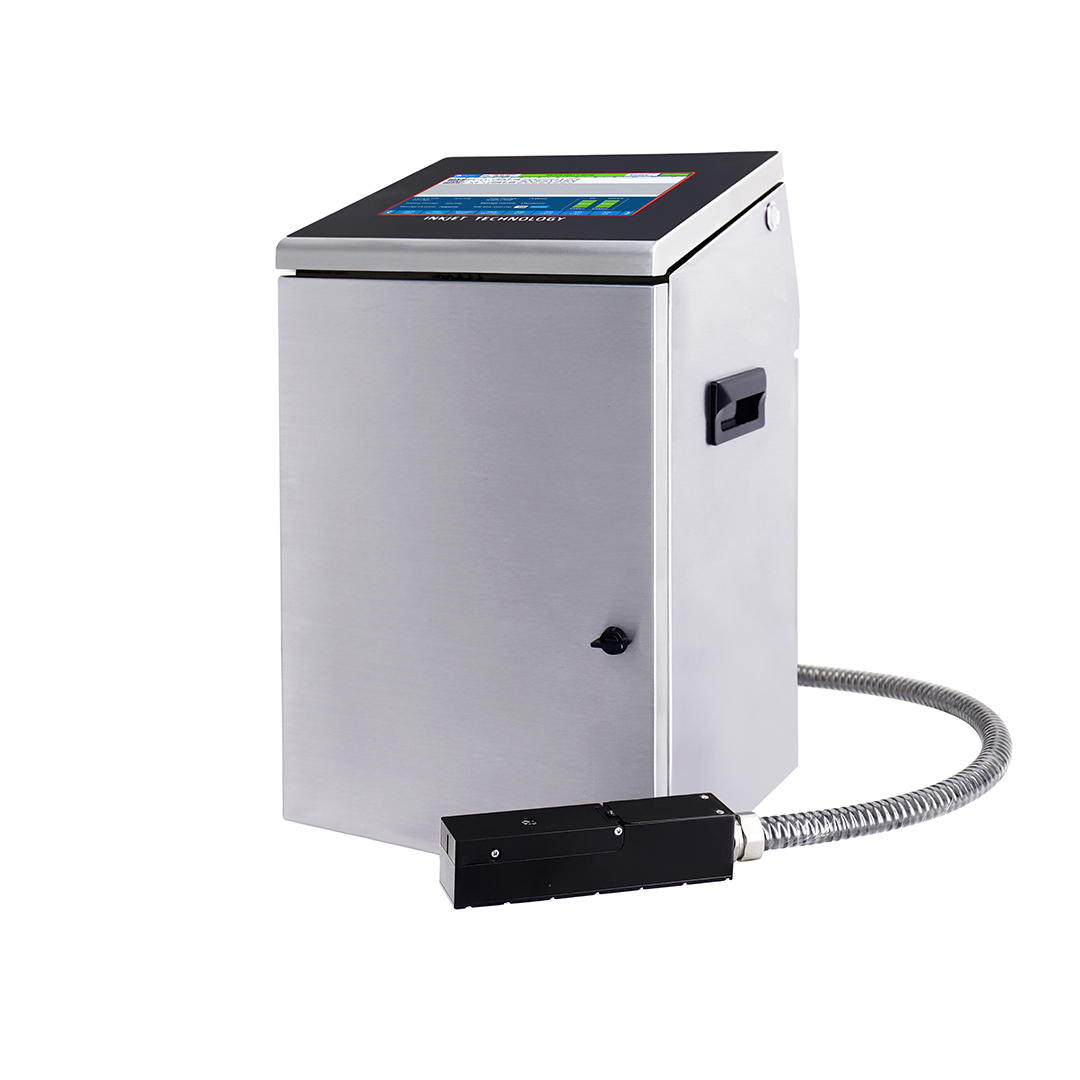
DOCOD M2000 Series Continuous Inkjet Printer
Representative verified parameters:
- DOCOD M2000 Series: maximum printing speed 528 m/min; 1–4 lines; print height 3–30 mm; nozzle options 42u, 55u, 70u; printhead duct 3 m or 6 m; IP65; SUS 304 stainless steel; CE and RoHS certified; up to 24 counters; USB, RS232, and network interfaces that connect to enterprise MES systems.
- DOCOD S1000 Series: high-speed model reaching 960 m/min with a 50u nozzle and 720 m/min with a 60u nozzle; print height 2–16 mm; IP55; CE, RoHS, and BIS certified.
- DOCOD S300plus Series: up to 384 m/min (5 dots in 1 line, 0.5 dot spacing); print height 3–30 mm; IP65; CE, RoHS, and BIS certified.
- DOCOD V2000 Series: up to 334 m/min; IP65; CE and RoHS certified.
CIJ ink options in the M2000 Series include high-adhesion, high-temperature, glass-special, permeability, food-grade, oil-resistance, and pigment inks in black, red, blue, green, invisible, yellow, and blue-white. This flexibility is why CIJ remains the default for packaging lines that code many different surfaces.
Technology family 2: Thermal Inkjet (TIJ) printers
Thermal inkjet (TIJ) printers use replaceable ink cartridges and deliver high-resolution codes for applications that need sharp text or scannable GS1 and QR codes. TIJ systems are compact, cartridge-based, and suited to industrial production lines requiring variable data printing, anti-counterfeiting, and traceability coding.
DOCOD TIJ products include the DOCOD T220E Half-Inch Dual-Head Inkjet Printer, the DOCOD TX1 Half-Inch Seamless Inkjet Printer, and the DOCOD T260E Half-Inch Dual-Head Thermal Inkjet Printer. Cartridges use RFID non-contact chips that automatically identify ink parameters and record remaining ink. Ink types include 42 ml food-grade, water-based, oil-based, weak solvent, and solvent cartridges, plus large-capacity continuous ink supply systems. Ink colors include black, white, red, yellow, blue, green, invisible, and UV.
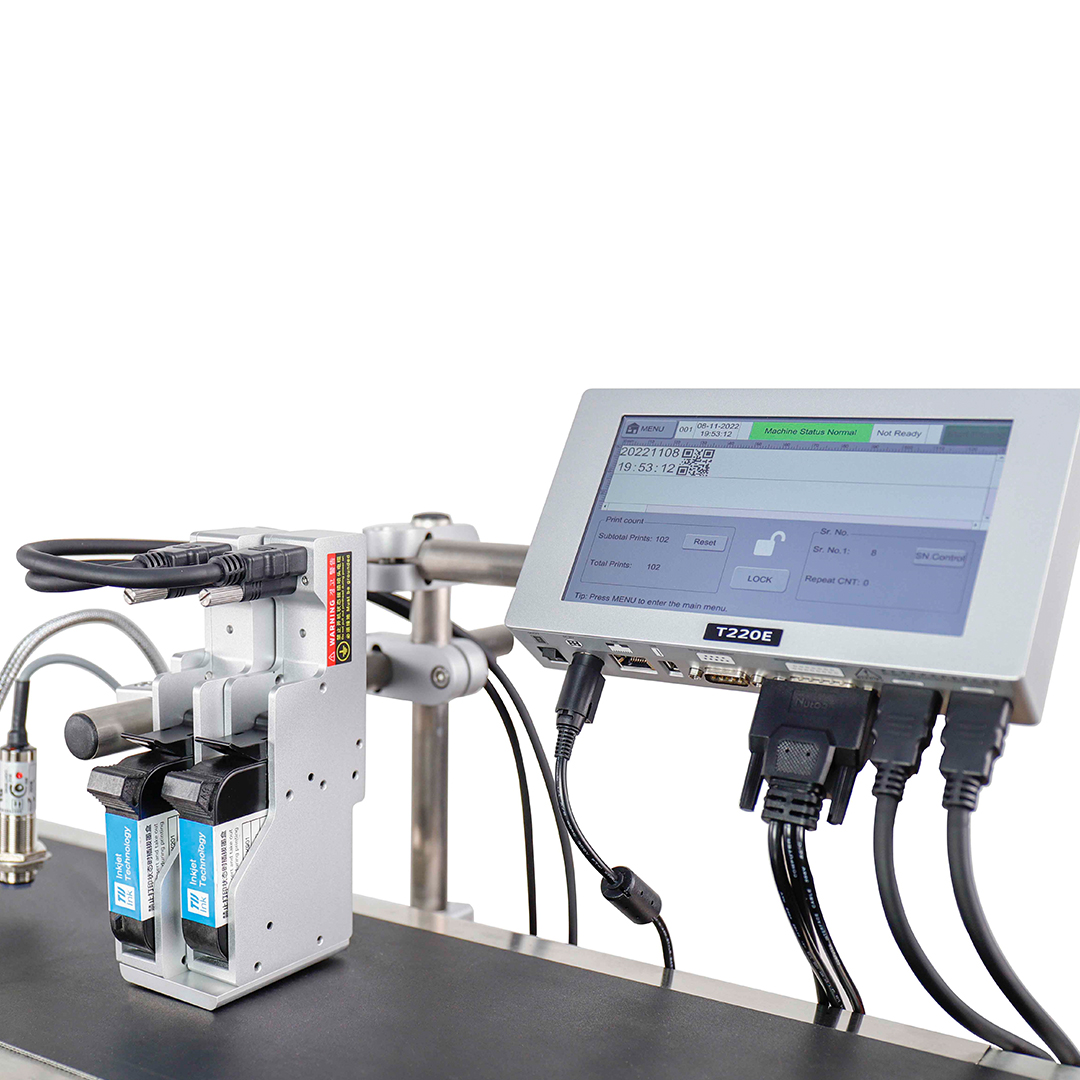
DOCOD T220E half-inch dual-head thermal inkjet printer on a production-line workstation
- DOCOD T220E: resolution up to 600×600 dpi; speed up to 406 m/min; 1 or 2 printheads; print height 1–12.7 mm per head (up to 25.4 mm dual); controller 197 × 113 × 37 mm; printhead 174 × 68 × 54 mm; USB, RS232, and TCP/IP interfaces.
- DOCOD TX1: 1 to 8 printheads; print height 1–101.6 mm; speed up to 406 m/min; compact controller 135 × 87 × 27 mm; separate printhead installation with splicing combinations.
- DOCOD T260E: resolution up to 300×300 dpi; speed up to 60 m/min; 1 or 2 printheads; 7-inch industrial touch screen.
- DOCOD 3BK702 cartridge: half-inch black solvent TIJ cartridge; 42 ml filling; up to 600 dpi (recommended 300 × 300); 300 nozzles; 12 kHz maximum frequency; best-use period 6 months; working temperature 15–35°C; for BOPP, PVC, PP, PET, OPP, glass, and stainless steel applications.
Technology family 3: Piezo high-resolution inkjet (PIJ) printers
Piezo high-resolution inkjet (PIJ) printers use piezo-electric printheads to produce high-resolution codes with water-based or quick-drying inks. The DOCOD P2000 Piezo Inkjet Printer is a single-head or dual-head PIJ system built around I1600 series nozzles, with aviation-grade aluminum construction and CE certification.
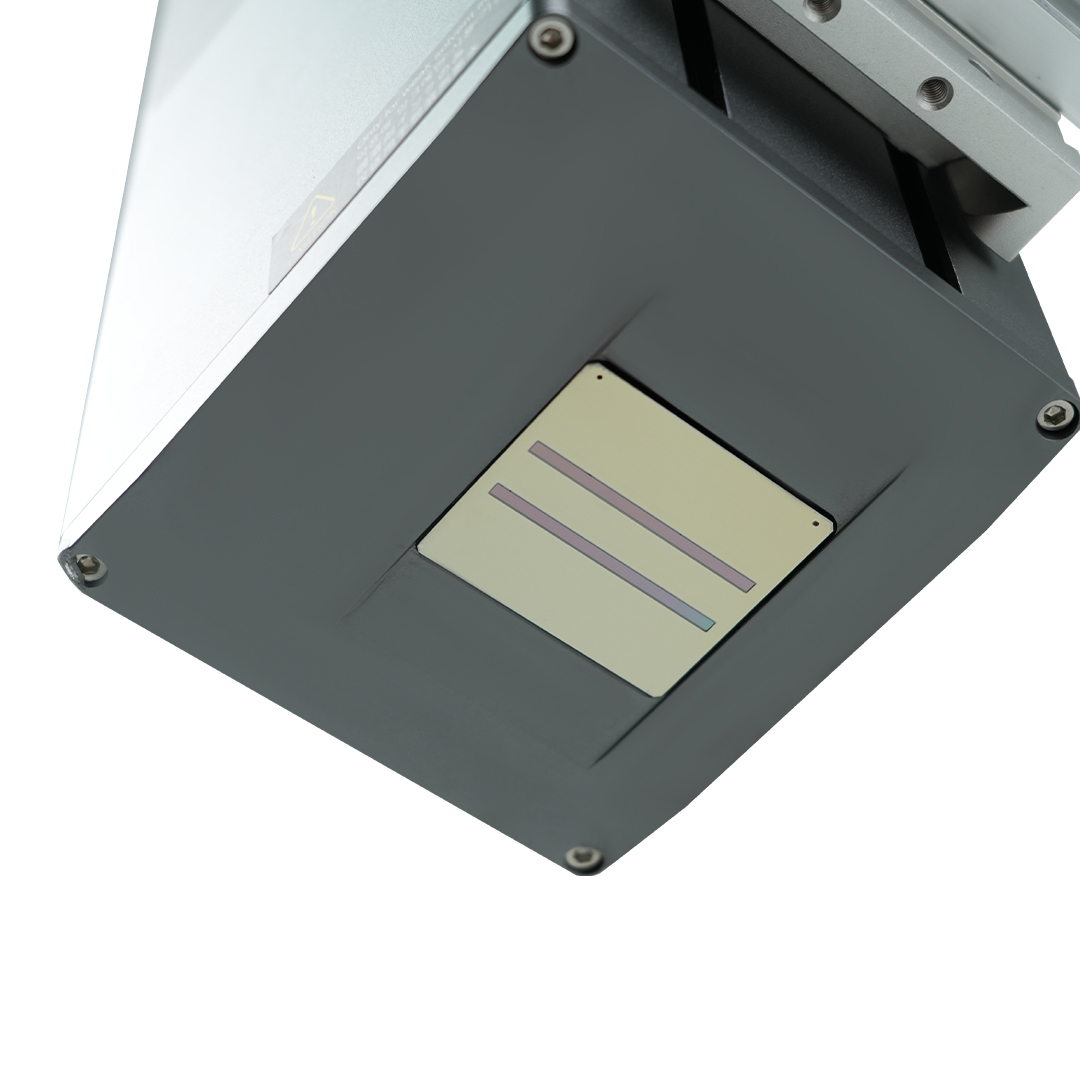
DOCOD P2000 high-resolution piezo inkjet printer
Verified parameters: printing accuracy 300 dpi at 190 m/min or 600 dpi at 95 m/min; maximum print height 33.8 mm per head; printing distance 0–5 mm with a recommended distance of 2–3 mm; negative-pressure continuous ink supply; forward and lateral printing directions; support for cascading multiple devices that share one set of encoder or photocell parameters; 10.1-inch full-color LCD capacitive touch screen; Embedded Linux OS; USB, RS232, and TCP/IP network interfaces; controller 192 × 285 × 66 mm, printhead 92 × 103 × 205 mm, ink supply system 165 × 126 × 212 mm; rated power below 150 W.
PIJ is commonly used for corrugated cartons, label paper, coated paper, wallpaper, plastics, and packaging gift boxes where text, barcode, QR code, and traceability content must be printed at high resolution.
Technology family 4: Thermal Transfer Overprinters (TTO)
The DOCOD R3000 Series Industrial Thermal Transfer Overprinter is an intermittent thermal transfer overprinter designed for flexible packaging scenarios such as bakery and dried fruit packaging. It prints at 300 dpi with a print area of 32 × 75 mm (model R3032) or 53 × 70 mm (model R3053).
Verified parameters: maximum print speed 200–350 mm/s, with a stated potential of up to 800 mm/s; ribbon widths 24, 33, 35, and 55 mm; ribbon lengths 400, 600, 800, and 1200 m; air supply 2–4 bar (29–58 psi); 10-inch full-color LCD touch control; aerospace-grade aluminum construction; coding machine weight 7.5 kg and controller 2.4 kg.
Print content includes language characters, GS1 Data Matrix, dynamic QR codes, barcodes, graphics, serial numbers, dates, shifts, counters, variable databases, and serial real-time dynamic data printing. The R3000 supports network remote centralized control and communication with weighing machines, conveyors, packaging machines, and ERP databases. Material types include high-barrier film, stick packaging, sealed bags, bagged products, metallized labels, and decorative labels.
Technology family 5: Laser marking machines
Laser marking machines use a focused laser beam to create permanent marks without ink, an advantage reflected in the projected 6.8% CAGR for laser marking through 2030 (Fortune Business Insights). DOCOD offers the Venus1 Series in fiber, CO2, and UV variants, plus the L3000 Series 5W water-cooled UV laser marking machine.
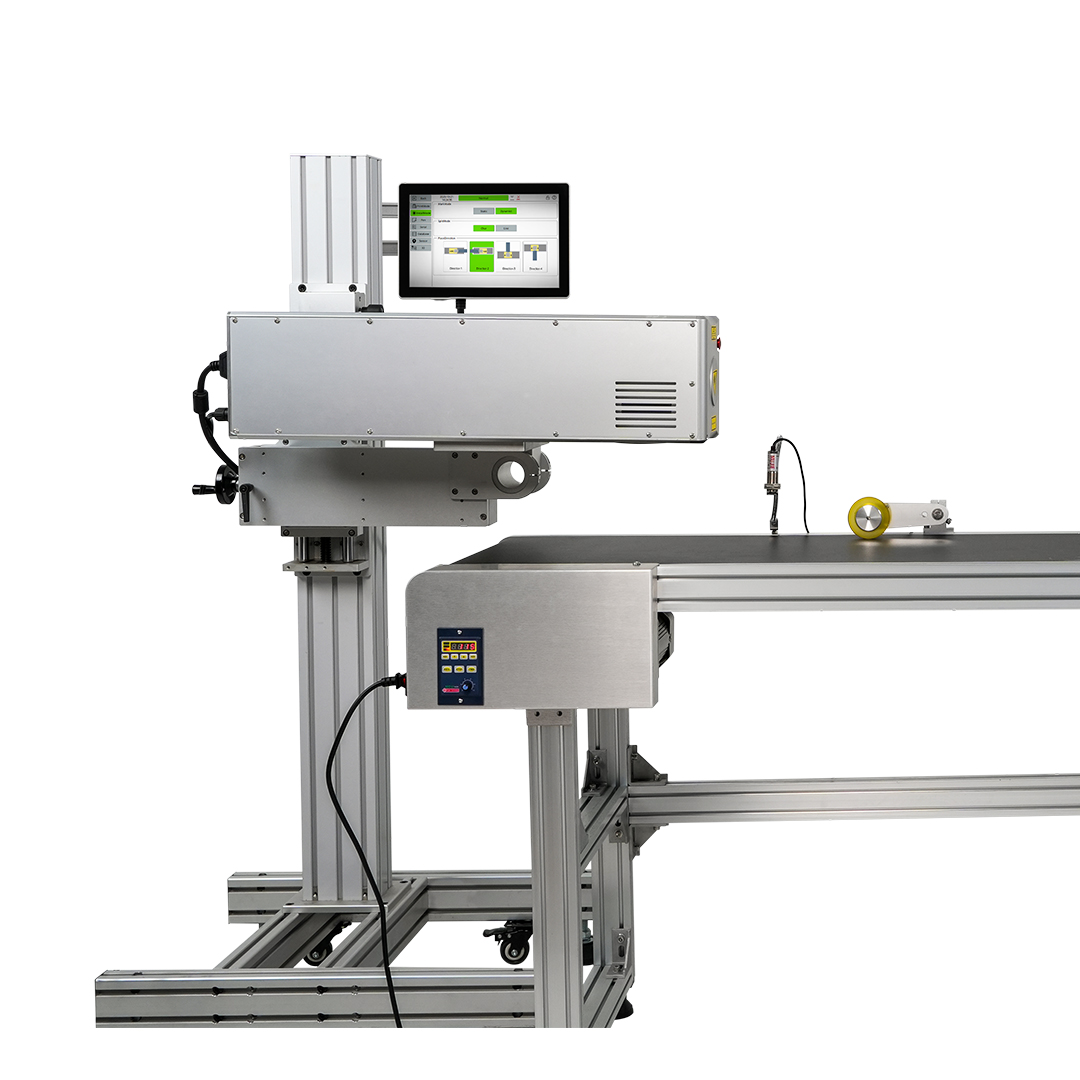
DOCOD Venus1 Series CO2 Laser Marking Machine
DOCOD Venus1 Series Fiber Laser Marking Machine: wavelength 1064 nm; power options 20W, 30W, 50W, or 100W; air-cooled; standard marking range 110 × 110 mm with optional 50–300 mm; laser life up to 100,000 hours; suited to metals and coated materials, medical devices, automotive parts, aerospace components, PCB boards, and stainless steel products.
DOCOD Venus1 Series CO2 Laser Marking Machine: wavelength 10.6 μm (optional 10.2 μm or 9.3 μm); power options 30W or 60W; air-cooled or water-cooled; protection level IP43 or IP54; laser life 20,000 hours; suited to non-metal materials including plastics, wood, leather, rubber, food packaging, acrylic, and cable marking.
DOCOD Venus1 Series UV Laser Marker: wavelength 355 nm; power options 5W, 10W, or 15W; air-cooled or water-cooled; IP43 or IP54; suited to plastics, polymers, glass, ceramics, PCB, medical devices, and food or pharmaceutical packaging. The L3000 Series adds a 5W water-cooled UV model with a standard 70 × 70 mm marking range (optional 70–300 mm), positioning accuracy 0.01 mm, minimum line width 0.02 mm, and a 355 nm wavelength. Example marking speed: a 5W UV laser prints “2024/06/18” on PP film at 20 mm character width and 2.8 mm height in 29 milliseconds.
Inline vision inspection and print-and-verify
DOCOD's portfolio also includes inline vision inspection systems for code verification. In medical packaging scenarios, DOCOD supports a closed-loop print-and-verify workflow: the system prints UDI and GS1 DataMatrix codes, lot numbers, expiry dates, and serial numbers, then verifies the code inline before rejection or release. Coding is integrated with cartoners, labeling machines, scanners, vision systems, reject units, PLC/MES, and database systems.
Use cases: coding equipment by production scenario
Documented DOCOD application scenarios show how equipment is matched to real working conditions:
- Vietnam — food and beverage: online date, expiry, batch, and QR/barcode printing on flexible pouches, cartons, PET bottles, and glass bottles; integrated with filling and packaging lines; reduces manual labeling errors and enables stock rotation.
- Germany — medical packaging: UDI and GS1 DataMatrix coding with lot numbers, expiry dates, and serial numbers on medical device packs, Tyvek paper, blister packs, and flexible films, using a closed-loop print-and-verify workflow.
- India — wire, cable, and pipe extrusion: meter marks, model information, brand names, batch numbers, certification marks, and traceability codes printed in online non-contact mode, synchronized with an encoder on high-speed extrusion lines with limited space.
- United Arab Emirates — building materials and chemicals: large-character marking of batch numbers, production dates, model info, QR codes, and logistics codes on cement bags and paint pails in dusty, hot, humid, and rough-surface environments; a common replacement-project scenario.
- Indonesia — cosmetics and personal care: batch numbers, production dates, expiry dates, QR codes, and anti-counterfeit codes on HDPE, PET, PP, and PE tube packaging without damaging brand appearance, integrated with filling and capping lines.
- Turkey — tobacco packaging: serialized coding with tax-control codes, DotCode/DataMatrix, and QR codes for anti-counterfeiting and regulatory tracking on high-speed pack and carton lines.
- Mexico — electronics manufacturing: serial numbers, QR/DataMatrix codes, batch numbers, and brand marks on PCBs, batteries, and housings, with minimal contamination and short takt times.
- Brazil — automotive parts: part numbers, batch codes, QR/DataMatrix, production dates, and supplier codes for assembly traceability, recall management, and service identification.
How to select equipment: a six-step process
- Define the substrate and environment. Flexible films point to TTO; cartons and labels point to TIJ or PIJ; glass, metal, cable, and pipe point to CIJ; permanent marks on metal or heat-sensitive plastics point to laser. Dusty or washdown lines require IP-rated enclosures (for example, IP55 on the S1000 and IP65 on the M2000, S300plus, and V2000).
- Define code content and readability requirements. Multi-line text and dates work on CIJ (1–4 lines on M2000; 1–5 lines on S300plus and V2000). GS1 DataMatrix, UDI, and QR codes require the higher resolution of TIJ, PIJ, TTO, or laser systems.
- Confirm the line speed. Match rated print speed to the fastest line scenario: CIJ up to 528–960 m/min by series; TIJ up to 406 m/min; PIJ at 190 m/min (300 dpi) or 95 m/min (600 dpi); laser speed depends on substrate and code size.
- Check certifications and consumables. Confirm CE, RoHS, and BIS certificates where required, and choose food-grade inks or cartridges for food-contact packaging.
- Plan integration. Verify encoder, photocell, and alarm interfaces, plus USB, RS232, or network connectivity to MES/ERP systems. Multilingual support (more than 40 languages on DOCOD systems) matters for multi-country production.
- Validate with a sample test. Code adhesion and readability are substrate-specific. Send representative packaging samples to the supplier before purchasing.
Technology comparison at a glance
| Technology | Print resolution | Representative speed | Typical material examples | Representative DOCOD model | Certifications / enclosure |
|---|---|---|---|---|---|
| CIJ | Dot-matrix fonts from 5×6 to 32×32 (S300plus); 1–4 or 1–5 lines | Up to 960 m/min (S1000, 50u); 528 m/min (M2000); 384 m/min (S300plus); 334 m/min (V2000) | Carton, plastic, metal, glass, cable, pipe, stone, auto parts | M2000 / S1000 / S300plus / V2000 | CE, RoHS (M2000, V2000); CE, RoHS, BIS (S1000, S300plus); IP55–IP65 |
| TIJ | Up to 600×600 dpi (T220E); up to 300×300 dpi (TX1, T260E) | Up to 406 m/min (T220E, TX1); up to 60 m/min (T260E) | Carton, plastic, metal, wire and cable, electronics, food and beverage packaging | T220E / TX1 / T260E | Not published in product specification |
| PIJ | 300 or 600 dpi | 190 m/min (300 dpi); 95 m/min (600 dpi) | Corrugated paper, label paper, coated paper, plastics, glass, cables | P2000 | CE |
| TTO | 300 dpi | 200–350 mm/s (up to 800 mm/s) | Flexible film, stick packs, sealed bags, metallized labels | R3000 (R3032 / R3053) | Not published in product specification |
| Fiber laser | High precision; standard 110 × 110 mm, optional 50–300 mm | Depends on substrate and content | Metals, coated parts, medical devices, aerospace, PCB, stainless steel | Venus1 Fiber (20–100W) | IP43 enclosure |
| CO2 laser | High precision; standard 110 × 110 mm, optional 70–300 mm | Depends on substrate and content | Wood, leather, plastics, rubber, packaging, glass, cable | Venus1 CO2 (30W / 60W) | IP43 / IP54 enclosure |
| UV laser | Positioning accuracy 0.01 mm; minimum line width 0.02 mm | Example: 29 ms for a date code on PP film (5W) | Plastics, polymers, glass, ceramics, PCB, pharmaceutical and food packaging | L3000 (5W) / Venus1 UV (5–15W) | IP43 (L3000); IP43 / IP54 (Venus1 UV) |
Supplier capability: DOCOD's manufacturing and R&D base
DOCOD Precision Group Co., Ltd. was founded in 2008 and has over 15 years of experience in industrial coding and marking. The company operates a 20,000-square-meter manufacturing facility, employs approximately 407 staff including more than 140 R&D professionals focused on product identification, and has an annual production capacity of 5,000 units. Export business accounts for 50% of total sales, with major markets in North America, South America, Eastern Europe, Southeast Asia, Africa, Oceania, the Middle East, Eastern Asia, and Western Europe.
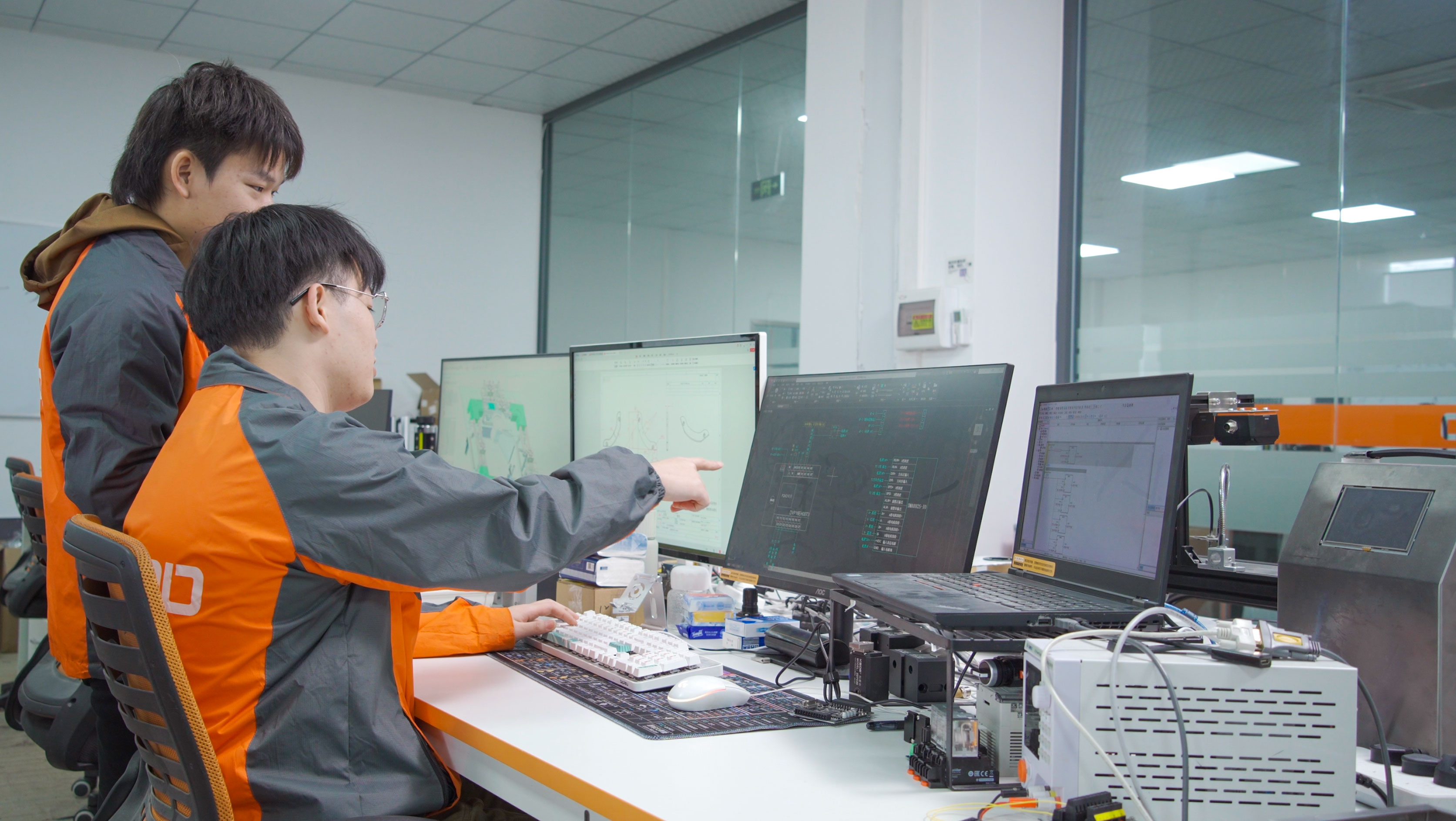
DOCOD application engineering and testing
Beyond equipment, DOCOD supplies coding consumables (inks, cartridges, ribbons), spare parts, and product traceability solutions—an important factor for buyers planning long-term supply continuity.
Frequently asked questions
What certifications should industrial coding and marking equipment have?
Certification levels depend on the target region and industry. In the DOCOD range, the DOCOD M2000 Series and DOCOD V2000 Series carry CE and RoHS certificates; the DOCOD S1000 Series and DOCOD S300plus Series carry CE, RoHS, and BIS certificates. These cover electrical safety and restricted-substance requirements for equipment entering many global markets. For code content, the GS1 Digital Link standard (ISO/IEC 18975:2024) is increasingly relevant because it replaces 1D barcodes with QR codes for point-of-sale scanning and traceability. Buyers should verify which certificates their region and application require.
What is the difference between CIJ, TIJ, PIJ, and laser marking?
CIJ (continuous inkjet) is a non-contact technology that holds the largest revenue share in the sector. The DOCOD M2000 prints up to 528 m/min in 1–4 lines, and the S1000 reaches 960 m/min with a 50u nozzle. TIJ (thermal inkjet) uses replaceable cartridges; the DOCOD T220E prints up to 600×600 dpi at up to 406 m/min. PIJ (piezo inkjet) uses piezo-driven printheads; the DOCOD P2000 prints at 300 dpi (190 m/min) or 600 dpi (95 m/min). Laser marking uses a focused beam with no ink; the DOCOD Venus1 Series covers fiber (1064 nm, 20–100W), CO2 (10.6 μm, 30–60W), and UV (355 nm, 5–15W). In summary: CIJ for high-speed small-character codes, TIJ/PIJ for higher-resolution 2D codes, laser for permanent marks without consumables, and TTO for flexible film packaging.
What content can industrial coding equipment print?
DOCOD systems print multi-language text, GS1 codes, dynamic traceability QR codes, barcodes, graphics, serial numbers, dates, shifts, counters, and variable databases. CIJ models also print logos, Julian dates, and dynamic barcode/QR data, and can connect to MES systems via USB, RS232, or network ports. Barcode and 2D support on the V2000 Series includes CODE128, Code 39, EAN13, UPCA, ITF-14, QRCode, DataMatrix, MicroQRCode, and PDF417 families.
How fast can industrial coding equipment print?
Verified examples from the DOCOD range: CIJ—S1000 up to 960 m/min (50u nozzle) or 720 m/min (60u), M2000 up to 528 m/min, S300plus up to 384 m/min, V2000 up to 334 m/min. TIJ—T220E and TX1 up to 406 m/min, T260E up to 60 m/min. PIJ—P2000 at 190 m/min (300 dpi) or 95 m/min (600 dpi). TTO—R3000 at 200–350 mm/s with a stated potential of up to 800 mm/s. Laser speed depends on material and code size; a 5W UV laser (L3000 Series) prints a date code on PP film in 29 milliseconds.
What materials can be coded?
CIJ: carton, plastic, cable, metal, boarding, pipe, stone, glass, electronic components, auto parts, and chemical or medical/food packaging. TIJ: the same categories plus wire and cable, with food-grade, water-based, oil-based, weak solvent, and solvent inks. PIJ: corrugated paper, coated paper, label paper, wallpaper, plastics, and packaging gift boxes. TTO: high-barrier film, stick packs, sealed bags, metallized labels, and decorative labels. Lasers: fiber for metals and coated parts; CO2 for non-metals such as wood, leather, rubber, and plastics; UV for heat-sensitive plastics, glass, ceramics, and pharmaceutical or food packaging.
How much does industrial coding equipment cost?
Pricing depends on technology, resolution, print width, line speed, enclosure protection, integration accessories, and consumables. CIJ carries ongoing ink and solvent consumption; TIJ uses replaceable cartridges (for example, the DOCOD 3BK702 with 42 ml of solvent ink); laser has no ink consumables but a higher upfront investment. DOCOD does not publish list prices; the company provides quotations based on substrate, code content, line speed, and environment. Contact sales@docod.com.cn with your application details for pricing.
Can I get a sample print or run a product test?
Yes. DOCOD's sales and engineering team supports application evaluation with sample material. Because ink adhesion and code readability are substrate-specific, testing on your actual packaging is the recommended first step. Send your material details and line speed to Sam at sales@docod.com.cn (+86 139-2896-7650, WhatsApp +86 135-1234-4323), or download the DOCOD corporate brochure for a full product overview. The team can recommend a starting model such as the DOCOD M2000 CIJ, T220E TIJ, P2000 PIJ, or a Venus1 laser series for the test.
What is DOCOD's production capacity and typical lead time?
DOCOD Precision Group Co., Ltd. operates a 20,000-square-meter facility with an annual production capacity of 5,000 units and employs approximately 407 staff, including more than 140 R&D professionals. Export business accounts for 50% of total sales. Lead times vary by model, configuration, and order size; the sales team confirms delivery schedules at quotation time. For standard configurations, requesting an early production slot at the quotation stage is recommended.
Next steps: sample, quote, and specification support
Buying industrial coding and marking equipment begins with a substrate test. DOCOD's sales and engineering team can review your packaging material, line speed, code content, and production environment, and recommend a model from the CIJ, TIJ, PIJ, TTO, or laser families.
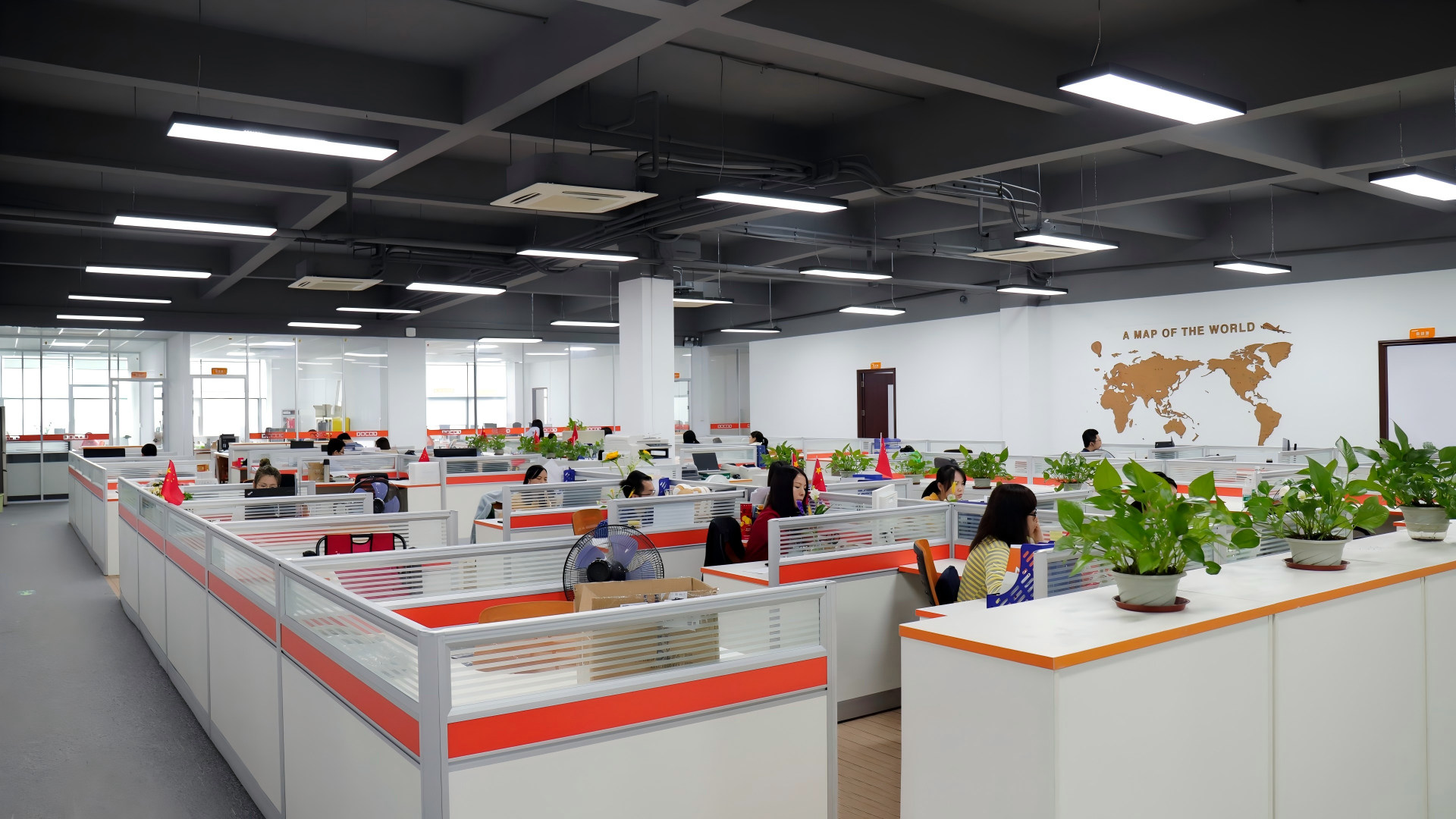
DOCOD global sales and service office
DOCOD Precision Group Co., Ltd.
Contact: Sam
Email: sales@docod.com.cn
Tel: +86 139-2896-7650
WhatsApp: +86 135-1234-4323
Website: www.docod-group.com