
Industrial Coding and Marking Equipment: The Ecosystem That Keeps Lines Running
Industrial Coding and Marking Equipment: The Ecosystem That Keeps Lines Running
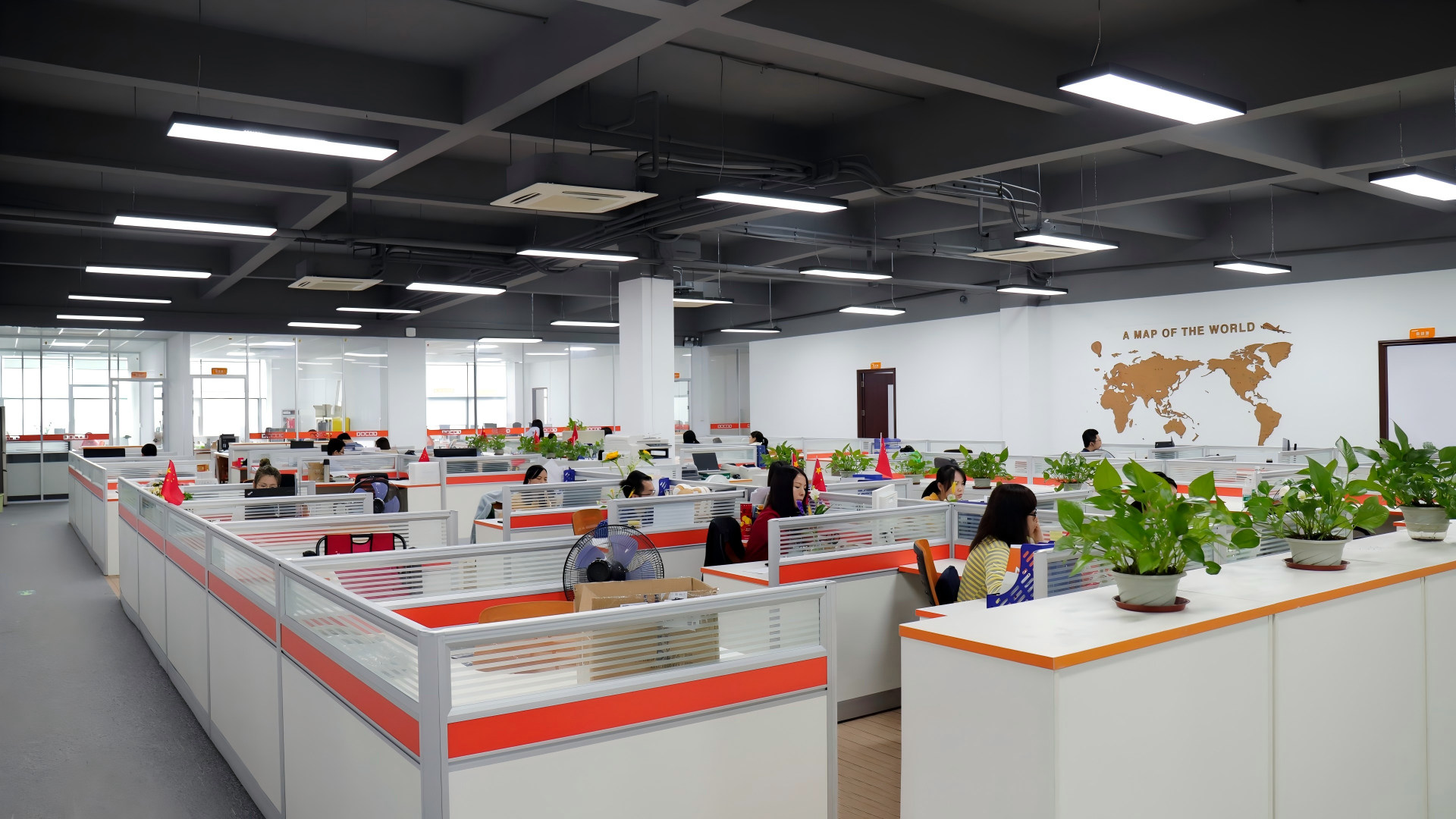
DOCOD global sales and service office: a support network for long-term coding operations
Industrial coding and marking equipment is not bought as a one-time transaction. A printer, laser, or overprinter is installed on a line that is expected to run for years, producing date codes, batch numbers, GS1 codes, and traceability data under real production conditions. For distributors and end users, long-term value comes from the ecosystem behind the machine: production capacity, spare parts planning, certification checks, application support, and after-sales response.
This article explains what a dependable supply ecosystem should include, and how DOCOD Precision Group Co., Ltd. structures its industrial coding, marking, and inspection equipment business to support long-term operation.
What Actually Goes Wrong After Coding Equipment Is Installed
Most coding line failures do not begin at the printhead. They begin before the order is placed. The risks that affect long-term supply are usually visible in the supplier's operating system, not in the equipment brochure.
- Material compatibility risk: the selected ink or marking method may not match carton, film, plastic, metal, or glass surfaces. Substrate testing before production is the control.
- Print quality risk: without sample validation, text, logos, and code density may fail at line speed.
- Compliance mismatch risk: the machine may not meet destination-market certification requirements if not confirmed by model and market before release.
- Spare parts continuity risk: after installation, the line depends on replacement parts and consumables being available for repeat operation.
- After-sales response risk: remote support, installation guidance, and troubleshooting determine how fast a stoppage is resolved.
- Delivery and transport risk: unclear milestones or weak export packing can delay commissioning or cause damage in transit.
- Missed coding and content mismatch risk: on critical lines, uncoded products or wrong data can be difficult to detect without online inspection and print-file control.
The Market Context for Industrial Coding and Marking Equipment
Global demand for coding and marking equipment continues to expand. According to SkyQuest, the global coding and marking equipment market was valued at USD 17.53 billion in 2024 and is projected to reach USD 27.11 billion by 2032. Grand View Research estimates that continuous inkjet (CIJ) technology held the largest revenue share in 2024, approximately USD 5.67 billion. Market Research Future places Asia-Pacific's share at around 35% in 2024, making the region the largest coding and marking market.
At the same time, standards are changing. The GS1 Digital Link standard is being globally adopted to replace 1D barcodes with QR codes for point-of-sale and traceability by 2027. Laser marking technology is projected to grow at a CAGR of 6.8% through 2030, partly because laser systems avoid consumables. Established industry names include Videojet Technologies, Domino Printing Sciences, Markem-Imaje, and Hitachi Industrial Equipment Systems. China's export value for industrial machine tools, including high-value marking equipment, rose by 15.7% year-on-year in early 2026 according to VDW and Honor Machinery.
In this environment, a long-term supplier needs to support multiple technologies and changing data requirements rather than a single printhead.
The Supply Ecosystem That Keeps a Coding Line Running
An equipment supplier that treats distribution as a long-term relationship builds operations around five layers: production capacity, lead-time predictability, quality control, after-sales support, and channel enablement. DOCOD Precision Group Co., Ltd. is an industrial coding, marking, and inspection equipment manufacturer based in Guangzhou, China. Founded in 2008, DOCOD focuses on design, research and development, production, sales, and service of industrial product identification equipment, components, and related solutions.
Its portfolio includes continuous inkjet printers, thermal inkjet printers, handheld coding equipment, piezoelectric high-resolution inkjet printers, drop-on-demand large-character inkjet printers, thermal transfer overprinters, laser marking machines, inline vision inspection systems, consumables, spare parts, and product traceability solutions.
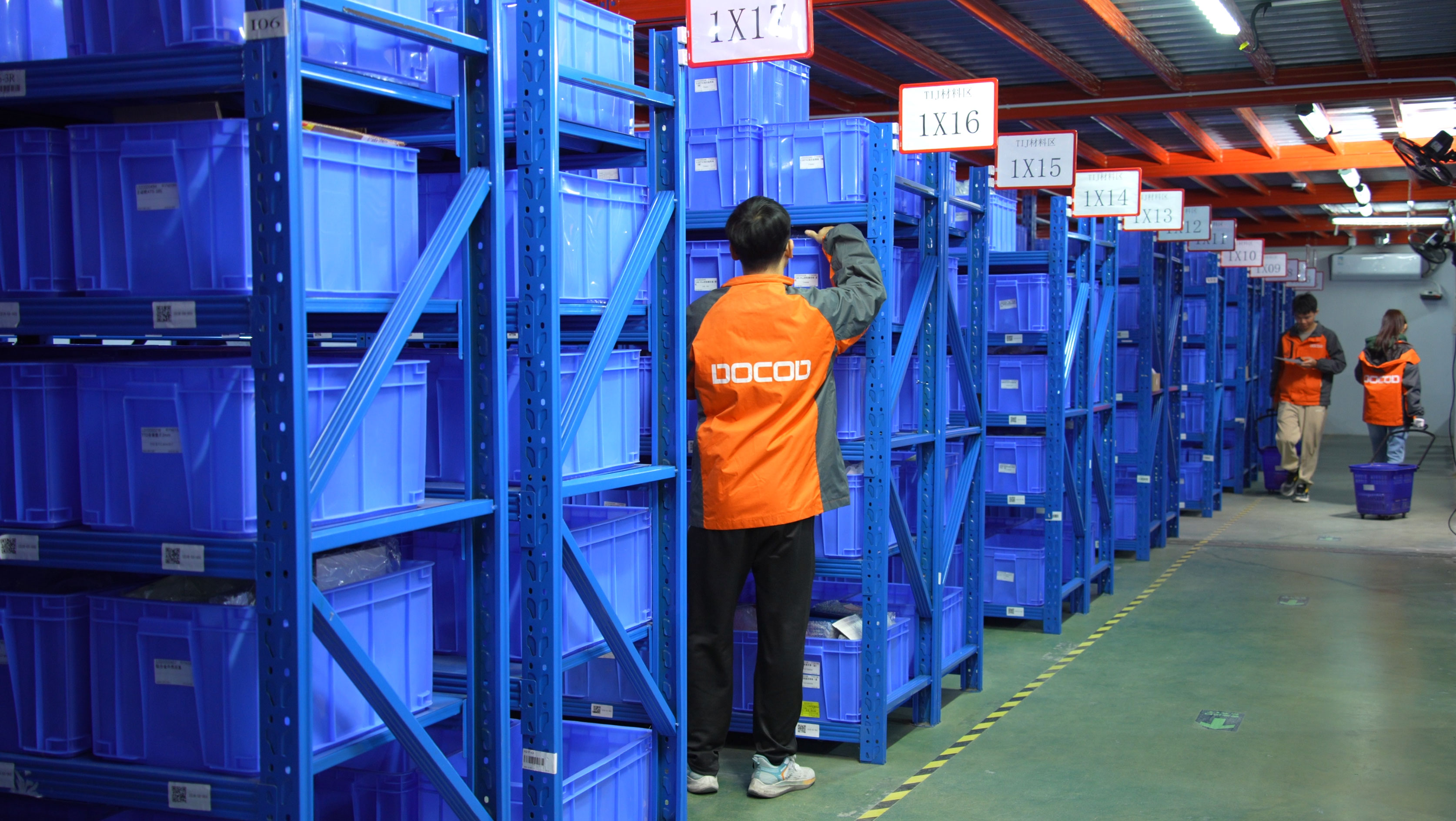
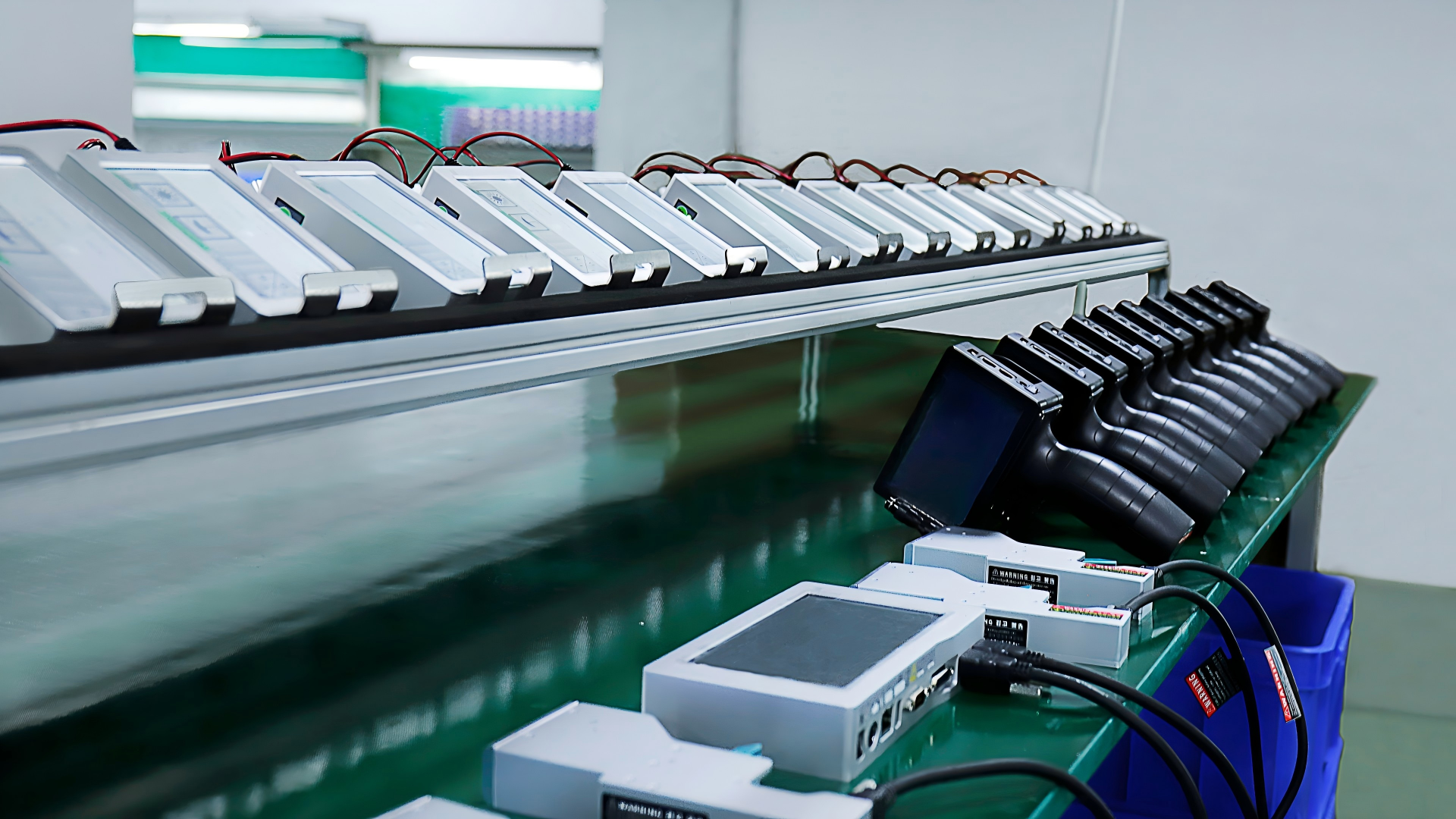
Finished industrial coding equipment prepared for distributor orders
Manufacturing Capacity and Scale
DOCOD's monthly production capacity is approximately 2,000 units for standard equipment, 1,000 units for spare-parts orders, and up to 4,000 units for distributor-supported products. The factory covers 20,000 m² and has 407 employees, including more than 140 R&D staff. Current annual output is approximately 5,000 units. For a distributor, this capacity matters because it changes the answer to a simple question: can the supplier scale when your order size grows?
Lead-Time Predictability
Standard equipment can be delivered within 15 working days. Customized solutions typically require 15 to 30 working days depending on product complexity and configuration. The production process is structured around order confirmation, assembly, testing, and shipment milestones, which reduces delivery-delay risk.
Quality Control and Export Preparation
Quality control includes part verification, packing inspection, and shipment check. For export orders, DOCOD uses carton or protective export packing and sends shipment photos before dispatch. Acceptance normally includes technical drawing confirmation, sample approval, and a pre-shipment function test. The purpose is to catch material compatibility, print quality, and transport-damage risks before the equipment leaves the factory.
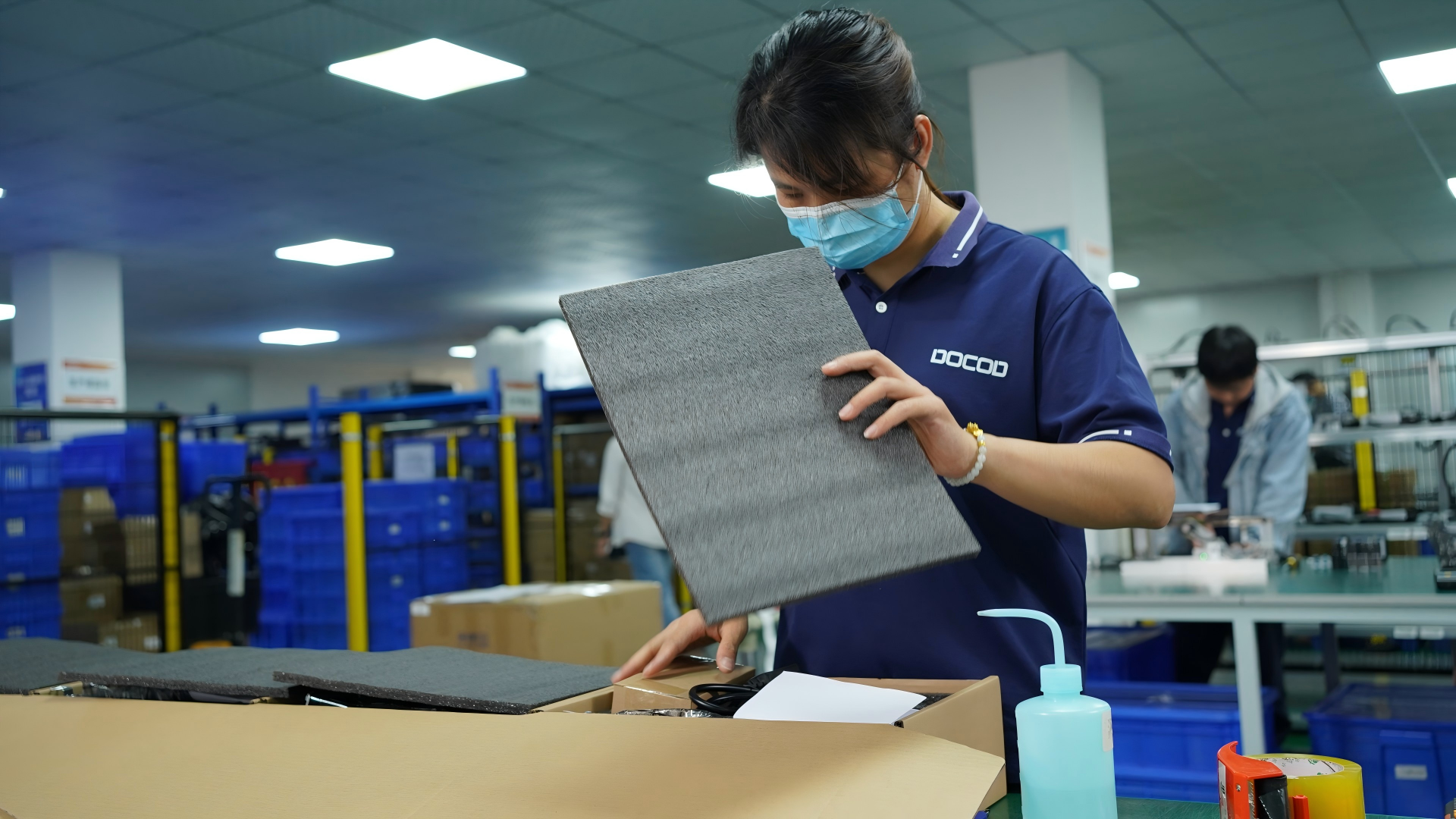
Reinforced export packing and shipment inspection before dispatch
After-Sales and Spare Parts Continuity
After delivery, DOCOD provides installation guidance, remote tuning, and fault diagnosis support. After-sales services also include parts matching support, replacement guidance, and online response. A recommended spare parts and consumables list is provided for repeat operation. This layer is what prevents a small issue from becoming a long downtime event on a packaging line.
Distributor and Service Partner Support
DOCOD exports to North America, South America, Europe, Southeast Asia, the Middle East, Africa, Oceania, East Asia, and Latin America. The manufacturer provides distributor and service partner support. Payment terms typically follow T/T 30/70 or LC, and delivery methods include FOB, CIF, CFR, and EXW. The minimum order quantity is one set per project. For distributors, the relevant point is not just product availability but the ability to run a local service business with factory-level backup.
How to Onboard a Long-Term Coding Equipment Supplier
Use this workflow to connect your production requirements to a supplier's supply ecosystem.
- Define the coding task: substrate, line speed, code content, environmental conditions, and inspection requirements.
- Validate the sample: require pre-production sample printing and substrate testing before mass shipment.
- Confirm compliance by model and destination market: check certificates such as CE, RoHS, or BIS according to the exact machine model and target country.
- Check production capacity and scheduling: ask for standard lead time, customization lead time, and how order milestones are managed.
- Plan spare parts and consumables: confirm the supplier can provide a recommended parts list for repeat operation.
- Agree on acceptance criteria: technical drawing confirmation, sample approval, and pre-shipment inspection.
- Set after-sales support: installation guidance, remote tuning, fault diagnosis, and the response process.
- Design for future expansion: confirm the supplier can add coding heads, laser routes, vision inspection, or traceability software as production scales.
Where the Ecosystem Matters Most
Different production environments place different demands on a supplier. Five examples show why the ecosystem must be evaluated together with the hardware.
High-Speed Cable, Pipe, and Building Materials Lines
These lines run continuously and require a coding head that can keep pace without frequent manual attention. The DOCOD S1000 Series High Speed Continuous Inkjet Printer is built for faster continuous lines, with IP55 protection and automatic nozzle cleaning. The V2000 Series Continuous Inkjet Printer is a general-purpose small-character CIJ route for varied packaging and component coding.
Carton, GS1, and Variable Data Printing
For cartons and labels, readable QR codes and GS1 codes depend on resolution and print height. The T220E Half-Inch Dual-Head Inkjet Printer supports up to 600 x 600 DPI and print speeds up to 406 m/min. When code areas are larger, the P2000 Piezo Inkjet Printer provides a maximum single-head print height of 33.8 mm and runs at up to 190 m/min at 300 dpi using a negative-pressure continuous ink supply.
Flexible Packaging and Thermal Transfer Overprinting
On flexible film lines, the DOCOD R3000 Series Industrial Thermal Transfer Overprinter works in intermittent mode and supports GS1 DataMatrix, dynamic QR codes, serial numbers, and variable database printing. Ribbon lengths of 400, 600, 800, or 1200 m allow different production planning cycles.
Permanent Laser Marking for Metal and Non-Metal Parts
Laser routes remove ink, solvent, and ribbon handling. The DOCOD Venus1 Series Fiber Laser Marking Machine operates at 1064 nm and suits metals and robust plastic parts. The DOCOD Venus1 Series CO2 Laser Marking Machine operates at 10.6 μm for paperboard, labels, PET, glass, and other non-metal materials. The DOCOD L3000 Series 5W UV Laser Marking Machine uses a 355 nm wavelength for sensitive plastics, glass, PVC, and flexible films.
Print and Verify Coding Systems
For regulated or high-cost lines, missed codes are a major risk. DOCOD's ecosystem includes inline vision inspection systems, with optional OCR/barcode inspection, alarm light, or rejection linkage for critical lines. This converts a coding device into a closed-loop print-and-verify system.
Comparison Table: Coding Technology Options in a Long-Term Context
The table below summarizes representative DOCOD models. It is not a ranking; it is a starting point for selecting equipment and planning support.
| Technology | Representative model | Key capability | Typical substrate fit | Long-run operation note |
|---|---|---|---|---|
| High-speed CIJ | S1000 Series Continuous Inkjet Printer | Continuous high-speed small-character coding; IP55; automatic nozzle cleaning | Cable, pipe, building materials, continuous packaging | Uses CIJ consumables; strong on very high-speed continuous lines |
| General CIJ | V2000 Series Continuous Inkjet Printer | Small-character coding; 1-5 lines; IP65; MES communication | Bottles, cables, varied product surfaces | Flexible multi-surface coding; routine ink-route management |
| TIJ | T220E Half-Inch Dual-Head Inkjet Printer | High-resolution cartridge-based coding; up to 600 x 600 DPI; 406 m/min; dual-head width up to 25.4 mm | Cartons, labels, QR/barcodes, GS1 data | Cartridge/CISS workflow; good for short-to-medium-run high-resolution jobs |
| PIJ | P2000 Piezo Inkjet Printer | High-resolution wide-format coding; 300/600 dpi; 33.8 mm print height; 190 m/min at 300 dpi | Coated cartons, large variable data, traceability codes | Negative-pressure continuous ink supply; supports cascading |
| TTO | R3000 Series Industrial Thermal Transfer Overprinter | Intermittent flexible-film coding; 300 dpi; ribbon lengths up to 1200 m; up to 800 mm/s | Flexible films, pouches, sachets, labels | Ribbon-based; supports GS1 DataMatrix and variable database |
| CO2 laser | Venus1 Series CO2 Laser Marking Machine | 30W/60W; 10.6 μm; no-ink marking | Paperboard, labels, PET, glass, non-metal packaging | No consumables; 20,000-hour laser life |
| Fiber laser | Venus1 Series Fiber Laser Marking Machine | 20W/30W/50W/100W; 1064 nm | Metals, robust plastic parts, coated surfaces | No consumables; up to 100,000-hour laser life |
| UV laser | L3000 Series 5W UV Laser / Venus1 Series UV Laser Marker | 355 nm; low-heat precision marking | Sensitive plastics, glass, PVC, flexible films | No ink; protects delicate substrates |
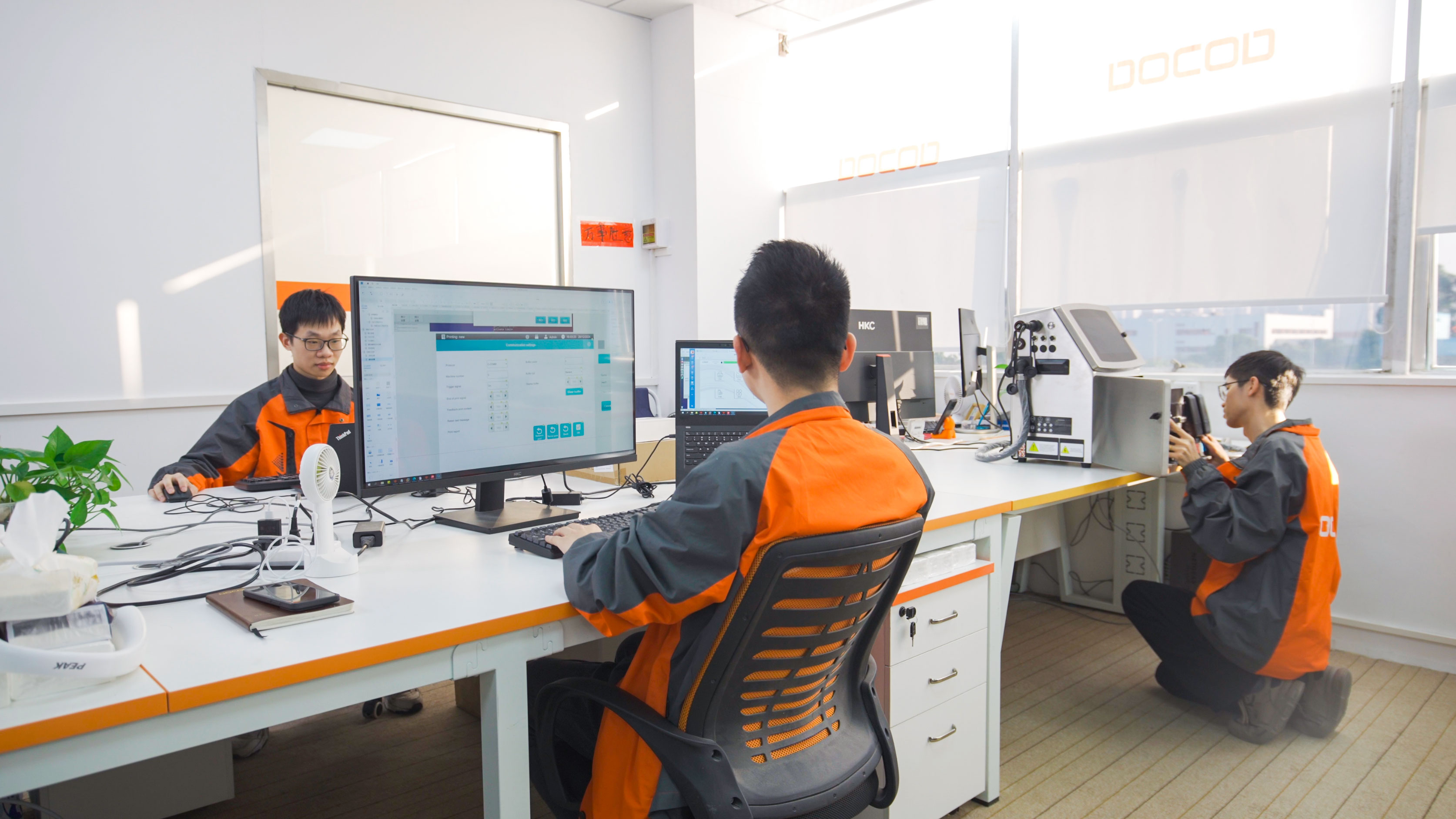
R&D and application engineering support in the DOCOD ecosystem
Frequently Asked Questions
Which certification checks should be made before buying industrial coding and marking equipment?
Certification must be confirmed by model and destination market before order release. Different machine configurations and export destinations may have different compliance requirements. In DOCOD's product line, representative CIJ and TIJ models carry CE and RoHS; some CIJ models also carry BIS. Confirm the exact certificate for the machine model you plan to order.
What production capabilities should a long-term coding equipment supplier have?
Capacity and R&D depth are key indicators. DOCOD has a 20,000 m² factory, 407 employees, and more than 140 R&D staff. Monthly production capacity is about 2,000 standard units, 1,000 spare-parts units, and up to 4,000 distributor-support units. This allows the manufacturer to manage both new equipment orders and ongoing after-sales demand.
How do MOQ and payment terms work for industrial coding equipment?
MOQ is one set per project for standard equipment orders. Payment commonly follows T/T 30/70 or LC, and delivery can be arranged under FOB, CIF, CFR, or EXW, depending on the order. Spare parts and consumables can follow a separate repeat-order route.
Can samples be validated before a full order?
Yes. Pre-production sample printing and substrate testing are part of DOCOD's acceptance process. The buyer approves a technical drawing and sample before mass shipment, which reduces print-quality and material-compatibility risk.
What is the typical lead time for industrial coding and marking equipment?
Standard equipment can ship within 15 working days. Customized solutions typically take 15 to 30 working days depending on configuration and complexity. Production follows order confirmation, assembly, testing, and shipment milestones. For a current lead-time estimate on your specific model and destination, contact sales@docod.com.cn or WhatsApp +86 135-1234-4323.
Conclusion
An industrial coding and marking machine is only as reliable as the system that supplies it. The best technology choice still depends on spare parts, support, lead times, and the ability to scale. Buyers who evaluate those layers before purchase are more likely to keep their lines running.
DOCOD Precision Group Co., Ltd. manufactures industrial coding, marking, and inspection equipment for global distributors and production lines. To review the full product range and service capabilities, download the DOCOD corporate brochure. For order or distributor inquiries, visit www.docod-group.com or contact sales@docod.com.cn.
Download the DOCOD corporate brochure for a complete view of industrial coding and marking equipment, service capabilities, and channel support.