
Laser & Inkjet Coding: 10 FAQs on Heads, Applications & Support
Laser & Inkjet Coding: 10 FAQs on Heads, Applications & Support
Ten questions decide most industrial coding purchases. They are rarely about brand preference. They are about whether a laser or inkjet system will hold a readable code on your substrate at your line speed, whether the printhead configuration covers the panel you actually print, and whether the supplier is still answering technical questions in year three.
This page answers those ten questions using published specification facts from DOCOD Precision Group Co., Ltd., an industrial coding, marking and inspection equipment manufacturer founded in 2008 and based in Guangzhou, China. DOCOD designs and manufactures continuous inkjet printers (CIJ), thermal inkjet printers (TIJ), piezoelectric high-resolution inkjet printers (PIJ), drop-on-demand large-character printers (DOD), thermal transfer overprinters (TTO), laser marking machines, inline vision inspection systems, consumables and traceability solutions. Each answer below is written so a procurement team can lift it straight into a technical comparison sheet.
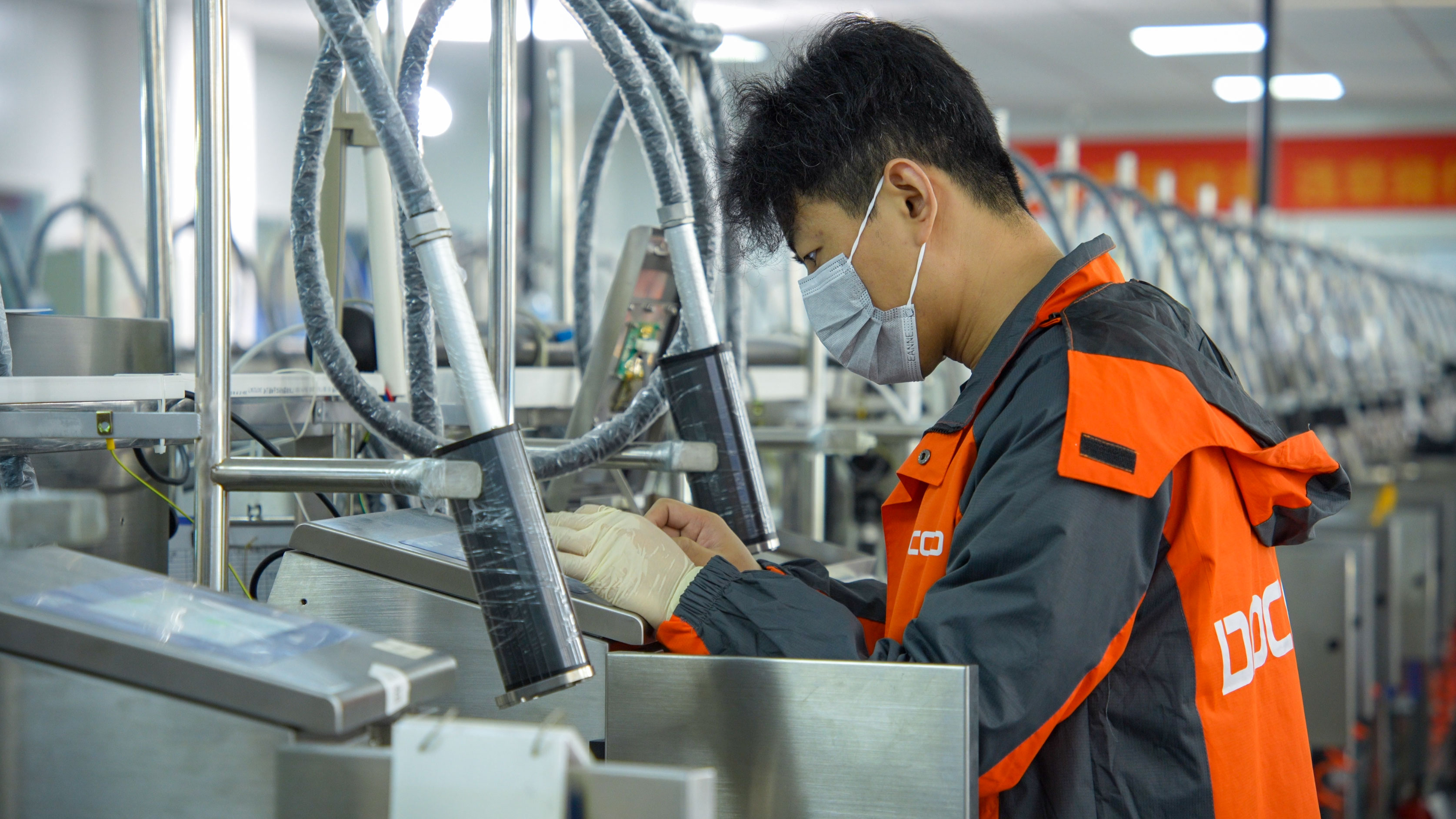
Coding systems under inspection-room testing — the stage where print quality, printhead behaviour and code readability are confirmed before a line acceptance decision.
Why the same ten questions keep coming back
Industrial coding sits at the junction of three different buying problems, and most quotations only answer one of them.
- Substrate and tolerance. A code that reads perfectly on a white carton can fail on a PP film, a PVC pipe or a coated cosmetic cap. Buyers need to know which technology family is matched to which material, and what happens at the edge of that match.
- Head configuration risk. Two quotes for the “same” printer can differ by a second printhead, a different nozzle diameter, a serially spliced head array or a different marking field. Without head-level detail, the numbers are not comparable.
- Continuity after acceptance. Coding equipment runs across multiple production shifts. Operating envelope, cabinet construction and post-sale response decide whether the unit is still productive two years later.
Consequently, this article is organised the way a procurement file is organised: applications first, printheads second, integration and post-sale support last.
The 2026 context behind these questions
Two external factors give the questions commercial weight. First, the category is growing and being re-specified. Fortune Business Insights puts the global coding and marking equipment market at USD 7.51 billion in 2025, and projects growth from USD 7.88 billion in 2026 to USD 12.62 billion by 2034. Other research houses publish different figures for overlapping scopes, so buyers should treat these numbers as direction, not as a sizing instrument for a single purchase decision.
Second, the coding content itself is changing. GS1 defines the Sunrise 2027 transition, with a deadline of 31 December 2027 for retail migration from 1D barcodes to 2D codes under the GS1 Digital Link standard. A printer bought in 2026 that cannot produce 2D codes will be re-specified well before its mechanical life ends. Fortune Business Insights also reports inkjet technologies (CIJ, TIJ and PIJ) at roughly 40.1% of the technology segment, which explains why inkjet questions dominate most buyer lists.
Traceability and quality control remain the stated purpose of the category: coding and marking exist to make a product identifiable through its supply chain. The ten questions below all serve that purpose.
Part 1 — Applications: what the equipment can and cannot mark
1. Which substrates can laser and inkjet systems handle on the same production line?
Short answer: inkjet families cover the widest substrate list, while laser families are selected by material class — fibre for metals, CO2 for non-metals, UV for heat-sensitive plastics and packaging.
Inkjet coverage is broad and largely shared across the DOCOD CIJ, TIJ and PIJ ranges: cartons, plastics, metals, plates, pipes, stone, glass, cables, electronic components, auto parts, industrial chemical packaging, and medical, food and gift packaging. This makes inkjet the default choice when one line runs several packaging formats per shift.
Laser coverage is segmented instead. The DOCOD Venus1 Series CO2 Laser Marking Machine addresses non-metal processing — plastics, packaging and printing, rubber, wood, acrylic, leather textiles, kraft board, glass and cable marking. The DOCOD Venus1 Series Fiber Laser Marking Machine addresses metals and coatings, medical devices, automotive and aerospace components, bearings, PCB boards, metal caps and stainless steel products. The UV range addresses plastics, polymers, glass, ceramics, printed circuit boards, medical devices, PET bags and cosmetics packaging — applications where low heat input and minimal damage matter.
2. When should a buyer choose laser marking instead of inkjet?
Short answer: choose laser when the mark must be permanent and substrate-tolerant without ink, ribbon or solvent; keep inkjet where speed, colour or porous packaging dominates.
Laser marking is a non-contact, consumable-free process: the mark is generated by the beam rather than deposited as ink or transferred from ribbon. That removes ink compatibility from the decision entirely — relevant on glass, coated film and engineering plastics where ink adhesion is the recurring failure mode. UV laser marking is the specific answer for heat-sensitive products, because the process is designed for low-heat, damage-minimised marking on medical devices, PCB and thin packaging.
Inkjet remains the stronger option where throughput is extreme or where porous substrates absorb ink quickly. The DOCOD S1000 Series High Speed Continuous Inkjet Printer reaches 720 m/min with a 60µ nozzle and up to 960 m/min with a 50µ nozzle at 0.5 mm pitch — speeds no laser marking head in this portfolio is specified against. Where colour coding or invisible ink is required for internal sorting, inkjet is the only option among these families.
3. Can one system produce variable data, GS1 codes and traceability codes?
Short answer: yes across the DOCOD range — variable databases, serial numbers, dynamic barcodes and 2D codes are supported from CIJ up to laser, which matters for the Sunrise 2027 deadline.
Concrete coverage by family: TIJ units such as the T220E and TX1 print multi-language text, GS1 codes, dynamic traceability QR codes, barcodes, graphics, serial numbers, dates, shifts, counters and variable databases. CIJ units such as the M2000 and V2000 print dynamic barcode and QR content from a database, including CODE128, EAN13, ITF-14 and DataMatrix/QR symbologies. The R3000 thermal transfer overprinter prints GS1 DataMatrix and dynamic QR codes on flexible film. Laser markers support CODE39, CODE128, GS1-128, QRCODE and DATAMATRIX directly.
For procurement, the practical test is not “can it print a QR code” — almost everything can. The test is whether the controller can pull a unique code per item from a live database and keep it synchronised with the line encoder. That is a workflow question, covered in question 8.
4. What line speed can realistically be expected at the required code quality?
Short answer: published maximum speeds range from 60 m/min on a 300 DPI half-inch TIJ unit to 960 m/min on a high-speed CIJ unit; quality and speed trade against each other, and the quoted maximum is always the easiest code, not yours.
Reference points from published specifications: CIJ — S1000 up to 960 m/min (50µ nozzle), M2000 up to 528 m/min, S300plus up to 384 m/min, V2000 up to 334 m/min. TIJ — T220E and TX1 up to 406 m/min, T260E up to 60 m/min at up to 300 × 300 DPI. PIJ — P2000 at 190 m/min in 300 DPI or 95 m/min in 600 DPI. Laser — speed depends on material, content size and complexity rather than a single figure; as a reference, the L3000 5W UV prints “2024/06/18” on PP film at 20 mm character width and 2.8 mm height in 29 milliseconds.
Buyers should therefore request a sample at their own speed, code content and substrate, not a datasheet maximum.
Part 2 — Printheads: configuration, geometry and durability
5. Single head or dual head — how do I know which configuration fits?
Short answer: a single head covers up to 12.7 mm of print height on half-inch TIJ; a second head doubles that to 25.4 mm, and beyond that you need serial splicing, not a bigger head.
On the T260E and T220E, the printhead count is 1 or 2, giving 1–12.7 mm with one head and 1–25.4 mm with two. The two heads can be spliced or used separately, which is the detail that decides layout: spliced heads build a taller continuous field, separate heads print two positions on the same product with one controller. The TX1 extends this logic to 1–8 heads and 1–101.6 mm of print height in various splicing combinations. The P2000 piezo unit is specified as single-head or dual-head with a maximum of 33.8 mm per head, and supports cascading several devices that share one encoder or photocell parameter set.
Decide the configuration from the print layout drawing, not from price: measured print height, code position tolerance and whether one or two print stations sit on the same machine frame.
6. What print height, resolution and marking field should I specify?
Short answer: inkjet heights run from 2 mm to 101.6 mm depending on family; laser fields are typically 110 × 110 mm standard with 70–300 mm options, and character height on lasers goes down to 0.6 mm.
Inkjet references: V2000 2–16 mm print height; S1000 2–16 mm; S300plus 3–30 mm; M2000 3–30 mm; P2000 up to 33.8 mm per head at 300 or 600 DPI; TX1 up to 101.6 mm. Resolution varies by family — T260E up to 300 × 300 DPI, T220E up to 600 × 600 DPI, P2000 300 or 600 DPI.
Laser references: the CO2, Venus1 UV and Venus1 fibre units offer a standard 110 × 110 mm marking range with optional 70–300 mm (50–300 mm on fibre), character height from 0.6 mm to the maximum engraving range. The L3000 5W UV is specified differently — standard 70 × 70 mm, optional 70–300 mm, with a minimum line width of 0.02 mm and positioning accuracy of 0.01 mm. On small medical or electronics parts, those two figures matter more than the field size.
7. What operating environment and construction should I verify for continuous shifts?
Short answer: inkjet and TTO units are specified for 0–45 °C and 30–70% RH; lasers for 0–45 °C at up to 95% RH, non-condensing and vibration-free. Cabinets are SUS 304 stainless steel or aerospace-grade aluminium, with IP ratings from IP43 to IP65.
That split is not cosmetic. The 30–70% RH window on inkjet reflects the physics of ink and solvent handling; a washdown area or an unheated warehouse outside that band changes consumable behaviour and maintenance frequency. Laser units tolerate higher humidity but are explicitly specified as non-condensing and vibration-free, which affects where you mount the head on a high-vibration extrusion or packaging frame.
Construction and ingress protection in the DOCOD range: the M2000, V2000 and S300plus CIJ units use SUS 304 stainless steel and carry IP65; the S1000 is IP55 in SUS 304. The TIJ and PIJ units (T260E, T220E, TX1, P2000) use aerospace-grade aluminium bodies, with industrial-grade stainless steel added on the T220E and TX1. The R3000 TTO uses aerospace-grade aluminium. Laser units use aluminium alloy housings at IP43 or IP54, with stainless steel on the L3000 laser host.
Part 3 — Integration, customization and post-sale support
8. How does the equipment connect to my line, my MES and my enterprise systems?
Short answer: standard interfaces are USB, RS232 and a network port, with photocell, encoder and alarm I/O; CIJ units connect to enterprise MES systems, TTO units dock to weighing machines, conveyors, paging machines and packaging machines.
Across the range, the standard communication set is USB, RS232 and TCP/IP network. External control covers photocell, encoder, alarm light and print-information selection, plus reverse/upside-down control on TIJ models. CIJ models are specified as connectable to an enterprise MES management system. The R3000 TTO goes further for packaging lines: network remote centralised control, docking to weighing machine, conveyor, paging machine and packaging machine, ERP database, drug supervision code and anti-counterfeiting traceability systems. The P2000 supports multi-device cascading that shares one encoder or photocell parameter set.
Where the line needs more than a printer, DOCOD provides a production line integration support service covering conveyor, pager and rewinder matching, encoder and sensor connection, and GS1/DataMatrix and serialization workflow matching. That service is quoted as one line at minimum, with a 20–35 working-day lead time and integration testing, sample run and video acceptance before delivery.
9. What OEM and ODM scope is available if we sell under our own brand?
Short answer: OEM covers branding — logo, startup screen, nameplate, packaging, manuals and carton labels at a minimum of one set and 15–25 working days; ODM covers functional change — software/UI, communication interface, bracket structure and printhead configuration at 20–30 working days per project.
The distinction matters contractually. OEM branding support is a packaging and identity workflow, controlled through sample confirmation and final inspection before shipment, with remote onboarding and branding file confirmation after delivery. ODM functional customization is an engineering workflow, controlled through requirement confirmation, function test and trial-run verification, with remote debugging and application support after delivery. Quotes for these two scopes should never be compared line by line, because only one of them changes the machine.
Typical ODM requests that fit the published scope: UI language and menu structure, communication interface selection, bracket geometry for an unusual mounting position, and printhead configuration for a specific code layout.
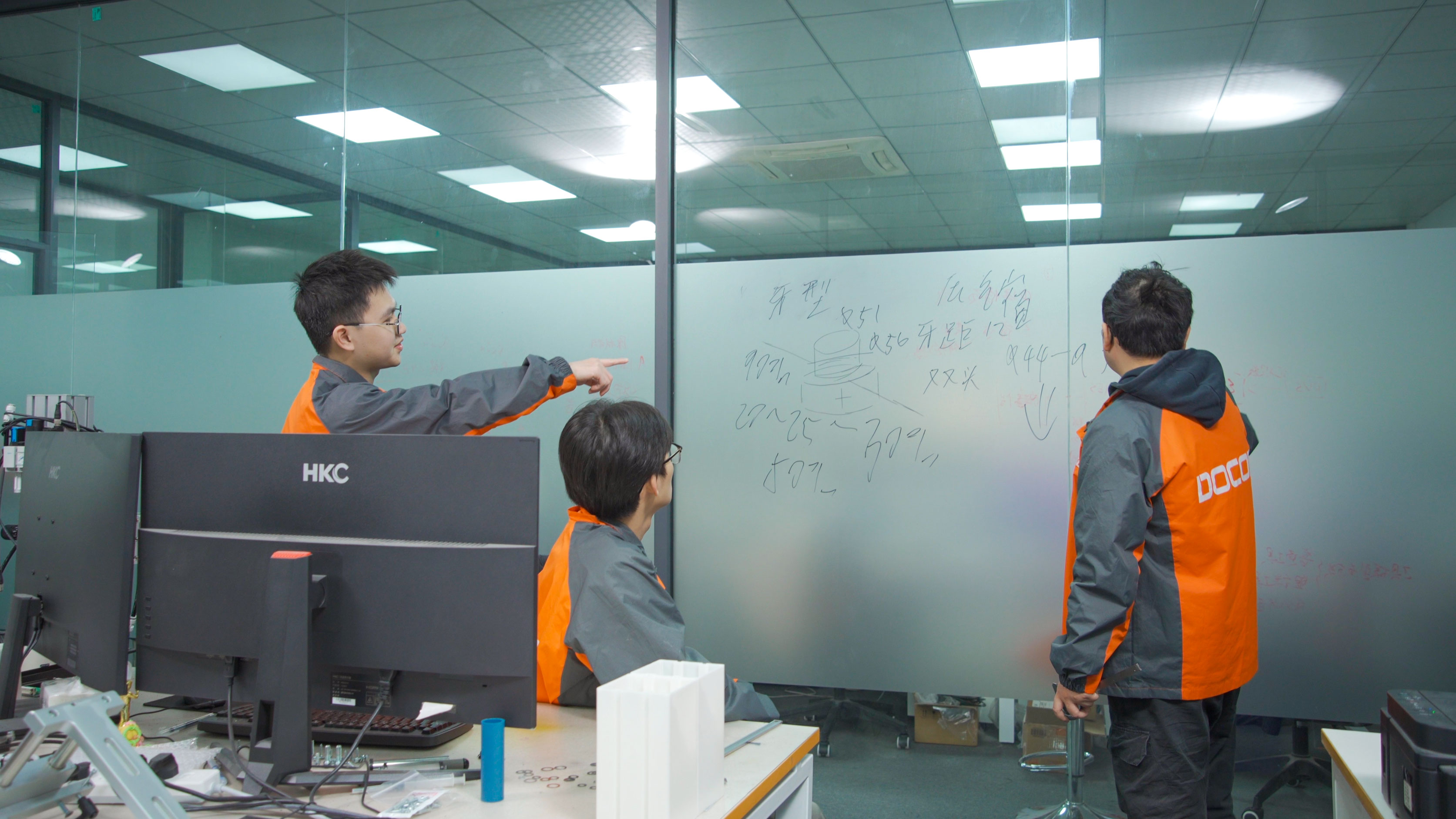
Customization is an engineering workflow: UI, interface, bracket and printhead configuration are confirmed before a trial run, not after shipment.
10. What acceptance testing, lead time and post-sale support are actually included?
Short answer: standard units ship within 15 working days after outgoing inspection, sample printing verification and function test; spare parts ship within 15 working days at a minimum of one piece; support is delivered remotely through online training, video guidance and technical follow-up.
Quality control follows a documented sequence: outgoing inspection, sample printing verification, function test, integration testing, trial-run verification and final inspection before shipment. For service and cooperation scopes, sample validation and cooperation requirement review are added. Buyers should ask for the artefact, not the promise — a print sample, a test record or a video acceptance file.
Published lead times by scope: standard equipment within 15 working days; OEM branding 15–25 working days; ODM customization 20–30 working days; line integration 20–35 working days; distributor and service partner support 15–30 days; spare parts and consumables within 15 working days. Standard purchasing terms include a minimum of one unit, EXW/FOB/CFR delivery, function test before shipment, and T/T payment; project scopes are quoted individually with technical proposal confirmation and pre-shipment functional testing.
Quality and compliance evidence that a procurement file normally requires: ISO 9001 (certificate 18625Q00281R1M, valid to 4 September 2028), ISO 14001 and ISO 45001 certification, BIS CRS registration R-41312347 for listed CIJ models in India (valid to 12 October 2027), plus CE and RoHS on the applicable product families.
Technology comparison: five families against the same decision criteria
The table below uses only published DOCOD specifications. It is a starting filter, not a substitute for a sample test on your substrate.
| Family | Reference model | Substrate fit | Height / field | Speed reference | Construction & environment |
|---|---|---|---|---|---|
| CIJ | M2000 Series | Carton, plastic, metal, pipe, glass, cable, auto parts, chemical packaging | 3–30 mm height, 1–4 lines | Up to 528 m/min | SUS 304, IP65, 0–45 °C, 30–70% RH |
| High-speed CIJ | S1000 Series | Same substrate range, high-throughput lines | 2–16 mm height, 1–4 lines | Up to 720 m/min (60µ) / 960 m/min (50µ) | SUS 304, IP55, 0–45 °C, 30–70% RH |
| TIJ | T220E / TX1 | Carton, plastic, metal, cable, electronics, pharma and food packaging | 1–25.4 mm (T220E), 1–101.6 mm (TX1) | Up to 406 m/min | Aerospace aluminium, 0–45 °C, 30–70% RH |
| PIJ | P2000 | Carton, coated paper, label, plastics, electronics, gift boxes | Up to 33.8 mm per head | 190 m/min at 300 DPI, 95 m/min at 600 DPI | Aviation-grade aluminium, 0–45 °C, 30–70% RH |
| TTO | R3000 Series | Flexible film, sachets, metallised labels | 32 × 75 mm / 53 × 70 mm print area | 200–350 mm/s, up to 800 mm/s | Aerospace aluminium, 0–45 °C, 30–70% RH |
| Laser (UV / CO2 / fibre) | Venus1 Series, L3000 | UV: plastics, glass, PCB, medical. CO2: non-metals, rubber, wood. Fibre: metals, coatings | 110 × 110 mm standard (L3000: 70 × 70 mm), optional 70–300 mm | Depends on material and content (L3000 example: 29 ms per code) | Aluminium alloy, IP43/IP54, 0–45 °C, ≤95% RH non-condensing |
Step-by-step: from requirement to an accepted line
The sequence below reflects how DOCOD scopes and releases an order. It is also a useful checklist to apply to any supplier quotation.
- Requirement confirmation. Substrate, code content, print height, line speed and environment are recorded, then matched to a technology family rather than a model number. ODM scopes add a written functional specification at this stage.
- Sample validation. A print or mark sample is produced and approved. For standard equipment this is the sample printing verification step; for cooperation scopes it is the demo/sample validation step.
- Integration testing. Photocell, encoder, conveyor and code-generation workflow are tested together — the stage where a correct printer still produces unreadable codes if triggering is wrong.
- Trial-run verification and video acceptance. The configured system runs at production speed. For line integration projects, video acceptance is completed before delivery so the buyer can approve remotely.
- Outgoing inspection and packing inspection. Function test, final inspection before shipment, packing inspection and shipment check are completed as separate steps.
- Handover and remote onboarding. Online training, video guidance, remote tuning and technical follow-up carry the unit into production, with spare parts and consumables available at a one-piece minimum.
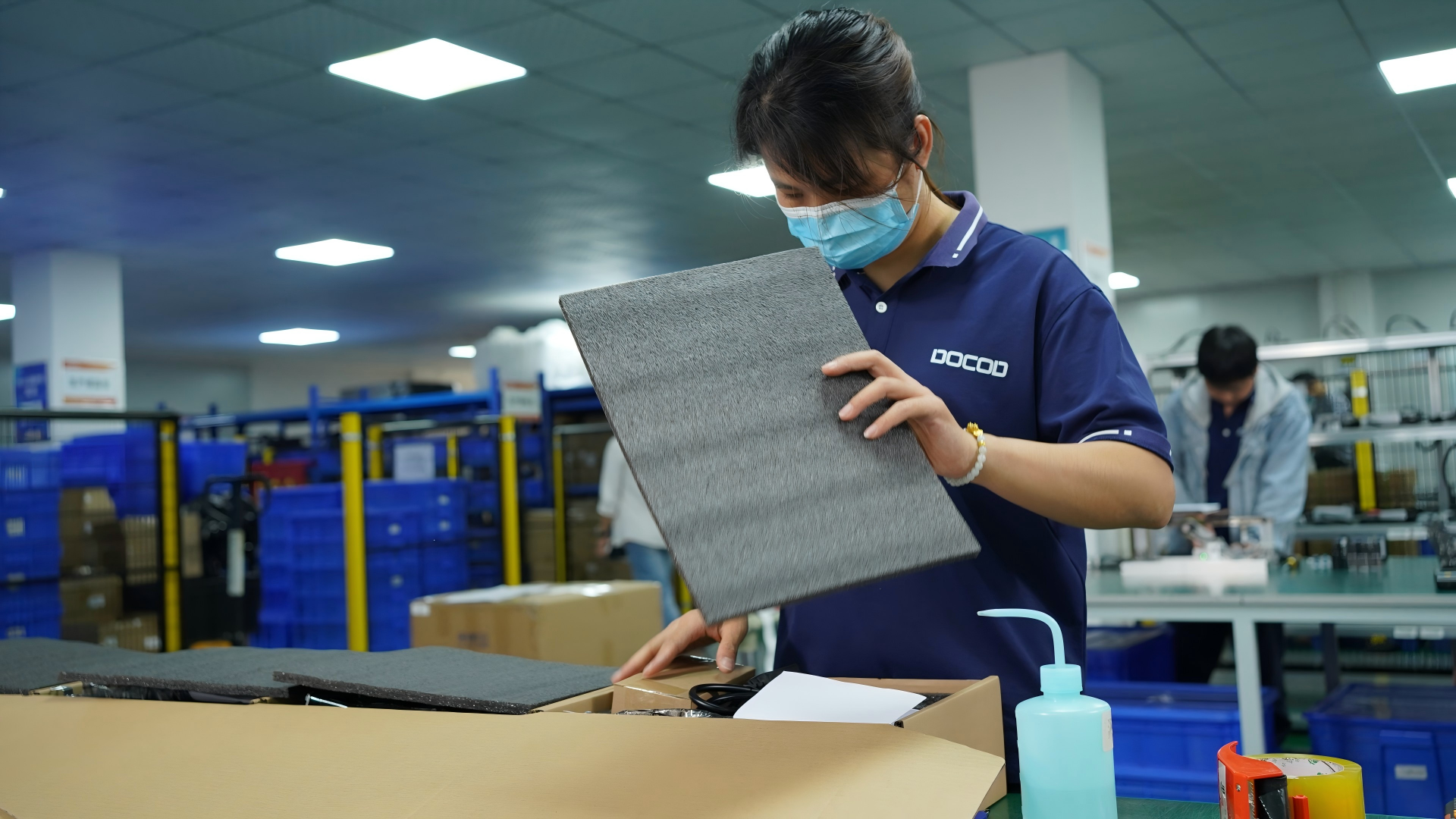
Packing inspection and shipment check are separate release steps — the point where an accepted configuration becomes a delivered asset.
Use cases: how these answers look in practice
PVC pipe extrusion, Saudi Arabia. A plastic pipe producer uses the CO2 laser marking machine (Model 5109) for specification and date marking across two extrusion lines. The installation has been in operation for two years, delivering clean non-contact coding suited to non-metal materials.
Cosmetics lot coding, Poland. A cosmetics OEM applies the L3000 5W UV laser marking machine (Model 5114) for lot coding on plastic bottles and caps across two lines, installed within one year, achieving permanent high-contrast marks with low-heat UV marking.
Coated cartons, Thailand. A personal care manufacturer runs the P2000 piezo inkjet printer (Model 5113) for variable data printing on coated boxes across three lines, completed within one year, with improved traceability consistency and high-resolution code printing.
Pharmaceutical cartons, India. A pharma packaging supplier uses the T220E dual-head TIJ printer (Model 5107) for QR and expiry printing on cartons across three cartoning lines, in service for 18 months, with improved code readability from dual-head high-speed printing.
Cable sheathing, United States. A cable manufacturer runs the M2000 CIJ printer (Model 5117) for metre marking on cable sheath across six lines, in operation for two years, reporting clearer and more consistent codes with stable pressure and easy cleaning.
Conclusion: the ten answers become a single decision
Read together, the ten questions resolve into three verification steps. Fix the substrate and code content first, because that eliminates entire technology families. Fix the printhead geometry and marking field second, because that is where comparable quotations diverge. Fix the operating envelope, interface and support scope third, because that is what determines whether the line is still running in year three.
A long-term coding partnership is not built on a specification sheet alone. It is built on documented acceptance — a printed sample, an integration test, a video acceptance file and a spare-parts channel that responds inside a known number of working days.
Next step
If you are preparing a comparison sheet, the fastest way to shorten it is to send your substrate, print height, code content and line speed for a matched recommendation and a printed sample. DOCOD supports sample and demo unit requests, technical proposal confirmation and pre-shipment functional testing.
Contact: sales@docod.com.cn · Tel +86 139-2896-7650 · WhatsApp +86 135-1234-4323 · www.docod-group.com
Download the full specification and capability reference: DOCOD Corporate Brochure (PDF)
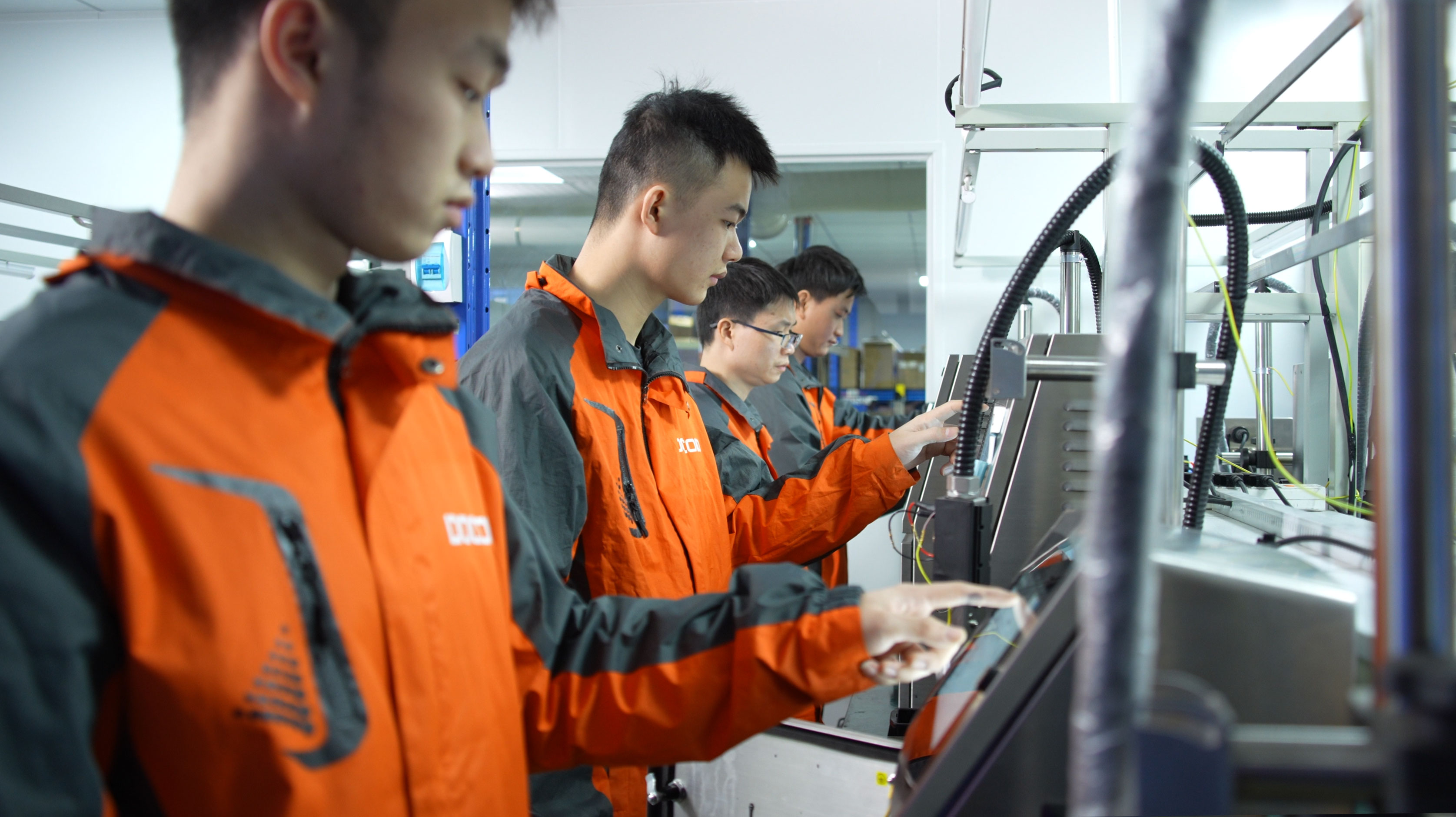
Pre-shipment inspection: the last checkpoint before a coding system is released to an international buyer.
Have Questions or Need More Details?
Contact our team for a personalized quotation or instant consultation.
Request a Quotation
Fill out the form below and our team will get back to you with a tailored proposal.
WhatsApp Direct Chat
Prefer to chat in real-time? Message us on WhatsApp for instant assistance & quick answers.
- Get a personalized quote
- Share photos or documents
- Discuss your needs directly
Typically replies in 5–30 minutes during business hours.