
OEM, ODM & Production Line Integration for Industrial Coding & Marking Equipment
OEM, ODM & Production Line Integration for Industrial Coding & Marking Equipment
Manufacturers, brand owners, and packaging line integrators evaluating industrial coding and marking equipment are often not simply buying a printer. They are looking for a capability partner that can deliver private-label hardware, adapt software and mechanical configuration to a specific application, integrate the coding station into an existing or new production line, and support code verification workflows. This article explains how OEM branding, ODM functional customization, production line integration support, and supporting services are structured at DOCOD Precision Group Co., Ltd., a Guangzhou-based manufacturer of industrial coding, marking, and inspection equipment.
What Does "Capability-Oriented" Mean in Industrial Coding Equipment Procurement?
In an evaluation-to-execution buying process, the buyer needs to verify more than print quality and price. The supplier must prove it can deliver the equipment in the required commercial configuration, adapt it to line conditions, and support it after installation.
Capability-oriented procurement questions usually include:
- Can the manufacturer apply my brand name to the machine, controller, packaging, and manuals?
- Can the software interface, printhead configuration, bracket structure, or communication ports be adjusted to match my application?
- Can the coding equipment be connected to an existing conveyor, encoder, photocell, packaging machine, or MES system?
- Can the supplier provide sample validation, video acceptance, and pre-shipment testing?
- What lead times and MOQs apply to standard, customized, and spare-part orders?
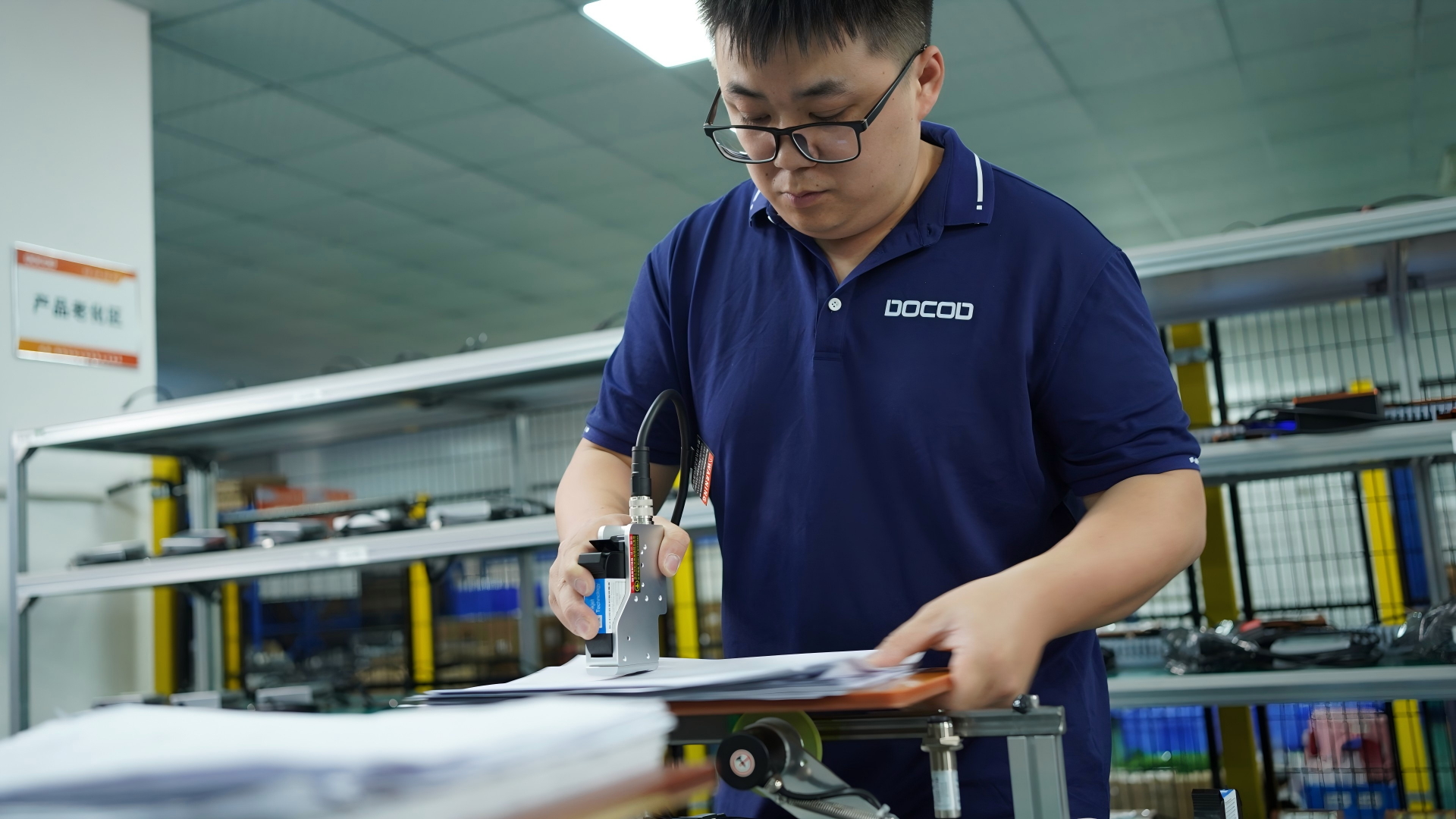
DOCOD addresses these requirements through six defined production modes: standard equipment supply, OEM branding support, ODM functional customization, production line integration support, spare parts and consumables supply, and distributor & service partner support. The table below summarizes the relevant capabilities.
Why OEM and ODM Capabilities Matter to Buyers
OEM branding support matters for distributors, system integrators, and equipment brands that need to sell coding machines under their own label. ODM functional customization matters for buyers whose product, packaging material, or line speed requires changes beyond standard options.
For example, a regional distributor may want the printer controller to show its own logo on startup, its own nameplate, manuals, and carton labels. An end manufacturer may need the UI language set, the bracket structure adapted to a specific line, or the communication interface configured to send variable data from a database.
DOCOD defines its OEM branding support as private label logo, startup screen, nameplate, packaging, manuals, and carton labels. ODM functional customization covers software/UI adjustment, communication interface, bracket structure, printhead configuration, and application-based adaptation. These are distinct capability lanes: OEM changes the identity of the product, while ODM changes the function or fit of the product.
OEM Branding Support
OEM branding support is designed for partners who need a complete private-label coding solution. The service includes applying the partner's logo to the machine and startup screen, and producing nameplates, packaging, manuals, and carton labels according to the partner's brand guidelines.
The MOQ for OEM branding support is 1 set, making it accessible to new distributors and established equipment brands testing a private-label program. Lead time is 15–25 working days, with a monthly capacity of 2,000 units. Quality control follows sample confirmation and final inspection before shipment. After-sales support includes remote onboarding, branding file confirmation, and spare parts coordination.
ODM Functional Customization
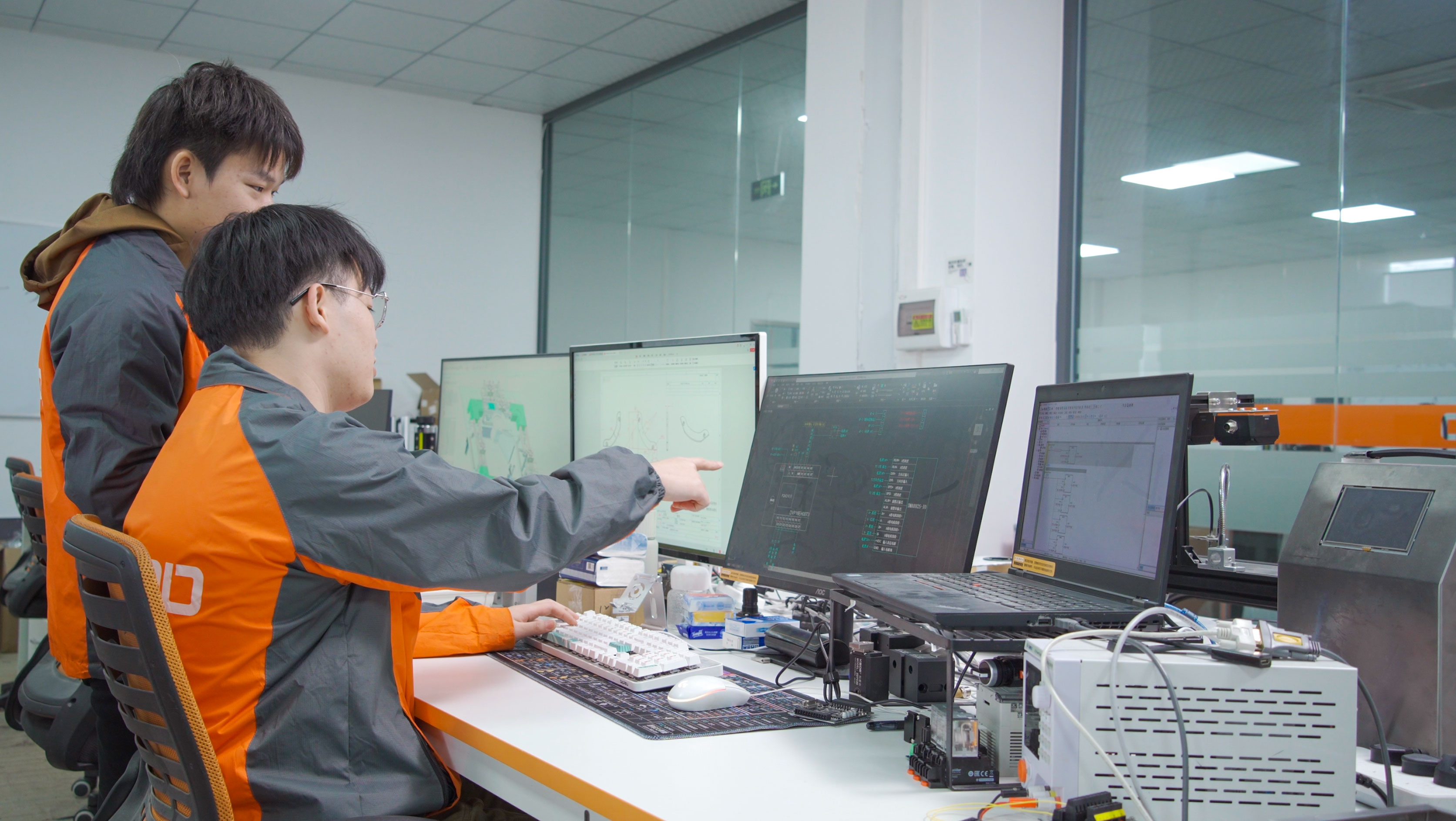
ODM functional customization is suitable when the standard product does not fully match the production scenario. The service can include software or UI adjustment, changes to the communication interface, bracket structure modification, printhead configuration, and adaptation based on the application.
The MOQ is 1 set per project, with monthly capacity of 2,000 units and lead time of 20–30 working days. Quality control follows requirement confirmation, function test, and trial-run verification. After-sales service includes remote debugging, technical follow-up, and application support.
ODM is commonly used in production line integration projects where the coding equipment must fit a specific conveyor height, print distance, or sensor trigger position. Because the customization is defined around the application, the supplier must confirm the requirement before building, then verify it through function testing and trial runs.
Production Line Integration Support
Integrating a coding station is the point where equipment capability meets physical line constraints. DOCOD's production line integration support covers conveyor, pager, and rewinder matching; encoder and sensor connection; and GS1/DataMatrix and serialization workflow matching.
The MOQ is 1 line, with monthly capacity of 2,000 units and lead time of 20–35 working days. Quality control includes integration testing, sample run, and video acceptance before delivery. After-sales support covers installation guidance, remote tuning, and fault diagnosis.
Video acceptance before delivery is a practical advantage for international buyers. Instead of discovering an interface problem after shipment, the buyer can review a recorded test run of the integrated line and confirm that the coding station is triggered correctly, the print position is stable, and the expected code format is produced.
Step-by-Step: From Standard Supply to Executed Coding Line
For a buyer moving from evaluation to execution, the following workflow describes how DOCOD delivers a coding solution.
Step 1: Requirement Definition
The buyer defines substrate, line speed, code content, print area, brand requirements, and line interface conditions. For standard equipment supply, DOCOD configures language, UI setup, print content settings, mounting options, and ink selection by substrate. For customized projects, the requirement is confirmed before production begins.
Step 2: Sample Confirmation and Function Test
For OEM branding orders, sample confirmation is required. For ODM and integration projects, function tests and trial-run verification are performed. Standard equipment is verified through outgoing inspection and sample printing before shipment.
Step 3: Production and Quality Control
Depending on the service mode, quality control can include requirement confirmation, sample validation, integration testing, function test, trial-run verification, outgoing inspection, packing inspection, and shipment check. Integration projects add sample run and video acceptance before delivery.
Step 4: Shipping and Acceptance
Delivery terms for equipment orders are commonly FOB, CIF, CFR, or EXW. Acceptance for standard equipment is based on function test before shipment; for custom orders it can include technical drawing confirmation, sample approval, and pre-shipment inspection.
Step 5: Installation and After-Sales Support
After-sales support for standard supply includes online training, video guidance, and remote support. Integration projects receive installation guidance, remote tuning, and fault diagnosis. ODM projects include remote debugging and technical follow-up.
Technology and Application Cases
DOCOD's product portfolio includes continuous inkjet printers (CIJ), thermal inkjet printers (TIJ), piezoelectric high-resolution inkjet printers (PIJ), drop-on-demand large-character inkjet printers (DOD), thermal transfer overprinters (TTO), laser marking machines, inline vision inspection systems, coding consumables, spare parts, and traceability solutions. The following cases show how different technologies are applied to real production scenarios.
Case 1: CIJ Coding on Beverage Bottles
A beverage bottling plant in Vietnam uses the DOCOD V2000 Series Continuous Inkjet Printer across 4 lines for batch coding on PET bottles. The project has been in operation for 2 years and achieved stable daily coding.
Case 2: CIJ Meter Marking on Cable Sheath
A cable manufacturer in the United States uses the DOCOD M2000 Series Continuous Inkjet Printer across 6 lines for meter marking on cable sheath. The installation has been running for 2 years, with users reporting clearer and more consistent codes.
Case 3: High-Resolution PIJ on Coated Boxes
A personal care manufacturer in Thailand uses the DOCOD P2000 Piezo Inkjet Printer across 3 lines for variable data printing on coated boxes. The project was completed within 1 year and achieved improved traceability consistency, with high-resolution code printing as a key highlight.
Case 4: CO2 Laser on PVC Pipe
A plastic pipe producer in Saudi Arabia uses the DOCOD Venus1 Series CO2 Laser Marking Machine across 2 extrusion lines for specification and date marking on PVC pipe. The 2-year installation provides clean non-contact coding suitable for non-metal materials.
Case 5: TTO on Flexible Film
A snack manufacturer in Indonesia uses the DOCOD R3000 Series Industrial Thermal Transfer Overprinter on 2 VFFS lines for date coding on flexible film. The 2-year project achieved cleaner film coding output with industrial-grade TTO performance.
Case 6: UV Laser on Plastic Cosmetic Packaging
A cosmetics OEM in Poland uses the DOCOD L3000 Series 5W UV Laser Marking Machine on 2 lines for lot coding on plastic bottles and caps. The installation was completed within 1 year and achieved permanent high-contrast marks using a low-heat UV marking process.
Case 7: TIJ Dual-Head on Pharma Cartons
A pharma packaging supplier in India uses the DOCOD T220E Half-Inch Dual-Head Thermal Inkjet Printer on 3 cartoning lines for QR and expiry printing on cartons. The 18-month project reported improved code readability.
Case 8: TX1 Seamless TIJ at Contract Packer
A contract packer in Brazil uses the DOCOD TX1 Half-Inch Seamless Inkjet Printer across 8 packing stations for batch and QR printing on shipping cartons. The compact setup allowed faster deployment across small lines in limited space.
Comparison: DOCOD Production Modes and Key Terms
| Production Mode | Typical Customization Included | MOQ | Lead Time | Quality Control | After-Sales |
|---|---|---|---|---|---|
| Standard Equipment Supply | Language, UI setup, print settings, mounting options, ink selection | 1 set | Within 15 working days | Outgoing inspection; sample printing verification; function test | Online training; video guidance; remote support |
| OEM Branding Support | Private label logo, startup screen, nameplate, packaging, manuals, carton labels | 1 set | 15–25 working days | Sample confirmation; final inspection before shipment | Remote onboarding; branding file confirmation; spare parts coordination |
| ODM Functional Customization | Software/UI adjustment, communication interface, bracket structure, printhead configuration | 1 set per project | 20–30 working days | Requirement confirmation; function test; trial-run verification | Remote debugging; technical follow-up; application support |
| Production Line Integration Support | Conveyor/pager/rewinder matching, encoder and sensor connection, GS1/DataMatrix and serialization workflow | 1 line | 20–35 working days | Integration testing; sample run; video acceptance before delivery | Installation guidance; remote tuning; fault diagnosis |
| Spare Parts & Consumables Supply | Compatible spare parts, ink/solvent matching, accessory kits | 1 piece | Within 15 working days | Part verification; packing inspection; shipment check | Parts matching support; replacement guidance; online response |
| Distributor & Service Partner Support | Training materials, demo support, product documents, localized market support | 2 units | 15–30 days | Demo/sample validation; cooperation requirement review | Product training; remote technical backup; service coordination |
Certifications and Quality Management
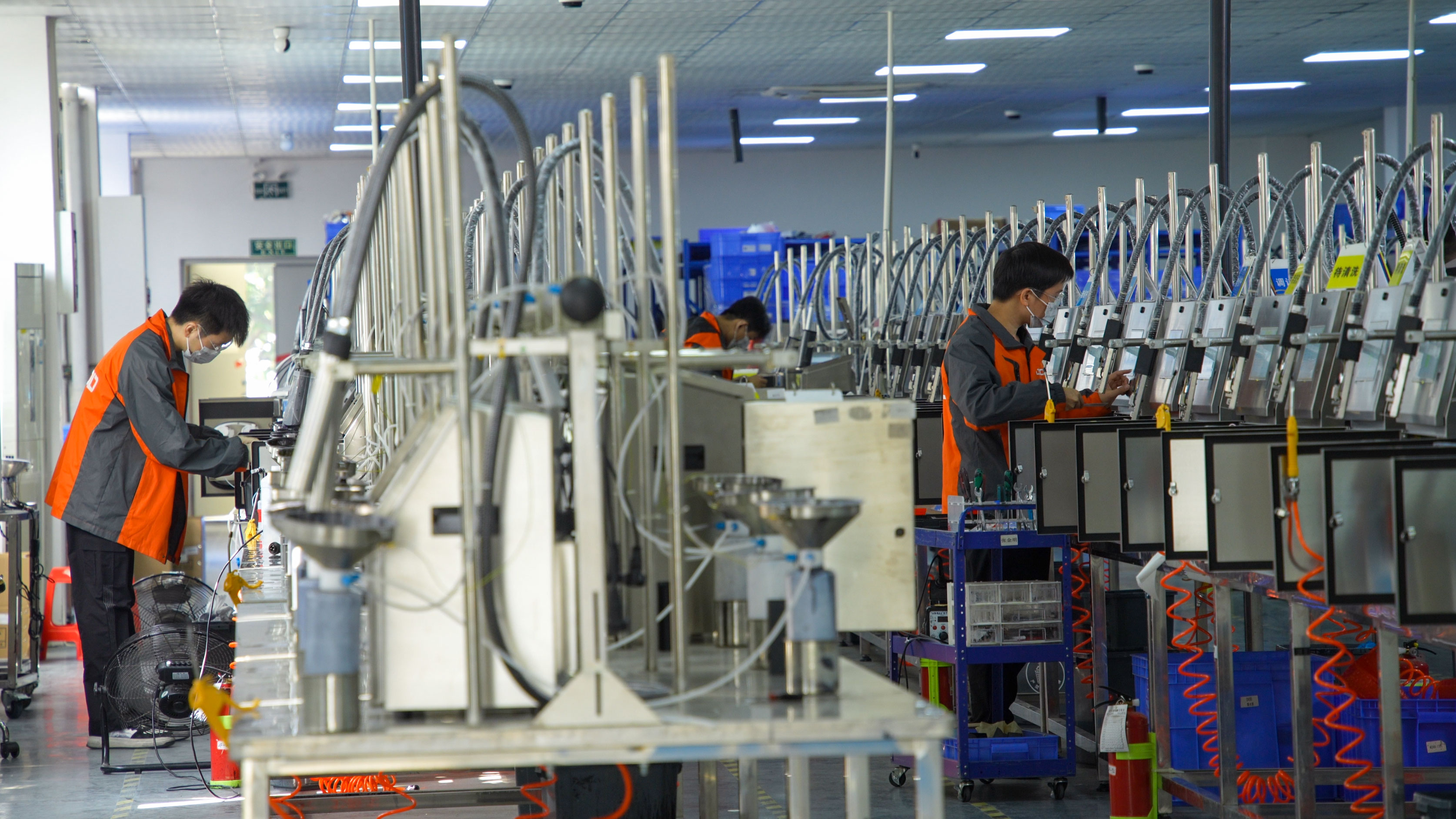
DOCOD operates under structured management system certifications. The company holds ISO 9001 Quality Management System Certification (certificate number 18625Q00281R1M) for R&D and production of inkjet printers, ISO 14001 Environmental Management System Certification (18625E00147R1M), and ISO 45001 Occupational Health and Safety Management System Certification (18625S00131R1M). The scopes cover R&D and production of inkjet printers and related management activities.
For the Indian market, DOCOD holds a BIS CRS Registration Licence for Printers / Plotters under the brand codpad, certificate number R-41312347, issued by the Bureau of Indian Standards. The applicable standard is IS 13252 (Part 1):2010 / IEC 60950-1:2005, covering the listed models manufactured at the registered factory address. The licence is valid from 2025-10-13 to 2027-10-12 and applies to the DOCOD M2000 Series Continuous Inkjet Printer, DOCOD S1000 Series High Speed Continuous Inkjet Printer, and DOCOD V2000 Series Continuous Inkjet Printer.
Technology Comparison at a Glance
| Technology | Typical Capability | Representative DOCOD Series |
|---|---|---|
| CIJ (Continuous Inkjet) | Small-character coding on carton, plastic, cable, metal, glass; high line speeds | V2000, S1000, M2000, S300plus |
| TIJ (Thermal Inkjet) | High-resolution variable data, GS1 codes, QR codes, multi-head splicing | T220E, T260E, TX1 |
| PIJ (Piezo Inkjet) | High-resolution text and 2D codes on porous and coated substrates | P2000 |
| DOD (Drop-on-Demand) | Large-character coding for cases and cartons | Covered by DOCOD portfolio |
| TTO (Thermal Transfer Overprinter) | Flexible film and label printing in intermittent mode | R3000 |
| Laser – CO2 | Non-metal marking, permanent clean codes on plastics, wood, rubber, coated surfaces | Venus1 Series CO2 Laser |
| Laser – Fiber | Permanent metal marking with high precision and depth | Venus1 Series Fiber Laser |
| Laser – UV | Low-heat marking on plastics, glass, ceramics, PCB, and food packaging | Venus1 UV, L3000 Series |
Buyer Considerations for OEM and ODM Projects
Define Your Brand and Functional Scope Early
For OEM branding, clarify which elements must carry the private label: controller logo, startup screen, nameplate, packaging, manuals, carton labels. For ODM, separate functional changes from cosmetic changes. Software/UI adjustment, communication interface, bracket structure, and printhead configuration are defined as ODM service items.
Confirm the Line Interface and Data Workflow
Integration projects require matching the coding station to the production line's physical and data interfaces. Encoder and sensor connection, conveyor or rewinder matching, and GS1/DataMatrix or serialization workflow matching should be confirmed before production. Video acceptance before delivery helps close the gap between factory test conditions and the buyer's expectations.
Verify Certifications Against Your Target Market
Certifications such as BIS CRS Registration are market-specific. Buyers selling into India should verify that the printer model is covered under the registration. CE, RoHS, and BIS are listed for specific DOCOD printer series; laser and other equipment may carry separate compliance documentation depending on the model and destination.
Plan for Consumables and Spare Parts
For repeat production, the buyer should confirm the supply path for ink, solvent, printhead cartridges, and spare parts. DOCOD's spare parts and consumables supply mode covers compatible spare parts, ink/solvent matching, accessory kits, and replacement parts selection, with a 1-piece MOQ and lead time of within 15 working days.
Use Sample and Trial-Run Validation
Before committing a full line, request sample printing on the actual substrate, confirm the ink type matches the material and drying requirement, and review the sample run or video acceptance record. This reduces the risk of mis-selecting print technology for the substrate.
FAQ
Does DOCOD hold the certifications needed for OEM supply to regulated markets?
DOCOD holds ISO 9001:2015 for quality management, ISO 14001:2015 for environmental management, and ISO 45001:2018 for occupational health and safety in R&D and production of inkjet printers. For the Indian market, the BIS CRS Registration Licence R-41312347 under the brand codpad covers the DOCOD M2000 Series, S1000 Series, and V2000 Series Continuous Inkjet Printers, valid until 2027-10-12. Buyers targeting other regulated markets should confirm the specific certificate required for their destination.
What OEM and ODM capabilities does the manufacturer offer?
OEM branding support includes private label logo, startup screen, nameplate, packaging, manuals, and carton labels. ODM functional customization includes software/UI adjustment, communication interface changes, bracket structure, printhead configuration, and application-based adaptation. Production line integration support covers conveyor/pager/rewinder matching, encoder and sensor connection, and GS1/DataMatrix and serialization workflow matching.
What are the MOQs and lead times for standard and custom coding equipment orders?
Standard equipment supply has an MOQ of 1 set with lead time within 15 working days. OEM branding support has an MOQ of 1 set with lead time of 15–25 working days. ODM functional customization has an MOQ of 1 set per project with lead time of 20–30 working days. Production line integration support has an MOQ of 1 line with lead time of 20–35 working days. Spare parts and consumables have an MOQ of 1 piece with lead time within 15 working days.
Can DOCOD provide sample validation before mass production?
Yes. For standard equipment, outgoing inspection and sample printing verification are performed before shipment. For OEM and ODM projects, sample confirmation and trial-run verification are part of the quality control process. For production line integration, sample run and video acceptance are completed before delivery. The buyer is encouraged to request a sample print on the actual substrate to validate ink adhesion, drying, and code readability.
How can a buyer request a quote or start an OEM/integration project with DOCOD?
Buyers can contact DOCOD directly through the company website www.docod-group.com or by email to sales@docod.com.cn. The corporate brochure is available for download at https://cdn.socialarks.com/sbsp/24972/common/2026/0612/Corporate%20Brochure-DOCOD.pdf. For a faster response, include the target substrate, line speed, print content, required certifications, and whether the project needs OEM branding, ODM customization, or production line integration support.
Conclusion
Selecting an industrial coding and marking equipment partner is not only about comparing print engines. The buyer must confirm that the manufacturer can deliver the equipment configured for the brand, adapted to the application, integrated with the production line, and supported through after-sales service.
DOCOD Precision Group Co., Ltd. provides standard equipment supply, OEM branding support, ODM functional customization, production line integration support, spare parts and consumables supply, and distributor & service partner support. These production modes are supported by defined quality control procedures, documented lead times, and a product portfolio spanning CIJ, TIJ, PIJ, DOD, TTO, laser, and inspection equipment. For buyers moving from evaluation to execution, defining the brand scope, line interface, certification requirement, and validation method early will reduce project risk and shorten time to stable production.
For a full overview of DOCOD's industrial coding and marking capabilities, download the corporate brochure: Corporate Brochure – DOCOD.