
Regional Compliance Guide for Industrial Coding: IP, Wavelength, and Operating Specs
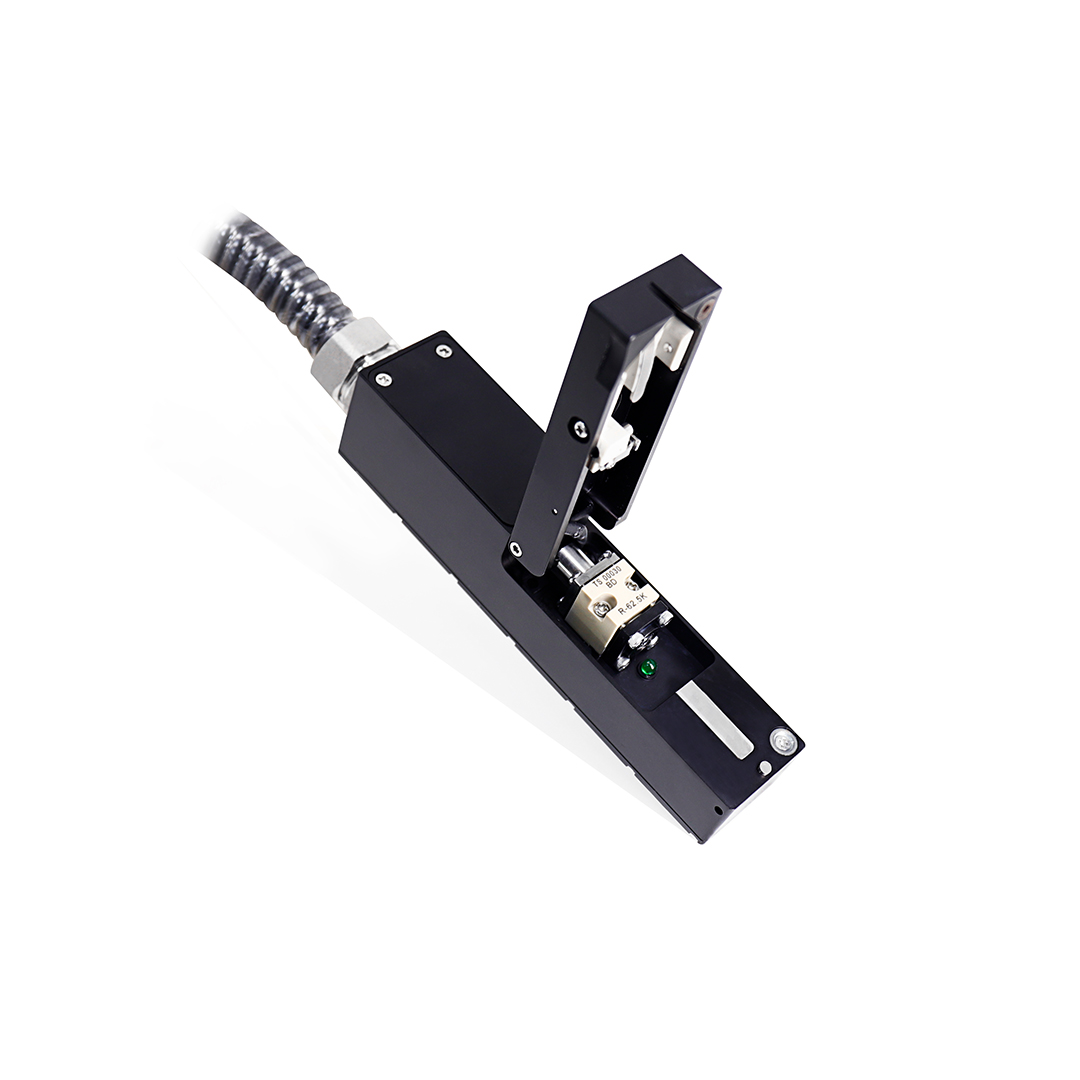
Regional compliance for an industrial coding and marking system is decided by three verifiable hardware facts before any certificate is discussed: the enclosure’s ingress protection (IP) rating, the wavelength and power of the marking source, and the documented operating window of temperature and humidity. Those three items tell a buyer what the machine can physically withstand, what code formats it can produce on a given substrate, and whether the destination plant environment sits inside the manufacturer’s specification at all. They also define the boundary of the exercise: hardware specifications support regional compliance mapping, but they do not replace local certification validation.
This guide is written for smart manufacturing buyers at the awareness and research stage — engineering, procurement and channel teams comparing coding and marking equipment for a project in a specific market, and looking for a repeatable way to read a specification sheet before they request a quotation. Worked examples are drawn from the published specification set of DOCOD Precision Group Co., Ltd., a China-based manufacturer founded in 2008 that designs, manufactures and services industrial coding, marking and inspection equipment, including continuous inkjet (CIJ), thermal inkjet (TIJ) and piezo inkjet (PIJ) printers, thermal transfer overprinters (TTO), laser marking machines and inline vision inspection systems.
By the end of this article you will be able to:
- Read IP ratings, housing materials and operating windows as compliance signals rather than marketing lines.
- Match a marking wavelength and power to the substrate and the code format your market requires.
- Run a six-step regional review that closes with the right question to your supplier — not with a guess.
Problem Definition: Why a Conformity Mark Is Not a Regional Approval
The most frequent error in coding equipment procurement is treating a conformity mark as a universal passport. It is not. A mark describes what the manufacturer has documented for a defined configuration against a defined framework. It does not describe whether the machine will survive your plant, print the code your regulator wants, or satisfy a national authority that has its own review process.
In practice, the mismatch shows up in five recurring ways:
- Environmental mismatch. A laser marker with an IP43 rating is designed for a sheltered position on a dry line. Installed beside a washdown or high-splash station, the same unit is outside the conditions its rating describes.
- Humidity mismatch. Ink-based printers in the DOCOD range are documented for 30–70% Rh. A laser marker in the same range is documented for humidity up to 95%, non-condensing. A tropical or coastal site that is perfectly acceptable for one technology may sit outside the specification of the other.
- Content mismatch. If the destination market requires a 2D DataMatrix, a GS1-128 string, a serialized tax-control code or a UDI line, a machine that cannot hold a variable database and print that structure fails the project regardless of print quality.
- Consumable mismatch. The DOCOD 3BK702 half-inch black solvent TIJ cartridge is documented for 15°C to 35°C and 35% to 80% Rh in operation, with a narrower storage and shipping band of 5°C to 40°C and 20% to 80% Rh. A consumable with a tighter window than the printer becomes the binding constraint on a hot line.
- Documentation mismatch. A declaration issued for one model option does not automatically cover a different laser source, printhead configuration or voltage variant.
Each of these is discoverable from the specification sheet — if the sheet is read as a compliance document rather than a brochure.
Industry Background: Why Spec-Level Compliance Reviews Are Growing
Two forces are pushing specification-level reviews up the procurement agenda. The first is market growth. Fortune Business Insights placed the global coding and marking equipment market at USD 7.51 billion in 2025, and the same source reports inkjet technologies — CIJ, TIJ and PIJ combined — at 40.1% of the technology segment. Published forecasts for the category differ materially depending on scope, base year and methodology, so any single figure should be treated as directional rather than settled. The direction itself is not disputed: capacity is being added, and new lines are being specified now.
The second force is traceability regulation. GS1 Digital Link, the standard behind the retail shift from 1D barcodes to 2D QR codes, is documented with a transition deadline of 31 December 2027 across the markets that have adopted it. For packaging teams, that converts a marketing topic into a hardware question: can the installed coding equipment print a standards-compliant 2D code, carry variable data from a database, and be verified inline?
Industry practice reflects the same shift. Coding and marking is generally described by solution providers as labeling, coding and marking across diverse substrates in industrial environments, with traceability and quality control as the core purpose. Once traceability is the purpose, the specification sheet stops being a purchase comparison and becomes a compliance input.
Reading the Three Specification Groups
1. Ingress protection: what IP43 and IP65 actually commit to
An IP rating under the IEC 60529 framework describes how well an enclosure resists solid objects and water. IP65 denotes a dust-tight enclosure protected against water projected by a nozzle; IP43 denotes protection against solid objects above a defined size and against spraying water, without the dust-tight and jet-water performance of IP65. The distinction is practical, not cosmetic: it decides where on the line the machine can be mounted.
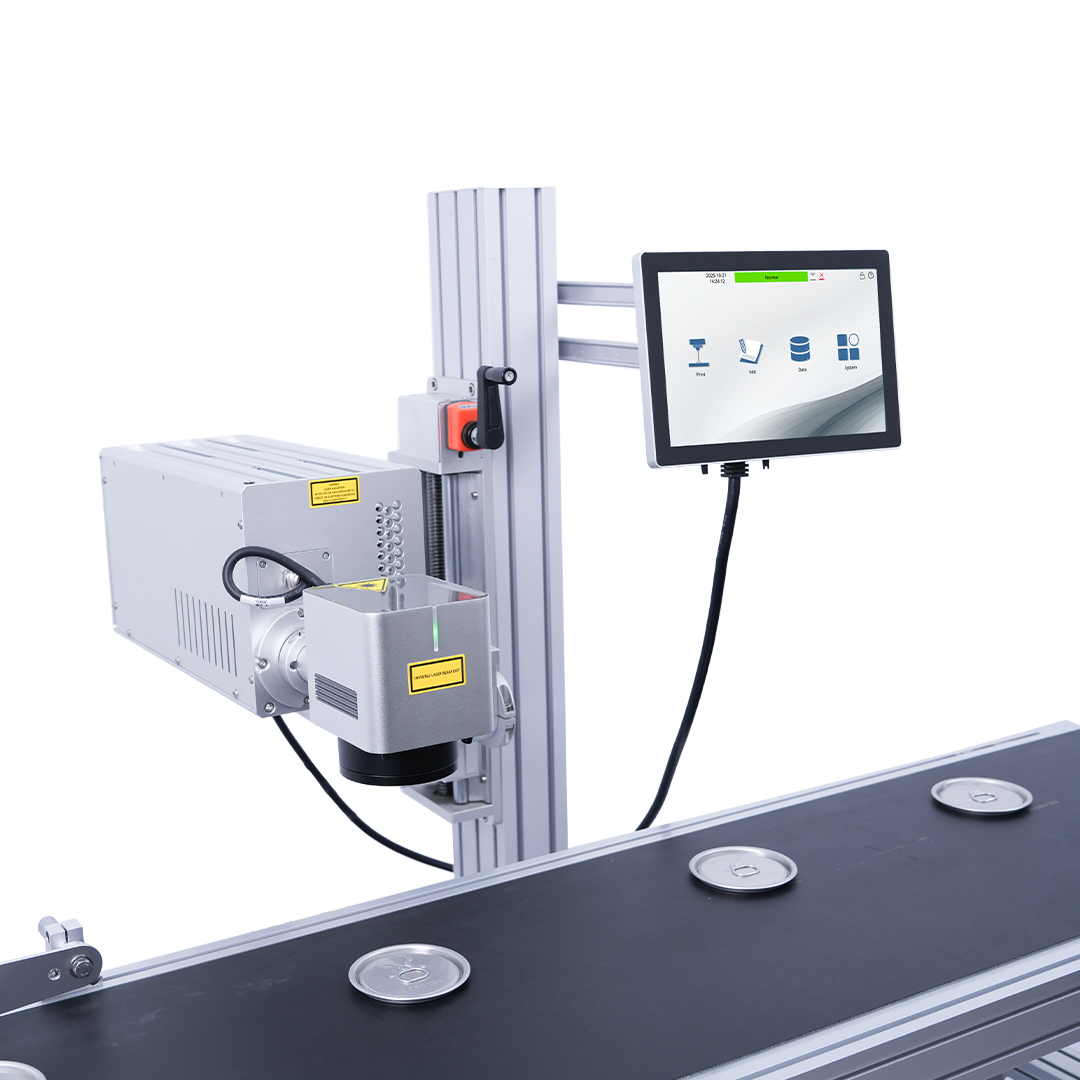
Within the DOCOD range the two ratings appear side by side, which makes the trade-off visible. The DOCOD M2000 Series Continuous Inkjet Printer is documented at IP65 in a SUS 304 stainless steel casing, alongside the S300plus Series at IP65 and the S1000 Series at IP55. The DOCOD L3000 Series 5W UV Laser Marking Machine and the Venus1 Series laser markers are documented at IP43, with the Venus1 UV and CO2 options also available at IP54 depending on the model option.
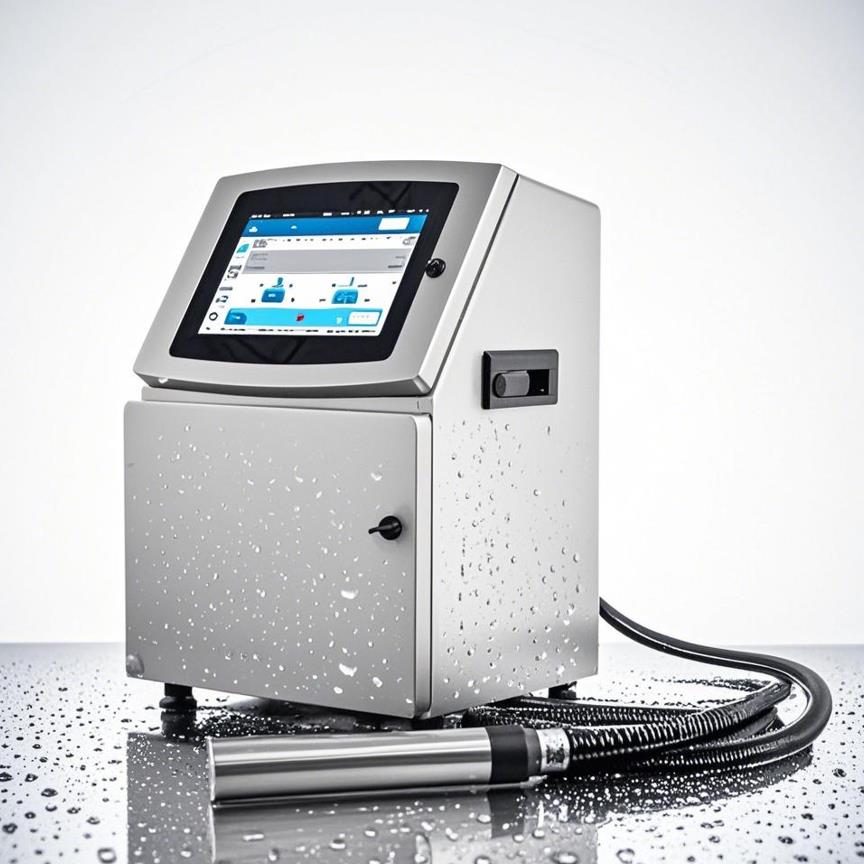
For a regional review, the useful question is not “which IP is better” but “which IP matches the mounting position I actually have.” A laser head with an IP43 rating mounted inside a dry cabinet on a clean line is inside its specification. The same head mounted at a splash zone is not.
2. Housing material and the cleaning regime
Housing material determines what cleaning chemistry and what physical handling the unit tolerates, which matters in hygienic, coastal and chemical environments. SUS 304 stainless steel is the documented casing material for the DOCOD M2000, S1000, S300plus and V2000 Series CIJ printers. The L3000 Series 5W UV laser uses a stainless steel laser host with an aluminium alloy controller. The Venus1 Series laser markers, the P2000 piezo inkjet printer, the R3000 thermal transfer overprinter and the T220E, T260E and TX1 thermal inkjet printers use aerospace-grade or aviation-grade aluminium bodies, with the T220E and TX1 also documented with industrial-grade stainless steel.
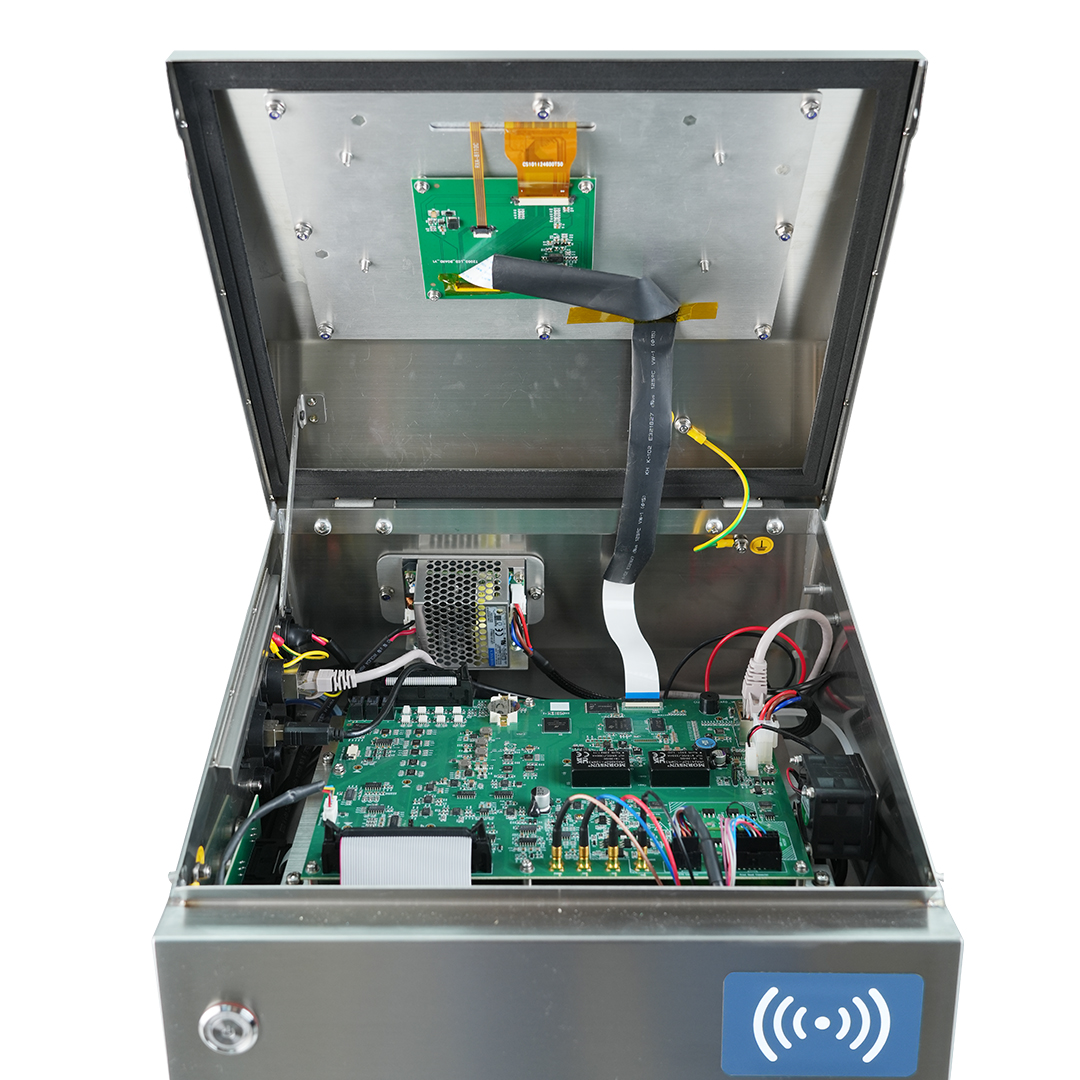
The compliance consequence is straightforward. A buyer specifying equipment for a plant that uses regular wet cleaning should confirm the enclosure rating and casing material together, and should expect the manufacturer to state both. A buyer specifying for a dry, dust-free electronics area can reasonably accept a lighter enclosure — provided the dust and static assumptions of that area are documented in the project file.
3. The operating window: temperature and humidity
The operating window is the single most frequently skipped item in a specification comparison, and the one most likely to invalidate an otherwise correct purchase. Two distinct bands appear in the DOCOD specification set:
- Ink-based systems (CIJ, TIJ, PIJ, TTO): temperature 0–45°C and humidity 30–70% Rh. This band is documented consistently across the M2000, S1000, S300plus, V2000, P2000, R3000, T220E, T260E, TX1 and XF30.
- Laser markers (UV, CO2, fiber): ambient temperature 0–45°C and humidity up to 95%, non-condensing, with no vibration. This band is documented across the L3000 Series UV laser and the Venus1 Series UV, CO2 and fiber markers.
The practical reading is that laser marking tolerates higher ambient humidity than solvent or water-based inkjet, but adds a “no vibration” and “non-condensing” condition that must be satisfied by the mounting position. Consumables sit in their own band: the 3BK702 solvent TIJ cartridge is documented at 15–35°C and 35–80% Rh in operation.
4. Wavelength and power: which marking source fits which substrate
Wavelength is the technical reason a market requirement becomes achievable or not. Three laser families appear in the DOCOD range, each documented for a different substrate class:
UV lasers at 355 nm. The DOCOD L3000 Series 5W UV Laser Marking Machine (model L3005U-355W-V-IP43) runs a 355 nm source at 5W with water cooling, an IP43 rating, a standard 70 × 70 mm marking range with 70–300 mm options, a minimum line width of 0.02 mm, positioning accuracy of 0.01 mm, and a documented laser life of 2–3 years. Its documented application field covers metal and non-metal materials, food packaging, PVC pipe, pharmaceutical packaging and flexible circuit boards. The Venus1 Series UV Laser Marker extends the same 355 nm wavelength across 5W, 10W and 15W options, with air or water cooling and IP43 or IP54 ratings, and is documented for plastics, polymers, glass, ceramics, printed circuit boards, medical devices, food and pharmaceutical packaging, PET bags, metal caps and cosmetics packaging.
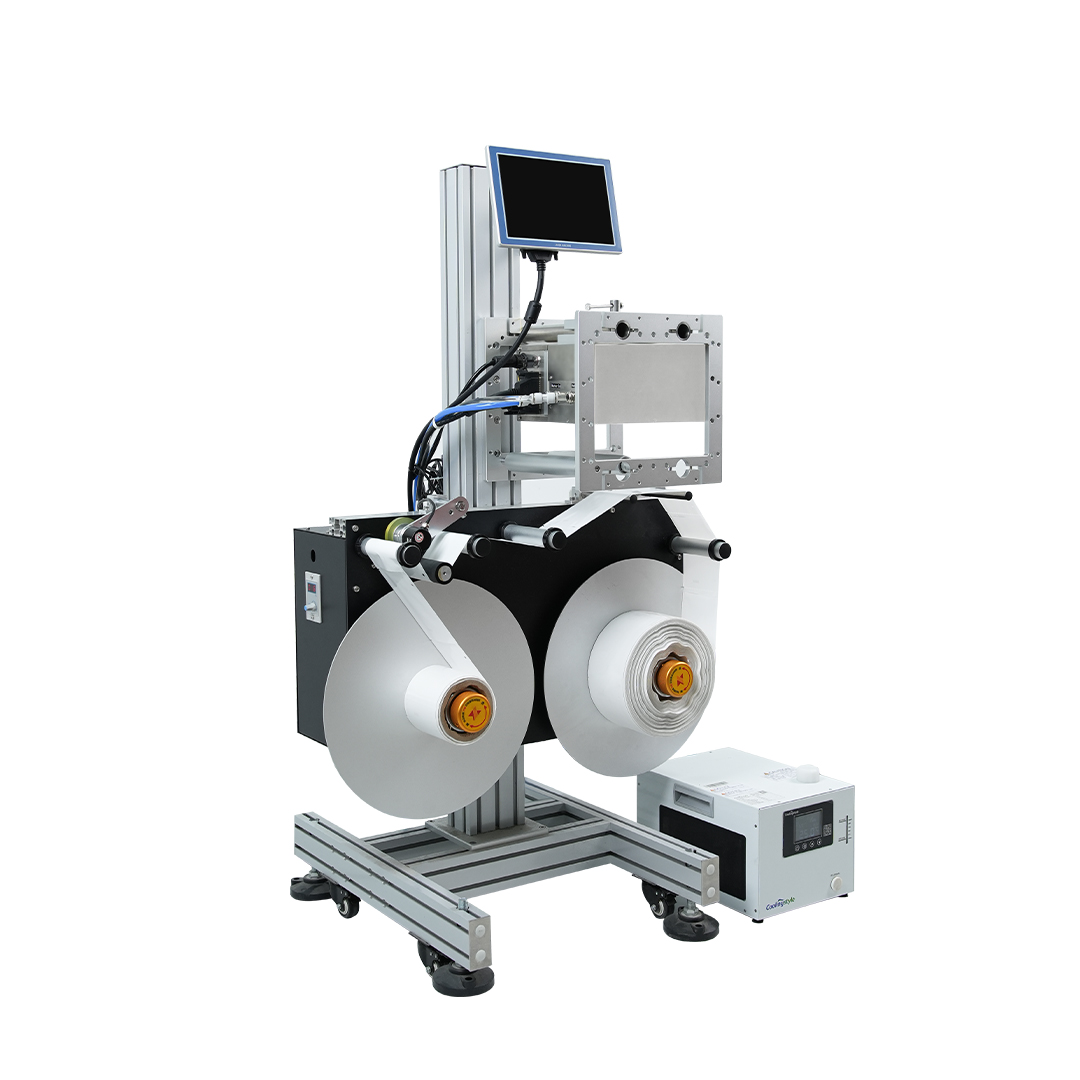
CO2 lasers at 10.6 µm. The Venus1 Series CO2 Laser Marking Machine offers 30W or 60W at 10.6 µm, with optional 10.2 µm and 9.3 µm wavelengths, IP43 or IP54 protection, air or water cooling, and a documented laser life of 20,000 hours. Its documented application field is non-metal processing: plastics, packaging and printing, rubber, leather textiles, wood products, cards, acrylic products, kraft board, cable marking and glass product marking.
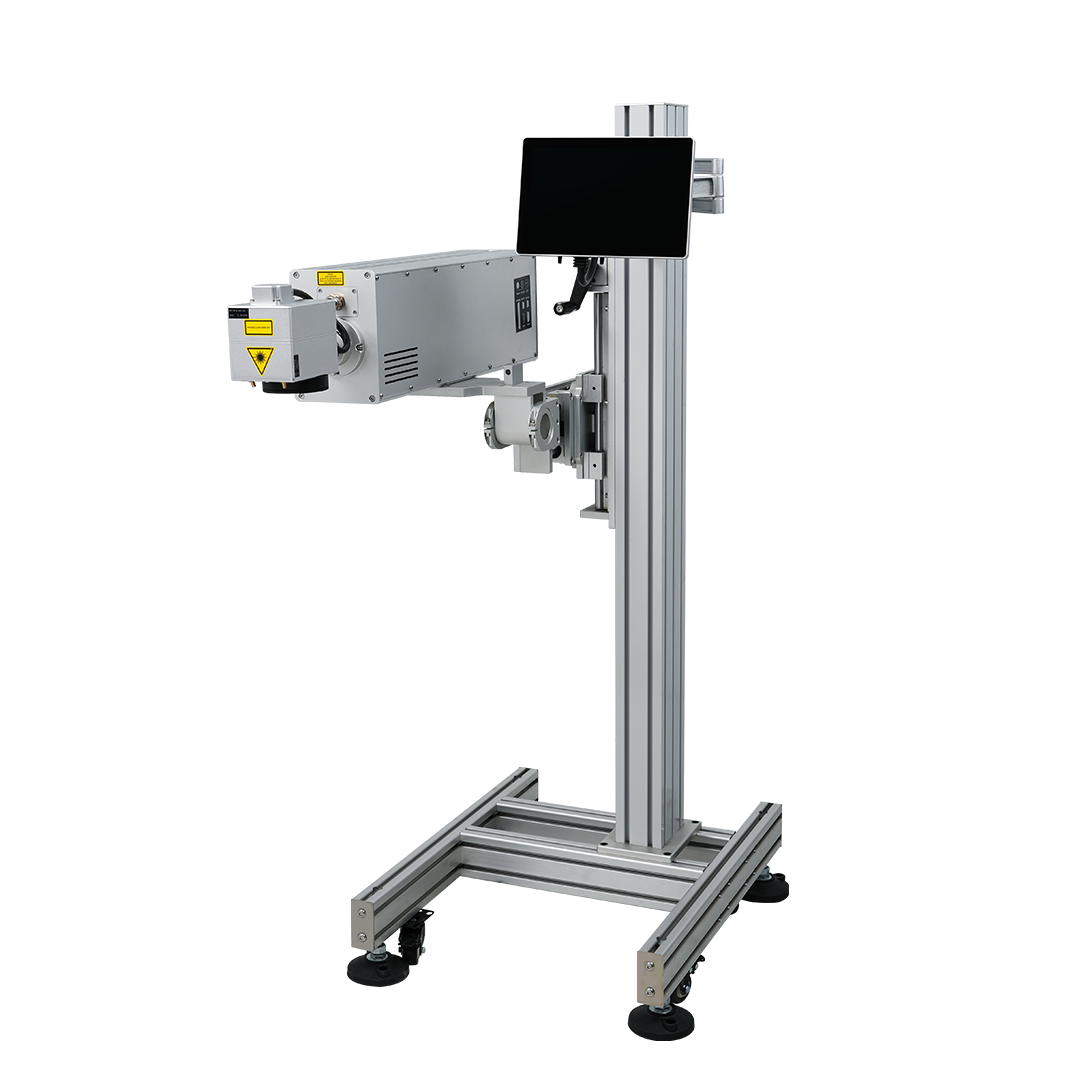
Fiber lasers at 1064 nm. The Venus1 Series Fiber Laser Marking Machine is documented with 1064 nm wavelength, power options of 20W, 30W, 50W or 100W, IP43 protection, air cooling and a laser life of up to 100,000 hours, applied to metal and coating work, medical devices, automotive parts, industrial bearings, aerospace components, PCB boards, metal caps, stainless steel products, pipes and cables.
For ink-based lines, the equivalent logic applies. The DOCOD M2000 Series CIJ printer is documented for carton, plastic, metal, sheet material, pipe, stone, glass, electronic components, auto parts and industrial chemical packaging, with 42u, 55u and 70u nozzle options, a 3–30 mm print height, 1–4 print lines and a maximum printing speed of 528 m/min. The 3BK702 half-inch black solvent TIJ cartridge is documented for BOPP, PVC, PP, PET, OPP, glass and stainless steel, with 300 nozzles, up to 600 dpi resolution and a 42 ml fill.
5. Traceability content: GS1 codes and dynamic data
Content capability is where compliance requirements are won or lost. The DOCOD M2000 Series CIJ printer is documented to print text, time, date, logo, shift, serial number, dynamic barcode and QR code, dynamic serial data and dynamic database content, with up to 24 counters, 256M memory, USB, RS232 and network ports, and a documented connection to an enterprise MES management system, in more than 40 languages. The L3000 Series UV laser supports EAN8, EAN13, CODE39, CODE128 and GS1-128 barcode formats. The T220E thermal inkjet printer is documented for multi-language text, GS1 codes, dynamic traceability codes, barcodes, graphics, serial numbers, dates, shifts, counters and variable databases, and the TX1 is documented for GS1 code printing and variable data.
Read against the GS1 Digital Link transition, this is the point where a compliance review becomes concrete: the machine must be able to hold a variable database, accept a serial or batch feed, print a standards-structured 2D code, and support verification. Closed-loop print-and-verify workflows are documented as part of DOCOD’s medical packaging application profile, which combines a coder, a scanner, a vision system, a reject unit and a PLC/MES layer.
Step-by-Step: A Six-Step Regional Compliance Review
Worked Application Profiles by Region
The following profiles come from documented application scenarios. They show how content requirements, environment and technology choice combine in a regional review. They describe application fit, not certification status.
Medical packaging in Germany. The documented workflow prints UDI, GS1 DataMatrix, lot numbers, expiry dates and serial numbers on medical device packs, Tyvek medical paper, blister packs, cartons, plastic bottles and flexible films, in a closed-loop print-and-verify process with a cartoner, labeling machine, scanner, vision system, reject unit and PLC/MES database. Here the compliance driver is code structure and verification, and the UV laser options are among the technologies mapped to that substrate set.
Food and beverage packaging in Vietnam. Production dates, expiry dates, batch numbers and QR or barcodes are printed online on flexible pouches, cartons, PET bottles and glass bottles, integrated with filling and packaging lines, with the stated function of reducing manual labeling errors and enabling stock rotation. The operating-window check matters here, because cold-chain, humid and hot environments are explicitly named in the application description.
Cosmetics and personal care in Indonesia. Batch numbers, production dates, expiry dates, QR codes and anti-counterfeit codes are applied to bottles and tubes in line with filling, capping and labeling equipment, across HDPE, PET, PP, PE tubes and laminated cartons, with the requirement that codes stay clear without damaging brand appearance. A low-heat marking source is relevant to that last constraint.
Wire, cable and pipe extrusion in India. Meter marks, model information, brand names, batch numbers, certification marks and traceability codes are printed in online non-contact mode synchronized with an encoder on high-speed extrusion lines with limited installation space and difficult-adhesion substrates. Space constraints make the mounting and IP discussion concrete rather than theoretical.
Building materials and chemicals in the UAE. Large-character marking applies batch numbers, production dates, model information, brand marks, QR codes and logistics codes to cement and mortar bags, pails, drums and boards in dusty, hot and humid conditions with rough surfaces, typically as a replacement project on existing bagging, extrusion or filling lines.
Serialized tobacco packaging in Turkey. Batch codes, tax-control codes, DotCode or DataMatrix and supply-chain traceability codes are applied at high speed with pack handling and vision inspection. Regulatory content of this type is the clearest example of a market where the marking specification is driven by a national scheme rather than by internal preference.
Comparison Table: Documented Specifications by Series
The table below consolidates the specification items most relevant to a regional compliance review. Values are taken from the published specification set; where an item is not stated there, it is marked accordingly rather than assumed.
| Series | Technology | IP rating | Housing material | Operating environment | Certifications documented |
|---|---|---|---|---|---|
| DOCOD M2000 Series | Continuous inkjet (CIJ) | IP65 | SUS 304 stainless steel | 0–45°C; 30–70% Rh | CE, RoHS |
| DOCOD S300plus Series | Continuous inkjet (CIJ) | IP65 | SUS 304 stainless steel | 0–45°C; 30–70% Rh | CE, RoHS, BIS |
| DOCOD S1000 Series | Continuous inkjet (CIJ) | IP55 | SUS 304 stainless steel | 0–45°C; 30–70% Rh | CE, RoHS, BIS |
| DOCOD V2000 Series | Continuous inkjet (CIJ) | IP65 | SUS 304 stainless steel | 0–45°C; 30–70% Rh | CE, RoHS |
| DOCOD T220E / T260E / TX1 | Thermal inkjet (TIJ) | Not stated in the specification set used here | Aerospace-grade aluminium; industrial-grade stainless steel (T220E, TX1) | 0–45°C; 30–70% Rh | Not stated in the specification set used here |
| DOCOD P2000 | Piezo inkjet (PIJ) | Not stated in the specification set used here | Aviation-grade aluminium | 0–45°C; 30–70% Rh | CE |
| DOCOD R3000 Series | Thermal transfer overprint (TTO) | Not stated in the specification set used here | Aerospace-grade aluminium | 0–45°C; 30–70% Rh | CE |
| DOCOD L3000 Series UV laser | UV laser, 355 nm, 5W | IP43 | Stainless steel host; aluminium alloy controller | 0–45°C; up to 95% Rh, non-condensing, no vibration | Not stated in the specification set used here |
| DOCOD Venus1 UV laser marker | UV laser, 355 nm, 5W / 10W / 15W | IP43 or IP54 | Aluminium alloy | 0–45°C; up to 95% Rh, non-condensing | Not stated in the specification set used here |
| DOCOD Venus1 fiber laser | Fiber laser, 1064 nm, 20W / 30W / 50W / 100W | IP43 | Aluminium alloy | 0–45°C; up to 95% Rh, non-condensing | Not stated in the specification set used here |
| DOCOD Venus1 CO2 laser | CO2 laser, 10.6 µm (optional 10.2 µm / 9.3 µm), 30W / 60W | IP43 or IP54 | Aluminium alloy | 0–45°C; up to 95% Rh, non-condensing | Not stated in the specification set used here |
| DOCOD 3BK702 TIJ cartridge | Consumable, solvent TIJ ink | Not applicable | Plastic cartridge housing | 15–35°C; 35–80% Rh (operation); 5–40°C; 20–80% Rh (shipping and storage) | Not stated in the specification set used here |
The table exposes one pattern worth noting before a quotation is requested: ink-based systems in this range share a 30–70% Rh band, consumables sit in a narrower thermal band, and laser markers trade a wider humidity tolerance for a no-vibration and non-condensing requirement. Any regional review that ignores those three lines is reviewing the wrong document.
Spec-to-compliance mapping
| Specification item | What it supports in a regional review | What it does not prove |
|---|---|---|
| IP rating (IP43, IP54, IP55, IP65) | Enclosure selection against dust, splash and washdown conditions at the mounting position | That the machine meets the electrical, EMC or safety requirements of the destination market |
| Housing material (SUS 304 stainless steel, aluminium alloy) | Cleaning-agent and corrosion tolerance for wet, hygienic, chemical or coastal environments | Hygienic design approval for food-contact surfaces |
| Operating window (0–45°C; 30–70% Rh; or up to 95% Rh non-condensing) | Environmental feasibility check before installation, and identification of the binding constraint | Performance guarantees outside the documented window |
| Wavelength and power (355 nm, 10.6 µm, 1064 nm) | Substrate capability and the code types the machine can physically produce | Regulatory approval of the code content or the traceability scheme itself |
| Documented certifications (CE, RoHS, BIS) | A starting documentation package for a specific series and configuration | Approval for a specific destination market — the declaration must be validated per configuration and jurisdiction |
Frequently Asked Questions
Does an IP rating or a CE, RoHS or BIS marking mean the equipment is approved to operate in my country?
No. An IP rating is an enclosure classification under the IEC 60529 framework, and the conformity marks listed in a specification set describe what the manufacturer has documented for a defined configuration under a defined framework. In the DOCOD range, for example, CE and RoHS are documented for the M2000 and V2000 Series CIJ printers, and CE, RoHS and BIS are documented for the S1000 and S300plus Series. Those entries give a compliance reviewer a starting documentation package and a list of what to request. They do not confirm that a specific machine, with a specific laser source, voltage configuration and printhead setup, satisfies every requirement of the destination market. Local validation remains a separate step, and it is normally carried out by the importer, integrator or the authority responsible for that market.
How do I choose between a 355 nm UV, a 10.6 µm CO2 and a 1064 nm fiber laser for a regulated application?
The choice follows the substrate and the required marking permanence, not the brand. A 1064 nm fiber source is documented for metal and coating work, medical devices, automotive parts, bearings, aerospace components, PCB boards, metal caps, stainless steel products, pipes and cables. A 355 nm UV source is documented for plastics, polymers, glass, ceramics, printed circuit boards, medical devices, food and pharmaceutical packaging, PET bags, cosmetics packaging and flexible circuit boards, with the L3000 Series 5W unit listed at a 0.02 mm minimum line width and 0.01 mm positioning accuracy. A 10.6 µm CO2 source, with optional 10.2 µm and 9.3 µm wavelengths, is documented for non-metal processing such as plastics, packaging and printing, rubber, leather textiles, wood, cards, acrylic, kraft board and cable marking. Confirm the substrate with the supplier and, where the application is regulated, confirm the code legibility requirement as well.
What should I check in the operating window before I place an order?
Compare three bands against your recorded plant data. Ink-based systems in the DOCOD range are documented at 0–45°C and 30–70% Rh. Laser markers are documented at 0–45°C with humidity up to 95%, non-condensing, and no vibration. Consumables can be tighter than the machine: the 3BK702 solvent TIJ cartridge is documented at 15–35°C and 35–80% Rh in operation, with shipping and storage at 5–40°C and 20–80% Rh. If any seasonal or process peak falls outside the relevant band, that constraint should be solved at the specification stage — through enclosure, ventilation, relocation or a different technology — rather than after commissioning.
How can I verify that a marking specification will actually work on my product before committing to a line?
Ask for application testing on your own substrate and, where relevant, for timing data rather than general statements. Documented examples of that kind exist in this range: the L3000 Series 5W UV laser is specified as printing a date string — character width 20 mm, height 2.8 mm — on PP film in 29 milliseconds. For ink-based projects, the equivalent checks are substrate compatibility, ink type and drying behaviour, for example the solvent cartridge documented for BOPP, PVC, PP, PET, OPP, glass and stainless steel. A sample print provides evidence about the marking; it does not provide the certificate, and the two should be tracked as separate deliverables.
Where should I go next if I need specifications or a configuration review for a specific market?
The productive next step is a documented configuration review: send the destination market, the substrate, the required code content, the mounting position and your recorded plant temperature and humidity range, and ask for the specification sheet, the certification documentation that applies to the exact configuration quoted, and a sample print. DOCOD Precision Group Co., Ltd. publishes its product range at www.docod-group.com, and the corporate brochure with the full product portfolio can be downloaded here: DOCOD corporate brochure (PDF). For direct technical questions, the contact channel is sales@docod.com.cn.
Conclusion: A Spec Review Is a Filter, Not a Certificate
Regional compliance for industrial coding and marking equipment cannot be resolved by a logo on a datasheet. It can, however, be narrowed substantially by three items that a manufacturer can document and a buyer can verify: the IP rating of the enclosure against the mounting position, the wavelength and power of the marking source against the substrate and the required code format, and the operating window of temperature and humidity against recorded plant conditions — with the consumable band checked separately, because it is often the tighter constraint.
Read together, those items convert a vague question — “is this machine compliant in my market?” — into a short list of answerable questions: what code content the market requires, what substrate must carry it, where on the line the unit will be mounted, what the plant environment actually is, how variable data reaches the printer, and which certification documentation applies to the exact configuration being quoted.
The final step belongs to the buyer, not the specification sheet. Hardware specifications support regional compliance mapping; they do not replace local certification validation. Treat the specification review as the filter that removes unsuitable configurations early, and treat the local validation as the gate that opens the project.
Next step for your project
Send us the destination market, substrate, required code content and your plant temperature and humidity range, and we will return the relevant specification sheet, the documentation that applies to the exact configuration, and a sample print for assessment.
Email: sales@docod.com.cn | WhatsApp: +86 135-1234-4323 | Website: www.docod-group.com
Download the DOCOD corporate brochure (PDF) for the full product portfolio, including CIJ, TIJ, PIJ, TTO, laser marking and inline vision inspection systems.
Have Questions or Need More Details?
Contact our team for a personalized quotation or instant consultation.
Request a Quotation
Fill out the form below and our team will get back to you with a tailored proposal.
WhatsApp Direct Chat
Prefer to chat in real-time? Message us on WhatsApp for instant assistance & quick answers.
- Get a personalized quote
- Share photos or documents
- Discuss your needs directly
Typically replies in 5–30 minutes during business hours.