
Supplier Capability Audit: Verifying Build, Customization, and Delivery Readiness
A supplier capability audit is a document-based test of three questions: what the machine is actually built from, what the supplier has formally agreed to customize, and what evidence will exist at the moment of shipment. It replaces brochure confidence with named documents, named owners and pass/fail criteria agreed before the purchase order is signed.
This guide is written for buyers who have already shortlisted a coding and marking supplier and are moving from evaluation into execution. It uses configurations from the DOCOD portfolio — the M2000 Series Continuous Inkjet Printer, the XC20 Mini Conveyor Belt and the XF30 Vertical Rewinding Machine — to show what an auditor should physically ask to see, and how those checks connect to purchasing terms and acceptance criteria.
The verification gap an audit has to close
A datasheet records what a supplier intends to sell. An audit records what a supplier can prove. The distance between the two is where most procurement disputes are born, and it usually appears in one of three places.
- Material drift. A cabinet described as stainless steel is not the same as a cabinet built to a named grade. Without a drawing that carries the grade designation and a bill of materials that matches the part number, a substitution can be made at any point in the build cycle without breaching the written specification.
- Customization scope creep in reverse. Branding is often quoted as a single line item while the deliverable list actually covers the logo, the startup screen, the nameplate, the packaging, the manuals and the carton labels. If only the nameplate was priced and tested, the other five items arrive as unbudgeted change requests.
- Delivery readiness assumed rather than demonstrated. A sample print proves that an ink and substrate combination works. It does not prove that the unit you will receive was inspected, packed and tested against an agreed criterion. Those are different controls, performed at different stages, and they need separate evidence.
The complication is that industrial coding suppliers rarely sell one product under one set of terms. The same company may operate standard equipment supply, OEM branding, ODM functional customization, production line integration, spare parts supply and distributor support side by side. Each has its own minimum order quantity, lead time and quality-control gate. An audit that applies a standard-equipment checklist to a line-integration project measures almost nothing.
Why coding and marking audits have become more technical
Coding and marking equipment sits inside the traceability chain rather than at its edge. Solution providers in this category describe their work as labeling, coding and marking across diverse substrates in industrial environments, with traceability and quality control as the core purpose — which means the audit is not only about machine build but about whether the mark itself can be verified later.
Two pressures push more of that verification into the purchase decision. The first is volume: Fortune Business Insights reported the global coding and marking equipment market at USD 7.51 billion in 2025. Other research houses publish materially different figures because their scope and base year differ, so the number is best read as a direction of travel rather than a budget input. The second is regulatory: GS1's Digital Link standard sets a 2027-12-31 transition date for retail scanning from 1D barcodes to 2D codes, which pulls variable-data and code-quality requirements into supplier capability conversations that once concerned only print speed.
DOCOD Precision Group Co., Ltd. is an industrial coding, marking and inspection equipment manufacturer founded in 2008, with a portfolio covering continuous inkjet (CIJ), thermal inkjet (TIJ), piezoelectric high-resolution inkjet (PIJ), drop-on-demand large-character inkjet (DOD), thermal transfer overprinters (TTO), laser marking machines and inline vision inspection systems, supported by 140+ R&D staff and an export ratio of 50%. That breadth is exactly why the audit has to start with the supply mode rather than the machine: a supplier with six documented delivery models can behave very differently depending on which one your order falls into.

Build and customization claims are only auditable when they are reproduced on a test bench under the conditions named in the specification.
Stage 1: Lock the supply mode before auditing anything
Ask the supplier to state in writing which supply mode the quotation covers. The six documented modes differ in order quantity, lead time and quality-control gate, and mixing them in one comparison produces numbers that cannot be verified.
| Supply mode | Documented customization scope | MOQ | Lead time | Quality-control gate |
|---|---|---|---|---|
| Standard equipment supply | Language and UI setup, print content settings, mounting options, ink selection by substrate | 1 set | Within 15 working days | Outgoing inspection; sample printing verification; function test before shipment |
| OEM branding support | Private label logo, startup screen, nameplate, packaging, manuals, carton labels | 1 set | 15–25 working days | Sample confirmation; final inspection before shipment |
| ODM functional customization | Software and UI adjustment, communication interface, bracket structure, printhead configuration, application-based adaptation | 1 set per project | 20–30 working days | Requirement confirmation; function test; trial-run verification |
| Production line integration support | Conveyor, pager and rewinder matching, encoder and sensor connection, GS1/DataMatrix and serialization workflow matching | 1 line | 20–35 working days | Integration testing; sample run; video acceptance before delivery |
| Spare parts and consumables | Compatible spare parts, ink and solvent matching, accessory kits, replacement part selection | 1 piece | Within 15 working days | Part verification; packing inspection; shipment check |
| Distributor and service partner support | Training materials, demo support, product documents, localized market support, cooperation package | 2 units | 15–30 days | Demo and sample validation; cooperation requirement review |
The audit consequence is direct. A buyer comparing a 15-working-day standard supply offer against a 20–35-working-day integration offer is not comparing supplier speed; the two modes perform different work and carry different acceptance evidence. Fix the mode first, then audit inside it.
Stage 2: Build evidence — materials, grades and enclosure protection
Build claims are the easiest to verify and the most often left unpinned. Take a CIJ model such as the DOCOD M2000 Series Continuous Inkjet Printer. If its specification states a cabinet material such as SUS 304 stainless steel, or enclosure protection such as IP65, the audit converts each statement into a specific document request rather than a visual impression of the machine.
From material claim to documented grade
- A part drawing that carries the grade designation on the component itself, not only in the general notes.
- A bill of materials line item whose part number matches the drawing revision you approved.
- Where the supplier can provide it, mill or incoming-material certification tied to that part number.
- Confirmation of which parts the claim covers. A stainless cabinet edge and a stainless ink-wetted path are different assurances and should not be collapsed into one sentence.
From IP rating to tested configuration
An ingress protection rating describes a tested enclosure configuration. The audit should ask for the test report, the standard cited, the model and configuration tested, and the sealing arrangement at every opening — cable glands, cabinet door gasket and the printhead aperture. A rating quoted for a sealed cabinet is not automatically transferable to the same cabinet with additional cable entries added on site. Treat the rating as configuration-specific until the report shows otherwise.

Customization is auditable when the approved drawing revision, not the sales email, is the reference document.
Stage 3: Customization evidence — match the deliverable list to the test record
Customization is where the audit earns its cost, because the gap between what is promised and what is tested is widest here. The test is simple: for every customized item, there must be a confirmation record and a verification record.
Under OEM branding support, the deliverable list runs to six items — private label logo, startup screen, nameplate, packaging, manuals and carton labels — gated by sample confirmation and final inspection before shipment. The audit question is therefore not "can you print our logo?" but "which of these six items were included in the confirmed sample, and where is the signed record?" Branding limited to the nameplate is a common and entirely avoidable discrepancy.
Under ODM functional customization, the deliverables are engineering changes: software and UI adjustment, communication interface, bracket structure, printhead configuration and application-based adaptation. The quality-control gate is requirement confirmation, function test and trial-run verification. An audit should request the requirement confirmation record, the function test output for the changed interface, and the trial-run report for the adapted application. A change that exists only in correspondence has no verification status at all.
Stage 4: Integration and workflow evidence — conveyors, rewinders and code workflows
Line integration is often quoted as an accessory bundle when it is in fact a separate supply mode with its own acceptance route: integration testing, a sample run, and video acceptance before delivery.
Consider peripheral equipment. The DOCOD XC20 Mini Conveyor Belt is documented in a bench-line installation at a small batch food producer in the UAE, conveying pouches for online coding, where the reported result was a smoother semi-automatic workflow and the stated highlight was a compact conveyor for fine products. In audit terms, a compact bench conveyor is a dimensional commitment: the drawing should state belt width, effective conveying length, speed range and any length customization you requested. If those figures appear only in a quotation line, the installation can be dimensionally wrong while remaining contractually compliant.
The DOCOD XF30 Vertical Rewinding Machine illustrates the same principle on the rewind side. It is documented in a label converter installation in Brazil for label secondary rewinding and coding, a single station in operation for two years, with smoother short-run relabeling as the reported result and roll-label rework as the stated application. Where such a rewinder is supplied with an integrated thermal inkjet engine — for example a half-inch TIJ unit from the same portfolio, such as the DOCOD T220E Half-Inch Dual-Head Inkjet Printer — the audit must insist that the engine's exact model code, print height, resolution and cartridge type appear in the technical proposal, and that the same code appears on the nameplate at pre-shipment inspection. An unnamed print engine inside a configured system is an open item, not a detail.
Where the workflow involves 2D codes, add the data layer to the audit: which symbology, which data structure, and which verification step confirms readability. Line integration support explicitly covers GS1/DataMatrix and serialization workflow matching, so the sample run should reproduce the actual variable data you will print, not a fixed test string.
Stage 5: Delivery readiness — separate the sample from the shipment
Delivery readiness is demonstrated by a sequence of controls, and the audit should identify which of them apply to your order. The documented quality-control sequence across DOCOD supply modes includes requirement confirmation, sample validation, integration testing, function testing, trial-run verification, outgoing inspection, sample printing verification, packing inspection, final inspection before shipment and shipment check.
Not every order passes through every gate. A standard equipment order runs outgoing inspection, sample printing verification and a function test before shipment. An integration project runs integration testing, a sample run and video acceptance. Spare parts run part verification, packing inspection and shipment check. The audit deliverable is a signed statement that names the gates for your specific order, the record each gate produces, and who reviews it.
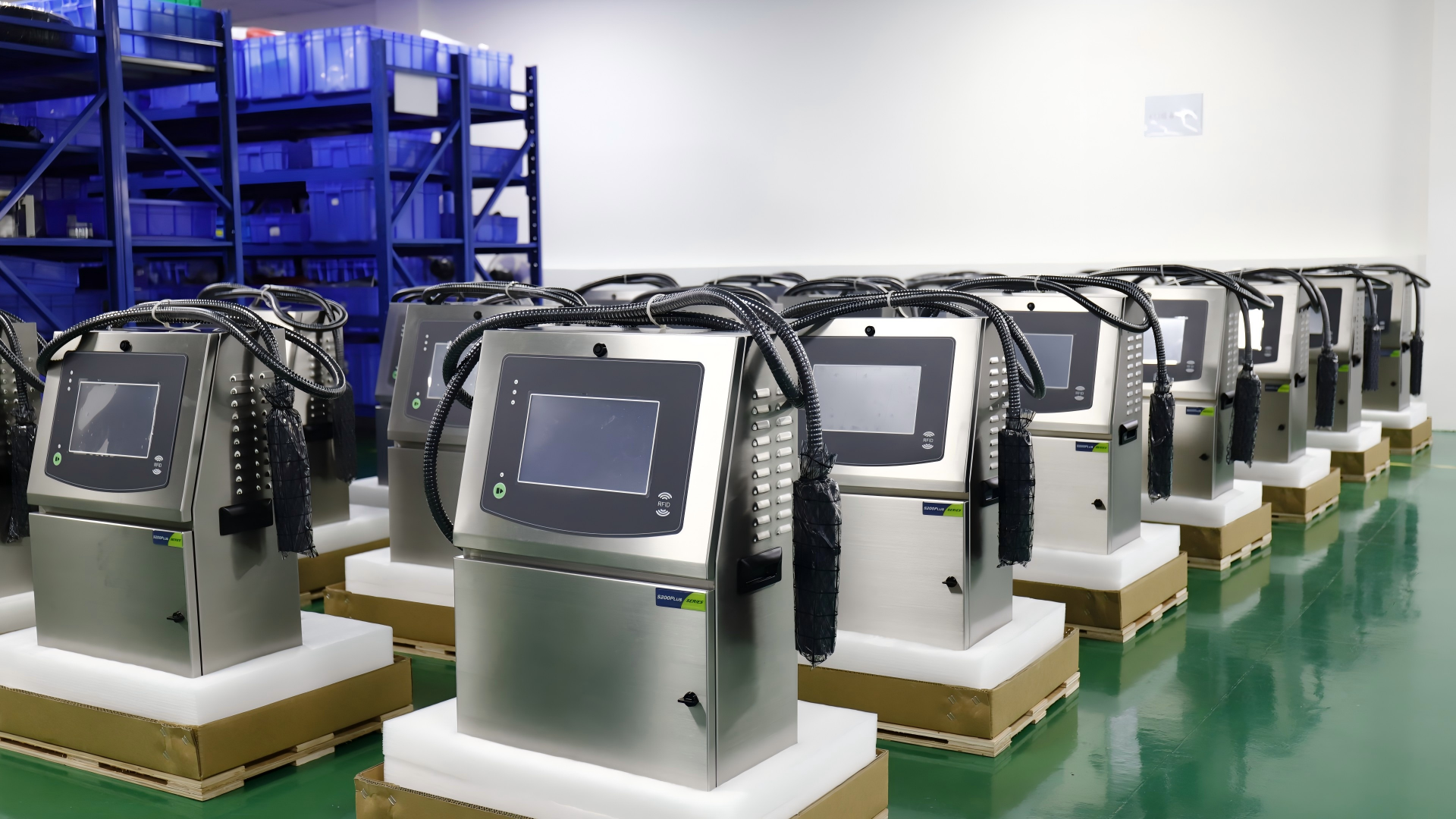
Outgoing inspection is a defined control with its own record — not a general statement that quality is checked.
Stage 6: Convert findings into purchasing terms
An audit that produces a findings list but no contractual clause has produced a report, not a control. The documented purchasing terms give the auditor concrete wording to work with, and they vary by supply mode.
- Customized orders: MOQ 1 customized order; delivery terms FOB, CIF, CFR or EXW; acceptance criteria covering technical drawing confirmation, sample approval and pre-shipment inspection; payment T/T 30/70 or LC.
- Single equipment units: MOQ 1 unit; delivery terms EXW, FOB or CFR; acceptance criterion is a function test before shipment; payment T/T.
- Set-based equipment orders: MOQ 1 set; delivery terms FOB or CIF; acceptance requires print sample confirmation and factory testing before delivery; payment T/T or LC.
- Project orders: MOQ 1 project; delivery terms FOB, CIF, CFR or EXW; acceptance requires technical proposal confirmation and a pre-shipment functional test; payment T/T or LC, case by case.
- Pre-shipment test option: MOQ 1 set; acceptance by pre-shipment test and video confirmation; T/T 30/70 is the recommended template.
Notice that acceptance criteria are already staged in these terms: technical drawing confirmation comes first, sample approval second, pre-shipment inspection last. An audit should verify that all three stages appear in your order, because a supplier who confirms drawings and samples but omits pre-shipment inspection has removed the final gate.
Stage 7: Check certificate scope, not certificate existence
Certificate checks fail more often on scope than on authenticity. Three management-system certificates are documented for the manufacturer: ISO 9001 certificate 18625Q00281R1M, ISO 14001 certificate 18625E00147R1M and ISO 45001 certificate 18625S00131R1M, all issued by Guangdong Zhongyu Certification Co., Ltd., all against the GB/T and ISO standards shown on the certificates, and all valid from 2025-09-05 to 2028-09-04. The ISO 9001 scope is R&D and production of inkjet printers.
Product-level certification has narrower limits again. The BIS CRS registration licence R-41312347, issued by the Bureau of Indian Standards against IS 13252 (Part 1):2010 / IEC 60950-1:2005 for the India market, covers printers and plotters under the brand codpad, for the listed models manufactured at the registered factory address, and is valid from 2025-10-13 to 2027-10-12. For a buyer, the operative words are "listed models" and "registered factory address": if the model code or the brand on your nameplate does not match the licence listing, the registration does not automatically extend to what you are buying. Ask for the model list, not a scanned cover page.
Audit workpaper: claim, document, fail signal
Use this as the acceptance sheet for the audit itself. Each line converts a claim into evidence and defines what an unacceptable answer looks like.
| Claim under audit | Document that settles it | Fail signal |
|---|---|---|
| Cabinet material, e.g. SUS 304 stainless steel | Approved part drawing with grade designation, matching BOM line item, material certification where available | Grade appears only in the brochure; drawing says "stainless steel" with no grade |
| Enclosure protection, e.g. IP65 | Test report naming the standard, the tested configuration and the sealing arrangement at each opening | Rating quoted without a report, or report names a different configuration |
| OEM branding package | Signed sample confirmation covering logo, startup screen, nameplate, packaging, manuals and carton labels | Confirmation covers the nameplate only |
| ODM functional change | Requirement confirmation record, function test output, trial-run verification report | Change exists only in email correspondence |
| Line integration readiness | Integration test record, sample run with your real variable data, video acceptance before delivery | Acceptance reduced to "the machine runs" |
| Conveyor or rewinder configuration | Drawing stating width, length, speed and any customization, plus named print engine on the configured system | Dimensions or engine model appear only in the quotation |
| Certification coverage | Certificate number, standard, validity dates, listed models and brand scope | Certificate valid but your model or nameplate brand is not listed |
What the audit looks like in practice
A cable manufacturer buying the M2000 Series Continuous Inkjet Printer for meter marking on cable sheath across six lines — the documented case in the United States, in operation for two years, with clearer and more consistent codes as the reported result and stable pressure plus easy cleaning as the stated highlights — would audit four things before commitment: the grade of the ink path and cabinet materials on the drawing, the cleaning procedure as written documentation rather than a demonstration, the sample approval record for the specific sheath compound, and the pre-shipment inspection criterion covering all six units as a batch.
A label converter adding the XF30 Vertical Rewinding Machine for roll-label rework would audit the web path and tension specification on the drawing, the named TIJ engine and cartridge type if the configuration includes an integrated printer, the coded-roll sample produced during the sample run, and the video acceptance scope — specifically which functions the video must show.
A small producer installing the XC20 Mini Conveyor Belt on a bench line would audit belt width, effective length and length customization against the bench dimensions, plus the mounting interface to the printer stand. These are low-value line items with high installation risk, and they are exactly the items most often confirmed verbally.
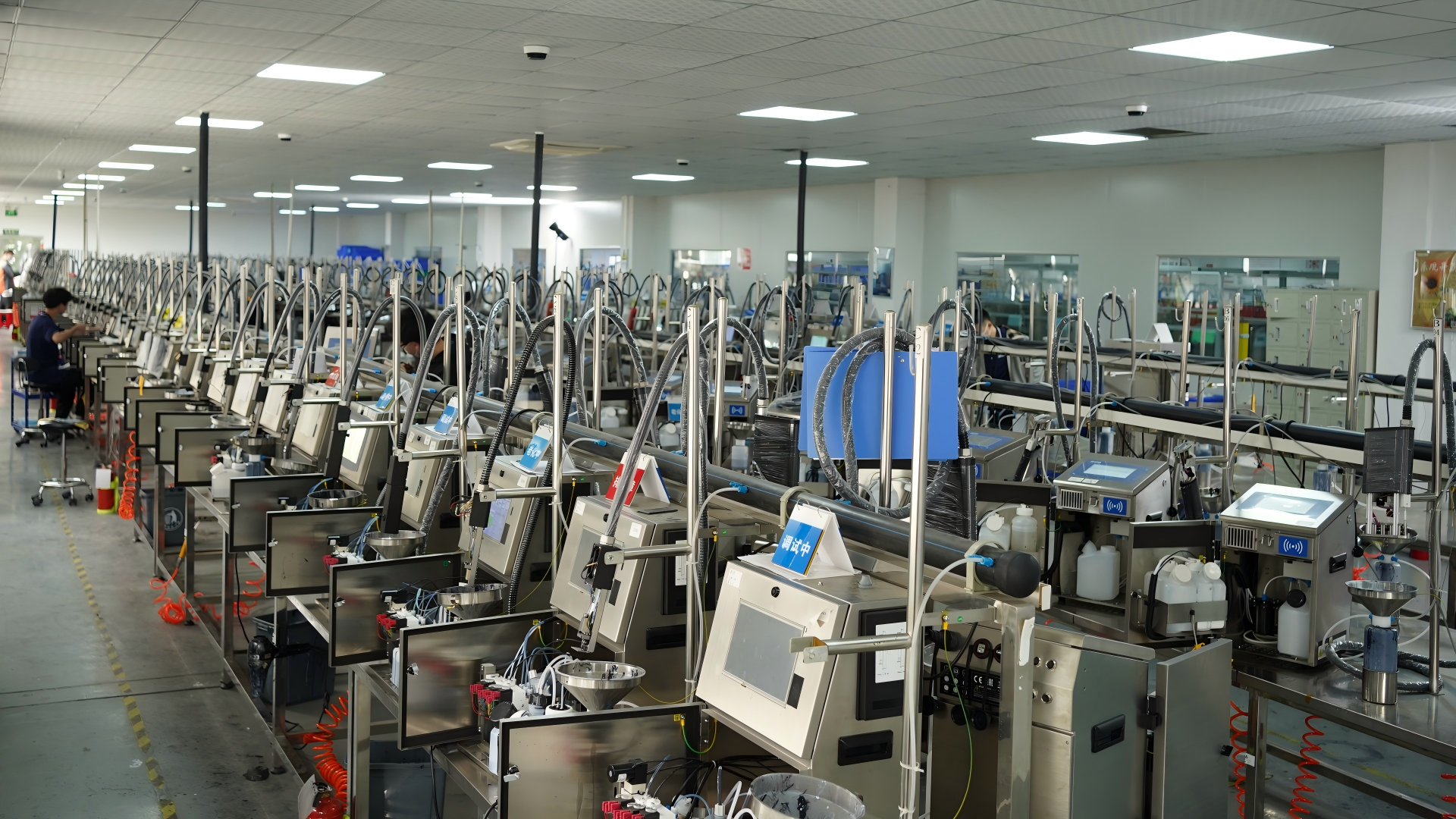
Build evidence should trace back to the assembly and test record for the unit you will actually receive.
Limits of a supplier capability audit
An audit establishes that claims are documented and controls exist. It does not establish long-run reliability. A sample run is a point-in-time test under stated conditions; it cannot predict consumable consumption over a year, downtime frequency, or performance on a substrate not included in the trial. Video acceptance is only as strong as the agreed scope — an unscripted video confirms that a machine operated, nothing more.
Two further boundaries are worth stating openly. First, self-reported reach and portfolio breadth are supplier statements, not independent verification, and should be treated as screening signals rather than settled facts. Second, documentation quality varies by supply mode: a spare-parts order is verified by part and packing confirmation, while a line-integration order is verified by integration testing and sample run. Holding a parts order to an integration standard, or the reverse, produces findings that say more about the checklist than about the supplier.
Frequently asked questions
Which documents settle a build-material or IP-rating claim?
A material claim is settled by an approved part drawing that carries the grade designation on the component, a bill of materials line item matching that drawing revision, and material certification where the supplier can provide it. An IP rating claim is settled by a test report that names the standard cited, the exact model and configuration tested, and the sealing arrangement at each opening including cable glands and the printhead aperture. A rating or grade quoted only in a brochure, or in a drawing general note without a matching BOM line, remains unverified.
How do OEM branding and ODM functional customization differ in what must be evidenced?
OEM branding support changes presentation: private label logo, startup screen, nameplate, packaging, manuals and carton labels, with a minimum order of 1 set, a lead time of 15–25 working days, and quality control by sample confirmation plus final inspection before shipment. ODM functional customization changes function: software and UI adjustment, communication interface, bracket structure, printhead configuration and application-based adaptation, with a minimum of 1 set per project, 20–30 working days, and quality control by requirement confirmation, function test and trial-run verification. The audit evidence therefore differs — a signed sample confirmation package for branding, and test records for the changed function under ODM.
What purchasing terms and acceptance criteria should be written down before commitment?
For a customized order, the documented template is MOQ 1 customized order, delivery terms FOB, CIF, CFR or EXW, acceptance criteria covering technical drawing confirmation, sample approval and pre-shipment inspection, and payment at T/T 30/70 or by LC. Single-unit orders use MOQ 1 unit with a function test before shipment and T/T payment. Set-based orders use MOQ 1 set, FOB or CIF, with print sample confirmation and factory testing before delivery. Project orders use MOQ 1 project and acceptance based on technical proposal confirmation plus a pre-shipment functional test, with T/T or LC on a case-by-case basis.
Can a sample run or video acceptance replace a pre-shipment inspection?
No. Sample approval confirms that the ink, substrate and print content combination produces an acceptable mark. Pre-shipment inspection confirms the specific unit, its configuration and its packing. Video acceptance, where offered, is a delivery-readiness control for integrated systems — documented as video acceptance before delivery under production line integration support, and as pre-shipment test plus video confirmation under a set-based order template — but its scope must be agreed in advance, because a video that shows only power-on and a print trigger verifies very little. Keep all three controls separate in the order.
How should lead time be verified for a customized or integrated order?
Verify lead time against the supply mode, not against a general average. Documented lead times run from within 15 working days for standard equipment supply and spare parts, 15–25 working days for OEM branding, 20–30 working days for ODM functional customization, 20–35 working days for production line integration, and 15–30 days for distributor and service partner support. Then ask for the sequence behind the number: when the drawing is confirmed, when the sample is approved, when the pre-shipment test occurs, and which record closes each stage. A lead time without a milestone list is an estimate.
Next step: the same evidence set used above — supply-mode scope, drawing confirmation, sample approval, pre-shipment inspection — is the basis of a formal audit request. The DOCOD corporate brochure covers the product families and manufacturing scope referenced in this guide, and configuration or documentation questions can be directed to the supplier through DOCOD Precision Group Co., Ltd.

Documentation requests, sample approvals and inspection records are handled through the supplier's sales and service organization.
Conclusion
A supplier capability audit succeeds when it produces a signed evidence chain rather than a comparison table. Fix the supply mode first, because MOQ, lead time and quality-control gates are defined per mode. Then convert each build and customization claim into a named document — drawing revision, material certification, IP test report, sample confirmation, function test record, integration test record — and define what an unacceptable answer looks like before the audit begins. Finally, write acceptance into the order in the documented order of operations: technical drawing confirmation, sample approval, pre-shipment inspection. Delivery readiness is not a feeling about a supplier; it is the set of records that exist before the invoice does.
Have Questions or Need More Details?
Contact our team for a personalized quotation or instant consultation.
Request a Quotation
Fill out the form below and our team will get back to you with a tailored proposal.
WhatsApp Direct Chat
Prefer to chat in real-time? Message us on WhatsApp for instant assistance & quick answers.
- Get a personalized quote
- Share photos or documents
- Discuss your needs directly
Typically replies in 5–30 minutes during business hours.