
Thermal Inkjet vs High-Resolution Piezo Inkjet: Head-to-Head Coding Decision
Two inkjet technologies sit side by side on most smart manufacturing coding lines, and buyers at the decision stage are usually asked to pick one of them: thermal inkjet (TIJ) with a compact half-inch printhead, or high-resolution piezo inkjet (PIJ) with a wider, data-dense printhead. Both are drop-on-demand inkjet systems. Both print variable data without a plate, a ribbon or a laser source. The difference appears in print area, resolution stability at speed, ink-supply architecture, and how much operator attention the code demands across a shift.
This guide compares the two routes head to head using the DOCOD T220E half-inch dual-head TIJ platform and the DOCOD P2000 high-resolution PIJ platform, and it explains how the decision changes with print content, substrate material, working environment and conveyor speed. It is written for the evaluation and decision stage of an industrial coding and marking equipment purchase, where the cost of choosing wrong is measured in re-work, unreadable codes and line stops.
The Short Answer, Before the Detail
If the code is compact — a date, batch, serial or short data string on cartons, labels and general packaging — and the line changes jobs often, a half-inch dual-head TIJ platform such as the DOCOD T220E is normally the simpler fit. It prints 25.4 mm of height, lists a top speed of up to 406 m/min, and uses a cartridge-based ink route that is fast to swap. If the code is large — wide 2D/QR data blocks, traceability codes, or dense variable data on coated cartons — the DOCOD P2000 high-resolution PIJ platform is the stronger fit: 33.8 mm of print height, 8.4 mm more than the T220E, and 190 m/min at 300 dpi against 120 m/min for the TIJ platform.
Everything that follows is the reasoning behind those two sentences, and the conditions under which the recommendation reverses.
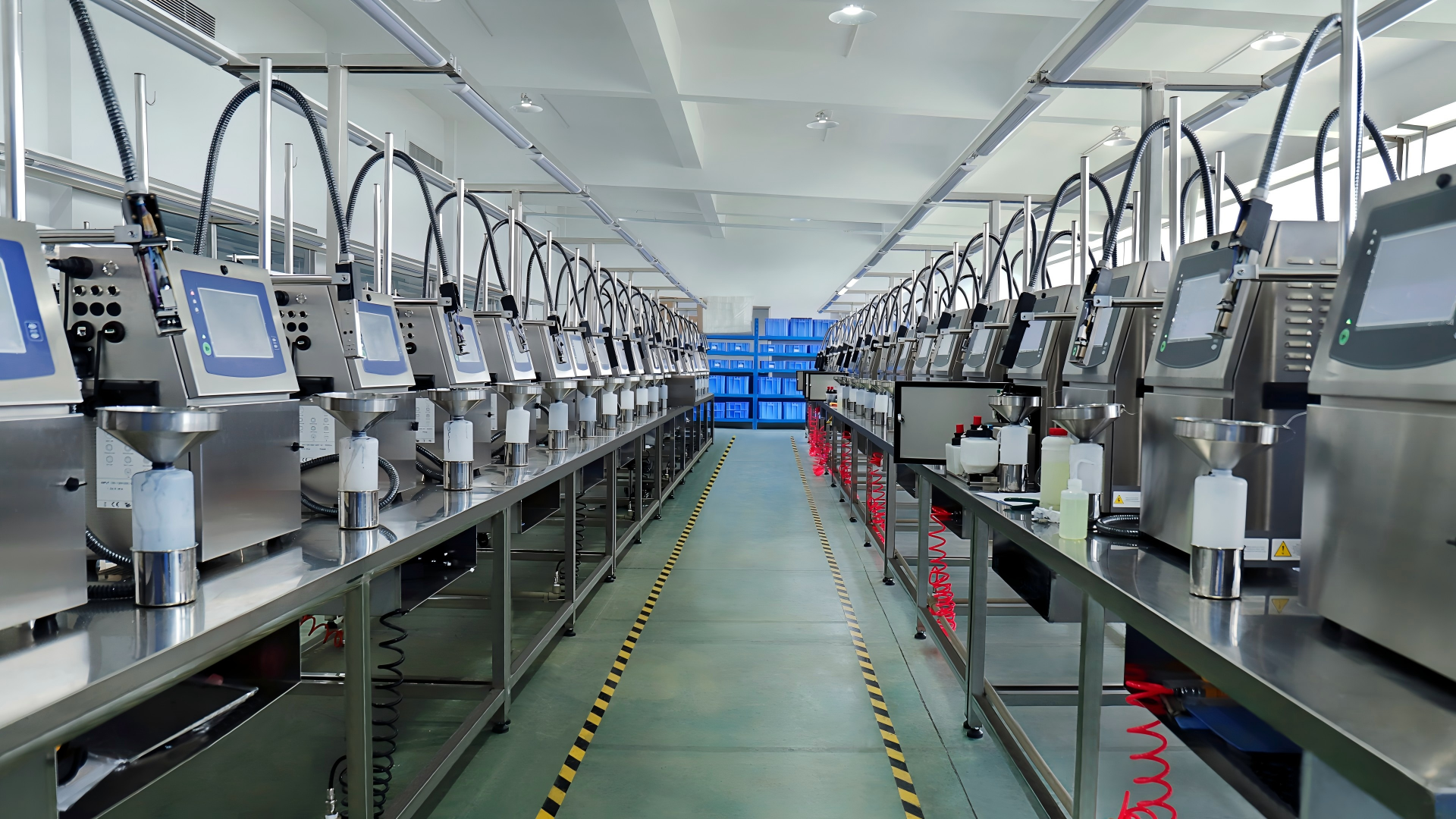
Problem Definition: Why This Comparison Is Usually Made Too Late
The TIJ-versus-PIJ question rarely surfaces during concept design. It surfaces after the carton artwork is approved, after the line speed is fixed, and after the customer has requested a 2D code that the originally specified printhead cannot fit inside its print window. At that point the buyer is no longer choosing a technology — they are correcting a specification.
Three specification errors drive most of these corrections:
- Specifying by speed alone. A published top speed describes the fastest condition the printer can reach, not the speed at which a specific code will stay readable. The same TIJ platform that lists up to 406 m/min is compared at 120 m/min when the job runs at 300 dpi.
- Specifying by print width alone. Print height determines how much data fits in one pass. A 25.4 mm print window and a 33.8 mm print window handle very different QR code versions and data densities.
- Ignoring the ink route. Cartridge-based systems and continuous ink-supply systems carry different running rhythms — one is interrupted by cartridge changes, the other by ink-supply management. Whichever interruption matches your batch pattern should influence the decision.
The practical fix is to stop treating TIJ and PIJ as price tiers of the same product and start treating them as two answers to two different coding questions.
Industry Background: Why the Question Is Getting Sharper
Coding and marking equipment is no longer a date-stamp category. Fortune Business Insights reported the global coding and marking equipment market at USD 7.51 billion in 2025, with inkjet technologies — CIJ, TIJ and PIJ combined — accounting for 40.1% of the technology segment. That share matters because inkjet is the technology family most directly affected by the shift from simple date codes to data-rich codes.
The regulatory driver is the GS1 Digital Link transition, commonly referred to as Sunrise 2027, which sets a deadline of 31 December 2027 for the retail move from 1D barcodes to 2D QR codes. For production teams, this is a hardware upgrade requirement rather than a labelling preference. A printer that comfortably produces a rotated date code and a short lot number may still be the wrong printer for a 2D code carrying a Digital Link URL.
Traceability and quality control sit behind the same shift. Industrial coding and marking is fundamentally about applying identification to diverse substrates in industrial environments so that traceability and quality control can be enforced. Once the code is carrying serialized data, its readability, position and verification become part of the quality record — which is why coding decisions increasingly pull in inline inspection at the same time as the printer.
Detailed Solution: How the Two Routes Actually Differ
Route 1 — Half-inch dual-head TIJ: DOCOD T220E
The DOCOD T220E Half-Inch Dual-Head Inkjet Printer is a thermal inkjet coder built around a 25.4 mm print height and a cartridge-based ink workflow. Its published top speed reaches 406 m/min, and in the head-to-head comparison against the P2000 it is recorded at 120 m/min when printing at 300 dpi. Dual heads give it wider coverage than a compact single-head TIJ unit — the same T220E offers 12.7 mm more print height than the DOCOD TX1 single-head model (25.4 mm versus 12.7 mm), even though both list the same 406 m/min top speed.
Its natural territory is cartons, labels, GS1 content and wider QR/barcode printing where code height and data density are moderate. Because it is more efficient for short- to medium-run high-resolution jobs than a general-purpose CIJ coder such as the DOCOD V2000, and because it delivers 9.4 mm more print height than that CIJ route (25.4 mm versus 16 mm), the T220E tends to win where a line alternates between jobs and needs readable variable data rather than maximum speed. On the consumable side, the T220E is part of a cartridge/CISS workflow; DOCOD specifies the 3BK702 solvent cartridge at 600 dpi with a 300-nozzle array, which gives solvent-chemistry coverage alongside the standard cartridge route.
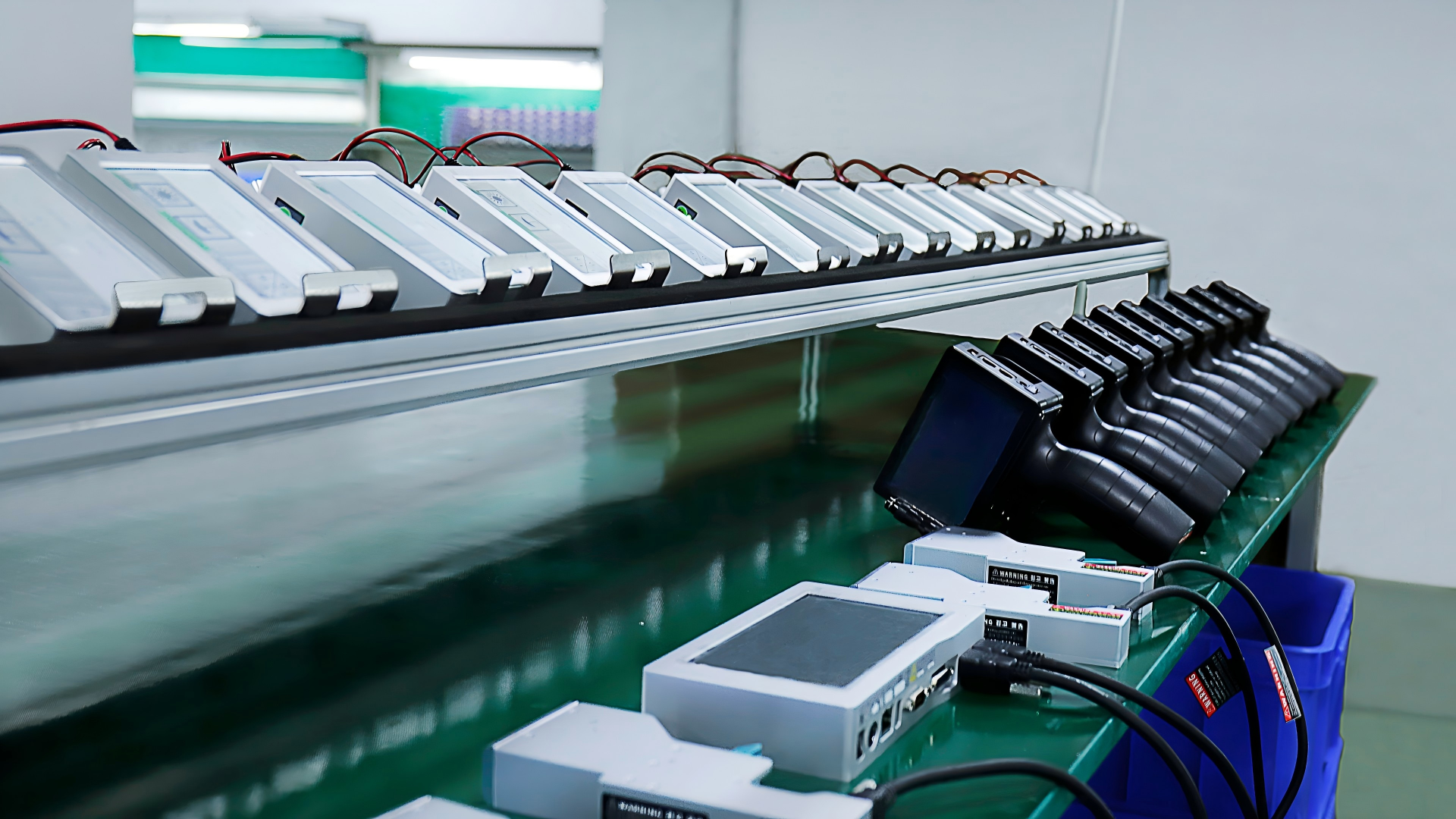
Route 2 — High-resolution PIJ: DOCOD P2000
The DOCOD P2000 Piezo Inkjet Printer is a high-resolution PIJ coder that uses a continuous ink-supply architecture instead of disposable cartridges. It is available in single-head and dual-head configurations, prints up to 33.8 mm of height, and reaches 190 m/min at 300 dpi — 70 m/min faster than the TIJ comparison at the same resolution. Against a standard CIJ coder such as the DOCOD V2000, the print-height advantage is even larger at +17.8 mm (33.8 mm versus 16 mm).
Operation is handled through a 10.1-inch touch screen, with the control platform built on Cortex-A7 processing paired with FPGA hardware — an architecture chosen to keep the print engine responsive while the interface handles variable data and 2D code generation. The continuous, negative-pressure ink supply is what makes the platform suited to larger QR codes, coated cartons, traceability codes and bigger print areas: batch work is not interrupted by individual cartridge changes, and per-cartridge cost and waste are reduced.
The trade-off is system complexity. PIJ carries more hardware and more ink-supply management than a cartridge-based TIJ unit, and that complexity has to be justified by the print job. If the job does not need 33.8 mm of width or a continuous supply rhythm, the complexity is paid for without being used.
The Four Variables That Decide It
Print content. Count the characters and the 2D code version first. A date, batch and short serial fit comfortably inside a 25.4 mm window. A GS1 Digital Link QR code with surrounding human-readable text, or several data fields stacked, pushes toward the 33.8 mm PIJ window. Content density, not line speed, is usually the variable that eliminates one option.
Material. TIJ and PIJ both deposit ink, so both depend on ink-to-substrate matching. Coated cartons, labels and paperboard are the mainstream territory for both platforms; uncoated or recycled board, films and low-surface-energy plastics absorb ink differently and may require a specific ink chemistry — this is where the 3BK702 solvent cartridge option on the TIJ side becomes relevant, and where PIJ's continuous supply supports longer homogeneous runs on one material.
Working environment. Dust, vibration, washdown and ambient temperature and humidity all affect ink behaviour and printhead life. Both routes need the working conditions confirmed before model selection, because a printer specified for a clean packaging hall may underperform on a dusty extrusion line.
Conveyor speed. Speed only becomes meaningful when it is paired with resolution and code size. At 300 dpi, the TIJ comparison is recorded at 120 m/min and the PIJ comparison at 190 m/min. If the line runs faster than that, either the resolution or the code content has to change — and that recalculation should happen before the purchase order, not after installation.
Step-by-Step Breakdown: A Six-Step Selection Sequence
Running the decision as a fixed sequence prevents the most common error, which is choosing a printer and then discovering what the line actually has to print.
- Define the final printed content in the customer's own files. Text, barcode, QR code, date format and language settings are confirmed and locked before any hardware discussion, because a late content change invalidates the print-height calculation.
- Measure the required print area, not the current one. Take the largest code expected over the equipment's service life — usually the 2D code version — and check it against the 25.4 mm TIJ window and the 33.8 mm PIJ window.
- Match ink chemistry to substrate. Carton, film, plastic, metal or glass decides whether a standard cartridge, a solvent cartridge such as the 3BK702, or a continuous-supply PIJ configuration is appropriate. Substrate testing with real samples is the control measure here.
- Recalculate conveyor speed at the required resolution. Use the 300 dpi figures rather than the headline top speed whenever the code is data-dense. Compare that number against the actual line speed, including acceleration behaviour at start-up.
- Check integration and verification. Both platforms integrate with conveyor handling such as the XC20 mini conveyor and with vertical rewinding equipment such as the XF30 vertical rewinding machine, and both can be paired with inline code inspection. If the line is critical, an OCR or barcode inspection system with alarm light or rejection linkage turns a print failure into a contained event rather than a batch re-work.
- Validate on a sample before committing the batch. Pre-production sample printing on the real substrate is the standard control measure for print quality, and it is also the point at which the TIJ-versus-PIJ decision becomes evidence-based instead of theoretical.
Use Cases: Which Platform Wins on Which Line
Case 1 — Coated carton with a traceability QR code: PIJ wins
When a coated carton carries a large QR code plus a batch line, the constraint is print area and resolution at speed. The P2000's 33.8 mm print height and 190 m/min at 300 dpi fit the job without reducing the code, and the continuous ink supply keeps a long batch running without cartridge-change interruptions.
Case 2 — Mixed short-run cartons and labels with frequent changeovers: TIJ wins
Where a line alternates between products and the code stays compact, the T220E's cartridge-based route and 25.4 mm print height are proportionate. Short- to medium-run high-resolution work is where the dual-head TIJ platform is most efficient, and quick cartridge swaps suit frequent job changes.
Case 3 — Simple date coding on boxes, eggs or bottles at low speed: TIJ wins decisively
A basic date code does not need 300 dpi data density or a continuous ink supply. A lower-tier TIJ unit such as the DOCOD T260E, which is positioned for simple date coding on eggs, bottles and boxes, covers the requirement with lower initial cost. Specifying PIJ here would add capability the code cannot use.
Case 4 — Narrow packaging line with limited mounting space: TIJ wins
Where space is tight and codes are short, a compact single-head TIJ unit keeps installation simple. The T220E is the step up when code height and data density grow beyond that compact footprint — it delivers higher efficiency when code height and data density are larger.
Case 5 — Serialized production with inline verification: PIJ plus inspection wins
When every unit carries a unique code and the code is verified in line, the fixed costs of inspection and rejection hardware already change the economics. Adding the wider, continuous-supply PIJ platform at that point usually costs less in disruption than trying to fit serialized 2D data into a smaller print window.
Comparison Table: DOCOD T220E (TIJ) vs DOCOD P2000 (PIJ)
| Comparison metric | DOCOD T220E half-inch dual-head TIJ | DOCOD P2000 high-resolution PIJ |
|---|---|---|
| Head configuration | Half-inch dual head | Single-head and dual-head configurations |
| Print height | 25.4 mm | 33.8 mm (8.4 mm more than the TIJ comparison) |
| Speed at 300 dpi | 120 m/min | 190 m/min (70 m/min more than the TIJ comparison) |
| Stated top speed | Up to 406 m/min | Not stated in the same comparison set; 190 m/min recorded at 300 dpi |
| Ink supply architecture | Cartridge / CISS workflow; 3BK702 solvent cartridge specified at 600 dpi with 300 nozzles | Continuous, negative-pressure ink supply |
| Control interface | Rich external interfaces for faster data-heavy printing | 10.1-inch touch screen; Cortex-A7 with FPGA control hardware |
| Compared with a standard CIJ coder | +9.4 mm print height versus the V2000 (25.4 mm vs 16 mm) | +17.8 mm print height versus the V2000 (33.8 mm vs 16 mm) |
| Best-fit content | Cartons, labels, GS1 content, wider QR/barcode, readable variable data | Larger QR codes, coated cartons, traceability codes, bigger print areas |
| Batch behaviour | Quick cartridge swaps suit short- to medium-run and mixed-product lines | Continuous supply reduces cartridge-change interruption and per-cartridge cost and waste in batch work |
| Complexity trade-off | Lower system complexity, cartridge-based deployment | Higher system complexity for better large-area print capability |
All figures above are taken from published DOCOD product comparisons of the T220E, P2000 and V2000 within the same comparison set.
How to read the table: the T220E is not a reduced version of the P2000, and the P2000 is not an upgraded T220E. They solve different code problems. The T220E optimises for compact, high-resolution, frequently changed content; the P2000 optimises for wide, data-dense content in long batch runs.
Frequently Asked Questions
Which technology fits the GS1 Sunrise 2027 move from 1D barcodes to 2D QR codes?
Both technologies can print 2D codes, but the GS1 Digital Link transition sets a deadline of 31 December 2027 for the retail shift from 1D barcodes to 2D QR codes, and that deadline changes the print-content requirement rather than the printer category. The DOCOD T220E is positioned for cartons, labels, GS1 content and wider QR/barcode printing at a 25.4 mm print height. The DOCOD P2000 is positioned for larger QR codes, coated cartons and traceability codes at a 33.8 mm print height. If the planned Digital Link code plus its human-readable text fits inside 25.4 mm, TIJ remains viable; if it does not, the wider PIJ print window is the practical route.
What print height and speed can each platform deliver?
The DOCOD T220E half-inch dual-head TIJ printer prints 25.4 mm of height, lists a top speed of up to 406 m/min, and is recorded at 120 m/min when printing at 300 dpi. The DOCOD P2000 high-resolution PIJ printer prints 33.8 mm of height and reaches 190 m/min at 300 dpi, available in single-head and dual-head configurations. The gap is 8.4 mm of print height and 70 m/min at 300 dpi in favour of the PIJ platform. Against a standard CIJ coder such as the DOCOD V2000, the print-height advantage is 9.4 mm for the T220E and 17.8 mm for the P2000.
Which option costs less — cartridge-based TIJ or continuous-supply PIJ?
The cost structures differ rather than simply ranking. The T220E uses a cartridge and CISS workflow with lower system complexity, which keeps deployment and consumable tracking straightforward. The P2000 uses a continuous, negative-pressure ink supply with higher system complexity, but it reduces per-cartridge cost and waste and avoids cartridge-change interruption in batch work — which is where its large-area print capability is paid for. The practical test is batch length and code size: short, mixed runs favour TIJ economics; long, data-heavy runs favour PIJ economics.
How should a buyer validate print quality before placing an order?
Substrate testing and pre-production sample printing are the standard controls on both routes. DOCOD's stated control measures for coding risk include ink or marking-method matching based on the actual carton, film, plastic, metal or glass surface, pre-production sample printing before mass shipment, and double confirmation of text, barcode, QR code, date format and language settings. Working temperature, humidity and line condition are confirmed before model selection. For critical lines, optional OCR or barcode inspection with alarm-light or rejection linkage is used so that a missing or unreadable code is caught in line.
Can either platform be integrated with a conveyor, rewinding equipment and inline inspection — and how fast can delivery be scheduled?
Both the T220E and the P2000 are designed for line integration, including conveyor handling such as the XC20 mini conveyor and vertical rewinding equipment such as the XF30 vertical rewinding machine, and both can be paired with inline code inspection. DOCOD schedules standard models first, with order confirmation, assembly, testing and shipment managed as milestones, and provides online support, installation guidance and troubleshooting after delivery plus a recommended spare parts and consumables list for repeat operation. The fastest way to confirm fit and timing for your line is to send your code content, substrate and line speed for a sample review — contact sales@docod.com.cn or +86 139-2896-7650.
Conclusion: The Decision Rule in One Line
Choose TIJ when the code is compact, the content changes often, and the line needs readable variable data on cartons, labels and general packaging without added system complexity — the DOCOD T220E covers 25.4 mm of print height, up to 406 m/min top speed, and a cartridge route that keeps changeovers simple. Choose high-resolution PIJ when the code is wide or data-dense, when the substrate is coated carton or another surface that benefits from a continuous supply, and when batch length justifies a lower per-cartridge cost burden — the DOCOD P2000 covers 33.8 mm of print height, 190 m/min at 300 dpi, and a 10.1-inch touch-screen control platform.
The rule only becomes reliable when it is tested against real content on a real substrate. Print height, 300 dpi speed and ink chemistry are the three numbers that decide it; everything else is scheduling.
DOCOD Precision Group Co., Ltd. is an industrial coding, marking and inspection equipment manufacturer founded in 2008, whose portfolio covers continuous inkjet printers (CIJ), thermal inkjet printers (TIJ), piezoelectric high-resolution inkjet printers (PIJ), drop-on-demand large-character inkjet printers (DOD), thermal transfer overprinters (TTO), laser marking machines and inline vision inspection systems. Product details are published at www.docod-group.com.
Next Step: Validate Your Code Before You Choose a Platform
Send the code content, the substrate and the line speed you are working with, and the DOCOD application team will confirm whether a half-inch dual-head TIJ platform or a high-resolution PIJ platform is the correct fit — and provide a sample evaluation and quotation for the configuration that matches.
Email: sales@docod.com.cn | Tel: +86 139-2896-7650 | WhatsApp: +86 135-1234-4323
Download the full product and capability overview: DOCOD Corporate Brochure (PDF)
Have Questions or Need More Details?
Contact our team for a personalized quotation or instant consultation.
Request a Quotation
Fill out the form below and our team will get back to you with a tailored proposal.
WhatsApp Direct Chat
Prefer to chat in real-time? Message us on WhatsApp for instant assistance & quick answers.
- Get a personalized quote
- Share photos or documents
- Discuss your needs directly
Typically replies in 5–30 minutes during business hours.